2027 Best Online Professional Masters Degrees With Part-Time Study Options

Co-Founder and Chief Data Scientist
Choosing an online master's degree while working means comparing more than subjects: you need a course schedule you can sustain and a credential that fits your career goal. The stakes can be substantial. The U.S. Bureau of Labor Statistics (BLS) reports a 2024 median annual wage of $124,910 for information security analysts, but a master's degree alone does not qualify someone for that occupation or wage. This guide compares practice-oriented degree fields and shows how to check part-time flexibility, total cost, accreditation, and licensing requirements before you apply.
Key Things You Should Know
- The best part-time choice depends on your goal, an MBA supports broad business advancement, while nursing, counseling, and some education paths require closer scrutiny of professional eligibility.
- Online does not mean self-paced, scheduled classes, fixed course sequences, clinical placements, and residencies can determine whether a program fits your workweek.
- BLS reports median weekly earnings of $1,840 for workers with a master's degree in 2024, but that figure spans occupations and experience levels, compare a degree's full cost with its likely value in your own career.
Top 10 Best Online Professional Masters Degrees With Part-Time Study Options - Top 10 Programs
Business / MBA Programs
A Master of Business Administration (MBA) suits professionals seeking broader responsibility in management, finance, operations, or strategy. For part-time students, the key distinction is whether courses run asynchronously or require evening meetings and team projects. An MBA may be a better fit than a specialized Master of Science (MS) for someone changing business functions; an MS may offer more depth in a defined specialty. Compare employer tuition assistance, cohort pacing, and any residency. Management jobs generally also require relevant experience.
Healthcare Administration & Management Programs
A Master of Healthcare Administration (MHA) or healthcare-focused MBA can prepare experienced professionals for operational and leadership work in health systems. Part-time students should check whether internships, applied projects, or scheduled group work can fit around shifts. An MHA emphasizes healthcare organizations and policy; an MBA can provide broader business training. Neither credential alone guarantees a management position, and an MHA is not a clinical license. Compare each curriculum against the roles you want and the experience employers request.
Information Technology Programs
An MS in information technology typically emphasizes enterprise systems, cloud infrastructure, project delivery, or technology leadership. It can suit working IT professionals who want to specialize without leaving employment. Check whether labs use remotely accessible tools, whether courses are offered in a predictable part-time sequence, and whether a capstone requires a workplace project. If you need only one platform-specific skill, an employer-recognized certification may be a smaller commitment. Technical leadership roles generally require experience as well as graduate study.
Computer Science Programs
An MS in computer science offers deeper study in areas such as algorithms, software systems, or artificial intelligence. It may suit software professionals seeking specialization or career changers willing to complete substantial prerequisites. Online applicants should confirm programming and mathematics requirements before assuming they can begin graduate coursework immediately. Part-time course rotation matters: an advanced elective offered infrequently can delay completion. Choose a project-based track for applied work or a thesis track if research and possible doctoral study are priorities.
Cybersecurity Programs
An MS in cybersecurity can develop skills in security engineering, risk management, digital forensics, or policy. Choose the concentration that matches your current preparation: technical tracks may assume networking and programming, while governance tracks may suit experienced compliance professionals. Ask whether virtual labs are available outside normal work hours and whether team exercises have fixed meeting times. The degree does not replace hands-on experience or automatically satisfy an employer's certification requirements.
Data Science / Analytics Programs
An MS in data science or analytics combines statistics, programming, data management, and applied modeling. Analytics programs may focus more on business decisions; data science tracks can require stronger mathematical and computing preparation. For part-time study, confirm access to software and datasets, the availability of prerequisite courses, and whether a capstone can use an approved workplace problem. Because AI tools are changing analytical workflows, look for training in model evaluation, data quality, and responsible use - not just a list of current tools.
Education / Educational Leadership Programs
A Master of Education (MEd) in educational leadership can help educators develop skills in curriculum, administration, or school improvement. If your goal is principal licensure, verify that the specific track meets your state's requirements; a general leadership degree may not. Working teachers should ask whether internships can be completed at their school, who approves the placement, and whether required meetings occur during teaching hours. A nonlicensure MEd may be appropriate for professional development without an administrative credential.
Counseling / Psychology Programs
Practice-oriented counseling master's degrees often combine online coursework with supervised, in-person clinical training. Check your state's licensing rules, the program's relevant accreditation, placement support, and the hours you must complete before applying. A general MA or MS in psychology is not interchangeable with a clinical counseling program and may not prepare you for licensure. Part-time enrollment can make academic work manageable, but practicum and internship schedules may still require time away from a full-time job.
Nursing Programs
A Master of Science in Nursing (MSN) can support nursing leadership, education, or advanced practice, depending on the track. Applicants generally need nursing qualifications appropriate to their chosen pathway. Online lectures may fit a rotating schedule, but clinical placements, preceptor availability, and any campus intensives can limit flexibility. An MSN does not itself confer advanced-practice licensure: state rules, examinations, and other requirements apply. Before enrolling, confirm both your state's eligibility rules and who arranges local clinical placements.
Engineering Management Programs
An MS in engineering management combines technical project work with budgeting, operations, and organizational decision-making. It can fit engineers preparing for broader responsibilities without pursuing a general MBA. Compare prerequisites, scheduled team projects, and whether an applied capstone can draw on your current job. Some programs favor applicants with engineering backgrounds; others accept related technical degrees. The credential can support advancement, but employers typically expect a record of engineering and project experience for management roles.
What Are the Best Online Professional Master's Degrees for Part-Time Students?
For part-time students, the best online professional master's degree is the one that advances a specific goal without requiring attendance or fieldwork you cannot sustain. There is no universal winner: a flexible MBA and a licensure-focused counseling degree solve different problems. Start with the career requirement, then compare schedule, applied work, total cost, and the credentials you already hold.
This comparison groups the degree fields by their most important decision point. It is a guide to choosing a field, not a ranking of individual universities.
| Degree field | Strong fit for | Part-time issue to verify |
| Business / MBA | Experienced professionals seeking broad business skills | Team meetings and cohort pace |
| Healthcare administration | Health-sector operations professionals | Internship or applied-project schedule |
| Information technology | IT specialists seeking technical breadth or leadership skills | Lab access and course rotation |
| Computer science | Applicants seeking deeper computing expertise | Prerequisites and advanced-elective availability |
| Cybersecurity | Security or IT professionals building a specialty | Virtual labs and scheduled exercises |
| Data science / analytics | Professionals working with data-driven decisions | Math preparation and capstone access |
| Educational leadership | Educators considering school leadership | State eligibility and internship hours |
| Counseling / psychology | Applicants pursuing an appropriate clinical path | Licensure fit and in-person placements |
| Nursing | Qualified nurses pursuing a defined specialty | Clinical placements and state rules |
| Engineering management | Engineers expanding project and business responsibilities | Prerequisites and team-project timing |
How Do You Choose an Accredited Online Master's Program?
Accreditation is a starting point, not a complete quality test. Confirm that the university holds recognized institutional accreditation, then check whether your intended profession calls for programmatic accreditation or approval. This distinction matters most when a degree is meant to support licensure or a particular professional credential.
Use the following checks to narrow a shortlist. Each addresses a mistake that can be difficult or expensive to correct after enrollment.
- Verify the institution's current accreditation through the accreditor or U.S. Department of Education records rather than relying on an advertisement.
- For a regulated career, ask the program which states and credentials its specific track is designed to serve, then confirm the answer with your state board.
- Request a part-time course sequence showing scheduled meetings, required campus visits, placements, and the earliest realistic completion term.
- Compare the required curriculum and applied work with job postings in your target field, not just a school's ranking.
A directory of top online colleges can help you discover institutions, but it cannot establish that a particular master's track meets your licensing or scheduling needs.
What Are the Admission Requirements for Online Master's Degrees?
Most online master's programs require a completed bachelor's degree and transcripts. Beyond that baseline, requirements vary by field and by track: an MBA may value professional experience, computer science may require programming and mathematics, and nursing may require an appropriate nursing license. Programs may also review GPA, recommendations, a statement of purpose, a résumé, an interview, or a portfolio. GRE or GMAT policies must be checked at the program level; a schoolwide description may not apply.
Ask admissions to identify prerequisite or foundation courses before you estimate time and cost. Also ask whether eligible previous graduate-level coursework or a graduate certificate can apply to the degree, when transfer credits are evaluated, and how many required courses would remain. Undergraduate preparation ordinarily does not count as graduate transfer credit.
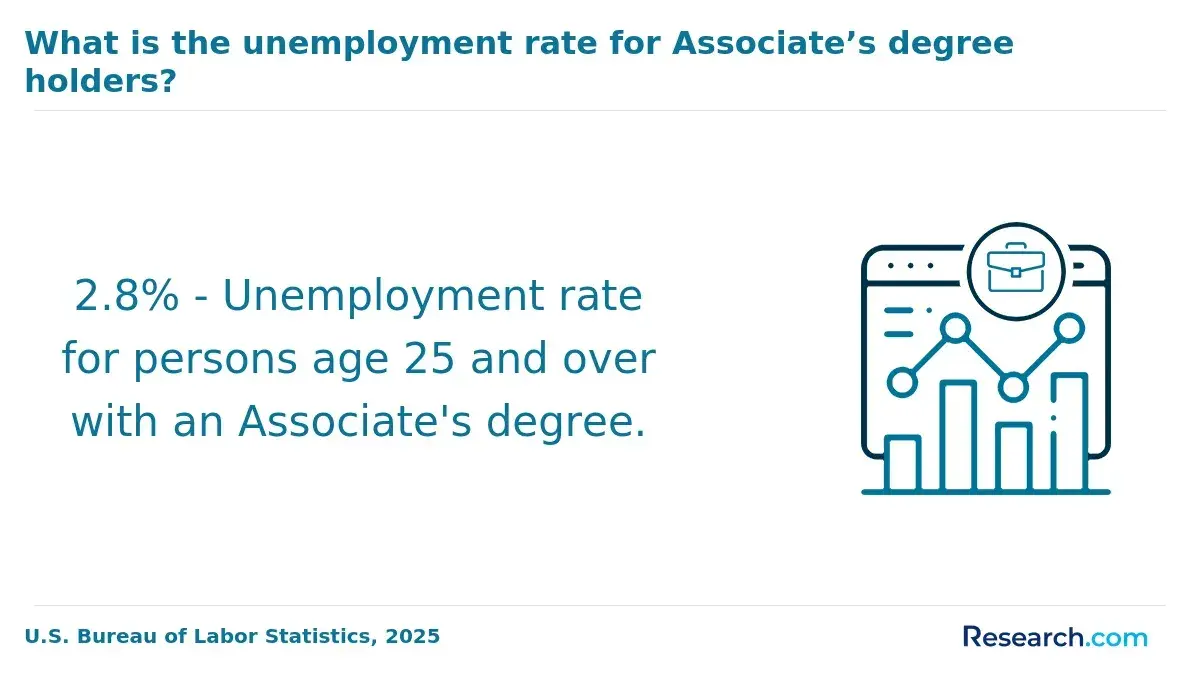
If you are still exploring an associate degree in 6 months online free, note the difference in entry point: an associate degree alone does not meet the usual bachelor's-degree requirement for master's admission.
Which Online Master's Degrees Lead to Professional Licensure?
Some online master's tracks are designed to contribute to professional licensure; others are intended for career advancement and do not lead to a license. Counseling, certain educational leadership tracks, and advanced-practice nursing demand particular attention to state-specific rules. A degree may meet an educational requirement while leaving examinations, supervised practice, certification, or other steps outstanding.
Before applying, name the exact license and state where you plan to practice. Ask the program for written confirmation of how its track addresses that state's educational requirements, whether it helps secure placements, and what graduates must do after earning the degree. Do not treat a general psychology, education, or nursing master's degree as equivalent to a designated licensure track.
What Do You Study in an Online Professional Master's Program?
Professional master's programs combine advanced coursework with opportunities to apply it. An MBA might culminate in a business strategy project; a cybersecurity MS might include remote labs; a counseling program may require a supervised practicum and internship. Electives and concentrations determine how closely the credential aligns with your next role.
Look beyond course titles when comparing curricula. Check how often required classes run, whether the culminating project is individual or team-based, whether a thesis is optional, and whether you can complete applied work near home. A research-heavy thesis can be valuable for doctoral preparation, while an applied capstone may better serve a workplace problem.
How Long Do Part-Time Online Master's Degrees Take?
Part-time completion depends on required graduate credits, courses offered each term, your sustainable course load, prerequisites, and any clinical, internship, thesis, or capstone requirements. An advertised timeline may assume uninterrupted enrollment or preparation you do not have. Short individual courses do not necessarily shorten the full degree.
Ask for a term-by-term plan based on your own starting point. If you have eligible graduate coursework, obtain an evaluation showing which credits satisfy actual degree requirements, not merely how many the school will accept. Confirm that the remaining courses can be taken part-time in the required order.
Some online self paced degrees offer greater control over coursework timing, but verify whether that flexibility applies to the graduate program and its deadlines. Clinical hours, team projects, and required course sequences may still be fixed.
How Much Do Online Professional Master's Degrees Cost?
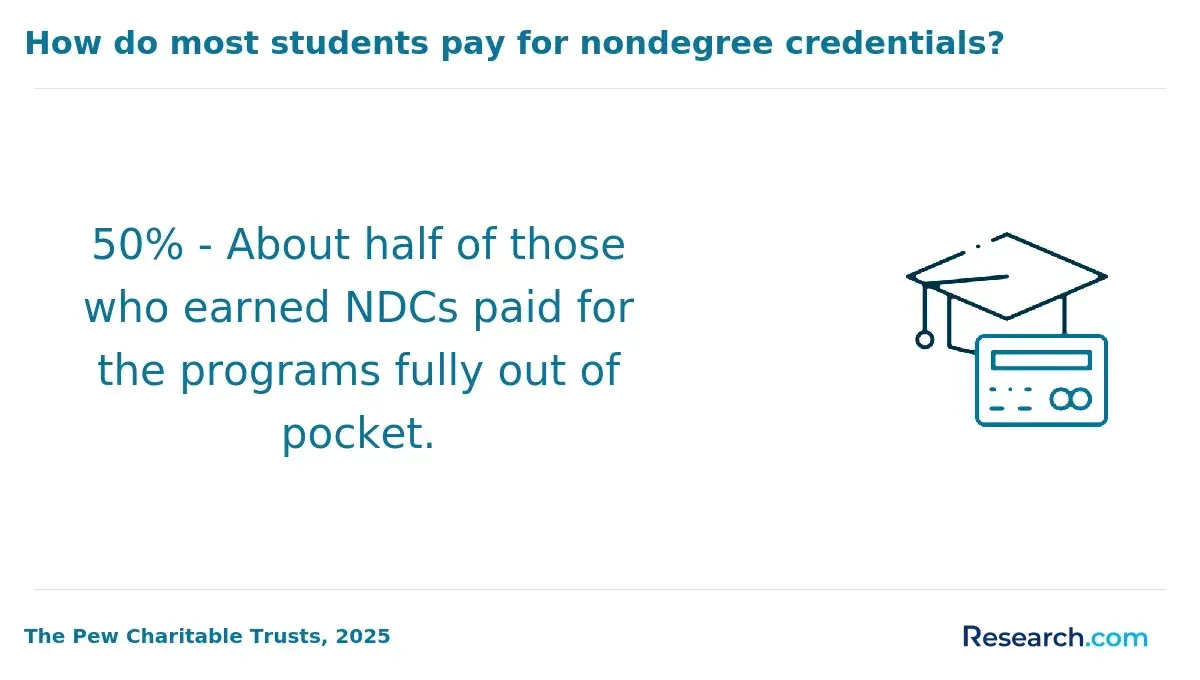
Compare total program cost, not tuition per credit alone. Multiply the program's published graduate tuition by the credits you must complete, then add mandatory and program fees, technology charges, books or software, and travel or placement costs. Check whether tuition differs by residency, whether prerequisites carry extra charges, and whether tuition can change during part-time enrollment. Request a personalized cost estimate from each school.
Financial aid eligibility depends on the institution, program, and your circumstances. Ask about federal aid, scholarships, employer tuition assistance, and payment plans, then compare what you would pay or borrow after those resources. Eligible graduate transfer credit may reduce costs only if it replaces required coursework.
If your goal is a narrow skill rather than a role requiring graduate preparation, online courses with certificates may offer a smaller commitment. Check whether employers in your target role actually recognize the alternative before choosing it over a degree.
What Careers and Salaries Follow Online Professional Master's Degrees?
Career value depends on the work you can pursue with your existing experience and other credentials, not on the degree title alone. BLS occupational wages describe workers across education and experience levels; they are not promised salaries for master's graduates. The following comparison helps distinguish possible uses of a degree from qualifications that may still be needed.
| Potential career direction | Relevant master's preparation | What the degree may not replace |
| Technology or security specialization | Computer science, IT, or cybersecurity coursework and projects | Technical experience and employer-requested skills |
| Business or healthcare management | MBA, MHA, or engineering management training | Industry experience and a record of leading work |
| School leadership | Appropriate educational leadership track | State certification, experience, or internship requirements |
| Counseling or advanced nursing practice | Designated clinical or advanced-practice track | State licensure steps, examinations, and supervised experience |
To judge whether graduate school is worth it, compare the full cost and time commitment with the roles available from your current credentials. Review local job requirements and ask prospective programs for career-outcome information specific to the track, while remembering that outcomes are not guarantees.
How Do Online Master's Degrees Compare With Campus Programs?
Online study can make part-time graduate education possible without relocating or commuting regularly, but it does not remove deadlines or required in-person work. Campus study can offer more face-to-face contact and easier access to some facilities, though travel and fixed meeting times may be harder to manage around a job. Hybrid study sits between the two and should be evaluated by its actual attendance requirements.
The format comparison below focuses on scheduling rather than assuming that one delivery method is academically better for everyone.
| Format | Potential advantage | Constraint to check |
| Online | Less routine travel; possible asynchronous access | Live sessions, deadlines, residencies, and local placements |
| Hybrid | Mix of remote work and in-person contact | Frequency and location of campus attendance |
| Campus | Regular in-person access to peers and facilities | Commute and fixed class times |
Before choosing, request a sample course schedule and a list of every required in-person component. That is more useful to a working student than a label such as "flexible" or "online."
Other Things You Should Know About
Often, but check the term-by-term workload and required meeting times. Clinical placements, internships, and residencies can conflict with full-time work even when classes are online.
No. Asynchronous classes do not require everyone to attend live, but they commonly have fixed assignments and deadlines. Confirm the rules for the specific graduate track.
Only if the relevant track meets your state's educational requirements and you complete any additional required steps. Verify eligibility with the state licensing board before enrolling.
Not automatically. Compare total cost and a realistic part-time timeline alongside accreditation, course availability, required placements, and fit with your intended career.
References
- Accreditation in the U.S. | ed.gov http://www.ed.gov/laws-and-policy/higher-education-laws-and-policy/college-accreditation/accreditation-in-the-us
- Academic Years, Academic Calendars, Payment Periods, and Disbursements | 2025-2026 Federal Student Aid Handbook https://fsapartners.ed.gov/knowledge-center/fsa-handbook/2025-2026/vol3/ch1-academic-years-academic-calendars-payment-periods-and-disbursements
- Understanding College Costs | studentaid.gov https://studentaid.gov/resources/prepare-for-college/students/choosing-schools/consider-costs
- 34 CFR 668.2 -- General definitions. | ecfr.gov https://www.ecfr.gov/current/title-34/subtitle-B/chapter-VI/part-668/subpart-A/section-668.2
- Estimated Fees - Student Accounts - Cal Poly https://afd.calpoly.edu/fees/estimated-fees
- Online Student Placement Process | asu.edu https://clinicalpartnerships.asu.edu/online-student-placement-process
- Prepare to Apply - Transfer Student Resources https://transfer.ncsu.edu/apply/prepare-to-apply/
- How Do I Know if a University is Accredited? | Florida National University (FNU) https://www.fnu.edu/how-do-i-know-if-a-university-is-accredited/
- Transfer Students | College of Education https://education.arizona.edu/admissions/transfer-students
- Why Is Accreditation Important? | ACE Blog https://ace.edu/blog/why-is-accreditation-important/