2027 Most Affordable Master's Degree Programs for Older Adults

Co-Founder and Chief Data Scientist
A low tuition rate does not necessarily make a master's degree affordable - especially if the program requires extra courses, travel, or time away from work. For older adults considering a career change or advancement, the better question is what the entire degree will cost and what it will help them do. The U.S. Bureau of Labor Statistics reports 2024 median weekly earnings of $1,840 for workers with a master's degree, versus $1,543 for those with a bachelor's; that broad comparison does not measure the payoff from any particular program.
This guide helps you compare fields, costs, and requirements before enrolling.
Key Things You Should Know
- Compare total degree cost, not tuition per credit: required graduate credits, fees, prerequisites, and in-person requirements can change the final bill.
- Business, education, and some technology master's programs may offer lower-cost routes when they have modest credit requirements and few required placements; counseling and nursing often have additional clinical or licensing-related costs.
- Career demand is not a return-on-investment guarantee: the Bureau of Labor Statistics projects 23% employment growth for medical and health services managers from 2024 to 2034, but experience and employer requirements still matter.
Top 10 Most Affordable Master's Degree Programs for Older Adults - Affordable Master's Programs
Business / MBA Programs
A Master of Business Administration (MBA) can suit an experienced professional seeking broader management skills. An MS in management or accounting may be more focused and, depending on required credits and fees, less expensive overall. Compare foundation-course requirements if your bachelor's degree is outside business. An MBA is most compelling when its curriculum and employer connections serve a specific goal; it does not independently qualify someone for a management position. If you need one skill rather than a broad credential, compare the full degree's cost with a graduate certificate.
Healthcare Administration & Management Programs
A Master of Healthcare Administration (MHA), healthcare-management MS, or relevant MBA can prepare experienced healthcare workers for operational responsibilities. Compare the required credits and any internship or residency before assuming an online option is cheaper. Programs may serve different goals: an MHA emphasizes healthcare operations, while an MBA usually provides broader business training. These degrees are not clinical licenses, and employers commonly expect relevant healthcare experience for management roles. For a career changer, ask whether the program helps students obtain practical experience and what it costs.
Information Technology Programs
An MS in information technology often covers systems, cloud services, databases, or technology management. It may be a practical choice for someone with workplace technology experience who wants broader responsibilities. Check whether programming or networking prerequisites add courses to the advertised degree, and whether a capstone can use a workplace project. If your goal is a specific platform or tool, a certification may cost less than a master's. For leadership roles, technical experience and management ability remain important alongside the credential.
Computer Science Programs
An MS in computer science can support advanced technical work or a career change, but prerequisites are a major affordability test. Applicants without sufficient programming, mathematics, or algorithms coursework may need additional classes before starting - or alongside - the graduate curriculum. Compare those requirements with the price of the degree itself. A research-oriented MS may include a thesis; a professionally oriented program may offer a project instead. Neither format guarantees a software job, and applicants should assess whether less extensive training meets their intended role.
Cybersecurity Programs
An MS in cybersecurity can deepen skills in security engineering, risk, policy, or incident response. Costs depend partly on whether the curriculum requires technical prerequisites, specialized labs, or a capstone. An experienced IT worker may gain more from an advanced specialization than a newcomer who still needs foundational skills. Compare the degree with employer-supported training and relevant certifications. Hiring for security roles varies by specialty; a master's alone does not replace hands-on experience or satisfy every employer's certification requirements.
Data Science / Analytics Programs
An MS in data science or analytics may cover statistics, programming, data management, and applied projects. Review mathematics and coding prerequisites before comparing prices: preparatory courses can make an apparently inexpensive program costly. Analytics programs focused on business decisions may fit a different goal from more technical data-science programs. Ask to see the required project or portfolio work, which can help demonstrate skills to employers. If you need only reporting or a specific analytical tool, a narrower credential may be a better-value first step.
Education / Educational Leadership Programs
A Master of Education (MEd), teaching-focused MA, or educational-leadership degree can be affordable for educators who qualify for employer support and avoid unnecessary prerequisite courses. First establish whether you want professional development, a salary-schedule credential, or preparation for an administrator license: these are different outcomes. Leadership and initial-licensure programs may require fieldwork, supervised experience, or state-approved coursework. Confirm your state's rules and your district's pay policy before treating a low-tuition program as a financial win.
Counseling / Psychology Programs
A counseling master's may prepare students for a licensed practice pathway, while a general psychology MA or MS may serve research or other nonclinical goals. They are not interchangeable. Compare total credits, supervised practicum and internship requirements, placement support, and travel - not just tuition. State licensure usually requires requirements beyond graduation, including supervised practice and examination. If clinical practice is your goal, verify the exact program against the licensing rules where you intend to work before paying a deposit.
Nursing Programs
A Master of Science in Nursing (MSN) can support nursing leadership, education, or an advanced-practice pathway, depending on the concentration. Applicants generally need an appropriate nursing background, and some tracks require an active registered-nurse license. Compare clinical-placement requirements, preceptor arrangements, and fees alongside tuition; these can limit how cheaply or flexibly you can complete the degree. Advanced-practice licensure and certification have separate requirements. Choose the concentration for its intended role, not simply because one MSN advertises a lower price.
Engineering Management Programs
An MS in engineering management combines technical project work with topics such as operations, finance, and leadership. It may fit an experienced engineer moving toward project oversight without pursuing a broad MBA. Check for engineering or quantitative prerequisites, required projects, and differential tuition. Neither this degree nor an MBA substitutes for the experience employers expect in senior engineering roles. Compare curricula - and complete costs - against your actual work goals before choosing between them.
What Are the Most Affordable Master's Degrees for Older Adults?
The most affordable master's degree for an older adult is the least costly reputable program that meets a defined goal - not one field that is cheapest everywhere. Business, education, IT, and some analytics programs may be economical when they require fewer additional courses or placements. Clinical and licensure-oriented paths can cost more to complete, but a cheaper nonlicensure degree is poor value if it cannot serve your intended occupation.
The comparison below highlights where a low advertised tuition rate can conceal a larger expense. It compares degree families rather than ranking schools, because program requirements and individual eligibility determine the final cost.
| Degree family | Potential affordability advantage | Cost or fit issue to check |
| MBA or management MS | May build on existing work experience | Foundation courses and program-specific fees |
| MEd or education MA | Possible employer assistance | Licensure fieldwork and district pay rules |
| IT, cybersecurity, or analytics MS | Projects may align with current work | Technical prerequisites and lab requirements |
| Counseling or nursing master's | Can serve a defined professional pathway | Clinical placements and state-specific requirements |
If you have not completed a bachelor's degree, graduate admission is generally not the next step. An online associates degree may be part of an earlier education plan, but it does not replace the bachelor's degree normally required for master's admission.
How Much Do Affordable Master's Programs Cost for Older Adults?
There is no reliable single price for an "affordable master's." Graduate tuition varies by institution, residency classification, field, and enrollment pattern. Sticker price is the published charge; your total program cost includes every required credit and expense; your net cost reflects applicable grants, employer payments, and other assistance. Loans change when you pay, not what the education costs.
These cost components make two programs' advertised tuition rates comparable. Ask each institution for an estimate based on your intended enrollment status and admission evaluation.
| Cost component | Why it changes the comparison |
| Required graduate credits and tuition | A lower rate may not offset a longer curriculum. |
| Mandatory and program fees | Technology, laboratory, and differential charges may be billed separately. |
| Prerequisites and transfer evaluation | Extra coursework raises cost; accepted graduate credits may reduce it. |
| Placement, travel, and lost work time | Residencies or clinical schedules can create substantial indirect costs. |
Request a written, itemized estimate through graduation, including likely tuition changes. Be wary of comparisons that multiply a per-credit rate by only the core degree credits while omitting required preparatory coursework or fees.
Are Online Master's Degrees Affordable for Older Adults?
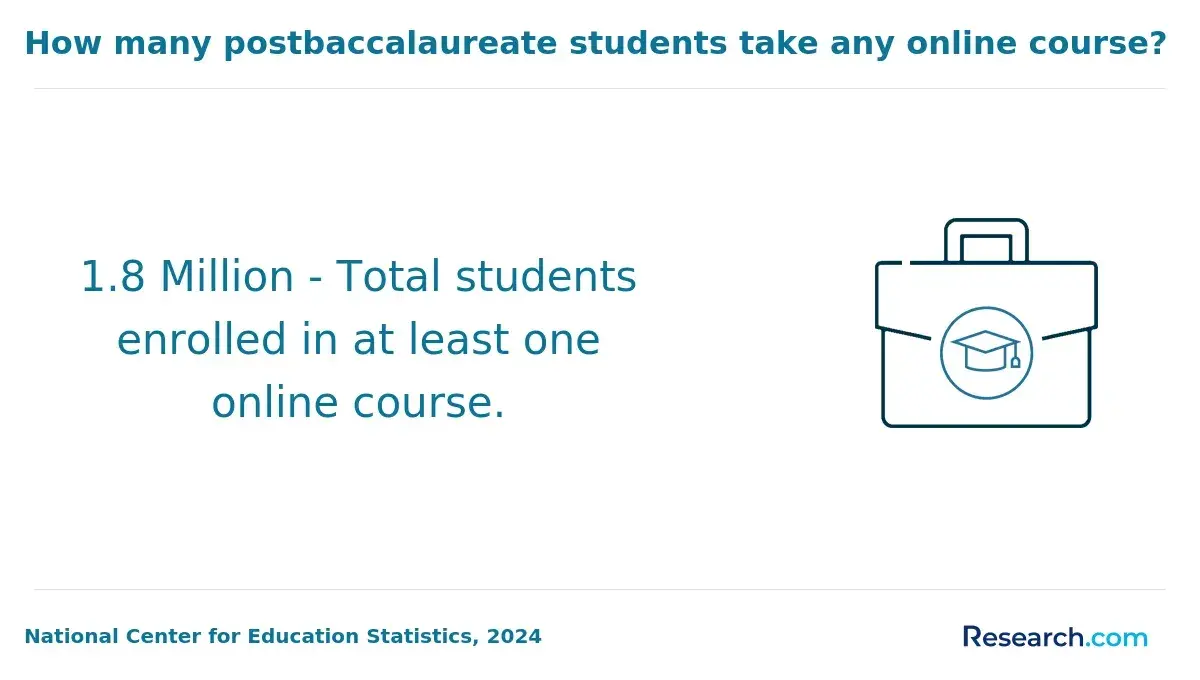
Online study can reduce commuting and relocation costs, but an online master's is not automatically cheaper or easier to schedule. Compare online fees with campus charges and confirm whether classes meet live, deadlines are fixed, and any residencies or placements require travel. For an older adult continuing to work, predictable course availability may matter as much as the tuition rate.
If speed is part of your cost calculation, comparisons of online masters programs can help frame questions about workload. Verify each school's actual credit requirements and schedule: finishing sooner may require an intensive course load or leave less time for paid work.
How Can Older Adults Verify Master's Program Accreditation?
Start with the institution: confirm its current accreditation through the U.S. Department of Education's accreditation database or the Council for Higher Education Accreditation directory. Then check whether your intended field requires or benefits from a separate programmatic accreditation or state approval. Institutional accreditation alone does not establish eligibility for a professional license.
For a regulated occupation, consult the licensing board in the state where you plan to practice and ask the program which requirements its curriculum satisfies. Verify the answer for your specific concentration and delivery format. Treat vague claims such as "prepares you for licensure" as a reason to seek written clarification before enrolling.
What Are the Admission Requirements for Older Adult Students?
Most master's programs require an earned bachelor's degree and transcripts. Programs may also evaluate GPA, prerequisite coursework, professional experience, recommendations, a statement of purpose, or an interview; test policies vary. Nursing, technical, and licensure-oriented programs can impose additional requirements. Ask graduate admissions and the department to review your preparation before budgeting for a program that might require foundation courses.
If a criminal record may affect your plans, distinguish admission from later clinical placement, licensing, and employment decisions. Guidance about college degrees for felons can inform an earlier education search, but graduate applicants should ask the intended program and relevant licensing board about their own requirements. Do not assume admission guarantees placement or licensure.
How Long Do Affordable Master's Degree Programs Take?
Completion time depends on required graduate credits, full- or part-time enrollment, course sequencing, and any thesis, capstone, internship, or clinical work. A short course term does not mean the whole degree is short. Ask for a term-by-term plan that accounts for how often required courses run; delayed graduation can increase fees and postpone the benefit you sought.
Claims about a 6-month master's degree online deserve particular scrutiny. Confirm what prior preparation, accepted graduate credit, and course load the timeline assumes. Previous undergraduate study ordinarily does not count as transferable master's-level credit unless an institution expressly provides such a pathway.
What Careers Can Older Adults Pursue After Graduate School?
A master's can support specialization, a career transition, research work, professional practice, or advancement within an existing field. The outcome depends on the occupation: an experienced teacher might pursue educational leadership, an IT worker might specialize in security, and a healthcare worker might develop administrative skills. Clinical roles can require licensure and supervised practice; management roles generally also require relevant experience.
Labor-market figures describe occupations, not what a particular degree's graduates earn. For example, the Bureau of Labor Statistics projects 29% growth in information security analyst employment from 2024 to 2034. That outlook may justify investigating cybersecurity, but it does not show that an MS is required for every opening or that its tuition will pay for itself. Compare postings for your target roles with your existing qualifications before enrolling.
What Financial Aid Helps Older Adults Pay for Graduate School?
Older age does not by itself rule out federal graduate aid. Complete the Free Application for Federal Student Aid (FAFSA) and review each school's offer, distinguishing grants and scholarships from loans that must be repaid. Federal loan eligibility and terms depend on current rules and your circumstances; check the applicable terms rather than assuming that aid will cover every expense.
Also ask employers about tuition assistance, service commitments, eligible fields, and reimbursement timing. Departments may offer assistantships or scholarships, although availability varies. Compare what you would personally pay through graduation - not just the size of an initial award - and account for any required reduction in working hours.
How Should Older Adults Choose a Reputable Master's Program?
Begin with the job or personal goal, then shortlist programs that meet its academic and, where relevant, licensing requirements. Obtain each program's published curriculum, accreditation information, and an individualized cost estimate. Ask for a transfer evaluation before relying on prior graduate coursework to lower the bill: accepted credits must also apply to the degree requirements, and programs may impose grade, age, equivalency, or residency rules.
Finally, compare realistic schedules, required in-person work, employer assistance, and the value of a less expensive alternative such as a certificate. Red flags include an unexplained total price, unclear placement arrangements, and promises of a promotion or salary based solely on graduation. The strongest choice is one you can complete and use for your specific goal at a cost you can justify.
Other Things You Should Know About
Generally, no. Check the program's academic and professional eligibility requirements rather than assuming age determines admission.
No field is consistently cheapest. Compare the complete cost of eligible programs, including prerequisites, fees, and placements, against the goal the degree must serve.
Usually not automatically. Experience may strengthen an application, but graduate credit requires a specific institutional policy and evaluation.
It can be if the program is reputable, fits your schedule, and advances a defined goal. Check the full cost and any in-person or licensing requirements before deciding.
References
- Cost of Attendance (Budget) | 2025-2026 Federal Student Aid Handbook https://fsapartners.ed.gov/knowledge-center/fsa-handbook/2025-2026/vol3/ch2-cost-attendance-budget
- Education And Career Benefits For Family Members | Veterans Affairs https://www.va.gov/family-and-caregiver-benefits/education-and-careers/
- Options for Financing Higher Education | Military OneSource https://www.militaryonesource.mil/education-employment/for-service-members/money-for-higher-education/
- DAPIP | Homepage - Office of Postsecondary Education (OPE) https://ope.ed.gov/dapip/
- Application Requirements and Deadlines | fitnyc.edu https://www.fitnyc.edu/admissions/graduate-applicants/application-requirements.php
- How Do Transfer Credits Work? A Guide for Adult Learners | Whitworth Online https://online.whitworth.edu/news-articles/how-do-transfer-credits-work-when-you-go-back-to-school/
- The Hidden Costs of College: What Adult Learners Should Compare Beyond Tuition | University of New Hampshire https://www.unh.edu/tipsguides/hidden-costs-college-what-adult-learners-should-compare-beyond-tuition
- What does college actually cost? | About the University of Cincinnati https://www.uc.edu/blog/hidden-costs-of-college.html
- How Much Does Grad School Cost? | UCLA https://www.ucla.edu/academics/graduate-benefits/how-much-does-grad-school-cost
- How Much Does a Master's Degree Cost? Tuition and Fees | bestcolleges.com https://www.bestcolleges.com/research/masters-degree-cost/