2027 Most Affordable Master's Degrees for White-Collar Jobs

Co-Founder and Chief Data Scientist
A low-cost master's degree can open a path to specialized work, but the cheapest tuition rate is not always the cheapest route to graduation. Demand also differs sharply by occupation: the U.S. Bureau of Labor Statistics (BLS) projects 34% employment growth for data scientists from 2024 to 2034. That outlook makes analytics worth examining, not automatically worth borrowing for.
This guide compares career-focused degree fields, explains the costs that change their affordability, and helps working professionals and career changers decide when graduate study is a better investment than another credential or more experience.
Key Things You Should Know
- Compare total program cost, not tuition per credit: required credits, fees, prerequisites, and travel can change which option is cheapest.
- An MBA, information technology MS, or engineering management MS may support advancement, but management jobs generally also require substantial experience.
- Licensure-oriented counseling, education, and nursing degrees require closer scrutiny: a low price is little value if the program does not meet the requirements for your intended state or role.
Top 10 Most Affordable Master's Degrees for White-Collar Jobs - Affordable Degree Rankings
Business / MBA Programs
A Master of Business Administration (MBA) is a professional degree suited to people seeking broader business responsibilities. Affordable options often come from public universities or programs with fewer required credits, but compare differential tuition, fees, and any foundation courses. An MBA may be less cost-effective for someone who needs one technical skill rather than broad management training. Check whether the curriculum offers useful concentrations and whether the schedule permits continued employment. The degree alone does not qualify a new graduate for a management position; relevant experience still matters.
Healthcare Administration & Management Programs
A Master of Healthcare Administration (MHA) or healthcare management MS prepares students for operational, financial, and policy work in healthcare organizations. Applicants may come from clinical or nonclinical backgrounds, although some programs favor professional experience. Compare required internships and healthcare-specific fees alongside tuition; an unpaid placement can increase the effective cost. An MHA is generally a better fit than a clinical degree for someone targeting administration rather than patient care. Leadership roles typically require experience, and requirements for regulated clinical work remain separate.
Information Technology Programs
An information technology MS commonly emphasizes systems, cloud infrastructure, databases, or technology operations. It can suit an experienced IT worker seeking specialization or a career changer whose program offers appropriate foundation courses. Those prerequisites can erase an apparent tuition advantage, so request a degree plan based on your transcript. Compare hands-on projects, lab access, and employer-relevant coursework, not just the credential's name. For a narrow skills gap, a shorter credential may cost less than a full master's degree.
Computer Science Programs
A computer science MS typically develops advanced software, algorithms, or computing expertise and may offer a research thesis or professional project track. Applicants without substantial programming and mathematics preparation may need bridge coursework before graduate classes. That extra time and tuition matter when comparing prices. Choose a research track if doctoral study is a serious goal; a project-based track may better serve applied development work. Neither path guarantees a software job, so evaluate your existing skills and the program's portfolio opportunities.
Cybersecurity Programs
A cybersecurity MS may cover network defense, risk management, digital forensics, or security policy. The least expensive appropriate option depends on the job: a technical security role may require stronger computing preparation than a governance-focused degree provides. Compare required labs, software, and prior-course requirements when estimating cost. Many security positions also value relevant work experience and certifications. If you already work in IT, ask whether a focused graduate certificate would address your target role without the expense of a full master's program.
Data Science / Analytics Programs
A data science or analytics MS can combine statistics, programming, and applied projects. Business analytics degrees may emphasize organizational decisions, while data science degrees often demand deeper quantitative preparation. Check prerequisite mathematics and coding courses before comparing advertised graduate tuition: a bridge sequence can substantially raise the final bill. Review the quality of project work and access to real datasets. For applicants who mainly need basic reporting skills, targeted training may be more economical than an entire graduate degree.
Education / Educational Leadership Programs
A Master of Education (MEd) may support curriculum work, instructional specialization, or educational leadership; these are not interchangeable career paths. Leadership or administrator-licensure tracks may require a teaching credential, experience, and supervised fieldwork. State requirements should determine your shortlist before price does. Ask whether a school-district partnership or employer benefit reduces tuition, and account for placement time when comparing online programs. An inexpensive degree that does not meet your state's credential requirements is unlikely to be a bargain.
Counseling / Psychology Programs
A counseling MA or MS designed for professional licensure usually includes supervised practica and internships, which can limit paid work and add travel costs. A general psychology master's may instead emphasize research and may not meet counseling-licensure requirements. Verify your state board's educational rules and the program's placement support before comparing tuition. Some psychologist roles require doctoral education, so do not assume a psychology master's qualifies you to practice independently. For a licensure goal, eligibility matters more than a small difference in sticker price.
Nursing Programs
A Master of Science in Nursing (MSN) can prepare eligible registered nurses for roles in education, leadership, or advanced practice. Admission and clinical requirements depend heavily on the track; some pathways require an active RN license, a particular nursing degree, or specific experience. Compare clinical placement obligations, fees, and travel as well as tuition. Advanced-practice eligibility involves separate certification and state licensure requirements. An inexpensive leadership MSN is not a substitute for a nurse practitioner track if advanced clinical practice is your goal.
Engineering Management Programs
An engineering management MS blends technical project work with finance, operations, and leadership. It often suits engineers who want broader responsibility without pursuing a general MBA, although programs differ in how much engineering preparation they require. Compare prerequisites and employer tuition assistance when judging affordability. A thesis-free professional track may fit someone working full time; a research-oriented option serves a different purpose. Neither the degree nor its price replaces the technical track record usually expected for engineering management roles.
What Are the Most Affordable Master's Degrees for White-Collar Careers?
There is no universally cheapest master's degree field. Among these options, professionally oriented MBA, IT, education, and engineering management degrees may be economical when a public institution offers a short, relevant curriculum without extra foundation or placement requirements. Counseling, nursing, and licensure-oriented education can cost more to complete even when their published tuition looks competitive.
The comparison below identifies the cost variable most likely to change each field's value. It compares degree types - not individual colleges or verified school prices.
| Degree family | Cost factor to check first | Best fit when |
| MBA or engineering management | Required credits and differential tuition | You have experience and seek broader responsibility |
| IT, computer science, or analytics | Foundation and bridge courses | You need specialized technical capability |
| Education, counseling, or nursing | Fieldwork, clinical, and licensure-related costs | The specific track meets your professional goal |
If you have not yet completed a bachelor's degree, start by comparing a cheap bachelor degree online; standard master's admission requires a completed bachelor's degree. If you already qualify for graduate admission, request an individualized cost estimate rather than assuming the cheapest advertised rate wins.
Which Affordable Master's Degrees Offer the Best Salary Potential?
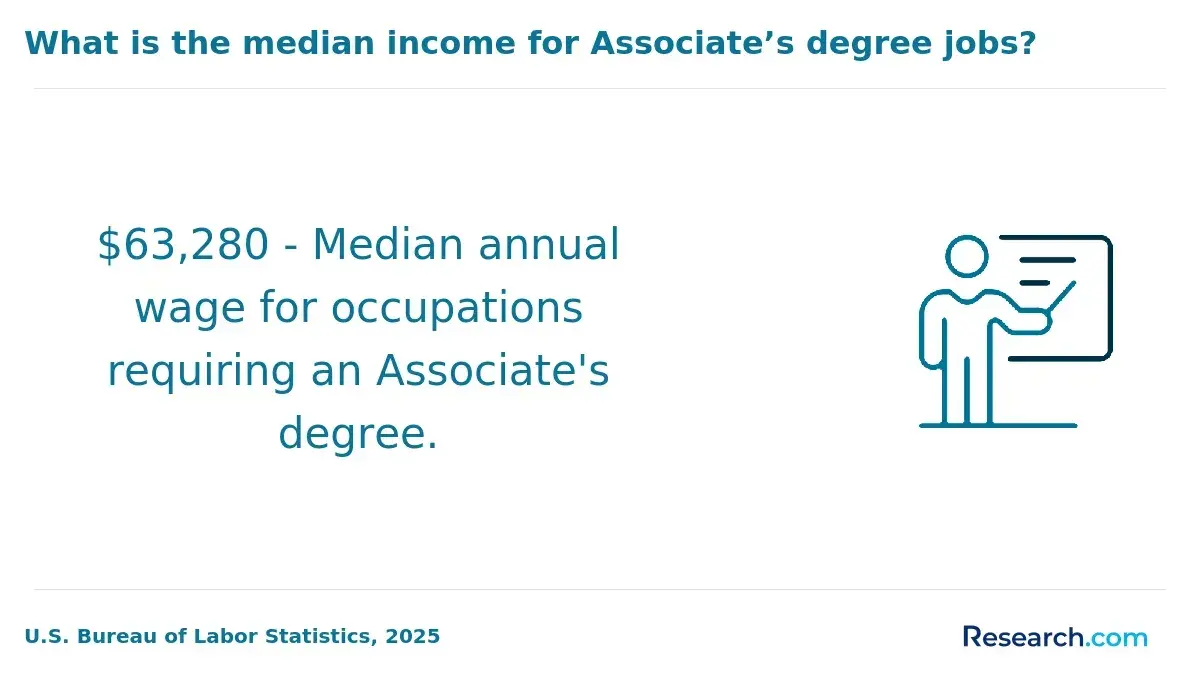
Computer science, cybersecurity, analytics, healthcare administration, and engineering management can connect to well-paid occupations, but occupational wages are not the salaries of master's graduates. For example, BLS reports a May 2024 median annual wage of $124,910 for information security analysts. That figure describes workers across education and experience levels; many roles require relevant experience, and a master's degree is not generally the sole entry requirement.
Assess salary potential against the incremental value of graduate study: Will the degree supply a required credential, enable a credible career change, or develop skills your employer rewards? If your target job values a narrower credential, compare best certifications for jobs before committing to graduate tuition. A higher-paying occupation is not, by itself, evidence that a particular master's program will pay for itself.
How Much Do Affordable Master's Degree Programs Cost?
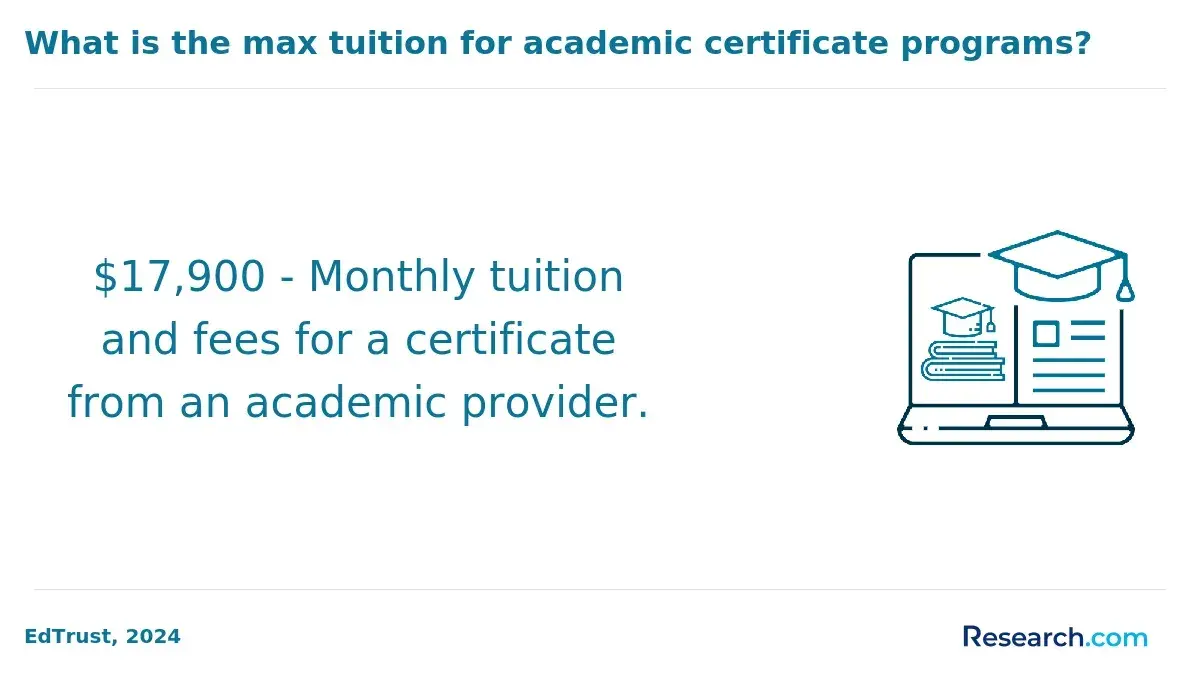
The relevant price is the amount needed to finish the degree, not the first term's bill or the advertised per-credit rate. Published tuition is a starting point; total program cost includes required charges, while your net cost depends on aid or employer contributions. For each school, obtain a written estimate based on your residency status, enrollment pace, and intended track.
These components explain why two programs with similar tuition rates can have very different final costs:
- Academic charges: Required graduate credits multiplied by the applicable tuition rate, plus mandatory, technology, and program-specific fees.
- Additional requirements: Prerequisite courses, materials, examinations, residencies, and travel or placement expenses.
- Financing and opportunity costs: Interest on borrowing and any earnings reduced by internships, clinical hours, or a heavier course load.
Ask about scholarships, assistantships, employer tuition assistance, and federal aid eligibility. If you have previous graduate coursework, request a formal evaluation: credits that transfer to the institution do not necessarily satisfy your degree requirements. Approved credits may reduce tuition and time, subject to program and residency-credit rules.
Which Affordable Master's Degrees Lead to In-Demand Jobs?
Among the fields covered here, analytics, cybersecurity, and healthcare administration connect to occupations with strong projected demand. BLS projects 23% employment growth for medical and health services managers from 2024 to 2034. That projection supports investigating healthcare management, but it does not mean an MHA graduate can enter a manager role without relevant experience.
Use occupational projections to identify promising roles, then read actual job postings for the credentials, technical skills, and experience employers request. A business or education degree may still be the better investment if it advances you within an employer or satisfies a specific credential requirement. Demand for an occupation does not establish demand for every graduate degree associated with it.
Are Online Master's Degrees More Affordable Than Campus Programs?
Online study can lower commuting or relocation expenses and help you keep working. It is not automatically cheaper: schools may charge the same tuition across formats, add online fees, or require scheduled sessions and in-person placements. Compare the complete price and calendar for online, hybrid, and campus versions of the same intended degree whenever possible.
For counseling, nursing, and some education tracks, ask where required fieldwork occurs and who arranges it. For technical degrees, check whether remote students can access the needed labs and software. If you are testing a new field before paying for a master's degree, relevant online courses may be a lower-commitment first step, though course completion does not replace a degree or license where one is required.
What Accreditation Should Affordable Master's Programs Have?
Start by confirming that the institution holds recognized institutional accreditation. Then check whether your target occupation, state board, or employer expects programmatic accreditation or a specific approved curriculum. This is especially important for counseling, nursing, and educator or administrator preparation; the relevant standard depends on the credential and state.
Do not assume an accredited university's every master's track qualifies graduates for every license. Ask the program which states its curriculum is designed to serve, then confirm the answer with the board responsible for your intended credential. For other fields, weigh accreditation alongside curriculum quality, total cost, and employer relevance rather than treating it as proof of career outcomes.
What Are the Admission Requirements for Affordable Master's Programs?
Most master's programs require a completed bachelor's degree, transcripts, and an application. A particular program may also require prerequisite courses, a minimum GPA, recommendations, a statement of purpose, professional experience, or an interview. GRE or GMAT policies vary; never infer a graduate program's policy from undergraduate admissions information.
Preparation affects affordability. A computer science or analytics applicant may need additional mathematics or programming courses; an MSN applicant may need an RN license and nursing background. Ask admissions to identify every course required before or after entry and whether conditional admission is possible if you lack a prerequisite. Count those requirements in the cost comparison before accepting an offer.
How Long Do Affordable Master's Degree Programs Take?
Completion time depends on required credits, course sequencing, enrollment intensity, and culminating requirements - not simply whether courses are accelerated. A full-time student in a coursework-focused program may finish sooner than a part-time student in a practicum or thesis track, while an extra foundation sequence can delay either student. Ask for a term-by-term plan based on the courses you actually need.
Flexible entry can help you begin sooner, but online schools with multiple start dates are not necessarily faster to graduate. Confirm when required graduate courses run and whether a capstone, internship, or clinical placement can begin on your preferred schedule. If you hold eligible graduate credit or a stackable certificate, obtain written confirmation of what applies before relying on an advertised timeline.
How Can You Choose a Reputable Affordable Master's Program?
Choose the lowest-cost suitable program, not the lowest number on an advertisement. First define the job or credential you want; then compare programs that can realistically support it. This sequence helps prevent an expensive mismatch:
- Confirm the institution's accreditation and, for regulated roles, verify the specific program against your intended state's requirements.
- Request a degree plan showing prerequisites, required credits, transfer evaluations, fieldwork, and likely completion time.
- Compare written estimates of tuition, mandatory fees, travel, materials, and financing costs after applicable assistance.
- Ask what graduates do, what experience employers expect, and whether a certificate or work-based training would meet your goal for less.
Watch for vague claims such as "fully online" without an explanation of placements, or "affordable" without a full fee schedule. If a school cannot clarify essential costs or licensure eligibility, keep comparing before you enroll.
Other Things You Should Know About
No field is consistently cheapest. Compare the total cost of accredited programs that match your career goal, including credits, fees, prerequisites, and required in-person work.
It may be if its curriculum supports a specific advancement goal and you can limit borrowing. For a narrow technical skills gap, a certificate or focused training may be more cost-effective.
Sometimes, but online delivery does not establish licensure eligibility. Check the exact program, required placements, and your intended state board's rules before enrolling.
Not necessarily. Pay depends on the occupation, employer, location, skills, and experience. Compare the degree's full cost with the qualifications your target jobs actually require.
References
- How many years of experience do I need to qualify for a job? | usajobs.gov https://help.usajobs.gov/faq/application/qualifications/experience
- An Overview of Accreditation of Higher Education in the United States | Congress.gov | Library of Congress https://www.congress.gov/crs-product/R43826
- Fastest Growing Occupations | bls.gov https://www.bls.gov/ooh/fastest-growing.htm
- Types of Financial Aid: Grants, Work-Study, and Loans | studentaid.gov https://studentaid.gov/understand-aid/types
- Trends in Student Loan Debt for Graduate School Completers | ed.gov https://nces.ed.gov/programs/coe/indicator/tub/graduate-student-loan-debt
- Accreditation in the U.S. | ed.gov http://www.ed.gov/laws-and-policy/higher-education-laws-and-policy/college-accreditation/accreditation-in-the-us
- General Schedule Qualification Policies | U.S. Office of Personnel Management https://www.opm.gov/policy-data-oversight/classification-qualifications/general-schedule-qualification-policies/
- Public vs. Private vs. Non-Profit Colleges | Goodwin University https://www.goodwin.edu/enews/choosing-a-college-public-private-non-profit-schools/
- Tuition & Fees - University & Student Business Services | The University of Memphis https://www.memphis.edu/usbs/fees/
- The W Online Tuition & Costs | Mississippi University for Women https://www.muw.edu/online/costs/