2027 Best Associate Degrees With No SAT or ACT Requirement

Co-Founder and Chief Data Scientist
Skipping the SAT or ACT can simplify the path to an associate degree, but it does not tell you whether a program fits your career goal - or whether its major has separate admissions rules. The College Board reported average published tuition and fees of $4,050 for in-district students at public two-year colleges in 2024-25. That makes these programs worth exploring, but tuition is only part of the decision. This guide compares six degree fields, explains what colleges may require instead of test scores, and shows how to check cost, transferability, and career eligibility before you apply.
Key Things You Should Know
- Many associate degrees require roughly 60 credits; a no-SAT/ACT policy removes an admissions test, not coursework, placement, or major-specific requirements.
- Choose an AA or AS with a verified transfer pathway if a bachelor's degree is the goal; compare AAS programs by the training and credentials needed for a specific job.
- Nursing and allied-health applicants should check selective admission separately from college admission. For context - not a graduate earnings promise - the U.S. Bureau of Labor Statistics (BLS) reports a 2024 median wage of $93,600 for registered nurses.
Top 10 Best Associate Degrees With No SAT or ACT Requirement
Business Programs
A business administration AA or AS can cover accounting, economics, and management while preparing students to transfer. A business AAS may emphasize bookkeeping, office operations, or applied software skills for earlier workforce entry. Neither route automatically qualifies a graduate for management work; experience matters. Compare the required courses with local entry-level job postings, and ask a prospective transfer university whether business credits will satisfy major requirements rather than transfer only as electives.
Healthcare Programs
Healthcare choices range from transfer-oriented health sciences to career-focused dental hygiene, radiography, and diagnostic medical sonography. These are not interchangeable: career programs may require prerequisites, competitive applications, laboratories, clinical placements, and a program-specific accreditation review. College-wide admission without SAT or ACT scores does not guarantee a clinical-program seat. Before applying, confirm placement availability, additional fees, and whether graduates are eligible for the certification or state license required for the intended role.
Information Technology Programs
IT associate degrees commonly cover networking, programming, databases, or technical support. An AS may prioritize transferable computing and mathematics courses; an AAS may focus more on applied labs and entry-level technical skills. Employers may also value a project portfolio, experience, or industry certification. Ask which software and equipment students use, whether required labs are remote or on campus, and how credits apply to a bachelor's program if that is your longer-term plan.
Nursing / Pre-Nursing Programs
An associate degree in nursing (ADN) can provide an educational route toward registered-nurse licensure, but admission to the college and admission to its nursing cohort are separate decisions. Nursing programs may assess prerequisite grades, a nursing entrance exam, background checks, and clinical eligibility even when SAT and ACT scores are unnecessary. Graduates must meet state board rules and pass the NCLEX-RN before practicing as registered nurses. A pre-nursing AS is different: it supplies preparatory coursework, not an RN credential.
Criminal Justice Programs
Criminal justice AA, AS, and AAS programs can introduce courts, corrections, policing, and research methods. A transfer-focused degree may suit students planning a bachelor's; an applied program may fit those exploring entry-level public safety or administrative roles. An associate degree does not replace police academy training, agency hiring standards, background screening, or other role-specific requirements. Check the rules of the agencies where you hope to work before choosing electives.
Psychology / Counseling Programs
Psychology AA and AS programs are usually starting points for transfer, with coursework in human behavior, statistics, and research. An applied human-services program may support entry-level aide or support work, depending on the employer. Neither an associate degree in psychology nor one in counseling qualifies a graduate to practice independently as a licensed counselor or psychologist. If licensure is the goal, map the required later degrees and supervised experience before enrolling.
What Are the Best Associate Degrees That Do Not Require SAT or ACT Scores?
The best choice is the degree field that meets your goal without making SAT or ACT scores an admissions barrier. Compare the program's own entry rules first, then its accreditation, total cost, transfer fit, and requirements for the job you want. There is no defensible single winner across students with different goals.
This comparison separates degrees that primarily prepare students to transfer from those that may prepare them for a defined occupation. Individual colleges can structure the same field differently.
| Degree field | Strongest fit | Decision-critical check |
| Business | Transfer or broad entry-level business preparation | Will credits satisfy a bachelor's business major? |
| Healthcare | Training for a specified allied-health role | Does the program meet certification or licensure eligibility rules? |
| Information technology | Technical entry-level skills or computing transfer | Are labs, projects, and courses aligned with the intended role? |
| Nursing or pre-nursing | RN preparation through an ADN, or prerequisites through pre-nursing | Is nursing-cohort admission separate, and is the ADN board-approved? |
| Criminal justice | Public-safety exploration or transfer | What additional agency training or hiring standards apply? |
| Psychology or counseling | Transfer toward further study | How much education is required for the eventual occupation? |
Salary-focused comparisons, including lists of most profitable degrees, can help frame a long-term education plan. They should not substitute for checking whether an associate-level credential actually opens the intended job.
Which Colleges Offer Accredited Associate Degrees Without SAT or ACT Requirements?
Colleges with associate-degree offerings and general admissions routes that do not ordinarily require SAT or ACT scores include Dallas College, Northern Virginia Community College (NOVA), and Southern New Hampshire University (SNHU). Dallas College offers career and transfer pathways; NOVA offers associate programs designed for both purposes; SNHU offers online associate options. These are examples to investigate, not a ranking or a claim that every major at each school has identical admission rules.
Verify the current policy for your exact degree, applicant category, and start term directly with admissions. In particular, ask Dallas College about Texas Success Initiative placement rules; ask any college offering nursing or allied health whether its separate application requires an entrance exam. Confirm institutional accreditation through the accreditor or the U.S. Department of Education's accreditation records, then check any occupation-specific program approval.
If remote study matters, a list of good online colleges can provide additional schools to investigate. Do not infer from an online listing that a particular associate major is fully online or that it meets your state's licensing rules.
What Admission Requirements Replace SAT or ACT Scores for Associate Degree Programs?
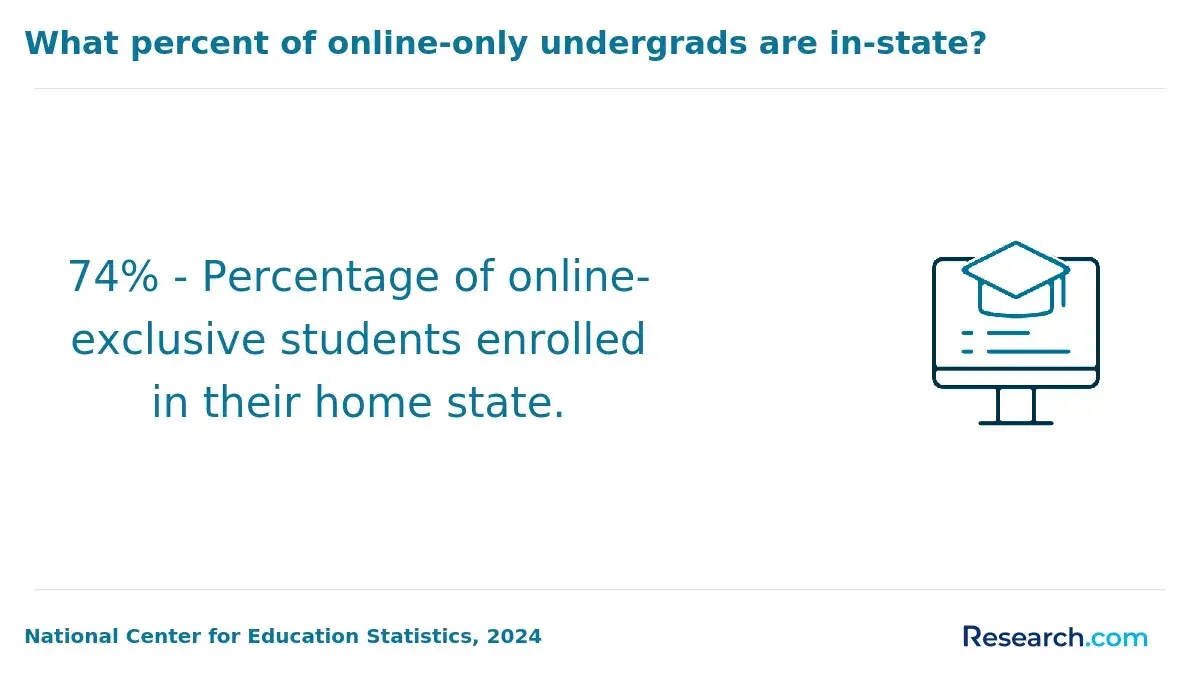
"No SAT or ACT requirement" generally means those scores are not needed for general college admission. It does not mean admission requires no documentation or that every applicant can enter every major immediately.
Schools may instead request a high school transcript or equivalent, an application, and evidence of English or mathematics readiness. Placement can rely on prior coursework, grades, college credits, a school-specific assessment, or state-required measures. Selective programs may additionally consider prerequisite grades, a minimum GPA, an entrance exam unrelated to the SAT or ACT, an interview, or clinical eligibility.
Before paying an application fee, ask: "Are SAT or ACT scores required for college admission, for this associate program, or for course placement?" Getting three separate answers prevents the common mistake of treating an open-admission college as an open-admission nursing program.
How Long Do Associate Degrees Without Test Scores Take to Complete?
Many associate programs are built around roughly 60 semester credits and can take about two years of full-time study. Part-time enrollment, unavailable courses, developmental work, and sequenced prerequisites can extend that timeline. Clinical cohorts may also have fixed start dates and required rotations; previously earned credits can shorten a path only if the college accepts them and applies them to remaining degree requirements.
Ask an adviser for a term-by-term plan showing prerequisites, major courses, general education, and the expected graduation term at your course load. Short individual classes do not make the whole degree an accelerated degree. Likewise, 1 year online masters are graduate-level options requiring prior education, not faster versions of an associate pathway.
Should You Choose an Online or Campus-Based Associate Degree Program?
Choose online study when the exact major is offered remotely and its schedule fits your life - not simply because the college advertises online courses. An online IT or business program may still use scheduled meetings, fixed deadlines, or proctored assessments. Nursing and allied-health programs normally require in-person clinical work even when some lectures are online.
Campus study can make equipment, labs, and face-to-face support easier to access, but travel and class times add costs. Hybrid study may balance those needs. Compare the required attendance pattern, evening or part-time availability, and clinical travel with your work schedule before applying.
What Coursework Do Students Complete in These Associate Degree Programs?
Most associate curricula combine general education - often writing, mathematics, and social or natural sciences - with courses in the major. Business students may take accounting; IT students may complete programming or networking labs; psychology students may study research methods. An applied healthcare degree can add anatomy prerequisites, supervised practice, and clinical assessments.
The degree label is a clue, not a transfer guarantee: AA and AS degrees often emphasize transfer, while an AAS often emphasizes workforce preparation. Request the course map and, if transfer is your goal, check an articulation agreement and the destination university's major requirements. Credits accepted by a university may still count only as electives.
What Careers and Salaries Can Associate Degrees Without Test Scores Lead To?
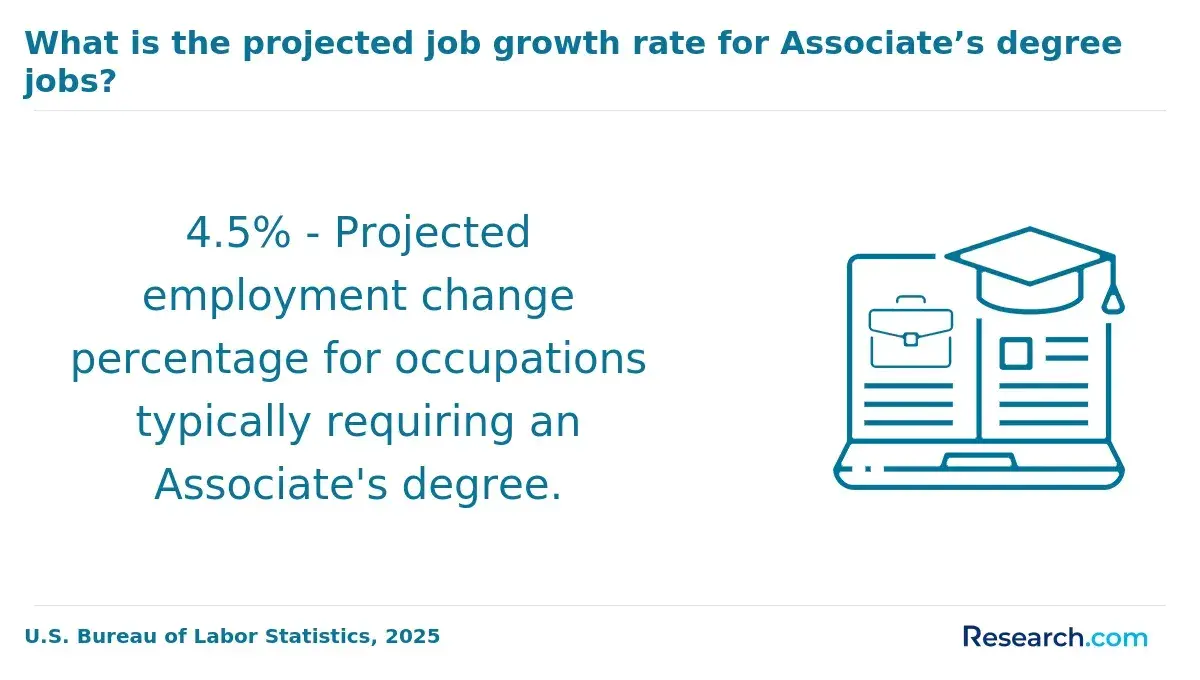
Career prospects depend on the specific program and occupation, not on whether applicants submitted test scores. For regulated clinical roles, the degree is one step toward eligibility; examination and licensing rules still apply.
The following BLS figures are 2024 U.S. occupational median annual wages for workers across experience levels. They are not expected starting salaries or measured earnings of graduates from the programs discussed here.
| Occupation | 2024 median annual wage | What an associate-degree applicant must check |
| Registered nurse | $93,600 | Approved nursing education and state RN licensure, including the NCLEX-RN |
| Dental hygienist | $94,260 | Accredited dental hygiene education and state licensure |
| Diagnostic medical sonographer | $89,340 | Employer credential expectations and applicable state requirements |
Business, IT, and criminal justice degrees connect to a wider range of jobs, so one occupational wage would misrepresent their likely outcomes. Psychology and counseling associate degrees usually provide a foundation for further study rather than independent clinical practice. If your eventual goal is criminal justice research or college teaching, an online PhD criminal justice no dissertation is a much later educational option - not a requirement for typical entry-level work.
Which Associate Degree Careers Have Strong Job Outlooks and Industry Demand?
Demand is strongest as a decision factor when you can connect a program to an identifiable occupation. BLS projects employment of diagnostic medical sonographers to grow 13% from 2024 to 2034. That supports investigating sonography, but projected national growth does not guarantee an opening in your area or admission to a local clinical program.
Healthcare employers also hire registered nurses and dental hygienists, while IT employers need technical skills that can change as tools and automation evolve. Compare local postings with the program's labs, clinical training, and certification preparation. For broad fields such as business or psychology, identify a target role first; an occupation-specific certificate, apprenticeship, or bachelor's pathway may fit better than an associate degree alone.
How Can You Verify Accreditation, Licensing, and Certification Requirements?
Accreditation and licensing are separate checks. Institutional accreditation concerns the college; programmatic accreditation or state board approval may determine whether a healthcare graduate can pursue a particular exam or license. A school's "no SAT/ACT" claim does not answer either question.
Before enrolling, complete these checks in order so you do not spend tuition on credits that miss your goal:
- Confirm the college's current institutional accreditation with its accreditor or the U.S. Department of Education, then verify that accreditation covers the institution offering the degree.
- For a regulated career, ask the relevant state board and credentialing organization which program approvals, exams, and clinical experiences they require.
- Request written confirmation of the major's admissions rules, required in-person components, and your eligibility as an online or out-of-state student.
- Compare the full estimated cost - including mandatory fees, equipment, travel, and exam expenses - and obtain a transfer-credit evaluation or articulation plan before committing.
For cost context, the College Board's 2024-25 in-district public two-year tuition-and-fees average does not include every expense above. Ask about grants, scholarships, payment plans, and federal aid eligibility, but compare the amount you would actually need to pay or borrow - not tuition alone.
Other Things You Should Know About
Many community colleges do not require them for general admission. Check the current policy for your college and major; placement or a selective program may have separate assessments.
No. A nursing or allied-health program may require its own entrance exam, and a college may assess course placement through testing or other measures.
It can be. Verify institutional accreditation, the exact program's delivery requirements, and any program approval needed for your intended occupation or state license.
Start with your goal. An AA or AS may be better structured for transfer; an AAS often emphasizes job-specific training. Confirm how the actual courses meet your intended university's or employer's requirements.
References
- Types of student financial aid | USAGov https://www.usa.gov/student-aid
- Types of Aid and Eligibility | Federal Student Aid https://financialaidtoolkit.ed.gov/tk/learn/types.jsp
- Occupation Finder: Occupational Outlook Handbook | bls.gov https://www.bls.gov/ooh/occupation-finder.htm
- An Overview of Accreditation of Higher Education in the United States | congress.gov https://www.congress.gov/crs-product/R43826
- Price of Attending an Undergraduate Institution - COE https://nces.ed.gov/programs/coe/indicator/cua/price-of-attending-an-undergraduate-institution
- DAPIP | Homepage - Office of Postsecondary Education (OPE) https://ope.ed.gov/dapip/
- 10 Growing Jobs That Pay Well and Don't Need a 4-Year Degree | U.S. Department of Labor https://beta.dol.gov/news-events/blog/10-growing-jobs-pay-well-and-dont-need-4-year-degree
- Tuition & Fees | State University System of Florida https://www.flbog.edu/universities/parents-students/tuition-fees/
- Freshman Admission Requirements | Florida Atlantic University https://www.fau.edu/admissions/freshman/how-to-apply/admissions-requirements/
- With an AA/AS transfer degree | AAS Pathways https://transfer.appstate.edu/prospective-students/transfer-advising/north-carolina-community-college-students/aaas-transfer