
2027 Best Associate Degrees With No Live Class Requirement

Co-Founder and Chief Data Scientist
Need a degree without rearranging work or family life around live lectures? An asynchronous associate program can let you study on your own schedule, but "online" does not always mean "no live classes." Cost matters, too: College Board reported average published tuition and fees of $4,050 for in-district students at public two-year colleges in 2024-25, before books and living expenses. This guide compares degree fields by scheduling flexibility, online completion requirements, cost, transfer value, and career fit so you can identify the right path - and know what to confirm before enrolling.
Key Things You Should Know
- Business, IT, criminal justice, and psychology are strong fields to investigate for asynchronous study; confirm that every required course, orientation, and exam has a no-live-attendance option.
- "No live classes" does not mean "no deadlines" or "fully remote." Nursing and some healthcare paths may require scheduled labs, clinical placements, or on-site assessments.
- Many associate degrees require about 60 credits. Compare the complete course schedule and total cost - not just a program's online label or per-credit tuition.
Top 10 Best Associate Degrees With No Live Class Requirement
Business Programs
Business administration AA or AS programs suit students planning to transfer; an AAS in accounting or business operations may emphasize workforce skills. Readings, recorded lessons, and case studies often lend themselves to asynchronous delivery. Compare required group projects and presentation formats: a program may teach online yet require live team meetings. Choose accounting if you want a focused entry-level skill set; choose a transfer-oriented business degree if a bachelor's is your goal. Neither path alone typically qualifies you for management positions.
Healthcare Programs
Health information technology and medical coding are worth investigating if you want healthcare coursework without routine patient-care clinicals. Verify whether required courses, coding assessments, and any internship can be completed without live class meetings. An applied science degree may support workforce entry, while a health sciences AS may be better for transfer. Avoid assuming that "online healthcare" means no in-person requirements: allied-health programs involving patients commonly require supervised practice, and credential eligibility depends on the specific program.
Information Technology Programs
IT support, networking, and cybersecurity associate programs may use recorded demonstrations and virtual labs rather than live lectures. Check whether labs are available anytime and whether exams require scheduled remote or campus proctoring. An AAS can emphasize practical troubleshooting; an AS may offer a clearer bachelor's transfer route. For an entry-level support goal, compare hands-on labs and employer-recognized certification preparation. Cybersecurity coursework is valuable, but the degree alone does not usually make someone ready for a senior security role.
Nursing / Pre-Nursing Programs
A pre-nursing AA or AS can sometimes offer asynchronous general education and science lectures, but science labs may be scheduled or in person. An associate degree in nursing is different: supervised clinical experience and skills assessments are integral, even when theory courses are online. If you need absolutely no scheduled attendance anywhere, nursing is unlikely to fit. If you only need to avoid live classes, ask programs for separate lecture, lab, and clinical schedules. Pre-nursing coursework does not guarantee admission to a nursing program.
Criminal Justice Programs
Criminal justice AA, AS, and AAS programs can cover law, corrections, and public safety through asynchronous readings and written assignments. A transfer-focused degree may suit students planning further study; an applied program may emphasize workplace procedures. Check whether simulations, internships, or capstone presentations have fixed meeting times. This degree can support applications for some public-safety and administrative roles, but police hiring and academy training follow separate employer and state requirements. It is not a substitute for those steps.
Psychology / Counseling Programs
A psychology AA or AS is generally a transfer foundation, not a qualification to practice counseling. Research methods and introductory psychology may work well asynchronously; check whether statistics, presentations, or a practicum add scheduled sessions. This path makes the most sense if you have a realistic bachelor's - and possibly graduate-school - plan. If you want to enter the workforce sooner, compare related human-services AAS programs, but verify placement requirements and the specific jobs they prepare students to pursue.
What Are Associate Degrees With No Live Class Requirement?
An associate degree with no live class requirement allows students to complete required instruction without attending real-time lectures or discussions. Typically, students access recorded materials and submit work by deadlines. The distinction is important: asynchronous does not mean self-paced, and it does not rule out scheduled exams, group work, campus visits, or local placements.
If controlling your weekly study hours is the priority, compare assignment deadlines and term schedules alongside online self paced colleges. Ask for a sample syllabus from a required course; it is more useful than an "online" label when determining whether the schedule fits your life.
Which Associate Degrees Can You Complete Entirely Online?
Business, IT, criminal justice, and psychology are plausible choices for entirely online study because their required work can often be delivered digitally. Health information programs may also qualify. No degree field is automatically fully online: completion depends on the college's exact curriculum, course availability, exam rules, and any experiential requirements.
The comparison below separates fields that are promising for a no-live-class search from paths that need closer scrutiny. It describes common delivery considerations, not a guarantee about any particular school.
| Degree field | What may fit asynchronous study | Requirement to check carefully |
| Business | Recorded lessons and independent assignments | Live presentations or group meetings |
| Information technology | Virtual labs and independent projects | Lab access windows and proctored exams |
| Criminal justice | Readings, discussions, and written work | Internships or scheduled simulations |
| Psychology | Lectures, research, and written assignments | Statistics exams or practicum requirements |
| Health information | Digital records and coding coursework | Required experience or credential-related rules |
| Nursing | Some online theory coursework | Scheduled labs, clinicals, and skills assessments |
A fully online academic program can still have fixed weekly deadlines. Conversely, a program with no live lectures might require an in-person clinical placement. Get both answers in writing if either condition would prevent you from enrolling.
How Much Do Online Associate Degrees Cost and How Long Do They Take?
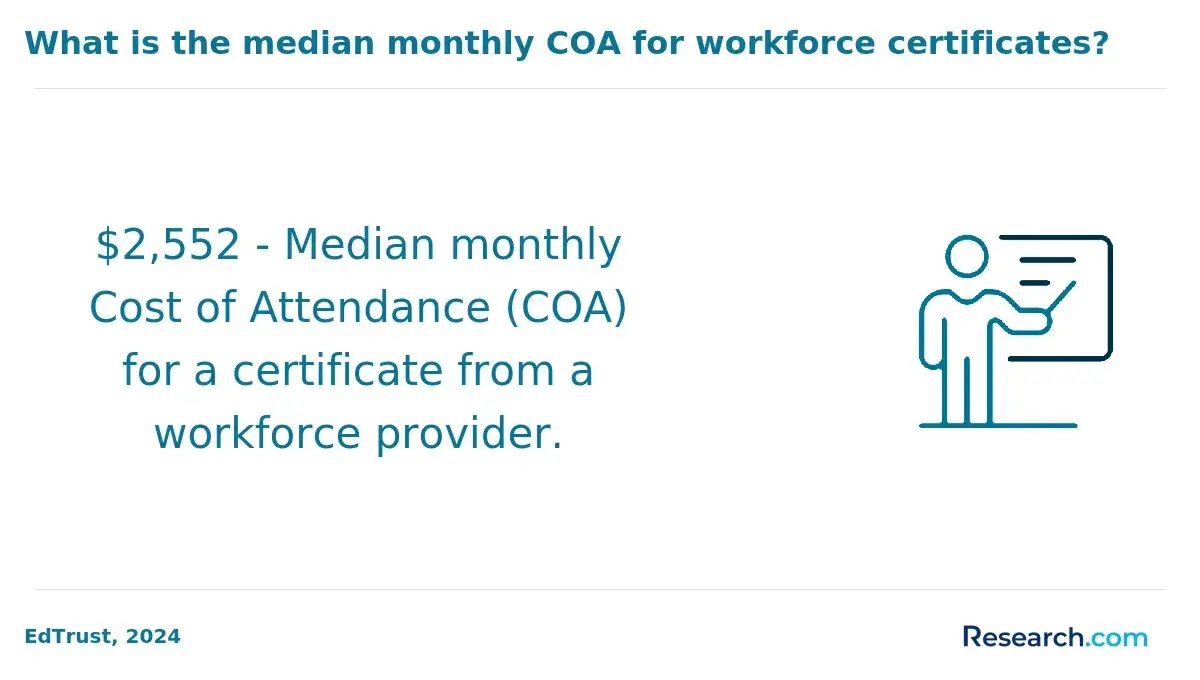
Many associate degrees require about 60 credits and can take roughly two years of full-time study. Part-time enrollment, course sequencing, prerequisites, and limited course offerings can extend that timeline; accepted transfer credit may shorten it. Shorter academic terms do not, by themselves, shorten the entire degree.
College Board's 2024-25 figure of $4,050 represents average annual published tuition and fees for in-district students at public two-year colleges - not the total price of a degree or an individual college's bill. Residency status, online fees, books, technology, proctoring, and any placement-related expenses can change the comparison. Ask each college for an estimate based on your remaining credits and expected enrollment pace, then compare financial aid eligibility and any employer assistance. If further education is part of your plan, consider the full pathway: even the most affordable online masters will not offset time and money spent on associate credits that do not apply to your intended bachelor's degree.
What Admission Requirements Apply to Online Associate Degree Programs?
Colleges commonly request an application, proof of high school completion or an equivalent credential, and transcripts from previous colleges. Placement into math or English may depend on school policy and prior coursework. Requirements can differ within the same institution: admission to a college does not establish eligibility for a selective nursing or allied-health major.
If you have prior credits, request an evaluation showing which courses satisfy specific degree requirements, not merely how many credits the college accepts. Also ask about minimum grades, credit age limits for technical courses, residency-credit rules, and whether any prerequisite must be completed before entering the major. Confirm that the courses you still need are offered asynchronously during terms you can attend.
What Coursework Do These Associate Degree Programs Include?
Most associate programs combine general education - such as writing and math - with major courses. Business may add accounting and management; IT may add networking and systems labs; psychology may add statistics and research methods. An AA or AS often emphasizes transferable coursework, while an AAS often emphasizes job-specific preparation, though each college's curriculum and transfer agreements matter more than the abbreviation alone.
Check the required courses rather than relying on a list of electives. A single mandatory live seminar, time-restricted lab, internship, or campus-only course can defeat an otherwise flexible plan. For a transfer goal, compare the proposed course sequence with the destination bachelor's requirements before registering.
Which Careers Can You Pursue With These Associate Degrees?
Career fit depends on both the major and the credential required by employers. Business or criminal justice may support applications for administrative roles; IT may support entry-level help desk work; health information may connect to records-related roles. Psychology is more often a step toward further education than a stand-alone counseling qualification.
For a focused technical goal, compare the time and cost of a degree with relevant online certifications. A certification may validate a particular skill sooner, while an associate degree offers broader coursework and may create a transfer route. Neither option guarantees hiring; examine local job postings for the credentials, experience, and software skills employers actually request.
What Salaries Can Graduates With These Degrees Expect?
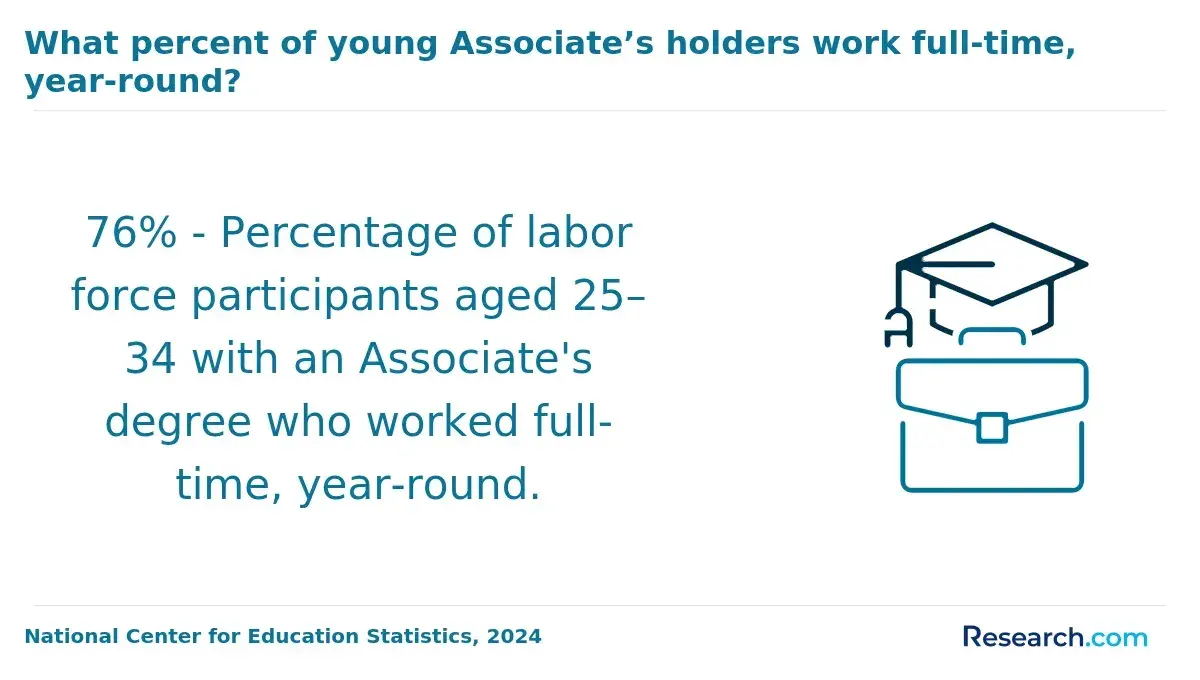
There is no reliable single salary for graduates of these six degree fields. Pay varies by occupation, location, experience, and additional qualifications; occupational wage data should not be read as a forecast of what an associate graduate will earn.
For example, the U.S. Bureau of Labor Statistics reported a $93,600 median annual wage for registered nurses in May 2024. That figure covers employed registered nurses across education and experience levels, not new associate-degree graduates. It is relevant only to students who complete an eligible nursing pathway and meet licensing requirements - not to pre-nursing students. When comparing other fields, start with a specific reachable occupation and its entry requirements before using its wage data to assess potential return.
Which Associate Degree Careers Require Licensure or Certification?
Nursing is the clearest licensure distinction here: graduating from an associate nursing program does not itself confer an RN license. Students must meet state board requirements and pass the required licensing examination. Other healthcare credentials may have eligibility rules tied to curriculum or experience. Some criminal justice occupations require agency training or certification, while counseling practice generally requires education and licensure beyond an associate degree.
IT certifications can be useful for particular jobs but are generally separate from the degree. Before paying for a credential - including easy licenses and certifications to get online - check whether employers in your target role recognize it and whether any exam, supervised experience, or state approval is required. A convenient online course is not necessarily an occupational license.
How Can You Choose an Accredited Online Associate Degree Program?
Start by verifying the college's institutional accreditation through the U.S. Department of Education or the Council for Higher Education Accreditation. For a regulated career, also ask whether the specific program holds any relevant programmatic accreditation or state approval and whether it meets requirements where you intend to work.
Then request a written degree plan and compare finalists against your actual constraints. The following checks help catch costly mismatches before you commit:
- Confirm that every required course is offered without mandatory live attendance, including orientations, labs, exams, and capstones.
- Ask which requirements must be completed on campus, through a local placement, or at a scheduled time.
- Get a personalized estimate of remaining credits, mandatory fees, other required costs, and likely completion time.
- For transfer plans, confirm how credits apply to your intended bachelor's major; for regulated careers, confirm program approval and licensing eligibility.
Be wary of an "entirely online" claim that excludes required campus visits, a low tuition quote that omits mandatory fees, or a transfer promise that does not specify how credits apply. The best choice is the accredited program whose complete requirements fit your schedule and intended next step.
Other Things You Should Know About
Usually, yes. You may choose when to watch lessons, but assignments and exams commonly have fixed due dates.
Sometimes. Confirm that every required course, exam, lab, orientation, and placement can be completed without a campus visit.
Generally not. Even when lectures are asynchronous, nursing programs require supervised clinical and skills work at scheduled times.
Compare AA or AS pathways with your intended bachelor's program, but verify how each course will apply. An AAS can transfer in some cases; the degree label alone does not settle the question.
References
- DAPIP | Homepage - Office of Postsecondary Education (OPE) https://ope.ed.gov/dapip/
- Recognition of Accrediting Agencies | Texas Higher Education Coordinating Board https://www.highered.texas.gov/recognition-of-accrediting-agencies/
- Transfer Degrees | Colorado Department of Higher Education Home https://cdhe.colorado.gov/transfer-degrees
- 8VAC40-31-140. Certification criteria for institutions of... - Virginia Law https://law.lis.virginia.gov/admincode/title8/agency40/chapter31/section140/
- What Career Paths Can I Pursue With an Associate Degree? | mwcc.edu https://mwcc.edu/blog/career-paths-to-pursue-with-an-associate-degree/
- Tuition & Expenses | Student Financial Services https://financialaid.wsu.edu/tuition-and-expenses/
- Placement Exams - Office of New Student Programs https://onsp.umich.edu/orientation/first-year-students/placement-exams
- Resources - Transfer Student Resources - NC State University https://transfer.ncsu.edu/resources/
- What Can You Do With an Associate Degree? | University of Phoenix https://www.phoenix.edu/articles/online-college/what-can-you-do-with-an-associate-degree.html
- Tuition and Fees | clark.edu https://www.clark.edu/enroll/registration/tuition-fees/


