2027 Most Affordable Online Master's Degrees for Students Using FAFSA

Co-Founder and Chief Data Scientist
An online master's degree may fit your schedule but still strain your budget - especially if the lowest advertised tuition excludes fees, prerequisites, or in-person requirements. The U.S. Department of Education's standard annual Direct Unsubsidized Loan limit for graduate students is $20,500, making the full cost of a degree more important than its monthly payment. This guide compares ten master's degree fields from a FAFSA user's perspective, explains what federal aid can and cannot cover, and shows you how to identify an accredited program you can afford to finish.
Key Things You Should Know
- FAFSA is an aid application, not a tuition discount. Graduate students generally cannot receive Pell Grants, and the standard annual Direct Unsubsidized Loan limit is $20,500; confirm current borrowing rules with each school.
- Compare the cost to finish: required credits × tuition, plus mandatory fees, prerequisite courses, travel, and placement expenses. A low per-credit price can conceal a costly degree.
- For any of the ten fields below, verify the specific online program's federal-aid eligibility, accreditation, enrollment requirements, and - where applicable - state licensure fit before accepting an offer.
Top 10 Most Affordable Online Master's Degrees for Students Using FAFSA - Affordable Online Master's
Business / MBA Programs
A Master of Business Administration (MBA) is a practice-oriented option for career advancement or a move into business roles. Compare the total price of required core and concentration courses, not just the advertised tuition rate; foundation courses and program-specific fees can change the calculation. An MBA may offer less value if your goal calls for a narrower accounting, finance, or analytics credential. Ask whether professional experience is preferred, whether courses meet on a fixed schedule, and whether an internship or capstone adds costs. Management jobs also typically require relevant experience.
Healthcare Administration & Management Programs
A Master of Healthcare Administration (MHA) or healthcare-focused MBA generally prepares students for organizational and financial work, not clinical licensure. Compare total required credits, healthcare-specific fees, and any internship or residency travel before choosing a lower-priced option. An MPH may fit a public-health policy goal better than an MHA. Online coursework does not necessarily eliminate local fieldwork. Healthcare management positions often require experience; the degree alone is not a route into a director role.
Information Technology Programs
An MS in information technology commonly emphasizes enterprise systems, cloud infrastructure, and technology management. Its affordability depends partly on whether your bachelor's coursework meets the program's technical prerequisites; bridge courses can increase both cost and time. Check whether labs require particular software, equipment, or scheduled attendance. If you need a specific technical skill rather than a broader graduate credential, compare the full master's price with a graduate certificate or relevant professional certification.
Computer Science Programs
An MS in computer science may support technical specialization, research preparation, or a career change, depending on its curriculum. Applicants without substantial programming and mathematics preparation may need prerequisite courses that do not count toward the degree. Compare thesis, project, and course-only paths because their fees, supervision, and timelines may differ. A low-cost program is a poor bargain if its required subjects do not match the software, systems, or research work you want to pursue.
Cybersecurity Programs
An MS in cybersecurity can develop expertise in security operations, risk, policy, or technical defense; those tracks are not interchangeable. Compare required credits, lab access costs, and prerequisite coursework alongside tuition. Some programs suit experienced IT workers, while others provide foundations for career changers. Before borrowing, compare the curriculum with job postings you hope to pursue: employers may also expect hands-on experience or certifications, and the degree does not independently qualify someone for a senior security role.
Data Science / Analytics Programs
An MS in data science typically requires statistics, programming, and applied projects; a business analytics master's may emphasize decision-making in organizations. Compare the price of required foundation courses, software access, and any project or internship requirements. The cheaper credential is not necessarily the better fit: inspect course descriptions to see whether they build the technical depth your target work requires. Applicants without quantitative preparation should request a written estimate that includes prerequisite costs.
Education / Educational Leadership Programs
A Master of Education (MEd) may focus on instruction, curriculum, or school leadership. Before choosing by tuition, establish whether the program serves practicing teachers, leads toward a particular state credential, or offers professional development without licensure. Student teaching, internships, background checks, and state-specific coursework can add expense and limit scheduling flexibility. If advancement is your goal, ask your employer or licensing agency whether the exact program meets its requirements.
Counseling / Psychology Programs
A clinical mental health counseling master's may be designed for a licensure pathway; a general MA or MS in psychology usually serves a different purpose. Compare required credits and the full cost of supervised practicum, internship, travel, and any residency - not just online tuition. Confirm state licensing-board requirements and applicable program accreditation before enrolling. A psychology master's alone does not generally qualify someone to practice independently as a psychologist, and counseling licensure requires additional steps after coursework.
Nursing Programs
A Master of Science in Nursing (MSN) may prepare registered nurses for education, leadership, or an advanced-practice pathway. These options differ substantially in admissions, clinical hours, certification requirements, and total cost. Verify current RN licensure requirements, the program's approval and accreditation, and whether suitable clinical placements are available near you. A lower tuition bill can be offset by travel, placement expenses, or reduced work hours. An MSN does not by itself confer advanced-practice licensure.
Engineering Management Programs
An MS in engineering management combines technical project work with organizational and financial decision-making. It can fit an experienced engineer seeking broader responsibilities, but an MBA or a specialized engineering MS may better match other goals. Compare required credits, technical prerequisites, and project fees; some programs admit applicants from related technical fields while others expect an engineering background. Ask whether the curriculum addresses your industry's needs rather than assuming the lowest-cost option will support advancement.
What are the FAFSA requirements for online master's degree students?
Online master's students use the same Free Application for Federal Student Aid (FAFSA) process as other eligible graduate students. You generally need to be admitted or enrolled in a federal-aid-eligible degree program, meet federal student eligibility rules, and maintain satisfactory academic progress. Federal loans ordinarily require at least half-time enrollment under the school's graduate-student definition. The fact that classes are online does not, by itself, disqualify you.
Submit the FAFSA for the academic year in which you will attend, then review the school's aid offer and graduate cost-of-attendance estimate. Ask the financial aid office how summer terms, part-time enrollment, prerequisite courses, and any required placements affect eligibility. FAFSA information helps determine eligibility; it does not promise enough aid to cover the bill.
Which online master's degrees qualify for federal financial aid?
An online MBA, MS, MEd, MHA, MSN, or other master's degree may qualify for federal aid when both the institution and the specific program are eligible and the student meets applicable requirements. The degree's subject or online format is not the deciding factor. Graduate certificates, nondegree prerequisite courses, and employer training should not be assumed to have the same eligibility as an approved master's program.
Before paying an enrollment deposit, ask the financial aid office to confirm eligibility for the exact program and campus or online designation on your admission offer. Also confirm how many credits constitute half-time study. Graduate students generally are not eligible for Pell Grants; scholarships, employer assistance, and federal loan options depend on their own rules. Check current loan terms before treating the amount shown in an aid offer as affordable borrowing.
How much does an affordable online master's degree cost after FAFSA aid?
An affordable online master's degree has no single "after FAFSA" price. FAFSA may help you access loans, but borrowed money does not reduce tuition; scholarships, grants, employer payments, and other aid you do not repay can reduce your out-of-pocket cost. Published graduate tuition rates also vary by school, program, residency status, and term.
The comparison below separates charges from funding. Use each school's official graduate tuition schedule and a program-specific cost estimate to fill in the amounts before deciding which offer is cheapest to complete.
| Cost or funding item | What to compare | Effect on affordability |
| Required graduate tuition | Tuition rate and credits needed for the degree | Establishes the main academic charge |
| Mandatory and program fees | Technology, course, differential, and graduation charges | Can erase an apparent tuition advantage |
| Additional requirements | Prerequisites, travel, equipment, and placements | Adds expenses that may not appear in a tuition quote |
| Scholarships and employer assistance | Award amount, eligibility, and renewal conditions | May lower the amount you must pay |
| Federal student loans | Available amount, interest, and repayment terms | Changes when you pay, not the degree's price |
Request a written, term-by-term estimate through graduation, particularly if you will study part time. Compare the remaining cost after nonrepayable aid with what you can pay without borrowing; then consider whether the likely career benefit justifies any debt. Graduate transfer credit can reduce charges only if accepted courses actually satisfy degree requirements.
Which affordable online master's programs are properly accredited?
Start with institutional accreditation recognized by the U.S. Department of Education. It matters for federal aid eligibility, but accreditation alone does not establish that every online master's program meets a state licensing requirement or represents good value. Verify the institution and the exact program rather than relying on a schoolwide claim.
Programmatic accreditation can be especially consequential in regulated fields. For example, nursing applicants can check for applicable CCNE or ACEN accreditation, while counseling applicants should investigate whether CACREP accreditation matters for their intended state and license. Education and other professional programs may face separate state-approval rules. Ask the school and the relevant licensing board whether its curriculum and placements meet requirements where you intend to practice.
How do online master's programs compare with campus-based degrees?
Online study can remove a commute, but it does not automatically remove scheduled classes or in-person requirements. The best delivery format is the least costly one you can realistically complete while meeting any hands-on or licensing needs.
This comparison highlights the expenses and constraints that matter most when an online price looks lower than a campus price.
| Format | Potential cost advantage | Constraint to verify |
| Online | May reduce commuting or relocation expenses | Live sessions, proctoring, internships, or local clinical work |
| Hybrid | May allow students to keep working while limiting campus trips | Travel frequency, location, and scheduling |
| Campus-based | May offer direct access to facilities or in-person opportunities | Commuting, relocation, and time away from work |
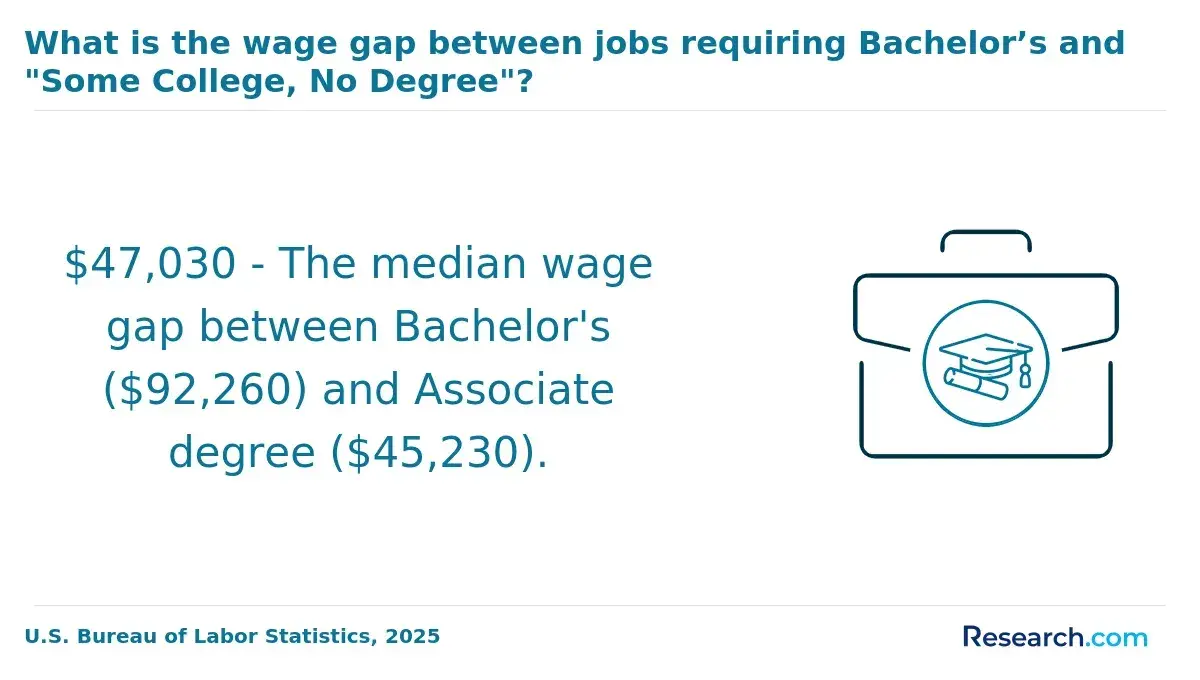
If your goal is not yet graduate-level work, compare the cost and career relevance of a bachelor's pathway or an associates degree online before committing to a master's. An associate degree is not a substitute for graduate study or the bachelor's degree ordinarily required for master's admission, but it may be a more appropriate earlier step.
What are the admission requirements for affordable online master's programs?
Most master's programs require an earned bachelor's degree. Beyond that, admissions rules vary: a program may review undergraduate GPA, relevant coursework, a résumé, recommendations, a statement of purpose, or an interview. Some technical programs expect mathematics or programming preparation; MSN pathways generally require nursing credentials; an MBA may value professional experience. GRE or GMAT requirements, waivers, and conditional-admission policies must be checked at the graduate-program level.
Ask admissions to identify any prerequisite courses and whether they count toward the master's degree or qualify for aid. Also ask for a graduate transfer-credit evaluation before enrollment if you have prior graduate coursework. If application costs matter, information about online colleges with open enrollment and no application fee can help you explore alternatives, but undergraduate or institution-wide policies do not establish a master's program's application fee or admission rules.
How long do affordable online master's degrees take to complete?
Completion time depends on required graduate credits, how many courses you take per term, course availability, and whether the program has a thesis, capstone, internship, or clinical placement. Part-time enrollment can make tuition payments easier to manage while extending the time you pay fees; faster study may reduce that time but strain your work schedule.
Be cautious with claims about a 6 months masters degree online: establish the credits and prior preparation assumed in any advertised timeline. Accepted graduate transfer credit or a qualifying combined bachelor's/master's pathway may shorten a particular student's remaining work, but undergraduate courses do not normally count as graduate transfer credit. Request an individualized degree plan showing remaining courses, their scheduled terms, and expected total charges.
What careers and salaries can online master's degree graduates expect?
Career possibilities depend on the field and your prior experience. An MBA may broaden business responsibilities; a technical MS may support specialization; a licensure-oriented counseling or nursing degree serves a more specific professional pathway. None guarantees a job, promotion, or salary increase.
For context, the U.S. Bureau of Labor Statistics reported a May 2024 median annual wage of $124,910 for information security analysts. That is an occupation-wide figure, not the expected pay of cybersecurity master's graduates; employers may also require substantial technical experience. Compare target job requirements with your current qualifications before deciding how much to borrow. If your aim is independent psychologist practice or research rather than a master's-level role, explore the requirements and costs of affordable PhD programs as a separate educational decision.
How should students choose a reputable affordable online master's program?
Choose by cost to complete an eligible, career-appropriate degree, not by the lowest advertised tuition or a school's position on a ranking. The biggest avoidable mistakes are overlooking required fees, assuming every online program is fully remote, and treating FAFSA loan eligibility as a discount.
Use this sequence to compare offers on equal terms and resolve uncertainties before you enroll:
- Define the job, advancement goal, or license you want; confirm whether it requires this particular degree or additional credentials.
- Verify institutional accreditation, federal-aid eligibility for the exact program, and any applicable program approval or state licensing requirements.
- Request a degree plan and written total-cost estimate covering required credits, fees, prerequisites, placements, and travel.
- Ask for an evaluation of eligible previous graduate coursework and confirm which accepted credits fulfill degree requirements.
- Compare schedules, nonrepayable aid, employer assistance, and the debt you would need under a realistic completion timeline.
A school that cannot clearly explain its online requirements, licensure fit, or full program charges has left you without essential information for an affordability decision. Resolve those questions in writing before accepting its offer.
Other Things You Should Know About
Yes, if you and the specific program meet federal aid requirements. Online delivery alone does not prevent eligibility; confirm the program's status and required enrollment level with its financial aid office.
No. FAFSA is an application for aid. Scholarships or grants may reduce your cost, but loans must be repaid with interest, and graduate students generally cannot receive Pell Grants.
No field is consistently cheapest at every school. Compare the total required credits, tuition, fees, prerequisites, and in-person expenses for programs that actually meet your career goal.
Often, yes, if you meet at least your school's definition of half-time graduate enrollment and all other eligibility requirements. Ask how your planned course load affects each term's aid offer.
References
- Grad PLUS loans | studentaid.gov https://studentaid.gov/understand-aid/types/loans/plus/grad
- Cost of Attendance (Budget) | 2025-2026 Federal Student Aid Handbook https://fsapartners.ed.gov/knowledge-center/fsa-handbook/2025-2026/vol3/ch2-cost-attendance-budget
- Your financial path to graduation | consumerfinance.gov https://www.consumerfinance.gov/paying-for-college/your-financial-path-to-graduation/
- Accreditation in the U.S. | ed.gov http://www.ed.gov/laws-and-policy/higher-education-laws-and-policy/college-accreditation/accreditation-in-the-us
- Online Master's Degrees | University of Miami https://uonline.miami.edu/programs/online-masters-degrees/
- Undergraduate and Graduate Tuition and Fees | Purdue Global https://www.purdueglobal.edu/tuition-financial-aid/undergraduate-graduate-tuition-and-fees/
- Cost of Attendance | wisc.edu https://financialaid.wisc.edu/cost-of-attendance/
- Cost of attendance | Twin Cities One Stop Student Services https://onestop.umn.edu/finances/costs/cost-attendance
- Can You Use FAFSA for Grad School? | The University of Olivet https://www.uolivet.edu/can-you-use-fafsa-for-grad-school/
- Tuition in Detail - One Stop Student Services https://onestop.utk.edu/billing-payments/tuition-detail/