2027 Best Online Professional Masters Degrees With No Campus Visits Required

Co-Founder and Chief Data Scientist
A professional master's degree may fit your career plans but not your ability to travel to campus. The distinction matters: "online" can still mean required residencies or scheduled attendance. Demand is another reason to compare carefully; the U.S. Bureau of Labor Statistics (BLS) projects 29% employment growth for information security analysts from 2024 to 2034, but that occupation does not require a master's degree for every position.
This guide compares career-oriented degree fields, explains where off-campus requirements can arise, and gives you a way to verify a program before committing.
Key Things You Should Know
- No campus visits means no required trip to the university; it does not necessarily mean no scheduled classes, local internship, student teaching, or clinical placement.
- Business, IT, computer science, cybersecurity, analytics, and engineering management generally offer clearer routes to entirely remote coursework; licensure-focused fields need closer review.
- BLS projects 29% growth for information security analyst employment from 2024 to 2034, but choose a degree by its requirements and your career goal - not job growth alone.
Top 10 Best Online Professional Masters Degrees With No Campus Visits Required - Top 10 Degrees
Business / MBA Programs
A Master of Business Administration (MBA) emphasizes applied finance, operations, strategy, and leadership. It suits experienced professionals seeking broader management responsibilities; an MS in a business specialty may fit someone seeking deeper technical expertise. Casework and team projects can be completed remotely, but some executive or cohort-based MBAs require residencies. Confirm that the specific track - not merely the school's online offerings - has no campus orientation, intensive, or final presentation. An MBA does not substitute for the experience employers commonly expect in management roles.
Healthcare Administration & Management Programs
A Master of Healthcare Administration (MHA) or healthcare management MS develops budgeting, quality improvement, policy, and organizational skills. These are generally nonclinical management credentials, making remote coursework more feasible than in patient-care programs. Some tracks still require an internship, applied project, or residency; ask whether it can be completed near home without visiting campus. Healthcare management jobs also depend on relevant experience. An MHA does not grant a clinical license.
Information Technology Programs
An MS in information technology commonly covers systems architecture, networks, cloud services, and IT project management. It may suit practitioners moving toward specialized or supervisory work, while a targeted certification may be less costly for a single technology skill. Virtual labs and remote capstones can support a no-campus format. Check whether lab access, examinations, or a required project presentation involves travel, and whether prerequisite computing courses add time or expense.
Computer Science Programs
An MS in computer science offers deeper study of algorithms, software systems, and areas such as artificial intelligence. Career changers should examine mathematics and programming prerequisites before comparing timelines. Coursework-only and remote-capstone tracks may avoid campus visits; thesis tracks can involve lab access or research arrangements that need individual confirmation. A computer science master's may help build specialized knowledge, but software development roles often accept bachelor's-level preparation and demonstrated skills.
Cybersecurity Programs
An MS in cybersecurity can focus on security engineering, risk management, incident response, or policy. Remote simulations and virtual labs make off-campus study possible, but check for required in-person exercises or proctored exams. Choose technical coursework for engineering goals and governance coursework for compliance-oriented roles. Employers may also value hands-on experience and certifications; a degree alone does not establish professional proficiency or qualify someone for every security position.
Data Science / Analytics Programs
An MS in data science or analytics usually combines statistics, programming, data management, and applied modeling. Remote datasets and projects can support study without campus visits. Compare programs by prerequisite mathematics, depth of statistical training, and access to substantive projects - not simply by their use of "AI" in marketing. Some analytics degrees emphasize business decisions rather than advanced modeling. A portfolio and prior domain knowledge may matter alongside the credential when seeking work.
Education / Educational Leadership Programs
A Master of Education (MEd) may serve practicing teachers, while an educational leadership degree may target school administration. Remote coursework does not eliminate possible fieldwork, student teaching, or leadership internships at local schools. If your goal is a principal or teaching credential, confirm state approval, prior-license rules, supervised-experience requirements, and whether placements are available where you live. For nonlicensure professional development, distinguish that track from one advertised as certification preparation.
Counseling / Psychology Programs
Counseling master's degrees often include supervised practica and internships even when classes are online. A psychology MA or MS may instead emphasize research or applied knowledge and may not lead to counselor licensure. Some programs also require campus skills intensives. Before choosing either path, verify in writing the program's campus requirements, local placement support, relevant accreditation, and eligibility under your state board's rules. "No campus visits" should never be mistaken for "no in-person clinical work."
Nursing Programs
A Master of Science in Nursing (MSN) may prepare registered nurses for leadership, education, or advanced practice. Classroom courses can be online, but clinical or teaching tracks often require supervised hours at an approved site; some require campus intensives. Check RN-license eligibility, placement responsibility, state authorization, and any specialty certification requirements before applying. A nonclinical leadership MSN may offer fewer location constraints, though its degree does not itself confer an advanced practice license.
Engineering Management Programs
An MS in engineering management blends technical project oversight with finance, operations, and organizational decision-making. It often suits engineers who want management preparation without leaving technical industries. Remote team projects and capstones may make campus-free completion possible; ask about labs, site visits, and final presentations. Compare it with an MBA: engineering management generally stays closer to technical work, while an MBA offers broader business study. Either path still relies on professional experience for leadership advancement.
What are the best professional master's degrees available entirely online?
The strongest no-campus-visit choices depend on your starting skills and intended work. Business and technology degrees often have fewer unavoidable in-person academic components; healthcare administration and engineering management can also fit. Education, counseling, and nursing require closer scrutiny because local practice requirements may remain even when campus travel is unnecessary. These are degree-field comparisons, not verified claims about every institution's program.
The comparison below separates campus travel from other location-based obligations so you can shortlist fields realistically.
| Degree field | Best fit | Requirement to verify |
| MBA or business MS | Business breadth or specialization | Residencies and cohort meetings |
| IT, computer science, cybersecurity, or analytics MS | Technical specialization | Labs, proctored exams, and prerequisites |
| MHA or engineering management MS | Industry-specific management preparation | Internships, site projects, and presentations |
| MEd, counseling master's, or MSN | Education or regulated professional practice | Local placements, licensure rules, and intensives |
If income potential is your starting criterion, compare online programs that pay well against the work experience and credentials their target occupations actually require. No single field is "best" if its curriculum or placement rules do not match your goal.
How can you verify that an online master's program is accredited?
Start with institutional accreditation: confirm the university and its current status in the U.S. Department of Education's accreditation database or with its recognized accreditor. Then check whether your intended profession calls for programmatic accreditation, such as CCNE or ACEN for relevant nursing programs, CACREP for counseling, or CAEP where applicable in education. Programmatic accreditation is not interchangeable with institutional accreditation, and its importance varies by state, credential, and employer.
Verify the exact degree and campus or online track - not just the institution's name - on the accreditor's listing. If accreditation is described as pending, ask the licensing board or employer whether that status meets your needs before enrolling.
Do online professional master's degrees qualify graduates for state licensure?
Not automatically. Licensure rules belong to the state and profession, not to the delivery format. A fully online academic program may meet classroom requirements while still requiring local supervised practice, exams, an existing professional license, or additional coursework. Education, counseling, and advanced practice nursing applicants should check the board in the state where they intend to practice.
Ask the program for its written licensure disclosure for your state and confirm it independently with the board. Also ask who secures field placements and whether the university can enroll students in your state. An MHA, MBA, or nonclinical management degree should not be treated as a route to a clinical license.
Which online master's programs offer the strongest career outcomes?
Strong career outcomes come from a match between the curriculum, your prior experience, and the occupation's hiring standards - not the degree title alone. A computer science or analytics MS may add technical depth; an MBA or MHA may complement substantial industry experience; a qualifying counseling or nursing program may support a regulated pathway after its separate practice and licensing requirements are met.
Request program-specific graduation, placement, and debt information, including how outcomes are defined and whether they cover online students. Where reliable results are unavailable, compare employer tuition support, required skills, local vacancies, and the cost of a certificate or work-based training instead. Access to career services is useful but is not evidence of a job offer.
What do students learn in online professional master's programs?
Professional master's programs combine advanced field coursework with applied work. An MBA might use financial analysis and strategy cases; a cybersecurity MS might use virtual security labs; an MEd might use a school-based leadership project. Depending on the degree, students also choose electives or a concentration and finish with a capstone, portfolio, comprehensive exam, internship, practicum, or thesis.
That final requirement is a crucial delivery check. A project completed remotely differs from a supervised placement near home, and both differ from a required university residency. Ask for the current degree plan and descriptions of every culminating requirement before treating a program as campus-free.
What are the admission requirements for online master's degrees?
Master's admission normally requires a completed bachelor's degree, transcripts, and a program application. Schools may also request recommendations, a statement of purpose, a résumé, an interview, or a portfolio. Technical degrees may require programming and mathematics; nursing programs may require an RN license; leadership programs may expect relevant work experience. GPA minimums, conditional admission, and GRE or GMAT policies vary by graduate program, not merely by university.
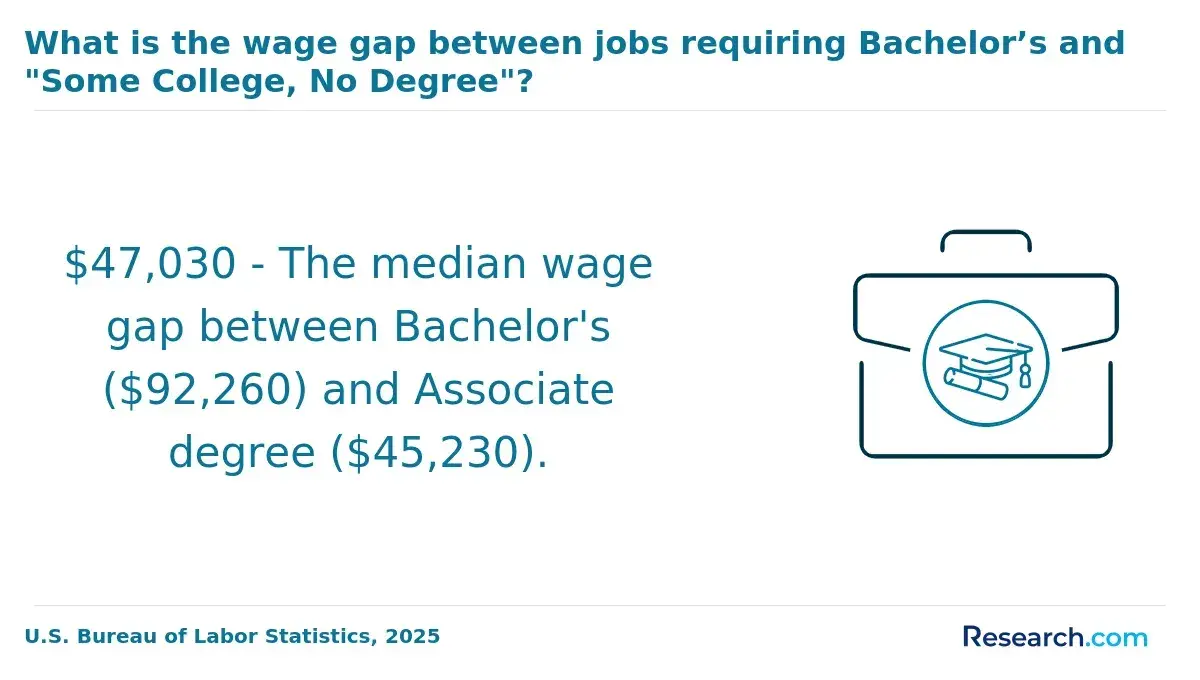
If you are starting without a bachelor's degree, an associate's degree online is an earlier educational step, not direct eligibility for a master's program. Applicants who already hold graduate coursework should request a pre-enrollment transfer evaluation: accepted credits must apply to this degree's requirements, and institutional limits or residency-credit rules may restrict their value.
How long do online professional master's degrees take and cost?
Completion time and cost vary with required graduate credits, tuition and fees, course sequencing, enrollment intensity, prerequisites, and applied requirements. A student studying part time may keep working but take longer; a faster schedule can increase weekly workload. Published per-credit tuition is not the total price of a degree.
For a usable comparison, request the cost to complete each remaining requirement, including mandatory and program fees, books or software, and any placement-related expense. Ask whether eligible graduate transfer credits or a stackable certificate reduce both the required coursework and the bill; undergraduate preparation does not normally count as master's-level transfer credit. Federal aid eligibility, scholarships, and employer assistance also depend on the student and program.
Be especially careful with a 6 month masters degree online: a short advertised timeline may assume prior graduate credit, a specific entry credential, or an unusually heavy course load. Obtain a term-by-term plan for your starting point before comparing speed or cost.
What salaries and job outlooks can graduates expect?
BLS occupational figures provide context, not predicted earnings for master's graduates. For example, BLS reports a May 2024 median annual wage of $124,910 for information security analysts. That figure covers workers across experience and education levels; a master's degree is not required for every opening and does not cause that wage.
The examples below show why occupational fit matters more than an attractive wage figure when choosing a graduate field.
| Occupation | Relevant degree fields | Important qualification beyond the degree |
| Information security analyst | Cybersecurity, IT, computer science | Employers often seek relevant technical experience |
| Medical and health services manager | MHA, healthcare management, MBA | Related healthcare or administrative experience commonly matters |
| School principal | Educational leadership | State licensure and teaching experience may be required |
| Mental health counselor | Qualifying counseling master's | Supervised practice, examination, and state licensure |
Review BLS outlook for the specific occupation you want, then compare local hiring requirements with the degree's cost and the qualifications you already have. National growth cannot guarantee a local opening or promotion.
How should you choose a reputable online master's program?
Make "no campus visits" a written selection criterion rather than relying on an online label. Compare the same evidence for each program:
- Request written confirmation that the exact degree track requires no campus orientation, residency, laboratory session, examination, or final presentation.
- Identify every scheduled online meeting and local internship, practicum, clinical placement, or student-teaching obligation, including who arranges it.
- Confirm institutional accreditation, any profession-specific accreditation, state authorization, and licensure eligibility where relevant.
- Get an individual degree plan showing prerequisites, transferable graduate credits, remaining courses, realistic terms, and total required charges.
- Compare the resulting cost and workload with employer assistance, a graduate certificate, certification, or advancement through experience.
Red flags include a tuition quote without mandatory fees, a completion estimate that assumes credits you do not have, and a licensure claim that does not name your state. If an occupation also involves background screening, research its rules before paying tuition; guidance on the best degree for felons can help frame alternatives, but the applicable board or employer makes the eligibility decision.
Other Things You Should Know About
No. A program may advertise online coursework while requiring an orientation, residency, lab, or examination on campus. Confirm the requirements for the exact track in writing.
Yes. Nursing, counseling, and education programs may require supervised activities at approved sites near the student without requiring travel to the university.
No. Live, scheduled online classes can still be campus-free. Check meeting times and attendance rules if scheduling flexibility matters to you.
Ask whether any campus attendance is required, whether local placements are necessary and who arranges them, whether the program meets your state's licensure rules, and what the complete degree will cost.
References
- Cost of Attendance (Budget) | 2025-2026 Federal Student Aid Handbook https://fsapartners.ed.gov/knowledge-center/fsa-handbook/2025-2026/vol3/ch2-cost-attendance-budget
- General Schedule Qualification Standards | U.S. Office of Personnel Management https://www.opm.gov/policy-data-oversight/classification-qualifications/general-schedule-qualification-standards/
- Licensure Processing Guides and Timelines | pa.gov https://www.pa.gov/agencies/dos/resources/professional-licensing-resources/licensure-processing-guides-and-timelines
- Accreditation in the U.S. | ed.gov http://www.ed.gov/laws-and-policy/higher-education-laws-and-policy/college-accreditation/accreditation-in-the-us
- G1.30 Student Co-op/Interns and Volunteer Practicum Programs | ky.gov https://manuals-sp-chfs.ky.gov/G1/Pages/1-30.aspx
- Public Health Internships | Wake County Government https://www.wake.gov/departments-government/public-health/public-health-internships
- Tuition in Detail - One Stop Student Services https://onestop.utk.edu/billing-payments/tuition-detail/
- How Internships, Practicums, and Clinicals Actually Work | Florida National University (FNU) https://www.fnu.edu/internships-practicums-clinicals-explained/
- Post-Graduate Outcomes - Penn Career Services | University of Pennsylvania https://careerservices.upenn.edu/post-graduate-outcomes/
- Approved Fieldwork Site Application Process | The University of New Mexico https://coehs.unm.edu/departments-programs/ifce/counselor-education/fieldwork.html