2027 Most Affordable Master's Degrees

Co-Founder and Chief Data Scientist
The cheapest master's degree on a tuition page may not be the cheapest one to finish. Required credits, fees, prerequisites, and unpaid placements can change the bill substantially. Career value matters too: the U.S. Bureau of Labor Statistics reports a May 2024 median annual wage of $133,080 for software developers, but a computer science master's does not guarantee that job or salary.
This guide helps prospective graduate students compare affordable degree fields, identify costs that published tuition misses, and choose a program that fits their career goal and budget.
Key Things You Should Know
- Compare total program cost, not per-credit tuition: required credits, fees, prerequisites, and travel can change which option is least expensive.
- Professional master's degrees may cost more to complete when they require clinical placements, internships, or licensure-related coursework; a lower-cost degree that misses your credential requirements is poor value.
- BLS reported a May 2024 median wage of $133,080 for software developers, but that is an occupational figure - not an expected salary for master's graduates or proof that a particular program will pay off.
Top 10 Most Affordable Master's Degrees - Affordable Degrees
Business / MBA Programs
A Master of Business Administration (MBA) usually emphasizes management practice; a specialized MS in accounting, finance, or another business subject may suit a narrower goal. Cost-conscious applicants should compare total required credits, business-school differential tuition, and any travel or residency expenses. An MBA may be more valuable to someone building on work experience than to someone expecting the degree alone to secure a management job. Ask whether employer tuition assistance applies and whether an affordable public program offers the coursework and recruiting access you need.
Healthcare Administration & Management Programs
A Master of Healthcare Administration (MHA), healthcare-focused MBA, or related MS can prepare students for administrative work, but management positions commonly require relevant experience. Compare tuition with internship, practicum, and campus-visit costs. An MBA may offer broader business mobility; an MHA may provide more healthcare-specific coursework. Neither should be confused with a clinical license. If your goal is hospital administration, check whether the curriculum and any experiential requirements fit the employers you hope to approach before choosing the lowest-priced option.
Information Technology Programs
An MS in information technology often focuses on systems, infrastructure, and applied technology leadership. It can be a practical choice for working IT professionals who want specialized coursework without leaving employment. Check whether a program requires foundation courses in networking or programming, since those can add cost and time. Compare employer reimbursement, scheduling, and the relevance of the curriculum to your target role. For some technical positions, experience and a focused certification may be a less costly next step than a full master's degree.
Computer Science Programs
An MS in computer science may emphasize advanced software, algorithms, artificial intelligence, or research. Applicants without a computing background should scrutinize prerequisite policies: inexpensive graduate tuition can be offset by additional foundation coursework. A thesis may fit research or doctoral goals, while a course-based or capstone path may better serve professional specialization. Compare the complete degree plan and your likely enrollment pace, not just advertised tuition. Software development roles do not universally require a master's, so weigh graduate study against experience and a targeted portfolio.
Cybersecurity Programs
An MS in cybersecurity can cover security engineering, risk, governance, or digital forensics. The least expensive option depends partly on your goal: technical and policy-heavy programs are not interchangeable. Ask about laboratory access, required certifications, and any extra technology fees. Cybersecurity hiring commonly values hands-on experience; the degree alone does not qualify someone for every security position. If you already work in IT, compare the master's with employer-funded training or certifications before committing to the larger expense.
Data Science / Analytics Programs
An MS in data science or analytics typically combines statistics, computing, and applied projects, but required mathematical preparation varies. Bridge courses, software access, and an extended capstone can affect total cost. An analytics program oriented toward business decisions may fit a different goal than a research-heavy data science degree. Compare courses against the tools and methods used in your target roles. If you need only a specific skill, a graduate certificate or employer-supported training may cost less than completing an entire master's.
Education / Educational Leadership Programs
A Master of Education (MEd) or educational leadership degree may support teaching specialization or school administration, depending on its design. Before comparing prices, confirm whether your state requires an approved educator-preparation pathway, particular coursework, experience, or an examination for the credential you want. Student teaching, fieldwork, or scheduled school-based activities can limit flexibility even in online programs. Educators should also check whether a district's salary schedule recognizes the specific degree; a low tuition bill does not ensure a pay increase.
Counseling / Psychology Programs
An MA or MS in counseling can be designed for a specific licensure track; a general psychology master's may instead emphasize research or preparation for further study. They are not substitutes. Compare required clinical hours, placement support, supervision costs, and your state's licensing rules before considering tuition. Online coursework may still require local, in-person practice. A program that is cheaper but does not meet the intended license requirements can be especially costly to correct later.
Nursing Programs
A Master of Science in Nursing (MSN) can prepare registered nurses for education, leadership, or a defined advanced-practice track. Admission commonly depends on nursing preparation and an active RN license; specific requirements vary. Clinical placements, travel, and specialty fees can outweigh a modest tuition difference. Advanced-practice roles also involve separate state licensure or certification requirements. Choose the specialty first, then compare programs that support eligibility in the state where you intend to practice.
Engineering Management Programs
An MS in engineering management combines technical project work with management subjects. It may appeal to engineers seeking broader responsibilities, although experience remains important for management roles. Compare tuition with prerequisite requirements, project-based fees, and the ability to study while employed. A technical engineering MS may be a better investment if your goal is deeper engineering specialization rather than managing teams or budgets. Employer tuition assistance can materially change which option is affordable.
What are the most affordable master's degrees in the United States?
The most affordable master's degree is the accredited, career-appropriate program with the lowest realistic cost to complete for your circumstances. There is no reliable nationwide cheapest-field ranking: institutions charge different graduate rates, and required credits and fees vary even within one field. Start with fields aligned to your goal, then compare specific program bills.
The comparison below shows where expenses beyond base tuition are most likely to change the result. It is a screening tool, not a price ranking.
| Degree path | Cost issue to investigate | Best comparison question |
| MBA or business MS | Business-school tuition and residencies | Does the specialization justify its full price? |
| Computer science or data science MS | Foundation courses and technical requirements | Which prerequisites would you personally need? |
| Education or counseling master's | Fieldwork and credential requirements | Will the program meet your state's rules? |
| MSN | Clinical placement and specialty costs | What must be completed locally? |
| IT or engineering management MS | Employer coverage and course scheduling | Can you keep working while enrolled? |
Public universities, including options with resident tuition, are useful places to compare prices, but public status alone does not establish the lowest total cost. Request an individualized estimate before calling any program affordable.
How much does an affordable master's degree cost?
There is no single price for an affordable master's degree. Published tuition is usually a rate per credit or term; total program cost includes every required graduate credit, mandatory and program-specific fees, and other expenses needed to finish. Your net cost is what remains after applicable grants, scholarships, assistantships, and employer contributions - not merely the advertised tuition rate.
For a fair comparison, request a written estimate covering tuition at your residency rate, required credits, fees, prerequisite courses, books or software, and travel or placement expenses. Ask whether aid is renewable and whether an assistantship changes enrollment or work obligations. Federal student-aid eligibility depends on the institution and your circumstances; loans reduce upfront payment, not the amount ultimately owed.
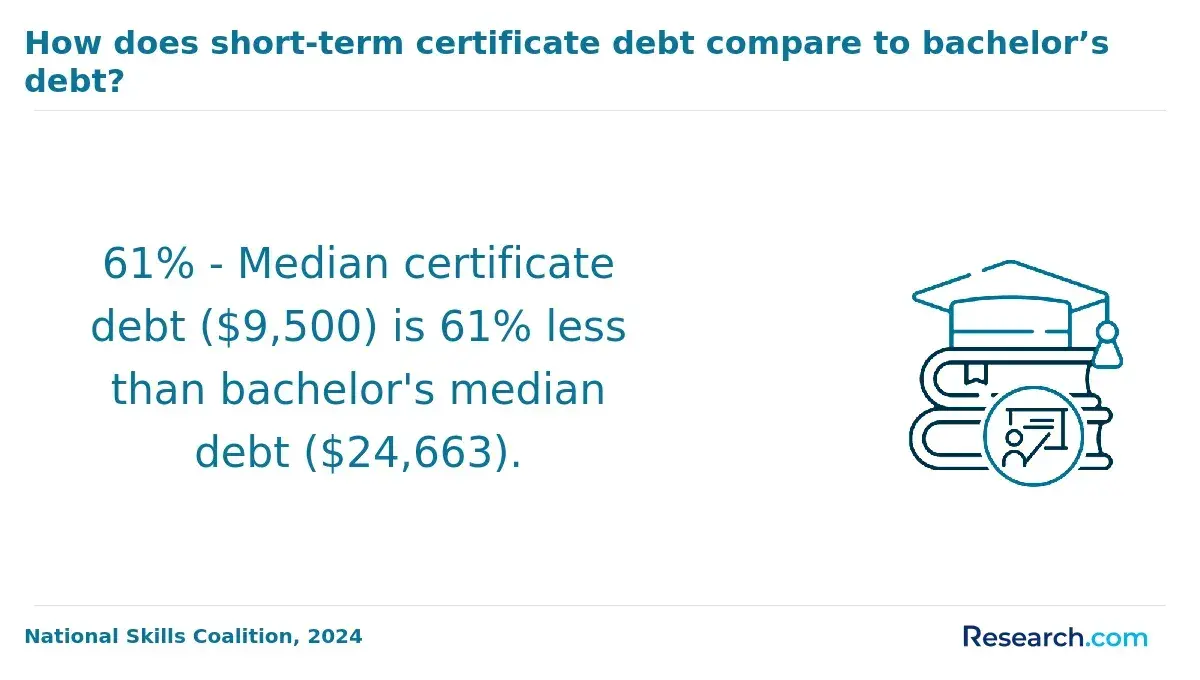
If a full degree exceeds your budget and your target role does not require one, compare the specific skills it teaches with short term certificate programs. A certificate is generally not a substitute for a master's required for professional licensure.
Are affordable online master's degrees accredited?
Some affordable online master's programs are offered by institutionally accredited universities, but online delivery and low price do not establish accreditation. Confirm the institution's current status through its recognized accreditor. In regulated fields, also check whether the particular program has any accreditation or state approval needed for your intended credential.
Accreditation does not, by itself, mean a counseling, education, or nursing program satisfies every state's licensing rules. Ask the program for its state-specific eligibility disclosure and confirm it with the licensing board where you plan to work. An online course schedule may still include in-person clinical work, field placements, or campus activities.
Which affordable master's degrees offer the best career outcomes?
The best career outcome depends on what you can do after the degree that you cannot readily do now. A licensure-aligned counseling or nursing program may open a defined credential pathway; a technical MS may deepen expertise; an MBA may help an experienced professional compete for broader responsibilities. None guarantees employment, promotion, or higher pay.
For context, BLS reports a May 2024 median annual wage of $112,590 for data scientists. That describes people working in the occupation - not graduates of data science master's programs. Check whether your target job calls for graduate study, review local openings, and compare the degree's full cost with your likely need for additional experience or credentials. If the role primarily rewards a narrower skill, explore certificate jobs that pay well before assuming a master's is the most economical route.
What are the admission requirements for affordable master's programs?
Most master's programs require a completed bachelor's degree, transcripts, and a graduate application. Individual programs may also require prerequisites, recommendations, a statement of purpose, relevant work experience, an interview, or a portfolio. GPA thresholds and GRE or GMAT policies vary by institution and program; do not infer graduate admission rules from undergraduate policies.
Ask admissions staff to evaluate your transcript for missing courses before comparing final costs. A career changer applying to computer science, for example, may face additional preparation, while an MSN applicant may need an RN license. If you have not yet earned a bachelor's degree, an associates degree may be an earlier educational step, but it does not ordinarily qualify you for standard master's admission.
How long do affordable master's degree programs take?
Completion time depends on required graduate credits, full- or part-time enrollment, course availability, and final requirements. A thesis, capstone, internship, or clinical placement can extend the schedule; short individual courses do not necessarily make the whole degree quick. Students balancing work should ask which courses are offered each term and whether any online meetings occur at fixed times.
Compare published timelines for online master's programs with the course load you can actually maintain. If you already have graduate coursework, request a formal transfer evaluation: accepted credits must apply to your degree requirements and meet the institution's grade, age, equivalency, and residency rules. A combined bachelor's/master's or other accelerated pathway may have separate eligibility conditions; undergraduate credits do not ordinarily count toward a master's unless the institution explicitly permits it.
Can affordable master's degrees lead to licensed careers?
Yes, some affordable master's programs can form part of a licensed-career pathway - but earning the degree and receiving a license are separate steps. Counseling, education, and advanced-practice nursing are examples where the intended occupation may require a particular program design, supervised experience, examinations, certification, or state approval.
Before enrolling, identify the exact license and state. Confirm that the program meets that state's education requirements, then establish who arranges placements and what they may cost. Do not assume an inexpensive general psychology degree qualifies you for a counseling license, or that an online program's availability in your state establishes licensure eligibility.
How do affordable master's degrees compare by salary and job outlook?
Salary and job outlook are useful for comparing occupations, but they are not master's-degree return-on-investment figures. BLS occupational data covers workers with varied education and experience, and some roles do not normally require graduate study. For example, BLS reports a May 2024 median annual wage of $117,960 for medical and health services managers; relevant professional experience is also important for many of those positions.
Use occupational wages and projected demand to check whether a career goal is plausible, then investigate the incremental value of graduate education for your situation. Compare the complete program cost and any lost earnings with employer requirements, your present experience, and a less costly alternative. Rapidly changing technical tools also make current coursework and practical experience important alongside any labor-market projection.
How can you choose a reputable affordable master's program?
A reputable affordable program should meet your career requirements at a cost you can realistically finish paying - not simply advertise the lowest tuition rate. Use the same questions for each finalist so differences in fees, eligibility, and delivery are visible.
Before applying or paying a deposit, take these steps:
- Confirm institutional accreditation and any program approval or accreditation relevant to your intended license.
- Request an itemized, personalized completion-cost estimate, including prerequisites, fees, and required travel or placements.
- Ask for the degree plan, course rotation, attendance rules, and an evaluation of any prior graduate coursework.
- Check target-job requirements and ask what documented career or licensure outcomes the program can provide.
- Compare grants, assistantships, employer benefits, and borrowing needs using the same expected enrollment pace.
Watch for vague claims that a degree is "fully online" despite required visits, that admission or transfer credit is automatic, or that occupational median wages represent graduate earnings. Get consequential requirements and costs confirmed in writing.
Other Things You Should Know About
It can be if the program meets a specific career or licensing goal and its full cost is manageable. Compare that benefit with your current experience and less costly alternatives.
Not necessarily. Online study may reduce commuting costs, but tuition, technology fees, and required in-person activities vary. Compare complete bills.
Yes, if your employer covers the eligible program and you meet its conditions. Check annual limits, grade requirements, and any repayment obligation if you leave.
Only if it also offers the coursework, schedule, support, and - when relevant - licensure preparation you need. The cheapest unsuitable degree is not the best value.
References
- Cost of Attendance (Budget) | 2025-2026 Federal Student Aid Handbook https://fsapartners.ed.gov/knowledge-center/fsa-handbook/2025-2026/vol3/ch2-cost-attendance-budget
- The Rule on Unfair or Deceptive Fees: Frequently Asked Questions | Federal Trade Commission https://www.ftc.gov/business-guidance/resources/rule-unfair-or-deceptive-fees-frequently-asked-questions
- Types of Financial Aid: Grants, Work-Study, and Loans | studentaid.gov https://studentaid.gov/understand-aid/types
- DAPIP | Homepage - Office of Postsecondary Education (OPE) https://ope.ed.gov/dapip/
- 1015a. Transparency in college tuition for consumers | house.gov https://uscode.house.gov/view.xhtml
- Student Loans and the High Cost of Higher Education | Office of the New York City Comptroller Mark Levine https://comptroller.nyc.gov/reports/student-loans-and-the-high-cost-of-higher-education/
- Fast Facts: Undergraduate graduation rates (40) | ed.gov https://nces.ed.gov/fastfacts/display.asp
- .12 Tuition, Fees, Enrollment Contracts, Refunds. | Library of Maryland Regulations https://regs.maryland.gov/us/md/exec/comar/13B.01.01.12
- Masters Degree Requirements | Graduate School Handbook https://handbook.unc.edu/masters.html
- Estimating Costs | charlotte.edu https://ninercentral.charlotte.edu/financial-aid-loans/estimating-costs