2027 Most Affordable Master's Degrees for Data-Driven Roles

Co-Founder and Chief Data Scientist
A low tuition rate does not necessarily make a master's degree affordable. Required credits, fees, prerequisites, and unpaid placements can change the final bill - and the right degree depends on the work you want to do. The U.S. Bureau of Labor Statistics projects 34% employment growth for data scientists from 2024 to 2034, but data-driven opportunities extend well beyond that occupation. This guide compares master's degree fields for prospective graduate students and working professionals, then shows how to calculate cost, check career fit, and avoid paying for credentials they do not need.
Key Things You Should Know
- Compare total program cost, not tuition per credit: required credits, fees, prerequisites, travel, and lost work time can change which option costs least.
- An MS in analytics is not automatically the best-value choice; an MBA, MHA, MEd, or another field-specific degree may better match where you plan to use data.
- BLS reports a $112,590 median annual wage for data scientists in May 2024, but that occupation-wide figure is not a salary prediction for master's graduates.
Top 10 Most Affordable Master's Degrees for Data-Driven Roles - Affordable Degrees
Business / MBA Programs
A Master of Business Administration (MBA) with analytics coursework suits professionals who want to use data in strategy, operations, or management. Compare its full price with an MS in business analytics: MBA requirements may include broader management courses that add cost without adding much technical depth. A lower-priced MBA can be worthwhile for an experienced manager, while someone seeking a modeling-intensive job may get more relevant training from a focused MS. Management roles still generally require experience.
Healthcare Administration & Management Programs
A Master of Healthcare Administration (MHA), or an MPH with a relevant concentration, can support work in quality improvement, finance, population health, or healthcare operations. Compare required credits and any internship or residency expenses alongside tuition. These degrees generally emphasize decisions in healthcare settings rather than advanced software engineering. They do not automatically qualify graduates for clinical licensure or leadership jobs; employers may require healthcare experience.
Information Technology Programs
An MS in information technology can fit analysts who work with databases, enterprise systems, cloud platforms, or IT operations. For affordability, check whether the curriculum already includes the SQL, systems, and analytics skills you need; otherwise, extra certificates may raise your total cost. Some programs accept applicants from varied bachelor's backgrounds but require foundation courses. Choose this path over data science when implementing and managing systems is your main goal.
Computer Science Programs
An MS in computer science can provide substantial preparation in algorithms, software, machine learning, and data infrastructure. It may be a cost-effective choice for applicants who already meet programming and mathematics prerequisites. Career changers should price any required bridge courses separately and confirm whether they extend completion time. A research thesis may suit doctoral plans; a project-based route may fit applied work better. Neither path guarantees a software or AI job.
Cybersecurity Programs
An MS in cybersecurity can serve professionals analyzing threats, managing security risk, or protecting data systems. Compare the cost of required labs, software, and certifications as well as tuition. Programs differ: some emphasize technical security, while others focus on policy and governance. The less expensive degree is poor value if it omits the skills your target role requires. Security positions may also require relevant experience or employer-specific clearance.
Data Science / Analytics Programs
An MS in data science or analytics offers the most direct route here to statistics, programming, data preparation, and predictive modeling. Compare required credits, computing fees, and prerequisites; a seemingly cheap program may become costly if you first need calculus or programming courses. Inspect capstone projects for evidence of applied skill-building. An analytics degree focused on business decisions may fit a different goal from a mathematically intensive data science degree.
Education / Educational Leadership Programs
A Master of Education (MEd) or educational leadership degree with assessment or learning-analytics coursework can fit educators who use evidence to improve instruction and programs. Employer tuition assistance may make it more affordable than a lower-sticker-price alternative. Check whether the degree meets your state's requirements if you seek an administrative credential; an inexpensive nonlicensure program may not. Practicums and school-calendar scheduling can also affect cost and time.
Counseling / Psychology Programs
An MA or MS in counseling or psychology may involve research methods, assessment, and outcomes data, but it is not interchangeable with an analytics degree. If your goal is licensed counseling, compare state eligibility, programmatic accreditation where applicable, supervised clinical requirements, and examination costs before comparing tuition. A low-cost research-oriented psychology master's may not meet counseling licensure requirements. Clinical placements can limit scheduling flexibility even when coursework is online.
Nursing Programs
A Master of Science in Nursing (MSN) may prepare registered nurses to use clinical and quality data in informatics or leadership. Admission generally requires nursing preparation and, often, an active RN license. Compare specialty fees and clinical or practicum requirements with tuition. An informatics-focused MSN may be more relevant than a general analytics degree for nursing practice, but it does not by itself grant an advanced-practice license or guarantee a management role.
Engineering Management Programs
An MS in engineering management can combine quantitative decision-making with project, operations, and technical-team management. It often fits engineers seeking broader responsibility rather than a first job in data science. Check for engineering prerequisites, employer reimbursement, and project requirements when comparing costs. An inexpensive degree that lacks the analytics depth needed for your target role may offer less value than a more focused program - or relevant work experience.
What Are the Most Affordable Master's Degrees for Data-Driven Careers?
The most affordable degree is the lowest-total-cost option that meets your career goal. There is no defensible universal winner by field: institutional tuition, required credits, residency status, and prerequisites vary too much. Start by comparing programs within the degree field that matches the work you want to do.
This comparison shows where each degree family may offer value and which cost issue deserves particular scrutiny. It compares types of degrees, not verified prices at individual universities.
| Degree family | Best-fit data-driven goal | Cost issue to check |
| MS in analytics or data science | Modeling and analytics work | Math and programming prerequisites |
| MS in computer science or IT | Data systems and software | Bridge coursework and labs |
| MBA or engineering management MS | Decisions in business or technical operations | Broader required coursework |
| MHA, MPH, MEd, or MSN | Data use within a professional field | Placements, credentials, and field-specific fees |
| Counseling or psychology MA/MS | Assessment, research, or clinical outcomes | Licensure-aligned coursework and supervised practice |
If earnings are your primary goal, compare the target occupation's entry requirements before paying for graduate school. Lists of most profitable college majors can offer undergraduate context, but they do not establish the added payoff of a master's degree.
Which Accreditation Should Affordable Data-Focused Master's Programs Have?
Start with institutional accreditation: confirm the school's current status through its recognized accreditor or the U.S. Department of Education's accreditation records. Accreditation matters for federal aid eligibility and can affect whether another school or employer recognizes the credential.
Next, check whether your intended profession requires or favors programmatic accreditation. This is especially important for counseling, nursing, and some healthcare or education pathways. An accredited university can still offer a program that does not meet a particular state's licensing rules. Before applying, ask the program and the relevant state board whether the curriculum, placements, and delivery format satisfy your intended credential's requirements.
How Much Do Affordable Master's Degrees in Data Analytics Cost?
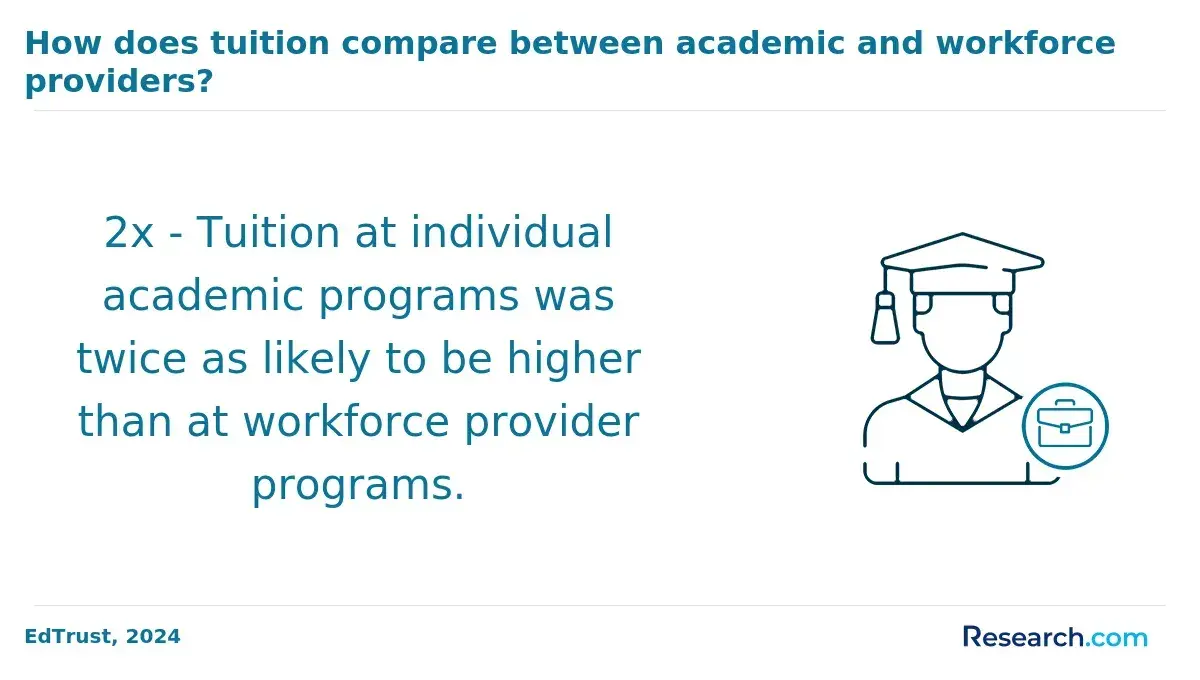
There is no single price for an affordable analytics master's degree, and a per-credit quote is not a total price. Ask each school for a written estimate based on your residency, prerequisites, enrollment pace, and required credits. Sticker price is the published charge; your net cost reflects grants or employer assistance you actually receive, while loans change when you pay rather than reducing the price.
The components below belong in the same comparison for every program. Leaving one out can make the apparent bargain more expensive.
| Cost component | What to verify |
| Tuition | Graduate rate, required credits, residency rules, and any differential rate |
| Mandatory charges | Program, technology, laboratory, and graduation fees |
| Preparation and completion | Prerequisite courses, software, capstone expenses, and required travel |
| Financing and time | Available aid, employer benefits, loan costs, and possible lost earnings |
Ask when tuition or fees may change and whether an assistantship, scholarship, or employer benefit applies to your specific enrollment plan. Confirm that the institution and program meet federal-aid eligibility rules before relying on loans.
Are Online Master's Degrees for Data-Driven Roles Worth It?
An online master's can be worth its cost when it supplies skills or professional eligibility you cannot obtain as efficiently through experience, a graduate certificate, or focused training. It may also let you keep earning while enrolled. But "online" does not mean asynchronous: scheduled classes, team projects, proctored work, residencies, and local placements can constrain your time or add expenses.
Compare the degree's incremental value against your current qualifications. A working analyst may need only a specific technical skill; an aspiring licensed counselor needs a qualifying pathway, not simply the cheapest analytics coursework. If your goal is research rather than professional advancement, consider whether a funded doctoral route or one of the cheapest PhD programs better fits - but compare funding, time, and career purpose rather than assuming a doctorate costs less.
What Do Affordable Data-Focused Master's Programs Teach?
Data-focused master's programs commonly teach how to frame questions, collect and clean information, analyze evidence, and communicate decisions. The balance varies: an MS in data science may emphasize statistics and programming, while an MBA may emphasize interpreting analyses for business decisions. Field-specific degrees add context such as clinical quality, school assessment, or security risk.
Review the actual required-course list, not just concentration labels. Check for statistics, databases, responsible data use, and a portfolio-worthy capstone if those skills matter to your goal. AI tools make it especially important to learn validation, privacy, and clear explanation - not merely how to produce a model output. A thesis may suit research plans; an applied project may provide more relevant evidence for an employer.
What Are the Admission Requirements for Data-Driven Master's Programs?
Most master's programs require a completed bachelor's degree, transcripts, and an application. Depending on the program, applicants may also need prerequisite math or programming, professional experience, recommendations, a statement, an interview, or a license. GPA thresholds and GRE or GMAT policies vary by graduate program; a school's undergraduate admissions policy does not answer either question.
If your record is uneven, ask whether the specific program offers conditional admission or evaluates recent relevant work. Guides to online graduate schools with low GPA requirements can help identify questions to ask, but verify the current threshold with graduate admissions. Also request an evaluation of any prior graduate-level coursework: accepted credits must apply to your degree requirements to save money.
How Long Does an Affordable Data-Focused Master's Degree Take?
Completion time depends on required credits, course availability, enrollment intensity, prerequisites, and culminating work - not the length of an individual course. Full-time study can shorten the calendar but increase the pressure to reduce paid work; part-time study can spread payments while leaving more time for fees or tuition increases to affect the final cost.
Ask for a term-by-term plan that includes every foundation course, capstone, internship, practicum, or clinical placement. If you have prior graduate credit or a stackable certificate, request a formal evaluation of course equivalency and residency requirements before counting on a shorter path. A combined bachelor's/master's or bridge pathway has separate eligibility rules; undergraduate courses do not ordinarily count as master's credit without an explicit institutional policy.
What Careers Can Affordable Data-Focused Master's Degrees Lead To?
Possible destinations include data analyst, data scientist, business intelligence analyst, IT systems specialist, security analyst, healthcare quality analyst, and education assessment specialist. The degree-to-job match differs: an MS in data science may support technical modeling, while an MHA may better serve someone improving hospital operations. Prior experience, technical skills, and employer requirements remain consequential.
Work backward from actual job postings: note required skills, licenses, and experience, then compare them with each program's curriculum and placement opportunities. For regulated work, confirm state requirements before enrolling. Applicants concerned that a criminal record may affect professional screening can research the best degree for felons, but should verify occupation-specific licensing and employer policies directly rather than assuming any degree removes those barriers.
What Salaries and Job Outlook Can Data-Driven Graduates Expect?
BLS reports a May 2024 median annual wage of $112,590 for data scientists and projects 34% employment growth from 2024 to 2034. That growth signals opportunity and competition, not a guaranteed job. The wage describes people employed in the occupation across education and experience levels; it is not the expected starting pay or return on investment for someone earning a master's degree.
For a useful financial comparison, investigate wages for the specific role and location you want, whether its employers prefer graduate education, and what skills you already possess. Then compare the possible career benefit with your total program cost and any earnings you would give up while studying. A less expensive certificate or experience-building role may be the better first step when a master's is not required.
Other Things You Should Know About
No degree field is cheapest at every school. Compare complete program estimates for degrees that teach the skills your target role requires; include fees, prerequisites, and residency-based tuition.
Not necessarily. Business, healthcare, education, IT, and other roles use data. Relevant experience or a narrower credential may be sufficient for some jobs.
Sometimes, but verify the specific program. Online coursework may still include scheduled sessions, residencies, clinical placements, practicums, or proctored activities.
Not automatically. Occupational wages depend on role, location, skills, and experience. Compare the degree's full cost with requirements and opportunities in your intended job market.
References
- Employment Projections Home Page | bls.gov https://www.bls.gov/emp/
- Understanding College Costs | studentaid.gov https://studentaid.gov/resources/prepare-for-college/students/choosing-schools/consider-costs
- Cost of Attendance (Budget) | 2025-2026 Federal Student Aid Handbook https://fsapartners.ed.gov/knowledge-center/fsa-handbook/2025-2026/vol3/ch2-cost-attendance-budget
- Qualified Ed expenses | Internal Revenue Service https://www.irs.gov/credits-deductions/individuals/qualified-ed-expenses
- Your financial path to graduation | consumerfinance.gov https://www.consumerfinance.gov/paying-for-college/your-financial-path-to-graduation/
- Research Summary: Education and Lifetime Earnings | ssa.gov https://www.ssa.gov/policy/docs/research-summaries/education-earnings.html
- Paying for Graduate School https://graduate.ua.edu/applicants/funding/
- Tuition & Expenses | Student Financial Services https://financialaid.wsu.edu/tuition-and-expenses/
- 7 Essential Data Analyst Skills to Advance Your Career | jhu.edu https://ep.jhu.edu/news/7-essential-data-analyst-skills-to-advance-your-career/
- The Data Analytics Skills Every Data Science Professional Needs | Gary W. Rollins College of Business https://blog.utc.edu/business/2023/11/15/data-analytics-skills-a-data-science-professional-needs/