2027 MLIS Programs for Community Technology Training

Co-Founder and Chief Data Scientist
Choosing an MLIS for community technology training means looking beyond a program's technology electives. You need preparation to teach people with different devices, skills, and access needs. The U.S. Bureau of Labor Statistics reports a May 2025 median annual salary of $68,270 for librarians and media collections specialists, but that broad figure cannot predict pay for a training role.
This guide helps prospective students compare accreditation, instruction-focused coursework, hands-on experience, cost, and credentials before committing to a degree.
Key Things You Should Know
- Prioritize an ALA-accredited master's program with documented opportunities to practice digital literacy instruction; a technology course alone does not establish a specialization.
- Check whether you can teach real learners during a practicum or project, and whether online students can complete that work locally.
- BLS projects 2.6% employment growth for librarians and media collections specialists from 2025 to 2035; community technology trainer jobs may have different qualifications and prospects.
What are MLIS programs for community technology training?
These are library and information science master's programs that can prepare students to help community members use technology safely and effectively. The work might include teaching introductory computer skills, helping patrons navigate online services, or designing accessible workshops on privacy and responsible AI use. Public libraries are a natural setting, but community organizations and other libraries may offer similar work.
"Community technology training" describes a career goal, not a standard degree title or universally available concentration. An institution might award an MLIS, MLS, Master of Science in Library Science, or another information-focused degree. Compare its documented curriculum and field opportunities rather than assuming the degree name confirms a particular training pathway.
Which accreditation should an MLIS program for community technology training have?
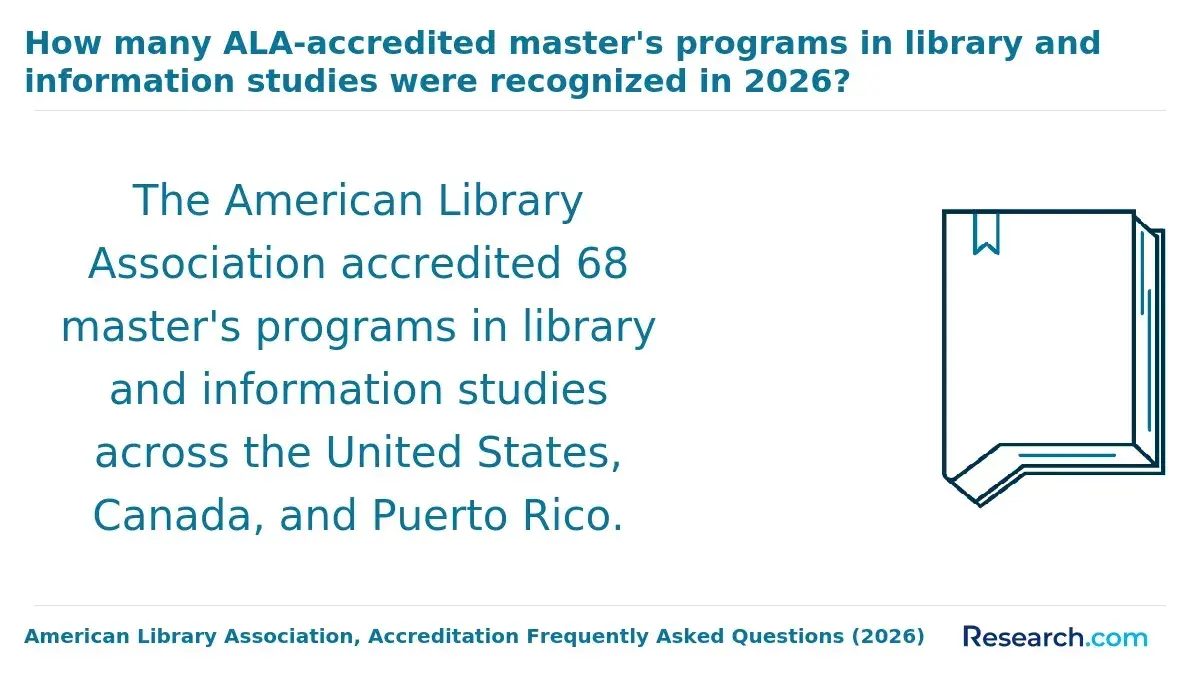
For readers seeking professional librarian positions, accreditation by the American Library Association (ALA) is a strong selection criterion. Check the specific master's program in the current ALA directory; accreditation of the university itself is not the same as ALA accreditation of its LIS degree.
ALA accreditation does not certify that a program offers a community technology concentration, a particular elective, or a local internship. After confirming accreditation, use the current catalog and ask the program which instruction courses are available to students in your study format and when they are typically offered.
What careers can an MLIS prepare you for in community technology training?
An MLIS can support a professional librarian role that combines reference service, outreach, and technology instruction. It can also help graduates compete for jobs focused on digital inclusion, although employers may accept other education and relevant teaching experience.
The distinctions below matter when deciding whether a graduate degree is worth the investment.
| Potential role | Typical training work | How an MLIS may fit |
| Public services or adult services librarian | Plans classes and provides individual help alongside reference and outreach duties | Often relevant to professional librarian hiring; check each posting |
| Digital literacy or technology trainer | Teaches workshops and supports learners using devices and online tools | May be valued, but teaching skill and experience can be as important |
| Library assistant or technician | Helps patrons use public computers and supports classes | May provide an entry point without requiring a master's degree |
| Community program coordinator | Organizes partnerships, schedules instruction, and evaluates participation | One possible qualification among education, outreach, and program experience |
For a broader comparison of credentials and occupations, see library science degree types and salaries. Read actual job postings in your target area before enrolling. They reveal whether employers ask for an ALA-accredited degree, teaching experience, language skills, or particular outreach responsibilities.
What do MLIS programs teach about digital literacy and technology instruction?
The most useful curriculum combines instructional design, planning learning goals and activities, with information literacy, reference service, community assessment, accessibility, and privacy. A student should learn not just how a tool works, but how to explain it to someone using an unfamiliar device or encountering an inaccessible website.
Look for assignments that require a lesson plan, a learner-friendly handout, an accessible workshop, and a way to assess whether participants achieved the learning goal. Responsible AI use may also be relevant when a class covers evaluating generated information or protecting personal data; it should not displace foundational instruction in searching, privacy, and device use.
Course sequencing matters as much as course titles. If an accelerated path appeals to you, compare the actual course schedule with the advertised timeline. A one year information science degree may leave less room for instruction electives or a substantial field project.
Are online or campus-based MLIS programs better for community technology careers?
Neither format is inherently better. An online program can let a working student remain near a library or community organization where they can practice teaching. A campus-based program may make it easier to use local partnerships and receive in-person feedback. In either format, supervised instruction with real learners is more informative than delivery mode alone.
Ask whether required sessions are live, whether group work crosses time zones, and whether a practicum can be arranged near you. "Online" does not necessarily mean self-paced or free of campus visits. If scheduling is the main constraint, explore flexible pace library science masters, then verify the program's actual deadlines, course sequence, and placement rules.
What are the admission requirements for community technology-focused MLIS programs?
Requirements vary by institution, so consult each program's current admissions page. Applicants should expect to document a completed bachelor's degree and may need transcripts, a statement of purpose, recommendations, a résumé, or other materials. Do not assume prior library work replaces a stated academic requirement.
Technology instruction experience can strengthen an application even when it is not required. In a statement of purpose, describe a specific teaching or outreach challenge, what you did, and what you want to learn.
If you have unusual academic records or hope to apply previous graduate credits, request an individual review; transfer-credit rules are program-specific and separate from undergraduate credit policies.
How long do MLIS programs take and how much do they cost?
Completion time depends on required credits, course availability, enrollment pace, and any fieldwork. Rather than relying on an advertised minimum, map the required courses and desired electives across actual terms. A missed prerequisite or infrequently offered instruction course can change your timeline.
For a meaningful cost comparison, calculate required credits multiplied by your applicable tuition rate, then add mandatory fees, materials, and any practicum travel or reduced work hours.
Published tuition is not the full cost of attendance, and online students should not assume they qualify for an in-state rate. Use low cost library graduate degree options as a starting point, then confirm current charges directly with each institution.
Compare that gross cost with any confirmed employer support or aid to estimate your out-of-pocket expense; separately consider how much you would borrow. An MLIS is easier to justify financially when your target postings require or favor it and the program offers field experience you cannot readily obtain through work or shorter training.
What technology training courses and field experiences should MLIS programs offer?
Seek verified coursework in information literacy instruction, public library services, accessibility, community outreach, and privacy. A course listed in a catalog is not proof that it runs every term or is open to online students. Ask an adviser for a feasible course sequence before treating an elective as part of your plan.
The strongest field experience lets you assess a community need, design instruction, teach it, gather feedback, and revise it. A workshop plan, accessible handout, and brief account of what learners found difficult can become a useful portfolio sample. Confirm who arranges the placement, whether remote or local sites are permitted, and whether you need time away from paid work.
Location affects the full cost of that experience. A regional comparison such as library science tuition South region can help narrow a search, but it cannot tell you whether a suitable placement is nearby or whether travel will be required.
Do community technology trainers need an MLIS, license, or certification?
There is no single credential requirement for every community technology training job. A professional librarian posting may require an ALA-accredited master's degree, while a trainer, assistant, or community educator posting may accept other qualifications and demonstrated teaching experience. Optional technology or teaching certificates can supplement those skills, but should not be mistaken for a universal legal requirement.
School librarian work is a separate credential decision. State certification, licensure, or endorsement requirements can apply even when the graduate degree is ALA-accredited or delivered online. If schools are among your intended employers, verify the specific preparation and credential rules with the relevant state education authority before enrolling.
What salaries and job outlook can MLIS graduates expect in community technology?
BLS reports a May 2025 median annual salary of $68,270 for librarians and media collections specialists and projects 2.6% employment growth for that occupation from 2025 to 2035. These are U.S. occupation-wide figures, not outcomes for MLIS graduates or a forecast for community technology trainers specifically.
Pay and hiring prospects depend on the employer, location, responsibilities, and whether a position is classified as a librarian, trainer, coordinator, or technician. Compare local postings with your current earnings and the total cost of the degree. If your preferred jobs do not require an MLIS, gaining workshop experience first may be a lower-risk way to test the career fit.
Other Things You Should Know About Library Science Programs
Yes. Document what you taught, who the learners were, how you adapted the lesson, and what feedback you received. Describe the work accurately rather than presenting volunteer service as a formal internship.
Only with appropriate permission and privacy safeguards. A lesson plan, your own handout, and an anonymized reflection can demonstrate your skills without exposing a patron's personal information.
Broad teaching and troubleshooting skills are generally more transferable. Learn the tools your intended community uses, but show that you can adapt when interfaces, devices, and learner needs change.
Talk with library staff and community partners, observe recurring help requests where permitted, and ask prospective learners about their goals. Use that information to propose a class rather than assuming everyone needs the same technology lesson.
References
- Workforce Development | State Library of Pennsylvania https://www.pa.gov/agencies/statelibrary/library-development/workforce-development
- Technology Center Instructors - Teacher Certification | CareerTech https://oklahoma.gov/careertech/educators/certifications/technology-center-instructors.html
- Students & Recent Graduates | U.S. Office of Personnel Management https://www.opm.gov/policy-data-oversight/hiring-information/students-recent-graduates/
- College Supervised Practicum | nysed.gov https://www.nysed.gov/teaching-initiatives/college-supervised-practicum
- Looking Ahead: Incorporating AI in MLIS Competencies | sjsu.edu https://scholarworks.sjsu.edu/cgi/viewcontent.cgi
- Public Library-Based Social Work Field Placements | tandfonline.com https://www.tandfonline.com/doi/full/10.1080/01616846.2022.2044264
- Youth Services (MLIS) | missouri.edu https://cehd.missouri.edu/degree/youth-services-mlis/
- MLIS Career Pathways - SJSU - School of Information https://ischool.sjsu.edu/mlis-career-pathways
- MLIS Master of Library and Information Studies - UA Online https://online.ua.edu/degrees/mlis-master-of-library-and-information-studies/
- Library Science Master's Online - UW Information School https://ischool.uw.edu/programs/mlis/degree-options/online