2027 How Quality Improvement Connects to Nursing Work: Concepts Students Should Recognize
Audited and Verified:
Our Editorial and Data Verification Process
Research.com uses government datasets, official education statistics and primary institutional information to support its career and degree guides. Our review process checks factual accuracy, occupational definitions, source dates and the requirements associated with the credentials discussed.
How This Article Was Fact-Checked
Our editorial team verifies salary estimates, employment projections, education requirements and program information against original data providers and official organizations. Salary figures are checked against the relevant occupational definitions and reporting periods. Information about licensure, accreditation and required in-person training is reviewed separately.
Fact-checked and verified on:

Co-Founder and Chief Data Scientist
Nursing students often encounter "quality improvement" in a course or project before they see how it affects a shift at the bedside. The connection matters: nurses notice recurring problems, document care, communicate risks, and help test safer workflows.
This guide explains what quality improvement means, how students learn it, and which methods are worth recognizing. It also shows how to assess a program's QI preparation without confusing a classroom project with permission to change clinical practice independently.
Key Things You Should Know
- Quality improvement (QI) tests changes to a care process in a specific setting; it does not replace patient-specific nursing judgment or clinical policy.
- A useful student QI proposal identifies a baseline, at least one process measure, an outcome measure, and a balancing measure before claiming success.
- Judge a nursing program's QI preparation by its supervised practice, feedback, and opportunities to interpret data - not by the presence of a project title alone.
What Is Quality Improvement in Nursing?
Quality improvement in nursing is the systematic use of data and small, evaluated changes to make a care process safer, more reliable, or more effective in a particular setting. A nursing team might examine why discharge instructions are sometimes incomplete, test an approved documentation prompt, and check whether completion improves without delaying discharge.
QI asks, "Is this process working better here?" Evidence-based practice asks what the best available evidence supports; QI can put that evidence into a local workflow and evaluate the result. Research generally aims to produce generalizable knowledge. A project's label alone does not determine its oversight: the organization must assess its purpose, methods, data use, and applicable review requirements.
QI preparation is not limited to degrees that add a new clinical specialty. For an experienced RN considering a practice-focused doctorate, DNP pathways that do not add a new clinical specialty may still involve substantial improvement work. "Without clinicals" should not be taken to mean without required practice experiences or an approved project.
Why Is Quality Improvement Important in Nursing Practice?
Nurses work where processes meet patients. They may spot an unclear handoff, a recurring delay in obtaining supplies, or a documentation step that makes follow-up difficult. Reporting those patterns gives a team a chance to improve the system rather than relying on individual vigilance alone.
Good QI also checks for unintended effects. A shorter discharge workflow is not an improvement if patients leave with less understanding or staff must complete missing work later. Nurses contribute clinical context, patient perspectives, and practical feedback while working within their roles and the organization's change-approval process.
These skills remain relevant in advanced practice, but QI coursework does not qualify an RN for an NP role. A nurse weighing that separate career goal can compare affordable online nurse practitioner programs while verifying population-focus preparation, supervised clinical requirements, and total cost.
How Do Nursing Students Learn Quality Improvement Skills?
Students typically progress from recognizing a safety problem in class to examining a workflow in simulation or supervised practice. They may review de-identified examples, map the steps in a process, choose measures, and explain what the results can - and cannot - show. Faculty and clinical-site staff determine what students may observe, access, or propose; students should not change patient-care procedures on their own.
A manageable assignment might examine whether an approved handoff checklist is completed. The student could define what counts as completion, identify the observations permitted by the site, and discuss whether the checklist improves communication or merely adds documentation. A proposal or simulated test is not evidence that patient outcomes improved.
Working practical nurses considering RN education can ask whether LPN-to-RN pathway options for working practical nurses include supervised opportunities to analyze care processes. Prior workplace experience is valuable context, but the receiving program decides how it meets academic requirements.
Students do not need to master every statistical tool. They should be able to match a method to a problem and explain its limits. The distinctions below are especially useful when reading or proposing a clinical improvement project.
| Method | What it helps answer | Important limitation |
| Process map | Where do handoffs, delays, or repeated steps occur? | A map describes a workflow; it does not measure improvement. |
| Plan-Do-Study-Act (PDSA) | What happened during a small, planned test of change? | One successful test does not establish a lasting effect. |
| Run chart | How does a measure change over time? | Changes need enough consistently collected data to interpret responsibly. |
| Process, outcome, and balancing measures | Was the change performed, did the intended result improve, and did it cause another problem? | A measure needs a clear definition and an appropriate denominator. |
A baseline matters because an after-only result cannot show whether a process improved. Students should also distinguish routine variation from a convincing pattern and avoid claiming that a local change caused every observed difference.
Licensed RNs comparing online RN-to-BSN clinical requirement comparisons should check how each program teaches and assesses these methods. A description such as "no clinicals" does not establish that there are no practice-based QI assignments or site-related obligations.
QI may appear in nursing fundamentals, leadership, community or population health, evidence-based practice, informatics, and capstone courses. For example, a fundamentals course may address error reporting; informatics may examine documentation data; and leadership may ask students to evaluate a proposed workflow change. Course titles and sequencing vary by school.
When reviewing a syllabus, look for more than a requirement to "complete a QI project." Stronger learning objectives ask students to define a problem, select meaningful measures, interpret limitations, and communicate recommendations to an appropriate audience. Clinical judgment and patient safety should remain visible throughout the assignment.
An ADN-prepared RN considering graduate study can use online ADN-to-MSN program comparisons to locate possible pathways, then inspect the actual curriculum. A bridge program's title does not establish how much QI preparation it provides or whether its specialty fits the nurse's goal.
Nursing program accreditation, such as applicable ACEN or CCNE accreditation, addresses educational quality within the accreditor's scope. It is distinct from institutional accreditation and from state board approval relevant to prelicensure education. None of these designations, by itself, tells a prospective student how well a particular QI assignment is taught.
Ask to see the program's stated QI learning outcomes and representative assignment expectations. Find out whether students receive feedback on measurement, participate in supervised clinical or simulated work, and learn the site's rules for accessing data. If a project uses employer information, ask who approves it and what may be shared in a presentation or portfolio.
BSN-prepared RNs considering affordable nursing master's study for BSN graduates should compare the curriculum and total program costs separately. A lower advertised price does not establish equivalent QI opportunities or suitability for a particular leadership, education, or clinical role.
QI interest does not create a separate admission route. Prelicensure nursing programs commonly evaluate prior coursework and science prerequisites, while postlicensure programs generally require an RN license; exact grades, course-age rules, exams, and other conditions are school-specific. Admission to a university may also differ from admission to its nursing major.
For this topic, the practical question is whether the program admits you to the pathway you need and provides the QI learning you want. Request the current admission criteria and curriculum for your intended entry term. If you already hold an RN license and want to lead larger improvement efforts, compare employer-sponsored QI training with a graduate degree before committing to additional study.
RNs considering doctoral study may encounter less restrictive DNP entry options. Admission flexibility does not waive a program's graduation requirements, required practice experiences, or organizational permissions for a QI project.
QI concepts, data interpretation, and group discussions can be taught online or on campus. The consequential difference is often how students complete supervised practice, simulation, team work, and project activities - not where they watch lectures. An online course may still require scheduled meetings, local site access, or campus visits.
For working students, ask which QI tasks can use an approved workplace, who arranges a site if needed, and whether employment activities count toward academic requirements. Do not assume that access to workplace data is automatic. Compare required attendance and project timelines against your actual work schedule before enrolling.
The same scrutiny applies to accelerated Doctor of Nursing Practice programs. A shorter published timeline can be attractive, but a feasible QI project still depends on approvals, usable data, faculty guidance, and time to evaluate results.
Staff nurses use QI skills when they report recurring risks and help evaluate changes to unit workflows. Charge nurses, nurse managers, educators, informatics nurses, and dedicated quality or patient-safety staff may take broader roles in coordinating teams, examining measures, or implementing approved changes. Responsibilities depend on the employer, the nurse's experience, and the position - not on having completed one student project.
For a student or new graduate, the sensible progression is to learn the process, contribute observations during supervised practice and orientation, and seek feedback before taking on more responsibility. Experienced RNs pursuing a QI-focused role can document their specific contribution to an approved project without presenting team results as solely their own.
Advanced practice nurses may also participate in service improvements, but their clinical role requires separate preparation and authorization. An RN comparing FNP study options with school-supported placements should verify clinical-placement responsibilities independently of any QI project support.
What Are Nursing Salaries and Job Outlook Expectations?
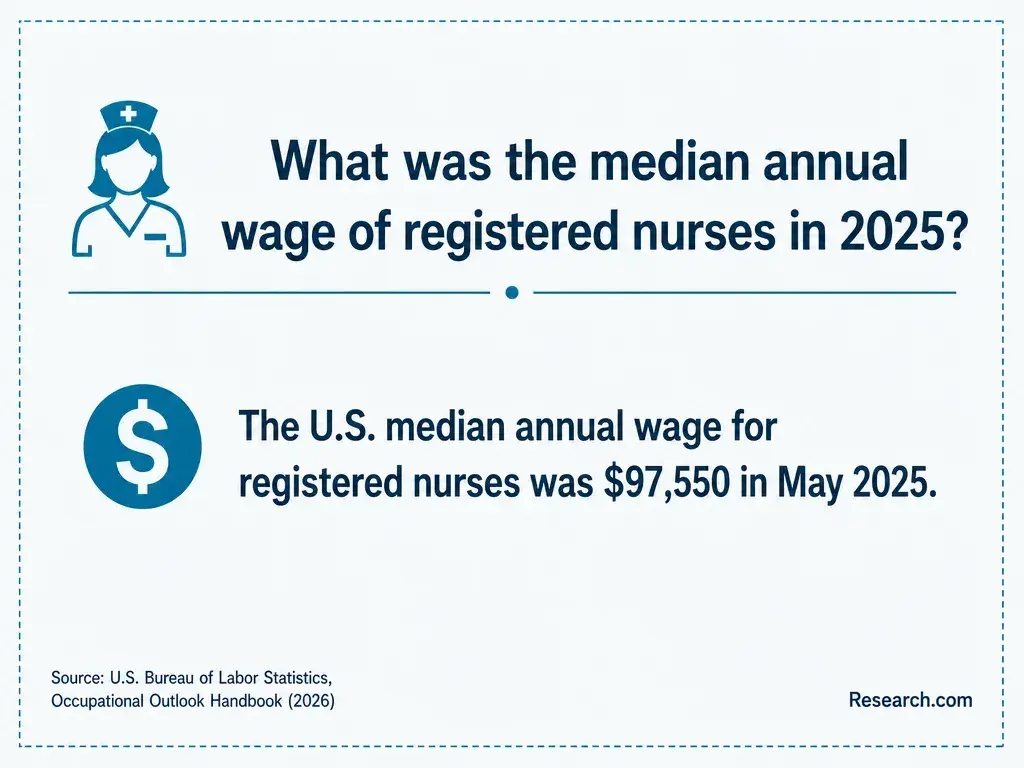
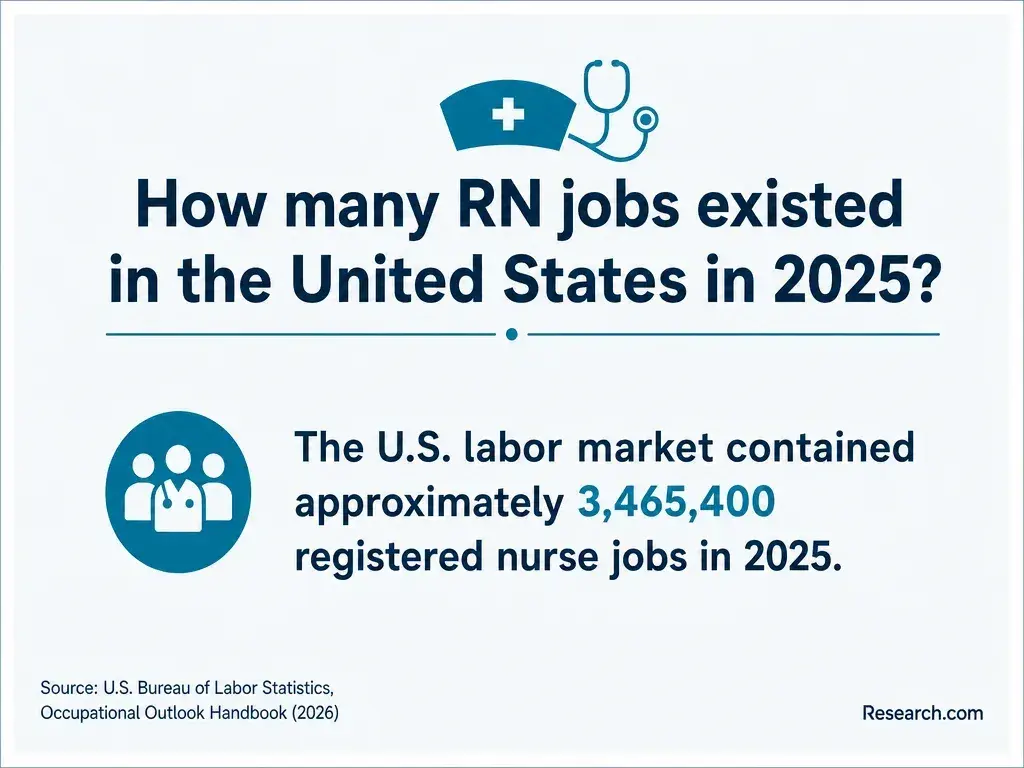
QI is a competency, not a single occupation with a standard salary. Staff RN positions, nurse manager jobs, and dedicated quality roles have different duties and pay structures. For an RN career baseline, consult the U.S. Bureau of Labor Statistics' current registered nurse wage and employment projections; use the publication's wage reference year and projection period when comparing figures. An occupation-wide median is not a new graduate's offer or a return on a particular degree.
Before paying for more education, compare actual job postings for the role you want. Note whether employers require an RN license, particular experience, a graduate degree, or demonstrated improvement work. Include tuition, fees, travel, project-related requirements, and time away from work in the comparison; a focused employer training opportunity may be enough for an initial QI contribution.
If the intended career is instead psychiatric-mental health advanced practice, online PMHNP tuition and fee considerations can inform a separate cost comparison. QI interest alone is not a reason to choose an NP program, and NP earnings should not be treated as the expected payoff from learning QI.
Other Things You Should Know About Nursing
Yes. Follow faculty and clinical-site rules before accessing or using patient information. De-identification and classroom use do not automatically remove organizational privacy or approval requirements.
Usually only with appropriate school and site permission. Describe your role and methods accurately, and omit protected patient information and confidential employer data.
Not every QI activity does. The responsible institution determines what review is required based on the project's purpose, methods, participants, and data - not simply its "QI" label.
Usually not by itself. Employers may seek RN experience, data skills, and evidence of collaboration or implementation. Compare the specific job requirements with what you can document.
- Quality of care | who.int https://www.who.int/health-topics/quality-of-care
- Using Control Charts to Understand Variation - PMC - NIH https://pmc.ncbi.nlm.nih.gov/articles/PMC12410059/
- Plan-Do-Study-Act (PDSA) Directions and Examples | Agency for Healthcare Research and Quality https://www.ahrq.gov/health-literacy/improve/precautions/tool2b.html
- Tools and Strategies for Quality Improvement and Patient Safety | nih.gov https://www.ncbi.nlm.nih.gov/books/NBK2682/
- Quality Measurement and Quality Improvement | cms.gov https://www.cms.gov/medicare/quality-initiatives-patient-assessment-instruments/mms/quality-measure-and-quality-improvement-
- Data and measurement in quality improvement | sciencedirect.com https://www.sciencedirect.com/science/article/pii/S2949912723000053
- What Is Quality Improvement in Nursing? - UMSV https://absn.mountsaintvincent.edu/blog/quality-improvement-in-nursing/
- 6.2 Quality Improvement Measures | University of West Florida Pressbooks https://pressbooks.uwf.edu/nursingleadership/chapter/9-3-measuring-and-improving-quality/
- Quality Improvement (QI) - Evidence-based Practice in Healthcare - Library Guides at Ohio University https://libguides.library.ohio.edu/evidence/QI
- PDSA Cycles: Improvement and Implementation - NIRN https://nirn.fpg.unc.edu/blog/pdsa-cycles-improvement-and-implementation/