2027 Choosing a BS in Business Administration When You Have Business Courses but an Incomplete Math Sequence
Audited and Verified:
Our Editorial and Data Verification Process
Research.com uses government datasets, official education statistics and primary institutional information to support its career and degree guides. Our review process checks factual accuracy, occupational definitions, source dates and the requirements associated with the credentials discussed.
How This Article Was Fact-Checked
Our editorial team verifies salary estimates, employment projections, education requirements and program information against original data providers and official organizations. Salary figures are checked against the relevant occupational definitions and reporting periods. Information about licensure, accreditation and required in-person training is reviewed separately.
Fact-checked and verified on:

Co-Founder and Chief Data Scientist
You may have completed accounting, marketing, or management courses and still be missing the math required for a BS in Business Administration. That gap can affect admission to the major, the order of your classes, and your graduation date - but it does not necessarily mean starting over.
For transfer and returning students, the key is to find out which credits satisfy degree requirements and when the remaining math must be finished. This guide shows you how to compare programs using an official degree audit, a workable course sequence, and a realistic cost estimate.
Key Things You Should Know
- An incomplete math sequence does not automatically prevent admission, but you must meet the chosen program's math requirements before graduating.
- Accepted business credits may count only as electives; an official degree audit must show whether they satisfy the core, concentration, or other requirements.
- Compare the cost and timing of the missing math - not just advertised transfer credits - because a prerequisite can delay later business courses.
Can you earn a BS in Business Administration with incomplete math courses?
Yes, if the program permits you to enroll before finishing the sequence and you complete every requirement for the degree. Schools may admit a student to the university while delaying admission to the business major, or they may allow enrollment in the major but restrict access to courses that require math. Admission, major eligibility, and graduation are separate decisions.
Identify the precise gap first: a missing prerequisite, an unfinished course, a transferred course the school considers nonequivalent, or a required statistics course you have not taken. A course marked "in progress" generally cannot satisfy a graduation requirement until it is completed and recorded. If speed matters, compare fast-track bachelor's degree options against the actual math sequence; an accelerated calendar cannot remove a prerequisite.
What math courses are required for a BS in Business Administration?
Requirements vary by institution. Depending on the catalog, a program may require college algebra, quantitative reasoning, finite mathematics, business calculus, statistics, or a combination. Some courses serve general education; others are prerequisites for finance, analytics, or upper-level business work. A prior course with a similar title is not automatically equivalent.
The distinction to check is what the course satisfies and what it unlocks. This comparison can help you read a catalog, but the receiving school determines equivalency.
| Possible requirement | Why it matters to your plan |
| Algebra or quantitative reasoning | May satisfy general education or be required before statistics or another business course. |
| Statistics | May be required in the business core and before analytics or research coursework. |
| Finite math or business calculus | May be program-specific or tied to a concentration; do not assume it is interchangeable with algebra. |
Ask for the catalog's exact course numbers, minimum grades, and approved transfer equivalents. The requirements for qualifying for a business administration college program are a starting point, not a substitute for your prospective school's rules.
How can you transfer business credits into a bachelor's degree program?
Send official transcripts from every college attended and request a degree audit for the specific BS in Business Administration, catalog year, and any intended concentration. The transfer office or registrar decides whether credit is accepted; the business department or authorized adviser may need to decide whether it fulfills a major requirement.
Use this sequence to turn a preliminary credit estimate into a completion plan:
- Collect syllabi for business and math courses whose equivalency is unclear, including course descriptions and credit hours.
- Mark each transferred course in the audit as general education, business core, concentration, elective, or unapplied credit.
- Ask who approves a substitution or appeal and obtain the decision in writing before taking another course elsewhere.
- Confirm residency rules, repeat-course policies, and the final term in which each remaining course is offered.
This matters especially if your prior credential is an applied associate degree or your credits use quarter hours: accepted credits may not satisfy the requirements you expected. If your target is a more specialized degree, a project management bachelor's transfer planning guide can help frame a separate comparison, but its transfer policies will not establish equivalencies for a business administration program.
Some do. A program may offer online math during a regular term, a shorter session, or an approved course through another institution. None of those options is guaranteed to be self-paced or available when you need it. Online math may have fixed deadlines, scheduled exams, proctoring, or required software.
Before choosing a format, ask whether you can take the math course alongside business classes, whether its prerequisite is offered in the same format, and when transfer approval must be obtained. If you work while studying, compare those answers with the course schedules and group-work expectations of business administration programs for studying around work commitments. Flexibility is valuable only if the required courses fit your available hours.
A typical curriculum combines general education with accounting, economics, marketing, management, finance, operations, business law, and quantitative coursework. Programs may also require a capstone, electives, or a formal concentration. The exact mix matters here because finishing math can be a condition for taking finance, statistics, analytics, or a concentration course.
Build a term-by-term plan rather than counting remaining credits alone. If a required course runs only in certain terms, completing its math prerequisite late can postpone graduation even when you have room in your schedule. When comparing shorter undergraduate business programs across the US, ask whether their advertised pace is feasible with your specific prerequisites and transferred coursework.
Check the institution's transfer-admission rules separately from the business major's entry rules. A school might accept your application with math outstanding, require completion before declaring the major, or require a particular grade before enrollment in later courses. GPA, transcript, and deadline rules also vary; an adviser's informal assurance is not the same as an approved exception.
Submit transcripts, identify any math course currently in progress, and ask admissions and the business adviser for written answers to two questions: When must the course be completed? and Which business courses will I be unable to take until then? If you are also weighing a project management bachelor's, review FAFSA planning for project management bachelor's students as a separate comparison - not as evidence that aid will cover unfinished math in your chosen business program.
Your remaining time depends on credits that apply to the degree, the missing math sequence, course availability, and whether you study part-time or full-time. Two programs can accept the same number of credits yet leave you with different graduation dates if one applies more of them to required courses.
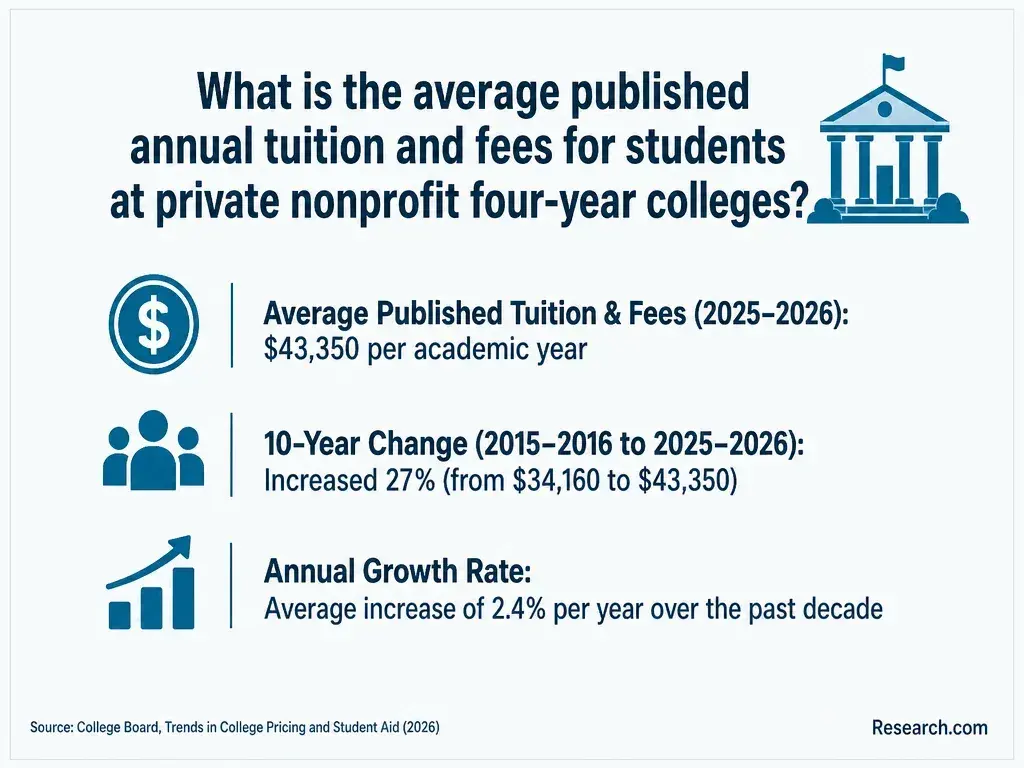
For each school, request a written remaining-course plan and estimate tuition using its published charges. Include mandatory fees, books or software, any math taken elsewhere, and the cost of a possible extra term. Ask the financial-aid office whether your planned enrollment and outside coursework qualify for aid; eligibility cannot be inferred from a school's advertised price.
Compare low-cost business administration degrees with federal aid options using your audited requirements and aid offer, not sticker price alone.
A broad business degree can support applications for roles such as operations coordinator, marketing coordinator, HR assistant, or project coordinator. The best fit depends on your existing work and the evidence you can show: a relevant internship, process-improvement assignment, spreadsheet analysis, or customer-facing responsibility may be more persuasive than a course title alone.
Use your intended role to choose electives and applied work. Someone aiming for project coordination may value scheduling and operations practice; someone moving toward HR will need different experience. Neither path automatically leads to management after graduation. If a specialized degree is under consideration, compare its additional coursework and transfer fit with business administration degrees compared by cost duration and outlook before switching programs.
There is no single salary or growth rate for BS in Business Administration graduates. Federal figures describe occupations, not the earnings of people with a particular major, and experience and location affect individual offers.
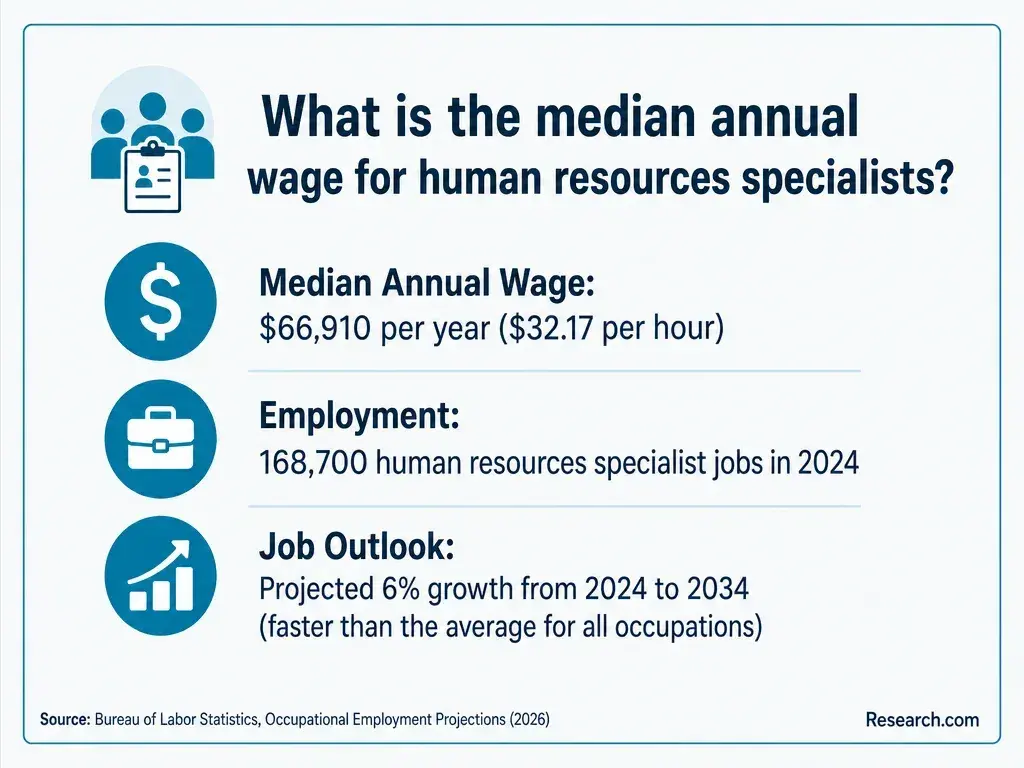
For example, the U.S. Bureau of Labor Statistics reports a May 2025 median annual wage of $75,940 for human resources specialists and projects 6% employment growth from 2025 to 2035. That occupation-wide median is not an entry-level offer: compare actual HR postings with your experience and the program's opportunities to develop relevant skills. If logistics is your goal instead, supply chain program tuition time and earnings context can inform a comparison with a more specialized pathway.
How do you choose an accredited business administration program?
Start by confirming recognized institutional accreditation, which is distinct from business-school or programmatic accreditation through AACSB, ACBSP, or IACBE. If a school advertises business accreditation, verify its scope and whether it covers the program and location you are considering. Accreditation alone does not establish that your credits will apply or that math will be available on your schedule.
Ask each finalist for an official degree audit, a course sequence showing when you can finish the missing math, its transfer-appeal policy, and a cost estimate based on remaining requirements. Check the current catalog and get uncertain substitutions approved before enrollment. A comparison of budget-conscious online business administration education is most useful after those checks: the better-value program is the one you can realistically complete without avoidable repeated courses or delays.
Other Things You Should Know About Business Administration
Possibly, but placement into a higher course is not always the same as earning credit or waiving a degree requirement. Ask the registrar what the test result will satisfy.
Only if the receiving school accepts that grading basis for the specific requirement. Check the policy before changing a course to pass/fail.
Do not assume so. Prior-learning credit and course substitutions require the school's approval, and some requirements cannot be met through experience alone.
Wait for an equivalency decision. A course may need review because of its content, grade, or credit hours; retaking it before that decision could create unnecessary cost.
- Accreditation in the U.S. | ed.gov http://www.ed.gov/laws-and-policy/higher-education-laws-and-policy/college-accreditation/accreditation-in-the-us
- Undergraduate Admission Requirements - UNLV Catalog https://catalog.unlv.edu/content.php
- Gen Ed Requirements | General Education @ Illinois https://gened.illinois.edu/requirements/
- College of Business Administration - Academic Catalog https://catalog.uic.edu/ucat/colleges-depts/business-administration/
- Transfer Credit Policy | Pace University New York https://catalog.pace.edu/undergraduate/academic/academic-policies-general-regulations/transfer-credit-policy/
- Transfer Credit Evaluation | Office of Admissions https://admissions.tc.umn.edu/admissions/transfer-admission/transfer-credit-evaluation
- Transfer Credit Evaluation - TXST Admissions https://www.admissions.txst.edu/future-students/transfer-credit-evaluation.html
- Math Requirements and Placement | our.ric.edu https://our.ric.edu/department-directory/office-new-student-programs/math-requirements-and-placement
- Testing & Placement - Rutgers Learning Centers https://learningcenters.rutgers.edu/student-services/testing-placement
- Fisher College of Business - OSU Math Department https://math.osu.edu/undergrad/non-majors/math-requirements/business