2027 Choosing a BS in Business Administration When Your Associate Degree Is Almost Finished
Audited and Verified:
Our Editorial and Data Verification Process
Research.com uses government datasets, official education statistics and primary institutional information to support its career and degree guides. Our review process checks factual accuracy, occupational definitions, source dates and the requirements associated with the credentials discussed.
How This Article Was Fact-Checked
Our editorial team verifies salary estimates, employment projections, education requirements and program information against original data providers and official organizations. Salary figures are checked against the relevant occupational definitions and reporting periods. Information about licensure, accreditation and required in-person training is reviewed separately.
Fact-checked and verified on:

Co-Founder and Chief Data Scientist
When your associate degree is nearly complete, choosing a BS in Business Administration is less about finding a school that accepts your credits than finding one that applies them toward graduation. A course accepted as an elective may still leave you taking a required accounting or statistics class.
This guide is for prospective transfer students comparing programs before they commit. It explains how to read transfer evaluations, identify missing requirements, compare realistic completion costs and schedules, and decide whether a broad business degree fits your goals.
Key Things You Should Know
- Choose b ot the total credits a school says it will accept: check the business core, prerequisites, concentration, electives, and residency rules.
- Request a program-specific degree audit before committing. An AA, AS, or AAS may receive a different evaluation, and an estimate is not a graduation guarantee.
- Compare the courses and terms left, tuition and fees, financial aid, and work-schedule fit together; the lowest advertised tuition may not produce the lowest cost to finish.
What Is a Bachelor's Degree in Business Administration?
A BS in Business Administration is an undergraduate degree built around organizational decision-making. Programs commonly combine accounting, finance, marketing, management, operations, and quantitative coursework with general education and electives. Some offer formal concentrations; others award only a general business degree. The school's catalog determines the actual curriculum and degree title.
A BS, BBA, or BA in Business may prepare students for overlapping work, but their requirements are not interchangeable. If you already know you want a function-specific career, compare the relevant coursework and transfer fit - not the title alone. For example, undergraduate leadership programs with shorter timelines may be worth examining for a leadership-focused goal, but check whether they provide the accounting or analytics preparation your target roles require.
How Does an Associate Degree Transfer Into a Business Administration Program?
The receiving institution decides which courses it accepts and where they apply. An AA or AS may align with a transfer agreement, while an AAS may contain more occupation-specific courses that count as electives rather than business requirements. Neither outcome is automatic. An associate degree can also satisfy a general education block under a particular agreement without satisfying prerequisites for the business major.
A useful transfer evaluation separates these categories. Ask each school for the same program-specific breakdown so you can compare what remains.
| Audit category | What the evaluation should show | Why it affects completion |
| General education | Requirements fulfilled and any gaps | An associate degree may satisfy some, but not all, requirements. |
| Business prerequisites and core | Specific accounting, economics, math, statistics, and business equivalencies | Missing prerequisites can delay later courses. |
| Concentration and electives | Credits applied to an official concentration versus free electives | Accepted credits may not advance the chosen specialization. |
| Residency and upper-level work | Courses that must be completed at the receiving school or at an advanced level | These rules can limit how much prior study shortens the degree. |
Send unofficial transcripts for an initial review, then request the official evaluation when eligible. Gather course descriptions or syllabi for disputed equivalencies, especially quantitative courses. Ask the transfer office about appeals and the business adviser about substitutions; only the authorized school officials can approve them. When comparing cost-to-finish for shorter business administration programs, use the requirements left on each audit, not the credits advertised as transferable.
What Should You Look for in an Accredited Business Administration Program?
Confirm that the institution holds recognized institutional accreditation, then check any claimed business-specific accreditation separately. AACSB, ACBSP, and IACBE accreditation has a defined scope; a school's claim does not establish that every business degree or delivery location is covered. Verify the status and scope with the accreditor and school before enrolling.
For a student close to an associate degree, program fit also depends on the catalog that will govern your enrollment. Check transfer agreements, upper-level course availability, advising access, graduation requirements, and the process for resolving an inaccurate audit. If you use online business programs in US college rankings as a starting point, treat the list as a shortlist - not a substitute for your own transfer evaluation and program-policy review.
Expect a mix of general education, a business core, advanced courses, and possibly a concentration or capstone. Requirements vary: one school may require a particular statistics course before analytics, while another may sequence accounting before finance. Courses that sound similar may not be equivalent for transfer purposes.
Map the remaining courses in prerequisite order rather than counting them alone. If a required course is offered infrequently, it can determine your graduation term even when few credits remain. Compare concentration requirements against your goal: supply chain coursework, for instance, may be more relevant to procurement or logistics than a general elective cluster. Students considering shorter completion timelines for supply chain bachelor's students should check whether that specialized degree applies their existing credits as well as a BS in Business Administration would.
Choose the format in which you can complete the remaining courses consistently. Online delivery may reduce travel, but classes can still have scheduled meetings, timed exams, group presentations, or fixed deadlines. Campus courses may provide easier access to local recruiting and in-person support, but commuting and limited section times can complicate work or caregiving.
Ask for recent syllabi or sample schedules for required upper-level courses - not just a general description of the program. Confirm any campus visits, proctoring, internship requirements, and whether required classes run in the terms you need them. Online colleges offering accelerated bachelor's can provide additional options, but a shorter calendar does not remove prerequisites or necessarily reduce weekly workload.
Admission to the university and admission to its business major may be separate decisions. Schools may review college transcripts, academic standing, completed coursework, and major prerequisites; GPA rules and application deadlines vary. Acceptance does not establish that every previous course will apply to the BS.
Because your associate degree is still in progress, ask whether you may apply before graduation, which transcript the school needs for its decision, and when it requires a final transcript. Confirm whether an incomplete prerequisite affects admission, major entry, or only course registration. Application costs are a smaller factor than degree-completion costs, but accredited colleges offering free online applications may help you keep comparison costs down while you seek evaluations from multiple schools.
There is no reliable completion timeline based solely on being "almost finished" with an associate degree. Your timeline depends on applied credits, remaining upper-level and residency requirements, prerequisite order, course availability, and how many courses you can take while working. Request a term-by-term plan for each school and ask what happens if a required course is unavailable in your planned term.
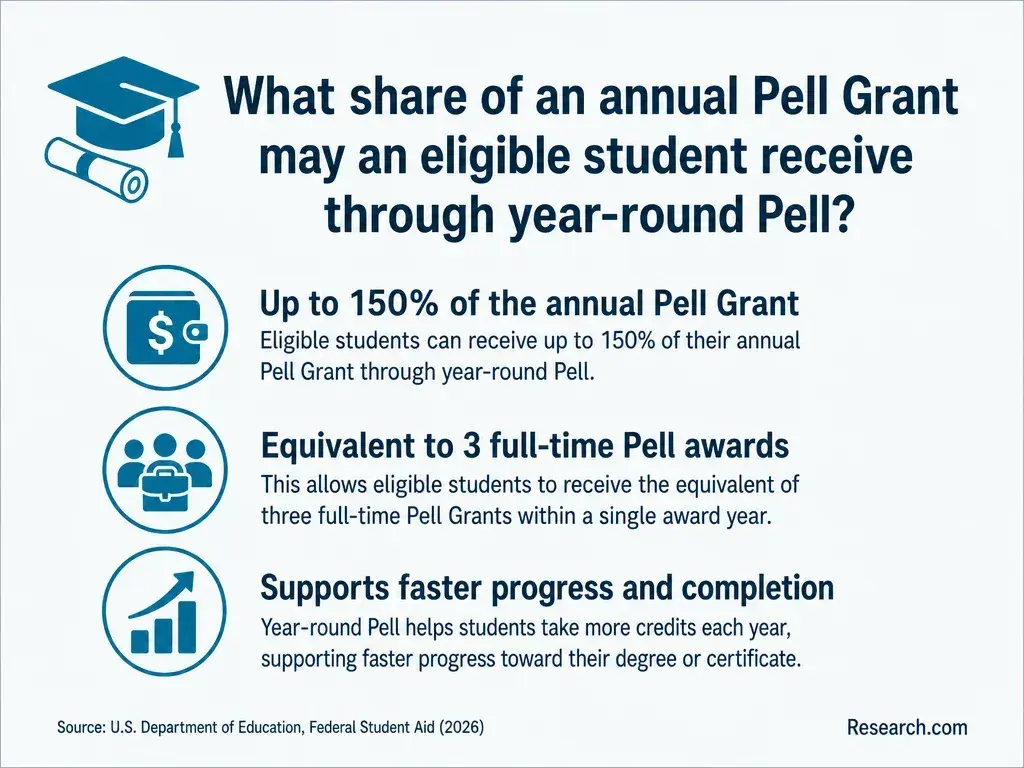
For cost, compare tuition for the courses you still need, mandatory fees, books or software, travel or proctoring, and potential borrowing costs. Include income you would forgo if a schedule requires fewer work hours. Ask the financial-aid office how your enrollment intensity and remaining eligibility affect aid; an admissions adviser's transfer estimate cannot answer that question. Business administration college affordability and FAFSA participation can help identify programs to investigate, but FAFSA participation alone does not establish your personal aid award or net price.
A BS in Business Administration can support applications for roles such as operations coordinator, marketing coordinator, HR specialist, sales operations associate, or project coordinator. The right entry point depends on your previous work, concentration, internships, and evidence of skills - not the degree name alone. Supervisory jobs generally require demonstrated responsibility beyond undergraduate coursework.
Use job postings in your target area to identify recurring tasks, then select courses and practical work that let you demonstrate them. For project-oriented roles, a documented schedule, budget, or process-improvement assignment may be more useful than an unrelated elective. If project work is your clear goal, compare the BS with value-focused project management degree choices and assess which path accepts more of your associate coursework.
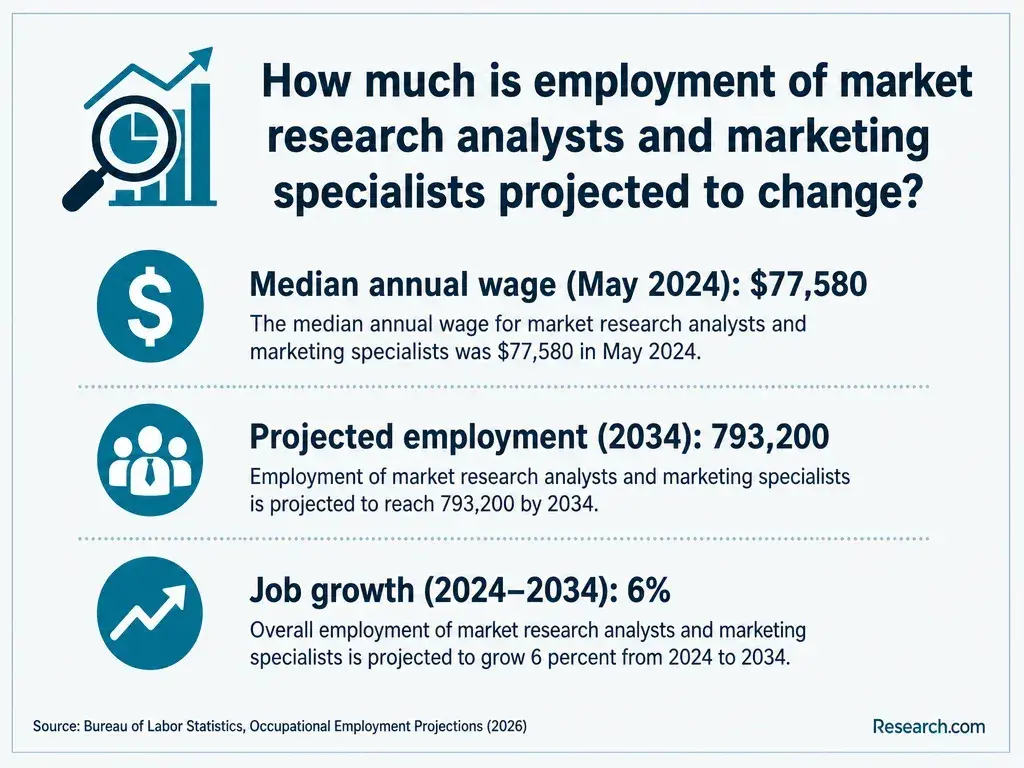
Pay depends on the occupation, experience, employer, and location; there is no single BS in Business Administration salary. The US Bureau of Labor Statistics reports a May 2025 median annual wage of $75,940 for human resources specialists and projects 6% employment growth for that occupation from 2025 to 2035. That is an occupation-wide median, not an expected starting salary for a new graduate or a return guaranteed by the degree.
Evaluate earnings against the role you can realistically pursue after graduation and the amount you would need to borrow. A lower-cost program is valuable only if its curriculum and schedule still support completion and your target work. Use low-cost online business administration pathways to find candidates, then compare their audited cost to finish rather than their advertised tuition alone.
Do Business Administration Graduates Need Certifications or Licenses?
The business administration degree itself does not generally require an occupational license. Particular jobs may have separate rules: accounting licensure, for example, is governed by state requirements, while some financial-services work requires role-specific registration or licensing. Voluntary credentials may also have education or experience prerequisites that a business course does not automatically satisfy.
Check requirements for your target occupation before choosing electives or paying for another credential. If project coordination is your goal, accredited project management programs with low tuition offer a comparison point, but neither a project management degree nor a business concentration automatically awards a professional certification.
Other Things You Should Know About Business Administration
Compare both options before withdrawing. Finishing may unlock a transfer-agreement benefit or general education waiver, but taking additional courses that will not apply to the BS could cost time and money. Get both pathways evaluated in writing.
Only if the program permits it and approves your experience under its academic rules. Current employment, credit for prior learning, and an internship are different arrangements; ask the program what documentation and supervision it requires.
Not necessarily. Schools may treat older general education and technical or quantitative courses differently. Request a current course-by-course evaluation instead of assuming all credits remain applicable - or that none do.
Usually you can request a change, but the new concentration may require courses your audit currently counts only as electives. Have an adviser revise your degree plan before changing it.
- Cost of Attendance (Budget) | 2025-2026 Federal Student Aid Handbook https://fsapartners.ed.gov/knowledge-center/fsa-handbook/2025-2026/vol3/ch2-cost-attendance-budget
- Accreditation in the U.S. | ed.gov http://www.ed.gov/laws-and-policy/higher-education-laws-and-policy/college-accreditation/accreditation-in-the-us
- Do College Credits Expire? What to Know Before You Start Over | msstate.edu https://www.cpcs.msstate.edu/news/2026/06/do-college-credits-expire
- Resources - Transfer Student Resources - NC State University https://transfer.ncsu.edu/resources/
- Academic Progress to Degree | osu.edu https://ugeducation.osu.edu/academics/academic-progress-degree
- Course Work Taken Elsewhere - USC Catalogue https://catalogue.usc.edu/content.php
- Online Tuition & Cost Calculator - ASU Online https://asuonline.asu.edu/what-it-costs/
- Tuition and Fees Charts - Student Financial Services https://sfs.gsu.edu/resources/student-acct/tuition-breakdown/
- Work-based learning opportunities to prepare students for evolving job market | Penn State University https://www.psu.edu/news/lehigh-valley/story/work-based-learning-opportunities-prepare-students-evolving-job-market
- Tuition, Financial Aid & Scholarships | Cost Estimator | GCU https://www.gcu.edu/tuition-and-financial-aid