2027 BS in Business Administration Program Choice: An Employee Onboarding Improvement Plan as a Capstone Option
Audited and Verified:
Our Editorial and Data Verification Process
Research.com uses government datasets, official education statistics and primary institutional information to support its career and degree guides. Our review process checks factual accuracy, occupational definitions, source dates and the requirements associated with the credentials discussed.
How This Article Was Fact-Checked
Our editorial team verifies salary estimates, employment projections, education requirements and program information against original data providers and official organizations. Salary figures are checked against the relevant occupational definitions and reporting periods. Information about licensure, accreditation and required in-person training is reviewed separately.
Fact-checked and verified on:

Co-Founder and Chief Data Scientist
An employee onboarding capstone can turn business coursework into a practical plan for helping new hires become ready for their roles. But a useful plan requires more than a welcome checklist: it needs a defined business problem, appropriate evidence, and a scope the student can complete without exposing employee information.
This guide is for prospective and current BS in Business Administration students considering that project. It explains what to look for in a program, how to build an academically credible deliverable, and when a different capstone or education pathway may fit better.
Key Things You Should Know
- An onboarding improvement plan is a viable capstone only if the program approves its scope and assessment method; employment at the organization does not automatically grant project approval or data access.
- A strong deliverable compares the current process with a proposed one, assigns responsibilities, estimates implementation needs, and specifies measures without claiming unobserved results.
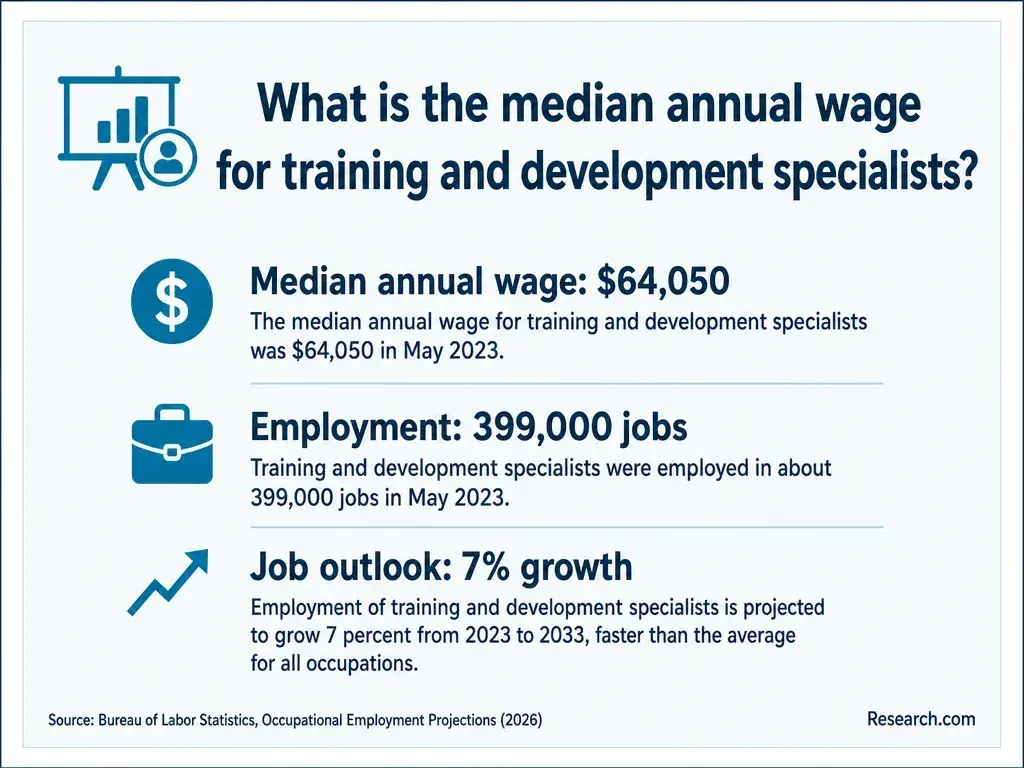
- The U.S. Bureau of Labor Statistics projects 11% employment growth for training and development specialists from 2025 to 2035, but a capstone alone does not qualify a graduate for that occupation.
What Is a BS in Business Administration With an Employee Onboarding Capstone?
A BS in Business Administration is an undergraduate degree covering multiple business functions. An employee onboarding improvement capstone is a culminating project in which a student analyzes how an organization introduces new hires to their work and proposes a better process. It is a project option, not a separate degree or professional HR credential.
The intended reader of the plan might be an HR lead, operations manager, or small-business owner. The project is a good fit when that decision-maker needs a clearer handoff among hiring, equipment setup, training, and early supervision. For an employed student, the first program-selection question is whether a current-workplace project is permitted and how faculty approval and employer permission work. Business administration degree planning for employed applicants can help frame the wider study-and-work decision, but the capstone policy must be confirmed with the institution.
What Do You Learn in a BS in Business Administration Program?
For this capstone, the most useful coursework usually connects organizational behavior, HR practices, operations, budgeting, statistics, and business communication. A student might use process mapping to identify handoff delays, basic accounting to estimate staff time, and data interpretation to distinguish an observed pattern from a proven cause. Employment-law instruction can help identify questions for qualified HR staff; an undergraduate course does not make the student a legal adviser.
Compare actual course descriptions and capstone requirements rather than assuming every BS program teaches onboarding in the same depth. If the goal is sustained HR work rather than broad business preparation, compare HR-specific coursework and transfer applicability. Students with prior credits can evaluate transfer-friendly online HR colleges alongside a general business degree. A strong onboarding project can demonstrate applied learning, but it does not substitute for missing HR knowledge or experience.
How Does an Employee Onboarding Improvement Plan Work as a Capstone?
Start with a narrow decision: for example, whether a team should standardize the handoff from an accepted offer to the first weeks of work. Define the employee group, location, process owner, and period being studied. Then confirm what the faculty assessor expects and what the organization permits. An academically approved proposal is not authorization to inspect personnel files, interview employees, or change workplace procedures.
A manageable capstone can follow this sequence. Each stage should produce material the student can explain and, where permitted, revise after feedback.
- State the problem and decision: identify the affected new-hire group, the process boundary, and what the sponsor could decide after reading the plan.
- Document the current process using permitted materials, such as blank checklists, role descriptions, or interviews authorized by the organization; label gaps where evidence is unavailable.
- Compare feasible changes, such as a clearer pre-start handoff, assigned training owners, or scheduled manager check-ins, against staff time and operational constraints.
- Produce a proposed process map, responsibility matrix, implementation schedule, communication materials, and a measurement plan.
- Review the draft with the faculty assessor and, if authorized, the workplace sponsor; distinguish their feedback from approval to implement.
Measures should match the problem and the data the organization can lawfully provide. The table shows what common measures can reveal - and what they cannot establish on their own.
| Possible measure | What it describes | Important limitation |
| Completion of required setup tasks | Whether defined steps were recorded as finished by a specified point | A completed checklist does not prove the employee can perform the role. |
| Time until a defined task can be performed independently | Progress toward one observable role milestone | Differences in role complexity, staffing, or supervision can affect the result. |
| New-hire feedback on instructions | Reported clarity and areas of confusion | A small or selective response group may not represent all new hires. |
If implementation is outside the semester or employer approval is unavailable, submit a proposed plan with assumptions and a future evaluation method - not a claim that onboarding improved. Keep personal data out of the portfolio, follow organizational intellectual-property rules, and seek faculty guidance before gathering employee feedback. If the student mainly wants project scheduling rather than HR-process analysis, economical project management education online may be a more focused alternative to compare.
Check that the institution holds recognized institutional accreditation, then ask whether the business school or program has applicable accreditation from AACSB, ACBSP, or IACBE. These are different questions: institutional accreditation applies to the institution, while business accreditation has a defined scope that may not cover every program. Neither designation guarantees an employer-sponsored capstone or a particular job outcome.
For this project, the program's written capstone rules are as important as its accreditation status. Ask whether students may propose an onboarding plan, whether a workplace sponsor is required, what happens if access is denied, and how a plan without implementation is graded. If comparing costs with a narrower degree, an accredited online project management tuition guide can prompt the same checks on accreditation scope and required project work; verify each institution's current status directly.
Requirements depend on the institution and whether the applicant is entering as a first-year or transfer student. Schools commonly request evidence of prior education and may set GPA or course prerequisites for entry to the business major. Admission to the university, admission to the major, and approval of a capstone are separate decisions.
Students with prior coursework should request an official evaluation showing which credits satisfy general education, business core, and remaining degree requirements - not merely how many credits are accepted. Ask whether statistics, accounting, or other prerequisite courses must be completed before the capstone. For someone choosing between broad business study and project-focused study, online project management bachelor's programs accepting transfer credits offer another comparison; only the receiving school can determine how a particular transcript applies.
A traditional full-time bachelor's path commonly takes about four years, but remaining time for a transfer student depends on the official degree audit, course sequencing, and how often the capstone is offered. A workplace project may reduce the need to find an outside project setting; it does not necessarily reduce required credits.
Compare schools using the cost of remaining required study: tuition, mandatory fees, books or software, any travel or proctoring, and the effect of enrollment pace on work hours. Ask whether capstone supervision carries a separate charge and whether employer reimbursement arrives only after a passing grade. If comparing a project-focused alternative, FAFSA-based aid for online project management undergraduates provides a starting point for aid questions, but eligibility and the actual award must be checked for the student and school. Do not count an expected employer payment as available cash until its terms are confirmed.
Neither format is inherently better for an onboarding capstone. An online program may suit an employed student who can observe a workplace process, while campus study may make faculty meetings and local project partnerships easier. In either format, ask how students present proposals, obtain feedback, work with teams, and handle a project when an employer will not share internal information.
Online does not necessarily mean self-paced. Check live-session times, group deadlines, capstone presentation requirements, and whether required courses run often enough to support the intended graduation date. Business degrees through accelerated online learning can help identify formats to investigate; a shorter calendar schedule still requires time for permissions, evidence review, and revisions.
An onboarding capstone is most relevant to entry-level or early-career work involving HR coordination, training support, operations coordination, or process documentation. In interviews, a student can explain the problem definition, stakeholder map, proposed handoffs, and measurement limits. That is more persuasive than presenting an unimplemented plan as a proven organizational success.
Role fit depends on prior experience. An employee already helping supervisors orient new hires may use the project to document responsibility and seek broader assignments; a student without related work may need an internship or supervised entry-level role. Someone more interested in purchasing, logistics, or distribution than people processes might compare supply chain bachelor's options focused on completion speed and choose a capstone aligned with that function instead. A business degree or onboarding plan does not confer managerial authority or an HR certification.
There is no single salary for BS in Business Administration graduates or for students who choose an onboarding capstone. As one occupation-level reference, the U.S. Bureau of Labor Statistics reports a May 2025 median annual wage of $69,280 for training and development specialists. That median covers workers across experience levels and is not an entry-level offer or a capstone-specific outcome.
For a personal return-on-investment decision, compare the price and time needed to finish the degree with the qualifications in actual local job postings. If a shorter study schedule would preserve earnings from current work, a guide to accelerated bachelor's study may help frame the time trade-off. It cannot establish that acceleration will raise pay; course load and completion feasibility still matter.
What Is the Job Outlook for Business Administration Careers?
The U.S. Bureau of Labor Statistics projects 11% growth in employment for training and development specialists from 2025 to 2035. This supports looking closely at training-related roles, but it does not forecast demand for onboarding capstones or guarantee openings for new graduates. Employers may seek experience delivering training, working with HR systems, or evaluating programs in addition to a degree.
A student aiming to enter that field should review job descriptions, seek supervised experience, and choose a capstone with a credible training or process-improvement deliverable. If speed to graduation is a major consideration, national rankings of fast-paced business bachelor's programs can identify programs to examine; confirm their capstone rules and course availability before assuming a faster program provides the relevant experience.
Other Things You Should Know About Business Administration
Possibly, if the faculty assessor accepts a hypothetical case. Label all assumptions clearly and do not present invented employee responses or results as observations.
Ask the institution before collecting responses. Its rules determine whether a review is required; employer permission and appropriate privacy protections may also be necessary.
Follow the course's AI-use rules and the employer's data policies. Do not enter confidential employee or company information into an unapproved tool, and verify any generated claims.
Tell the faculty assessor promptly. A revised scope, another approved sponsor, or a case based on materials already authorized may be possible, but do not assume the original access permission still applies.
- Privacy in the Workplace | priv.gc.ca https://www.priv.gc.ca/en/privacy-topics/employers-and-employees/02_05_d_17/
- CDC Approach to Program Evaluation https://www.cdc.gov/evaluation/php/about/index.html
- Effectiveness of formal onboarding for facilitating... - PMC - NIH https://pmc.ncbi.nlm.nih.gov/articles/PMC9934447/
- Capstone Experiences | Assessment and Curriculum Development Office https://manoa.hawaii.edu/assessmenttest/resources/how-to/capstone-experiences/
- Onboarding New Employees | umn.edu https://hr.umn.edu/supervising/modules/Onboarding-New-Employees
- Effective Onboarding Strategies to Increase Talent Retention | ScholarWorks https://scholarworks.waldenu.edu/cgi/viewcontent.cgi
- Onboarding Best Practices: A 30-60-90-Day New Hire Plan | cornerstoneondemand.com https://www.cornerstoneondemand.com/resources/article/onboarding-best-practices/
- Capstone Experiences | EP3 Guide https://ep3guide.org/guide/capstone-experiences/
- Best Practices for Internship Programs | NACE https://www.naceweb.org/talent-acquisition/internships/15-best-practices-for-internship-programs/