2027 Choosing a BS in Business Administration for Business Roles in Family-Owned Businesses
Audited and Verified:
Our Editorial and Data Verification Process
Research.com uses government datasets, official education statistics and primary institutional information to support its career and degree guides. Our review process checks factual accuracy, occupational definitions, source dates and the requirements associated with the credentials discussed.
How This Article Was Fact-Checked
Our editorial team verifies salary estimates, employment projections, education requirements and program information against original data providers and official organizations. Salary figures are checked against the relevant occupational definitions and reporting periods. Information about licensure, accreditation and required in-person training is reviewed separately.
Fact-checked and verified on:

Co-Founder and Chief Data Scientist
Working in a family-owned business can mean handling purchasing, payroll, customers, and difficult decisions long before you have a formal job title. A BS in Business Administration may help you build the skills to take on more responsibility - but it is not automatically the best investment for every family member or employee.
This guide explains which roles the degree can prepare you for, how to evaluate programs and costs, and when focused training or experience may serve you better. The goal is to choose an education path based on the work the business actually needs done.
Key Things You Should Know
- Choose a BS in Business Administration when you need broad preparation across finance, operations, marketing, and management - not merely a credential for an already-defined specialist task.
- Ask the business to define a role, supervisor, and measurable responsibilities; family membership and graduation alone do not establish readiness to manage people or money.
- National employment of logisticians is projected to grow 18% from 2025 to 2035, but that occupation-wide forecast does not predict hiring or pay at any particular family business.
What is a business administration degree, and how does it prepare you for family-business roles?
A BS in Business Administration is an undergraduate degree covering several business functions rather than training for one occupation. Depending on the school, it may emphasize quantitative work, offer a formal concentration, or leave room for electives. A BBA can cover similar ground; compare required courses and applied work rather than assuming the degree titles mean the same thing.
That breadth is useful when a small team needs someone who can read a cash-flow report, assess a supplier proposal, understand a marketing campaign, and communicate a decision to owners and employees. It does not replace industry knowledge or establish authority over relatives, longtime staff, or outside partners. Before choosing a program, write down the decisions your intended role will own and the skills needed to make them well. If you are new to college-level business study, review the college coursework required for business administration entry while checking each school's actual requirements.
What careers can you pursue in a family-owned business with a BS in Business Administration?
Family businesses hire for functions, not for a universal "family-business graduate" role. The table connects plausible starting responsibilities to evidence you could develop through coursework and supervised work. The appropriate title and level still depend on the company's size, industry, and your experience.
| Possible role | Typical work | Useful evidence of readiness |
| Operations or project coordinator | Track schedules, orders, handoffs, and service problems | A documented process map and a supervised improvement proposal |
| Marketing or sales coordinator | Maintain campaigns, customer records, and sales reporting | Customer research and a clearly measured campaign assignment |
| Purchasing or inventory coordinator | Compare suppliers, monitor stock, and report shortages | Spreadsheet analysis and an understanding of purchasing controls |
| HR or administrative assistant | Support hiring administration, records, and office procedures | Careful documentation, confidentiality, and knowledge of when to seek specialist advice |
If purchasing and distribution are the clear career target, compare general business study with accelerated undergraduate supply chain programs. A specialized program may provide more relevant depth, but its schedule and credit requirements need separate review. Management or succession responsibilities generally require demonstrated judgment and agreed decision rights beyond an entry-level role.
Is a BS in Business Administration worth it for working in a family-owned business?
It can be worth it if the business needs someone who will work across functions, you want career options outside the family firm, and the program provides relevant practice at a manageable cost. Its value is less clear when the immediate need is narrow - for example, learning a particular bookkeeping system - or when an owner expects a degree to resolve unclear authority or succession plans.
Compare the degree with the actual alternative: targeted courses, employer training, mentorship, or a specialized degree. Estimate what you would pay and when, how much work time you would give up, and which responsibilities you could realistically assume afterward. Do not count an unpromised promotion or salary increase as a return on investment. For a project-focused goal, project management study costs beyond tuition illustrate why comparing advertised tuition alone can miss important expenses.
A particularly valuable test is whether the firm will let you apply what you learn. Ask a non-family manager or another qualified supervisor to review your work against the same standards used for other employees. That makes skill development more credible inside the business and portable beyond it.
Most programs combine general education with business subjects such as accounting, finance, economics, marketing, management, operations, statistics, and business law. For a family firm, the most useful mix depends on its operating problems: accounting and finance support budget discussions; operations and analytics help diagnose delays or inventory issues; organizational behavior and HR courses can improve how you work with both relatives and non-family staff.
Look beyond course titles. Check whether you will build spreadsheets, interpret financial statements, present recommendations, and receive feedback on a realistic business problem. An entrepreneurship elective is not necessarily a formal concentration, and an introductory accounting course does not qualify you as an accountant. Also check prerequisite chains and when required courses run; business degree options with shorter sessions may offer a different calendar without reducing the work required in each course.
First, verify the institution's accreditation and whether the credential meets any employer, transfer, or graduate-school requirements important to you. Then check whether AACSB, ACBSP, or IACBE business accreditation applies to the school or specific program you are considering. Those are distinct checks: institutional accreditation does not mean the business program holds separate business accreditation, and business accreditation alone does not prove strong job outcomes.
Confirm the accreditor's current listing and scope rather than relying on a general website badge. Then compare the curriculum, faculty access, applied assignments, and support available to students who work in small firms. A waived application fee is a convenience, not a quality signal; if you explore fee-free online university applications, apply the same accreditation and program-fit checks to every option.
Online study may let you remain at the business while taking classes, but "online" does not necessarily mean self-paced. Campus study may provide easier access to instructors, classmates, and local employers, while requiring travel and fixed attendance. The better choice is the one whose real schedule lets you complete assignments without treating ordinary family-business demands as automatic extensions.
Ask each program about live meetings, group projects, exam arrangements, campus visits, internship rules, and whether a workplace project can meet course requirements. If you hope to study while employed, compare business administration programs for studying around work commitments against your busiest operating weeks - not just a typical week. Employer permission and faculty approval are separate requirements for using company work in an academic project.
Requirements vary by institution and by whether you apply as a first-year, transfer, or returning student. Schools commonly review prior academic records, while entry into the business major may have additional requirements in mathematics, accounting, economics, or academic standing. Ask admissions which requirements determine entry to the university and which determine entry to the major.
If you have previous college work, request an official evaluation showing which credits satisfy general education, the business core, electives, and any concentration - not merely how many credits were accepted. Ask an adviser how remaining prerequisites affect course order. Before selecting online degrees with accelerated terms, confirm that you can complete any required preparation in time for the business courses you intend to take.
A first-time, full-time student commonly plans around four academic years; transfer credit, part-time enrollment, required course availability, and school policies can change the timeline. Get a degree audit before estimating a completion date. Accepted credits that count only as electives may save less time than credits that satisfy required business courses.
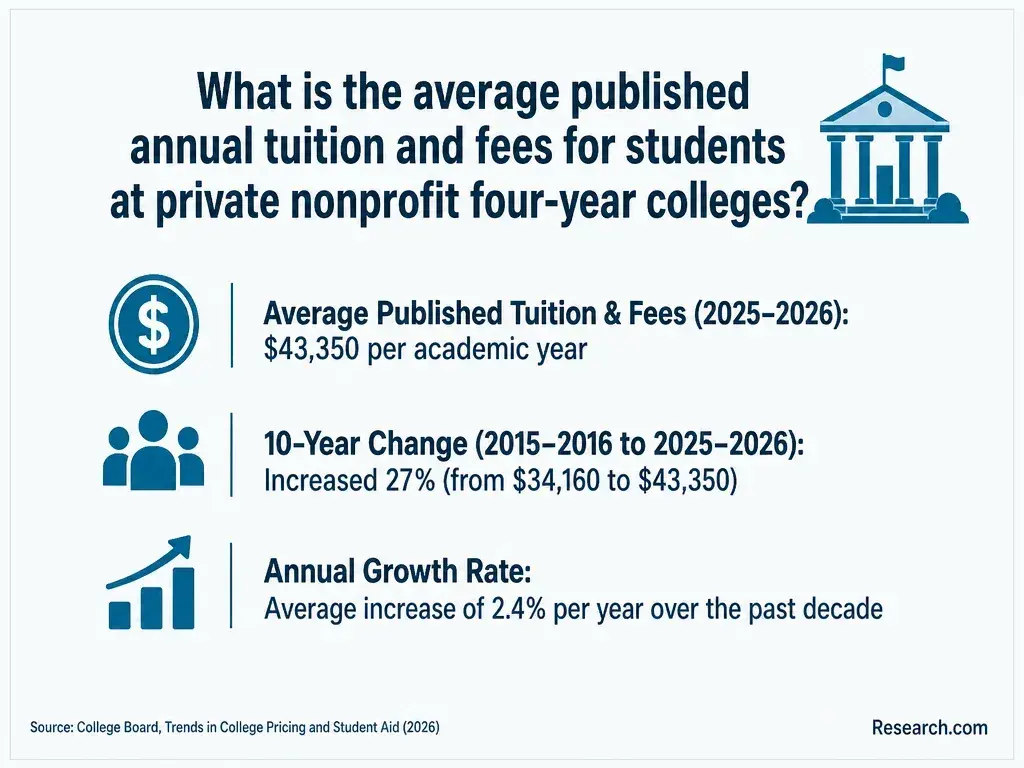
For a meaningful cost comparison, request each school's tuition basis and required fees, then add books, software, travel or exam costs, and the cost of any reduced work hours. Separate the amount due each term from the amount you expect to pay after confirmed aid or employer reimbursement. Online business administration degrees at lower prices can be a starting point, but compare your own remaining requirements rather than a published price alone.
There is no single salary or job-growth rate for BS in Business Administration graduates. Pay in a family business depends on the position, location, industry, company finances, and your responsibilities. The following U.S. Bureau of Labor Statistics figures describe entire occupations - not starting pay, family-business pay, or outcomes caused by this degree.
| Occupation | Median annual pay, May 2025 | Projected U.S. employment growth, 2025-2035 |
| Market research analyst | $78,760 | 7% |
| Human resources specialist | $75,940 | 6% |
| Logistician | $82,320 | 18% |
These figures can help identify functions with broader labor-market demand, but each occupation has its own hiring expectations; a general business degree may need to be paired with relevant experience or specialized skills. For a personal financial decision, compare realistic local openings and the family firm's written compensation plan with your education costs. Affordable business education options online may lower the amount you need to recover through future earnings, but a lower price is useful only if the program fits your goal and schedule.
Do family-business professionals need licenses or business certifications?
Most general operations, marketing coordination, and administrative roles do not require a license simply because the employer is family-owned. Particular services or occupations can have separate rules: accounting practice, investment advice, real estate activity, and other regulated work may require credentials or licenses under applicable law. A BS in Business Administration does not award them automatically.
Voluntary certifications can help with a defined skill gap, but check the issuing organization's eligibility and experience rules before paying. If your intended work is project coordination, compare a course, a certification pathway, and a degree by the work each prepares you to perform. Include fees and time as well as tuition; discussions of FAFSA planning for project management bachelor's students are relevant when a separate degree is under consideration, not evidence that a certification has the same aid eligibility.
Other Things You Should Know About Business Administration
Yes. The degree can support cross-functional work and career mobility. Ask whether hiring, promotion, and performance standards are clear for employees who are not relatives.
It can strengthen business skills, but succession also requires an agreed ownership and leadership plan. The family should address decision rights, mentoring, and legal or financial advice separately.
Set out the proposed duties, reporting relationship, evaluation standards, and compensation in writing before relying on the degree as a career plan. A neutral adviser may help clarify unresolved governance issues.
Only with appropriate company permission and within the school's rules. Remove personal and proprietary information, and agree in advance on what, if anything, you may show outside the business.
- 17 types of business degrees and the jobs they can lead to | ASU Online https://asuonline.asu.edu/newsroom/online-learning-tips/types-business-degrees-jobs/
- What Can You Do With a Business Administration Degree? | snhu.edu https://www.snhu.edu/about-us/newsroom/business/what-can-you-do-with-a-business-administration-degree
- Inside the Classroom | Columbia Business School https://business.columbia.edu/globalfamilyenterprise/current-prospective-students/inside-classroom
- 11 Types of Business Degrees and Career Pathways | National University https://www.nu.edu/blog/types-of-business-degrees/
- Working for the Family Business: Are You Ready? | upenn.edu https://globalyouth.wharton.upenn.edu/articles/college-careers-jobs/working-for-the-family-business/
- What Do You Learn in a Business Administration Degree? | Rowan Blog https://rowanblog.com/2026/07/what-do-you-learn-in-business-administration-degree/
- Business Administration Overview - Degrees | CareerExplorer https://www.careerexplorer.com/degrees/business-administration-degree/
- How to Define Roles in a Family Business | CO | CO- by US Chamber of Commerce https://www.uschamber.com/co/start/strategy/family-business-roles