2027 Can A Digital Advertising Certification Strengthen a BS in Business Administration Plan? Credit and Career Questions
Audited and Verified:
Our Editorial and Data Verification Process
Research.com uses government datasets, official education statistics and primary institutional information to support its career and degree guides. Our review process checks factual accuracy, occupational definitions, source dates and the requirements associated with the credentials discussed.
How This Article Was Fact-Checked
Our editorial team verifies salary estimates, employment projections, education requirements and program information against original data providers and official organizations. Salary figures are checked against the relevant occupational definitions and reporting periods. Information about licensure, accreditation and required in-person training is reviewed separately.
Fact-checked and verified on:

Co-Founder and Chief Data Scientist
A digital advertising certification can show that you know a campaign platform, but it may not move you closer to finishing a BS in Business Administration. That distinction matters if you are choosing courses, paying for training, or trying to qualify for a first marketing role. This guide compares certifications with degree coursework, explains how colleges evaluate credit, and connects both credentials to realistic advertising jobs. You will leave with a way to decide whether a certification is worth pursuing now, alongside your degree, or instead of additional coursework.
Key Things You Should Know
- A platform certification can strengthen a business degree by demonstrating tool-specific skills, but it does not replace marketing analysis, applied experience, or a degree requirement.
- Certification does not automatically earn college credit. Only the receiving college can decide whether it awards credit and whether that credit satisfies a requirement.
- The U.S. median annual wage for market research analysts was $78,760 in May 2025; that occupation-wide figure is not an expected starting salary for a newly certified graduate.
Can a digital advertising certification strengthen a BS in Business Administration?
Yes - when it fills a specific gap between broad business study and the advertising work you want to do. A BS in Business Administration may teach budgeting, customer behavior, statistics, and marketing strategy. A digital advertising certification typically assesses knowledge of a platform or practice, such as search campaigns, paid social advertising, or measurement. These are complementary credentials, not interchangeable ones.
The strongest combination is business reasoning plus demonstrable execution. For example, a student might explain a campaign's audience, budget assumptions, conversion measure, and privacy constraints, then use a relevant certification to show familiarity with the tools. A badge alone cannot establish that the student has managed a real budget or improved a client's results.
If you already work, start with the responsibilities you can document and the role you want next. A certification may be the faster choice if you already have a degree or relevant experience and only need platform fluency. If a bachelor's degree is a hiring requirement or you want broader options beyond advertising, the BS may warrant priority. Compare that choice with business administration degree planning for employed applicants before committing to both.
Which digital advertising certifications complement a business administration degree?
Choose a certification by the tasks in your target job postings, not by the number of badges you can collect. Providers change exam names, fees, eligibility rules, and renewal policies, so confirm those details with the issuer before enrolling.
The comparison below shows where common certification categories can add useful depth to a business degree. It describes learning focus, not a guarantee of job readiness.
| Certification focus | Best fit | Important limitation |
| Search advertising platforms | Roles involving keyword strategy, paid search campaigns, and performance reports | Platform knowledge does not prove experience managing spend or conversions |
| Social advertising platforms | Roles involving audience selection, creative testing, and paid social campaigns | Skills may not transfer directly between platforms |
| Analytics or measurement | Roles interpreting traffic, campaign events, and reporting data | Correct tool use does not by itself establish sound research design or causal impact |
For an aspiring advertising coordinator, one relevant certification paired with a well-explained project is usually more persuasive than several unrelated badges. If your goal is managing people or organizational change rather than running campaigns, compare the advertising route with organizational leadership bachelor's routes of three years or less; platform training would be less central to that goal.
Do digital advertising certifications transfer as college credit?
Usually, you should plan as though they will not count until your college confirms otherwise. A school might decline credit, award elective credit through a prior-learning process, or recognize learning only after an assessment. Even accepted elective credit might not fulfill a marketing course, business core, concentration, or residency requirement.
Before paying for training because you expect it to shorten your degree, ask the registrar or prior-learning office for a written evaluation. Provide the certification's issuer, learning objectives, assessment method, completion date, and any official credit recommendation. Then ask your business adviser to show exactly where an approved award appears in your degree audit.
Transfer policies are also program-specific: a school's treatment of prior learning in project management degrees with prior-credit pathways does not establish how its business administration program will classify an advertising credential. Accepted credit, applicable credit, and fewer courses remaining are three different outcomes.
A business degree can help an advertiser connect campaign decisions to organizational goals. Accounting and finance support budget discussions; marketing and economics inform positioning and demand; statistics helps with interpreting results; and management coursework develops communication across sales, creative, and leadership teams. The depth of each subject depends on the program.
Those foundations matter most when you can apply them. An internship, supervised workplace assignment, or approved class project can produce a brief that identifies an audience, spending constraint, success measure, and reasons a result may be uncertain. Get permission before using an employer's customer data, creative assets, or campaign reports. A classroom plan should be labeled as a plan, not presented as a completed campaign.
Choose the degree around the function you actually want. Someone aiming for employee recruiting or people operations may find online HR bachelor's programs accepting transfer credits more relevant than adding advertising credentials to a general business degree. A BS provides preparation, but entry into a specialist role still depends on the employer's requirements and evidence of your skills.
Look beyond a course title such as "digital marketing." A useful sequence connects marketing principles and consumer research with statistics or business analytics, then adds electives in advertising, marketing research, information systems, or campaign measurement. Check prerequisites and whether those electives are offered often enough to fit your graduation plan.
Compare assignments as well as course descriptions. A course that asks you to defend an audience choice, build a budget, define a conversion, and interpret imperfect results may serve your goal better than one focused only on platform terminology. A formal marketing concentration can add depth, but an informal group of electives is not automatically a concentration or separate credential.
If course timing is the obstacle, short-term classes toward a bachelor's degree may offer scheduling options. Confirm that each class applies to your official degree audit before taking it elsewhere; a faster class is not useful if it delays a required prerequisite or awards only unused elective credit.
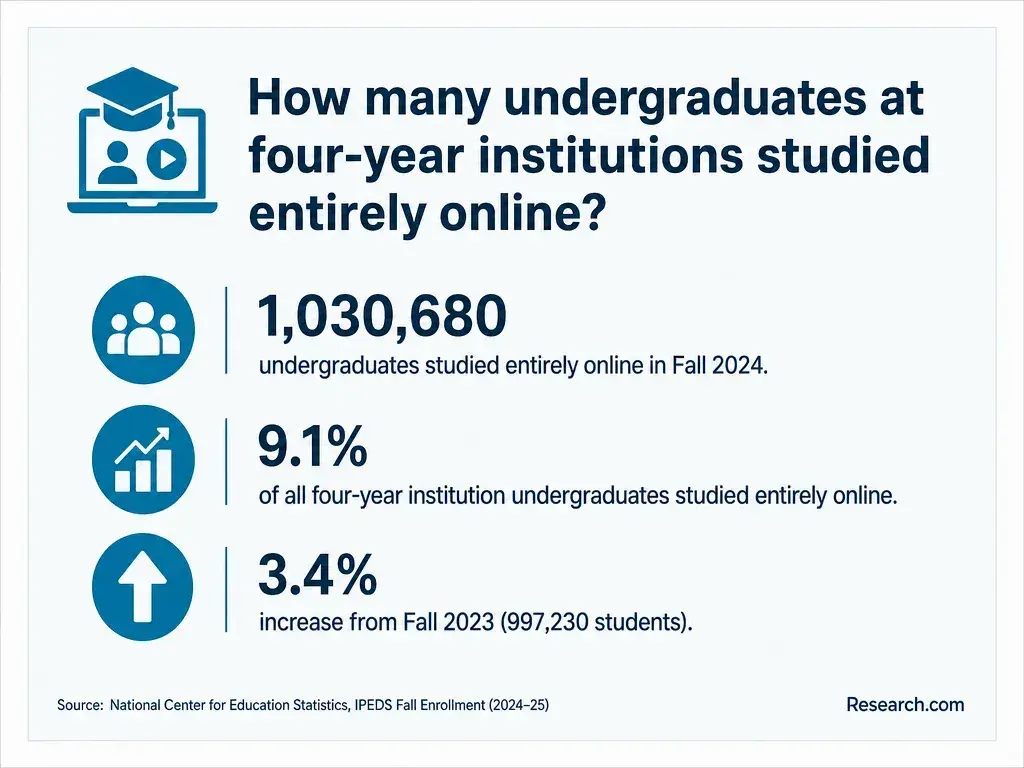
Neither format is inherently better for learning advertising. Online study may suit a working student who needs location flexibility, while campus study may make it easier to attend recruiting events, collaborate in person, or use local internship connections. The deciding evidence is the program's actual schedule, assignments, support, and access to relevant projects.
Ask whether classes require live meetings, group presentations, proctored exams, campus visits, or an internship at set hours. Also check whether the school provides access to needed software and whether remote students receive the same career support. Online does not necessarily mean self-paced.
Business degree options with shorter sessions may help you finish a course sooner, but compressed deadlines can make campaign projects harder to balance with work. Compare your weekly capacity and the sequence of required courses, not just the advertised calendar length.
First, verify that the institution holds recognized institutional accreditation and that it covers the school where you would enroll. Then check whether the business school or specific program has applicable AACSB, ACBSP, or IACBE accreditation. These are different types of accreditation, and a school-wide claim does not establish the scope of its business accreditation.
Use the accreditor's directory and the institution's current program information to confirm the exact degree, campus or online location, and accreditation scope. Accreditation is an important quality check, but it does not guarantee that a marketing elective is available, a certification earns credit, or graduates get advertising jobs.
When comparing accredited colleges offering free online applications, keep application fees separate from accreditation and total degree cost. A waived fee can reduce the cost of applying; it says little about the fit of the business curriculum.
Admission rules vary by school and by whether you are entering as a first-year or transfer student. Review the program's transcript, GPA, mathematics, and business-course requirements, including any separate admission step for the major. The requirements for qualifying for a business administration college program are distinct from the requirements for graduating or earning credit for a certification.
For a reliable cost and timeline estimate, obtain an official evaluation of prior credits and a degree audit. Count remaining required courses, likely course availability, residency credits, tuition, fees, books or software, and any certification exam or renewal charges. Compare the resulting plan with the time you could spend gaining relevant work experience. Without a school-specific audit and published prices, neither the total cost nor the time saved by certification can be stated responsibly.
Ask the financial-aid office how your enrollment pace affects aid eligibility and whether outside certification charges are included in your approved educational expenses. Employer reimbursement, when available, may have eligibility, grade, or repayment conditions; verify those before relying on it.
Entry routes include marketing or advertising coordinator roles that assist with campaign schedules, reporting, and vendor communication; paid-media assistant roles that support platform setup and monitoring; and research-oriented roles that analyze audiences or campaign data. Employers may use different titles for similar tasks. Look at the responsibilities and experience requirements, not the title alone.
The U.S. Bureau of Labor Statistics reports a May 2025 median annual wage of $78,760 for market research analysts. That occupation includes workers across industries and career stages, not just digital advertisers or new BS graduates. Marketing managers had a substantially higher occupation-wide median, but those jobs generally require relevant experience and should not be treated as an immediate graduation outcome.
A degree may be worth more to you if it also supports broader business roles; a targeted certification may offer a more direct route if you already meet degree expectations. Use local job postings and the remaining cost of your own program to interpret broad comparisons of business administration college costs and potential career outcomes. Neither a national wage figure nor a program's advertised price predicts your return.
What job outlook and professional standards affect digital advertising careers?
The Bureau of Labor Statistics projects 7% U.S. employment growth for market research analysts from 2025 to 2035. That is an occupation-level projection, not a forecast for every advertising specialty or a promise of openings for certification holders. Platform changes can also alter which tools an employer expects you to know, making current practice and adaptable measurement skills important.
Digital advertisers must work within platform rules and applicable law. Depending on the work, that can include truthful advertising and endorsement disclosures, rules for commercial email, and privacy or consent requirements for customer data. A platform certification is not a professional license or legal clearance. If you are unsure whether a proposed campaign can use particular data or claims, seek guidance from the organization responsible for compliance before launching it.
As you review job ads, separate required qualifications from preferred tools and compare them with your actual experience. If your interests shift toward coordinating campaigns as projects rather than optimizing ads, compare the additional study and funding implications; financial assistance for aspiring project management graduates concerns a different degree pathway and should not be assumed to cover an advertising certification.
Other Things You Should Know About Business Administration
Usually not. Check the issuer's eligibility rules, but many platform credentials are open to learners outside marketing majors. A business student can use one to add a focused skill.
Yes, if you label it as a simulation and distinguish proposed metrics from observed results. Use only materials you created or have permission to share.
Do not assume so. Check the issuer's current expiration, renewal, and reassessment rules, and keep the completion date visible on your résumé.
You may describe training in progress accurately, but do not claim the credential until it is awarded. An employer may ask for a verifiable credential record.
- Department Expectations: Curriculum | New York State Education Department https://www.nysed.gov/college-university-evaluation/department-expectations-curriculum
- Marketing B.S., with Digital Marketing and Analytics Concentration | usf.edu https://cloud.usf.edu/catalog/undergrad/marketing-bs-with-digital-marketing-and-analytics-concentration
- Exploring Accounting Certifications: Student Guide | Bay Path University https://www.baypath.edu/news/bay-path-university-blogs/post/exploring-accounting-certifications-student-guide/
- 4.1.18 Credit Earned through Transfer, Examination, and Prior Learning | Illinois State https://policy.illinoisstate.edu/academic/4-1-18/
- 8 Digital Marketing Certifications to Increase Your Potential | Wharton Executive Education https://executiveeducation.wharton.upenn.edu/thought-leadership/wharton-online-insights/digital-marketing-certifications/
- Get College Credit For Certifications, Training & Experience | Franklin University https://www.franklin.edu/transferring-credit/types-transfer-credit/certificates-and-training-credit
- Get Credit for Industry Certifications | broward.edu https://www.broward.edu/admissions/credit-for-prior-learning/industry-certifications/
- The Top Entry-Level Jobs for Marketing Graduates | Western Governors University https://www.wgu.edu/blog/the-top-entry-level-jobs-marketing-graduates2205.html
- Certificate vs. Degree: Pros, Cons, and Career Outcomes | National University https://www.nu.edu/blog/certificate-vs-degree/
- Portfolio Assessment | Miami Dade College https://www.mdc.edu/pla/earn_college_credits/portfolio/