2027 BS in Business Administration Curriculum: How to Evaluate Preparation in Digital Marketing
Audited and Verified:
Our Editorial and Data Verification Process
Research.com uses government datasets, official education statistics and primary institutional information to support its career and degree guides. Our review process checks factual accuracy, occupational definitions, source dates and the requirements associated with the credentials discussed.
How This Article Was Fact-Checked
Our editorial team verifies salary estimates, employment projections, education requirements and program information against original data providers and official organizations. Salary figures are checked against the relevant occupational definitions and reporting periods. Information about licensure, accreditation and required in-person training is reviewed separately.
Fact-checked and verified on:

Co-Founder and Chief Data Scientist
A business administration degree may include marketing, but that does not mean it teaches students to plan, measure, and improve digital campaigns. If you are comparing programs for a digital marketing career, the course titles alone will not tell you enough.
This guide shows what to look for in the curriculum, assignments, faculty support, and opportunities to build work samples. It also explains how delivery format, cost, and career goals can change which program is the better choice.
Key Things You Should Know
- Look for a progression from marketing research and statistics to digital channels, campaign measurement, and an assessed project, not just one introductory marketing course.
- Ask to see recent syllabi and assignment briefs. A formal concentration, an elective cluster, and hands-on experience are different forms of preparation.
- The U.S. Bureau of Labor Statistics projects 7% employment growth for market research analysts from 2025 to 2035, but a degree does not by itself establish readiness for a specific digital marketing job.
What is a BS in Business Administration with a digital marketing focus?
It is a bachelor's degree built around a general business core, with additional study in marketing and digital channels. Depending on the school, the focus may be an officially designated concentration, a set of electives, or simply projects within broader marketing courses. Confirm the designation on the program's official curriculum and transcript policies; a course in social media does not create a concentration.
The business core can be valuable because campaign decisions depend on budgets, customer behavior, organizational goals, and data interpretation. Its limitation is depth: a student pursuing a specialized marketing role may find more relevant upper-level work in a marketing major. Conversely, someone primarily interested in coordinating schedules and deliverables rather than marketing strategy might compare colleges accepting coursework toward project management bachelor's study before choosing a marketing focus.
What courses should a business administration curriculum include for digital marketing?
The strongest curriculum connects business fundamentals to the decisions a marketer actually makes. Use the catalog and course descriptions to check whether the subjects below are required, available as electives, or absent.
This comparison separates foundational knowledge from applied work, so you can see whether a program develops skills beyond terminology.
| Curriculum area | What useful preparation looks like |
| Marketing foundations and research | Customer segmentation, positioning, research design, and interpretation of customer evidence. |
| Statistics and business analytics | Spreadsheets, descriptive analysis, uncertainty, and careful interpretation of campaign measures. |
| Digital channels and content | Search, email, paid media, social channels, content planning, and how channel choices serve a defined audience. |
| Measurement and ethics | Campaign objectives, conversion measures, attribution limitations, privacy, and responsible use of customer data. |
| Applied assignment | A documented brief, budget assumptions, measurement plan, findings, and recommendations open to faculty feedback. |
Sequence matters. Research and statistics should support later campaign analysis, rather than appearing after the only digital marketing elective. Check prerequisites and whether advanced courses run often enough for your intended graduation schedule. If your interests are moving toward recruitment or employee development rather than customer acquisition, education options for future HR professionals are a more relevant comparison than adding unrelated marketing electives.
How can you evaluate digital marketing preparation in a degree program?
Start with evidence of what students must produce, not a list of platforms mentioned in promotional copy. A course can discuss analytics without requiring students to explain a result, its limitations, or a decision based on it. Use the same questions for each program you compare:
- Request recent syllabi and identify required digital marketing courses, prerequisites, elective availability, and who assesses the work.
- Ask for a representative assignment brief: Does it require a target audience, measurable objective, budget assumptions, channel rationale, and interpretation of results?
- Check whether students can complete a supervised internship, approved workplace project, or capstone relevant to marketing - and whether the school helps them find one.
- Ask what a student may retain for a portfolio, particularly when a project uses employer information, customer data, or licensed materials.
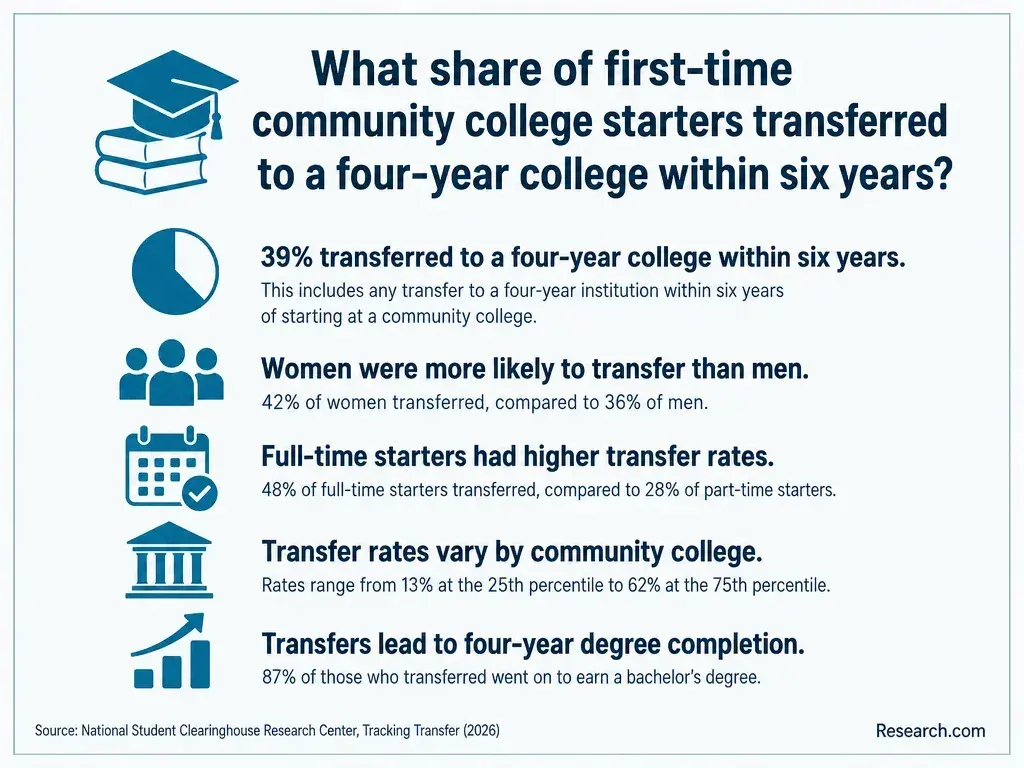
A convincing work sample explains the decision and its evidence; polished graphics alone are not enough. Treat simulations as practice, not proof that a campaign produced real-world results. If shorter programs are on your shortlist, use US fast-track undergraduate business degree options as a starting point, then verify that accelerated scheduling still leaves room for the marketing courses and project you need.
Neither format is inherently better. Digital marketing work can be taught and assessed online, while campus programs may make it easier for some students to meet collaborators, attend events, or access local employers. What matters is whether the format gives you timely feedback, realistic team assignments, access to suitable tools, and a feasible path to an applied project.
For an online program, confirm live-session times, group-work expectations, software access, exam rules, and whether internships require travel or daytime availability. For a campus program, compare commuting and course schedules with the value of in-person opportunities. An accelerated calendar can reduce elapsed time without reducing weekly workload; fast-track business degree options should therefore be assessed against your actual work and study schedule, not their advertised finish dates alone.
Verify that the institution holds accreditation recognized by the U.S. Department of Education or the Council for Higher Education Accreditation, and confirm its current status with the accreditor. Institutional accreditation applies to the college or university; business-specific accreditation, where present, has a separate scope. If a school cites AACSB, ACBSP, or IACBE, check whether its business school and the particular degree are covered. Neither type of accreditation proves that its digital marketing coursework is strong.
Use ranked US college pathways in online business to develop a shortlist, then check accreditation directly and compare the actual marketing curriculum. Program names, accreditor scope, and course availability matter more to this decision than a ranking position.
Requirements vary by institution and by whether you apply as a first-year or transfer student. Schools generally request evidence of prior education, while a business major or upper-level marketing courses may have additional GPA or prerequisite rules. Check the specific program for mathematics, statistics, accounting, or introductory business requirements rather than assuming they are identical across BS degrees.
If you have previous college coursework, ask for an official evaluation showing which credits apply to general education, the business core, and the marketing focus. Credit accepted by the university may count only as a general elective. The guide to business administration degree entry requirements can help you frame questions, but the admitting institution controls eligibility and its final credit decisions.
Completion time depends on remaining requirements, transfer-credit applicability, enrollment pace, prerequisites, and how frequently marketing electives are offered. A student with many accepted credits can still face delays if required courses are unavailable or those credits do not satisfy the degree audit. Request a term-by-term plan before relying on an estimated finish date.
Compare total remaining cost, not tuition alone: include mandatory fees, software, materials, possible travel or internship expenses, and the cost of an additional term if a course is missed. Online business administration program cost-and-time comparisons can help establish a shortlist, but obtain each school's current charges and a personalized degree audit before estimating what you would pay.
Potential starting points include marketing coordinator, digital marketing assistant, content coordinator, and entry-level campaign or research support roles. Responsibilities might include preparing content calendars, organizing campaign assets, checking reports, researching audiences, or explaining results to a team. Employers may also seek experience with particular channels or tools, so match your coursework and work samples to actual job postings.
Market research analyst roles place greater emphasis on research methods and interpreting data; the Bureau of Labor Statistics projects 7% employment growth for that occupation from 2025 to 2035. That outlook is for an occupation, not a forecast of openings for graduates of a particular program. Marketing manager positions generally call for substantial relevant experience and responsibility beyond an undergraduate course sequence. If your goal is organizational supervision rather than marketing execution, leadership bachelor's degrees with accelerated pacing represent a different curriculum choice - not a shortcut to a management job.
There is no reliable single salary for graduates with a digital marketing focus: job title, experience, location, industry, and responsibilities differ. For context, the Bureau of Labor Statistics reports a May 2025 median annual wage of $78,760 for U.S. market research analysts. That occupation-wide median includes experienced workers and is not an expected starting salary for a new business graduate or a wage figure for every digital marketing role.
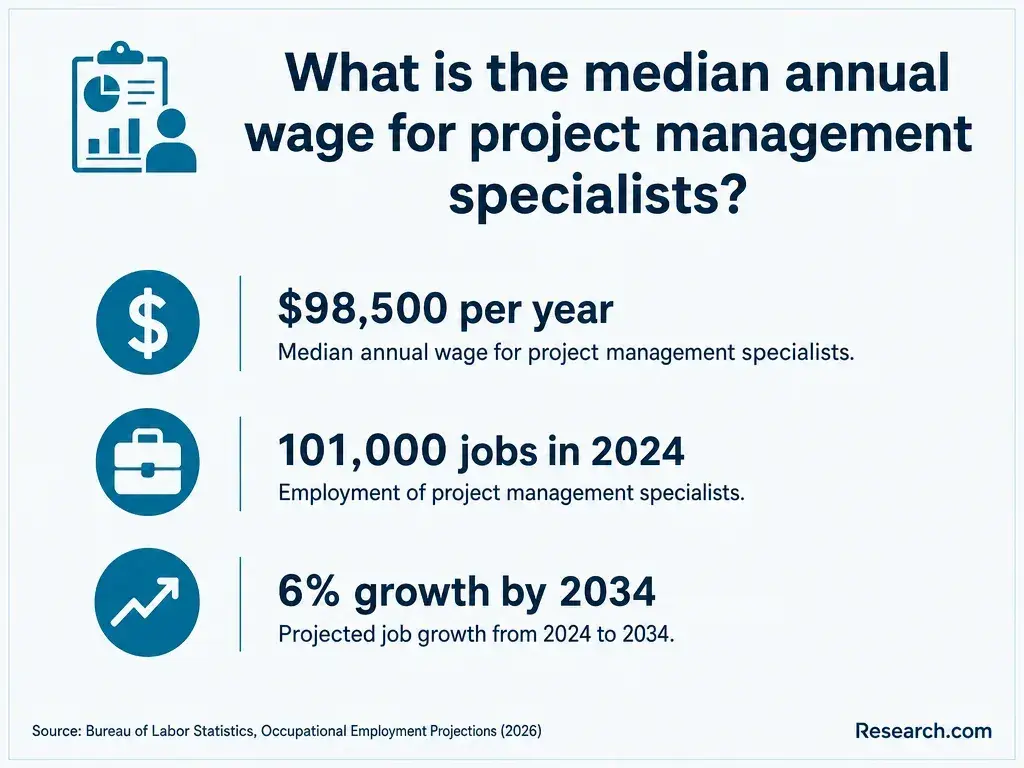
For a useful comparison, collect pay ranges for entry-level roles you could realistically pursue in your target location, then weigh them against your remaining education cost and likely time to completion. If project management is an alternative career direction, evaluate its duties and education financing separately; an online project management undergraduate funding guide addresses that different degree pathway rather than establishing digital marketing earnings or aid eligibility.
Which digital marketing certifications complement a business administration degree?
Platform-specific training in search advertising, analytics, email marketing, or marketing automation can complement a degree when it matches the tools used in your target roles. Check the issuer's current eligibility rules, assessment, fees, and renewal terms; these change. A certificate of completion, a vendor certification, and an academic concentration are not the same credential.
Choose training after identifying a skill gap in job postings or your portfolio. A focused credential may be a more direct next step than additional degree study if you already have broad business preparation. If you are deciding between marketing training and another bachelor's path, such as colleges accepting coursework toward project management bachelor's study, compare the work you want to do before comparing credentials. Whatever you choose, be prepared to show how you applied the skill, not merely that you passed an assessment.
If you are also weighing a specialized project-management degree, compare its distinct requirements and accredited project management degree cost breakdowns separately rather than assuming the two degrees have the same remaining cost.
Other Things You Should Know About Business Administration
Many entry-level marketing roles do not require programming. Basic familiarity with website structure or tracking concepts can help, but the technical depth depends on the role.
Yes, if you can clearly describe your responsibilities and document the work. Get client permission before showing materials or results, and distinguish your contribution from the team's.
It can provide undergraduate preparation, but graduate admissions requirements vary. Check the intended program's academic prerequisites and whether work experience is expected.
Explain the original objective, what the evidence does and does not show, and what you would change. A careful analysis can demonstrate judgment without claiming a successful result.
- Program: Business Administration, Marketing Major, B.S. | maine.edu https://catalog.usm.maine.edu/preview_program.php
- Online Digital Marketing Certificate Course | UNH Professional Development and Training https://digitalskills.unh.edu/digital-marketing
- Course Descriptions | Minot State University Academic Catalogs https://catalog.minotstateu.edu/graduate/course-descriptions/
- Business Administration with Digital Marketing concentration (Online) | Salem College https://www.salem.edu/academics/academic-programs/business-administration-with-digital-marketing-concentration-online/
- High-Impact Practices: Enhancing the Student Experience | Teaching and Learning Resource Center https://teaching.resources.osu.edu/teaching-topics/high-impact-practices-enhancing
- Bachelor of Business Administration: Marketing | The University of Olivet https://www.uolivet.edu/program/business-administration-marketing/
- Marketing Internships: How They Can Benefit Your Career | St. John's University https://www.stjohns.edu/news-media/johnnies-blog/marketing-internships-how-they-can-benefit-your-career
- Digital Marketing Training Options: Find the Right Fit for Your Career Goals | Regis College https://www.regiscollege.edu/blog/marketing-and-communications/digital-marketing-training
- Program: Business Administration, Digital Marketing Major, (BS) | tusculum.edu https://catalog.tusculum.edu/preview_program.php
- Using Student Learning Portfolios for Departmental Outcomes Assessment | The University of Iowa https://assessment.uiowa.edu/using-student-learning-portfolios-departmental-outcomes-assessment