2027 Supply Chain Management and Logistics vs. Business Analytics for a Business Administration BS: Which Fits?
Audited and Verified:
Our Editorial and Data Verification Process
Research.com uses government datasets, official education statistics and primary institutional information to support its career and degree guides. Our review process checks factual accuracy, occupational definitions, source dates and the requirements associated with the credentials discussed.
How This Article Was Fact-Checked
Our editorial team verifies salary estimates, employment projections, education requirements and program information against original data providers and official organizations. Salary figures are checked against the relevant occupational definitions and reporting periods. Information about licensure, accreditation and required in-person training is reviewed separately.
Fact-checked and verified on:

Co-Founder and Chief Data Scientist
A concentration can shape which problems you learn to solve - and which entry-level jobs you can credibly pursue. Supply chain management and logistics focuses on moving goods and coordinating operations; business analytics focuses on turning data into decisions across business functions. If you are choosing between them within a BS in Business Administration, the distinction matters more than either concentration's name. This guide compares coursework, applied skills, career evidence, program requirements, and costs so you can choose a path that fits your interests and the work you want to do.
Key Things You Should Know
- Choose supply chain management and logistics if you want to improve purchasing, inventory, transportation, or fulfillment; choose business analytics if you want to prepare data, build analyses, and explain findings across functions.
- Neither concentration guarantees a job or a higher starting salary. The U.S. Bureau of Labor Statistics (BLS) projects 18% employment growth for logisticians and 7% for market research analysts from 2025 to 2035; those occupations are useful comparisons, not outcomes for every graduate.
- Compare required courses, project access, transfer-credit applicability, and total remaining cost before choosing. An official concentration should appear in the school's degree requirements, not merely in its elective list.
What is the difference between supply chain management and business analytics in a business administration BS?
Supply chain management and logistics studies how an organization obtains materials, manages inventory, and delivers products or services. Business analytics studies how to prepare and interpret data to support decisions in operations, marketing, finance, and other functions. Both may use spreadsheets and forecasts, but their primary questions differ: "How should this process work?" versus "What does the evidence indicate we should do?"
The comparison below focuses on the work you would practice, not just the labels on a transcript. Actual concentrations vary by institution.
| Decision factor | Supply chain management and logistics | Business analytics |
| Typical decisions | Supplier selection, inventory levels, shipping routes, fulfillment capacity | Performance measurement, demand patterns, customer behavior, forecasting |
| Typical outputs | Process maps, purchasing analyses, inventory plans | Cleaned datasets, dashboards, statistical analyses |
| Best fit | Interest in operational constraints, vendors, and physical flows | Interest in data quality, quantitative reasoning, and communicating uncertainty |
| Important limitation | Coursework cannot replace experience with real operating systems and stakeholders | A dashboard or software course alone does not establish advanced analytical expertise |
There is considerable overlap. A logistics team may forecast demand, while an analyst may study delivery delays. If your goal is specifically to coordinate projects rather than manage supply networks or analyze business data, compare those curricula with colleges accepting coursework toward project management bachelor's study. Check whether a specialized degree would add useful requirements - or simply repeat credits you already have.
Which business administration concentration offers better career opportunities and salary potential?
Neither concentration is universally better. Supply chain is the clearer signal for procurement, inventory, transportation, and distribution roles. Analytics can support a wider range of functions, but that breadth also means applicants may compete with graduates in statistics, information systems, marketing, or other specialized fields. Salary depends more directly on the occupation, location, industry, experience, and demonstrated skills than on the concentration label.
For an early-career student, the stronger option is usually the one that lets you produce credible evidence of relevant work. A supply chain project might explain a proposed reorder policy and its constraints; an analytics project might document how a dataset was cleaned, what a model can and cannot show, and what decision it informs. Neither should claim savings or results that were not measured.
Start with a target role rather than an advertised salary. If you want to work in HR instead, neither concentration is the most direct preparation; HR bachelor's programs with flexible transfer pathways may be more relevant, particularly if you have credits to apply. For the two paths considered here, compare local postings and note which specific skills recur.
What courses do supply chain management and business analytics programs typically include?
Both paths generally sit alongside a business core that may include accounting, economics, management, finance, and statistics. Supply chain concentrations may add procurement, operations planning, transportation, inventory management, and quality improvement. Analytics concentrations may add data preparation, business statistics, databases, visualization, forecasting, and decision modeling. Schools determine their own course titles, prerequisites, and concentration requirements.
Look beyond the catalog title to the assignments. In supply chain, an inventory exercise should require you to weigh service levels against carrying costs. In analytics, a forecasting assignment should address missing data and uncertainty rather than present a prediction as fact. Statistics and spreadsheet proficiency help in both paths; some analytics sequences also require programming or database coursework. If you need to schedule prerequisites around a job, accelerated business education for working adults is worth comparing with a standard pace - but confirm when each required concentration course is offered.
Ask an adviser for the current degree map and sample syllabi. Verify whether the concentration is formally recorded, whether its courses add credits beyond the BS, and whether your proposed capstone or internship can focus on your chosen field.
Delivery format changes access and scheduling, not the underlying need to practice the skills. Online analytics courses may offer convenient access to datasets and software, while online supply chain courses may use cases and simulations when site visits are impractical. Campus study may make it easier to join faculty projects or meet local employers, but those opportunities depend on the school - not the format alone.
An online program is not necessarily self-paced. Check live-session times, group-project coordination, exam proctoring, software requirements, internship rules, and any campus visits. This matters especially if work or caregiving limits your availability. When you explore business administration colleges for working professionals, ask how students obtain concentration-specific project feedback and career support, not just whether lectures are recorded.
First, confirm that the institution holds accreditation from an accreditor recognized by the U.S. Department of Education. Then check whether the business school or named program has applicable business accreditation, such as AACSB, ACBSP, or IACBE. These are different checks: institutional accreditation does not establish that either concentration has separate business accreditation, and a business school's claim should be checked for its actual scope.
Accreditation is a baseline for evaluating a school, not proof of strong placement or a particular salary. Request the current catalog, verify which entity awards the BS, and ask for evidence of advising, course availability, and career outcomes. If federal aid matters to your choice, use lists of FAFSA-eligible online business administration colleges as a starting point, then confirm the specific institution's participation and your own aid eligibility.
Requirements vary by school and by whether you apply as a first-year or transfer student. Common application materials include prior transcripts and proof of secondary-school completion or its accepted equivalent. Some schools admit students directly to business administration; others require introductory courses or a separate application before entry to the major or concentration.
Compare business administration admission prerequisites with the courses needed after admission. An analytics sequence might depend on statistics, while a supply chain course might require introductory operations; neither should be assumed universal. You can compare business administration admission prerequisites before requesting a school-specific evaluation.
If you have prior college work, obtain a written degree audit showing which credits satisfy general education, the business core, concentration requirements, and residency rules. Accepted credits that count only as electives may not shorten your path through either concentration.
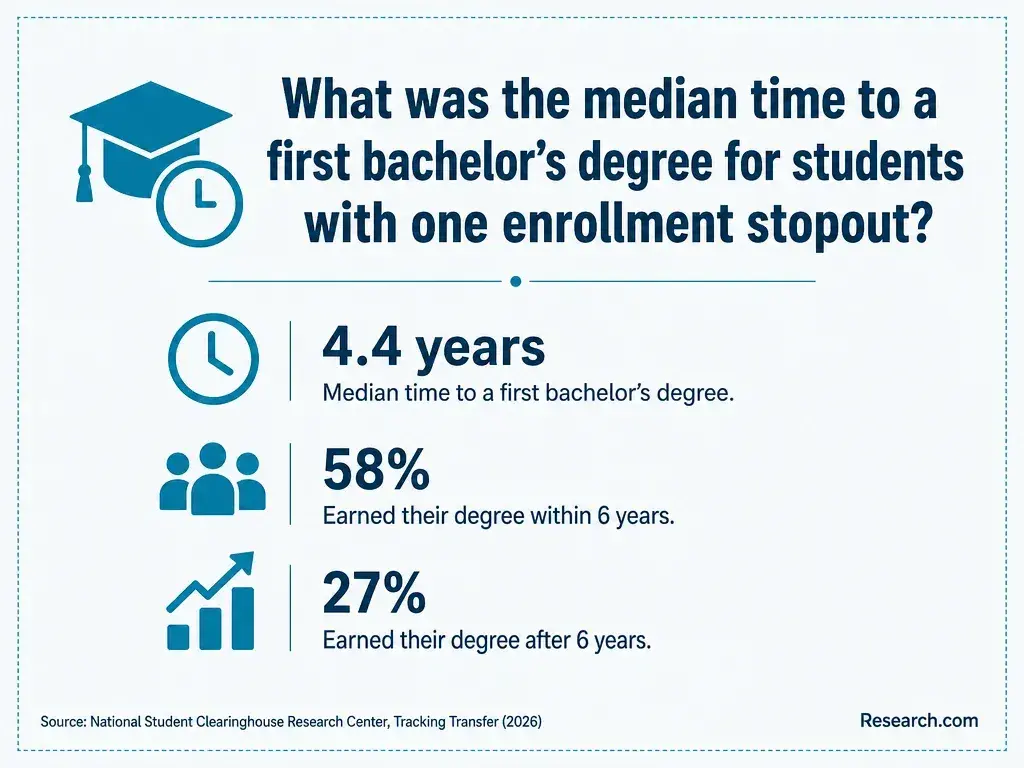
A bachelor's degree commonly represents about four years of full-time undergraduate study, but an individual completion timeline depends on accepted and applicable credits, enrollment pace, prerequisites, and when required courses run. Changing concentrations late can add time if a course sequence cannot be completed on schedule.
There is no reliable single price for this comparison. Request a school-specific estimate covering remaining tuition, mandatory fees, books, required software, travel or proctoring, and any extra terms created by course sequencing. Compare cheaper business administration college programs using the total cost to finish your approved degree plan, rather than the advertised per-credit price alone. Ask financial aid staff how part-time enrollment or an added term would affect your aid before making a cost-based choice.
Supply chain graduates may pursue roles such as logistics coordinator, inventory analyst, purchasing assistant, or operations coordinator. Their work can involve tracking orders, reviewing stock, communicating with suppliers, and investigating delays. Business analytics graduates may pursue business analyst, reporting analyst, operations analyst, or marketing analytics assistant roles, depending on the employer's technical requirements. Their work can involve cleaning data, checking metrics, producing reports, and explaining findings to decision-makers.
Job titles are not standardized. A "business analyst" opening may focus on software requirements rather than statistical analysis; a "supply chain analyst" may demand substantial database skills. Read the tasks and required experience in postings before treating either degree as a match. Internships, supervised projects, relevant employment, and work samples can help establish readiness, but a BS alone does not qualify someone to manage a department.
If your main objective is a faster transition into an entry-level role, online colleges offering accelerated bachelor's may be worth considering. Verify that faster pacing still leaves room for the concentration courses and practical experience your target postings call for.
BLS occupations offer labor-market context, not concentration-specific starting salaries. Logisticians are a close comparison for some supply chain roles. Market research analysts illustrate one analytics-related path, but do not represent every business analytics job. The figures below are U.S. occupation-wide medians for May 2025 and projected employment changes for 2025-2035.
| BLS occupation | Median annual salary, May 2025 | Projected employment growth, 2025-2035 |
| Logistician | $82,320 | 18% |
| Market research analyst | $78,760 | 7% |
Both projections exceed the approximately 3.5% national growth projected across all occupations, but they do not guarantee openings in your area. The wage medians include workers at different experience levels and should not be used as offers to new graduates. For a financial decision, compare local postings and likely entry routes with your remaining education expense; a guide to business administration tuition time commitment and career value can help frame that comparison without assuming a salary increase.
Which certifications help advance careers in supply chain management or business analytics?
In supply chain, commonly considered voluntary credentials include ASCM's Certified in Planning and Inventory Management (CPIM) and Certified Supply Chain Professional (CSCP), as well as the Institute for Supply Management's Certified Professional in Supply Management (CPSM). In analytics, options include vendor-specific certificates for tools such as Microsoft Power BI and broader analytics credentials. Check each issuer's current eligibility, exam content, fees, renewal rules, and intended experience level; a concentration does not automatically award or qualify you for a certification.
Choose a credential only after identifying a skill gap in your target job postings. A beginner may gain more from a well-documented spreadsheet, dashboard, or inventory project than from paying for an advanced exam without relevant practice. If you are weighing certification against a separate project management degree, compare curriculum and financing independently; financial aid for online project management bachelor's degrees concerns degree study, not automatic funding for a professional certification.
Other Things You Should Know About Business Administration
Often, yes - through electives, an approved minor, or projects - but only the school can confirm whether both formal concentrations are allowed and whether combining them adds credits or time.
Consider one if your target role consistently calls for deeper technical or functional study. Compare required courses and applicable transfer credits, not degree titles alone.
No. Automated tools can assist with preparation and reporting, but someone must assess data quality, interpret results, protect sensitive information, and explain limitations.
Usually the school sets the rules. Ask an adviser for an updated degree audit before switching so you can see whether completed courses still apply and whether the change affects graduation timing.
- New BLS employment projections: 3 charts - DOL https://beta.dol.gov/news-events/blog/new-bls-employment-projections-3-charts-0
- Operations & Supply Chain Management BSBA | Drexel University Catalog https://catalog.drexel.edu/undergraduate/collegeofbusiness/operationandsupplychainmanagement/
- Business analytics vs. business administration | Capella University https://www.capella.edu/blog/business/the-difference-between-business-analytics-and-business-analysis/
- Difference Between Business Management & Business Analytics | Major Discovery https://www.byui.edu/major-discovery/find-the-right-fit/difference-between-business-management-b-s-business-analytics-b-s
- 10 Key Skills for Data Analysts | Johns Hopkins AAP https://advanced.jhu.edu/about/on-the-advance/mastering-your-future/10-key-skills-for-data-analysts/
- Concentration Supply Chain Management | Centenary University https://www.centenaryuniversity.edu/degrees-and-programs/bs-business-administration-supply-chain-management/
- How Business Analytics Drives Data-Driven Decision-Making | Touro University Worldwide https://www.tuw.edu/business/business-analytics-and-decision-making/
- Full article: Critical analysis of the impact of big data analytics on supply chain operations | tandfonline.com https://www.tandfonline.com/doi/full/10.1080/09537287.2022.2047237
- Operations and Supply Chain Management Concentration | buffalo.edu https://catalogs.buffalo.edu/preview_program.php
- Supply Chain Management Major | Temple University https://www.temple.edu/academics/degree-programs/supply-chain-management-major-bu-scm-bba