2027 Subscription vs. Term Tuition for a Business Administration BS
Audited and Verified:
Our Editorial and Data Verification Process
Research.com uses government datasets, official education statistics and primary institutional information to support its career and degree guides. Our review process checks factual accuracy, occupational definitions, source dates and the requirements associated with the credentials discussed.
How This Article Was Fact-Checked
Our editorial team verifies salary estimates, employment projections, education requirements and program information against original data providers and official organizations. Salary figures are checked against the relevant occupational definitions and reporting periods. Information about licensure, accreditation and required in-person training is reviewed separately.
Fact-checked and verified on:

Co-Founder and Chief Data Scientist
A flat subscription price can make a business administration BS look cheaper than traditional term tuition - but only if you can complete enough applicable coursework before the subscription renews. This decision matters especially if you are finishing a degree while working or bringing in transfer credits.
This guide explains how each model charges, where delays change the math, and what to verify about aid and degree requirements. You will leave with a way to compare your likely cost to graduation, not just advertised tuition.
Key Things You Should Know
- Compare 3 figures first: remaining required credits, all-in cost per billing period, and the coursework you can realistically finish in each period.
- Subscription tuition tends to favor steady, faster progress; term tuition may cost less when you take a light load or need a predictable course schedule.
- Neither price model guarantees faster graduation: transfer-credit applicability, required course availability, fees, and aid rules can change the result.
What is subscription tuition versus term tuition for a business administration BS?
Subscription tuition charges a flat amount for an enrollment period, often allowing students to attempt multiple courses or competency assessments during that period. Term tuition charges according to a school's academic-term rules - often per credit, or at a flat rate for a defined credit load. A subscription period and an academic term need not have the same length.
The distinction is about billing, not necessarily teaching quality or course format. A subscription program may require students to demonstrate mastery before advancing; a conventional term program may still offer online, accelerated, or flexible courses. Compare the actual billing and academic policies of any ranked school options for studying business online rather than assuming their tuition models match.
Ask whether the flat price covers access to all remaining BS requirements, whether courses have start dates, and whether unfinished work carries into a new paid period. For term tuition, check whether the quoted price applies per credit or changes once you reach a full-time credit load.
Which business administration BS tuition model costs less overall?
Neither model is inherently cheaper. Subscription tuition can win when you complete several required courses in each paid period. Per-credit term tuition can win when work, caregiving, prerequisites, or limited course availability keep your course load low. A flat-rate term program may fall between those outcomes.
The comparison below shows what to include in a school-specific estimate. It is a framework, not a price quote; use each school's current charges and your official degree audit for the inputs.
| Cost component | Subscription model | Term model |
| Base tuition | Price per subscription period multiplied by paid periods needed | Applicable per-credit charges or flat-term charges across required enrollment |
| Remaining coursework | Required courses that can actually be completed within paid periods | Required credits and the terms in which courses are offered |
| Additional charges | Technology, assessment, books, and other charges not included in the flat price | Mandatory term or course fees, books, software, and other charges |
| Delay exposure | Another paid period for unfinished requirements | Another term, potentially with additional tuition and fees |
Ask the registrar or adviser for an audit showing which transfer credits apply to general education, the business core, electives, and residency requirements. Then request an itemized estimate at your feasible pace. Compare tuition for online business colleges as a starting point, but use the schools' own current estimates to decide.
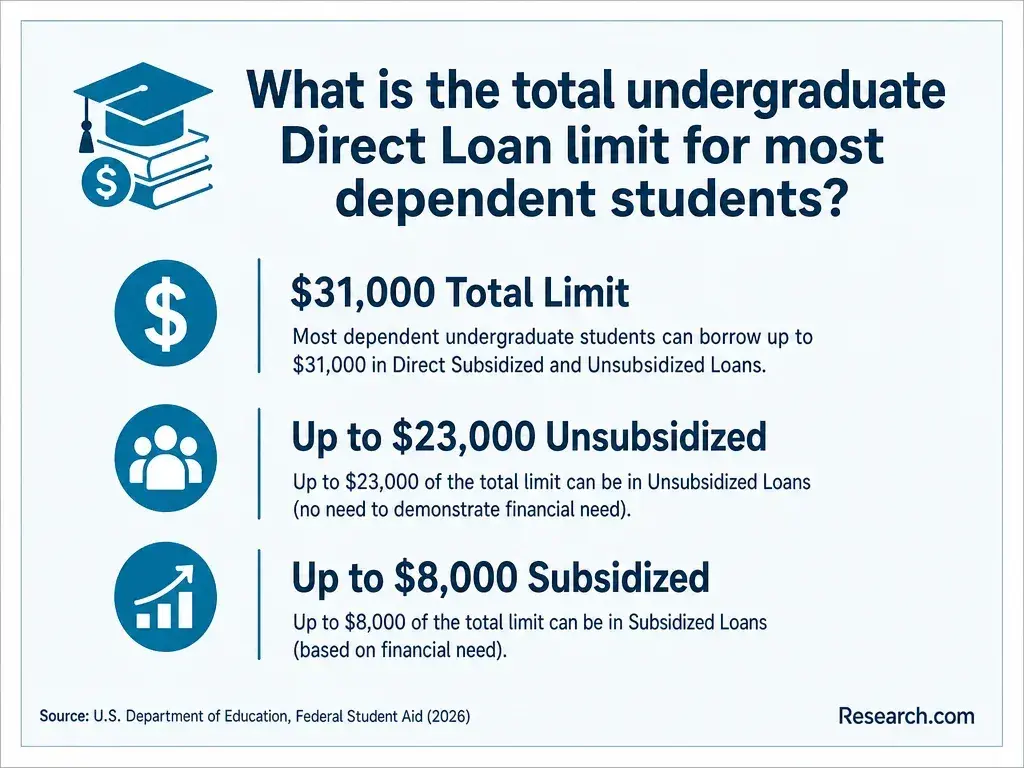
Keep sticker price separate from what you must pay now and what you may eventually repay. Grants, loans, employer reimbursement, books, software, and lost work hours can affect those amounts differently. Confirm aid eligibility and satisfactory academic progress rules with each financial-aid office; do not assume the same aid disburses on the same schedule under both models.
How do subscription and term tuition affect degree completion time?
Subscription pricing rewards progress within each paid period, but a faster pace is possible only if the program permits it and you have time to do the work. A student with completed general education requirements and strong accounting or spreadsheet preparation may move through some assessments quickly. Another student may need the full instructional time for statistics, finance, or a capstone.
Term programs generally make course load and completion dates easier to map in advance. They can still offer short sessions, while subscriptions can impose assessment windows, course-order rules, or limits on simultaneous enrollment. Explore accelerated online degree programs separately from their tuition models: a shorter advertised calendar does not establish a lower total price.
Build a completion calendar from the official audit. Mark prerequisites, courses offered only in particular periods, any internship or capstone approval, and the time you can reliably study each week. Test a slower scenario as well as your preferred pace. If one extra subscription renewal would erase the projected savings, the cheaper-looking model carries meaningful schedule risk.
A BS in Business Administration typically combines general education with accounting, economics, finance, marketing, management, operations, business law, quantitative methods, and strategic decision-making. Requirements vary: one program may emphasize statistics and analytics, while another offers more room for electives or a formal concentration. A capstone, simulation, or approved workplace project may also be required.
Curriculum matters to the tuition comparison because required courses may not be interchangeable or available on demand. Check whether a proposed subscription lets you complete the specific accounting, statistics, and upper-division courses on your audit - not merely a large number of elective credits. If your goal is specifically project coordination or management, compare the business curriculum with three-year-or-less leadership degree pathways only after checking which program's required courses and applied work fit that goal. A faster advertised pathway is not automatically the better or cheaper one.
Verify that the institution holds accreditation from an accrediting agency recognized by the U.S. Department of Education. Institutional accreditation is an important checkpoint for federal student-aid eligibility, but aid also depends on the student and program meeting applicable requirements. For a cost-focused comparison, check both accreditation and the program's participation in federal aid; see accredited business administration programs and federal student aid as a starting point.
AACSB, ACBSP, and IACBE provide separate business-school or programmatic accreditation. Do not assume an institution's claim covers the particular BS you intend to enter: check the accreditor's listing and scope. Programmatic accreditation may matter to your preferences or a prospective employer, but it does not by itself establish lower tuition, faster completion, or job placement.
Requirements depend on whether you enter as a first-year, transfer, or returning student. Schools commonly request prior academic transcripts; some business majors have separate admission or progression requirements, including prerequisite coursework or a minimum academic standing. Ask admissions which rules apply to you, then ask the registrar or transfer office how accepted credits will count toward the BS.
This distinction is financially important. A transferred course that counts only as a free elective may leave a required business course - and another paid period or term - on your schedule. Students also considering colleges accepting coursework toward project management bachelor's study should request separate evaluations for each degree; acceptance at a college does not mean a course satisfies the same requirement in two majors.
An online BS can be a credible academic degree when it comes from an appropriately accredited institution and delivers the stated curriculum and assessments. Delivery mode alone does not establish academic quality or employer acceptance. Examine faculty access, assessed work, career support, and whether the institution reports outcomes for the relevant program and student group.
Online also does not mean self-paced. Live meetings, group projects, proctored exams, and fixed deadlines can limit how many courses you finish per subscription period. If you plan to study while employed, compare online business administration pathways alongside an existing career against your actual work schedule, not just a program's flexibility claim.
The degree can support applications for business operations, sales support, marketing coordination, procurement, project coordination, and human resources roles. Your coursework, experience, and work samples matter more than the tuition model on your transcript. For example, a student targeting HR should compare business electives and supervised experience with more focused human resources education and career options.
Look for roles whose tasks match evidence you can show: a spreadsheet analysis, a process improvement proposal, customer-facing work, or an approved internship. A business administration BS does not automatically qualify a new graduate to manage employees or budgets. If the target role requires specialized accounting, analytical, or industry experience, identify that gap before choosing a program chiefly for its price.
There is no single salary for the degree. The U.S. Bureau of Labor Statistics reports a May 2025 median annual wage of $75,940 for human resources specialists, across workers in that occupation. That figure is not a starting salary for business administration graduates; experience, location, employer, and the specific job affect an individual offer.
For a tuition decision, avoid treating an occupation-wide median as a promised return on the degree. Instead, compare the qualifications in jobs you would realistically seek with the coursework and experience each program helps you build. If project work is your primary goal, project management degree tuition comparisons can help you examine a more specialized alternative - but compare its complete curriculum and cost to graduation, not tuition alone.
Do business administration graduates need licenses or certifications?
A general business administration BS does not itself grant an occupational license, and many business support roles do not require one. Particular activities or employers may require separate qualifications: public accounting licensure, some financial-services work, and certain professional certifications have their own rules. Check the relevant state regulator, credentialing organization, or job posting rather than assuming business coursework meets those requirements.
If a short credential could serve your target role, compare its eligibility requirements and cost with finishing a bachelor's degree. Conversely, a certificate may not replace a degree when an employer requires one. Students weighing a project management degree against a shorter credential can investigate funding sources for a bachelor's in project management; aid available for an eligible degree should not be assumed to cover a separate certification exam.
Other Things You Should Know About Business Administration
Only if the institution offers both models and permits a switch under its policies. Ask whether switching changes your degree requirements, completed-course treatment, aid, or refund eligibility before making a change.
Not necessarily. Check assessment-attempt limits, retake fees, and whether a repeat must occur in another paid subscription period.
Potentially, if the institution and expense meet applicable 529 eligibility rules. Confirm the school's eligibility and the qualified expense with the plan administrator or a tax professional before withdrawing funds.
That depends on the employer's policy. Ask what proof of payment and completed coursework it requires, when reimbursement occurs, and whether it caps payment by course, credit, period, or year.
- Cost of Attendance (Budget) | 2025-2026 Federal Student Aid Handbook https://fsapartners.ed.gov/knowledge-center/fsa-handbook/2025-2026/vol3/ch2-cost-attendance-budget
- Estimate your college cost | usa.gov https://www.usa.gov/estimate-college-cost
- Types of Financial Aid: Grants, Work-Study, and Loans | studentaid.gov https://studentaid.gov/understand-aid/types
- Accreditation in the U.S. | ed.gov http://www.ed.gov/laws-and-policy/higher-education-laws-and-policy/college-accreditation/accreditation-in-the-us
- Drops, Withdrawals, Forfeitures & Refunds - UW Finance https://finance.uw.edu/sfs/tuition-fees/drops-withdrawals-forfeitures-refunds
- Withdrawing | Office of Student Financial Aid | The University of Iowa https://financialaid.uiowa.edu/eligibility/withdrawing
- Prior Learning Assessment Process | grcc.edu https://www.grcc.edu/students-resources/academic-testing-services/prior-learning-assessment-process
- Course Policies and Guidelines - Office of the Registrar | Cal Poly, San Luis Obispo https://registrar.calpoly.edu/course-policies-guidelines
- New Pathways to a College Degree: How Transfer Credits Save Time | University of Arkansas Grantham https://www.uagrantham.edu/blog/transfer-college-credits-online-pathways-degree/
- Enrollment and Registration | LaGuardia CC Catalog - CUNY https://laguardia.catalog.cuny.edu/pages/MEGPswaMMQqIEngRxLSJ