2027 Best Online Marine Science Degree Programs at Nonprofit Universities

Co-Founder and Chief Data Scientist
Choosing an online marine science degree is difficult because many programs labeled "online" still require fieldwork, labs, or short residencies. That distinction matters for working adults, transfer students, and future researchers. The U.S. Bureau of Labor Statistics projects 4% employment growth for zoologists and wildlife biologists through 2033, reflecting steady demand in conservation-related work.
This guide explains how to compare nonprofit programs by academic quality, total cost, flexibility, experiential learning, and fit for marine-focused careers or graduate study.
Key Things You Should Know
- A legitimate online marine science degree should come from an institutionally accredited nonprofit university and clearly explain its laboratory, fieldwork, internship, and residency expectations before enrollment.
- Fully online marine science majors are uncommon because marine biology, oceanography, and ecology require hands-on scientific skills; hybrid programs can offer stronger preparation when local or campus-based field experiences are feasible.
- For career planning, the BLS projects 4% growth in zoologist and wildlife biologist employment through 2033, so students should pair marine science coursework with data analysis, GIS, research, communication, and field methods.
What Makes an Online Marine Science Degree Program at a Nonprofit University Different?
An online marine science degree at a nonprofit university is an academic program offered by a public institution or a private nonprofit institution. Nonprofit status means the institution does not distribute surplus revenue to owners or shareholders, but it does not by itself prove that a program is affordable, rigorous, flexible, or well matched to a student's career goals.
Marine science is an interdisciplinary field that studies oceans, coasts, marine organisms, climate systems, fisheries, conservation, and human impacts on aquatic environments. Programs may be titled marine science, marine biology, oceanography, environmental science, fisheries and wildlife, coastal management, or sustainability. A broader environmental science degree can be a practical online alternative when it includes marine ecology, water resources, conservation, or geographic information systems coursework.
The most important distinction is usually not public versus private nonprofit status. It is whether the program provides the scientific foundation and applied experience required for the student's target role.
| Program route | Best fit | Common online structure | Key trade-off |
| Associate degree or transfer pathway | Students completing general education and introductory science affordably | Mostly online coursework with transferable prerequisites | Often requires transfer to complete a bachelor's degree |
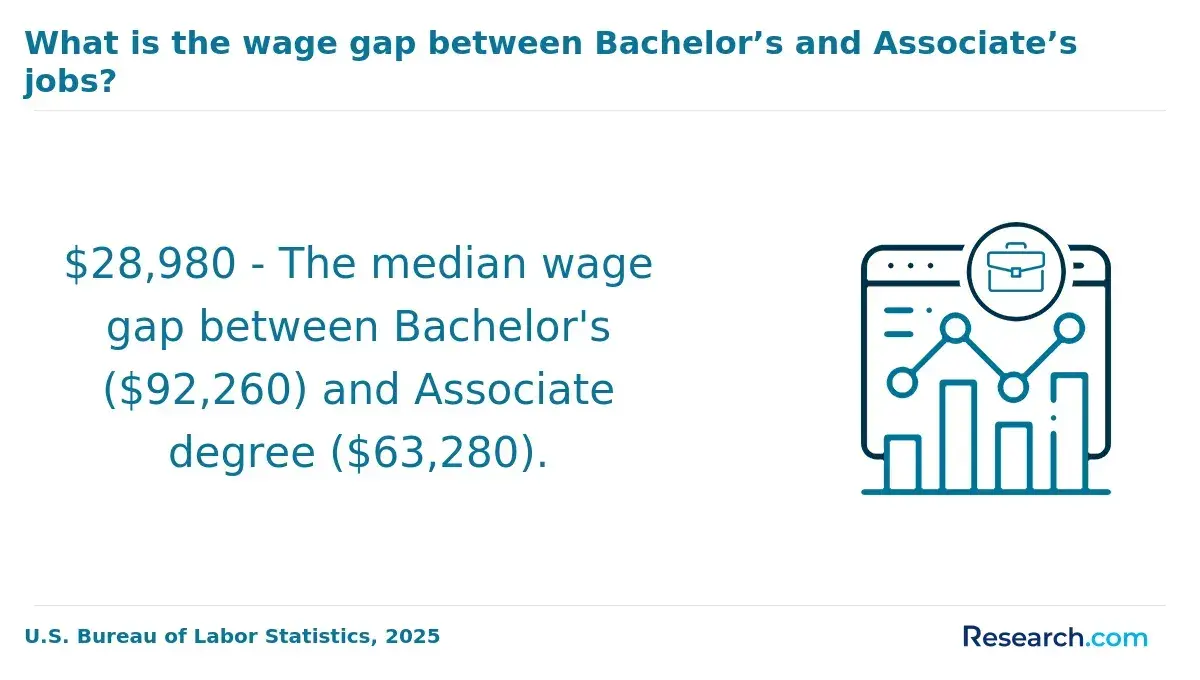
| Bachelor's in marine science or marine biology | Entry-level conservation, education, technician, and resource-management goals | Online lectures plus required labs, field sessions, or local placements | Hands-on requirements may limit location flexibility |
| Bachelor's in environmental science with marine emphasis | Students seeking a broader environmental career base | Online core with electives in ecology, GIS, policy, or water systems | May provide less specialized marine coursework |
| Master's in marine science, coastal science, or environmental management | Working professionals and students with a relevant bachelor's degree | Online seminars, research projects, and possible short residencies | Advanced science roles may still favor substantial research experience |
| Doctoral study | Independent research, university teaching, and advanced scientific leadership | Generally campus- and laboratory-based rather than fully online | Not usually compatible with a fully online format |
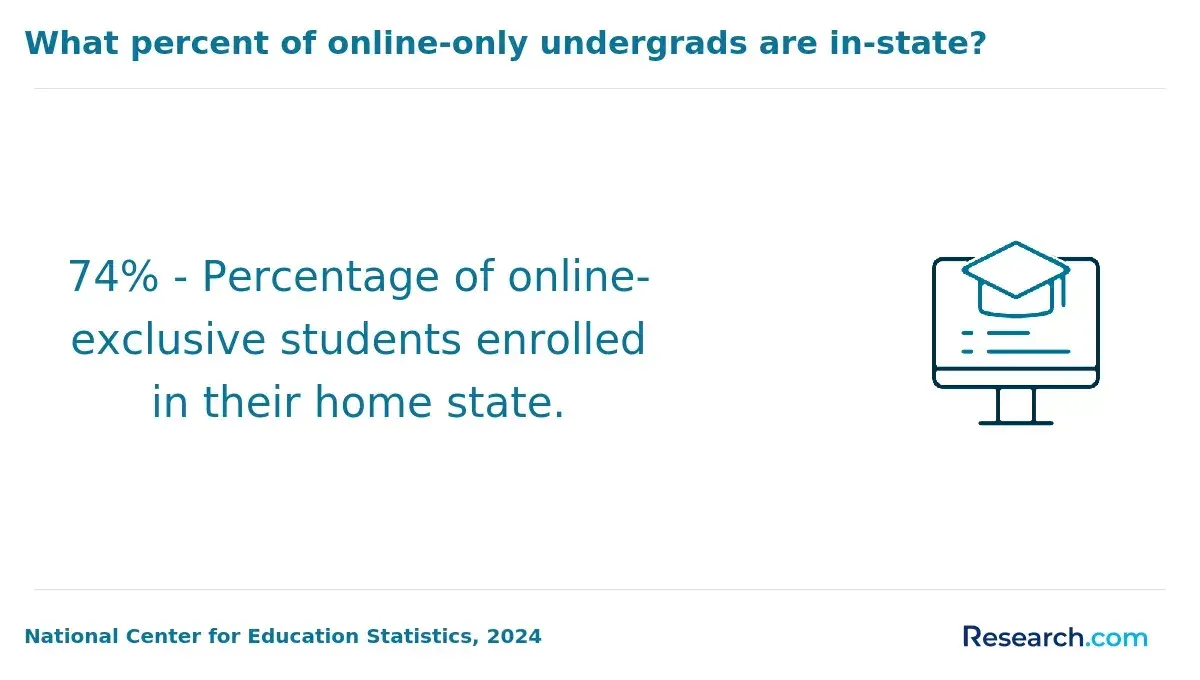
Public nonprofit universities may offer lower tuition to in-state students, while private nonprofit institutions may charge one online rate regardless of residence and may have more standardized adult-learning schedules. Compare the actual net cost, transfer policy, faculty access, and required travel rather than assuming either model is automatically the better value.
Students who need unusually independent pacing should distinguish structured online degrees from truly flexible formats. Resources on self-paced degrees can help clarify the difference between self-paced learning and an asynchronous course that still has weekly deadlines.
How Can Students Verify Accreditation for an Online Marine Science Degree at a Nonprofit University?
Institutional accreditation is the first verification step. It indicates that the university has been reviewed by an accrediting organization recognized by the U.S. Department of Education or the Council for Higher Education Accreditation. Accreditation affects federal aid eligibility, transfer-credit acceptance, employer confidence, and graduate-school applications.
Marine science does not have one universal programmatic accreditor comparable to the accreditors used in some licensed health professions. That means students should not reject a program solely because it lacks a marine-science-specific accreditation. Instead, verify institutional accreditation and assess the scientific quality of the curriculum, faculty, facilities, and experiential requirements.
Use the following process before paying an application fee. It helps separate a credible online program from one whose title sounds more specialized than its academic content.
- Search the university in the U.S. Department of Education's accreditation database and confirm that the institutional accreditation is current.
- Check that the exact online degree, major, concentration, and delivery format appear in the current academic catalog.
- Review required courses for biology, chemistry, ecology, statistics, scientific writing, and quantitative or geospatial methods.
- Ask whether labs, field courses, internships, research projects, or residencies are mandatory and obtain the expected travel and equipment costs in writing.
- Confirm how transfer credits, federal aid, and graduate-school prerequisites apply to your individual academic record.
A common mistake is confusing accreditation with membership in a professional association, a marketing badge, or approval for a continuing-education course. Another is assuming that a university's accredited campus program makes every online pathway identical. Verify the specific credential you will receive.
How Rigorous Are Online Marine Science Degree Programs at Nonprofit Universities?
A well-designed online marine science degree can be rigorous, but rigor comes from the curriculum and assessment design, not from the online label. Strong programs require students to interpret scientific literature, analyze datasets, write technical reports, use quantitative methods, and connect ecological concepts to real coastal or ocean-management problems.
At the bachelor's level, students commonly complete general biology and chemistry before progressing to ecology, conservation, marine organisms, ocean systems, environmental policy, statistics, and research methods. Programs aimed at field science may also require identification skills, sampling protocols, laboratory exercises, internships, or supervised research. A school that describes these requirements clearly is generally easier to evaluate than one that promises a marine career without identifying how students practice scientific skills.
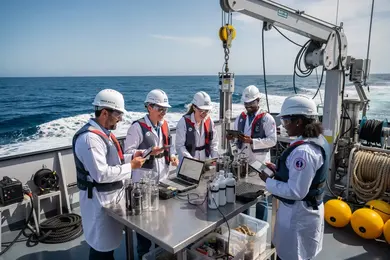
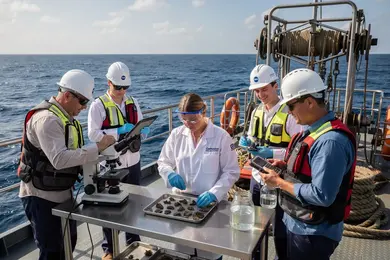
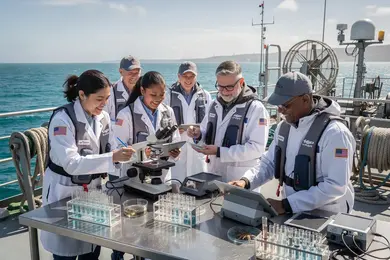
Online delivery works especially well for lectures, data analysis, modeling, GIS, literature review, policy analysis, and collaborative research writing. It is less complete for tasks such as vessel-based sampling, specimen handling, wet-lab chemistry, scuba-based observation, and equipment calibration. Students seeking research-intensive marine biology careers should treat required field and laboratory experience as a strength, not an inconvenience.
The following signals can help applicants judge whether an online program is academically substantial.
- Faculty biographies show relevant graduate training, active research, or professional experience in marine, coastal, fisheries, ecology, or environmental fields.
- Required coursework includes statistics, data interpretation, research methods, and scientific communication rather than only broad survey classes.
- Assignments use authentic datasets, environmental case studies, field observations, lab simulations, or capstone research projects.
- The catalog states how students complete laboratory and field requirements, including supervision, safety, equipment, and location expectations.
- Graduation requirements align with the prerequisite courses commonly expected by marine science master's programs.
Accelerated terms can suit organized adult learners, but they compress readings, assignments, and laboratory preparation into fewer weeks. A traditional schedule may be a better fit for students taking chemistry or statistics after a long academic break.
How Much Does an Online Marine Science Degree Cost at a Nonprofit University?
The advertised cost per credit is only one part of the decision. Total cost can include tuition, mandatory fees, textbooks, lab kits, software, proctoring, travel for residencies, field-course equipment, and lost work time. For transfer students, the number of previously earned credits accepted can matter more than a small difference in per-credit tuition.
National averages provide useful context but should not be treated as program quotes. National Center for Education Statistics data in 2024 reported average published tuition and fees of $11,610 for in-state students at public four-year institutions and $41,540 at private nonprofit four-year institutions. Online marine science students may pay a separate distance-learning rate, and public institutions may charge nonresidents more, so request a personalized estimate.
| Cost factor | Why it matters in marine science | What to ask the university |
| Per-credit tuition | Rates may differ by residency, degree level, and online status | Is the online tuition rate fixed for the time I am enrolled? |
| Transfer-credit evaluation | Accepted science and general-education credits can shorten completion time | How many credits are likely to apply, and which prerequisites must be retaken? |
| Laboratory and field expenses | Kits, local labs, travel, safety gear, and field courses may not be included in tuition | What required costs should I budget beyond tuition and fees? |
| Technology expenses | GIS, statistical software, proctoring, and computer specifications can affect total cost | Which software is supplied, and what equipment must I purchase? |
| Time to completion | Taking fewer courses can lower immediate cost but extend total enrollment time | What is a realistic completion plan for my transfer credits and work schedule? |
A lower tuition rate is not automatically the lowest-cost choice if it excludes required field experiences or accepts few transfer credits. Conversely, a higher-priced program can be reasonable if it includes strong advising, research access, needed prerequisites, and a schedule that allows the student to remain employed.
For comparison, calculate each school's estimated total using the same assumptions: credits remaining, tuition rate, mandatory fees, expected travel, and realistic course load. Do not compare a two-year completion estimate at one school with a four-year estimate at another without accounting for transfer credits and prerequisites.
What Financial Aid Is Available for an Online Marine Science Degree at a Nonprofit University?
Students in eligible degree programs at accredited nonprofit universities may qualify for federal financial aid by submitting the Free Application for Federal Student Aid. Eligibility and award amounts depend on factors such as enrollment intensity, cost of attendance, prior borrowing, and individual financial circumstances. Distance learners should confirm that their specific online program is eligible rather than assuming all online courses qualify.
Potential funding sources often include federal grants for eligible undergraduates, Direct Loans, work-study opportunities when available, state grants, institutional scholarships, employer tuition assistance, veterans' education benefits, and scholarships from environmental or coastal organizations. Graduate students generally have fewer grant options and should be especially cautious about borrowing for a program that does not support a clear professional objective.
Before accepting aid, compare the aid offer as a package rather than focusing only on the largest number. The following questions identify whether funding meaningfully reduces your out-of-pocket cost.
- Which awards are grants or scholarships that do not require repayment, and which are loans?
- Does the university renew institutional scholarships automatically, or must students meet GPA, enrollment, or residency conditions?
- Will part-time enrollment change grant eligibility, loan limits, scholarship amounts, or expected completion time?
- Are field-course travel, required equipment, and professional software included in the school's cost-of-attendance budget?
- Can employer reimbursement be coordinated with federal aid without creating an unexpected balance?
Students considering science alongside another health-related path should avoid assuming that financial-aid rules or practical requirements transfer across disciplines. For example, online RN to BSN programs without clinical requirements address a licensed-professional pathway with requirements that differ substantially from marine science.
How Flexible Are Online Marine Science Degree Programs at Nonprofit Universities?
"Online" can mean several different schedules. An asynchronous course usually lets students watch lectures and complete work on their own schedule within weekly deadlines. A synchronous course requires live online attendance at scheduled times. Hybrid programs combine online classes with campus labs, field courses, short residencies, internships, or local supervised experiences.
For marine science, flexibility must be weighed against the need for practical learning. Students with full-time jobs may prefer asynchronous lectures, but should expect some fixed commitments if the curriculum includes laboratory work, research presentations, group projects, or field training. Programs that offer local placements can reduce travel, but students should verify whether the school approves sites in their area.
| Format | Schedule flexibility | Best for | Potential limitation |
| Fully asynchronous online | High day-to-day flexibility | Working adults who are comfortable managing weekly deadlines independently | May offer fewer direct field and laboratory opportunities |
| Synchronous online | Moderate flexibility | Students who value live discussion and scheduled faculty contact | Meeting times can conflict with work or time zones |
| Hybrid with local experiential learning | Moderate to high, depending on placement | Students who need practical experience but cannot relocate | Approved sites, supervisors, and travel may be limited |
| Hybrid with campus residency | Lower during required sessions | Students able to travel for intensive labs or field instruction | Travel cost and time away from work require planning |
Ask for a term-by-term schedule before enrolling, including meeting times, assignment deadlines, residency dates, and expected hours for internship or fieldwork. Do not rely on a general statement that a program is "designed for adults." Flexibility is determined by the exact course sequence you will take.
Students who are also evaluating short, management-focused online credentials may find that an accelerated healthcare administration degree has a very different pacing model and career purpose. It should not be treated as a substitute for the science prerequisites needed in marine fields.
What Student Support Services Do Nonprofit Universities Provide for Online Marine Science Degree Students?
Online students need more than a learning platform. The most useful services help them plan science prerequisites, access library databases, solve technical problems, find field opportunities, and translate coursework into career or graduate-school preparation. Availability varies widely, so applicants should ask whether support is delivered specifically to distance learners rather than only to campus students.
Strong support is particularly valuable in marine science because a student may be studying far from the university's coastal facilities. A proactive advisor can help identify local agencies, aquariums, conservation groups, environmental laboratories, parks, or watershed organizations that may support internships, volunteering, or supervised projects when appropriate.
When comparing schools, look for services that address the practical barriers of studying science remotely.
- Academic advising that maps prerequisite science courses, transfer credits, and a realistic graduation timeline.
- Online tutoring or writing support for chemistry, statistics, scientific reports, and research papers.
- Library access to scholarly databases, librarian consultations, and interlibrary borrowing options for distance learners.
- Career services that review scientific résumés, support internship searches, and connect students with alumni or employers.
- Accessibility services, mental-health support, technical help, and clear procedures for remote examination or proctoring issues.
A red flag is a program that cannot explain who assists online students with required field experiences or how students access career support outside the campus region. Ask for examples of the support process, not only a list of services.
Do Online Marine Science Degree Programs at Nonprofit Universities Prepare Graduates for In-Demand Careers?
An online marine science degree can prepare students for relevant work when it builds both scientific knowledge and applied skills. Common entry-level directions include environmental technician, biological science technician, natural-resource assistant, outreach educator, fisheries observer, conservation-program assistant, laboratory assistant, GIS technician, and environmental compliance support. Job titles and qualifications vary by employer, agency, location, and level of field experience.
The BLS recently reported a median annual wage of $72,860 for zoologists and wildlife biologists. This occupation often requires at least a bachelor's degree for entry-level roles, while independent research positions and many specialized scientist roles may require a master's degree or doctorate. The figure is a national occupational median, not a starting salary or a guarantee for marine science graduates.
| Career direction | Typical education path | Helpful preparation | Graduate degree commonly helpful? |
| Environmental or biological technician | Associate degree, bachelor's degree, or relevant coursework depending on employer | Sampling, lab procedures, data entry, safety, and technical reporting | Usually not required for entry-level work |
| Conservation or coastal-program assistant | Bachelor's degree often preferred | Ecology, policy, community outreach, GIS, and project coordination | Can help with advancement |
| Fisheries or wildlife biologist | Bachelor's degree for some entry roles | Population ecology, statistics, field methods, species identification, and data analysis | Often helpful; frequently required for research leadership |
| Marine research scientist | Master's degree or doctorate commonly expected | Advanced research design, quantitative analysis, publications, and laboratory or field research | Usually expected |
| Environmental consultant or analyst | Bachelor's degree for some roles; requirements vary | Regulation, impact assessment, technical writing, GIS, and client communication | May improve specialization prospects |
Employers increasingly value evidence that applicants can work with data, maps, reports, and teams. Seek courses or projects involving GIS, spreadsheets or statistical software, scientific writing, environmental regulations, remote sensing, and data visualization. Artificial intelligence can assist with data processing and literature organization, but it does not replace the scientific judgment, field protocols, quality control, and ethical decision-making taught through supervised training.
Do not select a program based on salary claims alone. Request career-outcomes information, ask how outcomes are defined, and examine whether the curriculum matches the jobs you actually intend to pursue. Nutrition-focused careers, for example, follow distinct educational and credential pathways; prospective students should consult information about dietetics programs rather than assuming a marine science degree meets those requirements.
Can an Online Marine Science Degree From a Nonprofit University Prepare Students for Graduate School?
Yes, an online bachelor's degree from an accredited nonprofit university can prepare a student for graduate school if the academic record includes the prerequisites, grades, research exposure, and recommendations required by the target program. Graduate admissions committees generally evaluate the institution, transcript, rigor of science coursework, quantitative preparation, research fit, and applicant experience rather than dismissing a degree solely because some coursework was completed online.
Preparation matters especially for research-oriented marine biology, oceanography, and ecology master's or doctoral programs. Many expect prior coursework in biology, chemistry, calculus or statistics, physics, ecology, and research methods. Requirements differ by department, so students should review several target graduate programs early instead of discovering missing prerequisites near graduation.
Students intending to apply to graduate school can strengthen their preparation through a deliberate undergraduate plan.
- Identify likely graduate programs and record their prerequisites, recommended coursework, and application deadlines.
- Choose upper-level science, statistics, GIS, and research-methods courses that satisfy those expectations.
- Complete a faculty-supervised capstone, internship, research project, or field experience that produces a writing sample, poster, dataset, or technical report.
- Develop relationships with faculty or supervisors who can write detailed recommendations about academic and research abilities.
- Keep course syllabi, lab descriptions, project records, and transcripts in case a graduate department requests clarification about online or transfer coursework.
A master's degree is often the right next step for students seeking advanced technical roles, applied coastal management, or stronger research preparation. A doctorate makes the most sense for those pursuing independent research, highly specialized scientific positions, or many university faculty careers. Students who want field-intensive research should prioritize a graduate program's advisor fit, laboratory resources, funding, and research opportunities over whether every course can be completed online.
How Should Students Compare the Best Online Marine Science Degree Programs at Nonprofit Universities?
The best online marine science degree is the one that meets your educational prerequisites, budget, schedule, and career target without hiding essential fieldwork or travel costs. Because program titles vary, compare the actual curriculum and learning requirements rather than searching only for an exact "marine science" label.
Create a shortlist of accredited public and private nonprofit universities, then request information for the exact online pathway. A program may be a strong fit for a working professional seeking coastal-policy skills but a poor fit for a student who needs extensive wet-lab training for a research career.
| Comparison priority | Best-value signal | Red flag |
| Accreditation | Current institutional accreditation and a clearly listed degree in the catalog | Unclear accreditor, outdated claims, or a vague credential title |
| Curriculum | Biology, chemistry, ecology, statistics, research methods, and relevant electives | Few science prerequisites or no quantitative coursework |
| Experiential learning | Transparent lab, internship, research, or fieldwork plan with support for online learners | Promises hands-on preparation but does not explain where or how it occurs |
| Total cost | Written estimate covering tuition, fees, transfer credits, travel, and equipment | Only a per-credit price with no information about mandatory extras |
| Flexibility | Published course schedules, deadlines, residency dates, and part-time options | "Flexible" marketing without details about live sessions or field commitments |
| Career alignment | Relevant tools, projects, advising, internships, and outcomes information | Broad job promises without evidence of skill development |
| Graduate-school readiness | Required science prerequisites and opportunities for research or faculty mentorship | No pathway for advanced coursework or meaningful academic references |
Use these final questions in admissions conversations to turn a general comparison into a decision.
- What credential will appear on my transcript and diploma, and is this exact degree available fully online or hybrid?
- Which required classes have live meeting times, campus visits, local laboratory work, fieldwork, internships, or residencies?
- How many of my prior credits will transfer after an official evaluation, including biology, chemistry, mathematics, and statistics?
- What is my estimated total cost through graduation, including fees, travel, laboratory supplies, software, and course materials?
- Which careers is the curriculum designed to support, and what practical work products will I complete?
- If I intend to attend graduate school, which prerequisites and research experiences will this program provide?
Common mistakes include assuming nonprofit status ensures quality, choosing the cheapest tuition rate without calculating total cost, overlooking required travel, and selecting a broad environmental program without checking for needed marine coursework. Another error is choosing an online degree solely for convenience when the intended career requires substantial laboratory or field training.
For students comparing flexible online degrees across fields, an easiest RN to BSN program comparison illustrates why "easy" should never be the primary selection criterion. In marine science, the better question is whether the workload, scientific rigor, and experiential requirements prepare you for your intended next step.
Other Things You Should Know About Marine Science
No. Marine biology focuses primarily on marine organisms and ecosystems. Marine science is broader and may include biology, oceanography, chemistry, geology, climate, fisheries, conservation, and coastal policy. Review required courses to determine the program's actual emphasis.
Often yes, especially for environmental policy, conservation, GIS, data analysis, and general science coursework. However, some programs require local laboratory arrangements, travel to campus, field intensives, internships, or other hands-on activities. Confirm those requirements before applying.
Usually not for admission or for every program. Some field-based courses, research projects, or marine biology jobs may value or require diving credentials. Do not pay for certification unless your chosen program, research plan, or target employer specifically calls for it.
Useful complementary skills include statistics, GIS, spreadsheet analysis, scientific writing, public speaking, data visualization, laboratory safety, project management, and basic programming. The best choices depend on whether you are targeting conservation, research, policy, education, consulting, or technical fieldwork.
References
- Getting Started in Deep-Ocean Science https://www.dosi-project.org/deep-ocean-organizations/
- Can Online Colleges Offer Competitive Career Outcomes? https://www.onlineu.com/magazine/popular-online-schools-career-outcomes
- Marine Biology Degree Programs in the U.S. | MarineBio Conservation Society https://www.marinebio.org/careers/us-schools/
- Best Colleges for Marine Biology https://ingeniusprep.com/blog/best-colleges-for-marine-biology/
- Cost & Financial Aid https://www.semesteratsea.org/financial-aid/
- Batten School of Coastal & Marine Sciences https://www.vims.edu/academics/
- How to Become a Marine Biologist: A Step-by-Step Guide https://www.seamester.com/blog/how-to-become-a-marine-biologist/
- Master of Science in Biological Sciences and Marine Sciences Costs https://www.une.edu/sfs/graduate/costs/master-science-biological-sciences-and-marine-sciences-costs
- How to become a marine biologist? | Conservation Careers https://www.conservation-careers.com/how-to-become-a-marine-biologist/
- Home https://www.husson.edu/online/online-degrees/bachelor-of-science-in-marine-biology-and-conservation