2027 Online Marine Science Degree Programs With No Personal Statement or Admissions Essay Required

Co-Founder and Chief Data Scientist
Applying to an online marine science program can be simpler when a school does not require a personal statement, but transcripts, prerequisite science courses, and GPA standards may still determine admission. National Center for Education Statistics data published in 2024 show that 53.5% of U.S. postsecondary students took at least one distance-education course in fall 2022, making online options increasingly relevant. This guide helps prospective, transfer, and adult students distinguish true no-essay policies, assess program quality, and apply with realistic expectations.
Key Things You Should Know
- A true no-essay online marine science application omits the personal statement from standard admission, but it can still require official transcripts, a minimum GPA, science prerequisites, and sometimes placement or transfer-credit review; it is not automatic or open admission.
- "Essay-optional" means you may submit writing to add context, while "essay-waived" usually means a requirement has been removed for a particular applicant group or term; honors, research, and scholarship applications can still require written materials.
- Online learning is a mainstream format: 53.5% of U.S. postsecondary students took at least one distance-education course in fall 2022, according to NCES data published in 2024, but marine science degrees may still include in-person labs, fieldwork, or local proctoring.
What Does No Personal Statement or Admissions Essay Required Mean for Online Marine Science Degree Programs?
For an online marine science degree, "no personal statement or admissions essay required" normally means the institution does not ask applicants to write a narrative about their goals, background, academic interests, or readiness as part of its standard admissions application. The admissions office instead makes an initial decision from objective records, especially transcripts and completed coursework.
This policy applies to admission to the degree program, not necessarily to every opportunity connected with it. A university may separately request a short statement for competitive scholarships, honors colleges, research placements, departmental awards, graduate assistantships, or an appeal after an academic denial.
What Admissions Requirements Do Online Marine Science Degree Programs Use Instead of an Essay?
No-essay admissions shift the focus from a written narrative to evidence of academic preparation. Requirements differ by institution and degree level, and selective programs can be rigorous even when their application is brief.
The following comparison shows the documents and qualifications commonly used in place of an essay.
| Requirement | What schools evaluate | Why it matters for marine science |
| Official transcripts | Completed courses, grades, degree status, and academic trends | Programs often need proof of college readiness or prior undergraduate study. |
| GPA | Overall, transfer, or recent-course GPA | A minimum GPA may be required even when no narrative is requested. |
| Science prerequisites | Biology, chemistry, algebra, statistics, or physics | These courses support ocean systems, ecology, data analysis, and laboratory coursework. |
| Test scores | SAT, ACT, or placement results when applicable | Many schools are test-optional, but some applicants may need placement assessment. |
| Recommendations or résumé | Academic, professional, or field experience evidence | These are more common for graduate, competitive, or research-oriented options. |
| Identity and residency records | Residency, prior enrollment, and eligibility information | They can affect tuition classification and state-specific enrollment eligibility. |
Ask whether prerequisites must be completed before admission or can be taken after enrollment. A student missing chemistry may be admitted conditionally, required to take foundational courses first, or directed to a related environmental studies pathway.
Students comparing flexible formats can also look at self paced degrees, but self-paced scheduling does not remove laboratory, field, sequencing, or prerequisite requirements in science programs.
Who Is a Good Fit for Online Marine Science Degree Programs With No Admissions Essay?
A no-essay pathway can fit applicants whose academic records already communicate their readiness. This includes transfer students with a strong science foundation, working adults returning with prior college credit, military-affiliated learners, and students who prefer to spend application time on transcripts, financial-aid forms, and prerequisite planning rather than narrative writing.
It may be less suitable for an applicant whose grades do not reflect current ability, who changed direction after a difficult academic period, or who has extensive marine research, conservation, diving, vessel, fisheries, or community-science experience that is not visible on a transcript. An essay-optional program can provide useful context in those cases. It can also help a student explain a course withdrawal, a gap in enrollment, or why a nontraditional record still supports advanced science study.
Career goals should drive the decision more than application convenience. Marine science can lead toward environmental monitoring, coastal resource management, fisheries support, laboratory work, conservation organizations, education, data support, or graduate study. Many research-intensive scientist roles expect a graduate degree, and field-based jobs may value hands-on technical experience alongside coursework.
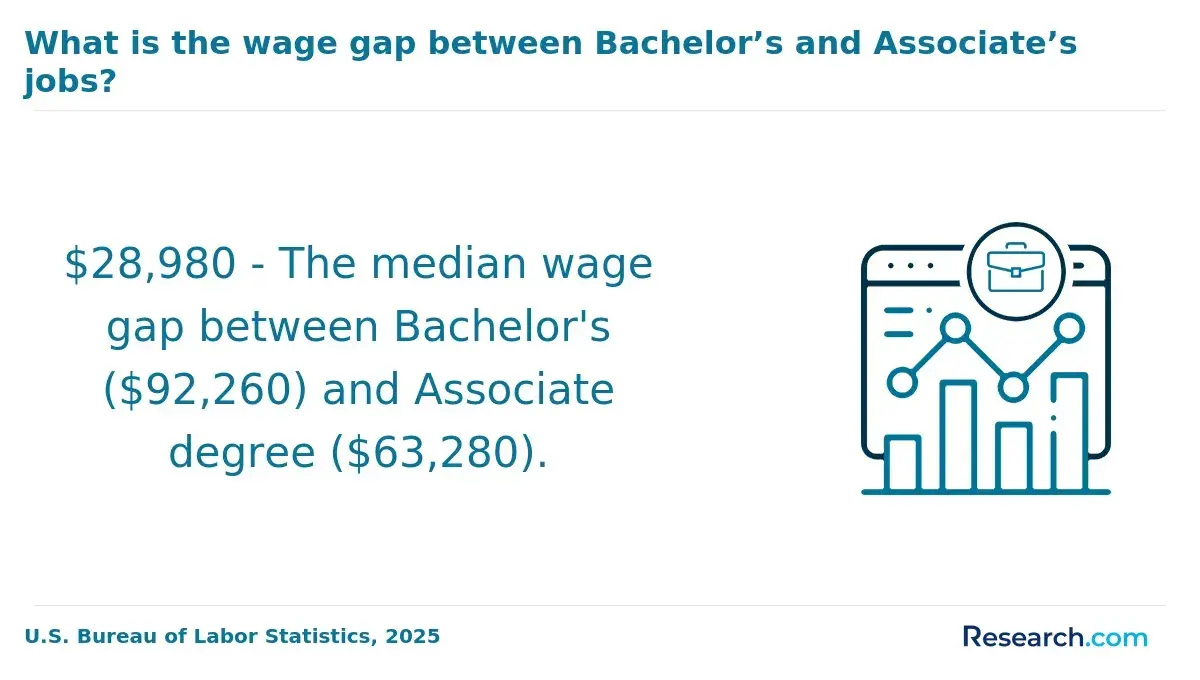
The U.S. Bureau of Labor Statistics projects 6% growth in employment for environmental scientists and specialists from 2023 to 2033. That broader occupation group is not a direct measure of marine-science hiring, but it indicates that students should prioritize quantitative, field, laboratory, and communication skills rather than assuming that a simplified application alone improves career prospects.
What Is the Difference Between No-Essay, Essay-Optional, and Essay-Waived Marine Science Degree Admissions?
The wording on an admissions page matters. These policies are not interchangeable, and the difference can affect whether you should submit additional context voluntarily.
| Policy | Meaning for standard admission | Best use case | Important caution |
| No essay required | No personal statement is part of the standard application. | Applicants with records that clearly meet published criteria. | Other materials, including transcripts and prerequisites, remain required. |
| Essay-optional | The essay is not mandatory, but the school will consider it if submitted. | Applicants needing to explain context or demonstrate preparation. | "Optional" does not mean irrelevant at competitive institutions. |
| Essay-waived | An essay otherwise required has been removed for a defined group, term, or route. | Eligible transfer, partner-school, or returning applicants. | Confirm the waiver applies to your applicant type before submitting. |
| Essay required elsewhere | The main admission application has no essay, but a separate opportunity does. | Students seeking scholarships, honors, or research funding. | Missing the separate deadline can reduce funding options. |
Do not confuse no-essay admission with test-optional admission. Test-optional refers to standardized scores, while no-essay refers to writing. A program may have one policy, both policies, or neither.
Students interested in structured health pathways can see a similar distinction between streamlined admission and program expectations in an accelerated healthcare administration degree. The subject differs, but the comparison principle is the same: evaluate curriculum, outcomes, and eligibility after confirming the application policy.
Are Online Marine Science Degree Programs With No Admissions Essay Easier to Get Into?
Not necessarily. Removing an essay lowers the writing burden and may shorten an application, but it does not establish an easier admissions standard. Schools can remain selective through GPA thresholds, limited upper-division seats, prerequisite grade requirements, capacity limits, and review of transfer equivalencies.
A no-essay process may actually make academic records more influential because there is no narrative statement to explain unusual circumstances. If your transcript is below a published minimum, an essay-free program may offer fewer ways to provide context unless it has an academic-review or conditional-admission process.
Compare admission difficulty using information that is more meaningful than essay policy: required GPA, prerequisite grades, acceptance data when the school publishes it, whether admission is direct to the major, and whether students must apply again for upper-level coursework. "Open admission" is a separate institutional policy and should never be assumed from a no-essay label.
For a stronger application strategy, apply to a balanced set of schools: at least one program where your completed science coursework clearly meets requirements, one that fits your preferred format and costs, and one option with advising or conditional pathways if prerequisites are incomplete.
How Can You Verify Accreditation and Quality in No-Essay Online Marine Science Degree Programs?
Start with institutional accreditation. In the United States, a legitimate degree-granting college should be accredited by an agency recognized by the U.S. Department of Education or the Council for Higher Education Accreditation. Institutional accreditation supports transferability, federal financial-aid eligibility, and employer confidence, though individual transfer decisions are always made by the receiving school.
Marine science does not have one universal programmatic accreditor comparable to some licensed professions. Quality therefore depends on the curriculum, faculty, student support, and practical learning design. An online program should clearly explain how it teaches or arranges laboratories, field methods, coastal data analysis, and any required in-person experiences.
Use these checks before paying an application fee or deposit.
- Verify the college's institutional accreditation in the federal accreditation database and confirm that the online degree is awarded by that accredited institution.
- Read the catalog for required biology, chemistry, mathematics, statistics, laboratory, fieldwork, internship, and residency components.
- Confirm whether labs use home kits, virtual simulations, local approved facilities, intensives, or campus attendance, and ask who pays related fees and travel costs.
- Review faculty credentials, course schedules, academic advising, tutoring, library access, disability services, and career support for online students.
- Ask whether the degree is designed for professional preparation, graduate-school preparation, transfer completion, or general environmental studies.
Red flags include vague accreditation claims, unclear degree ownership, promises of a fully online lab science degree without explaining practical work, pressure to enroll before receiving transfer evaluation, and no published tuition or refund information.
How Does the Application Process Work for Online Marine Science Degree Programs With No Personal Statement?
The process is usually document-driven, but applicants should read every checklist item rather than assuming the application is complete after submitting an online form. A missing transcript or prerequisite evaluation can delay review more than an omitted essay would.
Use this sequence to protect your time and avoid applying under the wrong policy.
- Select the exact degree, concentration, and entry term, then open the admissions page for your applicant category: first-year, transfer, returning, nondegree, or graduate.
- Download or save the current requirements page and confirm in writing that a personal statement is not required for your category and term.
- Request official transcripts early from every college attended; submit high-school records only if the school requires them for your status.
- Match completed courses against biology, chemistry, mathematics, and other prerequisites, then request a preliminary transfer-credit review when available.
- Submit the application, residency information, and any required fee waiver or payment before the deadline.
- Complete separate financial-aid, scholarship, placement, immunization, or orientation steps after admission, checking each one for writing requirements.
Keep copies of confirmation emails and screenshots of the requirement page. Admissions policies can change by term, and a written confirmation is more reliable than a search result or an outdated third-party listing.
Students accustomed to clinical-profession requirements may find it useful to compare how format-specific obligations work in online RN to BSN programs without clinical requirements. Marine science has different academic expectations, but both fields require applicants to verify the practical component rather than relying on a broad online label.
Can Transfer and Adult Students Apply to Online Marine Science Degree Programs Without an Essay?
Yes, many transfer and adult applicants can use no-essay pathways, but their requirements often differ from those for first-time students. Transfer review commonly emphasizes the number of transferable credits, cumulative or transferable GPA, grades in foundational sciences, and whether prior courses match the receiving institution's curriculum.
Adult learners should ask whether professional experience can satisfy any requirement. Work in aquariums, environmental agencies, fisheries, boating, surveying, conservation, or laboratories may strengthen a résumé, but it usually does not replace graded chemistry, biology, calculus, or statistics prerequisites unless the university specifically awards prior-learning credit.
Before applying, obtain answers to the questions below because they determine both completion time and total cost.
- How many credits can transfer, and is there a maximum age for science coursework?
- Are lower-division labs accepted from community colleges, and must they include an in-person component?
- Does the program require a minimum GPA overall, in transfer credits, or in prerequisite courses?
- Will an advisor provide a written degree audit before enrollment or only after a deposit?
- Are there required campus visits, field intensives, internships, or local-site approvals for online students?
Students changing careers should avoid choosing solely by the shortest advertised time to completion. A program that accepts more credits may be efficient, but only if its remaining coursework aligns with the marine, coastal, environmental, or graduate-school path you intend to pursue.
Do No-Essay Online Marine Science Degree Programs Affect Tuition, Financial Aid, or Scholarships?
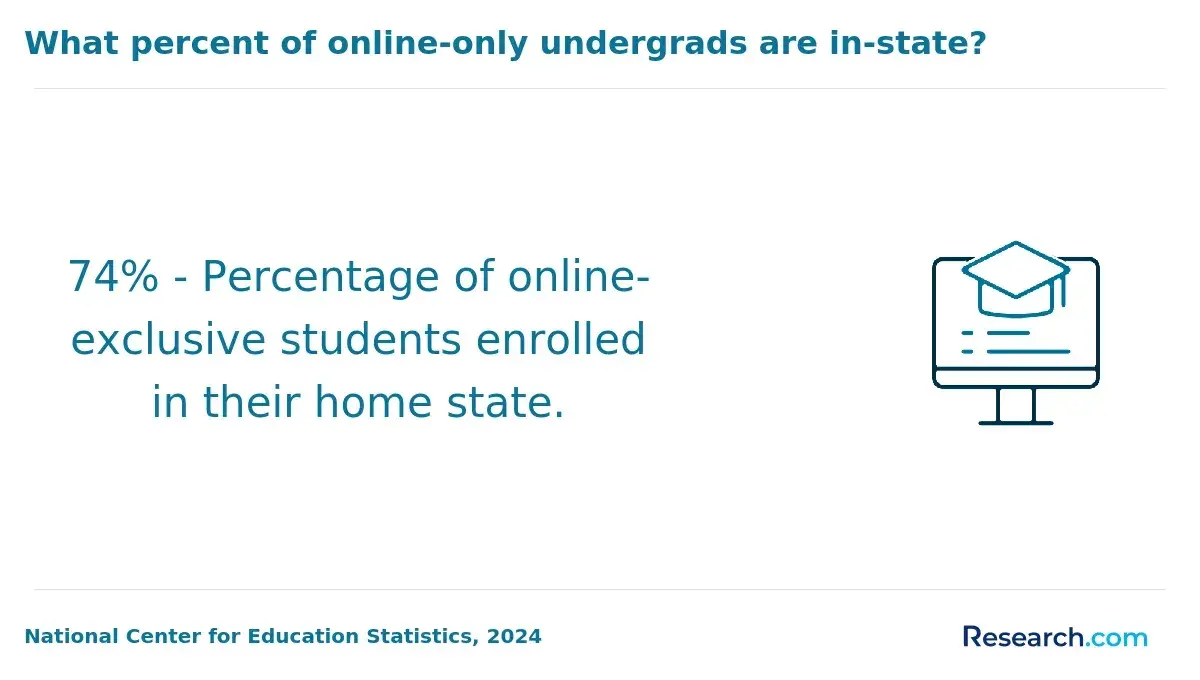
No-essay admission itself does not determine tuition, federal financial-aid eligibility, or degree value. Tuition is generally set by the institution, residency status, credit load, course level, and online fees. The major financial question is whether you can complete required labs, field experiences, and transferred credits without unexpected expenses.
Federal aid is typically determined through the FAFSA and depends on student eligibility, enrollment, cost of attendance, and other factors - not on whether the admissions application required an essay. However, scholarships frequently use a separate application and may request essays, recommendations, a résumé, proof of service, or a faculty nomination.
Compare the cost categories below rather than relying only on the advertised per-credit tuition rate.
| Cost factor | What to confirm | Potential decision impact |
| Tuition rate | In-state, out-of-state, online, undergraduate, or graduate rate | Residency rules can materially change total program cost. |
| Mandatory fees | Technology, distance-learning, laboratory, proctoring, and graduation fees | Fees can make a low advertised rate less competitive. |
| Field and laboratory costs | Travel, lodging, equipment, kits, safety training, and site fees | These expenses may not be included in tuition. |
| Transfer credit | Accepted credits and any required course repeats | More applicable credit can reduce time and borrowing. |
| Scholarship conditions | Separate deadlines, essays, GPA renewal rules, and enrollment requirements | A no-essay admission policy does not guarantee essay-free funding. |
Submit the FAFSA as early as practical and compare each school's aid offer only after confirming the same enrollment assumptions. If a scholarship essay could significantly reduce borrowing, writing it may be worthwhile even when the admission application does not require one.
Application simplicity should also not be mistaken for the easiest RN to BSN program model found in a different field. In any discipline, affordability and academic fit require a fuller review than admission paperwork alone.
How Should You Compare Online Marine Science Degree Programs With No Admissions Essay?
Compare programs in two stages. First, confirm that you are eligible and that the no-essay policy applies to you. Second, compare academic design, practical training, net cost, and relevance to your intended role or graduate-school plans. A quicker application is useful only when the degree also delivers the preparation you need.
This scorecard highlights the factors that should carry more weight than the presence or absence of an admissions essay.
| Comparison factor | Strong sign | Question to ask |
| Admission clarity | Requirements are published by applicant type and term. | Does the no-essay rule apply to transfer, adult, and online applicants? |
| Curriculum alignment | Required courses match your marine biology, oceanography, coastal management, or environmental goal. | Which courses build data, laboratory, and field-method skills? |
| Practical learning | Labs and fieldwork are clearly described with locations and costs. | Are campus visits, intensives, or local placements required? |
| Transfer value | A written evaluation identifies applicable credits before enrollment. | Which credits count toward the major rather than only electives? |
| Quality and support | Accreditation, faculty information, advising, and online student services are transparent. | Who helps online students plan labs, internships, and career steps? |
| Net cost | Tuition, fees, aid, and non-tuition expenses are itemized. | What will the complete degree cost after transfer credit and aid? |
Choose an essay-free option when your records meet the criteria, the program's practical requirements are workable, and the curriculum fits your goal. Consider essay-optional or essay-required programs when a written statement can explain academic context, demonstrate unusual experience, or improve access to competitive research and scholarship opportunities.
Related science and health programs also vary widely in clinical, laboratory, and experiential expectations. For example, students researching nutrition careers can compare dietetics programs while using the same core checklist: accreditation, required practical work, cost, and the specific admissions policy for their applicant category.
Other Things You Should Know About Marine Science
Not always. A school may waive essays for transfer applicants but require them for first-year, international, graduate, honors, or conditional-admission applicants. Check the requirement page for your exact applicant type and entry term.
Yes. Admissions staff may request additional information when transcripts are incomplete, academic history needs clarification, residency is uncertain, or a prerequisite review raises questions. This is different from a standard personal-statement requirement.
They may. Departmental scholarships, donor awards, research funding, and honors opportunities often have separate applications with essays or short-answer prompts. Review funding deadlines independently from admission deadlines.
Sometimes, but not always. Programs may use virtual labs, home kits, approved local facilities, short campus intensives, internships, or field courses. Confirm the exact requirements before enrolling, especially if travel or lab access would be difficult.
References
- Top Biology Scholarships for 2025 https://www.fastweb.com/college-scholarships/articles/scholarships-for-biology-majors
- Home https://www.husson.edu/online/online-degrees/bachelor-of-science-in-marine-biology-and-conservation
- How to Become a Marine Biologist: A Step-by-Step Guide https://www.seamester.com/blog/how-to-become-a-marine-biologist/
- Top 18 Marine Biology Scholarships to Apply for in December 2025 https://bold.org/scholarships/by-major/marine-biology-scholarships/
- Marine Biology Personal Statement https://www.ipl.org/essay/Marine-Biology-Personal-Statement-3A03C9B0D26C1E0A