2027 Online Marine Science Degree Programs With No Letters of Recommendation Required

Co-Founder and Chief Data Scientist
An online Marine Science degree with no letters of recommendation can reduce a frustrating application barrier, especially for working adults, transfer students, and applicants without recent academic references. The National Center for Education Statistics reported that 54% of U.S. postsecondary students took at least one distance education course in fall 2022, illustrating how mainstream online study has become. This guide explains what "no letters required" actually means, how to identify credible programs, what schools evaluate instead, and how to compare cost, accreditation, academic rigor, and career relevance before applying.
Key Things You Should Know
- "No letters of recommendation required" means applicants do not need to submit references for the standard application; it does not mean transcripts, minimum GPA rules, prerequisite science courses, essays, or proof of English proficiency are waived.
- Fully online Marine Science degrees are less common than online biology, environmental science, fisheries, conservation, and marine biology-related programs because laboratory and fieldwork requirements may still require short residencies or local supervised experiences.
- Compare total cost and career alignment rather than admission simplicity alone: College Board reported average 2024-25 published tuition and fees of $11,610 at public four-year in-state institutions and $43,350 at private nonprofit four-year institutions.
Which Online Marine Science Degree Programs Require No Letters of Recommendation?
Few U.S. institutions offer a fully online degree titled exactly "Marine Science." More commonly, students find online bachelor's degrees in marine biology, sustainable aquaculture, environmental science, fisheries, wildlife conservation, or biology with marine-focused electives. Undergraduate online applications are the most likely to omit recommendation letters; research-oriented master's programs commonly request them.
The options below show the kinds of programs worth investigating. Admissions policies can change by term, student type, and degree level, so applicants should treat a school's current program application page and written confirmation from admissions as the final authority.
| Program type to investigate | Typical degree level | Recommendation-letter pattern | Important limitation to check |
| Online marine biology or sustainable aquaculture bachelor's program | Bachelor's | Often no letters in standard undergraduate admission | Whether lab work, internships, or field experiences are required in person |
| Online environmental science bachelor's degree with coastal or marine electives | Bachelor's | Often no letters for first-year or transfer admission | Whether enough marine coursework is available for the intended career |
| Online fisheries, wildlife, conservation, or natural-resources bachelor's degree | Bachelor's completion or transfer | Usually transcript-centered, but rules vary by institution | Transfer-credit minimums and residency requirements |
| Professional online environmental-management master's degree | Master's | May waive letters for some applicants, but not always | Whether the waiver applies to the exact concentration and entry term |
| Research-based marine science or oceanography master's degree | Master's | Letters are commonly required | Faculty supervision, research-fit statement, and science prerequisites |
One current example to investigate is Unity Environmental University's online marine biology and sustainable aquaculture bachelor's pathway, which has used a streamlined undergraduate admissions model. Confirm the exact degree title, state availability, experiential-learning expectations, and whether letters remain absent from the application before paying an application or enrollment fee.
A no-letter option is most practical for applicants seeking a broad undergraduate credential or career transition. Students aiming for oceanographic research, marine-policy analysis, or a funded graduate assistantship should expect a more selective admissions process later, even if their bachelor's application does not require references.
What Are the Admission Requirements for Online Marine Science Degree Programs With No Recommendation Letters?
Admission requirements depend primarily on degree level. A no-recommendation policy removes one document from the application; it does not remove academic screening. Most online bachelor's programs request official high school or college transcripts, while transfer applicants may need to meet minimum transferable-credit and GPA standards.
Before applying, review the checklist for your applicant category rather than relying on an institution-wide admissions page. The following materials commonly replace or accompany recommendation letters.
- Official transcripts from high school, community college, and previously attended universities
- A minimum cumulative GPA, which may differ for first-year, transfer, and graduate applicants
- Completion of prerequisite coursework such as biology, chemistry, algebra, statistics, or environmental science
- A personal statement or short-response essay explaining academic goals and interest in marine systems
- A résumé documenting work, military service, volunteer activity, certifications, or relevant field experience
- Standardized test scores only when the school or applicant category still requires them
- Proof of English-language proficiency for applicants whose prior education does not meet the institution's exemption policy
Graduate applicants should be particularly careful. A program may advertise "no GRE required" but still require two or three recommendations, a statement of purpose, prerequisite science credits, and a résumé. Conversely, a professional master's program may waive letters only for applicants who meet a GPA threshold or have substantial relevant experience.
Applicants comparing streamlined online pathways in other applied fields may notice a similar distinction in online RN to BSN programs without clinical requirements: a reduced logistical requirement does not eliminate academic, licensing, or institutional eligibility rules. Read each condition separately.
Are Online Marine Science Programs With No Letters of Recommendation Easier to Get Into?
Not necessarily. Programs without recommendation letters are not automatically less rigorous, less selective, or easier to complete. Schools may use transcripts, prerequisite grades, essays, and prior coursework as more standardized evidence of readiness. This approach can be especially appropriate for structured undergraduate online programs with clear entry requirements.
Letters are most useful when a program needs qualitative evidence of research potential, laboratory maturity, writing ability, or leadership. For that reason, competitive thesis-based master's degrees in marine science, oceanography, ecology, and related disciplines frequently continue to require them. A letter-free application is more common when the curriculum is designed for broader access or professional advancement.
The Bureau of Labor Statistics reported a 2024 median annual wage of $72,860 for zoologists and wildlife biologists. Marine-focused work can fall within or overlap this occupation, but job duties, location, employer, degree level, and specialized skills materially affect pay. Applicants should not select a program merely because admission appears simpler; they should verify that its curriculum builds the quantitative, scientific, and field skills expected for their target role.
Students who may benefit most include adult learners with older references, transfer students with strong college transcripts, military-affiliated learners, and professionals moving into conservation, aquaculture, environmental education, or coastal resource work. Applicants seeking research careers should avoid assuming a streamlined bachelor's admission process will substitute for later research experience, faculty relationships, or graduate-school references.
What Do Online Marine Science Programs Evaluate Instead of Letters of Recommendation?
When letters are not required, admissions teams generally rely more heavily on evidence the applicant can provide directly and verify consistently. The strongest application makes a clear connection between past coursework or experience and the scientific demands of the program.
This comparison shows what each alternative material can demonstrate to an admissions reviewer.
| Application material | What it can show | How to make it more useful |
| Transcript | Academic preparation and performance over time | Highlight completed biology, chemistry, math, statistics, or environmental courses where allowed |
| Personal statement | Career direction, motivation, and communication ability | Connect a specific marine, coastal, fisheries, or conservation goal to the curriculum |
| Résumé | Professional maturity and relevant experience | Include field sampling, boating safety, GIS, aquaculture, environmental compliance, or volunteer work |
| Prerequisite grades | Readiness for science-intensive courses | Address weaker grades briefly and factually if the application permits context |
| Portfolio or supplemental response | Applied skills and project experience | Describe methods, tools, results, and your individual role in projects |
Do not use the absence of letters as a reason to submit a generic statement. Explain the ecosystem, problem area, or career setting that interests you, such as marine conservation, aquaculture operations, coastal resilience, environmental communication, fisheries management, or ecological data analysis. Specificity helps an institution assess fit without relying on a recommender's narrative.
Applicants with limited science coursework can strengthen their preparation by completing transferable prerequisites before enrollment, documenting relevant volunteer or work experience, and asking whether conditional admission is available. They should not exaggerate field experience or assume a general interest in oceans satisfies laboratory-science requirements.
How Can You Tell if an Online Marine Science Degree With No Recommendation Requirement Is Accredited and Legitimate?
Legitimacy begins with institutional accreditation, not with how easy the application appears. In the United States, students should verify that the institution is accredited by an accreditor recognized by the U.S. Department of Education or the Council for Higher Education Accreditation. Institutional accreditation supports transferability, federal-aid eligibility, and employer confidence, although transfer-credit decisions always remain school-specific.
Marine Science itself does not have one universal programmatic accreditor comparable to those used in some licensed professions. Evaluate the academic substance of the program as well as the institution. A credible online degree should identify its faculty, curriculum, credit requirements, learning platform, student services, tuition policies, and any in-person components.
Use these steps before submitting an application or deposit.
- Confirm the school's institutional accreditation through the accreditor's directory and the federal database, not only through marketing language.
- Locate the exact online degree page and compare its curriculum with the academic catalog for the same term.
- Ask in writing whether recommendation letters are "not required," "optional," or waived only under stated conditions.
- Confirm whether laboratory courses, fieldwork, proctored exams, internships, or residencies can be completed from your location.
- Request a written estimate of tuition, mandatory fees, technology costs, and any travel expenses.
- Ask whether the institution is authorized to enroll online students in your state and whether any professional pathway has state-specific rules.
Red flags include a school that will not identify its accreditor, unclear degree requirements, pressure to enroll immediately, vague claims about guaranteed jobs, or tuition disclosures that omit mandatory fees. Employers generally focus on the institution, credential, skills, and experience - not whether the admissions office requested letters - but highly technical employers may also expect field, laboratory, GIS, statistics, or research experience.
How Much Do Online Marine Science Degree Programs With No Letters of Recommendation Cost?
Cost varies more by institution, residency status, transfer credit, and course format than by whether letters are required. Online delivery can reduce relocation and commuting expenses, but marine-related programs may add laboratory kits, software, travel, field-course, proctoring, or residency costs.
For broad context, College Board's 2024-25 published tuition-and-fee averages show why applicants should obtain a program-specific estimate rather than assume an online degree is inexpensive.
- Public four-year institution, in-state tuition and fees: $11,610 per year on average
- Public four-year institution, out-of-state tuition and fees: $30,780 per year on average
- Private nonprofit four-year institution, tuition and fees: $43,350 per year on average
These are national published-price averages, not the net price an individual student will pay. Grants, scholarships, employer support, military benefits, transfer credits, and residency policies can lower the amount; required materials and travel can raise it. Ask for the estimated total program cost based on your anticipated transfer credits and course pace.
Compare cost per completed credential, not only cost per credit. A lower tuition rate may lose its advantage if few credits transfer, required courses are offered infrequently, or the program lacks the marine, data, or laboratory content needed for your intended occupation. Students evaluating an administrative career alternative may also compare the structure and pace of an accelerated healthcare administration degree, but should not treat it as a substitute for science training required in marine and environmental work.
Can You Get Financial Aid for an Online Marine Science Degree With Streamlined Admissions?
Yes. An online program's streamlined admissions process does not by itself limit access to financial aid. Students enrolled in an eligible degree program at an accredited institution may qualify for federal student aid if they meet general eligibility rules and complete the Free Application for Federal Student Aid (FAFSA).
Federal aid may include grants, work-study, and Direct Loans, depending on financial need, enrollment level, dependency status, remaining eligibility, and annual or aggregate borrowing limits. Schools may also offer institutional grants, payment plans, scholarships for transfer or military-affiliated students, and department-specific awards related to environmental or conservation studies.
Use a financial-aid offer to compare net cost, not just the headline award. Grants and scholarships generally do not need repayment when eligibility conditions are met; loans do. Review which awards are renewable, whether you must attend full time, and whether the school's estimate includes required fees, course materials, and field experiences.
Applicants should complete the FAFSA early, ask whether the online program qualifies for all institutional scholarships, and request clarification before accepting loans. Be cautious of programs that emphasize private financing before explaining federal aid, academic progress requirements, or withdrawal consequences.
How Long Does an Online Marine Science Degree With No Letters of Recommendation Take to Complete?
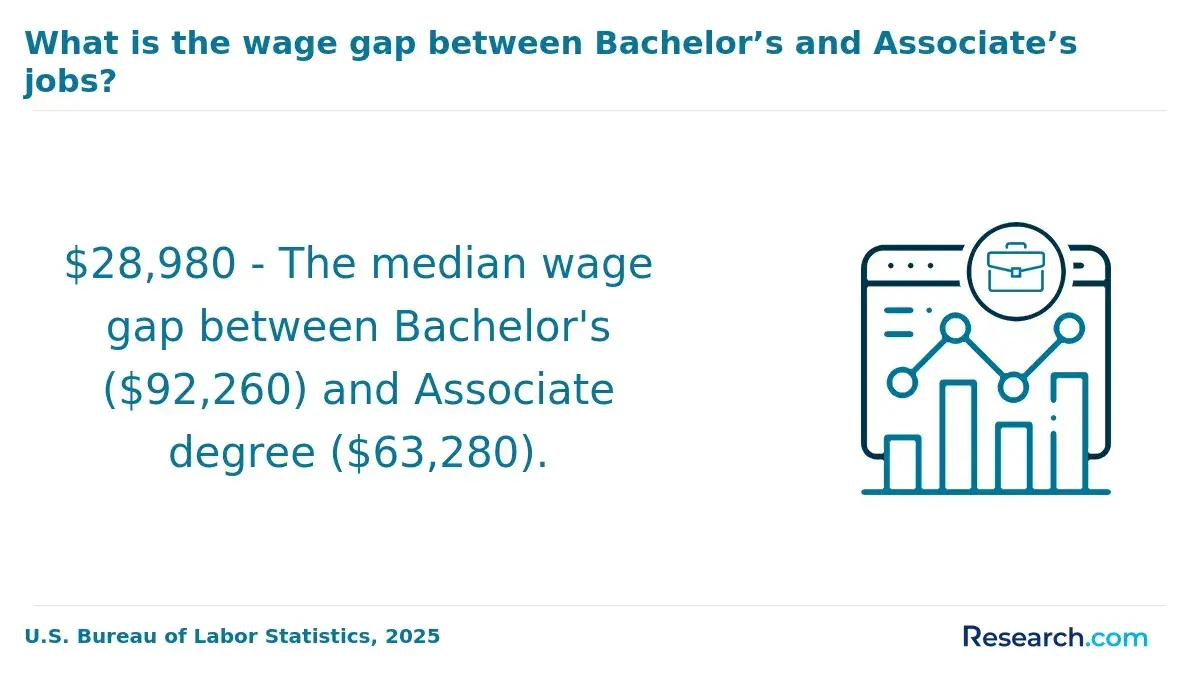
A bachelor's degree typically requires about 120 semester credits, which often translates to four years of full-time study when students begin without transfer credits. Part-time online enrollment can extend the timeline, while a degree-completion format can shorten it for students arriving with an associate degree or substantial transferable coursework.
Program pacing matters as much as total credits. Some online programs use traditional 15-week terms; others use shorter sessions with more concentrated weekly workloads. Accelerated terms can help motivated students progress, but they do not reduce the amount of science content students must master.
Before enrolling, ask how often required courses are offered and whether sequence-dependent classes - such as introductory biology, chemistry, statistics, ecology, or capstone courses - could delay graduation. Also confirm whether internships, fieldwork, or lab components have seasonal scheduling restrictions.
Students who need maximum scheduling control can compare the structure of self paced degrees, but should recognize that self-paced formats are uncommon for laboratory-based science programs. Marine Science courses often use instructor-led schedules to support experiments, collaborative analysis, and supervised applied learning.
Can You Transfer Credits Into an Online Marine Science Degree Program With No Recommendation Letters?
Many online bachelor's programs accept transfer credit, but acceptance is not automatic. The receiving institution evaluates course equivalency, grade earned, accreditation or recognition of the prior institution, age of coursework, and how credits fit its degree requirements. Marine Science-related programs may scrutinize science and mathematics courses more closely than general education credits.
Request an official transfer evaluation before committing whenever possible. The most useful documents are official transcripts, course descriptions, syllabi for specialized science courses, and records of laboratory components. A school may accept a course as elective credit without applying it to a major requirement, so ask for both numbers.
These questions can prevent a costly transfer surprise.
- How many lower-division and upper-division credits can transfer?
- What is the minimum grade required for biology, chemistry, calculus, statistics, and major courses?
- Will prior laboratory courses meet lab requirements, or will they transfer only as elective credit?
- How many credits must be completed through the institution to earn its degree?
- Can military training, professional certifications, prior learning, or examination credit apply?
- Will the evaluator provide a written degree plan showing remaining courses and expected completion time?
Transfer planning is especially valuable for students changing disciplines. For example, coursework from dietetics programs may include useful biology or chemistry foundations, but it does not automatically meet marine ecology, oceanography, or field-methods requirements. Obtain a written evaluation rather than making assumptions from course titles.
How Should You Compare Online Marine Science Degree Programs That Do Not Require Letters of Recommendation?
The best option is not necessarily the one with the fewest application documents. Compare whether the program gives you the academic preparation, flexibility, support, and recognized credential needed for your intended next step: an entry-level environmental role, a promotion, graduate school, or a career change.
Use the following comparison priorities to narrow a shortlist of legitimate no-recommendation options.
| Comparison factor | What to verify | Why it matters |
| Admission policy | Whether letters are truly not required for your degree, term, and applicant type | Prevents applying under an outdated or conditional waiver |
| Accreditation | Recognized institutional accreditation and transparent catalog information | Supports aid eligibility, employer confidence, and future transfer options |
| Curriculum | Biology, chemistry, ecology, statistics, GIS, data analysis, and marine or coastal coursework | Determines whether the degree aligns with target roles or graduate study |
| Experiential learning | Labs, fieldwork, internships, capstones, equipment, travel, and local-placement support | Marine employers often value applied skills alongside coursework |
| Total cost | Tuition, mandatory fees, materials, travel, transfer-credit outcome, and aid | Shows the likely financial commitment more accurately than advertised tuition |
| Student support | Science tutoring, career services, faculty access, disability support, and technical help | Can affect persistence in demanding online STEM courses |
| Career pathway | Relevant internships, employer connections, alumni outcomes, and graduate-school preparation | Helps distinguish a broad credential from a career-aligned program |
Keep a written comparison sheet and obtain answers from each admissions office by email. Do not confuse "no application fee," "test optional," "no GRE," or "recommendations optional" with "no recommendations required." Those phrases describe different policies.
It can also be useful to compare admissions transparency across fields. Guides to the easiest RN to BSN program options can illustrate how clear prerequisite, transfer, and licensure disclosures support informed enrollment decisions. For Marine Science, apply the same principle while giving additional weight to field and laboratory learning.
A no-letter online Marine Science degree is a strong fit when the program is accredited, its curriculum matches your goal, and you can meet its science and experiential requirements. It is a weaker fit when you need intensive research mentoring, advanced laboratory access, or a direct route to a specialized marine research career that the online format cannot provide.
Other Things You Should Know About Marine Science
Often, yes. Streamlined undergraduate admissions can work well for adult learners because schools may rely on transcripts, work history, and a personal statement instead of recent academic references. Check whether older science prerequisites must be repeated.
If letters are optional, submit them only if they add relevant, credible evidence of your academic ability, work ethic, or science experience. If a program says letters are not required, ask admissions whether unsolicited letters will be reviewed before requesting them.
Ask whether recommendation letters are required for your exact program and entry term, which prerequisites apply, whether labs or fieldwork occur in person, how many credits will transfer, and what the estimated total cost will be after aid.
It can, provided the institution is accredited and you complete the science, math, research, and laboratory prerequisites required by the graduate program. Students planning for graduate school should prioritize research opportunities, faculty interaction, strong grades, and experiences that can later support recommendation letters.
References
- How to Apply to Grad School in Marine Science https://underthecblog.org/2016/09/07/how-to-apply-to-grad-school-in-marine-science/
- Resources https://www.marinecareers.net/resources
- What Are the Best Schools to Study Marine Biology? https://www.scubadiving.com/best-schools-study-marine-biology
- Home https://www.husson.edu/online/online-degrees/bachelor-of-science-in-marine-biology-and-conservation
- How to Find Marine Science Research Opportunities as an Undergraduate https://www.coltie.com/post/how-to-find-marine-science-research-opportunities-as-an-undergraduate
- Top 18 Marine Biology Scholarships to Apply for in December 2025 https://bold.org/scholarships/by-major/marine-biology-scholarships/
- Application Information https://www.vims.edu/academics/graduate/admissions/application_components_deadlines/
- Why Experience is Non-Negotiable in Marine Biology https://www.mooremarinecollege.com/articles
- moolahSPOT https://www.moolahspot.com/local/browse.cfm
- About BOS | Discover Marine Conservation Today - Blue Ocean Society for Marine Conservation https://www.blueoceansociety.org/internships