
2027 Best Majors for Job Security

Co-Founder and Chief Data Scientist
A major can lead toward steady work, but a promising field is not the same as a secure job. The U.S. Bureau of Labor Statistics (BLS) projects employment growth of 6% for registered nurses and 17% for software developers from 2023 to 2033. Those figures show demand in two very different fields, not a promise to every graduate. If you are choosing a major or considering a career change, this guide compares practical routes into in-demand work, the credentials they require, and the costs and trade-offs worth checking before you enroll.
Key Things You Should Know
- Nursing offers a comparatively direct route to a regulated occupation, but graduates must meet state licensing requirements; BLS projects 6% employment growth for registered nurses from 2023 to 2033.
- Computer science can lead to well-paid work across industries, but technical skills need regular updating; BLS projects 17% growth for software developers over the same period.
- The most secure choice is one you can afford to complete and use: check local hiring, required credentials, experiential training, and total cost before committing.
Top 10 Best Majors for Job Security
Business Programs
Accounting is often a stronger job-security choice than a broad business major because it develops skills employers use for reporting, tax, and compliance. A bachelor's degree can prepare students for entry-level accounting roles; a master's in accounting may help students meet additional education requirements for CPA licensure, which vary by state. Business administration and MBA programs can support career changes or advancement, but neither substitutes for relevant experience. Choose a concentration tied to the work you want, and check internship access and recruiting outcomes rather than relying on the degree title alone.
Healthcare Programs
Healthcare administration, public health, and health informatics prepare students for different kinds of work. A bachelor's degree may lead to support or coordinator roles, while a master's in healthcare administration or public health can be useful for specialized or leadership positions that commonly require experience. These programs do not qualify graduates for clinical practice. Students seeking direct patient care should compare occupation-specific programs instead. Ask whether coursework includes healthcare finance, data, regulation, and supervised projects that match the roles available in your area.
Information Technology Programs
Information technology majors focus on systems, networks, cloud services, and security operations. A bachelor's degree plus hands-on experience may support entry into technical roles; an IT or cybersecurity master's is more often a specialization or advancement choice than an entry requirement. Security work can be resilient because organizations must manage ongoing risks, but entry-level cybersecurity jobs may still expect prior IT experience. Look for labs, internships, and opportunities to demonstrate troubleshooting skills. Vendor certifications can complement a degree, but their value depends on the specific role.
Computer Science Programs
Computer science teaches programming, algorithms, data structures, and software design. A bachelor's degree is a common route into software development; a master's may help with advanced specialization but is not generally necessary for entry-level development. Demand for software skills spans industries, yet hiring can fluctuate and applicants must show what they can build. Compare programs by their fundamentals, team projects, internship opportunities, and career support. Students who prefer operating and securing existing systems may find information technology a better fit than software-focused study.
Nursing Programs
Nursing offers a clearer credential-to-occupation path than many majors. An approved associate or bachelor's nursing program can lead toward registered nurse licensure after graduates meet state requirements and pass the licensing exam. A master's in nursing serves a different purpose, such as advanced practice, education, or leadership; advanced practice requires additional authorization. Clinical placements and demanding schedules make program fit important. Verify nursing-program approval, licensure eligibility, clinical placement arrangements, and total costs before applying, particularly if you intend to work in another state.
Psychology Programs
Psychology develops research, communication, and behavioral-analysis skills, but a bachelor's degree alone does not qualify someone to practice as a psychologist. Graduates may pursue related support roles or additional training. A master's can lead toward certain counseling or school-based careers when the program meets applicable state requirements; psychologist licensure generally requires doctoral-level preparation. Choose this major if the work interests you and you understand the next credential needed. Compare supervised-practice requirements and local opportunities before assuming that growing mental health needs translate directly into entry-level psychology jobs.
Education Programs
Education majors can prepare for teaching, a role with a defined route but substantial variation in openings by subject and location. Licensure-track bachelor's programs typically include supervised student teaching and must meet state rules. Master's programs may help licensed teachers specialize or advance; some also offer initial-licensure routes for career changers. A general education master's does not necessarily confer a teaching license. Check the subject and grade levels covered, placement arrangements, state eligibility, and local district vacancies before deciding whether the program matches your employment goal.
Criminal Justice Programs
Criminal justice covers legal systems, investigation, and public safety, but its career routes are less direct than those of nursing or social work. Police, corrections, federal, and investigative employers set different education, testing, training, and background requirements; some roles do not require this major. A master's in criminal justice may support specialization or advancement, not guaranteed entry into an agency. If job security is your priority, identify a specific occupation first and compare criminal justice with alternatives such as accounting, cybersecurity, or social work that may offer broader civilian options.
Engineering Programs
Engineering majors prepare students to design and improve systems, products, and infrastructure. A bachelor's degree in a relevant discipline is the usual starting point for engineering work; a master's may support specialization but is not universally required. Electrical, mechanical, civil, and industrial engineering connect to different employers and regional markets. Choose the discipline for its actual work, not an overall salary ranking. Verify that a prospective program has appropriate accreditation, especially if you may pursue professional engineer licensure, and ask about laboratories, design projects, internships, and employer recruiting.
Social Work Programs
Social work offers defined routes into services that communities continue to need. A bachelor of social work can prepare graduates for certain generalist roles, while a master of social work is commonly needed for clinical practice and can open other specialized paths. Clinical licensure also requires supervised experience and an exam under state rules. Some accredited master's programs offer advanced standing to eligible bachelor of social work graduates; applicants from other majors should not assume they qualify. Compare field placements, local hiring, likely pay, and the time required to reach your intended license.
What are the best majors for job security and career stability?
The best majors for job security are those with durable demand, a realistic path into specific occupations, and requirements you can meet. Nursing and social work offer relatively defined licensed pathways. Computer science, information technology, accounting, and engineering offer skills used by multiple employers, but outcomes depend more heavily on specialization, experience, and the local market. No major eliminates layoffs or guarantees a job.
This comparison shows where each field's security case is strongest - and the qualification that can change the decision.
| Major or field | Why consider it for stability? | Important limitation |
| Nursing | Defined occupation and broad healthcare demand | State licensure and clinical training required |
| Social work | Established roles in health and community services | Clinical roles require graduate education and licensure |
| Accounting | Reporting, tax, and compliance needs across industries | Some roles favor CPA eligibility or experience |
| Computer science | Software work across many sectors | Competitive hiring and continual skill development |
| Information technology | Ongoing need to operate and secure systems | Specialist roles may require prior technical experience |
| Engineering | Technical work tied to products and infrastructure | Demand varies by discipline and location |
| Education | Defined teaching roles in school systems | Openings vary by subject, district, and state |
| Healthcare administration | Operational work supporting care delivery | Management roles commonly require experience |
| Psychology | Useful behavioral and research foundation | Licensed practice needs further education |
| Criminal justice | Relevant preparation for some public-safety roles | Agency hiring rules often matter more than the major |
Which majors offer the strongest job outlook and employment demand?
Employment demand is strongest evidence when it describes the occupation you intend to enter, not just a broad industry. In its 2023-2033 projections, BLS estimated 33% growth for information security analysts. That suggests substantial demand, but these positions often call for related IT experience; a new cybersecurity degree alone may not be enough. Projections are national estimates, not forecasts for your city or a guarantee of openings when you graduate.
Compare growth with the occupation's size, replacement openings, and entry requirements. Healthcare can offer opportunities in both clinical and nonclinical work, while technology hiring may shift with employer spending and automation. For any major, check recent postings from employers in the places you would actually work: the required credentials and experience may be more useful to your decision than a national growth rate.
What degree or training pathways lead to secure, in-demand careers?
Secure careers do not share one education timeline. Registered nursing has approved associate- and bachelor's-level entry routes followed by licensure. Software development commonly draws applicants with bachelor's-level computing preparation, although demonstrated skills matter. IT support may be accessible through a shorter credential and experience, while clinical social work requires graduate education and supervised practice.
Start with the target occupation, then work backward through its requirements. A certificate or apprenticeship may be more efficient than a bachelor's degree for some technical roles; a bachelor's degree may provide more options if you want to change specialties later. Ask schools which prerequisite courses, placements, and credits you would still need. Transfer credit can reduce general education requirements without necessarily shortening a tightly sequenced major or clinical program.
Which job-secure majors provide the highest salary potential?
High pay and job security overlap in some fields, but they are different measures. BLS reported a May 2024 median annual wage of $133,080 for software developers, compared with $93,600 for registered nurses. These are wages for people working in those occupations - not expected starting salaries for graduates or evidence that either degree causes that pay. Location, experience, specialty, and employer affect individual earnings.
Computer science and engineering are worth comparing if salary potential is a priority and you enjoy technical work. Nursing may appeal more if you want a defined professional entry route. Higher-paying management, advanced-practice, and specialized roles frequently require experience or additional credentials. For a wider salary-focused comparison, see best bachelors degrees, then weigh potential earnings against program cost and the work you would actually do.
What courses and skills do job-secure majors typically include?
Job-secure majors pair field knowledge with skills employers can assess. Nursing includes biological sciences, patient assessment, and clinical practice. Engineering combines mathematics, science, laboratories, and design. Accounting develops financial reporting and analysis; computer science emphasizes programming and algorithms. Social work and education add supervised practice with clients or students.
Across fields, communication, problem-solving, data literacy, and ethical judgment help graduates adapt as tools change. AI can alter routine tasks in business and technology, making it especially important to learn how to verify results, explain decisions, and apply discipline-specific knowledge. Review a program's actual course sequence and culminating work: a relevant major name is less persuasive than the skills and evidence of work you can show an employer.
Do secure careers require licenses, certifications, or graduate degrees?
Some occupations require a license; others value certifications or experience without requiring either. Registered nurses need state licensure, and clinical social workers need a qualifying degree, supervised experience, and state licensure. Public-school teachers generally need state authorization. CPA licensure has separate state education, exam, and experience rules. An engineering degree alone does not make someone a licensed professional engineer.
By contrast, software developers generally do not need an occupational license, and IT certifications are usually role-specific rather than universal entry requirements. Check the licensing board for the state where you plan to work before enrolling, particularly for online or out-of-state programs. Avoid assuming that admission to a degree program means eligibility for every occupation associated with its field.
How much do job-secure degree programs cost and how long do they take?
A bachelor's degree is commonly planned as a four-year full-time pathway, while master's programs add time after prior study. Actual completion time depends on prerequisites, enrollment intensity, course sequencing, accepted transfer credit, and required placements. Clinical and student-teaching schedules can limit how quickly a student progresses, even when academic courses are available online.
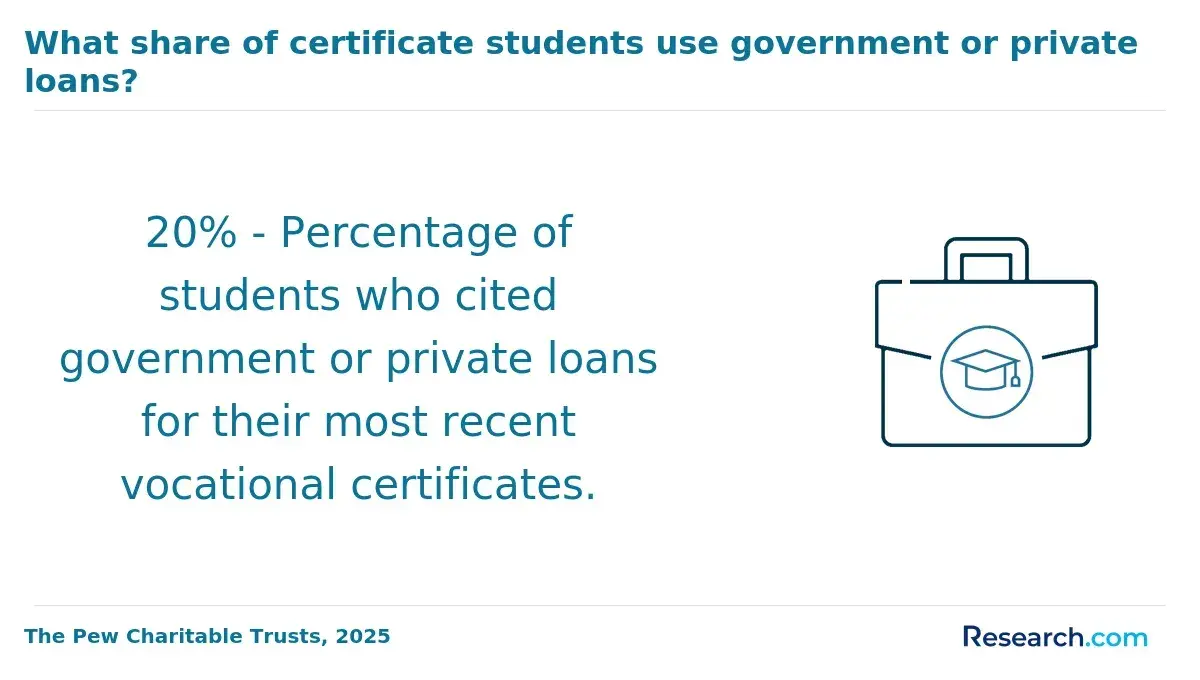
Compare the total cost to qualify for the job, not just tuition. Include mandatory and program fees, books and equipment, travel to placements, exams, and any subsequent graduate study or supervised training. Public in-state tuition may be lower than out-of-state or private tuition, but your aid offer determines what you may actually pay. When comparing cheapest online colleges, confirm that an affordable school also offers the specific major and any licensure preparation you need.
Are online or campus-based programs better for career preparation?
Online study can make coursework easier to fit around work, but it does not make a program self-paced or eliminate in-person requirements. Nursing clinicals, social work field education, engineering labs, and teacher preparation placements may require attendance at set times or approved sites. Even fully online academic courses can have live sessions and fixed deadlines.
Campus study can offer easier access to equipment, peers, and local recruiting; online study may widen your choice of schools if placements are workable where you live. If scheduling is decisive, compare meeting times, course availability, placement support, and part-time options - not just the delivery label. Guides to best accredited self-paced online colleges can help you explore flexible formats, but verify the format of the particular major before applying.
How can you choose an accredited program for a secure career?
Begin by confirming that the institution holds recognized accreditation, then check any program approval or specialized accreditation relevant to your target occupation. For example, a prospective nursing student should verify state-board requirements, while a future social worker should check whether the program meets the educational rules for the intended license. Requirements differ by state and profession.
Next, compare the published curriculum with local job requirements, ask where students complete internships or placements, and request a written estimate of remaining credits and total costs. Check whether the school reports relevant completion or licensure-exam outcomes, and understand what those measures do - and do not - show about employment. If admission eligibility is a concern, online schools that accept low GPA can be a starting point; confirm the specific major's admission rules separately, since selective and licensure-track programs may set additional requirements.
Other Things You Should Know About
There is no universally safest major. Nursing has a defined route into a licensed occupation, making it a strong option if you can meet clinical and licensing requirements. Local demand and your ability to complete the program still matter.
It can be, because software skills apply across industries. Hiring can fluctuate, however, and graduates benefit from projects, internships, sound fundamentals, and a willingness to update their skills.
Often not. Many nursing, engineering, accounting, and technology careers have bachelor's-level entry routes. Certain clinical mental health roles and specialized or advanced-practice positions require further education.
Not on salary alone. Compare occupational entry requirements, total education costs, local opportunities, and whether you would want the day-to-day work. Published median wages describe existing workers, not guaranteed graduate earnings.
References
- Linking college majors to careers: Career Outlook | bls.gov https://www.bls.gov/careeroutlook/2021/article/field-of-degree-and-careers.htm
- Relative Education and the Advantage of a College Degree | nih.gov https://pmc.ncbi.nlm.nih.gov/articles/PMC6059650/
- Research Summary: Education and Lifetime Earnings | ssa.gov https://www.ssa.gov/policy/docs/research-summaries/education-earnings.html
- Which Workers Are the Most Affected by Automation and What Could Help Them Get New Jobs? | U.S. GAO https://www.gao.gov/blog/which-workers-are-most-affected-automation-and-what-could-help-them-get-new-jobs
- After Everything: Projections of Jobs, Education, and Training Requirements through 2031 - CEW Georgetown https://cew.georgetown.edu/cew-reports/projections2031/
- How artificial intelligence impacts the US labor market | MIT Sloan https://mitsloan.mit.edu/ideas-made-to-matter/how-artificial-intelligence-impacts-us-labor-market
- The Career Effects Of Graduating In A Recession | NBER https://www.nber.org/digest/nov06/career-effects-graduating-recession
- Recession Graduates: The Long-lasting Effects of an Unlucky Draw https://siepr.stanford.edu/publications/policy-brief/recession-graduates-long-lasting-effects-unlucky-draw
- Which Jobs Require a Graduate Degree? | UCLA https://www.ucla.edu/academics/graduate-benefits/which-jobs-require-a-graduate-degree
- The Labor Market for Recent College Graduates | newyorkfed.org https://www.newyorkfed.org/research/college-labor-market


