
2027 Best Degrees for Parents

Co-Founder and Chief Data Scientist
Choosing a degree while raising children is a scheduling decision as much as a career decision. A promising field may be a poor fit if required classes, placements, or deadlines collide with family responsibilities. The stakes are real: the U.S. Bureau of Labor Statistics (BLS) projected 17% employment growth for software developers from 2023 to 2033, but a computer science degree is only useful if its workload and career path fit your goals.
This guide compares degree fields, shorter pathways, costs, and professional requirements so you can identify an option you can realistically finish.
Key Things You Should Know
- For many parents, business and information technology offer more scheduling options; nursing, teaching, and social work can be strong choices but often require fixed in-person placements.
- Compare the entire path, not just classes: BLS reported a 2023 median wage of $86,070 for registered nurses, but becoming one generally requires an approved nursing program and state licensure.
- Eligible students could receive up to $7,395 through the federal Pell Grant in the 2025-26 award year; actual aid and remaining costs depend on individual circumstances.
Top 10 Best Degrees for Parents
Business Programs
A bachelor's in accounting, management, or business administration can suit parents seeking broadly applicable skills and potentially desk-based work. A master's in business administration is usually more useful for advancement than for an initial job; compare part-time MBA schedules, group projects, and any required live sessions. Accounting offers a more defined occupational route, although CPA eligibility has separate state-specific education and examination rules. Choose business for a specific target role, not on the assumption that a general degree automatically leads to management.
Healthcare Programs
Healthcare administration bachelor's degrees prepare students for operations, records, and coordination work without the clinical placements common in patient-care programs. A master of health administration is generally aimed at people seeking more specialized or senior responsibilities; leadership roles typically also require experience. Health information management may appeal to parents who prefer technical and administrative work, but verify whether a desired role calls for a particular certification. Healthcare employment does not necessarily mean a predictable schedule, so compare the actual jobs associated with each degree.
Information Technology Programs
IT degrees cover networks, systems, cloud services, and security. Online coursework may be convenient, but labs, team projects, and employer on-call expectations can affect family time. A master's in cybersecurity or IT can support specialization for experienced workers; parents entering the field may find a bachelor's, associate degree, or targeted certification a more proportionate first step. Ask how the program provides hands-on practice and whether required courses are offered during the terms you can attend.
Computer Science Programs
Computer science emphasizes programming, algorithms, and mathematical reasoning. It can lead toward software roles, but a degree alone does not establish job readiness; projects, internships, and demonstrated skills matter. A master's may make sense for specialized work or a career change if prerequisite courses are manageable. Parents should check whether programming assignments have fixed team-meeting times and whether foundational math courses add to the advertised timeline. If you mainly want to administer technology rather than build software, IT may be a better fit.
Nursing Programs
An associate or bachelor's nursing program can lead toward registered nurse licensure after graduation and a passing licensing examination. Required clinical hours are usually scheduled in person, even when lectures are online. A master of science in nursing typically requires an existing nursing background; advanced practice roles involve additional clinical preparation and state requirements. Nursing may suit parents who can arrange reliable childcare for placements and shifts. Ask schools where clinical sites are located and who secures placements before committing.
Psychology Programs
A psychology bachelor's degree builds research and behavioral-science skills but does not qualify its holder to practice independently as a psychologist. Master's programs differ substantially: some emphasize research, while counseling-oriented degrees may be designed around supervised practice and licensure. Independent psychologist licensure generally requires doctoral education and other state requirements. Parents interested in therapy should check the exact license a program is intended to support, its practicum schedule, and their state board's rules before enrolling.
Education Programs
Teaching degrees can align with school calendars, but student teaching is an intensive, in-person commitment, and teachers also work outside classroom hours. A master's in education may support an experienced teacher's development or provide an initial-licensure route, depending on the program. Those routes are not interchangeable. Confirm state approval, endorsement area, placement arrangements, and whether a part-time student-teaching option exists. Parents seeking education work without classroom licensure might instead explore training or instructional-design roles.
Criminal Justice Programs
Criminal justice degrees examine law, institutions, and public safety. A master's may be relevant to policy, administration, or advancement for someone already in the field, but it is not a substitute for agency hiring, academy training, or other role-specific requirements. Shift work is common in some public-safety jobs, making career scheduling as important as class scheduling. Parents seeking predictable hours should investigate administrative and analytical roles rather than assume every degree-related job has the same demands.
Engineering Programs
Engineering degrees can lead toward technical design and development work, but undergraduate lab sequences may restrict part-time scheduling. A master's usually builds on substantial mathematics and discipline-specific preparation; it is rarely a shortcut into engineering for someone without that foundation. For fields where professional engineer licensure matters, check the undergraduate program's ABET accreditation and the applicable state board's rules. Parents should map prerequisite order and lab availability before judging whether the program fits their weekly schedule.
Social Work Programs
A bachelor of social work can prepare students for generalist roles, while a master of social work is commonly part of the path toward clinical social work licensure. Both may require field placements during hours set by an agency rather than the student. Some MSW programs offer advanced standing to applicants with an eligible accredited BSW; other bachelor's degrees generally do not qualify for that route. Verify Council on Social Work Education accreditation, placement support, and state licensing requirements before comparing program length.
What are the best degrees for parents seeking flexible career options?
The best degree for a parent is one whose coursework and likely career schedule both fit family life. Business, IT, computer science, and some healthcare administration programs may offer more options for part-time or remote study than placement-heavy fields. That does not make their jobs automatically remote or their courses asynchronous.
This comparison highlights the scheduling constraint most likely to change a parent's decision. Availability varies by school and program.
| Degree field | Potential advantage for parents | Constraint to check |
| Business or accounting | Often compatible with part-time coursework | Group meetings and role-specific credentials |
| IT or computer science | Some coursework can be completed remotely | Projects, labs, and technical prerequisites |
| Healthcare administration | Nonclinical path into healthcare | Experience expected for management jobs |
| Nursing, education, or social work | Defined routes toward particular professions | Clinical, teaching, or field placements |
If quiet, independent work is a priority, consider the tasks involved rather than relying on job titles alone; a guide to jobs for introverts can help generate possibilities. Compare those possibilities with local openings and your preferred hours.
Are online degrees a good option for parents balancing school and family?
Online degrees can be a good option for parents, but "online" does not mean "study whenever you want." Asynchronous classes generally let students access lessons without attending a live lecture, yet still have deadlines. Synchronous classes require attendance at set times. Either format may include group work or proctored assessments.
Ask for a recent course schedule and sample syllabus. Confirm part-time enrollment, required live meetings, exam arrangements, and whether needed courses run every term. For nursing, teaching, social work, and some other fields, establish where and when in-person placements occur. A nearby campus or hybrid program may be easier than an online program whose placements require long travel.
How much do degrees for parents cost, and what financial aid is available?
The cost of a degree depends on remaining credits, not just the advertised price per credit. Tuition, mandatory and program fees, books, equipment, travel, and unpaid placement time can all affect a parent's budget. Public in-state options and community colleges are worth comparing, but the least expensive published tuition is not necessarily the lowest total cost.
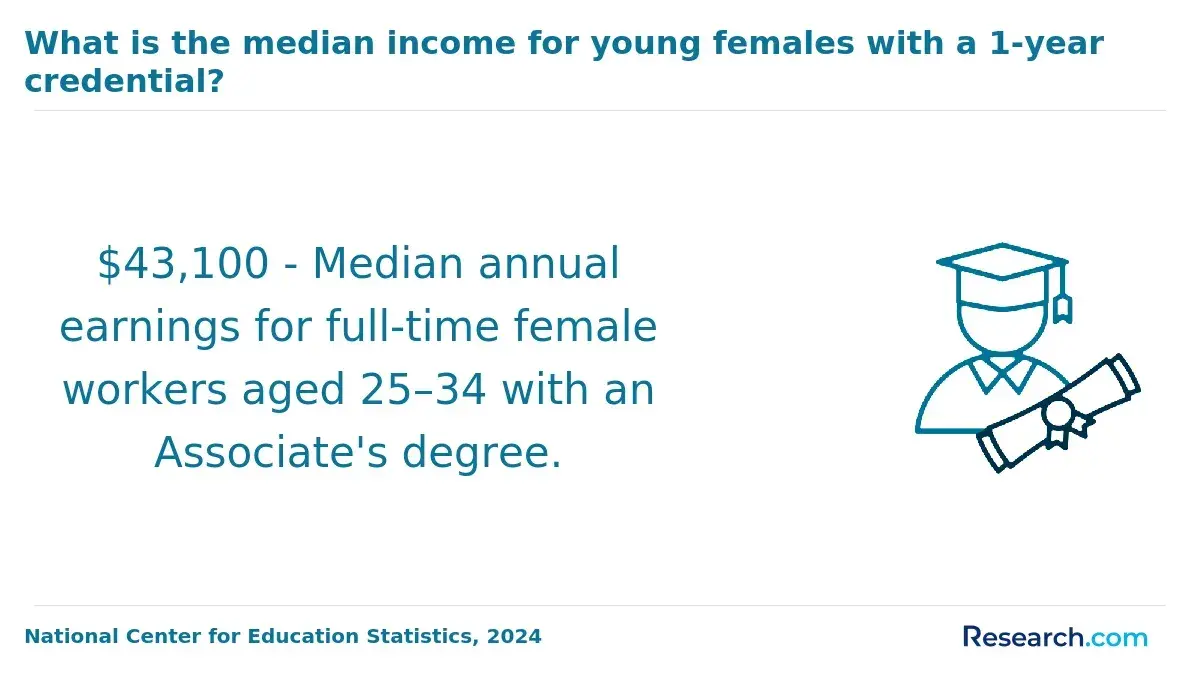
Complete the Free Application for Federal Student Aid (FAFSA) to assess eligibility for federal grants, loans, and work-study. Also ask about state aid, school grants, childcare assistance, employer tuition benefits, and payment plans. The maximum federal Pell Grant was $7,395 for the 2025-26 award year; eligibility and the amount awarded vary.
Request a written estimate showing the credits you still need after a transfer evaluation. Compare that estimate with the aid you can actually use and the income or childcare arrangements that study may affect. Avoid borrowing based on an occupational median wage: it describes workers in a role, not the expected earnings of a particular program's graduates.
Which degree programs offer the strongest career outcomes for parents?
Strong outcomes come from a match between the credential, entry requirements, and jobs you would accept. Nursing offers a defined licensing route, while accounting and computing can lead to several occupations but place substantial weight on skills and experience. Education and social work have clear professional pathways, though placements and state rules can narrow scheduling options.
When comparing what degree makes the most money, separate occupational pay from graduates' earnings and weigh it against program cost and time away from work. Ask each school for program-level completion and employment information, how it defines those outcomes, and whether the figures include part-time students. A high-paying occupation is a poor target if its required hours or credentials do not fit your plans.
What are the best certificate and associate degree pathways for parents?
A shorter credential can be the better first move when it leads to a job you want or applies toward a later degree. An associate degree commonly involves about two years of full-time study; part-time study usually takes longer. Certificates vary considerably in length and purpose. Neither is automatically a shortened version of a bachelor's degree.
These pathways serve different goals, so compare what each credential actually qualifies you to do:
- Community college associate degrees can support transfer or prepare students for particular technical and healthcare roles; check which courses apply to the intended job or bachelor's program.
- Career-focused certificates can develop specific skills, but employer recognition and any certification-exam eligibility should be verified before enrollment.
- Stackable pathways may let completed coursework count toward another credential, subject to the receiving school's published rules.
Parents exploring the fastest degree to get online should check the assumptions behind any completion claim, especially required transfer credit, prerequisites, course sequencing, and placements. Faster is only better if the credential supports the intended next step.
How do parents choose an accredited online or campus-based program?
Start with accreditation, then verify the requirements of the specific program. Check the institution's current accreditation through the accreditor or the U.S. Department of Education's accreditation records. For a licensed profession, also check applicable program accreditation, state approval, and the licensing board in the state where you plan to work. Institutional accreditation alone does not establish licensure eligibility.
Before applying, request written answers about transfer-credit evaluation, required credits at the institution, tuition and fees, course availability, and placement arrangements. Confirm whether previous coursework fulfills major requirements rather than merely counting as electives. Red flags include vague answers about licensure, an advertised timeline that assumes credits you do not have, and claims that "online" means no scheduled or in-person obligations.
What coursework and admission requirements should parents expect?
Admission and coursework vary more by field and degree level than by delivery format. Undergraduate applicants generally provide prior transcripts; some programs have separate competitive entry after prerequisites. Master's applicants typically need a bachelor's degree and may also need relevant coursework, experience, a portfolio, or a professional license. Check the actual program's policies rather than assuming a schoolwide admissions statement applies to it.
Business programs commonly include accounting and management; computing programs require technical coursework; nursing, education, and social work add supervised practice. Graduate programs may require a capstone, thesis, internship, or practicum. Ask for a term-by-term plan based on your completed credits and realistic weekly availability. A common mistake is budgeting time for lectures while overlooking assignments, commuting, and placement hours.
Which careers offer parents competitive salaries and strong job outlooks?
Salary and outlook are useful comparison tools, not predictions of a parent's return on a degree. BLS reported a 2023 median annual wage of $132,270 for software developers. It projected 17% employment growth for that occupation from 2023 to 2033. Those figures describe an occupation nationally; they do not show what a new graduate, career changer, or part-time worker will earn.
For parents comparing careers, examine local job postings alongside national data. Note required experience, licenses, shift patterns, remote-work expectations, and whether entry-level openings exist. Software development may reward a strong project portfolio; registered nursing requires licensure and may involve shifts; management jobs commonly require prior experience. The strongest outlook on paper is not necessarily the best family fit.
Which degrees require professional licenses or industry certifications?
Check licensing before enrolling if the job you want is regulated. Registered nurses need state licensure; public school teachers generally need state certification; clinical social workers and many counseling professionals must meet state education, supervised-practice, and examination requirements. Engineering licensure matters for some roles and jurisdictions. An online degree does not waive these requirements.
Industry certifications for jobs in areas such as IT can demonstrate particular skills, but they are different from a state professional license. Ask the relevant board or credentialing body whether the program meets its requirements, including accreditation and placements. If you may move, check the rules in each state you are seriously considering.
Other Things You Should Know About
Usually not. Many entry routes begin with a certificate, associate degree, or bachelor's degree. Consider a master's when the target role requires it or when its added preparation justifies the cost and time.
Often, but aid amounts and eligibility can depend on enrollment intensity and other rules. Ask the financial aid office to calculate your options for the course load you can sustain.
It may, if a school offers a relevant prior-learning assessment or accepts qualifying training. Credit is not automatic; request an evaluation showing where any award applies in your degree plan.
Ask for a personalized term-by-term plan, total remaining cost, required live or in-person hours, and the program's connection to your intended job or license. Confirm the answers in writing.
References
- Adult Students | Federal Student Aid - Financial Aid Toolkit https://financialaidtoolkit.ed.gov/tk/outreach/target/adults.jsp
- Flexible Work Schedules | U.S. Office of Personnel Management https://www.opm.gov/policy-data-oversight/pay-leave/work-schedules/fact-sheets/alternative-flexible-work-schedules/
- Cost of Attendance | Cal State LA https://www.calstatela.edu/financialaid/cost-attendance
- How Long Does an Online Degree Take for Adult Learners? | MVNU https://mvnu.edu/blogs/how-long-does-an-online-degree-take-for-adults/
- How Much Does Grad School Cost? | UCLA https://www.ucla.edu/academics/graduate-benefits/how-much-does-grad-school-cost
- Finish the degree you started (without starting over) | Newman Today https://news.newmanu.edu/finish-the-degree-you-started-without-starting-over/
- Online & Evening Programs & Courses | Whatcom Community College https://www.whatcom.edu/academics/online-evening-programs-courses
- What Early-Career Earnings and Unemployment Rates Tell Us About the Returns on Bachelor's Degree Majors - CEW Georgetown https://cew.georgetown.edu/resource/cew-blog-major-payoff/
- How Long Are Community College Programs? | Edison State Community College https://www.edisonohio.edu/blog/how-long-are-community-college-programs
- How Long Does It Take to Get a Bachelor's Degree? | University of Kansas https://admissions.ku.edu/blog/How-Long-Does-It-Take-to-Get-a-Bachelors-Degree


