2027 Seton Hall University Cost: Student Guide to Costs, Aid, and Funding

Co-Founder and Chief Data Scientist
Seton Hall University cost is more than the tuition line on a bill: housing, meals, fees, books, transportation, and loan interest can change the real price substantially. College Board reported that the average published tuition and fees at private nonprofit four-year colleges reached $43,350 for 2024-2025, so families comparing Seton Hall need a full cost view.
This guide is for undergraduates, graduate students, online learners, and parents who want to estimate costs, understand aid, and choose the funding strategy that best fits their goals.
Key Things You Should Know
- Seton Hall is a private university, so undergraduate pricing is not split into in-state and out-of-state tuition; the largest cost differences usually come from housing, meal plan, program fees, credits attempted, and aid eligibility.
- For 2025-2026 federal loans, fixed interest rates are 6.39% for undergraduate Direct Loans, 7.94% for graduate Direct Unsubsidized Loans, and 8.94% for PLUS Loans, which makes borrowing strategy a major part of the true cost.
- The best estimate is not sticker price alone: compare direct billed costs, indirect living costs, scholarships, grants, work-study, loan limits, and whether your program is billed flat-rate or per credit.
What does Seton Hall University tuition and fees include?
Seton Hall University tuition generally covers instruction and access to the academic program in which you enroll. Fees are separate charges that help fund student services, technology, campus resources, health-related services, registration systems, and other institutional operations. Because Seton Hall is a private nonprofit university, undergraduate tuition is typically the same for New Jersey and non-New Jersey residents.
Students should separate "direct costs" from "indirect costs" before deciding whether Seton Hall is affordable. Direct costs are billed by the university, while indirect costs are estimated expenses you may pay to other providers.
| Cost category | What it usually includes | Why it matters |
| Tuition | Instructional cost for enrolled credits or full-time enrollment | This is usually the largest academic charge and may vary by undergraduate, graduate, online, or professional program. |
| Mandatory fees | University, technology, student services, health, registration, or program-related fees | Fees can add materially to the bill even when tuition is known. |
| Housing and meals | Residence hall room charges and meal plan costs | Living on campus can raise direct billed costs significantly compared with commuting. |
| Books and supplies | Textbooks, course materials, software, lab supplies, and equipment | These costs vary by major and can be higher in lab, health, business, or technology-heavy programs. |
| Personal and transportation costs | Commuting, travel, laundry, clothing, phone, and other living expenses | These are not always on the bill, but they affect the amount you may need to save, earn, or borrow. |
One common mistake is comparing Seton Hall's tuition to another school's total cost of attendance. For a fair comparison, line up tuition, fees, room, board, transportation, books, and the net price after grants and scholarships.
How much does Seton Hall University cost for undergraduate students?
For undergraduate students, Seton Hall's published sticker price is built from tuition and mandatory fees first, then housing and meals if the student lives on campus. The full cost can look very different for a commuter, a resident student, and a student who receives a large merit scholarship.
The following table shows how undergraduate cost components typically affect the budget. Use it as a decision framework, then confirm the exact current rates with Seton Hall's student financial services office before enrolling or borrowing.
| Undergraduate cost item | How it is usually charged | Budget impact |
| Full-time tuition | Usually a semester or annual flat rate for a standard full-time course load | Best value is often achieved by completing enough credits each term to stay on a four-year graduation path. |
| Part-time tuition | Usually billed per credit | May lower the term bill but can increase time to degree and total living costs. |
| Mandatory fees | Usually charged each term | Must be included when comparing schools because fees are not optional. |
| Course or program fees | May apply to labs, clinical courses, studio work, health programs, or specialized courses | Can make one major more expensive than another even within the same university. |
| Housing and meal plan | Usually billed by semester for campus residents | Often the second-largest direct cost after tuition. |
Students trying to reduce undergraduate cost should focus on graduation efficiency. A student who pays for extra semesters because of dropped courses, changed majors, or unaccepted transfer credits may spend more than a student with a higher annual price who graduates on time.
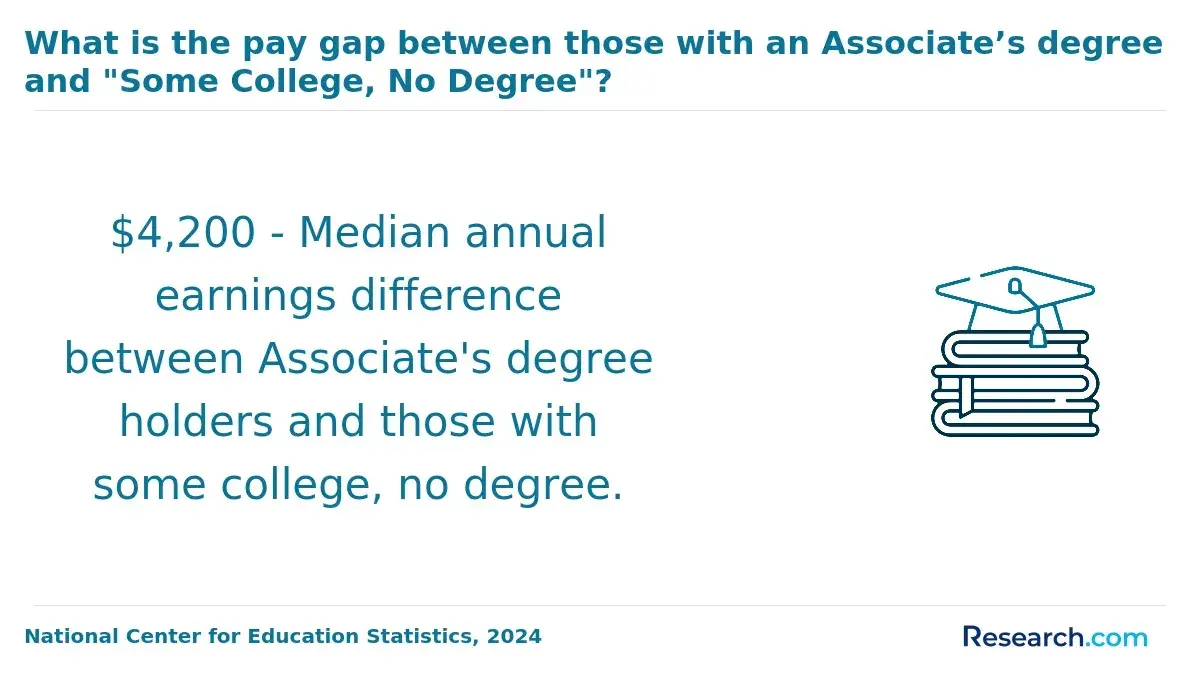
If you are still building a lower-cost transfer plan before choosing Seton Hall, comparing associate's degrees online can help you understand how community college or online credits might reduce the number of credits you need to pay for at a four-year institution.
How much does Seton Hall University cost for graduate students?
Graduate cost at Seton Hall is usually more program-specific than undergraduate cost. Many master's, doctoral, certificate, and professional programs are billed per credit, and tuition can vary by school, program format, clinical requirements, and course delivery method.
Graduate students should evaluate cost by the total number of credits required, not only by the per-credit rate. A lower per-credit price can still lead to a higher total cost if the program requires substantially more credits.
| Graduate cost factor | Why it changes the final price | Question to ask before enrolling |
| Per-credit tuition | Most graduate programs multiply tuition by required credits. | What is the current per-credit rate for my exact program? |
| Total credits required | Programs with internships, clinical hours, practicums, or licensure sequences may require more credits. | How many credits are required for graduation, and are prerequisites extra? |
| Program fees | Specialized programs may charge technology, clinical, lab, assessment, or residency fees. | Are all required fees included in the published estimate? |
| Enrollment pace | Part-time study can spread payments out but may delay career advancement or employer reimbursement. | How long will the program take at my planned credit load? |
| Employer tuition benefits | Some working professionals can reduce out-of-pocket cost through reimbursement. | Will my employer pay upfront, reimburse later, or require a grade minimum? |
Graduate students should also consider opportunity cost. If a program helps qualify you for a licensed, management, analytics, counseling, health, education, or specialized business role, the investment may be easier to justify than a program with unclear career alignment.
If your main goal is advancement with the lowest practical academic burden, comparing an easiest master's degree list can be useful, but "easy" should never be the only criterion. Accreditation, employer recognition, licensure fit, and total cost matter more for long-term value.
What financial aid options does Seton Hall University offer?
Seton Hall students may use a mix of institutional aid, federal aid, state aid, private scholarships, work income, and loans. The most important step is completing the FAFSA as early as possible if you want to be considered for federal grants, federal loans, work-study, and many need-based aid decisions.
Financial aid usually falls into a few major categories. Understanding the difference helps you prioritize free funding before borrowing.
- Grants: Need-based funds that generally do not need to be repaid if enrollment and eligibility requirements are met.
- Scholarships: Merit-based, talent-based, program-based, donor-funded, or need-informed awards that generally do not require repayment.
- Federal work-study: Part-time employment funding that helps students earn money while enrolled, subject to eligibility and job availability.
- Federal student loans: Borrowed funds with fixed federal interest rates, annual limits, and repayment requirements after leaving school or dropping below eligible enrollment.
- PLUS Loans or private loans: Additional borrowing options that may require credit review and should be compared carefully because they can increase total repayment cost.
Loan interest rates are a current cost issue. For 2025-2026, federal Direct Loan rates are 6.39% for undergraduates, 7.94% for graduate unsubsidized borrowers, and 8.94% for PLUS borrowers. That means two students with the same tuition bill can face different long-term costs depending on how much they borrow and which loan type they use.
Before accepting loans, compare your likely monthly payment with realistic entry-level earnings in your field. Students evaluating graduate school return on investment may also want to compare graduate degrees that are worth it to see how program choice, career demand, and credential requirements can affect value.
How do Seton Hall University scholarships work?
Seton Hall scholarships can reduce the gap between the published price and what a student actually pays. Scholarship availability, award amount, renewal rules, and eligibility criteria vary by student type, academic profile, program, talent area, and funding source.
The most useful way to evaluate a scholarship is to look beyond the first-year award. Renewal requirements determine whether the aid will reduce the cost of one year or the entire degree path.
| Scholarship feature | What to check | Why it matters |
| Renewability | Whether the award can be renewed each year | A renewable award can reduce total degree cost much more than a one-time award. |
| Minimum GPA | The cumulative GPA needed to keep the scholarship | Losing an award can create a sudden affordability problem. |
| Enrollment requirement | Full-time status, credit minimums, or continuous enrollment rules | Dropping below required credits may affect eligibility. |
| Stacking policy | Whether institutional scholarships can be combined with outside scholarships | Some awards reduce unmet need, while others may change the aid package. |
| Program restrictions | Whether the award applies to a specific major, school, campus, or degree level | Changing majors or programs can affect eligibility. |
Students should ask for scholarship terms in writing before committing. A generous first-year award is valuable only if it remains available under realistic academic and enrollment conditions.
A common mistake is assuming every outside scholarship will reduce the family contribution dollar for dollar. In some aid packages, outside scholarships may first reduce unmet need or loans, so ask how Seton Hall applies outside awards to the bill.
What are Seton Hall University housing and meal plan costs?
Housing and meal plan costs can significantly change the Seton Hall budget because they are direct billed costs for campus residents. Commuters may avoid residence hall and meal plan charges, but they still need to budget for transportation, food, parking, and time spent commuting.
The table below compares common living arrangements by cost behavior. It does not replace Seton Hall's current housing rate sheet, but it shows how each choice affects affordability and daily life.
| Living option | Cost pattern | Best fit |
| On-campus residence hall with meal plan | Higher direct bill, more predictable semester charges | Students who want campus access, structured dining, and easier participation in activities. |
| Commuting from home | Lower direct university bill, but transportation and meals still apply | Students close enough to campus to commute reliably without harming class attendance. |
| Off-campus housing | Rent, utilities, groceries, lease terms, and transportation paid separately | Upper-level or graduate students who can manage leases and variable monthly expenses. |
| Online study from home | No campus housing charge, but technology and home study costs may apply | Students in eligible online programs who need flexibility or live far from campus. |
When comparing housing options, include the value of time. A lower-cost commute may not be worth it if it makes class attendance, labs, clinical placements, campus jobs, or study time harder to manage.
Students looking for flexible, lower-pressure academic pathways before transferring should also compare the easiest associate degree to get, especially if the goal is to complete general education credits affordably before pursuing a bachelor's degree.
How much does Seton Hall University cost for online students?
Seton Hall online students may pay different tuition and fee structures depending on the program. Online cost is often driven by per-credit tuition, total required credits, technology fees, books, software, proctoring, clinical or field placement expenses, and whether any campus residency is required.
Online learning can reduce relocation and commuting costs, but it is not automatically cheaper. The right comparison is total program cost, not just whether the program is online or on campus.
| Cost issue | Online student impact | Decision point |
| Tuition structure | May be per credit and program-specific | Confirm the exact online program rate rather than using campus undergraduate pricing. |
| Campus fees | Some fees may differ, but online programs can still have technology or student service fees | Ask which fees apply to fully online students. |
| Books and software | Digital platforms, subscriptions, and specialized software may be required | Request a realistic materials estimate for the first term. |
| Residency or clinical requirements | Some programs may require in-person intensives, placements, or supervised hours | Budget for travel, background checks, uniforms, testing, or placement costs if applicable. |
| Work flexibility | Online study may allow continued employment | Compare tuition savings with the value of keeping income while enrolled. |
Online programs are often strongest for working adults who need scheduling flexibility, students outside commuting range, and graduate students whose employers may reimburse tuition. They may be a poor fit for students who need daily campus structure, extensive in-person labs, or hands-on support.
What payment plans and billing options does Seton Hall University provide?
Seton Hall typically bills students by term and expects payment by published deadlines unless financial aid, loans, scholarships, employer benefits, or a payment plan covers the balance. Students should monitor the university billing portal closely because aid that is "offered" is not the same as aid that has been accepted, completed, and disbursed.
Before the semester starts, use a short billing checklist to prevent late fees, registration holds, or unexpected balances.
- Review the bill for tuition, fees, housing, meal plan, course fees, and health insurance charges if applicable.
- Confirm that scholarships, grants, and accepted loans appear correctly and that all aid requirements are complete.
- Decide whether to pay in full, use a monthly payment plan, use employer reimbursement, or borrow for the remaining balance.
- Check whether outside scholarships have been received and posted by the university.
- Keep emergency funds for books, transportation, meals, and personal expenses that may not appear on the bill.
Monthly payment plans can help families avoid borrowing for the full balance at once, but they do not reduce the actual price. They are most useful when cash flow is the issue and the family can meet each installment without using high-interest debt.
A red flag is planning to cover a balance with private loans before comparing federal loan options, payment plans, scholarships, and part-time work. Private loans may have credit-based pricing and fewer borrower protections than federal student loans.
How can students estimate total attendance costs at Seton Hall University?
The best Seton Hall cost estimate starts with the total cost of attendance, then subtracts gift aid before considering work income and loans. Cost of attendance is the university's estimated full-year budget for tuition, fees, housing, food, books, transportation, and personal expenses.
Use this sequence to build a practical estimate before you commit.
- Identify your student type: undergraduate, graduate, online, commuter, resident, full-time, or part-time.
- Add direct billed costs: tuition, mandatory fees, course fees, housing, meal plan, and insurance if applicable.
- Add indirect costs: books, supplies, transportation, personal expenses, rent if living off campus, and technology.
- Subtract grants and scholarships first because they usually do not require repayment.
- Subtract realistic family contribution, savings, employer reimbursement, and work income.
- Estimate remaining need and compare federal loans, payment plans, and other funding options.
- Stress-test the estimate by asking what happens if housing changes, credits are added, a scholarship is not renewed, or graduation takes an extra term.
Career planning also belongs in the cost estimate. A degree that supports a clear career path, licensure requirement, or advancement goal may justify more investment than a program chosen without a defined outcome.
If you are choosing a major or graduate path partly around work style, reviewing good paying jobs for introverts can help connect academic cost with realistic career fit rather than focusing only on prestige or rankings.
What factors can change your final Seton Hall University cost?
Your final Seton Hall University cost can change after the first estimate. Some changes are predictable, such as annual tuition updates, while others depend on academic choices, housing decisions, credit loads, and aid renewal.
These are the cost variables most likely to surprise students and families.
- Credit load: Taking too few credits can delay graduation, while overload credits may add charges depending on program rules.
- Major or program changes: Switching into a program with labs, clinicals, internships, or specialized fees can raise costs.
- Housing changes: Moving on campus, changing residence hall type, or selecting a different meal plan can change the bill.
- Scholarship renewal: Falling below GPA, credit, or enrollment requirements can reduce aid in later years.
- Transfer credit limits: Credits that do not apply to the degree may not shorten time to graduation.
- Loan choices: PLUS Loans, private loans, deferment, and interest accrual can raise long-term repayment costs.
- Time to degree: Extra semesters often create the largest hidden cost because tuition, fees, and living expenses continue.
Current higher education trends make careful planning more important. Families are paying closer attention to net price, students are comparing online and hybrid formats, and employers increasingly value demonstrable skills, internships, certifications, and applied experience alongside the degree itself.
The safest approach is to revisit your cost plan every term. Recalculate remaining credits, aid renewal, housing, loan use, and career progress before registration so affordability problems are caught early.
Other Things You Should Know About
Seton Hall is a private university, so undergraduate tuition is generally not divided into in-state and out-of-state rates. Total cost can still differ by housing, meal plan, program, fees, and financial aid.
Yes. Seton Hall offers institutional scholarships, and students may also qualify for outside scholarships, grants, and other aid. Always check renewal rules, GPA requirements, and whether awards can be combined.
Possibly. Commuting or living off campus can reduce direct university charges, but you should still budget for rent, utilities, groceries, transportation, parking, and time costs.
Compare net price, not sticker price. Net price is the estimated total cost after grants and scholarships, before loans. It gives a clearer view of what you may need to pay, earn, or borrow.
References
- Seton Hall University (SHU) https://www.princetonreview.com/college/seton-hall-university-1062363
- Seton Hall Tuition and Financial Aid https://www.prepscholar.com/sat/s/colleges/Seton-Hall-tuition-financial-aid
- All Opportunities https://shu.academicworks.com/
- Calculating Student Budgets https://tcf.org/content/commentary/calculating-student-budgets-state-grant-aid-cost-attendance/
- Seton Hall changes break housing policy, adds nightly charge https://www.thesetonian.com/article/2025/11/residence-life-nightly-charge
- Seton Hall https://talk.collegeconfidential.com/t/seton-hall/1868970