2027 Can I Get Financial Aid While on Disability: Student Guide to Costs, Aid, and Funding

Co-Founder and Chief Data Scientist
If you receive disability benefits, paying for college can feel risky: you need funding, but you also need to protect essential income and health coverage. About 7.5 million disabled workers received Social Security Disability Insurance in 2024, so this is a common planning issue, not an exception. This guide explains how federal aid, state aid, scholarships, accommodations, work-study, online programs, and career planning fit together so you can compare options, avoid benefit problems, and choose a school that supports both your budget and your health.
Key Things You Should Know
- Yes, students on SSDI or SSI can generally receive federal student aid if they meet standard eligibility rules; the 2024-25 maximum Federal Pell Grant is $7,395, and it usually does not have to be repaid.
- FAFSA eligibility is based mainly on financial need, citizenship or eligible noncitizen status, enrollment, satisfactory academic progress, and default status; disability benefits may affect the calculation differently depending on whether they are taxable.
- Total cost matters more than tuition alone: College Board's 2024-25 averages list published tuition and fees at $4,050 for public two-year colleges, $11,610 for in-state public four-year colleges, and $43,350 for private nonprofit four-year colleges.
Can you receive federal and state student aid while on disability benefits?
Yes. Receiving disability benefits does not automatically disqualify you from federal, state, institutional, or private student aid. The bigger question is how each type of funding is treated by the school, the FAFSA formula, and the agency that pays your benefits.
Federal student aid usually includes grants, loans, and work-study. Grants such as the Pell Grant are need-based and generally do not require repayment. Federal student loans must be repaid, so they should be used carefully if your future work capacity or medical expenses are uncertain. Federal Work-Study is earned income, which can matter for SSI or SSDI work rules.
State grants and institutional aid vary widely. Some states and colleges have disability-focused funds, tuition waivers, vocational rehabilitation partnerships, emergency grants, or reduced course-load policies. These programs may have separate documentation rules, deadlines, and income tests.
Use this table to separate the major aid categories by repayment risk and benefit-planning concerns. It is not a substitute for a benefits counselor, but it can help you know which questions to ask before accepting an award.
| Aid type | Usually repaid? | Main planning issue for students on disability |
| Federal Pell Grant | No | Must meet FAFSA and enrollment rules; award amount depends on financial need and attendance status. |
| State grants | Usually no | Rules vary by state, residency, program, enrollment load, and funding availability. |
| Institutional scholarships | Usually no | May require GPA, major, disability documentation, or full-time enrollment unless an exception is approved. |
| Federal student loans | Yes | Can fill gaps but create future repayment obligations; disability discharge exists only under specific federal rules. |
| Federal Work-Study | No, because it is wages | Counts as earned income and may interact with SSI, SSDI trial work rules, or Medicaid eligibility. |
Before you accept an aid package, ask the financial aid office whether grants are refundable to you, whether a reduced course load changes your award, and whether the school coordinates with vocational rehabilitation. If you receive SSI or SSDI, also ask a certified benefits planner how the aid will be treated.
How does being on Social Security disability affect FAFSA eligibility and need analysis?
FAFSA eligibility is not based on whether you are disabled. It is based on the federal student aid rules that apply to all students, including identity, eligible citizenship or noncitizen status, enrollment in an eligible program, satisfactory academic progress, and financial need for need-based aid.
The FAFSA formula now uses the Student Aid Index, often called SAI, rather than the older Expected Family Contribution. For many students on disability, the most important distinction is whether a benefit appears as taxable income. SSI is generally not taxable. SSDI can be partly taxable depending on total income, and taxable SSDI may flow into adjusted gross income from the tax return used on the FAFSA.
The practical effect is that two students with the same disability diagnosis can receive different aid offers if their taxable income, household size, assets, dependency status, or enrollment load differ. A student with very low taxable income may qualify for more need-based aid, while a student with higher household income may qualify for less even if medical costs are high.
Here is how to approach the FAFSA if you receive disability benefits:
- File the FAFSA as early as possible because some state and campus grants are first-come, first-served.
- Use your actual tax information and do not manually add nontaxable benefits unless the FAFSA specifically asks for them.
- Contact the financial aid office if your current income is lower than the tax year shown on the FAFSA.
- Ask about a professional judgment review if disability-related medical costs, job loss, caregiving changes, or benefit changes make the FAFSA picture inaccurate.
- Keep copies of award letters, tax forms, medical expense records, and correspondence in case the school requests verification.
A professional judgment review is not guaranteed, but it can be important when your tax return does not reflect your current ability to pay. Schools have discretion, so provide clear documentation and ask what evidence they accept.
What college costs should disabled students expect, including accessibility and support services?
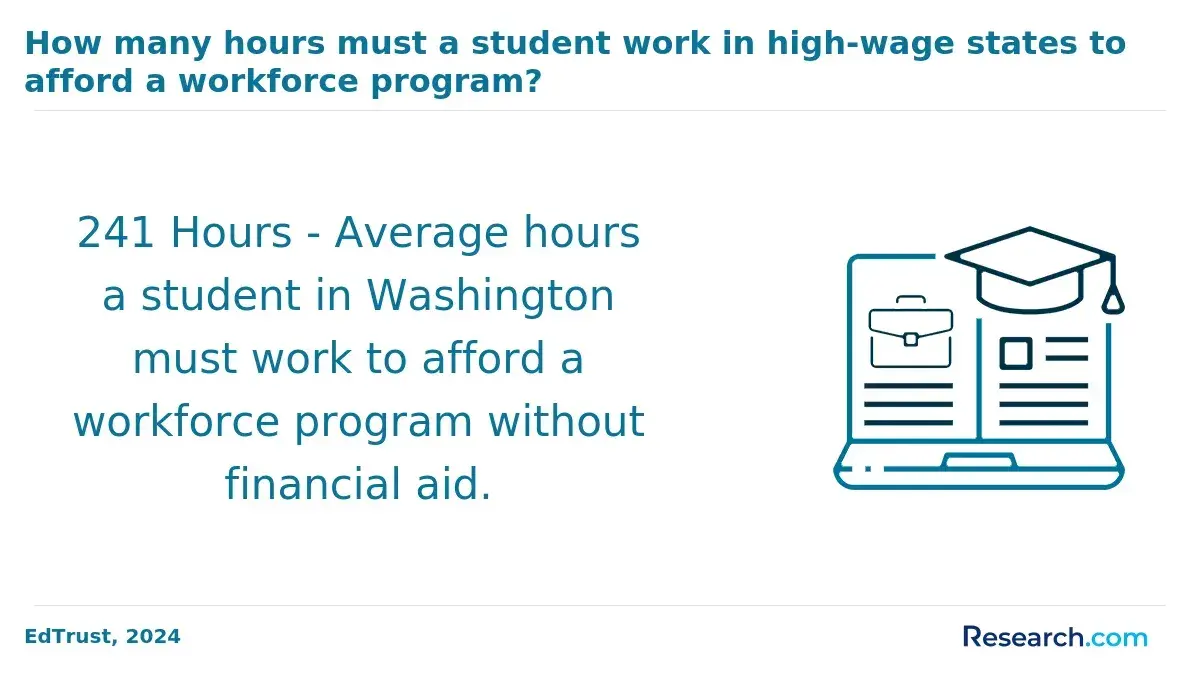
Disabled students should budget for both standard college costs and disability-related costs that may not appear on a school's cost-of-attendance page. Tuition is only one part of the decision; transportation, housing, technology, medical scheduling, and course load can change the real price of attendance.
College Board's 2024-25 data shows a wide tuition gap by institution type: average published tuition and fees are $4,050 at public two-year colleges, $11,610 for in-state students at public four-year colleges, and $43,350 at private nonprofit four-year colleges. That difference matters because students on disability may need a slower pace, summer terms, or accessible housing, which can extend the time they are paying education-related costs.
The table below summarizes common cost categories and why they matter for students with disabilities. Use it to build a realistic budget before comparing aid offers.
| Cost category | What it may include | Why it matters |
| Tuition and fees | Credits, online fees, lab fees, program fees, student activity fees | Reduced course loads may lower tuition but can also affect aid eligibility and time to completion. |
| Books and materials | Textbooks, digital access codes, adaptive formats, supplies | Accessible formats may require advance coordination with disability services. |
| Assistive technology | Screen readers, speech-to-text tools, ergonomic equipment, captioning tools | Some items may be funded by vocational rehabilitation, grants, or campus resources. |
| Transportation | Paratransit, fuel, parking, rideshare, accessible shuttle access | Campus programs can be more expensive if transportation is unreliable or medically difficult. |
| Housing and personal needs | Accessible housing, meal plans, personal care support, medical storage | These costs can exceed the standard allowance and may require documentation. |
| Health-related scheduling | Appointments, recovery time, reduced enrollment, extra terms | A longer timeline can increase total cost even when each term is affordable. |
Do not assume that accommodations cover every disability-related expense. Under disability law, colleges generally provide equal access to programs, but they are not required to pay for personal devices, personal attendants, or medical treatment. That is why financial aid, vocational rehabilitation, and personal budgeting need to be planned together.
Which types of financial aid are available specifically for students with disabilities?
Students with disabilities can use the same mainstream aid as other students, and they may also qualify for disability-specific scholarships or state vocational rehabilitation support. The best funding plan usually layers several sources instead of depending on one award.
These are the main categories to investigate, starting with the funds that usually carry the least repayment risk:
- Federal and state grants: Pell Grants, state need-based grants, and campus grants can reduce the amount you need to borrow.
- Disability-specific scholarships: Nonprofits, professional associations, foundations, and condition-specific organizations may fund students with physical, sensory, psychiatric, learning, or chronic health disabilities.
- Vocational rehabilitation funding: State VR agencies may help pay for tuition, books, transportation, assistive technology, or training when the program supports an employment goal.
- Institutional aid: Colleges may offer need-based grants, merit awards, emergency funds, completion grants, or scholarships through disability services or academic departments.
- Employer or union benefits: If you or a family member has access to tuition assistance, it may reduce out-of-pocket cost, though it can interact with other aid.
- Federal student loans: Loans can help bridge gaps, but students with uncertain future earnings should compare repayment plans and borrow only what is necessary.
A common mistake is searching only for scholarships with the exact name of your diagnosis. Broaden your search to include first-generation status, adult learner status, major, local civic groups, veteran status, transfer students, and career field. Many students receive more money from general need-based aid than from disability-only scholarships.
How do I compare online versus campus programs for accessibility, support, and total cost?
Online programs can be a strong fit for students who need flexible scheduling, reduced travel, or better control over sensory and medical environments. Campus programs can be better for students who need hands-on labs, in-person tutoring, structured routines, or direct access to disability services. The right choice depends on access, cost, learning style, and career requirements.
Online learning is not automatically cheaper or more accessible. Some programs charge online course fees, require proctored exams, or use platforms that do not work well with assistive technology. Campus programs may offer stronger in-person support but add transportation, parking, housing, and fatigue-related costs.
Use this comparison to identify which format fits your needs before you enroll. The best option is the one that you can complete consistently, not just the one with the lowest advertised tuition.
| Factor | Online program | Campus program |
| Schedule control | Often stronger for students with fluctuating symptoms or medical appointments | May be harder if classes meet at fixed times |
| Transportation cost | Usually lower because commuting is reduced | Can be significant if accessible transportation is limited |
| Technology access | Requires reliable internet, devices, and accessible learning platforms | May offer computer labs and on-site support |
| Hands-on learning | May require local placements, labs, or residencies | Often stronger for clinical, lab, studio, or trade-based programs |
| Social support | Depends on virtual advising and peer communities | May provide more visible tutoring, mentoring, and student life |
| Total cost risk | Can be lower, but fees and technology costs matter | Can be higher when housing and transportation are added |
If speed matters because you are trying to enter the workforce sooner, an accelerated bachelor's degree may be worth comparing with part-time study. Acceleration can reduce calendar time, but it may not be realistic if your disability requires lighter course loads or recovery time between terms.
Before choosing online or campus, ask each school to demonstrate its learning platform, explain how accommodations work in online exams, confirm whether field placements are local, and show the total cost of attendance for your expected enrollment load.
What disability-related documentation is needed for grants, scholarships, and campus accommodations?
Documentation requirements depend on the purpose. Financial aid, scholarships, disability services, and vocational rehabilitation may each ask for different proof. The goal is not to disclose more than necessary; it is to provide enough current, relevant information to support the request.
For campus accommodations, schools commonly need documentation that shows a disability, explains functional limitations, and connects those limitations to the requested accommodation. A diagnosis alone may not be enough if it does not explain how the condition affects reading, attendance, testing, mobility, communication, concentration, stamina, or housing access.
Prepare a documentation file before deadlines arrive. It should include the materials most often requested by colleges, scholarship committees, or VR agencies:
- Benefit award letters: SSI, SSDI, VA disability, or other official benefit letters can help document disability status for some programs.
- Medical or psychological documentation: Reports from qualified professionals may be needed for accommodations or disability-specific scholarships.
- Functional limitation statements: Clear descriptions of how the disability affects learning, testing, attendance, mobility, communication, or daily activities are often more useful than diagnosis labels alone.
- Accommodation history: IEPs, 504 plans, prior college accommodation letters, testing accommodations, or workplace accommodations can support continuity.
- Financial records: Tax forms, FAFSA records, medical cost records, and benefit notices may be needed for aid appeals or professional judgment reviews.
- Career goal documents: VR agencies may request a degree plan, employment goal, labor market rationale, or school cost comparison.
Do not wait until classes start to request accommodations. Disability services offices often need time to review documentation, coordinate accessible materials, arrange interpreters or captioning, modify testing procedures, or discuss housing needs.
How can adult learners on disability choose accredited, reputable degree programs and schools?
Adult learners on disability should evaluate schools with extra care because a poor fit can cost money, time, and health. Accreditation, transfer credit, support quality, flexibility, and career alignment matter more than marketing promises.
Start by confirming that the institution is accredited by an agency recognized by the U.S. Department of Education or the Council for Higher Education Accreditation. Accreditation affects federal aid eligibility, credit transfer, graduate school admission, employer recognition, and some licensure pathways. If you are comparing accredited schools online, look beyond the accreditation label and review program outcomes, support services, and policies for reduced course loads.
Use a decision checklist before enrolling. These questions help you identify whether a school is built for your academic goal and disability-related needs:
- Is the institution eligible for federal student aid, and is the specific program also aid-eligible?
- Does the program meet licensure, certification, or employer requirements in your state if your career requires them?
- How many credits can you transfer, and will transfer credits apply to major requirements or only electives?
- Can you attend part time without losing scholarships, housing access, or program standing?
- What is the process for online accommodations, clinical placement accommodations, or accessible course materials?
- Does the school publish graduation, retention, loan, and job placement information in a way you can verify?
- Are advisors trained to work with adult learners, veterans, caregivers, and students managing chronic conditions?
Watch for red flags such as pressure to enroll immediately, vague accreditation claims, unclear total costs, promises of guaranteed employment, refusal to explain transfer policies, or disability services that will not discuss process until after you commit. Reputable schools answer detailed questions before you sign enrollment documents.
What funding options cover assistive technology, tutoring, and personal support services in college?
Assistive technology, tutoring, transportation, and personal support services can determine whether a program is actually accessible. These costs may be covered by different sources, so students should build a funding map rather than assuming the college will pay for everything.
Common funding sources include campus disability services, financial aid cost-of-attendance adjustments, state vocational rehabilitation, Medicaid waiver programs, nonprofit grants, ABLE accounts, employer tuition benefits, veterans benefits, and scholarships. Veterans with service-connected disabilities should also compare education benefits and disability supports when selecting a military online college.
The key is matching the expense to the correct payer. The following examples show how responsibilities often differ, though rules vary by state, school, and program:
| Need | Possible funding source | Important limitation |
| Screen reader or speech-to-text software | Vocational rehabilitation, grants, personal funds, campus technology access | Personal devices are not always provided by the college. |
| Accessible textbooks | Campus disability services or accessible media office | Requests usually require advance notice and proof of purchase or enrollment. |
| Tutoring | Campus tutoring center, TRIO programs, scholarships, private funds | Disability accommodations do not always include unlimited one-on-one tutoring. |
| Personal care attendant | Medicaid waiver, personal funds, community programs | Colleges generally do not provide personal attendant services. |
| Transportation | Vocational rehabilitation, paratransit, local disability programs, aid budget adjustments | Availability depends heavily on location and eligibility. |
| Exam accommodations | Campus disability services | Must be approved before exams; retroactive fixes are uncommon. |
If your disability-related costs exceed the school's standard budget, ask the financial aid office whether a cost-of-attendance adjustment is possible. This may allow you to receive more aid eligibility, but it does not always create new grant money; sometimes it only increases loan eligibility.
How do disability benefits interact with work-study, internships, and part-time employment during school?
Work-study, internships, and part-time jobs can provide income, experience, and confidence, but students receiving SSI or SSDI need to plan carefully. The same paycheck that helps with books and transportation may affect cash benefits, reporting duties, or health coverage if it crosses program limits.
SSI is needs-based, so earned income can reduce monthly payments after exclusions are applied. SSDI is based on disability-insured status and has work incentive rules such as trial work periods and substantial gainful activity thresholds. SSA updates these thresholds regularly; for context, the 2024 trial work period service month threshold was $1,110 in gross earnings. That figure shows why even part-time work should be tracked, especially if hours vary by semester.
Use these steps before accepting paid work during school:
- Ask whether the position is Federal Work-Study, regular campus employment, internship pay, stipend, or contractor income because reporting may differ.
- Estimate monthly gross earnings, not just take-home pay, and compare them with current SSA rules.
- Report wages on time if your benefit program requires reporting.
- Keep pay stubs, award letters, job descriptions, and internship agreements.
- Ask a benefits counselor about work incentives, student earned income exclusions for SSI, Medicaid rules, and how unpaid internships are treated.
- Choose work that supports your career goal instead of taking hours that jeopardize health, grades, or benefits.
If graduate study is part of your long-term plan but your disability makes traditional research timelines difficult, compare flexible formats carefully. Some doctoral programs online no dissertation use capstones or applied projects, but you still need to verify accreditation, workload, faculty support, and whether the credential fits your career goal.
What are realistic career pathways, salaries, and job outlook for students on disability?
Students on disability should choose career pathways by balancing interests, functional capacity, labor market demand, schedule flexibility, and required education. The best path is not always the highest-paying one; it is the one you can complete, sustain, and adapt as your health or access needs change.
BLS May 2024 wage data can help set realistic expectations. For example, the median annual wage for medical records specialists was $50,250, a role that may appeal to students interested in healthcare administration, detail-oriented work, and potentially remote-friendly environments. Median wages are not guarantees, but they help compare training cost against likely earning ranges.
This table gives examples of career directions that may work for some disabled students, depending on accommodations, stamina, communication preferences, and local job markets. Use it as a starting point for career research, not as a promise of fit.
| Career direction | Typical education path | Why it may fit some students | Key caution |
| Medical records and health information | Certificate or associate degree; some roles prefer certification | Structured tasks, healthcare mission, possible remote or hybrid roles | Accuracy, privacy rules, and productivity expectations can be demanding. |
| Accounting or bookkeeping support | Certificate, associate degree, or bachelor's degree | Clear procedures, business demand, potential for remote work | Deadlines during tax or reporting cycles may increase stress. |
| Computer support or IT help desk | Certificate, associate degree, bachelor's degree, or industry certifications | Skills-based hiring and remote support options are common in some employers | Customer-facing troubleshooting can require sustained attention and communication. |
| Human services or peer support | Certificate, associate degree, bachelor's degree, or state-specific credential | Lived experience may strengthen empathy and client support | Emotional labor and fieldwork requirements can be challenging. |
| Digital marketing or communications | Certificate, portfolio, associate degree, or bachelor's degree | Project-based work and remote options may be available | AI tools are changing entry-level tasks, so portfolio quality matters. |
| Education, counseling, or leadership roles | Bachelor's, master's, or doctoral degree depending on role | Can lead to advising, training, administration, or specialized practice | Licensure, practicums, and in-person requirements vary by state. |
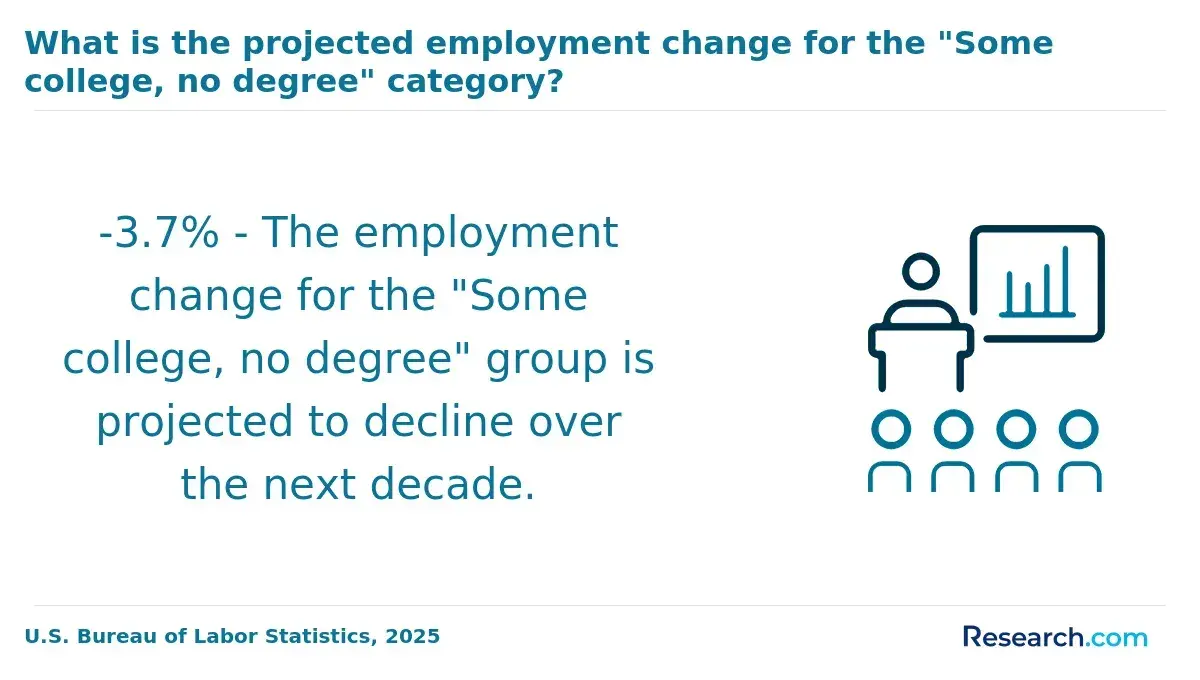
Current hiring trends make skills and flexibility especially important. AI and automation are changing clerical, writing, coding, and administrative tasks, but they are also increasing demand for workers who can use digital tools, manage information, solve problems, and communicate clearly. When comparing programs, ask how the curriculum teaches current software, accessibility-aware technology use, and career-ready projects.
Advanced degrees can help in education, administration, counseling, research, or leadership, but they should be chosen for a specific career reason. If you are comparing doctoral options and need a manageable timeline, research the easiest doctorate to get in terms of structure, admissions, and completion requirements, while remembering that "easiest" should never mean unaccredited or misaligned with your goals.
A smart career plan includes a backup option. For example, a student pursuing nursing might also consider health information, healthcare administration, or patient advocacy if clinical demands become unrealistic. A student pursuing teaching might also explore instructional design, tutoring coordination, or academic advising. Planning alternatives is not pessimistic; it protects your investment.
Other Things You Should Know About
Yes, disability benefits do not automatically prevent Pell Grant eligibility. Your award depends on FAFSA results, enrollment status, program eligibility, and federal annual limits.
Federal student loans are generally education funding, not wages, but how leftover funds are treated can vary by benefit program and timing. Ask a benefits counselor before using loan refunds for noneducation expenses.
Yes, eligible students can request reasonable accommodations in online courses. The exact accommodation depends on documentation, course design, technology, and whether the request creates a fundamental alteration.
Choose the pace you can sustain. Full-time enrollment may increase aid and speed completion, while part-time enrollment may better protect health, grades, and benefit stability. Ask the school how each option changes your aid package.
References
- Cost of Online College vs. In-Person | Touro University Worldwide https://www.tuw.edu/school-news/cost-of-online-college-vs-in-person/
- Aid for Students Living with Disabilities - Finaid https://finaid.org/otheraid/disabled/
- Documentation Guidelines https://charleston.edu/disability-services/how-to-register/documentation-guidelines.php
- HOW - Translation from English into Polish https://en.pons.com/translate/english-polish/how
- SSI Rules for College Students | Special Needs Alliance https://www.specialneedsalliance.org/the-voice/ssi-rules-for-students/
- Research Brief: Digital Access for Students in Higher Education and the ADA https://adata.org/research_brief/research-brief-digital-access-students-higher-education-and-ada
- how - Tłumaczenie po polsku - Słownik angielsko-polski Diki https://www.diki.pl/slownik-angielskiego
- ECTA Center: Funding Sources for Assistive Technology https://ectacenter.org/topics/atech/funding.asp
- SSDI and Education: Financial Aid Considerations in 2025 https://www.socialdisabilitylawyer.net/blog/ssdi-and-education-financial-aid-considerations-in-2025
- Going to School on Disability: Key Insights You Need https://disabilitylawyerarizona.com/can-you-go-to-school-while-on-disability/