2027 FAFSA for Trade School: Requirements, Deadlines, and How to Apply

Co-Founder and Chief Data Scientist
Trade school can be faster than a four-year degree, but paying for it still takes planning. For the 2025-26 award year, the maximum Federal Pell Grant is $7,395, which can make an eligible certificate or diploma program far more affordable. This guide is for students considering careers in skilled trades, health technology, cosmetology, transportation, IT support, and similar fields. You will learn which trade schools qualify for FAFSA, what documents you need, how deadlines work, and how to compare aid offers before committing.
Key Things You Should Know
- FAFSA can be used for trade school only when both the school and the specific program participate in federal student aid and meet Title IV eligibility rules.
- The 2025-26 maximum Pell Grant is $7,395, but trade school aid may be prorated if the program is short, clock-hour based, or less than a full academic year.
- Federal FAFSA deadlines are broad, but state and school priority deadlines can be much earlier, and some aid is awarded until funds run out.
What is FAFSA for trade school and who should apply?
FAFSA for trade school means using the Free Application for Federal Student Aid to apply for federal grants, work-study, and federal student loans for an eligible career-focused program. The FAFSA is not only for traditional colleges. It can also apply to qualifying vocational schools, technical colleges, community college certificate programs, career institutes, and some online workforce programs.
The key point is that FAFSA follows federal aid eligibility, not marketing language. A school may call itself a trade school, career academy, technical institute, bootcamp, or college, but students can use FAFSA only if the institution and program are approved for Title IV federal student aid. If you plan to continue your education later, it is also worth asking whether credits from a certificate can stack into associate degrees, because stackable pathways can reduce the risk of starting over.
Trade school FAFSA is a good fit if you want a shorter route into a specific occupation and the program leads to a recognized credential, license preparation, or employer-valued training. Common FAFSA-eligible fields may include practical nursing, medical assisting, dental assisting, automotive technology, welding, HVAC, electrical technology, aircraft maintenance, cosmetology, culinary arts, cybersecurity support, and advanced manufacturing.
It may not be the best fit if the program is not aid-eligible, does not meet licensing requirements in your state, has weak job placement transparency, or charges high tuition for training that employers do not value. Before applying, match the program to a real job title and verify that the credential is accepted by employers or licensing boards in the area where you plan to work.
What trade schools qualify for federal financial aid?
A trade school qualifies for federal financial aid when it participates in Title IV programs and offers an eligible program of study. Accreditation matters, but accreditation alone is not enough; the school must also be approved to administer federal student aid, and the program must meet federal rules for length, credential type, and academic standards.
The table below summarizes the most important eligibility differences. Use it to separate schools that can accept FAFSA from schools that may require private loans, payment plans, employer funding, or out-of-pocket payment.
| School or program type | FAFSA eligibility outlook | What to verify before enrolling |
| Public technical college | Often eligible if the program is Title IV approved | Confirm the program appears in the school's federal aid-eligible catalog and ask for the school code |
| Community college certificate | Often eligible, especially for credit-bearing certificates | Ask whether the certificate is financial-aid eligible and whether credits transfer into a degree |
| Private career school | May be eligible, but quality and costs vary widely | Check accreditation, state approval, program outcomes, refund policy, and federal aid participation |
| Short bootcamp or workshop | Often not eligible for FAFSA | Ask whether the program is Title IV eligible rather than assuming all career training qualifies |
| Apprenticeship-related instruction | Varies by sponsor, school partner, and program structure | Confirm whether classroom instruction is offered through an eligible institution |
A practical way to check eligibility is to ask the financial aid office for the school's federal school code and the exact program's aid status. Veterans and active-duty service members should also compare GI Bill, Tuition Assistance, Yellow Ribbon, and institutional support; lists of military friendly universities online can help students evaluate support services when they are comparing longer online pathways alongside trade programs.
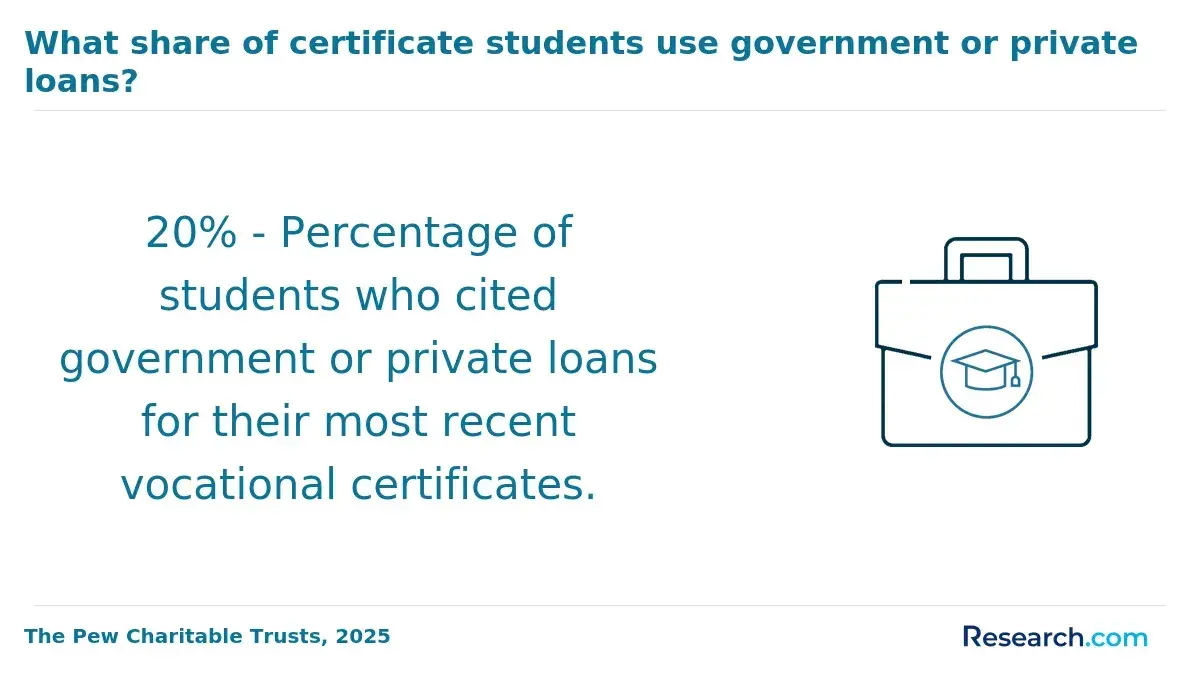
Red flags include schools that avoid answering whether the program is Title IV eligible, pressure you to enroll before seeing a total cost estimate, advertise "guaranteed jobs," or rely heavily on private financing without explaining federal aid options. If a school is not FAFSA-eligible, that does not automatically mean it is poor quality, but it does mean you should scrutinize cost, outcomes, employer recognition, and refund terms more carefully.
What FAFSA requirements do trade school students need?
Trade school students must meet the same basic federal student aid requirements as other FAFSA applicants. The details can vary depending on citizenship status, dependency status, program length, prior loan history, and whether the student is enrolled full time or part time.
Most applicants should review the following requirements before filing. These items determine whether your FAFSA can be processed and whether a school can package federal aid for your program.
- You must be a U.S. citizen or eligible noncitizen, unless you are applying only for aid sources that use FAFSA data but have different rules.
- You must have a valid Social Security number, with limited exceptions for some students from Freely Associated States.
- You must be enrolled or accepted for enrollment in an eligible degree or certificate program at a participating institution.
- You must maintain satisfactory academic progress, which usually includes minimum grades, pace of completion, and maximum time frame rules.
- You must not be in default on a federal student loan or owe a refund on certain federal grants.
- If the FAFSA identifies parent, spouse, or other contributor information as required, those contributors must provide consent and approval for federal tax information transfer.
The FAFSA now uses the Student Aid Index, or SAI, instead of the older Expected Family Contribution. A lower SAI generally indicates higher financial need, but the school still determines your final aid package based on the cost of attendance, enrollment intensity, program length, and available funding.
Dependency status is one of the most common points of confusion. Many trade school students are adults returning to school, but being financially independent in everyday life does not always make you independent for FAFSA. Federal rules consider factors such as age, marital status, military service, dependents, graduate study, homelessness determination, foster care history, and legal guardianship.
How do you complete the FAFSA for trade school?
Completing the FAFSA for trade school is similar to completing it for a college degree, but you should take extra care to list the correct school and confirm the program's aid eligibility. A short program can have unusual start dates, clock-hour requirements, or prorated aid, so accuracy matters.
Use this sequence to avoid delays and make sure the financial aid office can package your aid correctly.
- Create or access your StudentAid.gov account and make sure your name, date of birth, and Social Security number match official records.
- Ask the trade school for its federal school code and confirm that your specific certificate, diploma, or technical program is FAFSA-eligible.
- Start the FAFSA for the correct award year based on when your program begins, especially if the program starts in summer or crosses academic years.
- Invite any required contributors, such as a parent or spouse, and make sure they provide consent for federal tax information transfer.
- Enter school choices carefully, review dependency questions, and answer asset and household questions based on FAFSA instructions.
- Submit the FAFSA, save the confirmation, and monitor your FAFSA Submission Summary for errors or missing contributor information.
- Contact the school's financial aid office after submission to ask when you can expect an aid offer and whether additional forms are required.
If you are comparing a trade program with college-based accelerated programs, pay attention to the credential outcome, total cost, credit transfer, and time to employment. A shorter program is not automatically cheaper if it has high fees, limited aid eligibility, or credits that cannot be applied toward future education.
Common FAFSA mistakes include using the wrong school code, selecting the wrong award year, missing contributor consent, assuming a noncredit program qualifies, and waiting until the program start date to file. The safest approach is to submit early, then ask the financial aid office to explain your estimated grant, loan, and out-of-pocket costs in writing.
What deadlines apply to trade school FAFSA applications?
FAFSA deadlines for trade school come from three places: the federal government, the state, and the school. The federal deadline is usually the latest, but it should not be treated as your target because many state grants and campus funds are limited.
The table below shows how deadlines typically work. Use it to decide when to submit, especially if your program begins outside a traditional fall semester.
| Deadline type | Why it matters | Best action |
| Federal FAFSA deadline | Sets the final date to submit for a given award year | File well before the deadline; for the 2025-26 FAFSA, the federal submission deadline is June 30, 2026 |
| Federal correction deadline | Allows corrections after initial submission | Review the FAFSA Submission Summary promptly so mistakes do not delay aid |
| State priority deadline | May determine eligibility for need-based state grants | Check your state's deadline before choosing a program start date |
| School priority deadline | May affect institutional grants, work-study, or payment deadlines | Ask the financial aid office for the deadline tied to your specific start term |
| Program start date | Short programs may begin monthly, quarterly, or in clock-hour modules | Ask which FAFSA award year applies if the program crosses summer or a new academic year |
For the 2026-27 award year, students should confirm the applicable federal, state, and institutional deadlines directly through StudentAid.gov and the school's financial aid office because award-year calendars and state grant cutoffs may vary. If you are entering a high-demand program with limited seats, file the FAFSA before admissions decisions are finalized so the aid process is not the reason you miss a payment deadline.
Students often lose aid opportunities by assuming the federal deadline is the only date that matters. A better rule is to submit as soon as the FAFSA opens for your award year, then update or correct the form if your school choice, household information, or program plan changes.
What documents do you need to file FAFSA?
You can complete the FAFSA faster if you gather records before you start. The form uses federal tax information transfer for many applicants, but you may still need personal, financial, school, and contributor details.
Prepare the following documents and information before filing. Not every item applies to every student, but missing details can delay processing or require corrections.
- Your StudentAid.gov account username and password.
- Your Social Security number or eligible noncitizen documentation, if applicable.
- Your driver's license or state ID, if you have one.
- Federal tax return information for the required tax year, even when tax data is transferred automatically.
- Records of untaxed income, cash, savings, checking balances, investments, and business or farm assets when FAFSA instructions require them.
- Contributor information for a parent or spouse if the FAFSA requires it.
- The trade school's federal school code and the exact program name.
- Documentation related to dependency overrides, homelessness, foster care, guardianship, or unusual circumstances, if relevant.
The FAFSA simplification changes that began with the 2024-25 form made contributor consent especially important. If a required contributor does not provide consent and approval, the student may not receive a calculated SAI, which can prevent the school from awarding federal aid.
If your family situation is complicated, do not guess. Contact the school's financial aid office and ask whether you should file normally, request a dependency override, report a special circumstance, or provide documentation after submitting. Financial aid administrators can make certain professional judgment decisions, but they need documentation and cannot simply change FAFSA data because a student disagrees with the result.
How much aid can trade school students receive?
The amount of aid a trade school student can receive depends on the cost of attendance, Student Aid Index, enrollment intensity, program length, dependency status, annual loan limits, and whether the program is measured in credits or clock hours. The school calculates the final package, so two students in different programs may receive different aid even if their FAFSA information is similar.
The table below summarizes the major federal aid types trade school students may see in an aid offer. It also explains how each one affects your out-of-pocket cost and repayment risk.
| Aid type | How it works for trade school | Repayment impact |
| Federal Pell Grant | Need-based grant; the 2025-26 maximum award is $7,395, subject to eligibility, enrollment, and program rules | Usually does not need to be repaid unless enrollment changes or other conditions are not met |
| Federal Supplemental Educational Opportunity Grant | Campus-based grant for students with exceptional need at participating schools | Does not usually require repayment, but funds are limited |
| Federal Work-Study | Part-time employment through participating schools | Earned wages do not create student loan debt |
| Direct Subsidized Loan | Need-based federal loan for eligible undergraduate students | Must be repaid, but the government pays interest during certain periods |
| Direct Unsubsidized Loan | Federal loan not based on financial need | Must be repaid, and interest accrues once the loan is disbursed |
Loan limits are especially important in short programs. A first-year dependent undergraduate can generally borrow up to $5,500 in federal Direct Loans, while a first-year independent undergraduate can generally borrow up to $9,500, but subsidized portions are capped and schools may prorate loan amounts for shorter programs.
For decision-making, compare net cost rather than sticker price. Net cost is the amount left after grants and scholarships, plus any loans you choose to borrow. If a program's tuition is high and the expected entry-level wage in your field is modest, borrowing the full loan amount may create repayment pressure even if the school is FAFSA-eligible.
Can FAFSA cover online trade school programs?
FAFSA can cover online trade school programs when the institution participates in federal student aid and the online program itself is eligible. The delivery format is not the deciding factor; eligibility, accreditation, state authorization, program length, and credential value matter more.
Online trade programs can be convenient for students who work, care for family, live far from campus, or need asynchronous coursework. However, many skilled trades require hands-on labs, clinical hours, externships, shop time, or supervised practice. If the program prepares students for licensure, you must confirm that online coursework and any local practicum meet your state's rules.
Use these questions before choosing an online trade school. They help you separate flexible, legitimate options from programs that may not lead to the job you want.
- Is the online program Title IV eligible, or is only the school itself eligible?
- Does the program meet licensing, certification, or exam requirements in the state where you plan to work?
- How are labs, clinicals, externships, or hands-on competencies completed?
- Are local placements guaranteed, arranged by the school, or left to the student?
- What technology, tools, uniforms, exam fees, or travel costs are not included in tuition?
- Will credits transfer if you later pursue a degree at a community college or university?
Current student behavior favors flexibility, and many schools now blend online lectures with in-person skills training. That can work well for fields such as medical billing, IT support, paralegal technology, and some healthcare administration programs. It is riskier for fields where employers expect extensive hands-on practice unless the school has strong labs, employer partnerships, and transparent placement support.
How do trade school costs affect FAFSA eligibility?
Trade school costs affect FAFSA eligibility because federal aid is packaged around the school's cost of attendance. Cost of attendance is more than tuition; it may include fees, books, supplies, tools, transportation, housing, food, dependent care, loan fees, and required equipment. A welding, automotive, aviation, or cosmetology program may look affordable until you add tools, kits, uniforms, exams, and licensing costs.
The table below highlights cost factors that commonly change the true price of trade school. Use it when comparing schools because a lower tuition number does not always mean a lower total cost.
| Cost factor | Why it matters | Decision risk |
| Tuition and mandatory fees | Forms the base price of the program | High tuition can exceed grant aid quickly |
| Tools, kits, uniforms, and supplies | Often required before labs or externships | Students may need cash upfront if these are not covered by aid timing |
| Program length | Short programs may have prorated aid | A shorter timeline does not always mean full annual aid eligibility |
| Licensing and exam fees | May be required to work after completion | Graduation alone may not be enough to enter the occupation |
| Transportation and schedule | Clinical sites, shops, or labs may be far from home | Missed hours can affect completion and satisfactory academic progress |
| Transferability | Some credits may or may not apply to later education | Nontransferable credits can increase future education costs |
Cost comparison should include your long-term education plan. The same accreditation and credit-transfer questions that matter for trade school also matter when evaluating advanced pathways such as 1-year PhD programs online no dissertation USA, because a credential's value depends partly on institutional recognition, program quality, and whether it fits your career goal.
To estimate affordability, ask each school for a written net price estimate after grants and scholarships, then separate loans from free aid. If you must borrow, compare the monthly payment to realistic entry-level wages in your occupation and region. Avoid assuming that a job placement rate, median wage, or recruiter statement applies to every student, especially when outcomes vary by location, license status, experience, and employer demand.
What happens after you submit the FAFSA?
After you submit the FAFSA, you will receive a FAFSA Submission Summary. This summary shows the information processed from your form, your Student Aid Index, and whether anything needs attention. The school then uses your FAFSA data to prepare an aid offer if you are admitted to an eligible program.
Follow these steps after submission. They help you move from application to an informed enrollment decision.
- Review your FAFSA Submission Summary and correct errors as soon as possible.
- Confirm that the trade school received your FAFSA and has your correct program and start date.
- Submit any verification documents requested by the school, such as tax records, identity documents, or household information.
- Compare the aid offer by separating grants, scholarships, work-study, subsidized loans, unsubsidized loans, and out-of-pocket costs.
- Ask when aid disburses and whether you must pay for tools, uniforms, books, or deposits before disbursement.
- Accept only the loan amount you need, complete entrance counseling, and sign the Master Promissory Note if you borrow federal loans.
- Keep copies of the enrollment agreement, refund policy, satisfactory academic progress policy, and program completion requirements.
Do not treat an aid offer as the same thing as affordability. A package can cover the bill by including loans, but loans must be repaid. Compare the program's total debt to the likely earnings path for entry-level jobs, and ask what happens if you need to pause, repeat hours, or change programs.
If you are thinking far ahead, keep records of transcripts, certifications, and transfer credits. The habit of checking academic requirements early can help in any future pathway, from a certificate to a degree or even a doctorate without dissertation, where program format, accreditation, and completion rules can significantly affect cost and value.
Other Things You Should Know About
Yes, but only if the school participates in federal student aid and the specific program is Title IV eligible. Always ask for the school code and written confirmation that your program qualifies.
Sometimes, but not always. Grants, scholarships, work-study, and loans may cover part or all of the cost, but aid depends on your FAFSA results, program cost, enrollment status, and annual aid limits.
Yes. You can submit the FAFSA before admission and list the school you are considering. The school will prepare an aid offer only after you are admitted to an eligible program.
Ask about state grants, workforce funding, apprenticeships, employer sponsorship, payment plans, and scholarships. Also compare similar FAFSA-eligible programs before using private loans or paying out of pocket.
References
- 2026-27 FAFSA Checklist: What You'll Need to Complete Your Application https://www.fastweb.com/financial-aid/articles/fafsa-checklist
- Does FAFSA Cover Trade School? What to Know About Financial Aid for Tech and Vocational School https://lendedu.com/blog/does-fafsa-cover-trade-school/
- Paying for Trade School: Grants, Loans and Aid https://www.uti.edu/blog/education/paying-for-trade-school-financial-aid-grants-loans
- Financial Aid for Trade School — Ways to Pay for Your Degree https://blog.nwswb.edu/financial-aid-for-trade-school-ways-to-pay-for-your-degree
- Documents needed to fill out a FAFSA https://www.clcmn.edu/financial-aid/documents-needed-to-fill-out-a-fafsa/
- Apply for Trade School Financial Aid | Apex Technical School https://apexschool.com/financial-aid/how-to-apply-for-financial-aid/
- FAFSA Filed! What’s Next? https://educationquest.org/blog/fafsa-filed-whats-next/
- Does FAFSA Cover Trade Schools? https://www.best-trade-schools.net/next-student-guide/aid/fafsa/
- Financial Planning for Trade School: A Parent’s Perspective https://www.midwesttech.edu/resources/financial-planning-for-trade-school-a-parents-guide/
- Can You Get Financial Aid for Trade School? https://www.lincolntech.edu/news/skilled-trades/can-you-get-financial-aid-trade-school