2027 Pell Grants for Felons: Student Guide to Costs, Aid, and Funding

Co-Founder and Chief Data Scientist
Paying for college after a felony conviction can feel confusing, especially when rules differ for people who are released, incarcerated, or entering a prison education program. Pell Grants matter because the maximum federal award has remained $7,395 in recent award years, enough to cover a large share of community college tuition.
This guide is for justice-impacted students, families, reentry counselors, and admissions teams. You will learn who qualifies, what programs count, how costs compare, and how to choose an education path that fits your career options and legal restrictions.
Key Things You Should Know
- Pell Grants are generally available to eligible students with felony records after release, and drug convictions no longer automatically block federal student aid through the FAFSA.
- Students who are currently incarcerated can receive Pell funding only through an approved Prison Education Program, while the maximum Pell Grant has been $7,395 in recent federal award years.
- At 2024-25 published prices, the average public two-year in-district tuition and fees were about $4,050, so a maximum Pell Grant can cover tuition at many community colleges but may not cover housing, books, transportation, technology, or lost wages.
What are Pell Grants for felons, and who is eligible after incarceration?
Pell Grants are federal need-based grants for undergraduate students who have not already earned a bachelor's degree in most cases. Unlike loans, they usually do not have to be repaid if the student stays eligible and completes the term under school rules.
For people with felony records, the key question is not simply "Can felons get Pell Grants?" The better question is whether the student meets federal aid rules, whether the school participates in federal aid, and whether the program is approved for the student's incarceration status.
After release, a felony conviction by itself usually does not disqualify a student from Pell Grant eligibility. The FAFSA no longer uses prior drug convictions as an automatic aid barrier, which is important for students who were previously told they could not qualify.
Students still need to meet standard requirements, such as having a valid Social Security number in most cases, being a U.S. citizen or eligible noncitizen, having a high school diploma or equivalent, being enrolled in an eligible program, and maintaining satisfactory academic progress.
Eligibility is more limited for students who are currently incarcerated. A person in a correctional facility may receive Pell Grant funds only when enrolled in an approved Prison Education Program. These programs must meet federal, accreditor, correctional agency, and institutional requirements.
Students who are subject to certain involuntary civil commitment restrictions after a sexual offense may face additional federal aid limits, so it is important to ask the school's financial aid office for a case-specific review.
The table below separates common student situations because Pell eligibility depends heavily on status at the time of enrollment. Use it as a starting point, not as a substitute for a financial aid determination from the school.
| Student situation | Pell Grant access | What to verify before enrolling |
| Released from incarceration | Usually possible if standard federal aid rules are met | FAFSA eligibility, school participation in Title IV aid, satisfactory academic progress policy |
| On probation or parole | Usually possible if standard rules are met | Class schedule, travel restrictions, technology access, parole conditions |
| Currently incarcerated | Possible only through an approved Prison Education Program | Program approval, credit transferability, release-continuation options |
| Prior drug conviction | No longer an automatic FAFSA disqualifier | Other standard aid requirements and any school conduct policies |
| Prior defaulted student loan | May block aid until resolved | Loan status, Fresh Start or rehabilitation options, repayment plan eligibility |
How did the restoration of Pell Grant access change college options for people with felonies?
The restoration of Pell access for incarcerated students changed college planning in a practical way: it moved prison higher education from a mostly grant-funded or privately funded patchwork toward a federal-aid-supported model. Before restoration, many incarcerated learners depended on a small number of pilot programs, charitable funding, or state initiatives. Now, approved Prison Education Programs can use Pell Grants to support eligible students, which may expand access to transferable college credit and recognized credentials.
This change matters because education is one of the few reentry investments that can improve both employability and long-term stability. It also changes the questions students should ask. The issue is not only whether a prison offers "college classes," but whether the program is approved, accredited, transcripted by a real college, and designed so the student can continue after release.
However, restored access does not mean every incarcerated person can use Pell immediately. Colleges must go through approval steps, correctional systems must allow program delivery, and students must be enrolled in eligible programs. Some facilities may offer only noncredit training, informal enrichment, or short workforce courses that do not qualify for Pell.
For decision-making, the restoration creates three major opportunities and three limits. Understanding both sides can prevent disappointment and help students choose programs with real value.
| What changed | Why it helps | What still limits access |
| Pell Grants can support approved prison college programs | Students may earn subsidized college credits while incarcerated | Only approved Prison Education Programs qualify |
| More colleges have an incentive to serve incarcerated learners | Students may see more associate degree, certificate, and transfer options | Program availability still varies by state and facility |
| Credits may be tied to accredited institutions | Transcripts can be more useful after release | Not all credits transfer equally to every college |
Students and families should treat Pell restoration as a door opener, not an automatic award. The smartest move is to confirm approval status, credit type, and post-release continuation options before using limited lifetime Pell eligibility.
What education programs can felons use Pell Grants for, including online and campus options?
Felony records do not limit students to one kind of education program. Pell Grants can be used for eligible undergraduate certificates, associate degrees, and bachelor's degrees at participating colleges. For currently incarcerated students, the program must also be an approved Prison Education Program. For released students, the bigger question is whether the program is accredited, aid-eligible, affordable, and realistic given work, family, supervision, and transportation limits.
Online and hybrid programs can be especially useful after release because they reduce commuting barriers and make it easier to study while working. Still, online learning is not automatically easier. Students need reliable internet, time management skills, and a program that supports learners who may be returning to school after years away.
If you need a flexible starting point, reviewing the easiest online college guide can help you understand which majors may be more manageable, but you should still compare career outcomes and employer requirements.
The table below compares common Pell-eligible pathways for justice-impacted students. The best choice depends on timeline, career restrictions, academic readiness, and whether the credential will be respected by employers or licensing boards.
| Program type | Typical fit | Potential advantage | Key caution |
| Short undergraduate certificate | Students who need faster workforce entry | Can build job skills in months rather than years | Some certificates are not Pell-eligible or may have limited wage mobility |
| Associate degree | Students seeking affordable college credit or transfer | Often pairs well with community college Pell coverage | Transfer rules should be checked before enrolling |
| Bachelor's degree | Students targeting professional, management, technical, or public-sector roles | Can open more long-term advancement options | Costs can exceed Pell coverage quickly |
| Approved Prison Education Program | Currently incarcerated students | May allow college credit before release | Must be approved and may have limited major choices |
| Hybrid or online degree | Working adults, parents, or students with transportation limits | Flexible scheduling can support reentry stability | Requires self-discipline and technology access |
Students should avoid choosing a program only because it is available quickly. A short credential can be a smart move if it leads to a real job, but it can waste Pell eligibility if the credits do not transfer, the school has weak completion support, or the career requires a license the student may not be able to obtain.
How much does college cost for students with felony records, and how far do Pell Grants go?
Pell Grants can make college possible, but they rarely cover the full cost of attendance. Cost of attendance includes tuition, fees, books, supplies, transportation, housing, food, technology, and personal expenses. For justice-impacted students, there may also be reentry costs such as identification documents, work clothing, supervision fees, childcare, or transportation to campus.
The most useful benchmark is tuition and fees, because that is where Pell is applied first. According to College Board's 2024 pricing data, average published tuition and fees for public two-year in-district students were about $4,050 for 2024-25. That means a maximum Pell Grant can cover published tuition at many community colleges, but students still need a plan for living costs and materials.
The table below shows how far Pell may go at different institution types using published tuition and fee levels. These are broad averages, so students should compare the school's net price after grants, not just the sticker price.
| Institution type | 2024-25 average published tuition and fees | How a $7,395 maximum Pell Grant may compare |
| Public two-year, in-district | $4,050 | May cover tuition and fees with some funds left for other costs |
| Public four-year, in-state | $11,610 | May cover a significant share but not the full tuition bill |
| Public four-year, out-of-state | $30,780 | Usually covers only a smaller portion of tuition and fees |
| Private nonprofit four-year | $43,350 | Usually requires substantial institutional aid, scholarships, or other funding |
To reduce out-of-pocket costs, students should compare total net price, not only tuition. A low-tuition school can still be expensive if transportation, books, program tools, or housing are high. A higher-tuition school may be affordable if it offers strong institutional grants and accepts transfer credits.
Before enrolling, students should estimate the full budget using a practical checklist. These cost items often determine whether a program is sustainable through graduation:
- Tuition and mandatory fees after Pell, state grants, and institutional aid are applied
- Books, software, tools, uniforms, background checks, lab fees, exam fees, or clinical placement costs
- Transportation, parking, internet, laptop access, and childcare needs
- Lost wages if class schedules reduce work hours
- Emergency funds for housing instability, supervision appointments, or family obligations
The best value is usually the lowest-cost accredited program that leads to the student's intended career without creating unnecessary debt. For many students with felony records, starting at a community college and transferring later can preserve Pell eligibility and reduce risk.
Can a felony conviction affect FAFSA, financial aid eligibility, and other funding sources?
A felony conviction can affect financial aid planning, but it does not automatically end the possibility of federal student aid. The FAFSA asks about identity, income, dependency status, household information, and school choices. For most released students, the FAFSA process is the same as it is for other low-income undergraduates.
The main differences are practical: students may have missing tax records, unstable housing, limited internet access, loan default issues, or uncertainty about whether a chosen career will accept their record.
Drug convictions are no longer an automatic federal student aid disqualifier, and students do not have to assume they are ineligible because of past incarceration. However, other issues can still affect aid. Defaulted federal loans, failure to maintain satisfactory academic progress, enrollment in a non-aid-eligible program, or using up lifetime Pell eligibility can prevent or reduce funding.
Admissions and aid are separate decisions. A school may admit a student, but a specific program may have placement rules, clinical requirements, or background checks. Conversely, a student may qualify for aid but need academic support before entering college-level classes. If prior grades are a barrier, researching online colleges that accept low GPA can help identify flexible admissions options, but accreditation and aid eligibility still need to be verified.
Students should build a funding stack instead of relying only on Pell. The following sources can reduce borrowing, but each has separate rules and deadlines:
- State grants for low-income residents, adult learners, or workforce training programs
- Institutional grants from community colleges, public universities, and private nonprofit colleges
- Scholarships for reentry students, first-generation students, parents, veterans, or career-specific programs
- Workforce Innovation and Opportunity Act funding for approved job training programs
- Employer tuition assistance, union training benefits, or apprenticeship sponsorships
- Emergency aid for transportation, books, food insecurity, or housing instability
Loans should be considered carefully. Federal loans can be useful for completing a credential with strong job prospects, but debt can be risky when employment options are uncertain or licensure is not guaranteed. Before borrowing, students should ask the financial aid office for the net price, expected monthly loan payment, completion rate, and job placement information for the specific program.
What steps should justice-impacted students take to apply for Pell Grants and FAFSA?
The best FAFSA strategy is to apply early, correct errors quickly, and confirm program eligibility before classes begin. Justice-impacted students should not wait until every document is perfect. Financial aid offices can often help with unusual circumstances, missing parent information, homelessness, dependency questions, or tax access problems.
Use the steps below to move from interest to enrollment without wasting time or Pell eligibility. This sequence is especially important for students balancing work, supervision requirements, family obligations, or reentry services:
- Create or recover your StudentAid.gov account and gather identification, tax, and income information.
- Complete the FAFSA and list every college you are seriously considering, including community colleges and online options.
- Ask each school whether your chosen certificate or degree is eligible for Pell Grant funding.
- If you are incarcerated, confirm that the program is an approved Prison Education Program before relying on Pell.
- Review your financial aid offer and separate grants, scholarships, work-study, and loans.
- Calculate the full cost of attendance, including books, transportation, technology, childcare, and lost wages.
- Ask whether prior college, military, workforce, or prison education credits can transfer.
- Check whether your target career has licensing or background-check restrictions before committing to a major.
Working adults may also want to compare term length and course load. Some schools offer shorter sessions that let students complete credits faster, but accelerated formats can be intense. If speed matters because of work or reentry timelines, compare accelerated online degree programs for working adults with part-time options and ask how many hours per week each course requires.
Common FAFSA mistakes can delay aid or create surprise bills. Avoid submitting the FAFSA and then ignoring school emails, enrolling in a noneligible program, assuming loans are required, or failing to appeal when income has changed. Students coming out of incarceration should also update contact information immediately so they do not miss verification requests or award notices.
Employer Confidence in Online vs. In-Person Degree Skills, Global 2024

How do felons compare accredited schools and prison education programs for quality and recognition?
Accreditation is one of the most important quality checks for students using Pell Grants. A school must participate in federal student aid for Pell funding to apply, and recognized accreditation helps protect credit transfer, employer recognition, and eligibility for some graduate programs or licenses. For justice-impacted students, accreditation is also a safeguard against spending limited Pell eligibility on credits that may not help after release.
Students comparing schools should look beyond advertising. A program can be online, flexible, and affordable but still be a poor choice if credits do not transfer, student support is weak, or the degree does not align with background-check realities. A strong starting point is to compare the best online degrees and then verify each school's accreditation, costs, and reentry support directly.
The table below summarizes quality signals and warning signs. It is designed to help students ask better questions before signing an enrollment agreement.
| What to check | Good sign | Red flag |
| Accreditation | Institution is accredited by a recognized accreditor and participates in federal aid | School avoids clear accreditation answers or emphasizes speed over recognition |
| Credit transfer | Written transfer policies and articulation agreements are available | Admissions staff make verbal promises without documentation |
| Prison Education Program status | Program approval can be confirmed by the school and correctional partner | Classes are described as college-level but not tied to an approved program |
| Student support | Tutoring, advising, reentry support, technology help, and career services are accessible | Support is available only during hours the student cannot use |
| Career alignment | Program discusses background checks, licensing rules, and realistic job pathways | Program promises employment without explaining record-related barriers |
For prison education programs, students should ask whether credits appear on the same transcript as campus-based students, whether the degree name differs, and whether the student can continue after release. If a program cannot explain what happens when a student transfers facilities or leaves custody, the student should be cautious.
Which degree pathways and majors offer the best career options for students with felonies?
The best major for a student with a felony record is not always the highest-paying major on paper. It is the major that balances employability, personal interest, academic readiness, cost, licensing risk, and local labor market access. Students should choose a pathway that creates options rather than locking them into a career that may be blocked by background checks.
Some fields are more record-sensitive than others. Healthcare, education, law enforcement, finance, childcare, and government roles may require licensing, clinical placements, fingerprinting, or employer-specific review. Other fields, such as skilled trades, logistics, manufacturing, construction management, information technology support, entrepreneurship, and some business roles, may offer more varied entry points depending on the offense, time since conviction, and employer policies.
Students who are unsure where to start can review the best majors for the future and then filter the list through background-check and licensing realities. A major is only a good investment if the student can reasonably enter the field after graduation.
The table below compares degree pathways that often make sense for justice-impacted students. It does not rank them universally because the right choice depends on the student's record, region, and career goals.
| Pathway | Why it may fit | Potential career direction | Record-related caution |
| Information technology | Skills can be demonstrated through projects, certificates, and experience | Help desk, network support, cybersecurity support, software support | Cybersecurity and government contracts may require stricter background review |
| Business or accounting support | Useful across many industries and for self-employment | Office management, bookkeeping, operations, sales support | Finance roles may review theft, fraud, or fiduciary-related convictions closely |
| Skilled trades and applied technology | Can connect to apprenticeships and practical employment | HVAC, welding, electrical support, industrial maintenance | Licensing rules vary by state and trade |
| Logistics and supply chain | Strong fit for transportation, warehousing, and operations roles | Dispatcher, warehouse supervisor, inventory coordinator | Commercial driving or port work may involve additional checks |
| Human services or counseling support | Personal experience can be valuable in reentry and recovery work | Peer support, case aide, community outreach | Licensure, vulnerable-population rules, and agency policies can be strict |
A certificate can make more sense than a degree when the student needs fast employment, already has some college credit, or wants to test a field before committing. A degree can make more sense when the goal requires broader advancement, management responsibility, or transfer to a bachelor's program. The wrong move is choosing a major without checking whether employers, licensing boards, or clinical sites will consider the applicant.
What licenses, certifications, and background checks commonly affect careers for people with felonies?
Licensing and background checks are often more important than admissions for students with felony records. A college may allow a student to enroll in a program even if a later licensing board, clinical site, employer, or certification body may deny or delay approval. That does not mean students should avoid regulated fields entirely, but they should investigate before using Pell eligibility.
Rules vary widely by state, occupation, offense type, time since conviction, rehabilitation evidence, and the relationship between the offense and job duties. Some states have fair-chance licensing laws or individualized review processes, while others give boards broad discretion. Students should contact the licensing board in writing and keep copies of responses.
The table below highlights career areas where background checks commonly matter. It is not a legal determination, but it can help students decide where to ask deeper questions.
| Career area | Common checkpoint | Why it matters |
| Nursing and allied health | Clinical placement, state licensing, employer background check | Patient safety rules can restrict certain convictions |
| Education and childcare | Fingerprinting, school placement, state certification | Work with minors often triggers strict review |
| Commercial driving | Commercial driver licensing, employer insurance, federal safety rules | Driving history and certain offenses may affect eligibility |
| Skilled trades | Apprenticeship entry, state or local license, contractor requirements | Rules differ by trade and jurisdiction |
| Finance and insurance | Bonding, fiduciary review, state licensing | Fraud, theft, or financial crimes may receive close review |
| Cybersecurity and public-sector IT | Security clearance, agency background check, contractor screening | Access to sensitive systems can raise additional barriers |
Before choosing a regulated career, students should complete a short risk review. This is especially important for healthcare, teaching, finance, counseling, and government-related fields:
- Identify the exact license, certification, or clearance required for the target job.
- Check the state licensing board's rules and ask whether pre-application review is available.
- Ask the college whether clinical sites or internships can deny placement based on background checks.
- Request written information about how prior convictions are reviewed.
- Prepare rehabilitation evidence, including work history, education, references, treatment completion, and community service.
Artificial intelligence and automated screening tools are also changing hiring. Many employers use applicant tracking systems and background-check vendors, so students should make resumes clear, accurate, and skills-focused. If a background report contains errors, federal law may give the applicant a process to dispute inaccurate information, but timelines can still delay hiring.
What are realistic salary expectations and job outlooks for graduates with felony records?
Salary expectations for graduates with felony records should be realistic, not pessimistic. A record can affect hiring, licensing, and advancement, but education can still expand options when the credential matches a reachable career path. The best approach is to compare occupations by entry requirements, background-check risk, local demand, and wage potential.
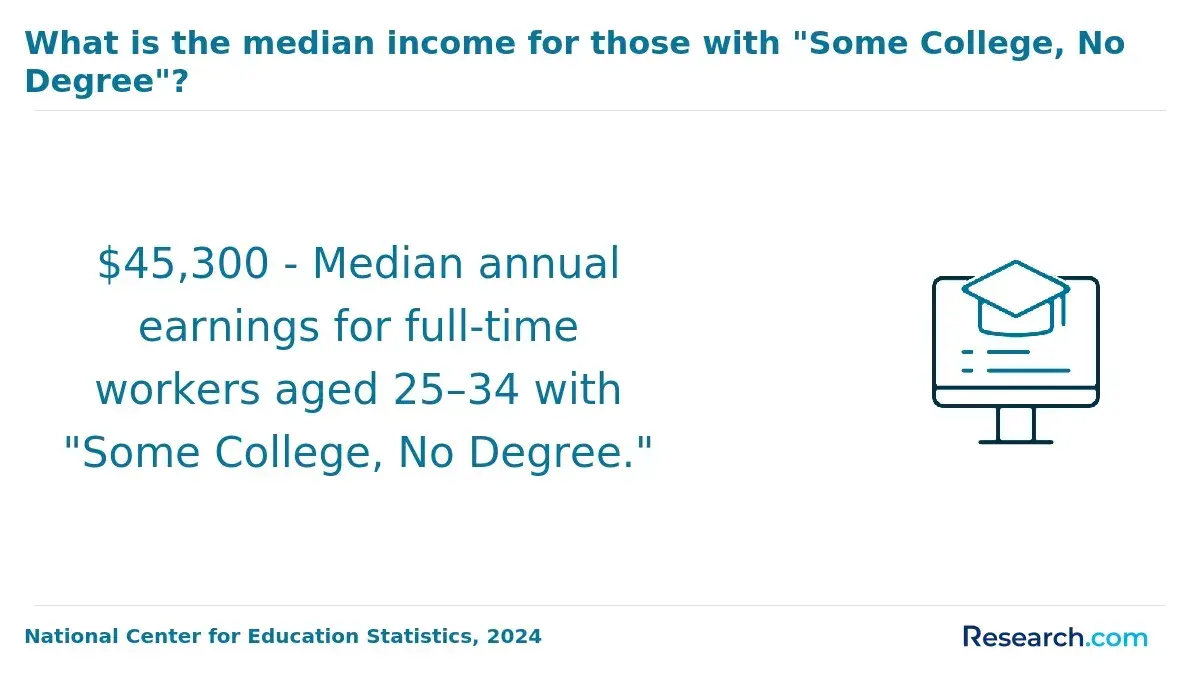
BLS May 2024 wage data shows the median annual wage for all U.S. occupations was $49,500. This benchmark helps students evaluate whether a program is likely to improve earning potential, but it should not be treated as a promise. Wages vary by region, experience, employer, union status, and whether the applicant can pass required screenings.
The table below gives examples of career directions that may be relevant to justice-impacted students. These are occupation-level medians, not guaranteed outcomes for graduates or people with felony records.
| Career direction | Example role | 2024 median annual wage context | Decision note |
| Information technology | Computer user support specialist | Often above the all-occupation median | Build a portfolio and consider vendor certifications to offset limited experience |
| Skilled trades | Electrician or HVAC technician | Often competitive with or above the all-occupation median | Check state licensing and apprenticeship background rules early |
| Logistics | Transportation, storage, or distribution supervisor | Can improve with experience and supervisory responsibility | May be accessible through warehouse or dispatch experience |
| Human services | Community and social service support roles | Varies widely by employer and credential | Mission fit may be strong, but licensing and agency policies matter |
| Business operations | Administrative services or operations support | Can scale with experience, software skills, and management ability | Useful for students who want broad private-sector options |
Job outlook also depends on industry trends. Technology skills, logistics systems, construction demand, healthcare staffing needs, and credential-based hiring all affect opportunities. At the same time, AI may reduce some routine office tasks while increasing demand for workers who can use digital tools, manage data, troubleshoot systems, or work in hands-on roles that are difficult to automate.
A practical career plan should include an entry-level job target, a one-year skill goal, and a longer-term advancement option. For example, a student might start in help desk support, add a networking certification, and later move toward systems administration.
Another might begin in warehouse operations, complete an associate degree, and move toward logistics supervision. The strongest plans do not depend on one employer saying yes; they create multiple ways to enter the labor market.
Other Things You Should Know About Scholarship And Financial Aid
Yes, many students with felony records can receive Pell Grants after release if they meet the standard federal student aid rules. The conviction itself usually is not the deciding factor, but enrollment in an eligible program, financial need, prior aid history, and satisfactory academic progress matter.
Yes, but only through an approved Prison Education Program. Not every prison class, certificate, or college partnership qualifies, so students should confirm approval before counting on Pell funding.
Prior drug convictions no longer automatically disqualify students from federal student aid through the FAFSA. Students should still complete the FAFSA and resolve any other issues, such as loan default or missing documentation.
The safest path is usually an accredited, affordable program that leads to jobs the student can realistically enter after background checks or licensing review. Community colleges, transferable associate degrees, short workforce certificates, and flexible online programs can all work when they match a clear career goal.
References
- Jobs for Felons: Realistic Careers, Trades, and Training Options https://www.trade-schools.net/articles/jobs-for-felons
- Education in Prisons: Overcoming barriers to high-quality prison education https://www.wgulabs.org/posts/colleges-in-prisons-overcoming-barriers-to-high-quality-prison-education
- Pell Grants and Prisons https://www.jff.org/blog/pell-grants-and-prisons/
- Pell Restoration https://www.unlockhighered.org/pell-restoration.html
- CEO NEST - Federal & State Financial Aid https://nest.ceoworks.org/advanced-training-education/going-to-college/financial-aid/federal-state-financial-aid
- Financial Aid and Drug Conviction Information https://www.cccd.edu/departments/education-services/financial-aid/financialaidanddrugconvictioninformation.html