2027 Women in STEM Scholarships: Eligibility, Deadlines, and Application Tips

Co-Founder and Chief Data Scientist
Finding a women in STEM scholarship is not just about lowering tuition; it is about choosing funding that fits your major, degree level, timeline, and career goal. The Bureau of Labor Statistics projects STEM occupations to grow 10.4% from 2023 to 2033, much faster than the overall labor market, which makes early financial planning more valuable. This guide is for high school seniors, college students, graduate applicants, career changers, and online learners who want to compare scholarship options, avoid weak applications, and make a smarter education investment.
Key Things You Should Know
- STEM scholarships for women commonly prioritize accredited enrollment, a STEM or STEM-adjacent major, academic readiness, leadership, financial need, or a clear commitment to broadening participation in technical fields.
- Deadline timing varies, but many national programs cluster between fall and spring; competitive applicants should begin tracking requirements at least 6 to 9 months before funds are needed.
- Cost planning matters because College Board's 2024-25 figures show published tuition and fees averaged $11,610 for in-state public four-year students, making scholarships most useful when combined with grants, institutional aid, and careful program selection.
What are women in STEM scholarships and who are they designed to support?
Women in STEM scholarships are financial awards designed to support women pursuing science, technology, engineering, mathematics, and closely related applied fields. Depending on the sponsor, eligible majors may include computer science, data science, cybersecurity, engineering, biology, chemistry, physics, mathematics, environmental science, health informatics, statistics, information systems, and some technical health or advanced manufacturing programs.
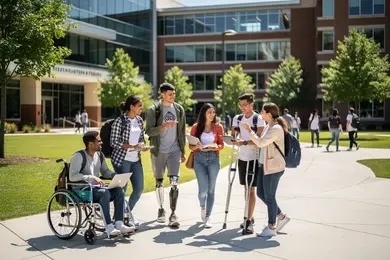
These scholarships are designed to reduce financial barriers, improve representation in high-demand technical fields, and help students build professional networks. Some programs are open to all women in eligible majors, while others focus on students from underrepresented racial or ethnic groups, first-generation college students, veterans, students with disabilities, single parents, rural learners, or students returning to school after a career break.
Scholarships can support several education paths. A high school senior may use an award for a bachelor's degree in engineering, while a working adult may look for funding tied to an associate's degree online in information technology or a transfer-focused STEM pathway. Graduate students may find fellowships for research-intensive fields, and certificate students may find smaller awards from employers, colleges, or professional associations.
The most important distinction is that a scholarship is not the same as a student loan. Scholarships generally do not require repayment if the recipient follows the award rules. However, some awards have conditions, such as maintaining full-time enrollment, meeting a minimum GPA, attending an accredited institution, submitting progress reports, or staying in an approved major.
What eligibility requirements do most women in STEM scholarship programs have?
Eligibility requirements vary by sponsor, but most women in STEM scholarship programs use a combination of identity, academic, enrollment, and career-goal criteria. Applicants should read the rules carefully because a strong candidate can still be disqualified for a technical mismatch, such as being enrolled part time when the scholarship requires full-time study.
The table below summarizes common eligibility categories and how they affect your application strategy.
| Eligibility factor | What programs commonly look for | Why it matters for applicants |
| Gender eligibility | Women applicants; some programs explicitly include transgender women, nonbinary students, or gender-diverse applicants | Read the sponsor's language rather than assuming eligibility from the scholarship name alone |
| Field of study | Declared or intended STEM major, technical certificate, or graduate research field | Some awards include health, analytics, or IT fields, while others limit eligibility to engineering or computing |
| Enrollment status | Accepted, enrolled, or planning to enroll at an accredited U.S. institution | Many sponsors require proof of admission or enrollment before funds are released |
| Academic standing | Minimum GPA, course rigor, research preparation, or faculty recommendation | Applicants with a lower GPA can sometimes compete by emphasizing improvement, projects, work experience, or leadership |
| Citizenship or residency | U.S. citizenship, permanent residency, DACA eligibility, state residency, or international-student eligibility depending on the award | Residency rules are strict and should be checked before investing time in an application |
| Financial need | FAFSA information, household income, unmet need, or personal financial explanation | Need-based awards often require more financial documentation than merit-only scholarships |
Common mistakes include applying without confirming the major list, submitting an outdated transcript, or assuming that "STEM" means every technical program qualifies. Applicants should also watch for red flags: application fees, vague sponsor names, requests for sensitive financial information outside normal aid forms, and "guaranteed scholarship" language. Reputable scholarships do not require you to pay to be considered.
When are typical application deadlines for major women in STEM scholarships?
Women in STEM scholarship deadlines are spread across the academic year, but many competitive programs follow predictable cycles. Instead of waiting for a single "scholarship season," students should build a rolling calendar that starts before college applications, transfer applications, or graduate admissions deadlines.
The table below gives a practical view of typical timing. Exact dates change, so applicants should verify each sponsor's current cycle before relying on a prior-year deadline.
| Deadline window | Common scholarship types | Best use of that period |
| August to October | Graduate fellowships, professional-association awards, institutional priority scholarships | Finalize recommendation requests, research statements, FAFSA planning, and school-specific aid forms |
| November to January | National STEM awards, corporate scholarships, early college scholarship rounds | Submit polished essays and confirm that test scores, transcripts, and enrollment plans match requirements |
| February to April | Engineering, computing, high school senior, and freshman-entry awards | Target awards tied to declared majors, admitted-student status, and professional interests |
| May to July | Local awards, emergency grants, smaller institutional funds, career-change scholarships | Fill funding gaps after financial aid offers and compare net costs across schools |
A strong scholarship calendar should include more than the final due date. Applicants should track the transcript request date, recommender deadline, FAFSA or institutional aid deadline, essay draft deadline, and notification date. This matters because a scholarship due in March may require a recommendation request in February and an official transcript order even earlier.
For major women in STEM scholarships, expect competition to be strongest when awards combine broad eligibility with large funding amounts. Smaller local scholarships may receive fewer applications, so students should balance national opportunities with state, employer, college foundation, alumni, and professional chapter awards.
How can students find reputable women in STEM scholarships from accredited institutions?
Reputable women in STEM scholarships usually come from accredited colleges, professional associations, government-related programs, nonprofit foundations, employers, or well-established community organizations. A practical search should start with sources that can verify eligibility and explain how funds are disbursed.
Students comparing online options should also confirm that the school itself is legitimate before applying scholarship funds; a curated list of the best online schools can be a useful starting point for evaluating institutional credibility and format fit.
Use a layered search strategy so you do not depend on one database or one national award. The following steps help applicants find legitimate opportunities while reducing wasted effort:
- Start with your college's financial aid office, department website, honors program, women in engineering or computing office, and foundation scholarship portal.
- Search professional associations in your field, such as engineering, computing, data science, mathematics, laboratory science, environmental science, or cybersecurity organizations.
- Check employer-sponsored programs if you or a parent works for a company with tuition assistance, employee dependent scholarships, or returnship programs.
- Look for state and local awards from community foundations, regional STEM councils, utility companies, hospitals, manufacturers, and technology employers.
- Confirm whether the scholarship pays the student, the school, or both, because disbursement rules can affect your bill timing and financial aid package.
Reputation checks are especially important for online learners and career changers because scholarship search ads can blur the line between legitimate awards and lead-generation forms. If a sponsor does not clearly name the organization, eligibility rules, selection process, funding amount, contact information, and privacy policy, treat it cautiously.
What documents and materials are usually required in scholarship applications?
Most women in STEM scholarship applications require a mix of academic records, personal materials, and proof that the applicant fits the award's purpose. The strongest applications are consistent: the transcript, resume, essay, and recommendations should all support the same story about preparation, goals, and impact.
Before applying, create a reusable scholarship folder with updated versions of the most commonly requested materials. This saves time and helps you avoid rushed submissions near deadline week.
- Official or unofficial transcripts showing GPA, completed STEM courses, transfer credits, and current enrollment status.
- Proof of admission or enrollment, such as an acceptance letter, class schedule, student account statement, or enrollment verification.
- Resume or activities list highlighting research, internships, coding projects, lab work, competitions, leadership, employment, military experience, caregiving responsibilities, or community service.
- Personal statement or essay explaining your STEM interest, career goals, obstacles addressed, and how the scholarship will support your next step.
- Letters of recommendation from teachers, professors, supervisors, research mentors, club advisors, or managers who can speak to your technical potential and reliability.
- Financial documents when required, such as FAFSA submission confirmation, Student Aid Index information, institutional aid letter, or a sponsor-specific financial need form.
- Portfolio items for some fields, such as GitHub repositories, design projects, research abstracts, lab summaries, patents, publications, presentations, or capstone work.
Applicants should tailor each submission rather than sending the same essay everywhere. For example, an engineering award may value teamwork and design thinking, while a data science scholarship may respond more strongly to statistical reasoning, ethical data use, and project outcomes.
How do women in STEM scholarships differ for undergraduate, graduate, and certificate programs?
Scholarship eligibility can change significantly by degree level. Undergraduate awards often focus on access, persistence, and declared major, while graduate awards may prioritize research, professional contribution, or leadership in a specialized field. Certificate awards are usually more career-focused and may be tied to workforce development, employer needs, or short-term reskilling.
The table below compares how scholarship expectations usually differ across common STEM education pathways.
| Program level | Typical scholarship focus | Best fit | Trade-off to consider |
| Certificate | Short-term technical skills, career transition, employer demand | Career changers, working adults, or students testing a field before a degree | Some scholarships exclude non-degree programs, and certificates may not transfer into a degree |
| Associate degree | Affordable entry into IT, engineering technology, lab science, cybersecurity, or transfer pathways | Students seeking lower upfront cost or a step toward a bachelor's degree | Transfer rules can affect whether credits count toward a four-year STEM major |
| Bachelor's degree | Major persistence, leadership, internships, undergraduate research, and representation in STEM fields | Students pursuing entry-level STEM roles or graduate-school preparation | Some awards require full-time enrollment or specific class standing |
| Master's degree | Advanced specialization, research, professional advancement, or leadership | Students targeting specialized roles in analytics, engineering management, biotechnology, AI, or cybersecurity | Funding may be more competitive and may require a clearer career or research plan |
| Doctoral degree | Research potential, faculty mentorship, publications, and long-term contribution to the field | Students pursuing research, academia, policy, or high-level technical leadership | Scholarships may be less important than assistantships, fellowships, tuition waivers, and funded research roles |
Students considering advanced online study should compare funding rules carefully because some fellowships prefer research-intensive or campus-based formats, while other awards are open to accredited distance education. For applicants exploring flexible doctoral pathways, information on online doctoral programs can help frame questions about pace, residency requirements, and funding compatibility.
The right path depends on the goal. A certificate may make sense for a quick transition into a technical support or analytics role, while a bachelor's degree is often the safer foundation for engineering, computing, and scientific careers. Graduate study is usually best when it unlocks a specific role, research track, salary band, licensure path, or employer requirement.
What tips help strengthen essays and personal statements for STEM scholarship applications?
Scholarship essays for women in STEM should do more than say you like science or technology. The best essays connect motivation, preparation, obstacles, evidence of growth, and future contribution in a way that helps reviewers remember the applicant.
Use the following process to strengthen essays and personal statements before submission:
- Answer the exact prompt first, then add personal detail; reviewers should not have to guess why your story fits the scholarship.
- Show evidence of STEM readiness through projects, courses, internships, research, competitions, work experience, caregiving problem-solving, or self-directed learning.
- Explain challenges without making the essay only about hardship; connect barriers to persistence, resourcefulness, and your next academic step.
- Be specific about career goals, such as cybersecurity analyst, civil engineer, environmental scientist, biostatistician, software developer, robotics technician, or biomedical researcher.
- Connect the award to a concrete need, such as reducing work hours, paying for lab fees, covering transportation, buying required technology, or allowing time for research.
- Ask a STEM instructor, writing tutor, mentor, or supervisor to review the essay for clarity, authenticity, and technical credibility.
A common weak essay says, "I want to inspire other women in STEM," but never explains how. A stronger version names the field, describes a real project or turning point, identifies a gap the applicant wants to address, and explains how the scholarship supports a realistic next step.
Applicants should also avoid exaggerating certainty. It is fine to say your interests are developing, especially early in college, as long as you can show a thoughtful direction. Reviewers often value intellectual curiosity and follow-through more than a perfectly fixed career plan.
How do online STEM degree pathways affect eligibility for women-focused scholarships?
Online STEM degree pathways can be eligible for women-focused scholarships, but eligibility depends on the sponsor's rules, the school's accreditation, the student's enrollment status, and whether the program includes required labs, clinicals, fieldwork, or campus residencies. Applicants should never assume that "online" automatically qualifies or disqualifies them.
Online programs may be a strong fit for working adults, caregivers, military-affiliated students, rural learners, and career changers who need flexibility. They can also help students control indirect costs such as relocation, commuting, and schedule disruption. Students prioritizing cost should compare total attendance expenses, not just tuition, and resources on the cheapest online university in USA options can help frame affordability questions.
Before applying scholarship funds to an online STEM program, ask these questions so you do not discover a problem after enrollment:
- Does the scholarship explicitly allow online, hybrid, or competency-based programs?
- Is the institution accredited by a recognized accreditor, and does the program have any required programmatic accreditation?
- Will the scholarship pay for online fees, technology fees, lab kits, proctored exams, or required campus visits?
- Does the program meet state requirements if the career involves licensure, field placement, clinical practice, or teacher certification?
- Are internships, labs, research experiences, or capstones available to online students in a way that supports career goals?
The main trade-off is flexibility versus access to hands-on opportunities. Online computing, analytics, cybersecurity, and information systems programs may translate well to remote formats, while engineering, laboratory science, and health-related STEM programs often require more careful review of lab access, clinical placement, or equipment requirements.
How can scholarship applicants verify program accreditation and future licensing alignment?
Accreditation is one of the most important scholarship and career checks because it affects federal financial aid access, credit transfer, graduate admissions, employer recognition, and licensure eligibility. For scholarship applicants, accreditation also matters because many sponsors will not release funds to unaccredited or unrecognized institutions.
Students should distinguish institutional accreditation from programmatic accreditation. Institutional accreditation applies to the college or university as a whole. Programmatic accreditation applies to a specific program, department, or professional pathway, and it can be especially important in fields with licensure, certification, or regulated practice.
The table below summarizes the accreditation and licensing checks that matter most for common STEM-related goals.
| Goal | Accreditation or approval to verify | Why it matters |
| Engineering licensure pathway | ABET accreditation for many engineering programs | State engineering boards and employers may rely on ABET status when evaluating education background |
| Computing or cybersecurity career | Institutional accreditation; relevant program recognition when available | Employers often emphasize skills and projects, but accredited education supports transfer and graduate study |
| Health informatics or clinical-adjacent STEM | Institutional accreditation plus any field-specific program approval | Clinical, privacy, or health data roles may have employer or certification expectations |
| Teacher or STEM education licensure | State educator preparation approval | Licensure rules vary by state and may not transfer automatically |
| Graduate research pathway | Institutional accreditation, faculty research fit, lab access, and funding structure | Program reputation, mentorship, and research output can matter more than format alone |
To verify alignment, check the school's accreditation page, the U.S. Department of Education-recognized accreditation database, the relevant programmatic accreditor, and the state licensing board if the career is regulated. If admissions staff make broad claims, ask for written confirmation that the program meets requirements for your state and intended credential.
A major red flag is a program that says accreditation is "pending" but encourages you to enroll immediately for a licensure-dependent career. Pending status may improve later, but it can also leave students without the credential pathway they expected.
How do women in STEM scholarships influence career paths, salaries, and job outlook?
Women in STEM scholarships can influence career paths by reducing financial pressure, allowing students to stay enrolled, pursue internships, buy required equipment, attend conferences, or choose a stronger program rather than the cheapest immediate option. They may also connect recipients with mentors, employer networks, research labs, and professional communities that improve career readiness.
The economic context is important. The Bureau of Labor Statistics reported a median annual wage of $101,650 for STEM occupations in 2023, based on data published in its 2024 occupational outlook materials. That figure does not guarantee individual earnings, but it shows why scholarship support in technical fields can have meaningful long-term value when paired with a well-matched program and strong skill development.
The table below shows how different STEM pathways can connect to career outcomes. Use it as a planning tool, not as a promise of a specific job or salary.
| Pathway | Common early roles | Skills that strengthen employability | Longer-term direction |
| Computer science or software | Junior developer, QA analyst, systems support specialist | Programming, version control, debugging, algorithms, teamwork | Software engineer, technical lead, product engineering, AI systems support |
| Data science or statistics | Data analyst, reporting analyst, research assistant | Statistics, Python or R, SQL, visualization, ethical data use | Data scientist, machine learning specialist, analytics manager |
| Engineering | Engineering technician, design assistant, junior engineer | CAD, modeling, lab testing, project management, safety standards | Licensed engineer, project engineer, engineering manager |
| Life or physical sciences | Lab technician, research assistant, quality control analyst | Laboratory methods, documentation, instrumentation, scientific writing | Research scientist, regulatory specialist, graduate or professional school |
| Cybersecurity or IT | Help desk analyst, security operations associate, network support specialist | Networking, scripting, risk assessment, incident response, documentation | Cybersecurity analyst, cloud security specialist, security architect |
Current trends make scholarship strategy more important. AI and automation are changing employer expectations across STEM fields, increasing demand for applicants who can combine technical tools with communication, ethics, domain knowledge, and problem-solving. A student who uses scholarship support to complete internships, certifications, research, or portfolio projects may be better positioned than one who focuses only on the credential name.
Not every student needs a full degree immediately. Some career changers benefit from shorter training first, especially when exploring technical support, analytics, cloud, or healthcare technology roles. Comparing degree pathways with 6-month certificate programs that pay well can help applicants decide whether to pursue a fast credential, a stackable certificate, or a longer STEM degree.
Other Things You Should Know About
Not always. Some are need-based, some are merit-based, and many use both. If a scholarship asks for FAFSA information or an aid letter, financial need is likely part of the review.
Yes. Many scholarships are open to high school seniors who plan to enroll in an eligible STEM major. Some require proof of college acceptance before funds are released.
Often, but not automatically. Eligibility depends on the sponsor's rules, the school's accreditation, enrollment status, and whether the program meets any field-specific requirements.
Apply to a balanced mix of national, institutional, local, and field-specific awards. A smaller scholarship with a strong fit may be more realistic than a large national award with broad competition.
References
- Gender Disparities in Stem Education and Career Choice https://ssr.crcjournals.org/gender-disparities-in-stem-education-and-career-choice/
- Women's STEM Scholarships for Grad School https://www.gograd.org/resources/women-in-stem/
- 10 Scholarships for Girls in STEM for Which You Should Apply https://prettybrainy.com/scholarships-for-girls-in-stem/
- A Step-by-Step Guide to Preparing and Organizing Scholarship Application Documents - Scholarships.af https://scholarships.af/74344/step-by-step-guide-to-preparing-and-organizing-scholarship-application/
- Opportunities to Support Your Journey — Women in Data https://www.womenindata.org/blog/opportunities-to-support-your-journey
- Must-Have Scholarships & Resources for Women in STEM https://www.onlinemastersdegrees.org/financial-aid/scholarships/women-in-stem/
- How to Write a Personal Statement (Tips + Essay Examples) | College Essay Guy https://www.collegeessayguy.com/blog/personal-statement
- Scholarships for Women in STEM https://www.madisontrust.com/client-resources/articles/scholarships-for-women-in-stem/
- British Council Women in STEM scholarships | British Council https://www.britishcouncil.org/study-work-abroad/in-uk/scholarship-women-stem
- A Guide to Finding and Applying to STEM Scholarships https://www.mastersindatascience.org/resources/guide-stem-scholarships/