2027 Nyu Tuition Out of State: Student Guide to Costs, Aid, and Funding

Co-Founder and Chief Data Scientist
NYU can be financially confusing because "out-of-state tuition" does not work the way it does at public universities. NYU's published undergraduate cost of attendance for New York students is about $99,068 for 2025-2026, making net price, aid eligibility, housing choices, and career goals critical parts of the decision. This guide is for families comparing NYU with public, private, online, and lower-cost pathways. You will learn what NYU actually charges, how aid changes the bill, and how to judge whether the investment fits your academic and financial plan.
Key Things You Should Know
- NYU is a private university, so undergraduate tuition is generally the same for in-state, out-of-state, and international students; the bigger difference is financial aid eligibility and living costs.
- NYU's 2025-2026 undergraduate cost estimate for students in New York is about $99,068, including tuition and mandatory fees, housing and food, books, transportation, and personal expenses.
- Students from families with income under $100,000 may qualify for NYU Promise tuition support, but families should still budget for housing, meals, indirect costs, travel, and loan limits.
What is NYU out-of-state tuition and total cost of attendance for undergraduate students?
NYU out-of-state tuition is the sticker price a non-New York resident pays before financial aid. Because NYU is a private nonprofit university, it does not discount tuition simply because a student lives in New York. The more useful number is the total cost of attendance, which estimates the full annual cost of studying, living, and participating as a student.
NYU's published 2025-2026 undergraduate estimate for students studying in New York shows why families should look beyond tuition alone. The table below separates direct costs, which are usually billed by NYU, from indirect costs, which students may pay to outside vendors.
| Cost category | Estimated annual amount | How to use this number |
| Tuition and mandatory fees | $68,978 | This is the main academic charge and usually the largest fixed cost. |
| Food and housing | $24,652 | This can change depending on residence hall, meal plan, or off-campus living choice. |
| Books and course materials | $1,494 | Costs vary by major, especially in art, science, technology, and lab-based courses. |
| Transportation | $1,154 | Out-of-state students should add travel home if it is not already reflected in their personal budget. |
| Personal expenses | $2,790 | This covers everyday items such as clothing, laundry, phone service, and basic supplies. |
| Total estimated cost of attendance | $99,068 | This is the best starting point for estimating need, loans, and family contribution. |
For decision-making, treat the total cost of attendance as the planning number and the tuition charge as only one part of the bill. A family that can cover tuition but not housing, meals, travel, and supplies may still face a financing gap.
How does NYU tuition differ for in-state, out-of-state, and international students?
NYU tuition does not differ by state residency in the same way tuition does at public universities. A student from California, Texas, Florida, or New York generally faces the same undergraduate tuition and mandatory fee structure for the same NYU school or program.
The differences appear in aid rules, documentation, travel costs, and visa-related limitations. This comparison shows what usually changes and what usually does not.
| Student type | Tuition treatment | Main cost differences | Important planning note |
| New York resident | Generally the same NYU tuition as other U.S. students | May have lower travel costs and easier access to family support nearby | New York residency alone does not create an in-state NYU tuition discount. |
| Out-of-state U.S. student | Generally the same NYU tuition as New York residents | Higher travel costs and possible storage or summer housing costs | Federal aid eligibility is based on FAFSA rules, not state of residence alone. |
| International student | Generally the same tuition for the same undergraduate program | Visa costs, health insurance, travel, currency risk, and fewer federal aid options | International students usually cannot use U.S. federal student aid, so institutional and private funding become more important. |
The common mistake is assuming that "out-of-state tuition" at NYU means a surcharge. At NYU, the real question is not whether you pay a nonresident rate; it is whether your net price after grants, scholarships, family resources, work, and loans is sustainable.
What financial aid, scholarships, and grants are available to NYU out-of-state students?
NYU out-of-state students can be considered for many of the same institutional aid programs as other U.S. students, but eligibility depends on financial need, application materials, deadlines, academic profile, and program rules. The most important distinction is between gift aid, which does not need to be repaid, and self-help aid, such as loans and work-study.
Use the following categories to understand what may reduce the bill and what may simply defer payment until later.
| Aid type | What it can cover | Best fit | Key caution |
| NYU institutional grants and scholarships | Tuition and sometimes broader cost of attendance | Students with demonstrated need or strong institutional fit | Amounts vary; do not assume another student's award will match yours. |
| NYU Promise | Tuition support for eligible first-year undergraduates from families earning under $100,000 | Lower- and middle-income families who meet NYU's eligibility rules | Tuition support does not automatically erase housing, meals, books, transportation, or personal expenses. |
| Federal Pell Grant | Need-based grant aid, with a maximum award of $7,395 for 2025-2026 | Students with high financial need based on FAFSA results | The maximum award is far below NYU's full cost, so it is usually only one funding layer. |
| Federal Direct Loans | Part of tuition, fees, or living costs | Students who need a federal borrowing option with standard protections | Dependent undergraduate annual limits may leave a large gap at high-cost institutions. |
| Outside scholarships | Tuition, books, housing, or other educational expenses depending on sponsor rules | Students willing to apply broadly and early | Some outside awards may reduce unmet need or loan eligibility rather than stack on top of all aid. |
To improve your aid strategy, complete the FAFSA as early as possible, submit any required institutional forms, review whether the CSS Profile or additional documentation is needed, and keep copies of every financial aid communication. If your family's income has changed, ask NYU whether a financial aid appeal or special circumstances review is available.
Avoid one of the biggest aid mistakes: comparing only scholarship amounts. A $30,000 award at a high-cost school may still leave a larger balance than a smaller award at a lower-cost institution.
What additional living expenses should out-of-state students expect when studying at NYU in New York City?
For many out-of-state students, New York City living costs are the deciding factor. NYU's estimate includes food and housing, transportation, and personal expenses, but your real budget can change based on residence hall assignment, meal plan, neighborhood, commuting distance, health needs, and how often you travel home.
Before committing, build a monthly budget that includes costs that do not always appear clearly in the first award letter. These items matter because they can turn an affordable-looking tuition plan into a cash-flow problem during the semester.
- Travel to and from your home state, especially during move-in, winter break, spring break, and summer storage periods.
- Housing deposits, renters insurance, furnishings, bedding, kitchen supplies, and moving costs if you live off campus after your first year.
- Food beyond the meal plan, including groceries, late-night meals, dietary needs, and social spending.
- Course-specific expenses such as studio materials, lab gear, software subscriptions, performance clothing, or equipment.
- Health insurance, prescriptions, mental health copays, and emergency care not fully covered by your existing plan.
- Internship-related expenses such as professional clothing, local commuting, unpaid internship costs, or summer housing in the city.
The practical approach is to separate fixed costs from flexible costs. Tuition and required fees are difficult to change, while housing choice, meal plan, used textbooks, transportation habits, and summer plans may offer more room for savings.
A common red flag is relying on a vague "I'll find cheaper housing later" plan. Off-campus housing can reduce costs for some students, but it can also add lease risk, broker fees, furniture costs, utility bills, and commuting time.
How can out-of-state students estimate their net price at NYU using calculators and cost tools?
NYU's sticker price is not the same as your net price. Net price means the estimated cost after grants and scholarships are subtracted, but before considering loans, work earnings, and family payment plans. For out-of-state students, the net price estimate is the number that should drive the college comparison.
Use calculators and award letters in a sequence rather than as one-time checks. The steps below help you estimate a realistic annual and four-year cost.
- Start with NYU's official cost of attendance for the correct school, campus, enrollment level, and housing status.
- Run NYU's net price calculator using accurate income, asset, household size, and student information.
- Complete the FAFSA and any institutional aid forms required for NYU scholarship consideration.
- Compare the official financial aid offer with the calculator estimate and ask questions about any major difference.
- Separate grants and scholarships from loans, work-study, Parent PLUS Loans, and payment plans.
- Multiply the estimated annual family cost by four, then add likely tuition increases, travel, summer costs, and loan interest.
Adult students comparing timelines should also think about opportunity cost, especially if they are leaving work to study full time. Some may find that accelerated bachelor's degree programs for adults offer a lower-cost or faster path if the NYU campus experience is not essential to their goal.
The biggest calculator mistake is entering optimistic numbers. If your parent contribution, outside scholarship, or summer earnings estimate is uncertain, create a conservative version of the budget before you enroll.
What payment plans, work-study options, and alternative funding sources can help cover NYU costs?
NYU costs can be covered through a mix of family payments, grants, scholarships, federal loans, private loans, work, and payment plans. The safest funding plan usually minimizes high-interest debt and avoids assuming that a student can work enough hours to cover a large balance while staying academically healthy.
Federal Direct Loan limits are important because they are often much lower than the remaining balance at a high-cost private university. Dependent undergraduates can typically borrow $5,500 in the first year, $6,500 in the second year, and $7,500 in later undergraduate years, subject to federal rules and aggregate limits.
Consider these funding tools in order of financial risk and flexibility.
- Use grants and scholarships first because they generally do not need to be repaid.
- Use savings, 529 plans, current income, or a monthly payment plan if the family can do so without draining emergency funds.
- Use federal student loans before private loans because federal loans usually provide more standardized borrower protections.
- Use work-study or part-time work to cover books, transportation, and personal costs rather than the core tuition bill.
- Consider Parent PLUS Loans or private loans only after comparing interest rates, repayment terms, cosigner risk, and total four-year debt.
- For eligible service members, veterans, and military families, compare NYU benefits with good online colleges for military if flexibility, tuition assistance, or deployment-friendly scheduling is important.
Work can help, but it is not a substitute for a funding plan. A student taking demanding studio, lab, clinical, or internship-heavy courses may not be able to work enough hours to cover a large balance without hurting academic performance.
Be cautious with private loans that require a cosigner and offer variable rates. A loan that makes the first semester possible can become risky if the same borrowing pattern repeats for eight semesters.
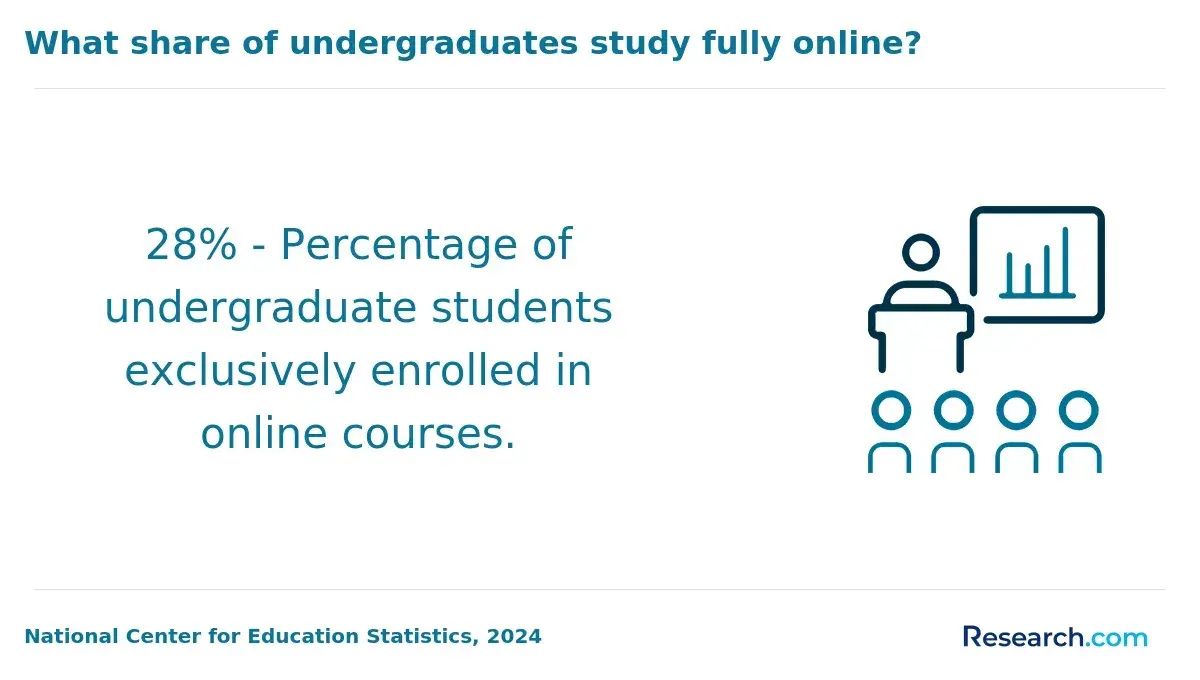
How do NYU online and hybrid programs compare in tuition, fees, and overall value to campus-based study?
NYU offers some online and hybrid learning options, but tuition and fees vary by school, program, degree level, and credit load. Online study can reduce relocation and commuting costs, but it does not automatically mean a lower tuition rate or a lighter academic commitment.
The comparison below shows when campus-based, hybrid, and online formats may make financial sense. Use it to identify the trade-off rather than assuming one format is always better.
| Format | Potential cost advantage | Potential limitation | Best fit |
| Campus-based NYU study | Full access to New York City networking, labs, studios, events, residence life, and in-person advising | Highest likely living costs, especially for students relocating to New York | Students whose goals depend on location, campus resources, performance spaces, labs, or in-person recruiting |
| Hybrid study | May reduce commuting or housing burden while preserving some in-person access | Still may require New York-area presence and schedule flexibility | Students near campus or in programs where occasional in-person work adds value |
| Online study | May allow students to avoid New York housing costs and continue working | Program availability, tuition structure, field placement, and networking experience vary widely | Working adults, remote learners, or students whose program outcomes do not require constant campus access |
Students comparing formats should check the program page for per-credit tuition, technology fees, residency requirements, internship or clinical obligations, and whether online students receive the same career services. If you are broadly comparing flexible pathways, an online degree may be worth reviewing alongside NYU's specific offerings.
The value question is not "Is online cheaper?" The better question is whether the format supports your goal at a lower total cost after housing, commuting, work schedule, networking access, and graduation timeline are included.
How does NYU's accreditation status impact federal aid eligibility, credit transfer, and professional licensure?
NYU is accredited by the Middle States Commission on Higher Education, a regional accreditor recognized in the U.S. higher education system. Accreditation matters because it helps determine whether students can access federal financial aid, whether other institutions may consider transfer credits, and whether certain programs can support licensure or certification pathways.
Accreditation is not just a checkbox; it affects real financial and career decisions. Here is how to use it when evaluating NYU or any alternative institution.
- Confirm institutional accreditation before relying on federal grants, federal loans, or credit transfer plans.
- Check programmatic accreditation when entering fields such as nursing, social work, education, counseling, accounting, engineering, or other regulated professions.
- Ask whether the program meets educational requirements in the state where you plan to work, not only in New York.
- Verify transfer policies with the receiving school because accreditation can support transferability but does not require another institution to accept every credit.
- For licensure-track programs, contact the relevant state board before enrolling if you may move after graduation.
A common mistake is assuming that a prestigious university name automatically satisfies every licensing board. Professional requirements can be state-specific, and they may include supervised hours, exams, background checks, or specific coursework beyond the degree itself.
What are typical career outcomes, starting salaries, and long-term earnings for NYU graduates?
NYU graduates enter many fields, including finance, technology, media, arts, health, public service, education, law-related work, research, and entrepreneurship. Career outcomes depend heavily on major, internships, portfolio quality, licensing requirements, work authorization, networking, and the broader economy.
For national context, the Bureau of Labor Statistics reported 2024 median usual weekly earnings of $1,543 for workers age 25 and over whose highest education was a bachelor's degree. That figure is not an NYU-specific salary promise, but it shows why families often weigh a bachelor's degree as a long-term earnings investment rather than a one-year expense.
The table below uses U.S. labor-market medians to frame common post-college directions. Starting salaries may be lower than these medians, and NYU-specific outcomes should be checked by school, major, and graduating class.
| Career direction | Examples of related roles | Useful NYU planning question |
| Business and finance | Financial analyst, consultant, accountant, marketing associate | Does the program provide recruiting access, internships, alumni contacts, and quantitative skill development? |
| Technology and data | Software developer, data analyst, product analyst, UX researcher | Will you graduate with a portfolio, coding experience, internships, and current technical tools? |
| Health and social impact | Nursing, public health, social work, nonprofit program roles | Are there clinical, fieldwork, licensure, or graduate school requirements after the bachelor's degree? |
| Arts, media, and communication | Producer, editor, designer, performer, communications specialist | Does New York City access justify the cost through portfolio building, auditions, internships, or industry exposure? |
| Research, policy, and graduate study | Research assistant, policy analyst, pre-law or pre-graduate pathways | Will undergraduate debt leave room for graduate or professional school borrowing later? |
Students still choosing a field should compare outcomes by major, not only by university brand. A practical starting point is to review best majors in college with an eye toward skills, labor demand, graduate school needs, and debt tolerance.
AI and automation also affect the ROI conversation. Employers increasingly value data literacy, communication, adaptability, and the ability to use digital tools responsibly. Students in creative, business, and technical fields should look for coursework and projects that build both human judgment and technology fluency.
How can prospective out-of-state students evaluate whether NYU is a financially sustainable choice?
NYU can be a financially sustainable choice for some out-of-state students, especially when grant aid is strong, the academic program is a clear fit, and the student can use New York City opportunities strategically. It can be financially risky when the plan relies heavily on private loans, uncertain family contributions, or a major with unclear earnings prospects and additional graduate school costs.
Use this decision framework before depositing. It is designed to help families compare NYU with public universities, other private colleges, community college transfer pathways, and online or adult-focused programs.
- Calculate the four-year net price after grants and scholarships, not just the first-year bill.
- Estimate total debt at graduation, including student loans, Parent PLUS Loans, and private loans.
- Compare monthly loan payments with conservative early-career salary expectations for your intended field.
- Ask NYU for program-specific outcomes, internship access, retention, graduation rates, and career services data.
- Identify which parts of the NYU experience directly support your goal, such as labs, studios, faculty, location, alumni networks, or clinical placements.
- Build a lower-cost backup plan, such as starting with an associate's degree, attending an in-state public university, or transferring after completing general education credits.
NYU may make sense if the net price is manageable, your program has strong experiential learning, and you can explain how the school's location and resources connect to your career plan. A different option may make sense if you would need to borrow heavily for a degree path that also requires unpaid internships, graduate school, or several years of low entry-level wages.
The most important red flag is choosing NYU because of prestige alone. Prestige can open doors, but it does not remove the need for a realistic budget, a strong academic plan, and a clear strategy for internships, skills, and post-graduation employment.
Other Things You Should Know About
No. NYU is a private university, so undergraduate tuition is generally not based on New York residency. Out-of-state students usually pay the same tuition rate as New York residents in the same program.
NYU's published 2025-2026 undergraduate cost estimate for students in New York is about $99,068, including tuition and mandatory fees, food and housing, books, transportation, and personal expenses.
Yes. Eligible U.S. out-of-state students can be considered for institutional aid, federal aid, and outside scholarships. Aid depends on financial need, application materials, deadlines, and program rules.
It depends on net price, debt level, major, career goals, and how well the student can use NYU's academic and New York City opportunities. Families should compare four-year costs and likely outcomes before committing.
References
- It costs $76,614 to go to NYU—but here's how much students actually pay https://www.cnbc.com/2019/08/02/it-costs-76614-to-go-to-nyuheres-how-much-students-actually-pay.html
- Career earnings by college major - The Hamilton Project https://www.hamiltonproject.org/data/career-earnings-by-college-major/
- Does NYU Give Scholarships in 2026? https://bold.org/blog/does-nyu-give-scholarships/
- NYU Out-of-State Tuition and Room and Board https://empowerly.com/faq/nyu-out-of-state-tuition-and-room-and-board/
- What are the tuition fees at NYU for international students? https://nbyula.com/q/what-are-the-tuition-fees-at-nyu-for-international-students-lpxq
- How to Navigate NYU's Financial Aid Options (A Guide) https://collegefinance.com/financial-aid/how-to-navigate-nyus-financial-aid-options-a-guide
- 8 Ways to Pay for College - Woodbury University https://woodbury.edu/news/8-ways-to-pay-for-college/
- Cost of Living for Students in New York City: 2026 Budget Breakdown https://fllat.com/blog/new-york-city/cost-of-living-for-students-in-new-york-city-2026-budget-breakdown
- New York University - Middle States Commission on Higher Education https://www.msche.org/institution/0360/
- Accreditation - NY Health Careers https://www.healthcareersinfo.net/what-to-think-about/accreditation/