Interview with E-Commerce Software Experts: Answering Student’s Most Common Questions

Co-Founder and Chief Data Scientist
The global online shopping boom isn’t slowing down, and students who understand e-commerce software are better positioned to take advantage of it. In 2024, retail e-commerce sales reached $6 trillion; experts predict that number will climb to $8 trillion by 2028. That kind of growth creates real opportunities. But many students miss out because they don’t know where to start or which tools to trust.
That’s why we sat down with Ben Ajenoui, founder of SEO HERO LTD, a Hong Kong-based agency helping businesses rank on Google since 2016. Ajenoui is also the former Marketing & Partnership Director at OpenCart.
In this expert-led interview, you’ll find answers to the most common student questions about e-commerce software, covering costs, features, mobile design, and more. The Research.com team has worked closely with industry leaders to bring you clear, accurate, and practical insights. By the end, you’ll have the knowledge to move forward with confidence and avoid the missteps that stop others from launching their online stores.
- How would you describe the current state of the e-commerce software industry in 2025?
- What major shifts have you observed in the past few years?
- How does OpenCart support universities and research institutions?
- How can universities use e-commerce platforms beyond the traditional campus bookstore?
- Can e-commerce platforms support fundraising and other academic operations?
- What should schools or research groups know before launching their first e-commerce store?
- What’s next for e-commerce in higher education?
- How much does e-commerce software usually cost?
- What support and learning resources do platforms offer for students?
How would you describe the current state of the e-commerce software industry in 2025?
The e-commerce software market in 2025 is fast, global, and driven by personalization. Knowing how these platforms are evolving is crucial for students exploring careers in online retail, software development, or digital sales. Whether you want to build your online store or work behind the scenes on software or strategy, it’s essential to understand what today’s tools can do and what customers expect. With retail e-commerce sales projected to reach $8 trillion globally by 2028, the systems behind the scenes are becoming more complex, competitive, and intelligent.
- Ben Ajenoui: “In 2025, running an online business demands far more than just listing products and processing payments. E-commerce software must now offer built-in flexibility, personalization, and global support. AI features are no longer optional — they’re expected.”
Ajenoui explains that modern consumers want instant service and smart recommendations. That means platforms must support chatbots, dynamic pricing, and AI-powered search. These tools are already embedded in most successful e-commerce systems today.
- Ben Ajenoui: “Businesses that fail to adopt AI will likely fall behind.”
Another significant shift, he says, is the push toward global selling, even for small businesses. Today’s platforms must support multiple currencies, languages, and tax systems from day one.
- Ben Ajenoui: “Global selling is becoming the norm... Platforms that localize checkout pages and automate international compliance are winning market share.”
He also notes a divide in how platforms are built.
- Ben Ajenoui: “Businesses no longer want to be locked into rigid systems. There’s a clear shift toward open-source and low-code platforms that offer full control with fewer fees. For example, OpenCart gives users complete freedom to shape their store’s look and function. Merchants are choosing models that let them own their infrastructure, rather than renting access on high-fee platforms. The industry is splitting in two directions. Some platforms offer an all-in-one experience, but lock users into costly ecosystems. Others, like OpenCart, serve as a base for custom tech stacks with plug-and-play freedom.”
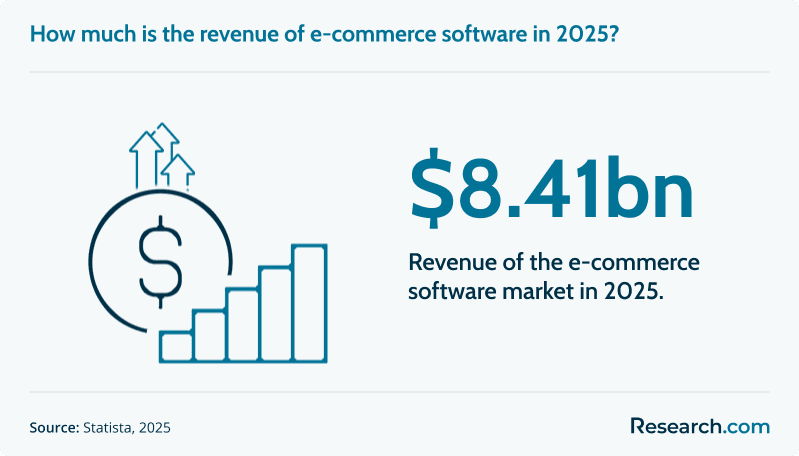
Broader market data backs these trends. The e-commerce software industry is projected to grow at a steady 3.27% annually through 2030, reaching nearly $9.88 billion in value. This sustained growth reflects demand for more innovative, flexible tools that scale with a business. As Ajenoui puts it, “Flexibility is now a business advantage, not just a feature.”
Students exploring roles in software, product design, or even those curious about, "What does a sales manager do?" should pay close attention to these shifts. Sales professionals, for example, are now expected to understand the software behind the products they sell and to recommend tools that align with a company’s long-term growth.
The takeaway is clear: companies that embrace adaptability, AI, and global readiness will lead the market. And students who study these trends early can position themselves as the next wave of experts in the e-commerce space.
The chart below lists the industries with the highest percentage of market share in e-commerce, as published in 2025.
What major shifts have you observed in the past few years?
E-commerce software hasn’t just evolved—it’s been completely redefined. Students looking to work in web development, business tech, or even digital strategy should understand how the industry has shifted in recent years. What was once considered advanced, like AI tools or international shipping support, is now baseline. These changes matter to developers and anyone studying user experience, data systems, or even those exploring the best front end development coding bootcamps.
- Ben Ajenoui: “The e-commerce software landscape has undergone dramatic changes in recent years. Businesses are now demanding more flexibility and customization than ever before. One major shift is the move toward headless commerce, where the front-end and back-end are decoupled. This gives companies greater control over user experience across devices like mobile apps and smart TVs. Platforms like OpenCart are often used for the back-end, while the frontend is tailored independently.”
Ajenoui says there’s also been a strong push toward open-source platforms. Unlike proprietary systems that lock businesses into high fees or limited features, open-source tools, he points out, let merchants own their entire tech stack.
- Ben Ajenoui: “Merchants want to avoid high transaction fees and platform lock-ins tied to proprietary software. Open-source systems like OpenCart give full ownership of code, data, and design. Businesses are increasingly choosing these solutions to protect their margins and maintain control.”
AI has moved from trend to necessity. From fraud detection to intelligent product descriptions, automation now powers nearly every part of the online shopping experience.
- Ben Ajenoui: “Platforms that lack native AI tools or integration options are falling behind. Tools like auto-generated product descriptions and intelligent inventory management are becoming standard.”
Cross-border selling is growing fast, too, Ajenoui points out.
- Ben Ajenoui: “Small businesses are launching internationally much earlier in their lifecycle. This requires software that supports multiple currencies, languages, and tax compliance out of the box. OpenCart enables this through modular language packs, tax zones, and shipping tools.”
Finally, he observes that personalization is now expected, especially by younger buyers. From loyalty tools to behavior-based promotions, platforms must help brands connect with each user one-on-one.
- Ben Ajenoui: “Shoppers expect tailored experiences based on browsing behavior and purchase history... Without this, brands risk lower engagement and conversion.”
This shift toward personalization is backed by global data: 64% of consumers prefer to buy from companies that tailor their experience to their needs. In India, that number rises to 82%, showing how essential personalization is in fast-growing markets. In contrast, Japan reports the lowest rate, with only 37% of consumers valuing personalized experiences, illustrating the importance of understanding local preferences.
How does OpenCart support universities and research institutions?
Many e-commerce platforms are built for retail. However, schools and research centers need something different. They often have tight budgets, multiple departments, and unique digital products like online courses or textbooks. That’s why platforms that offer both flexibility and affordability stand out.
- Ben Ajenoui: “OpenCart is a strong choice for universities and research institutions thanks to its cost-effective, open-source framework. With no licensing fees, schools can customize their online stores without exceeding tight budgets. Its multi-store feature is especially valuable for institutions with separate departments, allowing each one to run its own storefront from a single dashboard. This centralized management saves time while supporting diverse branding and content needs.”
Ajenoui also emphasizes how OpenCart supports the sale of educational content, including textbooks, digital downloads, and courses. Pre-built education themes make materials easier to present, and integration with Learning Management Systems (LMS) creates a smooth connection between learning and payment tools.
Security and access control matter too, especially when handling financial or academic data. He says OpenCart allows institutions to set roles and permissions, ensuring only authorized staff can manage key parts of the system. This is critical when serving international audiences or accepting payments from a wide range of sources.
For institutions with global reach, Ajenoui says OpenCart offers a localized experience to engage international students.
- Ben Ajenoui: “OpenCart’s multi-language and multi-currency support enables a smooth, localized shopping experience. This is essential for global engagement and accessibility.”
Another strength he mentions is the platform's extension marketplace. Schools can add features like donation tools, event scheduling, or content modules without starting from scratch. Marketing tools—like SEO settings, coupon codes, and affiliate systems—also help institutions boost visibility and manage fundraising efforts more effectively.
Analytics complete the picture, he says. OpenCart allows staff to track what’s working and what isn’t and adjust their approach. With 94% of Gen Z using mobile phones for educational purposes, platforms like OpenCart need to deliver mobile-friendly, personalized shopping experiences for this growing user base.
- Ben Ajenoui: “OpenCart’s adaptability and control make it ideal for institutions that need more than a basic online store. It supports long-term growth without forcing them into expensive or rigid platforms. Overall, OpenCart gives academic organizations the freedom to operate and expand on their own terms.”
In a space where academic needs often go underserved, OpenCart’s combination of control, customization, and affordability gives institutions the tools to grow without locking them into costly systems. It also offers students in the best degrees for a career in sales a behind-the-scenes view of how e-commerce tools are helping transform how education is marketed, sold, and delivered online.
How can universities use e-commerce platforms beyond the traditional campus bookstore?
Campus bookstores used to be the main hub for academic sales. But in 2025, universities are using e-commerce platforms for much more than just textbooks. As over 53% of students now take at least one distance education course, institutions are rethinking how to serve students, alumni, and even donors online.
- Ben Ajenoui: “Universities are moving beyond traditional campus bookstores by embracing e-commerce as a core part of their operations. This shift is helping institutions increase revenue while improving access, engagement, and service delivery.”
Ajenoui notes that one way universities are expanding is through online merchandise sales. “Schools now sell apparel, tech gadgets, and lifestyle products to appeal to a broader audience,” he said. He also cited the University of Washington as an example of how schools have widened their online product line to reach more buyers beyond campus.
Remote access to course materials is another major shift. As distance learning grows, platforms like OpenCart make it easy for students to get what they need without delays. This supports both flexibility and accessibility. They can also use it as a way to gain experience and engagement.
- Ben Ajenoui: “Universities are using e-commerce as a launchpad for student-run businesses. These platforms offer a safe, structured space for students to test ideas and build real-world skills. Online stores also strengthen alumni engagement. Schools can offer alumni-exclusive products and simplify donation processes.”
Administrative tasks are shifting, too. Schools now directly manage event signups, facility rentals, and tuition payments through e-commerce. This reduces paperwork and saves time for staff, and it also aids sustainability efforts.
- Ben Ajenoui: “Sustainability is another area where e-commerce helps—digital delivery of learning materials reduces paper use and shipping needs.”
Ajenoui adds that integrating e-commerce with LMS platforms helps deliver personalized, seamless learning experiences. Some schools even offer custom course bundles through their stores. A global e-commerce presence helps universities reach students and donors worldwide. Localized storefronts with multilingual support make the process smooth and inclusive.
Analytics tools also play a big role. Schools can track what’s selling, what’s not, and where students are clicking. Ajenoui believes that this data helps improve everything from marketing to inventory.
- Ben Ajenoui: “In short, e-commerce is no longer a side project for universities. It’s a growing part of how they serve, scale, and connect with their entire community.”
As schools rethink online operations, e-commerce platforms are essential to campus strategy. With the right tools, they can better serve a mobile-first generation, support global learning, and empower the next wave of student-led innovation.
Can e-commerce platforms support fundraising and other academic operations?
Universities aren’t just selling course books or hoodies online anymore. They use e-commerce platforms to manage complex needs like academic fundraising, research grant workflows, and lab equipment sales. As research spending continues to grow—Johns Hopkins University alone reported over $3.8 billion in R&D expenditures—there’s a bigger need for smart, flexible systems to support this activity.
- Ben Ajenoui: “Yes, e-commerce tools can significantly enhance academic fundraising, research grant management, and lab equipment sales. By leveraging digital platforms, universities can streamline operations, increase transparency, and expand their reach.”
Fundraising is one area seeing real change. Schools now use platforms like OpenCart to collect online donations, launch giving campaigns, and create branded donor pages. These tools make managing contributions easier and recognizing donors publicly or privately. This ties directly into earlier points Ajenoui has pointed out about OpenCart’s extension marketplace. With the right add-ons, institutions can integrate donation tools, event ticketing, or even recurring giving options without building from scratch.
Research grant management is also going digital. While most e-commerce platforms aren’t a complete grant system, they help by centralizing workflows like payment processing, supply ordering, and spending reports. Ajenoui previously highlights how OpenCart’s user permissions and role settings allow for secure access, which is critical when managing financial data tied to research projects.
Lab equipment sales are another emerging use. Research centers often sell surplus tools or order specialized items. E-commerce tools allow departments to list, track, and fulfill orders efficiently. With OpenCart’s multi-store setup, each lab or department can manage its storefront while sharing a central dashboard.
These applications support a bigger trend: schools want more ownership and flexibility in online operations. As Ajenoui has emphasized, open-source platforms give them freedom from rigid, expensive systems, which is key for institutions with tight budgets and evolving goals. For students exploring the requirements to become a marketing analyst, these behind-the-scenes strategies offer valuable lessons in how digital tools are shaping business, education, and fundraising alike.
The chart below lists the institutions with the highest R&D expenditures, as reported by the NCSES in 2023.
What should schools or research groups know before launching their first e-commerce store?
Setting up an e-commerce platform might sound simple, but there’s a lot to consider for universities and research groups. From different user types to legacy systems, a successful launch depends on thoughtful planning, good tools, and clear goals.
- Ben Ajenoui: “Start by clearly defining your goals—whether it’s selling lab equipment, managing donations, or distributing course materials. Choose a platform that’s flexible and open-source if possible, so it can adapt to your institution’s changing needs.”
That advice builds on Ajenoui’s earlier points about ownership and adaptability. Open-source systems like OpenCart allow schools to grow without being tied to vendor contracts or rigid feature sets. They’re ideal for long-term use, especially if your institution plans to expand its offerings later.
Another early step is ensuring that different departments can use the same platform independently.
- Ben Ajenoui: “Make sure the solution supports multi-user access with permissions, allowing various departments to operate independently within the same system.”
This is where features like OpenCart’s multi-store dashboard come into play, letting schools run several storefronts—like a donation page, course catalog, or bookstore—under one roof.
Ajenoui also suggests syncing the platform with systems your school already uses. That could mean connecting it to accounting software, LMS platforms, or inventory tools. It saves time, reduces errors, and keeps everything in one place.
The user experience matters too. As Ajenoui puts it, your audience may include donors, students, and international buyers. Hence, the interface has to be intuitive and secure. Schools should also invest in staff training and ensure tech support is available after launch. “Don’t underestimate the need for staff training and ongoing technical support to maintain the system,” he emphasized.
Finally, Agenoui suggested a step-by-step approach to implementation.
- Ben Ajenoui: “Start small—perhaps with one department or product line—then expand based on feedback and results. Finally, use analytics to measure success and adjust your strategy as needed.”
That incremental approach mirrors best practices taught in many of the best data science bootcamps, where testing, analysis, and iteration are essential to building a sustainable system. It’s a straightforward way for universities to enter e-commerce one step at a time, with eyes on the future.
What’s next for e-commerce in higher education?
Today, most universities use e-commerce tools for basic needs—bookstores, apparel, or ticketed events. However, in the next 5 to 10 years, these platforms will take on much bigger roles. They’ll help schools manage digital payments, grow revenue, and connect with students, donors, and global partners in more innovative ways.
- Ben Ajenoui: “Over the next 5 to 10 years, e-commerce platforms will shift from being optional add-ons to becoming strategic components of university tech stacks. Today, most institutions use them primarily for campus bookstores or merchandise sales. In the future, they’ll play a central role in how universities manage digital transactions, distribute services, and engage with diverse stakeholders—from students and alumni to corporate partners.”
Ajenoui sees e-commerce becoming the transactional hub of the modern campus. He said to “expect tighter integration with learning management systems, CRM tools, and finance software.” Everything from enrollment and lab access to event sign-ups and certificate programs will run through one platform.
Automation and integration will reduce staff manual work, while offering users more options. This includes subscription models for continuing education, or micro-credentials that students can buy and complete independently.
There’s also room for more customization.
- Ben Ajenoui: “We’ll also see a rise in customizable storefronts for departments, labs, and even student startups, giving them control over their digital presence while staying under the university’s system architecture. On the back end, automation and analytics will help universities optimise inventory, personalise marketing, and improve donor engagement in fundraising campaigns.”
As Ajenoui puts it, this shift will bridge the gap between the academic world and the outside community, bringing everything from student onboarding to research licensing under one digital roof.
How much does e-commerce software usually cost?
The cost of e-commerce software depends on several factors, mainly whether the platform is open-source or proprietary, and what features are included out of the box. Some platforms charge monthly fees, take a cut of each transaction, or require paid add-ons to unlock basic tools. Others, like OpenCart, are open-source and free to use, which makes a big difference for schools and research institutions operating on limited budgets.
This kind of cost control matters, especially for institutions managing multiple departments or storefronts. OpenCart’s free base platform includes support for digital products, international currencies, and flexible themes. Many extensions are free or low-cost, so schools don’t have to commit to expensive, all-in-one software to start.
Some proprietary platforms charge anywhere from $30 to $300 per month, with added fees for payment processing, advanced SEO tools, or user permissions. Universities may also need to pay for setup, staff training, or developer time to create custom integrations. That’s why flexibility and scalability are so important.
Ben Ajenoui recommends choosing software that supports gradual growth. Instead of paying for every feature upfront, institutions can roll out their e-commerce tools department by department and scale as needed.
What support and learning resources do platforms offer for students?
E-commerce platforms can serve as learning environments. Many universities use platforms like OpenCart to manage online transactions and teach students real-world skills in tech, business, and digital marketing. This makes them useful for both administration and education.
Here’s how platforms support student learning:
- Hands-on experience: Schools often create sandbox storefronts where students can experiment with product listings, manage inventory, or design user experiences. This hands-on approach helps students studying entrepreneurship, computer science, or digital marketing build practical skills.
- Documentation and tutorials: Open-source platforms like OpenCart have extensive community forums, user guides, and video tutorials. Students can learn everything from setting up a store to customizing code. This self-directed learning mirrors what they’ll encounter in real tech jobs.
- Extension marketplaces: Exploring add-ons lets students understand how modular software works. Whether adding a donation plugin or testing out SEO tools, students learn how to evaluate and integrate tools that solve real-world problems.
- Cross-departmental projects: E-commerce platforms make it easy for tech, business, and design students to collaborate on shared digital projects. For example, a marketing student might run ad campaigns. In contrast, a coding student manages site speed and checkout logic—practical experience that ties directly into careers.
This kind of exposure is beneficial for students exploring high-growth tech paths. For instance, learning how e-commerce software works can complement what students learn in coding or app development bootcamps. With the average app developer salary rising, universities that embed e-commerce into the student experience give their graduates an edge in the job market.
As Ben Ajenoui points out, e-commerce platforms also support student-run businesses. By giving students safe, structured control over storefronts, schools help them build confidence and career-ready skills while still in school.
The chart below lists the countries with the highest number of stores in the jobs and education sector, as published in 2023.
Why E-Commerce Belongs in Higher Education’s Digital Strategy
E-commerce is a flexible tool that supports fundraising, course delivery, student businesses, and global engagement. As expert Ben Ajenoui emphasizes, platforms like OpenCart offer affordability, customization, and control, ideal for academic environments with complex needs. From managing donations and selling lab equipment to launching student-run shops, these tools are becoming core to how universities operate and grow. When integrated with other campus systems and built to scale, e-commerce platforms help institutions work smarter, connect with more people, and adapt quickly. In short, they’re shaping how education is delivered, supported, and experienced.
More Information About the Expert We Interviewed
Ben Ajenoui

Ben Ajenoui is the founder and Managing Director of SEO HERO LTD, a Hong Kong-based agency focused on SEO and web development. Since 2016, the company has helped local businesses improve online visibility and reach top search engine rankings. Ajenoui specializes in on-page SEO, technical audits, and content strategy, and has authored guides like the Google SEO Starter Guide. He also served as Marketing & Partnership Director at OpenCart, helping expand its reach. Ajenoui is recognized as a key contributor to Hong Kong’s digital marketing scene because of his strategic insight and results-driven approach.
References:
- AfterShip. (2025a). eCommerce Statistics by Industry in 2025. AfterShip.
- AfterShip. (2025b). Jobs & Education eCommerce Statistics in 2025. AfterShip.
- DemandSage. (2024). Startup Statistics 2025 (Numbers & Success Rate). DemandSage.
- Green, D., Scutt, J., & Quaadgras, T. (2025). Consumer Preferences for Privacy and Personalization, 2025 | Global Research Report. Research. Qualtrics XM Institute.
- National Center for Science and Engineering Statistics (NCSES). (2023). Rankings by total R&D expenditures. Higher Education R&D Survey. NCSES.
- Statista. (2025). eCommerce Software - Worldwide. Enterprise Software. Statista.