2027 Urban Planning Degree Specialization Pay Report: Which Academic Tracks Lead to the Highest Earnings

Co-Founder and Chief Data Scientist
Choosing an urban planning specialization is really a career-direction decision: transportation, GIS, climate resilience, housing, and real estate tracks can lead to different employers, skills, and pay ranges. The U.S. Bureau of Labor Statistics reported a $81,800 median annual wage for urban and regional planners in May 2024, but specialization, degree level, industry, and location can move outcomes significantly.
This guide is for students comparing academic tracks and program costs. You will learn which concentrations tend to offer stronger earning potential, where the trade-offs are, and how to choose a path with better career fit and education ROI.
Key Things You Should Know
- Transportation, infrastructure, GIS/geospatial analytics, real estate development, and climate resilience tracks usually show the strongest earnings signals because they connect planning knowledge with technical, regulatory, capital-project, or private-sector decision-making.
- The BLS May 2024 median wage for urban and regional planners was $81,800, but specialization pay is best interpreted through target roles, industries, geography, credentials, and experience rather than as a guaranteed outcome from a concentration name.
- Master's-level planning education, AICP eligibility, advanced GIS/data skills, fiscal analysis, environmental review, and project management can raise competitiveness, while program cost and local labor-market demand determine whether a higher-paying track is worth the investment.
- Key Things You Should Know
- Which Urban Planning Degree Specializations Lead to the Highest Earnings?
- How Does Urban Planning Specialization Pay Vary by Degree Level?
- Which Industries Pay the Most for Different Urban Planning Academic Tracks?
- Which Urban Planning Degree Tracks Have the Strongest Long-Term Advancement Potential?
- How Do Location and Remote Work Affect Urban Planning Specialization Pay?
- What Skills and Courses Make a Urban Planning Specialization More Marketable?
- How Should Students Compare Urban Planning Specialization Pay Against Program Cost?
- Do Certifications, Licensure, or Graduate Study Change Urban Planning Specialization Earnings?
- How Should Students Choose the Best Urban Planning Degree Specialization for Their Career Goals?
- Top Trending Urban Planning Rankings
Which Urban Planning Degree Specializations Lead to the Highest Earnings?
The highest-paying urban planning specializations are generally the ones that prepare students for technical analysis, infrastructure investment, land economics, environmental compliance, or cross-agency project leadership.
Because national salary datasets rarely report wages by academic concentration, the best way to compare tracks is to connect each specialization to the roles and industries it typically feeds.
The table below ranks common urban planning degree specializations by relative earning potential and explains why some tracks tend to command stronger pay. Use it as a decision tool, not a salary promise:
| Urban planning specialization | Typical pay signal | Common roles | Why it can pay more | Best fit for students who like |
| Transportation and infrastructure planning | Very strong | Transportation planner, mobility analyst, transit planner, infrastructure program planner | Large public capital budgets, federal funding rules, modeling, safety analysis, and consultant demand can support higher compensation. | Systems thinking, maps, public investment, traffic, transit, and data |
| GIS, geospatial analytics, and urban data science | Very strong | GIS analyst, spatial data specialist, planning data analyst, geospatial project lead | Employers value technical skills that apply across planning, utilities, real estate, climate, logistics, and public-sector analytics. | Software, statistics, mapping, coding, dashboards, and problem solving |
| Real estate, land use, and economic development | Strong to very strong | Development analyst, land use planner, economic development specialist, entitlement coordinator | Private-sector development, feasibility analysis, zoning strategy, and public-private partnerships can raise earnings potential. | Markets, finance, zoning, negotiation, and urban growth |
| Environmental planning and climate resilience | Strong | Environmental planner, resilience planner, hazard mitigation planner, sustainability program planner | Demand is supported by infrastructure adaptation, environmental review, disaster mitigation, and federal/state grant programs. | Climate, ecology, regulation, risk, and community protection |
| Urban design and physical planning | Moderate to strong | Urban designer, campus planner, comprehensive planner, design review planner | Pay improves when design skills are paired with entitlement, real estate, visualization, or project management expertise. | Form, streetscapes, architecture, public space, and visual communication |
| Housing, community development, and equity planning | Moderate | Housing planner, community development specialist, neighborhood planner, policy analyst | Mission-driven roles are important but often concentrated in nonprofits and local government, where budgets may limit pay. | Policy, affordability, public engagement, and social impact |
| General urban and regional planning | Moderate with flexible upside | Planner I, comprehensive planner, zoning planner, planning technician | Broad training offers flexibility, but earnings often depend on later specialization, management responsibility, or technical credentials. | Variety, public service, writing, community meetings, and local government |
For many students, the strongest earning path is not the narrowest track; it is the track that combines planning judgment with a marketable tool. Transportation plus GIS, climate resilience plus grant writing, or real estate plus zoning and financial modeling can be more valuable than a concentration label by itself.
Common mistakes include choosing a specialization only because it sounds high-paying, ignoring the local employer base, or assuming a private-sector path is automatically better. A student who dislikes quantitative work may struggle in a high-paying GIS or transportation track, while a housing-focused student may build excellent long-term value by adding data, finance, or policy evaluation skills.
How Does Urban Planning Specialization Pay Vary by Degree Level?
Degree level matters because urban planning is a profession where the master's degree often functions as the standard credential for professional planning roles, especially in larger cities, consulting firms, and competitive public agencies. A bachelor's degree can open assistant, technician, GIS, or policy-support roles, but graduate study may be important for advancement.
The table below compares common degree levels by likely planning outcomes. It shows how education level changes access to roles rather than promising a specific wage:
| Degree level | How it affects specialization pay | Typical planning-related opportunities | Best-value strategy |
| Certificate or minor | Can add marketable planning context to geography, public policy, engineering, architecture, or environmental studies. | Planning assistant, GIS technician, sustainability assistant, community development support | Use it to test the field or add a skill, not as a substitute for professional planning preparation. |
| Bachelor's degree | Supports entry-level roles, especially when paired with GIS, statistics, public engagement, or environmental review skills. | Planner assistant, zoning technician, transportation analyst assistant, GIS analyst | Build a portfolio and internships early because employers may prioritize applied experience. |
| Master of Urban Planning or related master's | Often improves access to professional planner roles, leadership tracks, and AICP-eligible career paths. | Urban planner, transportation planner, land use planner, environmental planner, policy analyst | Choose a concentration based on target employers and practicum quality, not only course titles. |
| Doctoral degree | Most useful for research, university teaching, advanced policy analysis, or specialized consulting. | Researcher, faculty member, senior policy analyst, think-tank specialist | Pursue only if the role requires research depth; it is not necessary for most planning careers. |
The pay difference between bachelor's and master's pathways depends heavily on role type. A bachelor's graduate with strong GIS and Python skills may out-earn a master's graduate in a lower-budget community development position, while a master's graduate in transportation consulting may advance faster because the credential fits employer expectations.
Students should also consider accreditation. Planning Accreditation Board-accredited programs may help with professional credibility and AICP eligibility pathways, but the right choice still depends on curriculum, internship access, faculty expertise, cost, and placement outcomes in the student's preferred specialization.
Which Industries Pay the Most for Different Urban Planning Academic Tracks?
Urban planning pay varies sharply by industry because different employers pay for different kinds of value. Public agencies may offer stability and benefits, consulting firms may reward billable technical expertise, and private development employers may pay more for planning knowledge tied to deal execution and entitlement risk.
The table below shows how common urban planning academic tracks line up with higher-paying or higher-demand employer settings. It is designed to help students connect specialization choice with realistic hiring markets:
| Industry or employer type | Tracks with strong fit | Pay and demand signal | What employers usually value |
| Architecture, engineering, and planning consulting | Transportation, GIS, environmental planning, urban design | Often strong for students with technical modeling, compliance, and project-delivery skills. | Client-ready analysis, writing, visualization, deadlines, and interdisciplinary teamwork |
| Local and regional government | Land use, comprehensive planning, housing, transportation, sustainability | Large employment base; pay may be steadier than highest, with benefits and advancement ladders. | Public process, zoning, staff reports, council presentations, and regulatory judgment |
| Federal and state agencies | Transportation, resilience, environmental planning, policy analysis | Can be competitive where roles involve grants, infrastructure, risk management, and regulatory programs. | Program administration, compliance, interagency coordination, and policy writing |
| Real estate development and land use law-adjacent work | Real estate, land use, economic development, urban design | Strong upside for planners who understand feasibility, entitlements, market analysis, and negotiation. | Financial literacy, zoning strategy, stakeholder communication, and risk reduction |
| Utilities, energy, and infrastructure organizations | GIS, infrastructure planning, resilience, environmental planning | Growing relevance as infrastructure modernization and climate risk reshape capital planning. | Asset mapping, scenario analysis, permitting, geospatial data, and long-range planning |
| Nonprofits and advocacy organizations | Housing, community development, equity planning, environmental justice | High mission fit; pay may be lower unless the role includes grant management, policy leadership, or technical analysis. | Community trust, program design, policy advocacy, evaluation, and coalition building |
BLS May 2024 data shows that local government remains a major employer of urban and regional planners. That matters because many planning students start in public agencies, even if their long-term earning strategy involves moving into consulting, infrastructure management, development, or senior administration.
A practical way to evaluate industry fit is to read job postings before choosing electives. If transportation firms in your target metro repeatedly request travel-demand modeling, GIS, NEPA knowledge, or grant experience, those signals are more useful than a generic concentration ranking.
Which Urban Planning Specializations Offer the Best Entry-Level Earnings?
Entry-level earnings are strongest when a specialization gives new graduates a job-ready technical contribution from day one. Employers are more likely to pay for skills that reduce training time, such as GIS, data visualization, environmental documentation, transportation analysis, or zoning review.
The table below compares entry-level value by specialization. It focuses on early-career employability and the skills that can help a new graduate compete for better starting offers:
| Specialization | Entry-level earnings outlook | Early-career roles to target | Portfolio evidence that helps |
| GIS and geospatial analytics | Strong | GIS analyst, planning data analyst, mapping technician | Interactive maps, spatial analysis projects, dashboards, Python or SQL samples |
| Transportation planning | Strong | Transportation planning analyst, transit planner, mobility planner | Network analysis, safety studies, ridership analysis, corridor plans |
| Environmental and resilience planning | Moderate to strong | Environmental planner, sustainability analyst, hazard mitigation assistant | Environmental review samples, climate risk maps, grant or adaptation plans |
| Land use and zoning | Moderate to strong | Planner I, zoning analyst, entitlement assistant | Staff reports, code analysis, site review memos, public hearing materials |
| Housing and community development | Moderate | Housing program analyst, community development coordinator, policy assistant | Needs assessments, demographic analysis, grant narratives, engagement summaries |
| Urban design | Variable | Urban design assistant, planning designer, design review assistant | Design portfolio, 3D visuals, streetscape concepts, form-based code examples |
BLS May 2024 wage distributions show that lower-paid urban and regional planner roles still sit well above many general entry-level administrative jobs, but the early-career spread is real. Students who graduate with internships, GIS samples, writing clips, and a clear specialization story are usually better positioned than students who only list coursework.
Before choosing a track for entry-level pay, students should complete a quick evidence check. This sequence helps separate attractive program marketing from actual labor-market demand:
- Search current job postings in your target region using both the specialization name and the job titles it leads to.
- Record repeated software, policy, analysis, and communication requirements across at least 10 postings.
- Compare those requirements with the program's required courses, electives, studio projects, and internship support.
- Ask the department for recent placement examples by concentration, not only overall program outcomes.
- Choose electives that produce portfolio artifacts an employer can evaluate quickly.
Which Urban Planning Degree Tracks Have the Strongest Long-Term Advancement Potential?
Long-term advancement in urban planning usually comes from moving beyond analysis into project leadership, policy authority, budgets, staff supervision, client management, or development strategy. The best track depends on whether the student wants to become a senior public planner, consultant, infrastructure manager, development executive, or policy leader.
The table below compares advancement potential by specialization. It helps distinguish tracks that pay well early from tracks that may become more valuable after experience, credentials, and leadership responsibility:
| Track | Long-term advancement potential | Possible senior roles | Main advancement lever |
| Transportation and infrastructure | Very strong | Transportation planning manager, mobility director, infrastructure program manager | Capital planning, federal funding, modeling, safety, and interagency coordination |
| Real estate and economic development | Very strong | Development director, entitlement manager, economic development director | Financial feasibility, negotiation, public-private partnerships, and market judgment |
| GIS and urban analytics | Strong | Geospatial program manager, planning analytics lead, smart cities data manager | Data systems, automation, dashboards, spatial modeling, and cross-department decision support |
| Environmental and resilience planning | Strong | Resilience officer, sustainability director, environmental planning manager | Climate risk, grants, compliance, hazard mitigation, and infrastructure adaptation |
| Housing and community development | Strong but budget-sensitive | Housing director, community development director, policy director | Program leadership, funding strategy, compliance, and coalition management |
| Urban design | Strong when paired with delivery skills | Urban design principal, design review manager, campus planning director | Portfolio quality, stakeholder persuasion, zoning implementation, and project management |
AI and automation are changing the advancement equation. Routine mapping, document review, and scenario generation are becoming faster, so planners who can validate data, explain trade-offs, lead public decisions, and translate technical findings into policy may have stronger long-term resilience than planners who only operate tools.
Some planners eventually move from planning into broader administration, workforce policy, or organizational leadership. Students comparing those directions may also look at adjacent graduate options such as human resources online masters programs, especially if their long-term goal is public-sector management rather than technical planning practice.
How Do Location and Remote Work Affect Urban Planning Specialization Pay?
Location can affect urban planning pay as much as specialization because planning work is tied to population growth, infrastructure spending, housing pressure, environmental risk, and public budgets. A transportation planner in a major metro region, for example, may see different opportunities than a transportation planner in a smaller jurisdiction with fewer capital projects.
High-cost coastal metros, fast-growing Sun Belt regions, state capitals, and the Washington, D.C. federal-policy market often provide stronger opportunities for specialized planners, but higher wages should be weighed against rent, commuting costs, taxes, and student loan payments. A higher nominal salary is not always a higher real return.
Remote work is uneven in planning. GIS, data analysis, research, grant writing, policy analysis, and consulting documentation can be hybrid or remote-friendly, while zoning administration, site review, public hearings, field visits, and community engagement often require local presence.
Students should evaluate location and remote flexibility with a structured comparison. The goal is to avoid choosing a specialization that is valuable nationally but weak in the student's actual target market:
- Transportation and infrastructure tracks are strongest where regions have transit agencies, metropolitan planning organizations, major roadway programs, ports, airports, or federally funded infrastructure projects.
- GIS and urban analytics tracks travel well across locations because spatial data skills are useful in government, utilities, consulting, real estate, and climate work.
- Housing and community development tracks are especially relevant in high-cost metros and regions with affordability pressure, but nonprofit and local-agency pay can vary widely.
- Environmental and resilience tracks are more marketable in areas facing flooding, wildfire, heat, coastal risk, water constraints, or major environmental review activity.
- Real estate and land use tracks are strongest in active development markets, but they can be cyclical when interest rates, credit conditions, or construction costs slow projects.
A common red flag is comparing salaries across cities without considering cost of living or employer type. A student deciding between a public planning job in a smaller city and a consulting role in a major metro should compare take-home pay, benefits, advancement speed, commute, and professional network-not salary alone.
What Skills and Courses Make a Urban Planning Specialization More Marketable?
A urban planning specialization becomes more marketable when it combines domain knowledge with evidence that the student can solve employer problems. The most valuable courses are usually the ones that produce usable work samples: maps, staff reports, policy memos, models, engagement plans, environmental documents, or financial analyses.
Students comparing tracks should look for courses and skills that make the specialization portable across employers. These skill clusters are especially useful for improving earning potential and career flexibility.
- GIS and spatial analysis: ArcGIS Pro, QGIS, spatial statistics, web mapping, geodatabases, remote sensing, and cartographic storytelling.
- Data and technology: Excel modeling, SQL, Python or R, dashboards, scenario planning tools, data cleaning, and responsible AI use.
- Transportation and infrastructure: Travel behavior, multimodal planning, safety analysis, capital programming, transit operations, and federal funding basics.
- Land use and real estate: Zoning, entitlement processes, site planning, market analysis, pro formas, development feasibility, and public-private partnerships.
- Environmental and resilience planning: NEPA concepts, hazard mitigation, climate adaptation, stormwater, environmental justice, and grant-supported implementation.
- Communication and leadership: Public meeting facilitation, conflict resolution, staff reports, visual communication, presentation skills, and plain-language policy writing.
Course selection should also reflect employer expectations. A student who wants GIS-heavy roles should not stop at one introductory mapping course, and a student who wants development work should not graduate without understanding zoning, feasibility, and entitlement timelines.
Practical experience matters because planning employers often hire based on proof. Studio projects, internships, capstones, research assistantships, and client-based coursework can help students show how they think, not just what they studied.
How Should Students Compare Urban Planning Specialization Pay Against Program Cost?
Students should compare specialization pay against program cost by estimating realistic outcomes, not by chasing the highest possible salary. The key question is whether the degree, concentration, and school network improve access to the roles the student actually wants enough to justify tuition, fees, living costs, and time out of the workforce.
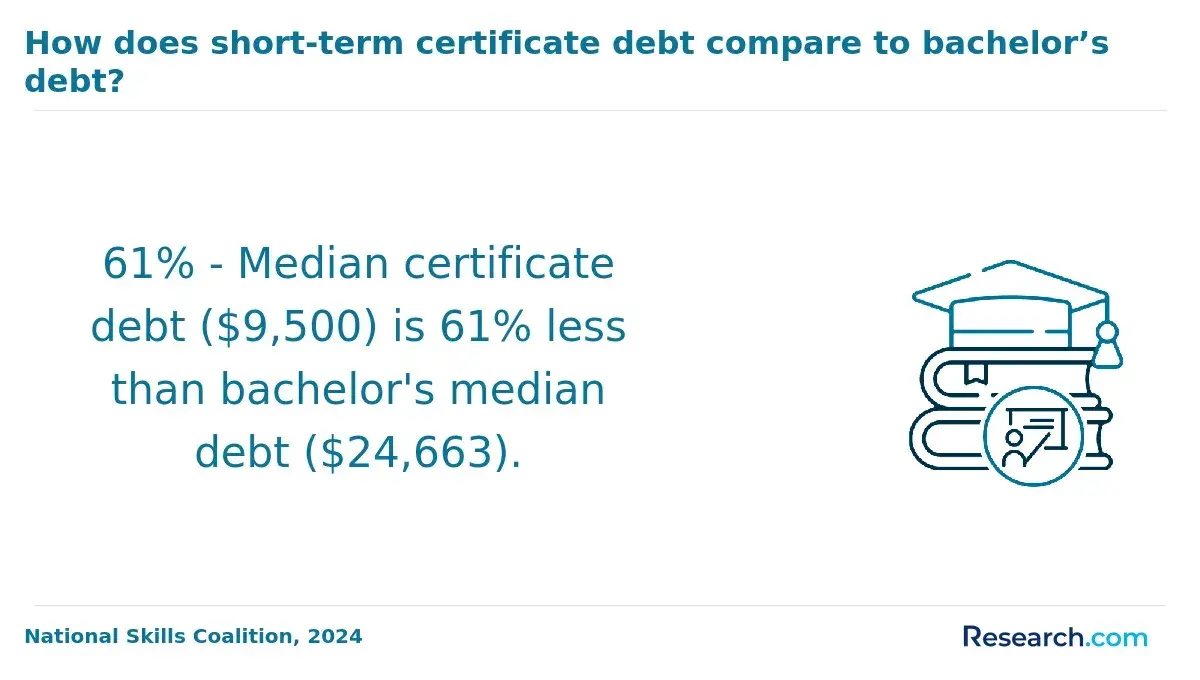
College Board's 2024 Trends in College Pricing reported average published tuition and fees of $11,610 for in-state students at public four-year institutions for 2024-25. That figure is not specific to planning graduate programs, but it shows why cost discipline matters: even before housing, books, fees, and lost wages, program price can materially affect ROI.
Use this process to compare the financial value of urban planning tracks. It is especially useful when deciding between a lower-cost general planning program and a higher-cost program with a specialized reputation:
- Identify the exact job titles each specialization supports in your preferred region or remote market.
- Compare the program's total cost, including tuition, fees, relocation, commuting, software, field studios, and unpaid internship expectations.
- Ask for placement outcomes by concentration, employer type, and geography rather than relying on broad program reputation.
- Estimate the time required to reach professional-level roles, including internships, graduate study, AICP eligibility, or technical certification.
- Compare net value, not headline pay, by accounting for cost of living, benefits, loan payments, and career flexibility.
This same cost-versus-career-outcome logic applies across professional degrees; for example, students evaluating online executive MBA cost also need to compare tuition against advancement goals instead of assuming that a credential automatically creates a return.
Red flags include programs that advertise broad career success without specialization-level outcomes, weak internship pipelines, limited studio work, outdated GIS or data courses, or very high tuition for a track that mainly leads to lower-budget public or nonprofit roles.
A lower-cost program with strong local employer relationships may outperform a more expensive brand-name option for some planning careers.
Do Certifications, Licensure, or Graduate Study Change Urban Planning Specialization Earnings?
Certifications, licensure, and graduate study can change earning potential, but the effect depends on the role. Urban planning is not licensed in the same universal way as medicine, law, or many clinical professions, so credentials often work as credibility signals rather than legal requirements.
AICP certification, offered through the American Planning Association's professional certification structure, is one of the best-known planning credentials. It can support advancement for public-sector planners, consultants, and managers, but eligibility depends on education and professional experience, and employers vary in how much they reward it.
Unlike clinical fields where program selection is closely tied to licensure preparation, such as SLP master's programs online, urban planning students usually have more flexibility to choose programs based on concentration strength, internship access, accreditation, cost, and local employer networks.
Other credentials can strengthen specific tracks. A GIS-focused student might consider geospatial certifications or software credentials, an environmental planner may benefit from NEPA training or floodplain-related credentials, and a project-focused planner may eventually add project management training.
Students should use credentials strategically rather than collecting them randomly. The most useful credential is the one repeatedly requested in job postings for the roles, industries, and locations the student wants.
- Choose AICP-oriented preparation if your goal is professional planning leadership in government, consulting, or comprehensive planning.
- Choose GIS or data credentials if your target roles involve spatial analysis, dashboards, automation, or analytics-heavy consulting.
- Choose environmental, resilience, or floodplain-related training if you want climate adaptation, hazard mitigation, or environmental review roles.
- Choose project management training if you want to lead capital programs, consultant teams, implementation plans, or cross-agency initiatives.
How Should Students Choose the Best Urban Planning Degree Specialization for Their Career Goals?
The best urban planning specialization is the one that connects your strengths, target employers, preferred lifestyle, and financial limits. A high-earning track is only a good choice if you can perform the work well and if the program gives you access to the roles that make the track valuable.
Start with career direction, then choose the specialization. Transportation and GIS tracks fit students who enjoy systems, data, and technical tools. Housing and community development fit students motivated by affordability, equity, and program design.
Real estate and land use fit students interested in markets, zoning, negotiation, and growth. Environmental and resilience planning fit students drawn to climate risk, regulation, and infrastructure adaptation.
Students who are unsure whether they want planning leadership or broader business management may also compare adjacent pathways, including easy MBA programs to get into, but that comparison should be based on career target rather than admissions convenience.
Use these questions when comparing schools and concentrations. They can help you avoid overpaying for a track that does not match your goals:
- Which employers hired recent students from this exact concentration, and in what job titles?
- Does the curriculum include current tools such as GIS, data visualization, scenario modeling, environmental review, finance, or transportation analysis?
- Are studios and capstones connected to real clients, agencies, consulting firms, or community partners?
- Can I complete internships in the industry and location where I want to work?
- Does the program publish transparent cost, aid, assistantship, and placement information?
- Will the specialization still be valuable if I change sectors from public agency to consulting, nonprofit, development, or infrastructure work?
A balanced decision often beats a purely salary-driven decision. If two tracks have similar earning potential, choose the one where you can build stronger evidence of skill, develop a better network, and stay motivated long enough to advance.
Other Things You Should Know About Urban Planning
Transportation and infrastructure planning, GIS/geospatial analytics, real estate and land use, and climate resilience often show the strongest earning signals. Actual pay depends on employer type, location, degree level, technical skills, and experience.
Not always, but a master's degree is commonly preferred for professional planner roles and can improve access to advancement paths. Bachelor's graduates can still compete well when they have strong GIS, data, zoning, environmental, or internship experience.
Yes, GIS is one of the most portable planning skill areas because it applies to transportation, housing, climate, utilities, real estate, and public-sector analysis. It is strongest when paired with planning judgment and clear communication skills.
Not automatically. A higher-paying track may not be the best ROI if you dislike the work, lack the required quantitative or technical skills, or plan to work in a region with limited demand for that specialization.
Top Trending Urban Planning Rankings
References
- Spatial Planning Explained: Meaning, Jobs & Careers https://www.gogeogo.com/en/blog/spatial-plannung-regional-planning
- Private Sector Roles and Participation https://inclusiveinfra.gihub.org/action-areas/private-sector-roles-and-participation/
- Urban Planning Salary and Career Outlook https://teach.com/online-ed/government-degrees/online-masters-urban-planning/salary-and-career-outlook/
- Careers in Urban Planning: Opportunities to Enter, Advance In, and Navigate the Field | ProFellow https://www.profellow.com/fellowships/careers-in-urban-planning-opportunities-to-enter-advance-in-and-navigate-the-field/
- Top Urban Planning Certifications in USA [2025] https://www.novatr.com/blog/top-urban-planning-certifications-in-usa
- All Things Urban https://www.allthingsurban.net/blog/Finding-Your-Niche-in-the-Urbanism-Job-Market