# 1 position
Best Pharmacy Technician Training Programs & Trade Schools in Charlotte for 2027
Audited and Verified:
Our Editorial and Data Verification Process
Research.com uses government datasets, official education statistics and primary institutional information to support its career and degree guides. Our review process checks factual accuracy, occupational definitions, source dates and the requirements associated with the credentials discussed.
How This Article Was Fact-Checked
Our editorial team verifies salary estimates, employment projections, education requirements and program information against original data providers and official organizations. Salary figures are checked against the relevant occupational definitions and reporting periods. Information about licensure, accreditation and required in-person training is reviewed separately.
Fact-checked and verified on:

Co-Founder and Chief Data Scientist

Reviewed by Karolina Broda
Fact-Checker and Data Verification
Choosing pharmacy technician training in Charlotte means comparing more than tuition: the right program must fit your schedule, prepare you for pharmacy work, and support North Carolina registration. The U.S. Bureau of Labor Statistics projects 6.4% national employment growth for pharmacy technicians from 2025 to 2035. For career changers and first-time students, this guide explains credentials, hands-on training, costs, and career prospects. It also accompanies the Best Pharmacy Technician Trade Schools in Charlotte for 2027 ranking, created by the Research.com team of data scientists to help students identify programs worth considering.
Key findings about pharmacy technician degrees in Charlotte
- North Carolina pharmacy technicians must register with the North Carolina Board of Pharmacy; completing a school program and earning a national certification are separate steps. Check a program's registration and certification preparation before paying.
- The national median pharmacy technician wage was $45,750 in May 2025, according to the U.S. Bureau of Labor Statistics. That is a career-wide benchmark, not an expected Charlotte starting salary.
- For 2025-2035, the U.S. Bureau of Labor Statistics projects 6.4% national employment growth. Compare classroom programs with employer training, especially if paid work experience would reduce your borrowing or time away from work.
Table of Contents
- Best Pharmacy Technician Training Programs & Trade Schools in Charlotte for 2027
- What can I expect from a pharmacy technician trade school program in Charlotte?
- Where can I work with a pharmacy technician trade school training in Charlotte?
What can I expect from a pharmacy technician trade school program in Charlotte?
Expect instruction in medication names, dosage calculations, prescription processing, inventory, insurance claims, and patient privacy, followed by practice under a pharmacist's supervision. A certificate or diploma program may use simulation labs and an externship; an employer-sponsored route may teach the same workplace tasks through supervised employment. Ask exactly which tasks you will practice and whether an externship is guaranteed, arranged by the school, or left to the student.
Central Piedmont Community College is one Charlotte provider to investigate, but compare its current pharmacy technician offering, schedule, and credential with other available training routes before applying. A listing of best online trades school options can broaden a search, but distance coursework is not a substitute for confirming practical training and North Carolina registration requirements.
Where can I work with a pharmacy technician trade school training in Charlotte?
Retail pharmacies process prescriptions and customer transactions; hospital and health-system pharmacies may add medication distribution, sterile preparation, and round-the-clock shifts. Charlotte-area applicants can also investigate outpatient clinics, specialty pharmacies, and mail-order operations. Employers such as Atrium Health and Novant Health make hospital practice a relevant local option, but their openings and hiring requirements change.
Choose training around the setting you want. For a hospital goal, ask whether students practice medication safety, hospital workflows, and sterile-compounding concepts - and whether graduates actually qualify for the employer's entry-level openings. A retail-focused course and a hospital externship are not interchangeable simply because both award a pharmacy technician certificate.
A current, comparable Charlotte-specific wage should be your starting point for a local budget; do not substitute a national figure for a local offer. The U.S. Bureau of Labor Statistics reports a $45,750 national median annual wage for pharmacy technicians in May 2025. That median covers experienced workers as well as newer technicians and should not be treated as a graduate's starting wage.
Compare actual Charlotte job postings by setting, shift, certification preference, and experience requirement. Hospital shifts or specialized duties may change an offer, while training costs and unpaid externship time change what that offer is worth to you. Request a written pay range from an employer rather than relying on a school's advertised earnings claim.
Length depends on the credential and schedule: short occupational certificates can take less time than longer diploma or associate-degree pathways, while part-time study or a required externship can extend the calendar. Do not assume a common title implies a common number of classroom, lab, or worksite hours. Request each program's published clock or credit hours, weekly schedule, externship hours, and expected completion date.
An associate-degree route may suit someone who wants a broader college credential, but it is not automatically necessary for pharmacy technician entry. If speed matters, compare a short certificate or paid employer training with fastest online associates degree options only after checking that the pharmacy-specific coursework and required hands-on experience fit your goal.
Online delivery can make terminology, calculations, and pharmacy-law coursework easier to schedule around a job. Campus instruction offers direct access to equipment and supervised practice; hybrid programs combine remote lessons with in-person labs or externships. None of these formats, by itself, establishes certification eligibility or readiness to work in a pharmacy.
For an online option, obtain written answers about where Charlotte-area students complete practical work, who secures the site, and whether travel or daytime attendance is required. Adults comparing flexible study options, including top online degrees for seniors, should apply the same accessibility questions here - but assess a pharmacy technician credential on its occupational training, not its online convenience alone.
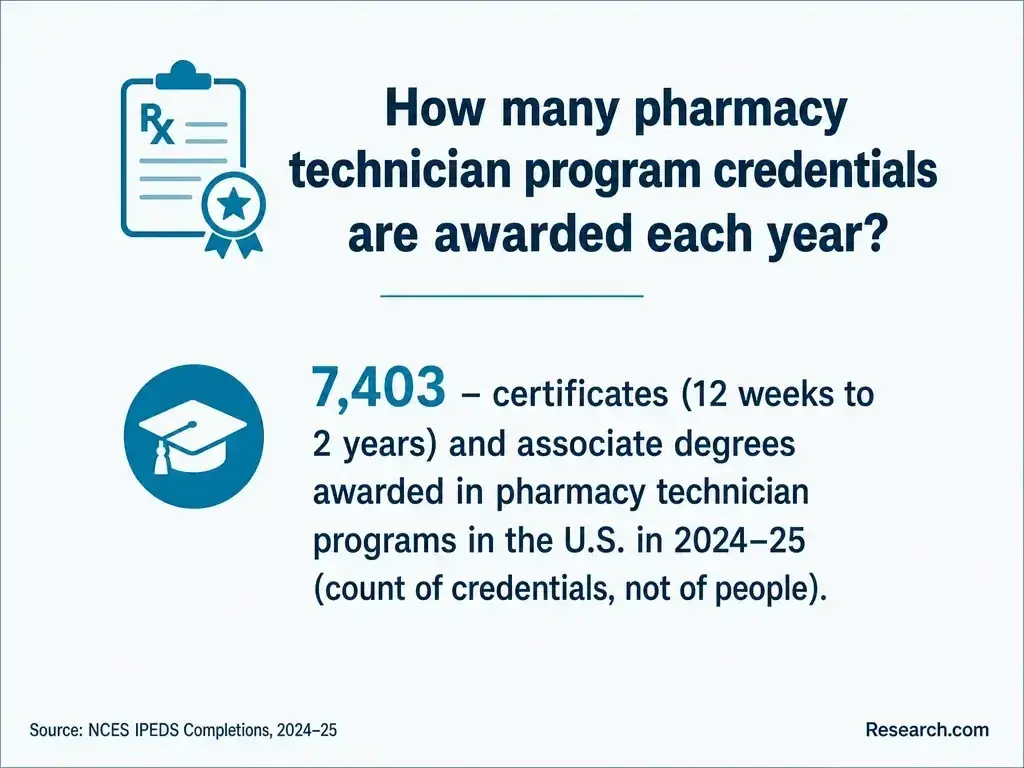
There is no reliable single Charlotte average that covers college programs, private career training, and paid employer routes on the same basis. Ask each provider for a written total cost to become job-ready, not just its advertised tuition. The comparison below identifies charges and offsets that can change which route is affordable.
| Cost or offset | What to verify |
| School charges | Tuition, mandatory fees, books, software, and any lab or materials charges |
| Career-entry expenses | Uniforms, background checks if required, certification exam and registration fees, and transport to class or an externship |
| Income and assistance | Lost wages during training, paid employer training, grants, scholarships, and any aid for which the specific program qualifies |
Federal aid eligibility varies by institution and program; a school's accreditation does not make every short course aid-eligible. For an associate pathway, associate degree online cost comparisons can provide context, but use the Charlotte program's actual bill and practical-training expenses for your decision. Ask Central Piedmont Community College or any provider you consider about current aid eligibility and workforce funding rather than assuming either applies.
A training provider may award a certificate, diploma, or associate degree; an employer may instead document completed workplace training. These are educational or training credentials, not the same thing as registration with the North Carolina Board of Pharmacy or voluntary national certification. The Pharmacy Technician Certification Board's Certified Pharmacy Technician credential, for example, requires meeting its eligibility rules and passing its exam; graduation alone does not award it.
Check the exact award on the current program page and ask whether its curriculum meets the certification route you intend to use. If comparing nonprofit online providers through top accredited non profit colleges, verify the pharmacy technician program itself, its hands-on arrangements, and its fit with North Carolina rules. Institutional accreditation, programmatic recognition, state school authorization, certification, and Board registration answer different questions.
Requirements vary by provider and training site. Check the published minimum education, age, application materials, placement requirements, and any background screening before paying a deposit. An externship site or employer may have additional onboarding conditions that do not apply to classroom admission. Ask whether a past conviction could affect placement or North Carolina Board registration before investing in a program.
Employer-sponsored training is a realistic alternative for applicants who can secure a trainee position and learn on the job. Compare its paid hours and supervision with a school's lab access and placement support; admission to a course does not guarantee an externship, a job, or Board registration.
Good training connects drug terminology and dosage calculations to actual prescription workflows: entering orders accurately, checking labels and inventory, handling insurance rejections, protecting patient information, and recognizing when a question must go to a pharmacist. Depending on the intended workplace, students may also need exposure to hospital distribution systems or sterile-compounding procedures.
Ask for a skills checklist and the proportion of instruction spent practicing rather than watching demonstrations. Technology can speed inventory and prescription processing, but accuracy, escalation, and communication remain essential when an automated system flags a problem. For hospital-bound students, verify whether the practical component covers the setting they hope to enter.
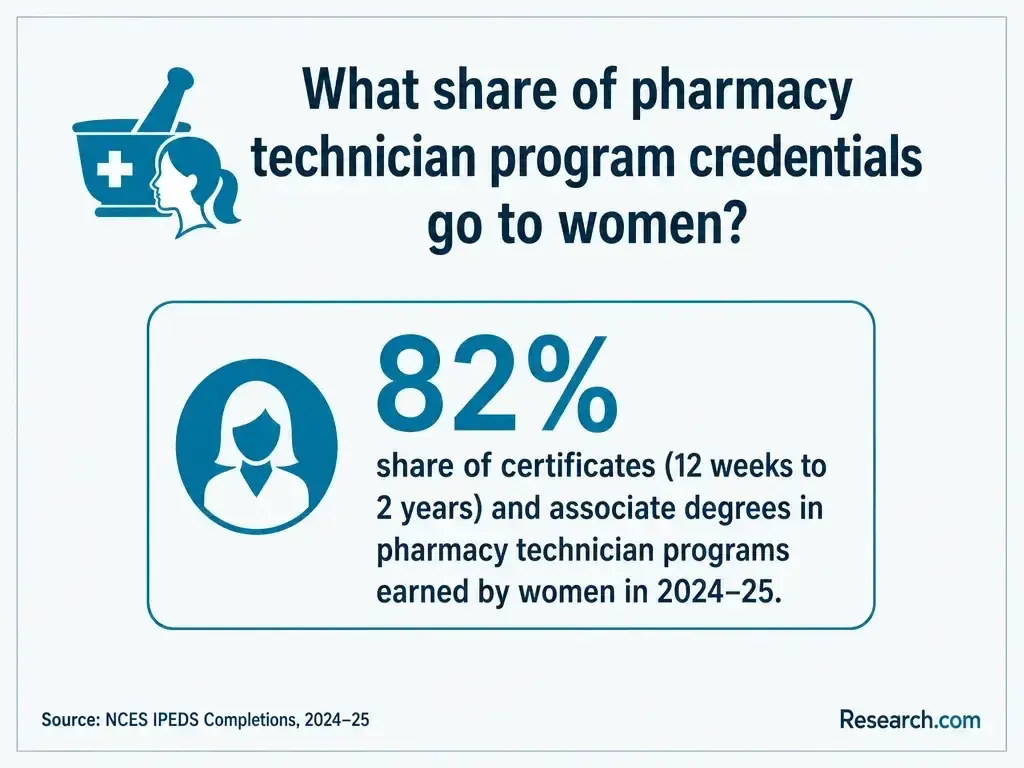
North Carolina requires pharmacy technicians to register with the North Carolina Board of Pharmacy. That state requirement is distinct from earning a school credential or a national certification; check the Board's current application instructions and timing before beginning technician duties. Do not assume that a program submits the registration for you.
National certification can expand options where an employer prefers or requires it for a role. The Pharmacy Technician Certification Board offers an education-or-work-experience eligibility pathway followed by an examination, but applicants must verify its current conditions directly. Ask each program which certification exam it prepares students for and whether its training satisfies that organization's eligibility rules. Neither institutional accreditation nor a course completion certificate substitutes for Board registration.
The best fit is the route that gets you qualified for your intended pharmacy setting without unnecessary cost or delay. A campus certificate can suit someone who needs structured lab practice; an employer trainee position may suit someone who needs wages immediately. A longer credential makes more sense only if its additional training advances a specific goal.
Use the ranking as a shortlist, then put these questions to each provider before enrolling:
- What credential, classroom and lab hours, and supervised work experience will I complete?
- Who arranges a Charlotte-area externship, and what happens if a site is unavailable?
- How does the training support North Carolina Board registration and my intended certification pathway?
- What is the full cost after fees, exam expenses, travel, aid, and time away from paid work?
- What completion and job-placement results can you document for this specific program and period?
Watch for a program that advertises "certification" without naming the certifying body, treats online lessons as a replacement for practical skills, or quotes tuition without required extras. To assess return on investment, consider completion probability, aid and debt, forgone earnings, plausible entry pay versus what you earn now, and how long you expect to work in the occupation - not institution type or a headline salary alone.
Entry-level technicians can build experience in retail prescription processing or health-system medication distribution. With employer training and demonstrated competence, some move toward specialty pharmacy, inventory coordination, sterile-compounding work, or lead technician duties. Requirements for these roles vary by employer; an entry certificate does not automatically qualify someone for every specialization.
If your goal is a hospital or specialty role, look at current local postings before choosing an externship. That shows whether employers want national certification, particular technical experience, or shift availability, and helps you choose training that supports a credible next step rather than an appealing job title alone.
The U.S. Bureau of Labor Statistics projects 6.4% national growth from 2025 to 2035 for pharmacy technicians. This indicates continuing demand nationally, not a forecast of Charlotte openings or a promise of employment after training.
Charlotte's mix of community pharmacies and major health systems gives applicants different workplaces to investigate. Check current local vacancies for entry requirements and shift patterns before committing to a program: plentiful postings that require experience or certification may call for stronger work-based training than a classroom-only course provides.
Best Pharmacy Technician Training Programs & Trade Schools in Charlotte for 2027
Education is a substantial investment, so the Research.com team designed this ranking to help readers compare pharmacy technician programs with their real local alternatives. Only programs with completions reported to IPEDS are eligible. That makes the ranking useful for comparing included schools, but it does not mean an unlisted employer training route or other provider is unavailable or unsuitable.
Best-program rankings consider student outcomes; earnings and return on investment; costs and debt; and quality and recognition. Occupation-relevant programmatic accreditation or industry recognition accounts for 20% of the score, institutional accreditation for 10%, and student support for 10%. The remaining 60% covers outcomes, earnings, and costs, with weights distributed using an entropy-based method that gives more weight to indicators that differ more across programs. Most-affordable rankings instead score tuition, attendance cost, debt, and federal loan default rates using entropy-based weights; accreditation and other quality measures are not part of that score.
The team drew on the following sources to check educational, financial, and recognition indicators. Some professional organizations cover other trades rather than pharmacy technology specifically; their inclusion in the broader ranking methodology should not be mistaken for pharmacy technician program approval.
- IPEDS database - program completions and institutional reporting.
- National Center for Education Statistics - federal education data and definitions.
- College Scorecard database - available institutional cost, debt, and earnings measures.
- Peterson's database - supplementary school and program information.
- Commission on Accreditation of Allied Health Education Programs - allied-health program recognition where applicable.
- Accrediting Bureau of Health Education Schools - relevant institutional or health-education accreditation records.
- Commission on Dental Accreditation - dental-program recognition in the broader trade-school methodology.
- Dental Assisting National Board - dental-assisting credential information in the broader methodology.
- National Center for Construction Education and Research - construction credential recognition in the broader methodology.
- Apprenticeship.gov Partner Finder - potential work-based training alternatives.
Using multiple sources helps readers investigate cost, outcomes, and recognition rather than relying on a school's marketing alone. Learn more about how Research.com creates its rankings. Before enrolling, confirm current program details directly with the provider and verify North Carolina's occupational requirements separately.
# 2 position
Central Piedmont Community College - Pharmacy Technician/Assistant.
certificate or diplomaFrequently asked questions about pharmacy technician programs in Charlotte
Can I become a pharmacy technician without trade school?
Potentially. Employer-sponsored, supervised training can be an alternative. You still need to meet North Carolina Board of Pharmacy registration requirements and any employer or certification requirements that apply to your goal.
Is national certification required in North Carolina?
Do not confuse national certification with mandatory state registration. Check current Board rules and the requirements of jobs you want; an employer may prefer or require certification for a particular position.
Can I complete pharmacy technician training entirely online?
Some coursework can be remote, but verify how the program teaches practical skills and arranges any required in-person experience. Online delivery alone does not establish certification eligibility or job readiness.
Is a certificate or an associate degree the better choice?
A shorter certificate may be enough for an entry goal; an associate degree involves a broader, longer course of study. Compare the exact curriculum, practical experience, total cost, and requirements in local job postings before choosing.
Does a school ranking guarantee that a program is right for me?
No. A ranking can narrow your search, but confirm current costs, schedule, externship access, credential, certification alignment, and North Carolina registration steps with the provider and relevant organizations.
- U.S. Bureau of Labor Statistics - Pharmacy Technicians
Used to verify salary, employment outlook, and typical education requirements.
https://www.bls.gov/ooh/healthcare/pharmacy-technicians.htm - NCES College Navigator (IPEDS)
Used to verify programs offered and institutional accreditation.
https://nces.ed.gov/collegenavigator/ - NHA - ExCPT Pharmacy Technician
Professional certification reference for graduates of this occupation.
https://www.nhanow.com/certifications/pharmacy-technician - Central Piedmont Community College - official website
Official school website (programs, tuition, admissions).
https://www.cpcc.edu/