Most Affordable Cybersecurity Associate Degree Programs in New York for 2027
Audited and Verified:
Our Editorial and Data Verification Process
Research.com uses government datasets, official education statistics and primary institutional information to support its career and degree guides. Our review process checks factual accuracy, occupational definitions, source dates and the requirements associated with the credentials discussed.
How This Article Was Fact-Checked
Our editorial team verifies salary estimates, employment projections, education requirements and program information against original data providers and official organizations. Salary figures are checked against the relevant occupational definitions and reporting periods. Information about licensure, accreditation and required in-person training is reviewed separately.
Fact-checked and verified on:

Co-Founder and Chief Data Scientist

Reviewed by Karolina Broda
Fact-Checker and Data Verification
Choosing an affordable cybersecurity associate degree in New York means looking beyond advertised tuition: fees, commuting, hands-on access, and the degree's career fit can change the value of a program. The U.S. Bureau of Labor Statistics projects 21.0% national growth for information security analysts from 2025 to 2035, but that experienced occupation is not a guaranteed first job. This guide explains costs, degree pathways, and realistic entry routes. It also features the Research.com team of data scientists' Most Affordable Cybersecurity Associate Degree Programs in New York for 2027 ranking to help students make an informed choice about programs worth considering.
Key findings about associate cybersecurity degrees in New York
- Compare the total price for your residency status, not a headline tuition figure: New York community-college charges can depend on county residency documentation, and fees, software, and travel add to the bill.
- An AS generally deserves closer attention if you want flexible academic progression; an AAS generally emphasizes career-focused coursework. Verify the actual course sequence and transfer agreements rather than relying on the degree letters alone.
- The national information security analyst median was $129,180 in May 2025, according to the U.S. Bureau of Labor Statistics. It describes workers across experience levels - not expected pay immediately after an associate degree.
Table of Contents
- Most Affordable Cybersecurity Associate Degree Programs in New York for 2027
- What can I expect from an associate cybersecurity degree in New York?
- Where can I work with an associate cybersecurity degree in New York?
What can I expect from an associate cybersecurity degree in New York?
Expect a combination of general education, computing fundamentals, and security-focused practice. Programs may teach networking, operating systems, scripting, access control, and incident response through virtual machines, network simulations, or supervised labs. Ask to see the course sequence: a program with substantial troubleshooting and documentation practice may serve an entry-level applicant better than one that lists security topics but offers little applied work.
The degree awarded matters because similarly named programs can serve different goals. These distinctions are starting points, not guarantees about any particular college's curriculum.
| Associate degree | Typical emphasis | Best fit to investigate |
| AS | Computing, mathematics, and general education alongside security courses | Students who want a stronger foundation for later academic study while retaining entry-level IT options |
| AAS | Applied technical courses and workplace-oriented practice | Students prioritizing near-term IT employment, provided the program has substantial labs |
| AA or another associate degree | Varies considerably by institution | Students whose specific course plan - not merely its title - matches their technical and academic goals |
Cybersecurity work often builds on IT support or network administration experience. A short course may get someone with existing IT skills to a specific competency faster, but it does not replace an associate degree's broader coursework. Readers comparing shorter routes can review best 6-month certificate programs that pay well online while keeping the different educational outcomes in mind.
Where can I work with an associate cybersecurity degree in New York?
Potential workplaces include healthcare systems protecting patient information, financial-services firms managing access and fraud risks, public agencies, schools, and IT service providers supporting multiple clients. New York City's large employer base may offer more specialized teams, while an applicant outside the metro area may find broader IT roles that combine support, networking, and security duties. Compare actual vacancies within commuting distance before choosing a campus or specialization.
An associate degree can support applications for help-desk, desktop-support, junior network-support, or security-operations support work. Employers may still require demonstrated technical skills, relevant experience, or additional screening. A program's internship connections and local employer relationships are therefore worth testing with specific questions about recent placements, not just promotional claims.
There is no single salary for cybersecurity associate degree graduates. The U.S. Bureau of Labor Statistics reports a $129,180 national median annual wage for information security analysts in May 2025. That occupation commonly calls for experience and often additional education; its median is not an entry-level offer or a New York associate-degree outcome. Use it to understand a possible longer-term occupation, not to calculate immediate loan affordability.
For a useful personal estimate, collect current local postings for roles you could plausibly enter, note their stated pay ranges and experience requirements, and compare them with your present earnings. New York City offers a different employment and commuting market from many upstate areas, so a statewide or national wage figure cannot substitute for the locations where you would actually work.
A full-time associate degree is commonly planned around two academic years and roughly 60 semester credits, but each college sets its own required credits and course sequence. Part-time study can take longer, especially when a prerequisite networking course is offered only once per year or a required lab has limited sections. Ask for a term-by-term plan that includes general education and any internship or capstone - not just the number of security courses.
Faster completion can reduce time away from work but may make it harder to hold a job or absorb demanding lab courses. Conversely, a manageable part-time schedule may improve your chance of finishing, even if it raises living and commuting costs over a longer period. Request an evaluation of prior college credit before estimating either timeline.
Lectures, readings, coding exercises, and some security labs can be delivered online using virtual environments. Campus study may provide easier access to physical network equipment, scheduled lab help, and nearby employer events. Neither format is automatically more practical: ask whether remote students can use the same lab software, receive live troubleshooting help, and complete any required internship near home.
A hybrid program can reduce commuting without eliminating campus visits. Check the published schedule for exams, labs, orientation, and work-based learning before treating a program as fully remote. If you are comparing providers beyond nearby campuses, accredited non profit online universities is a starting point for provider research - not proof that a particular associate degree has the labs, transfer terms, or support you need. Institutional accreditation, course delivery, and employer recognition are separate questions.
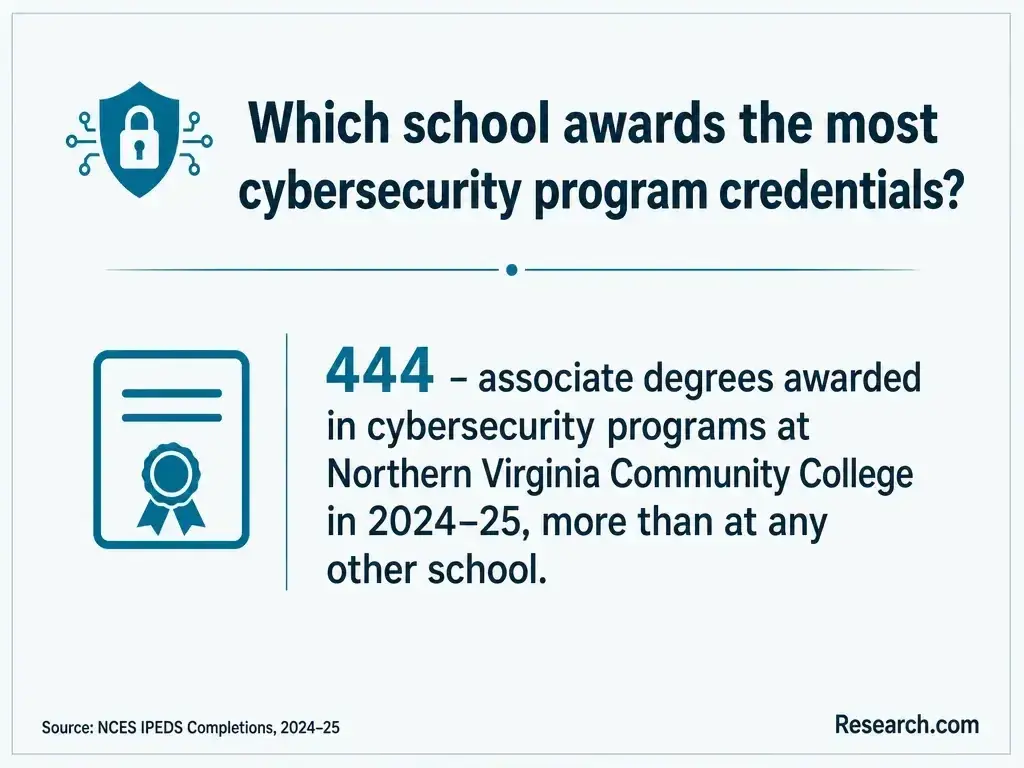
A reliable single average would obscure the price a New York student actually pays. Community-college tuition can differ by residency category, and the total can change with course load, delivery format, and time to completion. For instance, compare the current published costs at CUNY Queensborough Community College, Suffolk County Community College, Rockland Community College, CUNY Bronx Community College, and Hudson Valley Community College only after confirming which residency rate applies to you. Do not treat those institutions as interchangeable cybersecurity options without checking their current degree offerings.
Build a completion-cost estimate for each program, not just a first-semester tuition comparison. The categories below are separate because a low tuition rate can be offset by substantial non-tuition expense:
- College charges: tuition at your documented residency rate, mandatory fees, and any course or lab charges.
- Study expenses: textbooks, required software, a suitable computer, internet access, and any required equipment.
- Attendance expenses: transportation for classes or internships, living costs, and earnings you may forgo while studying.
- Next-step expenses: optional certification examinations or employer-required screening, if they fit your intended role.
Subtract confirmed grants, scholarships, and employer assistance only after checking eligibility and renewal rules. Ask each college for a program-specific estimate covering the entire expected enrollment period; published annual cost of attendance is useful for aid planning but may not equal your personal out-of-pocket bill.
Eligible students can explore federal Pell Grants, federal student loans, and institutional aid through the Free Application for Federal Student Aid (FAFSA), according to Federal Student Aid. New York residents should also check current Tuition Assistance Program rules through the New York State Higher Education Services Corporation. Eligibility depends on factors including the student, institution, enrollment, and applicable program rules; neither admission nor a low ranking price guarantees an award.
Before borrowing, ask the financial-aid office for a written estimate for your actual course load and residency status. Check whether aid continues during part-time terms, whether any employer tuition benefit pays upfront or reimburses later, and whether an internship affects paid work hours. Borrowing decisions should reflect a realistic entry-level job scenario rather than the information security analyst median.
Typical admissions steps include an application and proof of secondary-school completion or an accepted equivalent; colleges may also use prior coursework or placement information to determine a starting math or English course. A cybersecurity associate degree need not require prior security employment, but networking and basic computer fluency can make the technical sequence easier. Confirm the specific college's admissions, placement, and prerequisite policies rather than assuming they are statewide.
Verify the institution's accreditation through the U.S. Department of Education's recognized-accreditation information, and check the college's authorization and current program listing. Neither accreditation nor admission establishes that a course will transfer or qualify you for a professional certification. Search results about what is the easiest phd address a different educational decision; for this one, the relevant question is whether you can enter and complete the associate degree's technical sequence.
Common coursework includes computer networking, operating systems, introductory programming or scripting, database or cloud fundamentals, security principles, and general education in writing and mathematics. Applied classes may ask students to configure permissions, inspect logs, document vulnerabilities, and explain a response to a simulated incident. The precise mix matters: a student targeting network support needs sound networking practice, while a student drawn to security operations should look for log analysis and incident-documentation exercises.
Request sample lab assignments and a full course map. Determine whether security courses require earlier IT classes, whether an internship or capstone is required or optional, and whether the program supplies access to lab environments outside scheduled class hours. A similarly titled degree with fewer practical opportunities may require more independent skill-building before an employer interview.
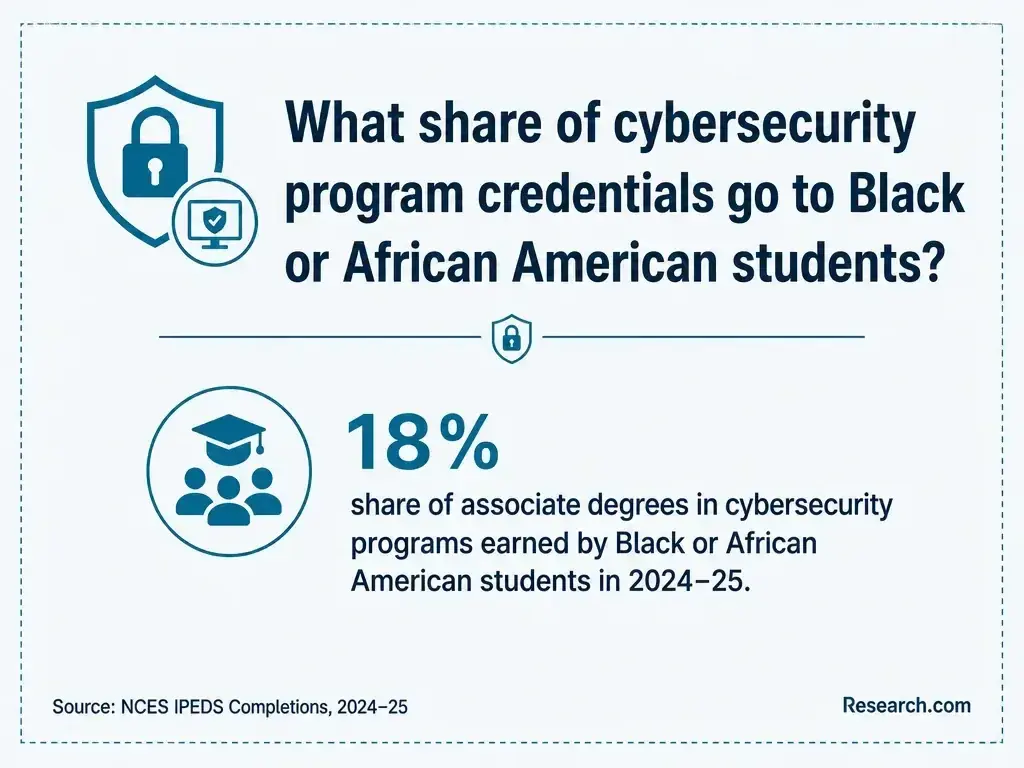
At the associate level, a "specialization" may be a small elective cluster rather than a formal concentration. Depending on the college, relevant emphases can include network defense, systems administration, cloud security fundamentals, digital forensics, or security operations. Check the actual electives and their availability: a concentration is less useful if its key course is rarely offered or requires credits outside the degree plan.
Choose depth only after securing broad IT foundations. An elective that teaches students to investigate logs or administer a network may be more useful for an initial support role than a narrow topic with little hands-on work. Resources about doctorate degrees without dissertation concern a different level of study; associate-degree applicants should instead compare the labs and courses they can complete within their intended timeline.
Start with the job you could realistically seek after graduation and the amount you can afford to spend. An affordability ranking is a shortlist tool, not a substitute for checking curriculum, completion feasibility, and local opportunities. These checks turn advertised features into comparable evidence:
- Confirm the exact degree awarded, required credits, prerequisite sequence, and whether necessary labs run in the terms you can attend.
- Obtain a written total-cost estimate using your documented residency rate, expected course load, aid, software needs, and travel.
- Ask for examples of lab work, internship access, career support, and recent entry-level employer connections.
- If future academic progression matters, request a written evaluation of how specific courses transfer; an AS or AAS label alone does not settle that question.
- Verify institutional accreditation separately from any industry recognition or optional certification preparation, and ask what graduates must do beyond finishing the degree.
A common mistake is selecting the cheapest listed tuition while overlooking an extra semester, a long commute, or limited lab access. Another is assuming the information security analyst wage represents starting pay. The better investment is the program you can complete at a manageable net cost while gaining skills relevant to attainable jobs.
IT support, junior network support, and security-operations support are plausible starting points, depending on the graduate's skills and local hiring requirements. From there, documented troubleshooting experience and stronger systems knowledge can support applications for more specialized security duties. "Information security analyst" is a useful longer-term career target, but the U.S. Bureau of Labor Statistics describes an occupation whose employers commonly expect experience and often additional education.
Professional certifications may help demonstrate particular skills, but an associate degree does not automatically award one, and certification is distinct from occupational licensure. There is no general New York occupational license required simply to work in cybersecurity; individual employers may impose screening or role-specific requirements. For someone already employed in IT, targeted online certificates that pay well may address a narrow skill gap more quickly, while an associate degree offers a broader, credit-bearing foundation. Compare the two against the job postings you intend to pursue.
National demand is strong for experienced security talent: the U.S. Bureau of Labor Statistics projects 21.0% growth in information security analyst employment from 2025 to 2035. That projection does not measure vacancies reserved for new associate degree graduates in New York. It supports studying the field, but not assuming an immediate analyst position.
Test the local market before enrolling. Search current postings in the area where you can work, separating entry-level support jobs from analyst roles that specify years of experience. Note recurring requirements for networking, cloud administration, scripting, and communication, then compare them with each college's required courses and labs. In a smaller upstate market, broad IT capability may open more initial options than a narrowly defined security title; in the New York City area, weigh a larger employer pool against commuting time and costs.
Most Affordable Cybersecurity Associate Degree Programs in New York for 2027
Investing in an associate degree is an important decision. Research.com created its affordability ranking to help readers compare eligible programs against relevant local options, using education and cost data while checking the credibility and accuracy of the information. Only programs with completions reported to the Integrated Postsecondary Education Data System (IPEDS) are included; absence from the ranking does not mean a program is unavailable or poor quality.
Most affordable rankings score costs and debt only: tuition, cost of attendance, median student debt, and federal loan default rate. Indicator weights are assigned through an entropy-based method, which gives more weight to measures that differ more across programs. Accreditation and other quality measures are not part of this affordability score. Research.com's separate best-program rankings consider student outcomes, earnings, costs, support, accreditation, and occupation-relevant recognition; readers should not mistake those broader rankings for this one.
The ranking methodology draws on the following data sources. Some occupation-specific sources support Research.com's broader ranking framework rather than a cybersecurity-specific accreditation or certification requirement:
- IPEDS database - program completions and institutional reporting.
- National Center for Education Statistics - federal education data and definitions.
- College Scorecard database - institution-level cost, debt, and outcome measures where available.
- Peterson's database - supplemental institutional information.
- Commission on Accreditation of Allied Health Education Programs (CAAHEP) - occupation-specific accreditation information in the broader framework, not cybersecurity program approval.
- Accrediting Bureau of Health Education Schools (ABHES) - health-education accreditation information in the broader framework.
- Commission on Dental Accreditation (CODA) - dental-program accreditation information in the broader framework.
- Dental Assisting National Board (DANB) - dental-assisting recognition information in the broader framework.
- National Center for Construction Education and Research (NCCER) - construction-industry recognition information in the broader framework.
- Apprenticeship.gov Partner Finder - apprenticeship-provider information in the broader framework.
Use the ranking to narrow a shortlist, then verify each college's current charges, course delivery, and outcomes directly; a low cost score cannot establish whether its cybersecurity labs or career support meet your needs. Research.com explains its approach further on its methodology page.






# 7 position
Genesee Community College
associateComputer and Information Systems Security/Auditing/Information Assurance
Delivery mode: Online
86.28
/ 100
Final score
- School graduation rate
- 30%
- Students receiving Pell Grants
- 25%
- In-state tuition & fees (per year)
- $5,900
- Out-of-state tuition & fees (per year)
- $6,500
- School website
- genesee.edu
Accreditation
Institutional accreditation from Middle States Commission on Higher Education.
Genesee Community College earned a Research.com Affordability Score of 86.28/100, with $6,500 median student debt among the verified supporting factors.







# 15 position
# 16 position

# 17 position
Touro University
associateComputer and Information Systems Security/Auditing/Information Assurance
Delivery mode: On Campus (May Include Online Courses)
56.98
/ 100
Final score
- School graduation rate
- 70%
- Students receiving Pell Grants
- 33%
- In-state tuition & fees (per year)
- $23,100
- Out-of-state tuition & fees (per year)
- $23,100
- School website
- touro.edu
Accreditation
Institutional accreditation from Middle States Commission on Higher Education.
Touro University earned a Research.com Affordability Score of 56.98/100, with 7% federal loan default rate among the verified supporting factors.

Frequently asked questions about cybersecurity programs in New York
Which associate degree is better for cybersecurity, an AS or an AAS?
An AS is often the stronger option to investigate for academic flexibility; an AAS commonly emphasizes applied career preparation. Compare required courses, labs, and written transfer terms because degree labels do not guarantee either outcome.
Can I get a cybersecurity job with only an associate degree?
Yes, you can apply, but entry-level IT support or network-support roles may be more attainable first steps than an analyst title. Demonstrable lab skills, work experience, and local employer requirements matter.
Is a fully online associate degree enough?
It can provide useful technical coursework if its remote labs are substantial and accessible. Verify any required campus visits or internships, as well as how you will get troubleshooting help and practical experience.
Do I need a New York cybersecurity license?
There is no general state occupational license for cybersecurity work. An employer can still require screening or particular qualifications; certification preparation and institutional accreditation are separate matters.
How should I compare the cheapest programs?
Use your actual residency tuition rate and add mandatory fees, software, transportation, and the likely time to completion. Then compare practical coursework, career support, and aid-adjusted cost - not price alone.
Is a cybersecurity associate degree worth it?
It may be if you can complete it affordably and its labs and courses match jobs you could realistically pursue. Estimate the net cost and time away from work against your current earnings and plausible entry-level opportunities, not an experienced analyst's median wage.
- U.S. Bureau of Labor Statistics - Information Security Analysts
Used to verify salary, employment outlook, and typical education requirements.
https://www.bls.gov/ooh/computer-and-information-technology/information-security-analysts.htm - NCES College Navigator (IPEDS)
Used to verify programs offered and institutional accreditation.
https://nces.ed.gov/collegenavigator/ - CompTIA Security+
Professional certification reference for graduates of this occupation.
https://www.comptia.org/certifications/security - CUNY Queensborough Community College - official website
Official school website (programs, tuition, admissions).
https://www.qcc.cuny.edu/ - Suffolk County Community College - official website
Official school website (programs, tuition, admissions).
https://www.sunysuffolk.edu/ - Rockland Community College - official website
Official school website (programs, tuition, admissions).
https://www.sunyrockland.edu/ - CUNY Bronx Community College - official website
Official school website (programs, tuition, admissions).
https://www.bcc.cuny.edu/ - Hudson Valley Community College - official website
Official school website (programs, tuition, admissions).
https://www.hvcc.edu/