Most Affordable Cybersecurity Associate Degree Programs in West Virginia for 2027
Audited and Verified:
Our Editorial and Data Verification Process
Research.com uses government datasets, official education statistics and primary institutional information to support its career and degree guides. Our review process checks factual accuracy, occupational definitions, source dates and the requirements associated with the credentials discussed.
How This Article Was Fact-Checked
Our editorial team verifies salary estimates, employment projections, education requirements and program information against original data providers and official organizations. Salary figures are checked against the relevant occupational definitions and reporting periods. Information about licensure, accreditation and required in-person training is reviewed separately.
Fact-checked and verified on:

Co-Founder and Chief Data Scientist

Reviewed by Karolina Broda
Fact-Checker and Data Verification
Choosing an affordable cybersecurity associate degree means comparing more than tuition: the right program also needs useful labs, manageable fees, and a path toward the work you want. The U.S. Bureau of Labor Statistics projects 21% national growth for information security analysts from 2025 to 2035, but that occupation is not necessarily an entry-level destination. This guide helps West Virginia students weigh costs, formats, and career prospects. It accompanies the Most Affordable Cybersecurity Associate Degree Programs in West Virginia for 2027 ranking, created by the Research.com team of data scientists to help students make informed choices.
Key findings about associate cybersecurity degrees in West Virginia
- Compare the full bill, not the ranking position. Tuition, mandatory fees, software, transportation, and any certification exam costs can change which West Virginia associate degree is cheapest for you.
- Match the degree to the first job. A career-focused AAS with networking and security labs may suit entry-level IT work; a more transfer-oriented AA or AS may fit a student prioritizing broadly transferable coursework.
- Plan for a first step into IT. BLS reports a $129,180 U.S. median annual wage for information security analysts in May 2025, but that occupation commonly requires relevant experience; the figure is not a starting-salary estimate for associate degree graduates.
Table of Contents
- Most Affordable Cybersecurity Associate Degree Programs in West Virginia for 2027
- What can I expect from an associate cybersecurity degree in West Virginia?
- Where can I work with an associate cybersecurity degree in West Virginia?
What can I expect from an associate cybersecurity degree in West Virginia?
Expect a combination of general education, computing fundamentals, and applied security work. A strong associate degree should let you practice configuring networks, managing operating systems, interpreting logs, and responding to simulated incidents in a controlled environment. Ask to see the required course sequence and lab descriptions: two degrees with "cybersecurity" in their names may offer substantially different practical experience.
The degree label matters. An Associate of Applied Science (AAS) generally emphasizes career preparation, while an Associate of Arts (AA) or Associate of Science (AS) may devote more room to general education and transferable coursework. Those are tendencies, not transfer guarantees. If your goal is an immediate IT support or network role, prioritize demonstrable skills and work-based opportunities; if keeping future academic options open matters most, check written transfer agreements course by course. Broad discussions of college majors' employment prospects can provide context, but they cannot replace a review of this program's local employer connections.
Where can I work with an associate cybersecurity degree in West Virginia?
Potential workplaces include hospitals, banks, utilities, schools, government offices, and companies that support those organizations' networks. For an associate degree holder without prior IT experience, an internal help desk, network support team, or managed IT provider may be a more realistic first employer than a dedicated security operations center. Those roles can provide the systems access and troubleshooting experience security teams value.
Location changes the search. Students near Charleston or the Eastern Panhandle may be able to compare more employers in person, while rural students may need to budget for travel, broaden their search, or confirm whether a remote opening is genuinely open to West Virginia residents. Ask each program where its students complete internships or employer projects; a nearby placement can be more useful than a distant employer logo on a program page.
There is no single wage for the degree. Pay depends on the job, location, experience, and employer - not just the diploma. The U.S. Bureau of Labor Statistics reports a $129,180 national median annual wage for information security analysts in May 2025. That median includes experienced workers nationwide and should not be used as a West Virginia graduate's expected first offer.
For a useful return-on-investment estimate, compare actual postings for the entry-level roles you qualify for with your current earnings. Then account for grants, debt, time out of work, the likelihood of finishing, and how long you expect to remain in the occupation. A lower-priced degree can be a poor investment if its schedule prevents you from completing the labs or gaining relevant experience.
Associate degrees commonly require about two years of full-time study, but the required credits and course schedule vary by school. Check the catalog rather than assuming every semester includes the courses you need: a networking prerequisite or a security course offered only once a year can extend completion time. Part-time enrollment may make work more manageable but can also add terms and living expenses.
Before enrolling, request a term-by-term plan showing required credits, prerequisites, lab times, and any internship. Ask the school to evaluate prior college credit or eligible prior learning in writing. Fewer remaining credits can reduce cost, but only if the credits apply to the degree rather than appearing solely as electives.
Online study can remove a long rural commute and make lectures, discussions, and some software-based labs easier to fit around work. Campus study may offer direct access to equipment, instructors, peers, and local employer events. A hybrid option can combine those advantages, but its required campus visits may still be costly if you live far away.
Ask whether networking and security labs use remote virtual machines, shipped equipment, or campus hardware; whether exams require a testing site; and whether an internship must be completed locally. "Online" describes delivery, not the absence of practical requirements. If federal aid is important, confirm the specific school and associate degree's eligibility rather than relying on general lists of online universities that accept FAFSA.
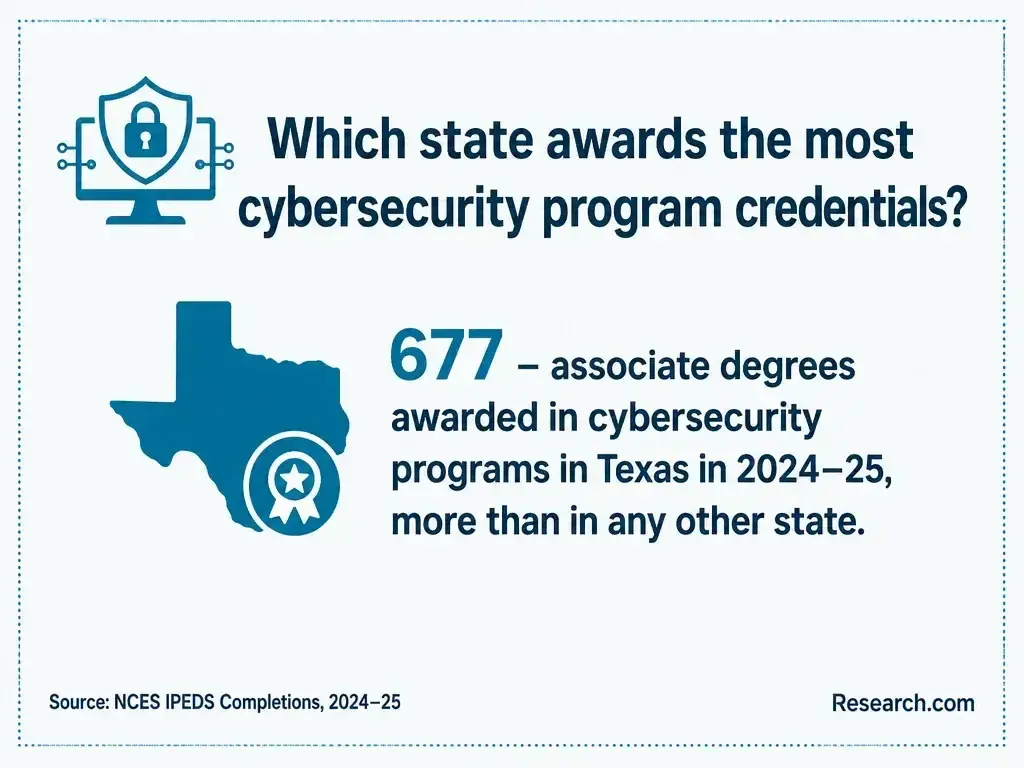
There is no reliable single price that applies to every student: residency status, enrollment pace, delivery format, and aid can all change the bill. A published annual tuition figure is especially easy to misread as the total degree cost. Request a current estimate for all remaining terms, including mandatory fees, textbooks, software, computer requirements, possible exam fees, and travel to labs or internships.
The comparison below separates charges you can verify before enrolling from costs that depend more heavily on your circumstances. It is more useful than comparing tuition figures drawn from different residency categories.
| Cost category | What to check for each associate degree |
| School charges | Tuition by residency status, mandatory fees, and charges across all required terms |
| Cybersecurity materials | Computer specifications, textbooks, software access, and any optional certification exams |
| Attendance costs | Travel for campus labs or work placements, internet, housing, and lost work time |
| Cost offsets | Grants, scholarships, eligible state aid, and employer tuition assistance |
Do not compare an associate degree's price with lists of most affordable online masters; they answer a different cost question. For this decision, compare itemized associate degree estimates on the same completion timeline.
Start with the Free Application for Federal Student Aid (FAFSA) to determine eligibility for federal grants, loans, and other aid at an eligible school. West Virginia students should also check current state aid rules, including whether the degree, institution, residency, enrollment level, and application timing meet the requirements for programs such as WV Invest. Eligibility and award amounts are not automatic; verify them with the school's financial aid office and the West Virginia Higher Education Policy Commission or Council for Community and Technical College Education.
Compare net cost after grants before deciding whether to borrow, and ask whether an employer will reimburse tuition only after you pass a course. Reimbursement timing matters if you must pay upfront. If studying part-time, confirm how a lighter course load affects each award before committing to a schedule.
Admissions rules are school-specific. Applicants should expect to provide an application and evidence of prior education; a school may also use placement measures or prerequisite coursework to determine where a student starts in math, writing, or computing. Prior cybersecurity experience is not necessarily required, but comfort with computers and the willingness to troubleshoot are important.
Separate college admission from entry into the major. Ask whether a program has additional course prerequisites, a limited cohort, or background-check conditions for particular internships. If your intended employer requires a security clearance, the degree itself does not confer one; clearance decisions are separate from school admission.
Programs commonly pair writing, mathematics, and other general education with networking, operating systems, scripting, and cybersecurity fundamentals. Applied courses may cover access controls, system hardening, incident response, or digital evidence. Course titles alone reveal little about practice: ask what students actually configure, investigate, and document.
For career preparation, look for labs that require you to diagnose a broken network, secure a system, or explain an incident to a nontechnical audience. For a program that emphasizes transferability, ask whether general education and computing courses have documented equivalents at your intended receiving institution. Neither a lab-heavy curriculum nor a transferable course list, by itself, guarantees employment or credit acceptance.
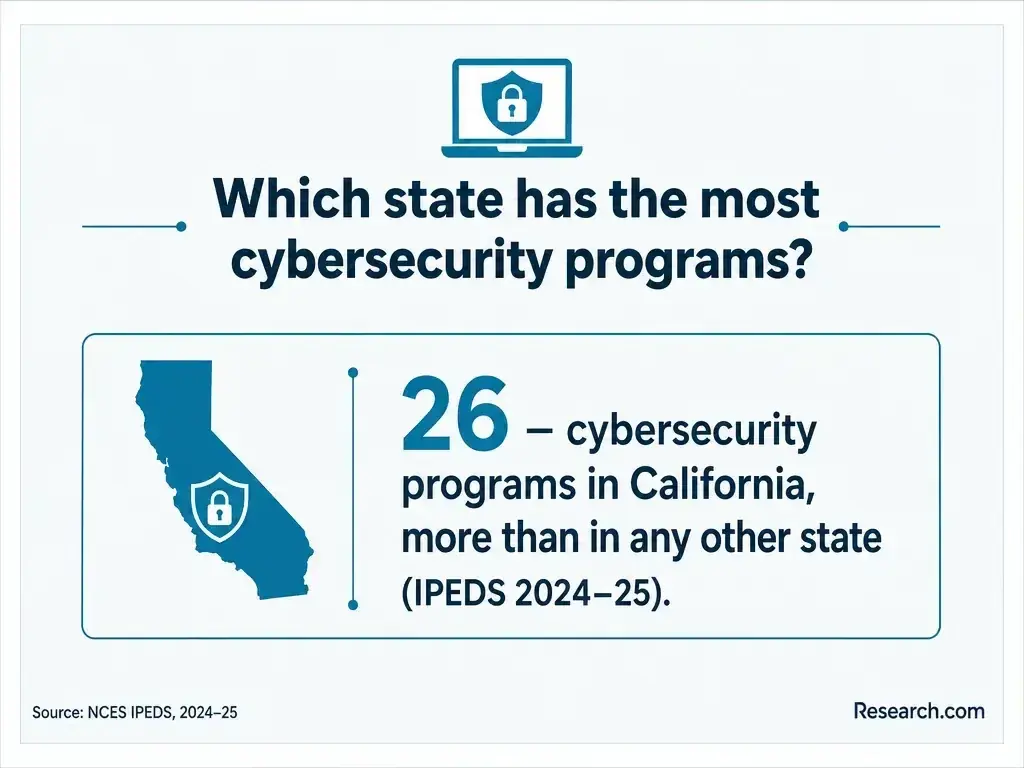
Associate degrees may emphasize network defense, systems administration, digital forensics, or cloud and infrastructure security through required courses or electives. Availability varies, so do not assume a concentration exists just because a school advertises cybersecurity. A network-focused path may fit an aspiring infrastructure technician; forensics may appeal to someone interested in evidence handling, though specialized investigative jobs can demand additional experience.
Choose breadth first if you are new to IT: networking, operating systems, and troubleshooting support several entry-level paths. Optional industry certification preparation can add value when the coursework and exam match jobs you are actually seeking, but certification is separate from the associate degree. Lists of what certificate programs pay well should not be treated as evidence that a particular degree or exam leads to that pay.
Start with the job you would realistically apply for upon graduation, then compare programs against that goal. An affordability ranking is a useful shortlist, not a quality or employment guarantee. Before paying a deposit, work through these checks with an adviser and the program director:
- Confirm the exact degree awarded, required credits, course rotation, and a feasible completion plan for your work schedule.
- Verify institutional accreditation through a recognized accreditor, then ask separately about any claimed cybersecurity recognition; neither replaces evidence of strong labs or employer acceptance.
- Request lab and internship details, including required campus visits, equipment, and recent local placement opportunities.
- Get an itemized total-cost estimate for your residency and enrollment status, then subtract aid you are actually eligible to receive.
- If transfer matters, obtain a written course-by-course evaluation or applicable articulation agreement before assuming credits will count.
Be cautious if a school cannot explain its labs, quotes only first-term tuition, or implies that accreditation guarantees a job. Broad searches for easy phds address a different educational decision; the immediate test is whether this associate degree provides the skills, time commitment, and cost profile you need now.
A common route begins with IT support, network support, or junior systems work, then moves toward security responsibilities as experience grows. Graduates who already work in IT may be better positioned to seek a security-focused opening immediately. In either case, a portfolio of documented labs, clear incident reports, and an internship can make an application more concrete than the degree title alone.
Information security analyst is a possible longer-term occupation, not the default first job. According to the U.S. Bureau of Labor Statistics, analysts protect an organization's computer networks and systems; employers commonly value related IT experience. When reviewing openings, distinguish required experience from preferred certifications and do not assume an optional exam is a West Virginia occupational license.
National demand provides context, not a local job offer. The U.S. Bureau of Labor Statistics projects 21% growth for information security analysts nationwide from 2025 to 2035. That projection covers the occupation at all experience levels, so it should not be read as the growth rate for entry-level associate degree jobs in West Virginia.
Test your local market before enrolling: review current postings within a commute you can sustain, note whether they ask for support experience or security experience, and ask programs which employers interview their students. If nearby security openings consistently require prior IT work, an associate degree with strong networking labs and an accessible support-job pathway may be a better investment than one built around an advanced-sounding title.
Most Affordable Cybersecurity Associate Degree Programs in West Virginia for 2027
Investing in education is a consequential decision. Research.com created this ranking to help readers compare affordable associate degree options against other programs available in the same location, rather than against an unrelated national pool. The team checks source data and program eligibility; only programs with completions reported to IPEDS are included.
The most affordable ranking evaluates tuition, cost of attendance, median student debt, and federal loan default rates. An entropy-based method gives more weight to cost and debt indicators that vary more across programs. Unlike Research.com's best-program rankings, this affordability score does not include accreditation, student support, or other quality indicators. Readers should check those factors separately. The following sources inform Research.com's ranking work; occupation-specific sources are used where relevant, and allied-health and construction sources do not imply cybersecurity program approval.
- IPEDS database - reported completions, institutional costs, and related college data.
- National Center for Education Statistics - federal education data and definitions.
- College Scorecard database - available cost, debt, and outcome measures.
- Peterson's database - supplementary institutional information.
- Commission on Accreditation of Allied Health Education Programs (CAAHEP) - occupation-specific accreditation information where applicable, not a cybersecurity accreditor.
- Accrediting Bureau of Health Education Schools (ABHES) - health-education accreditation information where applicable, not a cybersecurity accreditor.
- Commission on Dental Accreditation (CODA) - dental-program accreditation information where applicable, not a cybersecurity accreditor.
- Dental Assisting National Board (DANB) - occupation-specific requirements where applicable, not cybersecurity requirements.
- National Center for Construction Education and Research (NCCER) - construction-industry recognition where applicable, not cybersecurity recognition.
- Apprenticeship.gov Partner Finder - information about registered apprenticeship partners, not a measure of associate degree affordability.
Institution-wide debt or cost figures may not describe a particular cybersecurity program, and a 2027 ranking cannot guarantee future prices. Use the ranking to narrow your search, then request each school's current program-level cost estimate and degree requirements. More detail about the approach is available on Research.com's methodology page.
# 5 position
American Public University System
associateComputer and Information Systems Security/Auditing/Information Assurance
Delivery mode: Online
79.37
/ 100
Final score
- School graduation rate
- 59%
- Students receiving Pell Grants
- 29%
- Median earnings 1 year after completion
- $45,027
- In-state tuition & fees (per year)
- $8,400
- Out-of-state tuition & fees (per year)
- $8,400
- School website
- apus.edu
Accreditation
Institutional accreditation from Higher Learning Commission.
American Public University System earned a Research.com Affordability Score of 79.37/100.

Frequently asked questions about cybersecurity programs in West Virginia
What is the most affordable cybersecurity associate degree in West Virginia?
The answer depends on your residency, aid eligibility, fees, and time to completion. Use the accompanying ranking to identify candidates, then compare current itemized estimates for your circumstances.
Can I complete a cybersecurity associate degree online?
Possibly. Confirm which labs, exams, and internships can be completed remotely and whether any campus visits are required before choosing an online option.
Is an AAS or an AS the better choice?
An AAS may be preferable for immediate, hands-on career preparation; an AS may suit a student who needs more transferable coursework. Check the actual curriculum and written transfer rules rather than relying on the label.
Will the degree qualify me for a cybersecurity job?
It can help you compete for appropriate openings, but no degree guarantees employment. Applicants without IT experience may need to start in support or network roles and build security experience.
Do I need a license to work in cybersecurity in West Virginia?
Do not confuse an industry certification with an occupational license. Check the requirements of your target role and employer; a degree or certification does not automatically satisfy every hiring condition.
- U.S. Bureau of Labor Statistics - Information Security Analysts
Used to verify salary, employment outlook, and typical education requirements.
https://www.bls.gov/ooh/computer-and-information-technology/information-security-analysts.htm - NCES College Navigator (IPEDS)
Used to verify programs offered and institutional accreditation.
https://nces.ed.gov/collegenavigator/ - CompTIA Security+
Professional certification reference for graduates of this occupation.
https://www.comptia.org/certifications/security - New River Community and Technical College - official website
Official school website (programs, tuition, admissions).
https://www.newriver.edu/ - West Virginia Northern Community College - official website
Official school website (programs, tuition, admissions).
https://www.wvncc.edu/ - Blue Ridge Community and Technical College - official website
Official school website (programs, tuition, admissions).
https://www.blueridgectc.edu/ - BridgeValley Community & Technical College - official website
Official school website (programs, tuition, admissions).
https://www.bridgevalley.edu/ - American Public University System - official website
Official school website (programs, tuition, admissions).
https://www.apus.edu/