Best Court Reporter Training Programs & Trade Schools - Top Court Reporting Schools in Arizona for 2026

Co-Founder and Chief Data Scientist
Choosing the right court reporter trade school in Arizona can shape your future career. This article introduces the best programs for 2026, carefully ranked by the Research.com team of data scientists. Their analysis helps you find quality schools that match your goals.
Reading this guide will give you confidence in selecting a program that offers valuable skills and credentials. Earning a diploma or certification opens doors to rewarding opportunities in the legal field. Take the first step toward a promising career with the right education.
Key benefits of finishing court reporter trade school in Arizona
- Graduates from court reporter trade schools in Arizona can expect starting salaries around $44,613, with the potential to earn up to $80,930 annually as they gain experience and certifications.
- Career paths include working in local courts, freelance reporting, or joining federal courts, as shown by alumni from popular Arizona trade schools who enjoy diverse and stable job options.
- Completing a court reporter program online offers flexibility and faster completion, helping graduates balance life and study, just like many successful online students from top Arizona schools.
- Best Court Reporter Training Programs & Trade Schools - Top Court Reporting Schools in Arizona for 2026
- What can I expect from court reporter trade schools in Arizona?
- Where can I work after finishing court reporter trade schools in Arizona?
What can I expect from court reporter trade schools in Arizona?
Jumping into a court reporter trade school program in Arizona means diving headfirst into mastering the stenotype machine and digital recording tools-imagine fingers flying over keys while capturing every courtroom word with pinpoint precision. Graduates from popular schools like Central Arizona College often share how the blend of hands-on transcription exercises and quizzes, paired with personalized instructor feedback, transformed their confidence and skill. You'll navigate courses packed with judicial and medical jargon, courtroom etiquette, and communication theory, ensuring you speak the court's language fluently.
Expect a choice between a focused certificate and a broader associate's degree, depending on your pace and goals. Many find the online modules especially helpful to balance life and study, while others thrive in classroom settings. Digital court reporting skills are a highlight, preparing you for certifications like the AAERT, which open doors across Arizona and beyond.
Certification isn't just a checkbox-it's a rite of passage. Passing Arizona's state exam means proving you can record verbatim and uphold courtroom ethics, a challenge that graduates describe as tough but tremendously rewarding. Continuing education keeps you sharp, with a steady rhythm of learning that feels less grind and more growth.
Where can I work after finishing court reporter trade schools in Arizona?
After finishing a court reporter trade school program in Arizona, graduates often find themselves stepping directly into the heart of the state's legal system. Imagine landing a role as a stenographer-court reporter in Maricopa County Superior Court, where every word you capture shapes the official record. Many grads from popular Arizona trade schools describe the thrill of hearing their fast fingers echo through courtroom proceedings, knowing their certification from the Arizona Supreme Court opens these doors.
Others dive into freelance work, collaborating with law firms or agencies for depositions and hearings, enjoying the flexibility and variety this path offers. Picture a freelance court reporter juggling sessions across Phoenix and Yuma, thriving on the challenge and the rewarding pay.
Moreover, graduates find chances in municipal and justice courts statewide, or even administrative agencies needing sharp transcription skills. With over 170 court reporting-related jobs in Arizona, including court clerks and courtroom assistants, these trade schools set students up to confidently enter a dynamic, well-paid career with multiple pathways.
Fresh out of a court reporter trade school in Arizona, you might be wondering how the numbers stack up. Graduates from popular Arizona programs often land starting salaries between $30,000 and $45,000, enough to cover rent and maybe a weekend hike in the Sonoran Desert. Imagine stepping into a Phoenix courtroom, your skills freshly minted, earning close to $45,000-that's a real confidence booster.
With time and experience, your paycheck can climb steadily. Many find themselves hitting the sweet spot of $60,000 to $75,000 annually as their shorthand fingers fly faster and certifications pile up. One Tucson graduate shared how the steady rhythm of court proceedings translated into a robust $74,795 yearly wage, enough to enjoy local favorites like a night out in downtown Tucson.
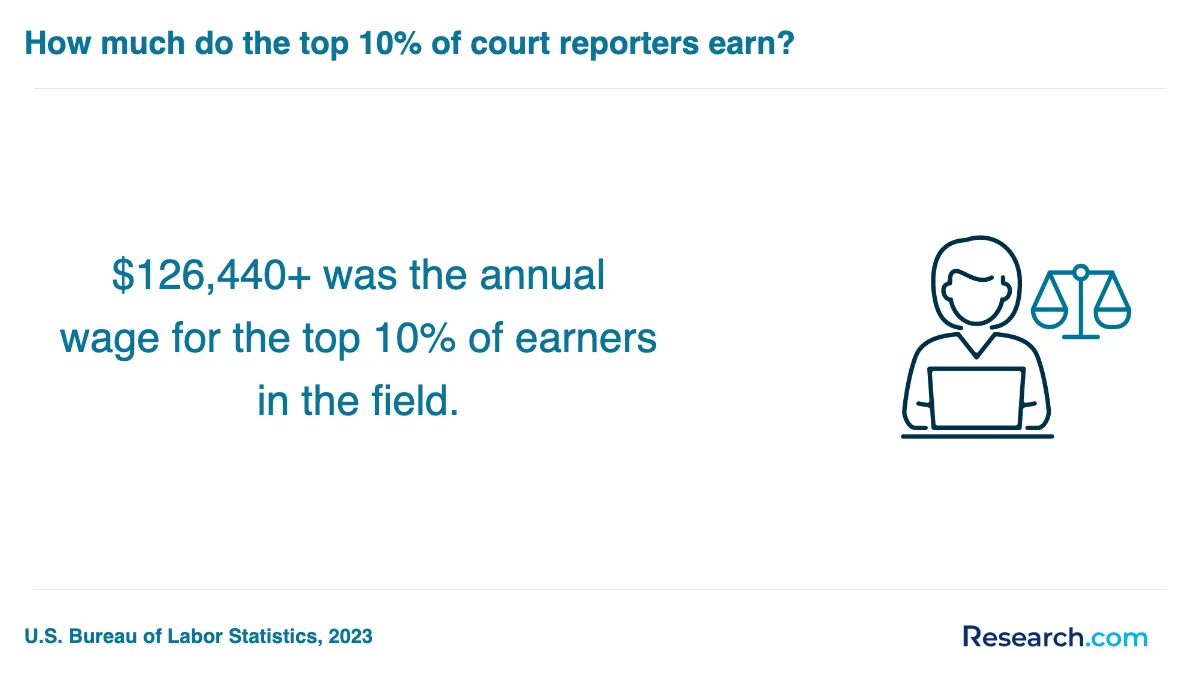
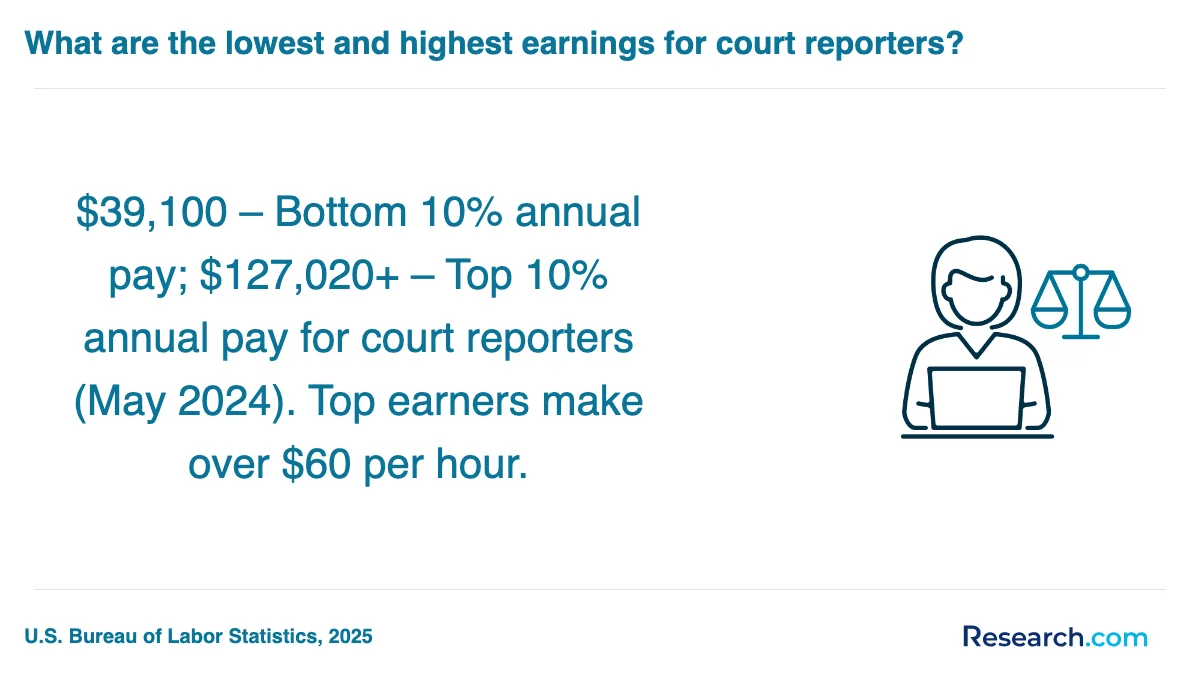
Some federal court reporters in Arizona start even higher, around $80,000, with seasoned pros reaching beyond $120,000. This path rewards dedication and skill, turning your trade school days into a flourishing career right in the heart of Arizona's urban buzz.
- Applicants must have a clean background, U.S. citizenship, good hearing, verbal skills, and a high school diploma or equivalent.
- Programs include associate degrees and certificates, covering stenotype operation, transcription, and legal terminology.
- Certification exams include the NCRA Registered Professional Reporter costing $120 for skills and $220 for written tests, and the NVRA Certified Verbatim Reporter with $150 skills and $125 written fees.
- Tuition ranges from $5,000 to $15,000 for certificate programs, with higher costs for associate degrees at private schools.
- Starting salaries for court reporters in Arizona range from $40,000 to $50,000, with experienced reporters earning $60,000 or more.
Finishing a court reporter trade school program in Arizona usually takes about 18 to 24 months, a timeline that feels just right for many students eager to jump into the fast-paced world of legal transcription. Imagine a graduate from a well-known Phoenix trade school, who balanced evening classes with a day job, and still managed to complete the program in under two years. Their excitement on graduation day was palpable-finally armed with skills to capture courtroom drama word-for-word.
Another graduate from Tucson's popular trade school recounts the intense but rewarding journey: months of mastering shorthand and real-time reporting software, all compressed into a steady, immersive schedule. The program's pacing lets students truly absorb the material without feeling overwhelmed, transforming nervous beginners into confident professionals.
Trade schools in Arizona often tailor their programs to fit busy lives, offering flexible schedules that keep motivation high. The sense of accomplishment when the certificate is in hand makes the 18-24 month investment feel like a swift sprint toward a fulfilling career.
Imagine juggling family, work, and court reporting classes all from your living room-this is the reality for many online students at places like Central Arizona College and Cochise College. Graduates recall the freedom of logging in late at night or during lunch breaks, using digital tools to practice stenography at their own pace. The flexibility feels like a weight lifted, especially when balancing life's chaos.
Contrast that with the on-campus experience at Gateway Community College or Phoenix College, where students thrive in buzzing classrooms filled with the clatter of stenotype machines. Graduates describe the thrill of instant feedback from instructors and hands-on practice in real court simulation labs. The energy of face-to-face interaction and the camaraderie forged during internships create a vibrant learning atmosphere.
Cost-wise, online programs often win for affordability-no gas, no parking, no housing. Yet, on-campus students cherish the immediate networking and direct mentorship that can fast-track careers in Arizona's legal circuits.
When diving into the world of court reporter trade school programs in Arizona, graduates often reflect on the average tuition fees for court reporter programs in Arizona as a pivotal part of their journey. Community colleges offer a wallet-friendly path, with fees ranging roughly from $780 to $6,150 per year, allowing many eager students to balance cost and quality effectively. Imagine graduating with a strong sense of accomplishment while spending less than some think possible - that's the reality for many pursuing associate's degrees locally.
For those craving a more specialized and immersive experience, the cost of court reporting education in Arizona can climb higher, sometimes reaching between $7,000 and $12,000 at private institutions. Graduates from such programs often speak about the value of intensive courses that pushed them to professional readiness faster, justifying the steeper price with their enhanced skills and confidence during real courtroom experiences.
Online programs also sculpt unique paths, with tuition often spanning $4,000 to $12,000. This flexibility draws many who juggle work and study, echoing the increasing appeal of remote learning. Whether learning in a buzzing classroom or through a screen, the dream of becoming a court reporter remains accessible. For those wondering about the easiest and fastest law degrees to study, it's worth exploring options like these at what is the easiest and fastest law degrees to study.
Imagine stepping into Bryan University's lively campus, feeling the weight of tuition lighten as you clutch your approval letter for the Arizona Court Reporters Association scholarship. Many students in Arizona tap into this local goldmine, easing their financial worries while diving deep into court reporting programs.
Federal aid, unlocked by the FAFSA, is a lifeline for those enrolled in accredited courses offering academic credit. Pell Grants and federal work-study opportunities often become a reality here, giving students the freedom to focus on mastering their skills instead of stressing over bills. However, if you're eyeing a digital court reporting certificate without academic credit, this route may not open.
Nationally, the National Court Reporters Association showers hardworking students with scholarships up to $5,000. Graduates recall how these funds transformed their ability to afford not just tuition but also essential equipment and software, turning dreams into tangible success.
And don't forget the private scholarships like the $500 GMR Transcription Academic Scholarship, a helpful boost for transcription enthusiasts. Early applicants often share the thrill of securing aid on a first-come, first-served basis, making timely action a secret weapon in this financial quest.
To dive into a court reporter trade school program in Arizona, you'll typically need a high school diploma or GED-no shortcuts here. Graduates often recall that this basic credential was their ticket to unlocking a career filled with fast-paced courtroom drama and precision.
Some schools, like those popular in Phoenix or Tucson, also look for:
- A strong command of English-grammar, punctuation, and vocabulary are your best friends.
- Basic computer skills since modern court reporting blends traditional stenography with digital tech.
- Sometimes, an entrance exam or typing test to gauge your readiness.
One graduate shared how mastering shorthand early was a game-changer, making the rigorous curriculum feel like an exciting challenge rather than a chore. Many students find hands-on practice at these Arizona trade schools boosts confidence, turning nervous beginners into skilled professionals ready for real courtroom action.
At Arizona court reporter trade schools, students dive headfirst into mastering the stenotype machine-imagine the thrill of fingers flying over keys, capturing every courtroom word in real time. Graduates often recall the excitement of finally transcribing flawlessly during simulated trials, a testament to their intense practice.
Core courses include:
- Stenotype machine operation: Building speed and accuracy essential for live court reporting.
- Transcription and editing: Polishing raw transcripts to meet strict legal standards, much like refining a masterpiece.
- Legal and judicial terminology: Unlocking the language of judges, attorneys, and witnesses to ensure no nuance is missed.
- Medical terminology: Gearing up for cases involving health experts, a favorite among students fascinated by medical-legal intersections.
Popular programs at schools like Central Arizona College also integrate digital reporting skills, giving students hands-on experience with cutting-edge recording software and hardware. Alumni often mention how this tech-savvy training made them confident in adapting to evolving courtroom environments.
Classroom discussions on courtroom procedures, ethics, and professionalism bring the Arizona judicial system to life, preparing students not just as reporters but as trusted guardians of truth and confidentiality.
Arizona court reporter training programs open doors to a variety of exciting specializations that graduates rave about for their hands-on approach and real-world relevance. Imagine mastering Digital Court Reporting at Central Arizona College, where students quickly become comfortable with high-tech software, ready to ace the AAERT Certified Electronic Reporter exams-feeling confident as they capture legal proceedings in real time.
Others dive into Legal Transcription, honing meticulous listening and typing skills to flawlessly transcribe court sessions, mastering complex legal jargon. Graduates often describe the satisfaction of perfectly typed records that become crucial courtroom evidence. Then there's the niche of Court Interpretation, where bilingual students train to serve as vital language bridges-especially Spanish-English pairs-opening new career avenues in Arizona's multicultural legal system.
Some students opt for combined training programs blending digital reporting and transcription, gaining versatility eagerly sought by employers. These Arizona court reporting specializations help students envision themselves succeeding, whether behind a keyboard or a microphone, making each day in court uniquely rewarding. For those curious about affordable options, check out this cheapest legal studies program that aligns with your ambitions.
Picking the best court reporter programs in Arizona means diving deep into accreditation and real-world readiness. Graduates from popular schools rave about how NCRA-accredited courses prepared them to tackle the exact skills needed in the courtroom, like speedy stenography and accurate legal transcription. Choosing a program with strong faculty credentials and hands-on training at institutions near Phoenix or Tucson makes all the difference - proximity matters when balancing life and study.
Another top-rated court reporting schools in Arizona feature flexible schedules, including part-time and accelerated tracks that fit the busy lives of many students. Hearing firsthand from alumni, many emphasize the value of job placement assistance, which helped them land gigs immediately after passing state certification, a must in Arizona.
For those also curious about related legal fields, check out this top online paralegal associate's degree as a complementary path. In the end, it's about matching program structure, reputation, and real-life prep to your own ambitions.

Graduates from court reporter trade schools in Arizona dive into a spectrum of Arizona court reporting careers after graduation that keep their days dynamic and engaging. Picture working in the bustling state courts, where certification under the Arizona Judicial Branch's Court Reporter Standard Certification Program is your ticket to producing precise, indispensable transcripts for trials. It's a role many graduates from Phoenix and Tucson trade schools praise for its challenge and respect in the legal community.
Others embrace the flexible lifestyle offered by private court reporting agencies, contracting for hearings and depositions across the state, perfect for those valuing diverse assignments.
For a twist, many step into Communication Access Realtime Translation (CART) captioning, transforming spoken word into real-time text for live events, classrooms, and broadcasts, making communication accessible to the deaf and hard of hearing-a deeply rewarding skill sharpened at local trade programs.
Popular paths for graduates also include broadcast captioning and transcription roles, turning audio content into clear, written records for media and government. Arizona's court reporter job opportunities in Arizona are broad and promising, with hourly rates touching $45 to $50, fueling aspirations.
Students curious to expand their qualifications sometimes explore the cheapest master of legal studies online programs to enhance their careers even further.
The court reporter trade school graduates in Arizona step into a job market that's buzzing with opportunity. With an expected growth rate of nearly 7% statewide by 2026, the court reporter job outlook in Arizona is brighter than many other professions. Graduates from popular Arizona trade schools often share how diving into local training programs gave them the hands-on skills that employers crave-especially as demand for certified reporters rises in bustling hubs like Phoenix.
Salaries highlight this positive trend. Entry-level reporters can anticipate solid pay starting around $62,160 annually, with the Phoenix metro area boosting that average to $66,080 or more. Experienced reporters have reported earnings close to $79,720, making this a career path that rewards dedication. Key factors include:
- Job openings averaging 10 annually, with a total workforce expected to reach 160 by 2026.
- A growing need for remote court reporters as virtual legal proceedings become commonplace.
- Higher wages linked to formal certification and specialized training.
Graduates describe immediate engagement in the workforce through connections made during their schooling, emphasizing the hands-on practicum and networking opportunities. These insider experiences illustrate the court reporter salary trends Arizona students can expect. Plus, for those curious how this fits into broader career options, exploring the forensic science job outlook offers an inspiring look at related fields thriving alongside court reporting.
Best Court Reporter Training Programs & Trade Schools - Top Court Reporting Schools in Arizona for 2026
# 1 position
Bryan University - Court Reporting and Captioning/Court Reporter.
associateBryan University's Court Reporting and Captioning/Court Reporter program trains students to accurately record and transcribe legal proceedings using print or electronic methods. The curriculum covers legal terminology, shorthand, verbatim recording, equipment operation, and professional ethics. The program's annual in-state tuition is $12,185. Graduates have median earnings of $26,288 one year after completion. The program is accredited by the Accrediting Commission of Career Schools and Colleges.
# 2 position
GateWay Community College - Court Reporting and Captioning/Court Reporter.
associateGateWay Community College offers a fully online Court Reporting and Captioning/Court Reporter program. The curriculum prepares students to accurately record and transcribe legal proceedings using print or electronic methods. Instruction covers legal terminology, shorthand, equipment operation, and professional ethics. The program is accredited by the Higher Learning Commission, with an annual in-state tuition of $2,358.
Frequently Asked Questions about court reporter
After completing a court reporter trade school in Arizona, preparing for the job market involves several strategic steps. First, obtaining certification from the National Court Reporters Association (NCRA) significantly improves employment prospects. The Certified Shorthand Reporter (CSR) license is required to work in Arizona courts, and passing the state exam is essential.
Networking with local professionals and joining organizations such as the Arizona Court Reporters Association can open doors to job opportunities. Additionally, gaining experience through internships or freelance work builds practical skills.
According to the U.S. Bureau of Labor Statistics, court reporters in Arizona earn a median annual wage of about $62,000, highlighting a stable career path.
Employers hiring court reporter trade school graduates in Arizona prioritize strong transcription skills and high accuracy. Graduates must demonstrate the ability to produce verbatim records of legal proceedings with at least 95% accuracy, as required by the National Court Reporters Association (NCRA). Proficiency in stenography and realtime reporting technology is crucial, allowing reporters to provide instant transcripts during trials.
Attention to detail and excellent listening skills are essential, given the fast-paced courtroom environment. Familiarity with legal terminology and procedures enhances performance and employability.
Communication skills also matter, as reporters often interact with judges, attorneys, and clients. Adaptability to evolving software and equipment is becoming increasingly important in Arizona's modern legal settings.
Finding internships relevant to court reporter trade school programs in Arizona involves several practical steps. Start by contacting local court reporting schools directly, as many have established partnerships with courts and legal firms for internship placements. The Arizona Court Reporters Association is another valuable resource, offering networking opportunities and listings of available internships within the state's legal system.
Many internships are located in county courthouses, law offices, or transcription firms, especially in metropolitan areas like Phoenix and Tucson. According to the U.S. Bureau of Labor Statistics, internships are crucial for gaining real-world experience, which significantly improves job prospects after graduation.
Students should also explore Arizona's state and local government websites, which sometimes post internship openings for court reporting students. Utilizing career services at trade schools and attending legal career fairs can further increase chances of securing a relevant internship.
A court reporter trade school diploma in Arizona plays a significant role in career mobility and advancement within the state's legal and transcription fields. Graduates gain specialized skills in stenography, transcription technology, and legal terminology, which are essential for certification and employment. According to the National Court Reporters Association, certified court reporters earn a median annual wage notably higher than non-certified peers, reflecting enhanced job prospects.
In Arizona, the demand for qualified court reporters is steady, with the Arizona Department of Employment Security projecting a 5% growth in related occupations through 2030. Holding a diploma from a trade school often accelerates eligibility for certification exams like the Registered Professional Reporter (RPR), which is critical for higher-level positions.
Employers in courts, law firms, and government agencies prefer candidates with formal training, as it reduces onboarding time and ensures accuracy in legal records. Thus, completing a court reporter trade school program in Arizona can open doors to various roles and improve long-term career growth opportunities.
Students enrolled in court reporter trade schools in Arizona can benefit from several part-time job opportunities that enhance their skills and experience. Positions such as transcriptionist or freelance captioner allow students to practice real-time transcription and improve typing speed, which is crucial for court reporting. Additionally, working as a legal assistant or clerk in law firms provides exposure to legal terminology and courtroom procedures.
According to the U.S. Bureau of Labor Statistics, Arizona's demand for court reporters is expected to grow moderately, making practical experience valuable. Part-time roles in local courts or government offices also help students build professional networks while studying.
To choose the best court reporter degree program near you, first consider accredited colleges that offer specialized training in court reporting and transcription, emphasizing real-time reporting, CART, and various steno or voice writing methods. Research universities and technical schools near Arizona that provide court reporter training, evaluating key factors such as curriculum strengths, alumni success, and available technology. Institutions near Arizona with strong programs will often offer demo classes or open days, allowing you to experience different campuses and resources firsthand; utilizing platforms like Research.com can offer insights into program offerings near me.
- Best Court Reporter Training Programs & Trade Schools - Top Court Reporting Schools in California for 2026
- Best Court Reporter Training Programs & Trade Schools - Top Court Reporting Schools in Texas for 2026
- Best Court Reporter Training Programs & Trade Schools - Top Court Reporting Schools in Kansas for 2026
- Best Court Reporter Training Programs & Trade Schools - Top Court Reporting Schools in Minnesota for 2026
- Best Court Reporter Training Programs & Trade Schools - Top Court Reporting Schools in Wisconsin for 2026
- Best Court Reporter Training Programs & Trade Schools - Top Court Reporting Schools in Illinois for 2026
- Best Court Reporter Training Programs & Trade Schools - Top Court Reporting Schools in Alabama for 2026
- Best Court Reporter Training Programs & Trade Schools - Top Court Reporting Schools in Florida for 2026
- Best Court Reporter Training Programs & Trade Schools - Top Court Reporting Schools in Ohio for 2026
- Best Court Reporter Training Programs & Trade Schools - Top Court Reporting Schools in Pennsylvania for 2026
- Court Reporters: Salary, career path, job outlook, education and more - RaiseMe https://www.raise.me/careers/legal/court-reporters/
- Careers in Court Reporting | CART | Court Reporting Career | ACI https://www.arlingtoncareerinstitute.edu/court-reporting-voice-writing-program/careers-court-reporting-captioning/
- How to Become a Court Reporter | Court Stenographer https://www.allaboutlaw.co.uk/school-leaver-law-careers/becoming-a-lawyer/how-to-become-a-court-reporter
- How To Become a Court Reporter | Rev https://www.rev.com/blog/how-to-become-court-reporter
- Court Reporting Careers - Generations College https://www.generations.edu/future-students/student-success/career-services/court-reporting-careers/
- A Lucrative and Underrated Career Path of Court Reporting - Career Insights Advisory https://ciainsights.com/a-lucrative-and-underrated-career-path-of-court-reporting/
- 6 Steps to Become a Court Reporter | Magna Legal Services https://magnals.com/6-steps-to-become-a-court-reporter/
- How to Become a Court Reporter - Planet Depos https://planetdepos.com/how-become-court-reporter
- How To Become a Court Reporter (School, Duties & Salary) https://www.allcriminaljusticeschools.com/specialties/court-reporter/
- SAC : Academics : Programs : Court Reporting | Alamo Colleges https://www.alamo.edu/sac/academics/program-index/public-policy--service/court-reporting/