2027 Speech Pathology Degree Payback Report: Which Programs Deliver the Best Cost-to-Salary Return

Co-Founder and Chief Data Scientist

Reviewed by Rhea Paul, PhD
SLP Education & Research Expert
Choosing a speech pathology degree is a high-stakes financial decision because most licensed speech-language pathologist roles require a master's degree. The payoff can be strong: the Bureau of Labor Statistics reports a $95,410 median annual wage for speech-language pathologists and projects 15% job growth from 2024 to 2034.
This guide is for prospective students comparing programs, debt, salary potential, online options, and licensure requirements. You will learn how to identify programs that offer the best cost-to-salary return before you enroll.
Key Things You Should Know
- The strongest ROI usually comes from CAA-accredited, lower-cost master's programs that meet state licensure requirements without forcing relocation, excess fees, or delayed clinical placement.
- BLS data places the median speech-language pathologist wage at $95,410, but payback depends heavily on total debt, work setting, state wages, and whether the graduate enters a licensed SLP role.
- A bachelor's degree alone generally has weaker ROI for speech pathology if the goal is independent practice, because most SLP roles require a master's degree plus supervised clinical experience and state licensure.
- What Is the Return on Investment of a Speech Pathology Degree?
- Which Speech Pathology Programs Deliver the Best Cost-to-Salary Return?
What Is the Return on Investment of a Speech Pathology Degree?
The return on investment of a speech pathology degree is the relationship between what you spend on education and what the credential helps you earn over time. For most students, the key ROI question is not simply "Is speech pathology a good career?" but "Will this specific program lead to licensed employment at a cost I can reasonably repay?"
Speech-language pathologists assess, diagnose, and treat communication, speech, language, voice, fluency, cognitive-communication, and swallowing disorders. They work in schools, hospitals, rehabilitation centers, private practices, skilled nursing facilities, early intervention programs, and telepractice settings. Because the role involves clinical judgment and patient care, employers and state boards usually expect a graduate degree, supervised clinical experience, and state licensure.
For ROI purposes, the master's degree is usually the decisive credential. A bachelor's in communication sciences and disorders can prepare students for graduate study or speech-language pathology assistant roles in some states, but it usually does not qualify graduates for independent SLP practice. That distinction matters because a low-cost bachelor's degree may still deliver limited financial return if the student must later pay for graduate school.
A practical ROI calculation should include both direct and indirect costs. Direct costs include tuition, required fees, clinical placement fees, books, technology charges, background checks, and exam costs. Indirect costs include relocation, commuting, unpaid clinical hours, childcare, reduced work hours, and interest on loans. Students comparing clinical careers should also benchmark alternatives; for example, reviewing health information manager salary data can help clarify whether a patient-facing clinical path or a healthcare administration path better fits their financial goals.
Use this simple framework to judge ROI before applying:
- Confirm the degree level required for the job you want in your state.
- Estimate total program cost, not just tuition.
- Compare expected debt with realistic entry-level and median wages in your target setting.
- Check licensure, accreditation, clinical placement, and exam preparation outcomes.
- Choose the lowest-cost program that still protects eligibility for the career outcome you want.
Which Speech Pathology Programs Deliver the Best Cost-to-Salary Return?
The best cost-to-salary return usually comes from programs that combine three features: recognized accreditation, low net cost, and reliable clinical placement. In speech pathology, a cheaper program is not automatically a better investment if it creates licensure problems, delays graduation, or leaves students scrambling to find required clinical hours.
The table below summarizes the program patterns that tend to produce stronger or weaker ROI. It is not a ranking of individual schools; it is a decision tool for identifying the program structures most likely to improve payback.
| Program type | Cost-to-salary return potential | Best fit | Main ROI risk |
| In-state public CAA-accredited master's | Often strongest because tuition is usually lower while the credential can lead to the same licensed SLP roles as higher-cost programs | Students who can attend locally or qualify for in-state tuition | Competitive admissions and limited cohort seats |
| Online or hybrid CAA-accredited master's with local clinical placements | Can be strong when it avoids relocation and allows part-time work | Working adults, caregivers, and students far from a campus program | Placement availability, state authorization, and additional technology or residency fees |
| Private nonprofit master's with scholarships or assistantships | Can be competitive when grants significantly reduce net price | Students receiving substantial institutional aid | Sticker price may be much higher than public options if aid is limited |
| Accelerated bachelor's-to-master's pathway | Can improve ROI if it reduces time to completion and avoids duplicate coursework | Students certain they want SLP licensure early in college | Less flexibility if the student changes career goals |
| Bachelor's-only communication sciences program | Limited for independent SLP practice but useful as a graduate-school foundation | Students preparing for a master's or SLPA roles where permitted | May not produce licensed SLP earnings without graduate study |
| High-cost program without clear clinical placement support | Usually weaker because debt can rise without improving salary eligibility | Rarely the best first choice unless unique circumstances justify it | Delayed graduation, excess borrowing, and licensure uncertainty |
To identify a high-return program, focus on outcomes that directly affect licensure and employment. Ask admissions teams for recent completion rates, Praxis preparation support, clinical placement procedures, state authorization details for online students, and the total cost of attendance after scholarships.
Red flags include vague placement language, pressure to enroll before financial aid is clear, unclear state licensure alignment, unusually high fees outside tuition, and claims that salary outcomes are guaranteed. No program can promise a specific salary, but a transparent program should help you understand how graduates progress toward licensure.
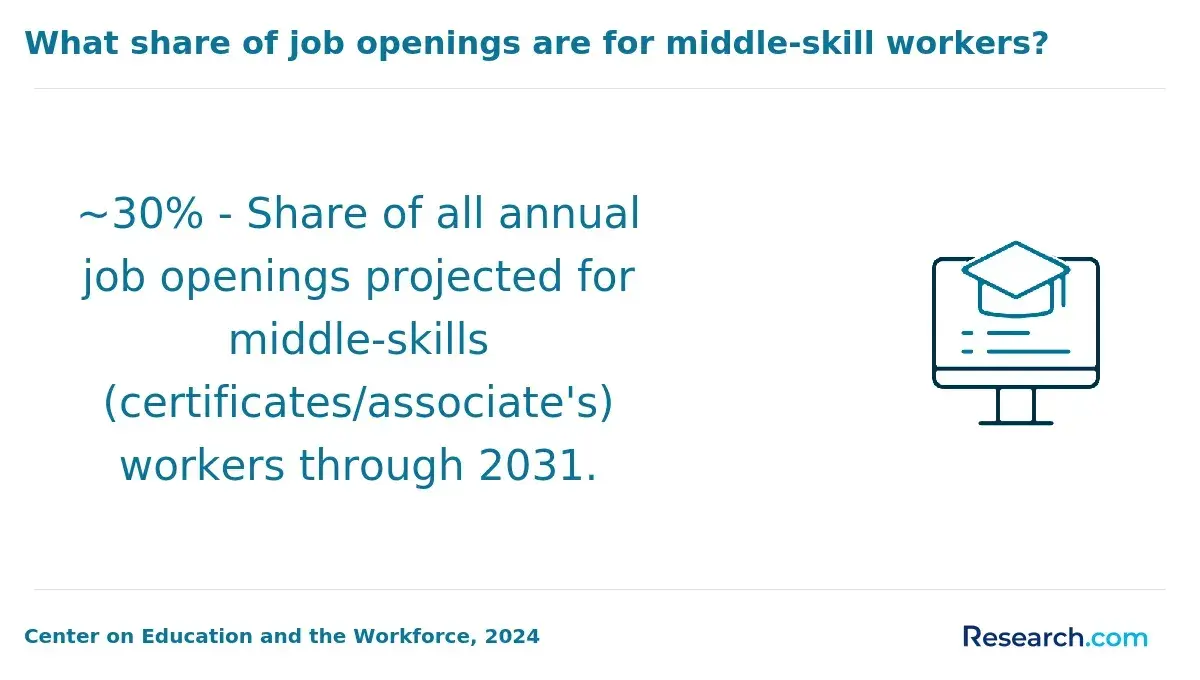
Tuition is one of the biggest drivers of speech pathology degree payback because licensed SLP salaries are tied more to role, setting, region, and experience than to how expensive the degree was. A graduate from a lower-cost accredited program may qualify for the same license and many of the same jobs as a graduate from a more expensive program.
NCES-published graduate tuition averages show why net price matters: recent national averages place public graduate tuition and required fees at roughly $12,600 per year, compared with about $30,000 per year at private nonprofit institutions. These are broad averages, not speech-pathology-specific prices, but they show how school choice can create large differences in borrowing before a student earns the same clinical credential.
The table below breaks down the cost items that most often change the payback period. Use it to compare programs on total financial exposure rather than tuition alone.
| Cost factor | Why it matters for payback | What to verify before enrolling |
| Tuition rate | The largest visible cost and the easiest to compare across programs | Whether the rate is per credit, per term, or flat-rate by cohort |
| Required fees | Can materially raise the true cost of an online, hybrid, or clinical program | Technology, lab, clinical, placement, graduation, and background-check fees |
| Clinical placement costs | Unpaid or distant placements may reduce work hours and add travel costs | Who arranges placements and whether sites are available near you |
| Residency requirements | Online programs may still require campus visits that add travel and lodging expenses | Number, length, and timing of required in-person sessions |
| Loan interest | Interest can increase repayment burden even when tuition seems manageable | Current federal loan rates, repayment options, and how much you must borrow |
| Time to completion | Extra terms delay earnings and may increase living costs | Average completion time and course sequencing flexibility |
Students comparing speech pathology with other clinical graduate routes should also consider credential length and debt. For instance, online pharmacy school programs may lead to a different healthcare career, but the doctoral timeline, licensure requirements, and total borrowing profile can be very different from a speech pathology master's pathway.
A common mistake is choosing the program with the most recognizable name without checking whether the higher price improves the employment outcome. In speech pathology, accreditation, licensure fit, clinical training quality, and placement reliability usually matter more to ROI than prestige alone.
The break-even point for a speech pathology degree is the time it takes for the added earnings from the credential to outweigh the total cost of earning it. Because students enter with different undergraduate debt, living costs, scholarships, and prior salaries, there is no single reliable break-even number that applies to everyone.
A useful payback formula is: total out-of-pocket cost and debt interest divided by the annual earnings increase you reasonably expect after entering a licensed SLP role. The "earnings increase" should be based on your realistic alternative, not just the national SLP median. For example, a student leaving a low-wage job may see a different payback timeline than a teacher, SLPA, or healthcare worker who already has a stable salary.
Use the following sequence to estimate your own break-even period before you commit:
- List the full cost of each program, including tuition, fees, travel, books, clinical requirements, and living expenses during unpaid placements.
- Subtract grants, scholarships, assistantships, employer support, and savings you can use without high-interest debt.
- Estimate the amount you would need to borrow and check the current federal loan interest rates and repayment options.
- Compare realistic salaries in your target state and setting, using entry-level ranges when available rather than relying only on the national median.
- Calculate how many years of added after-tax income would be needed to recover the net cost.
- Stress-test the estimate by adding an extra semester, a delayed clinical placement, or a lower first-year salary.
The fastest payback usually occurs when students keep total debt low, graduate on time, pass required exams promptly, and enter a setting with steady demand. The slowest payback often occurs when students borrow heavily for a program that does not improve licensure eligibility or when they choose a path that does not lead to independent SLP practice.
Part-time study can help students keep working, but it may delay full-time SLP earnings. Full-time study can speed entry into the profession, but it may require more borrowing. The better option depends on whether the student's current income offsets the cost of a longer timeline.
Students drawn to rehabilitation but unsure about speech pathology may also explore movement-focused pathways such as the best online kinesiology degree, especially if they are considering exercise science, wellness, coaching, or preparation for physical therapy or occupational therapy.
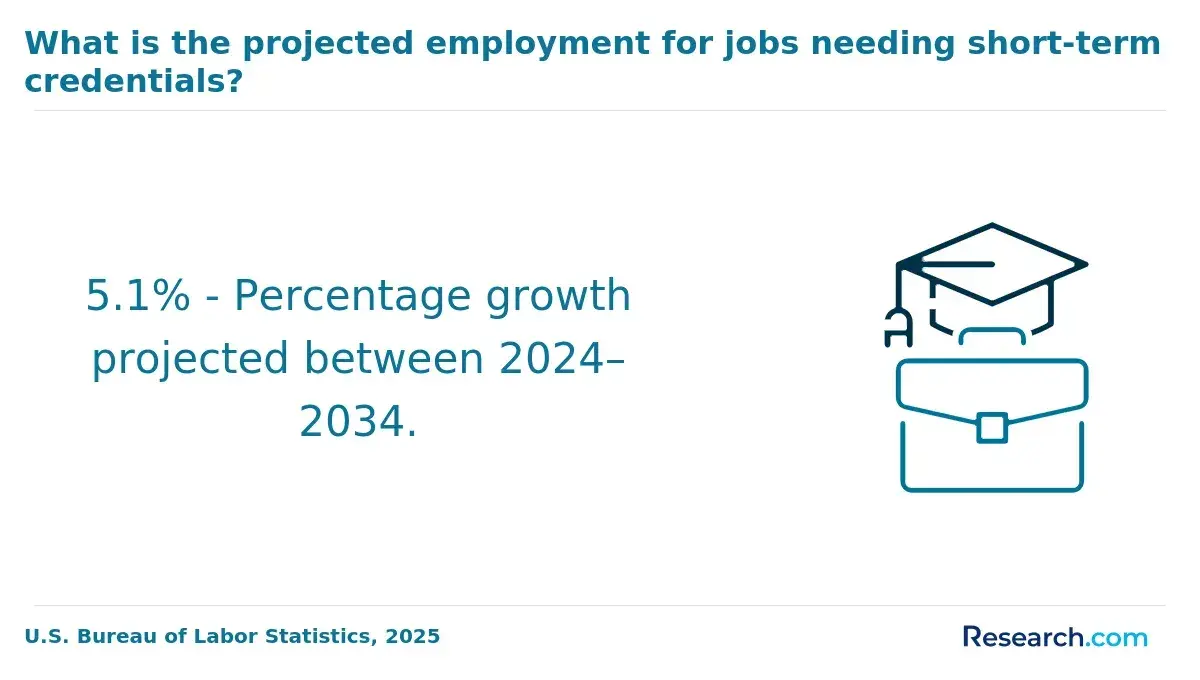
The biggest ROI factors are the ones that affect eligibility, cost, time, and employability. A speech pathology degree can be financially worthwhile, but the degree must match the credential requirements for the student's intended role and state.
These factors deserve the most attention when comparing programs because they can change both the cost side and the salary side of the ROI equation:
- Accreditation: Students aiming for SLP licensure should verify that the graduate program is accredited by the Council on Academic Accreditation in Audiology and Speech-Language Pathology or otherwise accepted by the relevant state board.
- State licensure alignment: Online and out-of-state programs may not automatically meet every state's requirements, so students should confirm eligibility with the licensing board where they plan to practice.
- Clinical placement reliability: Strong placement support can prevent graduation delays and improve readiness for medical, school, or private practice roles.
- Net price after aid: Scholarships, assistantships, tuition waivers, and employer benefits can change the true ROI more than sticker price suggests.
- Completion time: Extra terms add cost and delay earnings, especially in programs with rigid sequencing or limited clinical slots.
- Work setting choice: Schools, hospitals, rehabilitation, telepractice, and private practice can produce different salary paths and lifestyle trade-offs.
- Geographic mobility: Willingness to work in high-need districts, rural areas, or medical settings may expand opportunities, but licensure portability must be checked.
Admissions requirements can also affect ROI before the first tuition bill arrives. Many programs require prerequisite coursework in communication sciences, anatomy, physiology, linguistics, phonetics, statistics, psychology, or biological sciences. Students without the right prerequisites may need extra courses, which add time and cost.
One overlooked ROI factor is fit. A student who dislikes clinical documentation, caregiver coaching, school compliance processes, or medically complex cases may struggle to persist even if the salary outlook is attractive. The best financial decision is also a realistic career decision.
Employer demand strengthens the value of a speech pathology degree because it increases the likelihood that graduates can find relevant work after meeting licensure requirements. BLS projects 15% growth for speech-language pathologists from 2024 to 2034, which is much faster than the average for all occupations. For students, that suggests the field has favorable long-term demand, although local hiring conditions still vary.
Several forces support demand in the US market. An aging population increases the need for swallowing, cognitive-communication, and neurological rehabilitation services. Schools continue to need clinicians for speech, language, literacy-related communication needs, autism support, and individualized education program services. Telepractice has also expanded access in districts and communities that struggle to recruit on-site clinicians.
Demand does not eliminate competition. Medical SLP roles may favor applicants with strong adult placements, dysphagia experience, hospital rotations, or post-graduate mentorship. School roles may favor applicants who understand IEP processes, caseload management, bilingual service delivery, and collaboration with educators. Private practice roles may reward specialization in areas such as early intervention, feeding, fluency, or augmentative and alternative communication.
Students can use employer demand more strategically by reviewing job postings before choosing electives and placements. If local employers repeatedly request pediatric experience, bilingual skills, AAC familiarity, dysphagia training, or teletherapy comfort, those signals should influence program selection and clinical planning.
The main caution is that national demand does not guarantee a specific job in a preferred city or setting. ROI is strongest when students combine a recognized credential with practical experience that matches real employer needs in the region where they plan to work.
Students can improve the financial value of a speech pathology degree by making cost-conscious decisions before enrolling and career-focused decisions during the program. The best strategy is to protect licensure eligibility while reducing unnecessary borrowing.
Use these practical steps to increase ROI:
- Start with accreditation and licensure, not rankings, because an impressive program is not worth the cost if it does not support your state and career requirements.
- Compare total cost of attendance across at least three programs, including fees, travel, clinical placement expenses, and expected lost income.
- Ask each program how clinical placements are arranged, how far students travel, and what happens if a placement falls through.
- Apply for graduate assistantships, scholarships, employer tuition support, and public-service-focused aid before relying on loans.
- Choose placements that match your intended setting, such as schools, hospitals, early intervention, or adult rehabilitation.
- Prepare early for required exams and licensure paperwork so you do not delay the transition from graduate student to paid clinician.
- Build marketable skills in documentation, telepractice, bilingual service delivery, AAC, dysphagia, caregiver coaching, and interdisciplinary collaboration.
Students who are not ready for a master's program may consider lower-cost ways to test their interest in healthcare or patient support before committing to graduate debt. For example, comparing a 12-week LPN program with a speech pathology pathway can clarify whether the student wants a faster nursing-related credential or a longer communication-disorders clinical path.
Common mistakes include assuming all online programs meet every state's licensure rules, focusing only on tuition while ignoring clinical travel, borrowing up to the maximum without a repayment plan, and choosing a bachelor's program without understanding that a master's degree is usually required for independent SLP practice.
Before enrolling, students should ask admissions advisors direct questions: What is the total program cost? Are placements guaranteed or student-arranged? Does the program meet licensure requirements in my state? What support exists for the Praxis exam and clinical fellowship transition? What percentage of students finish on time? Clear answers are a good sign; vague answers are a reason to pause.
Speech pathology can offer a strong blend of clinical purpose, job demand, and professional stability, but it is not the only healthcare-related degree with ROI potential. The best comparison depends on whether the student wants direct patient care, rehabilitation, education, healthcare operations, fitness and movement science, or a faster entry into the workforce.
The table below compares speech pathology with nearby fields based on credential path, ROI logic, and who each option may fit best.
| Field | Typical education path | ROI profile | Best fit |
| Speech-language pathology | Usually a master's degree, supervised clinical experience, exam requirements, and state licensure | Strong when debt is controlled and the graduate enters licensed SLP work | Students who want communication, swallowing, school, pediatric, adult rehab, or telepractice work |
| Occupational therapy | Graduate-level clinical degree and licensure | Can be strong but program cost and clinical requirements must be compared carefully | Students interested in daily living skills, rehabilitation, disability support, and adaptive function |
| Physical therapy | Doctoral-level clinical degree and licensure | Can lead to advanced clinical practice but often requires a longer and potentially more expensive path | Students focused on movement, injury recovery, orthopedics, and physical rehabilitation |
| Kinesiology or exercise science | Bachelor's or graduate degree depending on career goal | ROI varies widely because some roles require additional credentials or graduate study | Students interested in movement science, wellness, coaching, or preparation for clinical graduate programs |
| Healthcare administration or health information | Bachelor's or master's depending on role | May offer strong non-clinical ROI for students who prefer systems, data, compliance, or management | Students who want healthcare careers without therapy licensure |
| Practical nursing | Shorter vocational or certificate pathway plus licensure | Faster entry and lower education time, but different scope of practice and salary path | Students who want bedside nursing responsibilities sooner |
Compared with many alternatives, speech pathology's ROI is strongest for students who are comfortable with graduate education but want a master's-level clinical route rather than a doctoral-level one. It may be weaker for students who want the fastest possible workforce entry, dislike documentation-heavy work, or are unwilling to complete supervised clinical requirements.
A speech pathology degree is worth it when the student's goal is licensed SLP practice, the program is properly accredited, the total cost is manageable, and the student is prepared for clinical training. The field has favorable demand, meaningful work, and a median wage that can support repayment when borrowing is kept in proportion to expected earnings.
It may be the right investment if you enjoy language, communication, child development, neuroscience, rehabilitation, counseling families, and solving practical clinical problems. It is also a strong fit for students who want flexibility across schools, healthcare, private practice, early intervention, adult rehab, and telepractice.
It may not be the best investment if you want to avoid graduate school, need immediate earnings, are not interested in licensure, or would struggle with clinical documentation and regulated practice. Students who only want a general healthcare job may find a shorter or more affordable credential more efficient.
The best decision is to compare programs like an investor and a future clinician. Choose the lowest-cost accredited path that meets your state licensure needs, provides reliable clinical placements, and supports the setting where you want to work. Avoid choosing based on prestige alone, and do not assume a high tuition price produces a higher salary.
Before applying, your final checklist should include accreditation, state authorization, total cost, clinical placement model, completion timeline, exam support, licensure fit, and local employer demand. If a program passes those tests and the career genuinely fits your strengths, a speech pathology degree can deliver a strong cost-to-salary return.
Speech pathology graduates' earnings vary by state, setting, experience, caseload type, and whether the graduate has completed licensure requirements. The most useful national benchmark is the BLS median annual wage for speech-language pathologists, which is $95,410. This figure should be treated as a midpoint across many settings, not a guaranteed starting salary.
Different work environments can affect both pay and lifestyle. Schools may offer predictable calendars and benefits, while medical settings may involve more intensive clinical responsibilities, productivity expectations, or specialized dysphagia work. Private practice and telepractice can offer flexibility, but income may depend on referrals, payer mix, credentialing, and business structure.
The table below compares common SLP work settings by the salary and ROI factors students should evaluate before choosing a program or specialization.
| Work setting | Common responsibilities | ROI considerations |
| K-12 schools | Evaluations, IEP services, language therapy, articulation therapy, collaboration with teachers and families | Stable demand and school-year schedules can support predictable repayment, but salaries vary by district and contract |
| Hospitals | Swallowing evaluations, acute care, cognitive-communication therapy, interdisciplinary care planning | Medical skills may improve advancement options, but roles can be competitive and may require strong clinical placements |
| Skilled nursing and rehabilitation | Dysphagia therapy, cognitive-linguistic treatment, functional communication support | Can offer broad adult clinical experience, but productivity expectations should be reviewed carefully |
| Private practice | Assessment and treatment for children or adults, parent coaching, specialized therapy services | Income may grow with specialization, but business costs and insurance reimbursement affect net earnings |
| Telepractice | Remote assessment, therapy delivery, documentation, and care coordination | May reduce commuting and widen job access, but state licensure and client-location rules must be checked |
Students should also understand the early-career timeline. Many graduates complete a supervised clinical fellowship before reaching full professional independence. During this period, salary, supervision quality, and caseload support can influence both career development and financial confidence.
Technology is changing day-to-day work but has not removed the need for clinical judgment. AI-supported documentation, screening tools, speech analysis software, and teletherapy platforms may improve efficiency, yet human clinicians remain responsible for diagnosis, treatment planning, ethics, family communication, and compliance with state and employer requirements.
Other Things You Should Know About Speech Pathology
In most cases, yes. Independent SLP practice generally requires a master's degree, supervised clinical experience, a passing exam score, and state licensure. Requirements vary by state.
It can be worth it if the program is properly accredited, meets your state's licensure rules, and provides dependable clinical placements. Online format alone does not determine ROI.
It can be useful as preparation for graduate school or assistant roles where allowed, but it usually does not qualify graduates for independent SLP practice. ROI is stronger when it supports a clear next step.
The biggest mistake is enrolling without calculating total cost and licensure fit. Tuition, fees, unpaid clinical hours, relocation, loan interest, and delayed graduation can all affect payback.
See What Experts Have To Say About Studying Speech Pathology
Read our interview with Speech Pathology experts

- Best Online Speech-Language Pathology (SLP) Programs 2025 https://onlinespeechpathologyprograms.org/best-online-slp-programs/
- 16 Speech Pathology Career Paths & Outlooks | USAHS https://www.usa.edu/blog/speech-pathology-career/
- How to Become a Speech Pathologist After Graduation? https://www.laspeechtherapysolutions.com/how-to-become-a-speech-pathologist-after-graduation/
- Landing Your First Speech Pathology Job After Graduation: A https://www.healthcarelink.com.au/article/landing-your-first-speech-pathology-job-after-graduation-a-practical-guide-for-new-speechies/2087
- Average speech pathologist salaries across Australian states https://www.vu.edu.au/about-vu/news-events/vu-blog/average-speech-pathologist-salaries-across-australian-states
- CCC-SLP Salary and Career Outlook https://speechpathologymastersprograms.com/become-speech-pathologist/ccc-slp-guide/ccc-slp-career-salary/
- Speech-Language Pathology: A Career for Individuals Who Want to Work with Young Children https://www.mefa.org/article/speechlanguage-pathology-a-career-for-individuals-who-want-to-work-with-young-children/
- How to Pay Off Student Loan Debt on a Speech-Language Pathologist Salary https://www.studentloanplanner.com/average-salary-of-speech-language-pathologist/
- 25 Best Master's Degrees In Speech Pathology | GradSchoolHub https://www.gradschoolhub.com/best/masters-degrees-in-speech-pathology/
- Speech-Language Pathologist Salary Guide https://slponline.ithaca.edu/blog/speech-language-pathologist-salary-guide