Choosing a speech pathology program means weighing tuition, clinical preparation, accreditation, and the state where you intend to practice. This guide is for aspiring speech-language pathologists and career changers comparing U.S. degree options. It explains the master's-level pathway, costs, licensure considerations, delivery formats, and career outlook. It also features the 2027 Most Valuable Speech Pathology Degree Programs Ranking in the USA, created by the Research.com team of data scientists to help students make an informed choice about which speech pathology degree programs are worth considering.
Key findings about speech pathology degrees in America
A master's degree from a program accredited by the Council on Academic Accreditation in Audiology and Speech-Language Pathology (CAA) is the standard educational route toward clinical practice; students should separately verify their intended state's license rules.
Speech-language pathologists had a median annual wage of $97,870, or $47.05 per hour, in May 2025, according to the U.S. Bureau of Labor Statistics; pay varies substantially by setting, experience, schedule, and location.
BLS projects 17% employment growth for speech-language pathologists from 2025 to 2035, with about 12,500 annual openings on average, making clinical training capacity and placement support important comparison factors.
What can I expect from a speech pathology degree in America?
In the U.S., "speech pathology degree" usually refers to a master's degree in speech-language pathology (SLP), communication sciences and disorders (CSD), or a closely related title. A bachelor's degree can prepare students for prerequisite coursework or support roles, but it ordinarily does not qualify someone for independent SLP practice. Most prospective clinicians need a CAA-accredited graduate program, supervised clinical education, a post-graduate clinical fellowship, a national examination, and a state license.
Graduate study combines scientific knowledge of communication and swallowing with applied clinical decision-making. Students learn to assess and treat speech, language, voice, fluency, cognitive-communication, and swallowing disorders across the lifespan. Programs also expect professional writing, ethical judgment, cultural responsiveness, and collaboration with families, teachers, physicians, occupational therapists, and audiologists.
The educational routes below serve different goals. The master's route is the relevant comparison for students seeking licensure as speech-language pathologists.
Credential
Typical purpose
What it generally does not provide
Bachelor's in CSD or related field
Foundation for graduate admissions and certain support positions
Independent SLP licensure
Master's in SLP/CSD
Clinical preparation for the SLP licensure pathway
Automatic licensure without fellowship, exam, and state steps
Doctoral degree
Research, university teaching, leadership, or advanced scholarly work
A substitute for required clinical master's preparation
Students changing careers can enter from psychology, linguistics, education, health sciences, or another major, but they may need leveling courses before beginning the graduate curriculum. That added time and tuition should be included in the investment decision.
Where can I work with a speech pathology degree in America?
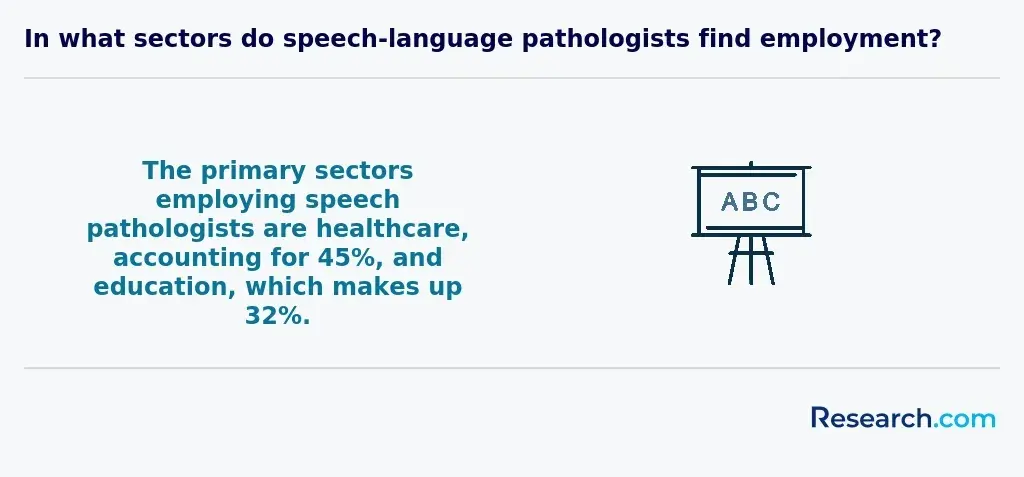
Speech-language pathologists work wherever communication, swallowing, and cognitive-communication needs are assessed or treated. The setting changes both the patient population and the practical trade-offs: school roles often follow an academic calendar, while medical settings may involve more complex swallowing care, documentation, and broader scheduling demands.
Common employers and work environments include:
Public and private elementary and secondary schools, where clinicians support students' educational access through individualized services.
Hospitals, rehabilitation facilities, and outpatient clinics, where work may include neurological, voice, swallowing, and post-acute care.
Skilled nursing facilities and home health agencies, which often serve older adults and may require travel or productivity-based documentation.
Private practices and multidisciplinary pediatric clinics, which can offer focused caseloads but vary in pay structure and benefits.
Universities, research centers, and specialty programs, typically requiring additional research training for faculty-focused roles.
Where you study matters because clinical placements build regional professional networks and may introduce you to local employers. Students hoping to remain in a particular state should ask whether placements are available near home and whether the program routinely supports that state's licensure documentation.
The U.S. Bureau of Labor Statistics reports a median annual wage of $97,870 for speech-language pathologists in May 2025. This is a national occupational median, not a starting-salary promise: earnings can differ by state, metropolitan area, employer type, clinical experience, productivity expectations, and whether the position is school-year or year-round.
Salary comparisons are most useful when paired with the work setting and total cost of becoming licensed. A position with a higher stated salary may involve a longer commute, less predictable scheduling, fewer benefits, or a higher local cost of living.
Career stage or factor
How to interpret earnings
Decision implication
Clinical fellowship
Compensation may differ from that of independently licensed clinicians
Budget for the transition year rather than assuming full-career pay immediately
School employment
Pay commonly follows district salary structures and contracts
Compare benefits, calendar, caseload, and pension provisions alongside salary
Medical and post-acute settings
Compensation may reflect schedule, acuity, and productivity expectations
Ask about supervision, caseload targets, documentation time, and benefits
Geographic mobility
Wages and demand vary across U.S. labor markets
Compare local job postings and licensing requirements before borrowing heavily
For a broader look at setting-specific options, explore careers available to a speech language pathologist. Use salary information as one input in an ROI estimate that also considers debt, time out of the workforce, completion likelihood, aid, and long-term career goals.
Value is not simply the lowest tuition or the most selective admission standard. Strong programs pair an accredited clinical curriculum with transparent requirements, suitable placement access, and a structure that fits the student's prior preparation and intended practice location. The institutions below stand out for different concrete program features, so applicants should compare them against their own clinical, geographic, and scheduling priorities.
CUNY Brooklyn College: Brooklyn College offers speech-language pathology preparation in New York City, where access to diverse multilingual communities can shape clinical learning. It may fit applicants seeking an urban public-college option and who can manage the logistical demands of clinical placements in a large metropolitan area.
The University of Texas at El Paso: UTEP's speech-language pathology program is based in a border-region setting where bilingual and multicultural communication needs are especially relevant to clinical education. This context can be valuable for students interested in serving Spanish-speaking families and culturally diverse communities.
California State University-Sacramento: Sacramento State houses communication sciences and disorders in its College of Health and Human Services, connecting the discipline to a broader health-professions environment. Students drawn to interprofessional healthcare preparation may find that organizational setting more relevant than a program centered primarily in arts and sciences.
California State University-East Bay: Cal State East Bay's speech, language, and hearing sciences department serves the East Bay region, a meaningful advantage for applicants seeking California-based placement and professional-network access. Students should still confirm how placements align with their transportation, employment, and licensure plans.
Texas A&M University-Kingsville: Texas A&M-Kingsville's communication sciences and disorders offerings are situated in South Texas, giving the program a regional service orientation distinct from the large coastal California programs in this group. It can be a practical option for students whose career plans center on Texas communities and who want to evaluate in-state public-university costs.
San Diego State University: SDSU's School of Speech, Language, and Hearing Sciences combines undergraduate, master's, and doctoral education within one discipline-focused unit. Its breadth is particularly useful for students who want exposure to a department serving both clinical training and research interests rather than a stand-alone professional sequence.
Worcester State University: Worcester State presents its Master of Science in Speech-Language Pathology as a defined graduate professional program. This direct degree focus may suit applicants who want a clearly identified master's pathway in Massachusetts and intend to compare clinical placement support within New England.
California State University-Long Beach: CSULB offers speech-language pathology through its College of Health and Human Services, positioning clinical communication disorders education alongside related helping professions. That structure may appeal to students seeking a Southern California public option with a health-services academic context.
San Jose State University: San José State's Communicative Disorders and Sciences department is located in Silicon Valley, where students can evaluate access to a large and diverse regional service area. It is especially worth considering for applicants whose personal networks or future work plans make Northern California placements more practical.
University of Nebraska at Kearney: UNK's communication disorders program gives students a Great Plains public-university option outside the larger coastal and Texas markets represented here. Its location can matter for students seeking a program connected to smaller communities, potentially lower relocation pressures, or regional practice opportunities.
Before treating any feature as decisive, verify the current CAA accreditation status, clinical-hour plan, cohort model, tuition, and state authorization with the program. A program's strongest differentiator only creates value if it supports the population, location, and employment setting you actually want.
A full-time master's program in speech-language pathology commonly takes about two academic years, although the actual timeline depends on prerequisite completion, course sequencing, clinical placements, and whether the student attends part time. Students entering without a CSD bachelor's degree may need a post-baccalaureate or leveling sequence first, extending the path before graduate clinical training begins.
Graduation is not the final step toward independent practice. Most states require applicants to complete a supervised clinical fellowship after the master's degree and meet examination and state-specific documentation requirements. Plan the timeline from first prerequisite through license issuance, especially if you are leaving paid employment to enroll full time.
An accelerated route can reduce calendar time but may increase weekly workload and reduce flexibility for employment or caregiving. Students seeking a faster format should compare course intensity, placement scheduling, and state eligibility rather than choosing based on advertised duration alone.
Online SLP programs generally deliver academic coursework remotely, but they cannot make the clinical component fully virtual. Students still complete supervised, in-person clinical experiences at approved sites. The key comparison is therefore not "online versus clinical," but whether the program can arrange, approve, and supervise placements where the student lives.
Factor
Online or hybrid program
On-campus program
Course access
May reduce relocation needs and support working adults
Usually follows a campus-based schedule and cohort routine
Clinical experiences
Still require local in-person placements and coordination
May provide easier access to university clinics and local partners
Networking
Can be geographically broad but requires intentional relationship-building
Often concentrated around the campus region and its placement sites
Best fit
Self-directed students with reliable placement feasibility
Students who benefit from campus clinics, local faculty access, and structured routines
Online study can be worthwhile for a working professional or a student far from a campus, but it is not automatically cheaper or easier. Compare tuition, mandatory campus visits, technology requirements, clinical travel, placement availability, and whether the program meets the educational requirements for your intended license. Students comparing formats can review the best speech pathology online degree programs as a separate starting point.
There is no single reliable national "average cost" that captures what an individual SLP student will pay. Published tuition differs by public or private institution, resident status, credit load, program length, required fees, and annual tuition changes. The most useful comparison is each program's estimated total cost of attendance, not its per-credit price alone.
For public universities, in-state eligibility can materially affect the bill, while private nonprofit institutions may charge the same tuition regardless of residency but offer different institutional aid. Students should also account for clinical clothing, background checks, immunizations, travel, housing, and income forgone during intensive placements.
Use this cost checklist when comparing offers:
Calculate tuition and mandatory fees across the full planned enrollment period, including any prerequisite or leveling term.
Separate school-billed costs from clinical-placement travel, parking, housing, health insurance, and examination expenses.
Compare renewable scholarships and assistantships, not only first-year awards.
Ask whether a delayed placement, repeated course, or part-time enrollment changes the published program cost.
California applicants can narrow the public-cost search with this guide to the cheapest slp master's programs in california. Lower tuition can improve ROI, but it should not outweigh accreditation, clinical support, and a realistic path to completion.
Graduate SLP students may combine federal student aid, institutional scholarships, graduate assistantships, state programs, employer support, and external professional scholarships. Eligibility and award amounts vary; students should submit the FAFSA early and ask each program whether assistantships are available to clinical master's students rather than assuming they are reserved for doctoral students.
Federal Direct Unsubsidized Loans may be available to eligible graduate students within annual and aggregate limits. Eligible graduate or professional students may also apply for a federal Direct Graduate PLUS Loan, subject to federal eligibility requirements and a credit check, through Federal Student Aid. Borrow only after comparing the amount to a conservative completion and repayment plan.
Financial-aid questions worth asking before enrollment include:
Which scholarships are available specifically to SLP master's students, and are they renewable?
Can clinical schedules realistically coexist with a paid assistantship or outside job?
What is the typical timing of aid disbursement relative to tuition and placement expenses?
Does the institution offer loan counseling that models repayment under different earnings and debt scenarios?
Students seeking flexible formats may also compare aid and tuition approaches in the Most Affordable Online Masters in Speech Pathology guide. Do not assume online status makes a program eligible for more aid or eliminates clinical travel costs.
View the chart data as a table
SLP annual wage spread - national (May 2025) (Source: U.S. Bureau of Labor Statistics (OEWS May 2025))
Category
Value
10th percentile
$62,900
25th percentile
$77,730
Median
$97,870
75th percentile
$114,570
90th percentile
$134,160
Most master's programs require a bachelor's degree, minimum GPA standards, transcripts, recommendation letters, a personal statement, and evidence of prerequisite knowledge. Requirements vary widely, particularly for applicants without a communication sciences and disorders major. Programs may require coursework in phonetics, language development, anatomy and physiology of speech and hearing, audiology, speech science, statistics, and biological, physical, or social sciences.
Applicants should confirm whether missing prerequisites can be completed before admission, during a formal post-baccalaureate sequence, or within the master's curriculum. A career changer should not interpret "related major accepted" as meaning no additional coursework is needed.
Red flags to avoid include applying before confirming prerequisite equivalencies, overlooking observation-hour requirements where applicable, and choosing a program before checking whether it accepts your prior credits. Applicants looking for a broader admissions comparison can consult this overview of speech pathology programs, but should prioritize fit and licensure eligibility over perceived ease of admission.
Master's curricula build the diagnostic and intervention skills needed for supervised clinical practice. Course titles differ, but accredited clinical programs typically cover the major communication and swallowing disorder areas and connect classroom learning to clinical practica.
Students commonly encounter the following course areas:
Speech sound disorders, phonological assessment, and intervention planning.
Child and adult language disorders, including developmental and acquired language needs.
Fluency, voice, resonance, and motor speech disorders.
Dysphagia and swallowing assessment, often with medically oriented content.
Neuroanatomy, speech science, audiology, research methods, and evidence-based practice.
Clinical methods, ethics, counseling, documentation, and supervised practica.
Compare course sequencing, not just the catalog list. A program may cover every major disorder area but differ substantially in when students begin clinic, whether they work with children and adults, and how faculty assess readiness for advanced placements.
Most entry-to-practice SLP master's programs are broad by design because clinicians must develop competence across populations and disorders. Specialization more often occurs through electives, clinical placements, faculty research, capstones, and early-career employment than through a narrowly titled master's concentration.
Common areas students may pursue include pediatric language and literacy, bilingual assessment, autism and neurodevelopmental differences, medical SLP and dysphagia, voice, fluency, augmentative and alternative communication, adult neurogenic disorders, and hearing-related communication. The best choice depends on whether the program offers actual placements, faculty expertise, and supervision in the area - not merely a course title.
A narrow specialty interest should not lead applicants to neglect generalist preparation. State licensing and clinical practice require broad foundational competence, and early-career clinicians may work with mixed caseloads even when they have a long-term specialty goal.
The best program is the one that makes your intended licensure and employment path feasible at an acceptable total cost. Rankings can help identify options worth investigating, but they cannot determine whether a program will accept your prerequisites, place you near home, or satisfy a specific state board's requirements.
Use this sequence to make a more defensible decision:
Confirm current CAA accreditation and verify your intended state's education, fellowship, examination, and licensing requirements.
Compare total cost of attendance, expected program length, aid, and the income you may forgo while enrolled.
Ask how clinical placements are assigned, what populations and settings are available, and whether students may need to travel or relocate.
Review graduation, Praxis, fellowship, and employment information when the program publishes it, including the reporting period and cohort definition.
Speak with admissions staff about prerequisite transferability, part-time feasibility, and support if a placement schedule changes.
Common mistakes are choosing solely by tuition, assuming any online program works in every state, and treating the national median wage as a personal salary forecast. Cincinnati-area applicants can add local comparison context through the Inexpensive Speech Pathology Degree Programs Ranking in Cincinnati, OH.
The primary career path is licensed speech-language pathologist, but the clinical setting and patient population can create very different professional experiences. A master's degree may also support related roles in clinical coordination, assistive technology, research, program administration, or education, depending on additional experience and employer requirements.
Path
Typical focus
Useful program comparison factor
School-based SLP
Educational access, language, literacy, and student support
Pediatric placements and school-district partnerships
Medical SLP
Adult or pediatric hospital care, rehabilitation, and swallowing
Medical placements and dysphagia preparation
Early intervention or pediatric clinic
Developmental communication and family-centered services
Infant, toddler, and caregiver-coaching experiences
Skilled nursing or home health
Adult communication, cognition, and swallowing support
Adult caseload preparation and documentation training
Research or university pathway
Communication science, teaching, and scholarship
Faculty mentorship and research opportunities
Students should select placements that test, rather than merely confirm, their preferences. A pediatric-focused applicant may discover a strong interest in adult neurogenic disorders, while a medically focused student may find that school schedules better fit long-term family and lifestyle goals.
View the chart data as a table
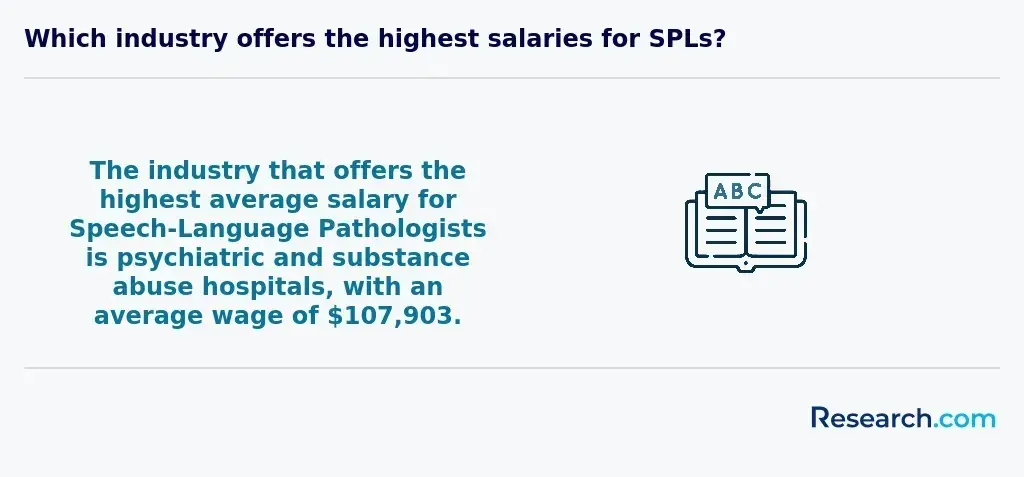
Median SLP wage by work setting (United States, May 2025) (Source: U.S. Bureau of Labor Statistics (OEWS May 2025, by industry))
Category
Value
Schools (educational services)
$83,120
Offices of PT/OT/speech therapists
$98,910
Hospitals
$103,690
Nursing & residential care
$109,660
The national job outlook is favorable but should not be read as a guarantee of a job in every location or setting. BLS projects 17% employment growth for speech-language pathologists from 2025 to 2035, much faster than the average for all occupations, and estimates about 12,500 openings each year on average during that period. Demand reflects needs across schools, healthcare, aging-related services, and rehabilitation.
For applicants, the practical implication is that licensure-ready training and placement experience remain more important than simply holding a graduate degree. Employers may prioritize candidates who can work with the populations they serve, document effectively, collaborate across disciplines, and satisfy state credentialing requirements.
Artificial intelligence and telepractice may change documentation workflows, remote service delivery, and administrative tasks, but they do not replace the licensed clinician's assessment, clinical judgment, supervision, and patient-centered responsibilities. Evaluate whether a program teaches telepractice ethics and technology as a complement to - not a substitute for - supervised in-person clinical preparation.
2027 Most Valuable Speech Pathology Degree Programs Ranking in the USA
Research.com recognizes that a graduate education investment can affect a student's debt, career mobility, and ability to qualify for state licensure. The ranking was designed to make program comparison more transparent by evaluating academic and research strength, cost, graduate outcomes, student profile, and institutional quality, then ranking programs by the value dimension named in the ranking.
For on-campus programs, Research.com uses data-driven, entropy-based weights calibrated to the available indicators. Online-program rankings use a distance-learning adaptation that excludes campus-dependent indicators and emphasizes program structure and student support, with fixed weights for graduation rate (30%), research (25%), institutional profile (15%), and students, cost, and course factors (10% each).
The ranking draws on the following established education datasets:
IPEDS database, for institution and program reporting data.
Readers can use the ranking as a focused starting point for identifying programs that balance educational value with career preparation, then verify clinical requirements, accreditation, aid, and state eligibility directly with each school. See Research.com's methodology for additional detail on how rankings are created.
Council on Academic Accreditation in Audiology and Speech-Language Pathology (CAA) of ASHA
Status Accredited - With MonitoringID a3d488d3-c0e1-4713-aaf8-caf4be631e8bValid 2022-2030
Last known review scheduled for 2029
Verify accreditation
CUNY Brooklyn College earned a Research.com Value Score of 96.47/100, supported by $22,180 total tuition + mandatory fees and 100% Praxis pass rate. Its Speech-Language Pathology, M.S. is listed by ASHA EdFind as CAA-accredited through 2030, with the most recently listed accreditation review scheduled for 2029.
Admissions data from
ASHA EdFind
(updated 11/07/2025)
Speech-Language Pathology, M.S. (Master of Science in Speech-Language Pathology)
92.26
/ 100
Final score
Program length
5 semesters typical (6 semesters maximum)
Required credits
51 semester hours
Acceptance rate
46% (57 of 123 applications)
GPA range
2.71 - 4.00
Offers with funding
~5% (3 of 57 offers)
Application deadline
Fall admission: February 1
Class size
28
Degrees granted
31
Application process
CSDCAS
Prerequisites
Undergraduate prerequisites required: Yes; prerequisite courses offered; available online
Additional requirements
Comprehensive exam; Capstone
Accreditation
Council on Academic Accreditation in Audiology and Speech-Language Pathology (CAA) of ASHA
Status AccreditedID a266094f-ced3-468f-8663-6410cbc3c899Valid 2021-2029
Last known review scheduled for February 2028
Verify accreditation
The University of Texas at El Paso earned a Research.com Value Score of 92.26/100, supported by $20,600 total tuition + mandatory fees and 86% Praxis pass rate. Its Speech-Language Pathology, M.S. (Master of Science in Speech-Language Pathology) is listed by ASHA EdFind as CAA-accredited through 2029, with the most recently listed accreditation review scheduled for 2028.
Admissions data from
ASHA EdFind
(updated 10/31/2025)
Master of Science in Communication Sciences and Disorders
91.32
/ 100
Final score
Program length
4-5 semesters (4 semesters for Fall Clinical Practica Cohort starting clinical practica in fall; 5 semesters for Spring Clinical Practica Cohort starting clinical practica in spring)
Council on Academic Accreditation in Audiology and Speech-Language Pathology (CAA) of ASHA
Status AccreditedID a22eaf94-2b34-464e-8b9c-d9941752d77dValid 2019-2027
Last known review scheduled for February 2027
Verify accreditation
California State University-Sacramento earned a Research.com Value Score of 91.32/100, supported by $22,732 total tuition + mandatory fees and 94% Praxis pass rate. Its Master of Science in Communication Sciences and Disorders is listed by ASHA EdFind as CAA-accredited through 2027, with the most recently listed accreditation review scheduled for 2027.
Admissions data from
ASHA EdFind
(updated 11/07/2025)
Council on Academic Accreditation in Audiology and Speech-Language Pathology (CAA) of ASHA
Status Accredited - With MonitoringID 2f9192df-b6d2-4225-ab35-cf667921dcdcValid 2020-2028
Last known review scheduled for 2027
Verify accreditation
California State University-East Bay earned a Research.com Value Score of 84.71/100, supported by $28,821 total tuition + mandatory fees and 2-year completion pathway. Its Master of Science in Speech-Language Pathology (In-Person) is listed by ASHA EdFind as CAA-accredited through 2028, with the most recently listed accreditation review scheduled for 2027.
Admissions data from
ASHA EdFind
(updated 10/31/2025)
Council on Academic Accreditation in Audiology and Speech-Language Pathology (CAA) of ASHA
Status Accredited on ProbationID c2072401-23fc-43e6-9371-e61f291f6b2aValid 2021-2029
Last known review scheduled for 2028
Verify accreditation
Texas A&M University-Kingsville earned a Research.com Value Score of 82.24/100, supported by $24,628 total tuition + mandatory fees and 2-year completion pathway. Its Master of Science in Communication Sciences and Disorders is listed by ASHA EdFind as CAA-accredited through 2029, with the most recently listed accreditation review scheduled for 2028.
Admissions data from
ASHA EdFind
(updated 10/29/2024)
Master of Arts (M.A.) in Speech-Language Pathology
83.76
/ 100
Final score
Program length
5 semesters (2 academic years plus 1 intervening summer)
Required credits
64
Acceptance rate
15% (68 of 446 applications)
GPA range
3.58 - 4.00
Application deadline
Fall admission: Dec. 1 and Jan. 12
Class size
42
Degrees granted
40
Application process
CSDCAS University online application
Prerequisites
Undergraduate prerequisites required: Yes; prerequisite courses offered; available online
Additional requirements
Comprehensive exam; Thesis
Accreditation
Council on Academic Accreditation in Audiology and Speech-Language Pathology (CAA) of ASHA
Status AccreditedID 83962615-99b4-4354-85c8-d72c6481cbbdValid 2021-2029
Last known review scheduled for February 2028
Verify accreditation
San Diego State University earned a Research.com Value Score of 83.76/100, supported by $28,000 total tuition + mandatory fees and 100% Praxis pass rate. Its Master of Arts (M.A.) in Speech-Language Pathology is listed by ASHA EdFind as CAA-accredited through 2029, with the most recently listed accreditation review scheduled for 2028.
Admissions data from
ASHA EdFind
(updated 10/31/2025)
Accelerated (6 semesters) or Full-Time (8 semesters); part-time also available (2-3.5 years total)
Required credits
55
Acceptance rate
36% (55 of 151 applications)
GPA range
3.00 - 3.90
Application deadline
Summer admission: January 15
Class size
26
Degrees granted
29
Application process
CSDCAS
Prerequisites
Undergraduate prerequisites required: Yes
Additional requirements
Comprehensive exam; Thesis
Accreditation
Council on Academic Accreditation in Audiology and Speech-Language Pathology (CAA) of ASHA
Status AccreditedID a4af633a-0683-41d0-b7aa-570346086540Valid 2019-2027
Verify accreditation
Worcester State University earned a Research.com Value Score of 80.99/100, supported by $20,807 total tuition + mandatory fees and 98% Praxis pass rate. Its Master of Science in Speech-Language Pathology is listed by ASHA EdFind as CAA-accredited through 2027, with the most recently listed accreditation review scheduled for 2026 (in process).
Admissions data from
ASHA EdFind
(updated 08/18/2026)
Master of Arts (M.A.) in Speech-Language Pathology
80.88
/ 100
Final score
Program length
Five (5) semesters (Fall, Spring, Summer, Fall, Spring)
Required credits
60
Acceptance rate
11% (54 of 507 applications)
GPA range
3.53 - 4.00
Offers with funding
~6% (3 of 54 offers)
Application deadline
Fall admission: January 15
Class size
34
Degrees granted
27
Application process
University online application
Prerequisites
Undergraduate prerequisites required: Yes
Additional requirements
Comprehensive exam; Thesis
Accreditation
Council on Academic Accreditation in Audiology and Speech-Language Pathology (CAA) of ASHA
Status AccreditedID c92d1f64-ff08-453c-9e9a-fc050204b9e5Valid 2019-2027
Verify accreditation
California State University-Long Beach earned a Research.com Value Score of 80.88/100, supported by $26,145 total tuition + mandatory fees and 100% Praxis pass rate. Its Master of Arts (M.A.) in Speech-Language Pathology is listed by ASHA EdFind as CAA-accredited through 2027, with the most recently listed accreditation review scheduled for 2026 (in process).
Admissions data from
ASHA EdFind
(updated 08/13/2026)
Council on Academic Accreditation in Audiology and Speech-Language Pathology (CAA) of ASHA
Status AccreditedID 6c11b735-71a4-4304-8989-e724202ce5c7Valid 2026-2034
Last known review scheduled for August 2033
Verify accreditation
San Jose State University earned a Research.com Value Score of 80.36/100, supported by $27,760 total tuition + mandatory fees and 92% Praxis pass rate. Its MS in Speech-Language Pathology is listed by ASHA EdFind as CAA-accredited through 2034, with the most recently listed accreditation review scheduled for 2033.
Admissions data from
ASHA EdFind
(updated 10/30/2025)
Speech-Language Pathology, Master of Science in Education (On-Campus Track)
79.92
/ 100
Final score
Program length
5-semester full-time program (approximately 18-20 months)
Acceptance rate
78% (76 of 98 applications)
GPA range
2.63 - 4.00
Offers with funding
~7% (5 of 76 offers)
Application deadline
Fall admission: January 15
Class size
46
Degrees granted
34
Application process
CSDCAS University online application
Prerequisites
Undergraduate prerequisites required: Yes; prerequisite courses offered; available online
Additional requirements
Comprehensive exam; Thesis
Accreditation
Council on Academic Accreditation in Audiology and Speech-Language Pathology (CAA) of ASHA
Status AccreditedID 8cff9ed4-00e6-41d1-b7ab-73143003ab90Valid 2018-2026
Verify accreditation
University of Nebraska at Kearney earned a Research.com Value Score of 79.92/100, supported by $20,006 total tuition + mandatory fees and 98% Praxis pass rate. Its Speech-Language Pathology, Master of Science in Education (On-Campus Track) is listed by ASHA EdFind as CAA-accredited through 2026, with the most recently listed accreditation review scheduled for 2026.
Admissions data from
ASHA EdFind
(updated 09/01/2026)
Undergraduate prerequisites required: Yes; prerequisite courses offered; available online
Additional requirements
Comprehensive exam; Thesis
Accreditation
Council on Academic Accreditation in Audiology and Speech-Language Pathology (CAA) of ASHA
Status AccreditedID 9d0f97d7-db5e-45b1-a3e4-135710cf7f7fValid 2020-2028
Last known review scheduled for February 2027
Verify accreditation
University of New Mexico earned a Research.com Value Score of 79.87/100, supported by $25,882 total tuition + mandatory fees and 89% Praxis pass rate. Its Master of Science in Speech-Language Pathology is listed by ASHA EdFind as CAA-accredited through 2028, with the most recently listed accreditation review scheduled for 2027.
Admissions data from
ASHA EdFind
(updated 08/15/2025)
Council on Academic Accreditation in Audiology and Speech-Language Pathology (CAA) of ASHA
Status AccreditedID 0172af86-abd2-40f5-86e3-1ced14dd219bValid 2024-2032
Last known review scheduled for February 2032
Verify accreditation
University of Central Arkansas earned a Research.com Value Score of 78.51/100, supported by $22,032 total tuition + mandatory fees and 99% Praxis pass rate. Its Master of Science (M.S.) education program in speech-language pathology is listed by ASHA EdFind as CAA-accredited through 2032, with the most recently listed accreditation review scheduled for 2032.
Admissions data from
ASHA EdFind
(updated 09/01/2026)
Master of Science in Speech-Language Pathology Program
78.37
/ 100
Final score
Program length
Two years, five semesters (including one summer); full-time; fall entry
Required credits
57
Acceptance rate
90% (93 of 103 applications)
GPA range
3.47 - 4.00
Offers with funding
~19% (18 of 93 offers)
Application deadline
Fall admission: February 1
Class size
20
Degrees granted
25
Application process
CSDCAS University online application
Prerequisites
Undergraduate prerequisites required: Yes
Additional requirements
Comprehensive exam; Capstone
Accreditation
Council on Academic Accreditation in Audiology and Speech-Language Pathology (CAA) of ASHA
Status AccreditedID 486e292d-d12d-4d87-b2de-99fffc06b843Valid 2026-2033
Last known review scheduled for February 2032
Verify accreditation
University of Arkansas for Medical Sciences earned a Research.com Value Score of 78.37/100, supported by $23,142 total tuition + mandatory fees and 98% Praxis pass rate. Its Master of Science in Speech-Language Pathology Program is listed by ASHA EdFind as CAA-accredited through 2033, with the most recently listed accreditation review scheduled for 2032.
Admissions data from
ASHA EdFind
(updated 11/05/2025)
Council on Academic Accreditation in Audiology and Speech-Language Pathology (CAA) of ASHA
Status AccreditedID b118a9d9-0706-4bdd-b64e-96c7fa9940abValid 2022-2030
Last known review scheduled for August 2029
Verify accreditation
University of North Carolina at Greensboro earned a Research.com Value Score of 78.36/100, supported by $22,113 total tuition + mandatory fees and 92% Praxis pass rate. Its Speech-Language Pathology, M.A. (On-Campus) is listed by ASHA EdFind as CAA-accredited through 2030, with the most recently listed accreditation review scheduled for 2029.
Admissions data from
ASHA EdFind
(updated 10/21/2025)
Council on Academic Accreditation in Audiology and Speech-Language Pathology (CAA) of ASHA
Status AccreditedID bf34712a-937e-4f34-8c49-424fd4a6c423Valid 2022-2030
Last known review scheduled for August 2029
Verify accreditation
University of Central Missouri earned a Research.com Value Score of 77.77/100, supported by $22,560 total tuition + mandatory fees and 98% Praxis pass rate. Its Master of Science in Speech-Language Pathology is listed by ASHA EdFind as CAA-accredited through 2030, with the most recently listed accreditation review scheduled for 2029.
Admissions data from
ASHA EdFind
(updated 10/20/2025)
Council on Academic Accreditation in Audiology and Speech-Language Pathology (CAA) of ASHA
Status AccreditedID 48923ea1-e705-49bf-ac6a-5acc68fe892dValid 2023-2031
Last known review scheduled for February 2030
Verify accreditation
State University of New York at Cortland earned a Research.com Value Score of 77.45/100, supported by $22,620 total tuition + mandatory fees and 90% Praxis pass rate. Its Communication Sciences and Disorders, M.S. is listed by ASHA EdFind as CAA-accredited through 2031, with the most recently listed accreditation review scheduled for 2030.
Admissions data from
ASHA EdFind
(updated 10/24/2024)
MS in Communication Disorders - Speech-Language Pathology Concentration
76.48
/ 100
Final score
Program length
2 years full-time (max 4 years)
Acceptance rate
39% (52 of 133 applications)
GPA range
3.00 - 4.00
Offers with funding
~15% (8 of 52 offers)
Application deadline
Recommended submission: February 15; applications must be verified by CSDCAS by March 1 (2026–27 admissions cycle).
Class size
33
Degrees granted
29
Application process
CSDCAS
Prerequisites
Undergraduate prerequisites required: Yes; prerequisite courses offered; available online
Additional requirements
Comprehensive exam
Accreditation
Council on Academic Accreditation in Audiology and Speech-Language Pathology (CAA) of ASHA
Status AccreditedID 23e6c322-1719-4e1e-9ea7-e34cbe53e8f2Valid 2021-2029
Last known review scheduled for February 2029
Verify accreditation
State University of New York at New Paltz earned a Research.com Value Score of 76.48/100, supported by $28,731 total tuition + mandatory fees and 90% Praxis pass rate. Its MS in Communication Disorders - Speech-Language Pathology Concentration is listed by ASHA EdFind as CAA-accredited through 2029, with the most recently listed accreditation review scheduled for 2029.
Admissions data from
ASHA EdFind
(updated 09/25/2025)
Council on Academic Accreditation in Audiology and Speech-Language Pathology (CAA) of ASHA
Status AccreditedID 87ebd1f8-d2f6-43d9-8ec9-95539c733cd2Valid 2025-2033
Last known review scheduled for February 2032
Verify accreditation
Ball State University earned a Research.com Value Score of 76.36/100, supported by $25,984 total tuition + mandatory fees and 95% Praxis pass rate. Its Master of Arts in Speech Pathology (Speech-Language Pathology) is listed by ASHA EdFind as CAA-accredited through 2033, with the most recently listed accreditation review scheduled for 2032.
Admissions data from
ASHA EdFind
(updated 10/15/2025)
Master of Science in Communication Sciences and Disorders (speech-language pathology)
76.12
/ 100
Final score
Program length
Traditional Track: 5 semesters full-time; Leveler Track: 7 semesters full-time. Total 63 semester hours.
Required credits
63
Acceptance rate
80% (98 of 123 applications)
GPA range
3.00 - 4.00
Offers with funding
~71% (70 of 98 offers)
Application deadline
Fall admission: February 1
Class size
30
Degrees granted
33
Application process
University online application
Prerequisites
Undergraduate prerequisites required: No; prerequisite courses offered; available online
Additional requirements
Capstone
Accreditation
Council on Academic Accreditation in Audiology and Speech-Language Pathology (CAA) of ASHA
Status AccreditedID 2a47127e-cc9c-4070-8354-ba38b038f7e5Valid 2021-2029
Last known review scheduled for August 2028
Verify accreditation
Western Carolina University earned a Research.com Value Score of 76.12/100, supported by $21,121 total tuition + mandatory fees and 91% Praxis pass rate. Its Master of Science in Communication Sciences and Disorders (speech-language pathology) is listed by ASHA EdFind as CAA-accredited through 2029, with the most recently listed accreditation review scheduled for 2028.
Admissions data from
ASHA EdFind
(updated 09/11/2025)
Council on Academic Accreditation in Audiology and Speech-Language Pathology (CAA) of ASHA
Status AccreditedID 1786847c-6dc3-4317-bb9e-9f668ca8b788Valid 2023-2031
Last known review scheduled for 2030
Verify accreditation
University of Arkansas earned a Research.com Value Score of 75.96/100, supported by $25,094 total tuition + mandatory fees and 100% Praxis pass rate. Its Master of Science in Communication Sciences and Disorders is listed by ASHA EdFind as CAA-accredited through 2031, with the most recently listed accreditation review scheduled for 2030.
Admissions data from
ASHA EdFind
(updated 10/27/2025)
Frequently asked questions about speech pathology degree in America
Do I need a master's degree to become a speech-language pathologist?
Usually, yes. Independent clinical practice generally requires a qualifying master's degree, supervised post-graduate experience, a national examination, and state licensure. Requirements should be verified with the licensing board in the state where you plan to work.
Does a CAA-accredited program guarantee a license?
No. Accreditation is a critical educational requirement, but graduates must still complete fellowship, examination, and state-specific application steps. States can have additional documentation or jurisprudence requirements.
Can I enter an SLP master's program without a communication sciences degree?
Often, yes, but you may need leveling or prerequisite coursework. Ask each program which prior courses transfer and how missing prerequisites affect your start date and total cost.
Are online speech pathology degrees legitimate?
They can be, provided the program has appropriate accreditation and can support required in-person clinical education. Confirm state eligibility and placement arrangements before enrolling.
Is speech pathology a good investment?
It can be for students who want licensed clinical work and can complete an accredited pathway with manageable debt. Compare total cost, aid, time out of work, local job options, and your likely practice setting rather than relying on salary figures alone.
How long is the clinical fellowship after graduation?
The fellowship timeline and requirements depend on certification and state rules. Confirm current requirements with the relevant professional certification body and your state licensing board before selecting a program.
See What Experts Have To Say About Studying Speech Pathology
ASHA EdFind - Accredited Speech-Language Pathology Programs Used to verify CAA accreditation or candidacy status for graduate SLP programs. https://find.asha.org/ed/
O*NET OnLine - Speech-Language Pathologists Used to verify common responsibilities, professional skills, work settings, and education expectations for SLPs. https://www.onetonline.org/link/summary/29-1127.00
The University of Texas at El Paso - Speech-Language Pathology, M.S. (Master of Science in Speech-Language Pathology) Official program page (curriculum, tuition, and admissions). https://www.utep.edu/chs/slp/
San Diego State University - Master of Arts (M.A.) in Speech-Language Pathology Official program page (curriculum, tuition, and admissions). https://slhs.sdsu.edu/academics/ma