2027 Speech Pathology Degree Underemployment Report: Which Graduates Are Most Likely to Work Below Their Education Level

Co-Founder and Chief Data Scientist

Reviewed by Rhea Paul, PhD
SLP Education & Research Expert
Speech pathology graduates face a unusual labor-market split: demand for licensed speech-language pathologists is strong, but many bachelor's graduates cannot practice as full SLPs without a master's degree and state licensure. The New York Fed reported that 41.2% of recent college graduates were underemployed, showing why credential fit matters. This guide is for communication sciences and disorders students, recent graduates, and career changers who want to avoid overqualification. You'll learn which graduates are most at risk, what employers expect, where wage gaps appear, and how to build a path toward degree-level speech pathology work.
Key Things to Know About Underemployment in Speech Pathology Industry
- Speech pathology underemployment risk is highest for bachelor's-only communication sciences and disorders graduates because full SLP roles typically require a master's degree, supervised clinical experience, state licensure, and often the CCC-SLP credential.
- The degree-level labor market is favorable after licensure: the U.S. Bureau of Labor Statistics projects 18% growth for speech-language pathologist jobs from 2023 to 2033, much faster than the 4% average for all occupations.
- The wage penalty can be large when graduates fall into low-credential roles: BLS May 2024 data shows a $95,410 median wage for speech-language pathologists, compared with much lower median wages for common fallback roles such as teacher assistant, childcare worker, or medical assistant.
- How likely is it for Speech Pathology graduates to become underemployed?
- Is the college curricula for Speech Pathology keeping up with employer expectations?
How likely is it for Speech Pathology graduates to become underemployed?
Speech pathology graduates are not equally likely to become underemployed. The key dividing line is whether the graduate is qualified for a licensed, degree-level pathway or is entering the market with only a bachelor's degree in communication sciences and disorders. In this field, "underemployment" usually means working in a job that does not require the graduate's level of education, clinical preparation, or specialized communication-disorders training.
For bachelor's graduates, the risk is meaningful because the major is often designed as preparation for graduate school, not as a stand-alone professional license. A graduate who does not enter a master's program, secure a speech-language pathology assistant role where permitted, or pivot into a related clinical support field may end up in roles such as classroom aide, behavior technician, childcare worker, administrative assistant, or general healthcare support worker.
For master's graduates from accredited programs who complete licensure steps, underemployment risk is lower because the occupation has strong demand. BLS projections published for 2023 to 2033 estimate 18% job growth for speech-language pathologists, with about 13,700 openings per year. That does not guarantee a job in a preferred city, setting, or specialty, but it does signal a stronger degree-to-occupation match than many general bachelor's majors.
The practical takeaway is simple: speech pathology is a high-alignment field after the required professional credential, but a higher-risk field if the student stops at the bachelor's level without a specific employment plan.
The table below summarizes where underemployment risk tends to concentrate. It is most useful for students deciding whether to pursue graduate school, seek an assistant role, or pivot into a related healthcare career.
| Graduate profile | Typical employment outcome | Underemployment risk | Why it happens |
| Bachelor's in communication sciences and disorders with no SLPA eligibility | Paraprofessional, childcare, administrative, behavior support, or general healthcare support roles | High | Full SLP jobs generally require graduate education and licensure |
| Bachelor's graduate in a state that licenses or recognizes SLP assistants | Speech-language pathology assistant, school-based support, clinic support | Moderate | SLPA roles use field-specific skills but may still be below full professional level |
| Master's graduate completing clinical fellowship | Clinical fellow in schools, hospitals, private practice, or outpatient settings | Lower | The role is part of the recognized professional licensure pathway |
| Licensed SLP with CCC-SLP or equivalent employer-recognized credential | Speech-language pathologist in school, medical, rehab, telepractice, or specialty setting | Lower | Education, licensure, and job requirements are closely aligned |
Is the college curricula for Speech Pathology keeping up with employer expectations?
Speech pathology curricula generally cover the academic foundation employers expect: anatomy and physiology of speech, phonetics, language development, audiology, speech and language disorders, research methods, and clinical observation. The problem is not that the curriculum is irrelevant. The problem is that many bachelor's programs are intentionally pre-professional, while employers hiring degree-level SLPs need job-ready clinical decision-making that usually comes through graduate clinical practica, supervised hours, and licensure preparation.
Employer expectations have also expanded. Schools and healthcare employers increasingly value comfort with electronic health records, telepractice platforms, augmentative and alternative communication tools, culturally responsive assessment, bilingual service delivery, IEP documentation, dysphagia awareness, interprofessional collaboration, and data-based progress monitoring. Students comparing healthcare education routes, including clinical degrees and online pharmacy school programs, should recognize that employer readiness now depends on applied training, not just completing academic prerequisites.
The table below shows common curriculum strengths and gaps. Use it to audit whether a speech pathology program is preparing you for employer expectations or mostly preparing you for graduate admission.
| Curriculum area | Where programs are usually strong | Where employer expectations may exceed coursework | Why it matters for underemployment |
| Foundational speech and language science | Phonetics, language acquisition, anatomy, audiology, and disorder categories | Applying theory to real caseload decisions | Graduates who cannot show applied skills may be screened into assistant or support roles |
| Clinical exposure | Observation hours and simulated case discussions | Hands-on assessment, treatment planning, progress notes, and caregiver coaching | Employers often prioritize supervised experience over classroom-only preparation |
| Documentation and compliance | General ethics and professional standards | IEPs, Medicaid documentation, EHR workflows, HIPAA, and outcome tracking | Documentation gaps can make graduates look less job-ready |
| Technology use | Basic exposure to tools and materials | AAC devices, telepractice platforms, AI-assisted documentation review, and digital therapy resources | Technology fluency helps graduates compete in schools, clinics, and remote service settings |
| Career preparation | Graduate school advising | SLPA licensing research, resume targeting, interview preparation, and employer networking | Weak career planning increases the chance of taking the first available low-credential job |
AI is not replacing licensed clinical judgment in speech pathology, but it is changing entry-level expectations. Tools that summarize notes, support scheduling, or help organize therapy materials can reduce the value of purely clerical experience. Graduates are better protected when they can show clinical reasoning, ethical use of technology, measurable client progress, and comfort with documentation systems.
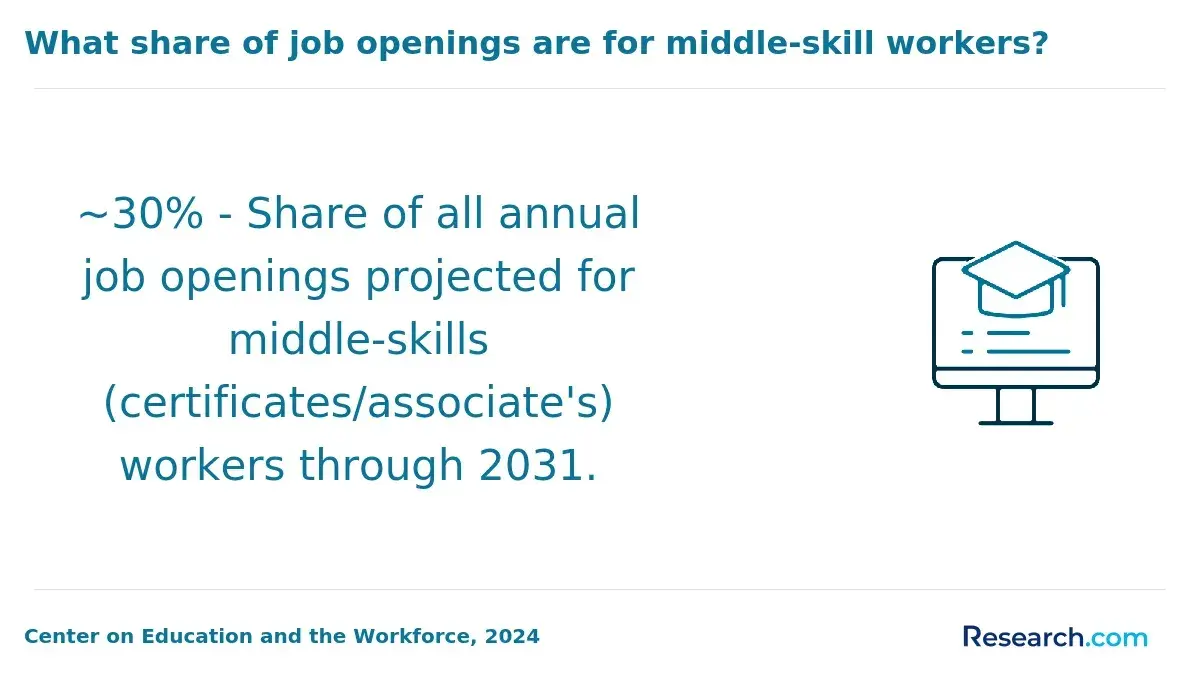
Speech pathology differs from many majors because the degree-level occupation has a clear professional gate: graduate education and licensure. That makes the field less like a general liberal arts major and more like nursing, occupational therapy, physical therapy, counseling, or education, where credential completion strongly affects job alignment.
The broad benchmark is important. The New York Fed's 2024 labor-market data showed that 41.2% of recent college graduates were underemployed, meaning many worked in jobs that typically did not require a college degree. Speech pathology students should use that figure as a warning about bachelor's-level outcomes, not as a direct rate for licensed SLPs. The master's-level SLP pathway is more occupationally specific than the average major, but bachelor's-only graduates can resemble other pre-professional students who have not yet completed the credential that unlocks the target job.
The table below compares speech pathology with other common majors and healthcare-adjacent paths. It focuses on credential fit rather than claiming a single underemployment rate for every graduate.
| Field or major | Credential link to degree-level work | Underemployment pattern | Decision point for students |
| Speech pathology or communication sciences and disorders | Strong after master's degree and licensure | Bachelor's-only graduates face higher mismatch risk; licensed SLPs face lower mismatch risk | Plan early for graduate admission, SLPA eligibility, or a related credentialed role |
| Nursing | Strong after RN licensure | Lower mismatch risk when licensure is completed | Choose accredited programs with strong clinical placements and exam preparation |
| Psychology bachelor's | Often requires graduate education for licensed practice | Higher risk of generalist support or administrative roles without graduate study | Build applied research, behavioral health, or human-services experience before graduation |
| Education | Strong when state teacher licensure is completed | Mismatch risk rises for graduates without certification or in low-hiring regions | Track state certification rules and local district demand |
| Health information and healthcare administration | Varies by employer and certification | Better alignment when students add analytics, compliance, coding, or EHR skills | Compare role-specific outcomes, including health information manager salary expectations |
Compared with many majors, speech pathology can be worth pursuing when the student is prepared for the full credential pathway. It becomes riskier when a student assumes the bachelor's degree alone will qualify them for SLP jobs.
Low-credential work can affect career growth, but the effect depends on the role and the graduate's strategy. A school-based paraprofessional role that involves AAC support, language modeling, and IEP-team exposure can strengthen a future application. A general receptionist job in an unrelated office may provide professionalism, but it does little to prove readiness for clinical speech-language work.
The main risk is signaling. Employers and graduate programs look for evidence that a candidate understands clients, documentation, ethical boundaries, collaboration, and the realities of service delivery. If a graduate spends several years in unrelated low-credential work, they may need to explain why their clinical skills are still current and why they are ready to re-enter the professional pipeline.
There is also a financial compounding effect. Federal Direct Loan rates for 2024-25 were 6.53% for undergraduate borrowers and 8.08% for graduate or professional borrowers. When a graduate carries debt while earning low-credential wages, repayment pressure can push them to delay graduate school, reduce application flexibility, or accept another short-term job instead of investing in the credential that may improve long-term alignment.
Low-credential work is least damaging when it is intentional, time-limited, and connected to the next credential. It is most damaging when it becomes a substitute for planning.
The salary gap between underemployed speech pathology graduates and degree-level speech-language pathologists can be substantial. BLS May 2024 data reports a $95,410 median annual wage for speech-language pathologists. Common fallback roles that do not require full SLP preparation typically report lower median wages, which means underemployment can affect both immediate income and the ability to repay loans, move for better jobs, or fund graduate school applications.
The table below uses BLS May 2024 median wage data to illustrate the wage gap between a licensed SLP role and common lower-credential alternatives. These are national medians, so actual pay varies by state, district, healthcare setting, union contract, experience, and employer budget.
| Role | Typical credential alignment | May 2024 median annual wage | Approximate gap versus SLP median |
| Speech-language pathologist | Master's degree, supervised practice, state licensure, often CCC-SLP | $95,410 | Baseline |
| Medical assistant | Postsecondary certificate or employer training; bachelor's usually not required | $44,200 | $51,210 lower |
| Social and human service assistant | Varies; many roles do not require a speech pathology degree | $44,240 | $51,170 lower |
| Teacher assistant | High school diploma, associate degree, or local requirements depending on district | $35,240 | $60,170 lower |
| Childcare worker | Usually no college degree required | $32,050 | $63,360 lower |
This gap does not mean every graduate should reject a lower-paid bridge role. It means the role should have a purpose. If a job helps you qualify for graduate school, gain supervised experience, or meet state SLPA requirements, the short-term pay cut may be strategic. If it does not build toward a credentialed role, the opportunity cost can become expensive quickly.
Speech pathology graduates are pushed into low-credential roles for several reasons, and most are predictable before graduation. The biggest barrier is credential mismatch: many students complete a bachelor's degree that prepares them academically for speech pathology but does not authorize them to work as independent SLPs.
Other barriers are local. Some states and employers have clear SLPA pathways, while others have limited assistant roles or stricter supervision rules. Rural areas may have demand but fewer graduate placements or clinical supervisors. Competitive metro areas may offer more jobs but also attract more applicants from nearby universities.
Students should identify the specific barrier affecting them rather than assuming the entire field is weak. The most common barriers include:
- Not understanding that a master's degree and state licensure are usually required for full SLP practice until late in the bachelor's program.
- Applying only to dream graduate programs and having no backup plan for prerequisites, assistant credentials, or a second application cycle.
- Lacking supervised experience with children, adults, disability services, AAC, schools, hospitals, or rehabilitation settings.
- Graduating without references from clinicians, faculty supervisors, or field-placement managers who can speak to applied communication-disorders skills.
- Ignoring state-by-state differences in SLPA recognition, school hiring rules, and licensure pathways.
- Using a generic resume that describes coursework but does not show documentation, observation, progress tracking, or client-facing experience.
- Taking the first available unrelated job without a timeline for graduate applications, licensure steps, or skill development.
Some students also compare speech pathology with faster direct-care pathways, such as a 12 week LPN program, because they want a quicker route to licensed patient care. That comparison can be useful, but the right choice depends on whether the student wants nursing duties or communication-disorders practice.
A strong speech pathology resume should make the graduate look ready for a clinical or clinically adjacent environment, not just academically interested in communication disorders. Applicant tracking systems and hiring managers look for role-specific language, but human reviewers also want evidence of judgment, professionalism, and client-centered experience.
The best resumes translate coursework and field exposure into employer language. Before applying, graduates should build a resume that connects their education to the setting they want: school, pediatric clinic, hospital, skilled nursing facility, early intervention, private practice, research lab, or SLPA role where permitted.
Use the following sequence to position your resume for degree-level or gateway roles:
- Start with the target role and setting, then identify the exact phrases employers use, such as speech-language pathology assistant, communication disorders, IEP support, AAC, pediatric language, dysphagia exposure, documentation, or progress monitoring.
- Create a skills section that includes clinical observation, phonetic transcription, language sampling, treatment-material preparation, data collection, caregiver communication, HIPAA awareness, and EHR or documentation tools when accurate.
- Rewrite coursework as applied preparation, emphasizing assessment concepts, intervention planning, anatomy and physiology, audiology, language development, research methods, and multicultural communication.
- Add field experience even if it was unpaid, including observation hours, volunteer work, school placements, disability services, tutoring, research labs, early childhood settings, or rehab exposure.
- Use measurable bullets where possible, such as number of observation hours completed, age groups served, documentation types reviewed, or materials prepared, without disclosing private client information.
- Include a short credential-readiness line if relevant, such as state SLPA application in progress, graduate prerequisites completed, CPR certification, background check clearance, or bilingual proficiency.
- Tailor each application so a school district resume emphasizes IEPs and classroom collaboration, while a medical setting resume emphasizes documentation, interprofessional communication, and patient-care exposure.
Avoid the common mistake of listing only "communication skills" and "teamwork." Those traits matter, but nearly every applicant claims them. A better resume proves readiness through settings, tools, populations, documentation tasks, and supervised exposure.
Certifications can help speech pathology graduates reduce underemployment risk, but they do not all serve the same purpose. Some credentials are required for professional SLP practice, some support assistant-level employment, and others strengthen a resume for specific settings. Students should be careful not to buy random certificates that employers do not recognize.
The most important credential for full speech-language pathologist roles is usually the state license, commonly supported by completion of an accredited master's program, supervised clinical experience, a clinical fellowship, and exam requirements. Many employers also value the Certificate of Clinical Competence in Speech-Language Pathology, known as CCC-SLP, although exact requirements vary by state and employer.
The table below separates credentials that can unlock professional practice from those that mainly improve employability in related or assistant roles. Always verify requirements with your state licensing board and target employers before spending money.
| Credential or training | Best fit | How it helps reduce underemployment risk | Important limitation |
| State SLP license | Master's-level SLP graduates | Qualifies graduates for independent or supervised professional SLP roles depending on state rules | Requirements vary by state and usually require graduate education |
| CCC-SLP | Clinical fellows and licensed SLPs | Signals nationally recognized professional competence to many employers | It is not a shortcut around degree, exam, or supervised practice requirements |
| State SLPA license, registration, or approval | Bachelor's graduates in states with assistant pathways | Can turn a general CSD bachelor's degree into a field-specific assistant role | Not all states use the same SLPA rules or job titles |
| CPR and Basic Life Support | Medical, rehab, school, and clinic settings | Supports readiness for patient-facing environments | Usually not enough by itself to qualify for degree-level speech pathology work |
| AAC-focused training | School, pediatric, autism, and disability-service settings | Shows practical technology skill with communication supports | Quality and employer recognition vary widely |
| HIPAA, documentation, or EHR training | Clinics, hospitals, telepractice, and healthcare support roles | Helps graduates show compliance awareness and workflow readiness | Does not replace supervised clinical experience |
Students considering adjacent rehabilitation or movement-science careers may also compare options such as the best online kinesiology degree, but that path leads to different roles and should not be treated as a substitute for SLP licensure.
The smartest strategy is to treat speech pathology as a credentialed career path from the first year of college, not as a major that automatically leads to the target job. Students who plan early can reduce underemployment risk by aligning coursework, experience, references, state rules, and applications before graduation.
The following steps help students move toward degree-level employment instead of drifting into low-credential work:
- Map the target role first. Decide whether you want full SLP practice, an SLPA role, audiology, special education, healthcare administration, research, or another related path.
- Check state rules early. Look up whether your state recognizes SLP assistants, what coursework or supervision is required, and whether school districts hire bachelor's-level support staff.
- Choose accredited and well-connected programs. For master's pathways, prioritize programs that meet professional accreditation expectations, offer strong clinical placements, and report transparent student outcomes.
- Build supervised experience before senior year. Seek observation, volunteer, paraprofessional, research, tutoring, disability-services, early intervention, or clinic exposure tied to communication and swallowing needs.
- Prepare for graduate admissions before the final semester. Track prerequisites, GPA expectations, recommendation letters, personal statements, application deadlines, and interview requirements.
- Develop setting-specific skills. For schools, learn IEP language, classroom collaboration, and AAC basics; for medical settings, learn documentation, interdisciplinary communication, dysphagia terminology, and patient safety expectations.
- Create a privacy-safe portfolio. Include de-identified sample treatment materials, language-sample analysis, reflection papers, research posters, and documentation templates that show reasoning without revealing client information.
- Network with purpose. Contact alumni, clinical supervisors, school SLPs, private-practice owners, and graduate students to learn which experiences actually influence hiring in your region.
- Evaluate fallback jobs by exit value. Accept a lower-credential role only if it provides supervision, relevant experience, references, schedule flexibility, or a clear path to graduate school or SLPA eligibility.
- Reassess ROI each year. Compare expected debt, local wages, graduate school costs, licensing requirements, and your willingness to relocate for stronger placements or first jobs.
The common mistake is waiting until graduation to discover that the bachelor's degree is not enough for the desired role. The better approach is to build a credential plan, an experience plan, and a financial plan at the same time.
Some speech pathology graduates stay in low-credential roles only briefly, especially when the role is a planned bridge into graduate school or supervised assistant practice. Others remain stuck longer because the job does not build the clinical evidence, references, prerequisites, or licensure progress needed for degree-level work.
The length of underemployment often depends on whether the first job is a gateway or a trap. A gateway role uses communication-disorders knowledge, provides supervised exposure, and helps the graduate move toward graduate school, SLPA credentials, or a related healthcare credential. A trap role pays immediate bills but offers little skill growth related to assessment, treatment, documentation, or client communication.
Before accepting a lower-credential role, graduates should ask whether it supports a realistic exit plan. The following signs help separate useful bridge jobs from roles that may prolong underemployment:
- A stronger bridge role has supervision from an SLP, audiologist, special educator, behavioral clinician, or healthcare professional who can verify field-relevant skills.
- A stronger bridge role includes documentation, screening support, therapy-material preparation, progress tracking, family communication, or exposure to IEP or care-team meetings.
- A weaker fallback role uses general customer service, clerical, or childcare labor without structured learning tied to communication disorders.
- A weaker fallback role has unpredictable hours that make it hard to complete prerequisites, apply to graduate school, study for exams, or attend interviews.
- A risky role has no promotion path, no clinical references, and no timeline for moving into an assistant, graduate, or licensed pathway.
A reasonable bridge job can make sense for one application cycle, a gap year, or while completing missing prerequisites. It becomes a problem when the graduate stops accumulating field-specific evidence and simply waits for the labor market to improve.
Other Things You Should Know About Speech Pathology
Yes, but usually not as a full speech-language pathologist. Bachelor's graduates may qualify for SLPA roles in some states, school support jobs, research assistant roles, disability services, or healthcare support positions. The strongest outcomes usually come when the job is tied to a graduate school or licensure plan.
Not automatically. The bigger issue is whether the program meets accreditation expectations, includes required clinical experiences, prepares students for licensure, and has strong placement support. For clinical SLP preparation, supervised practica and state eligibility matter more than whether some coursework is online.
Relocation can help if your local area has few graduate placements, limited SLPA roles, or heavy competition for school and clinic openings. Before moving, compare state licensure rules, cost of living, school district demand, medical employer hiring, and supervision availability.
Use the next cycle strategically. Ask programs for feedback, strengthen prerequisites, gain supervised experience, improve references, consider additional accredited programs, and explore SLPA eligibility if your state allows it. Avoid taking an unrelated job without a plan to improve your next application.
See What Experts Have To Say About Studying Speech Pathology
Read our interview with Speech Pathology experts

- Too many graduates, not enough jobs: universities, profits and clinical need https://theconversation.com/too-many-graduates-not-enough-jobs-universities-profits-and-clinical-need-13482
- Why is speech language pathology considered a gendered ... https://athenacommons.muw.edu/cgi/viewcontent.cgi
- Speech-Language Pathology: A Career for Individuals Who Want to Work with Young Children https://www.mefa.org/article/speechlanguage-pathology-a-career-for-individuals-who-want-to-work-with-young-children/
- How to Follow the Best Path to Becoming a Speech Pathologist https://www.masmedicalstaffing.com/blog/becoming-a-speech-pathologist/
- Occupation Profile https://nccareers.org/occupation-profile/291127/1284
- How Many Speech Therapists in the Us | Advanced Therapy Clinic https://www.advancedtherapyclinic.com/blog/how-many-speech-therapists-in-the-us
- Medical Speech-Language Pathologist - Explore Healthcare Careers - Mayo Clinic College of Medicine & Science https://college.mayo.edu/academics/explore-health-care-careers/careers-a-z/medical-speech-language-pathologist/
- Speech Pathology Career Guide https://speechpathologymastersprograms.com/speech-pathology-careers/
- The Labor Market for Recent College Graduates https://www.newyorkfed.org/research/college-labor-market
- Speech-Language Pathology (SLP) Career Outlook - USAHS https://www.usa.edu/blog/speech-language-pathology-slp-career-outlook/