
2027 Best Social Work Degree Programs Ranking in Iowa

Co-Founder and Chief Data Scientist
Choosing the right social work degree program in Iowa can shape your future and open doors to meaningful career opportunities. This article introduces the 2027 Best Social Work Degree Programs Ranking in Iowa, created by the Research.com team of data scientists.
Our goal is to help you make an informed decision by providing clear, trustworthy insights into the top programs available. Pursuing a social work degree not only builds professional skills but also empowers you to make a positive impact in your community.
Explore these rankings to find a program that fits your goals and passion for helping others.
Key benefits of getting social work degree in Iowa
- Graduates with a social work degree in Iowa can expect strong earning potential, with careers like Social Workers earning a mean annual wage of $68,800 and Community Organizers making around $83,400. These salaries show promising financial stability for those passionate about helping others.
- A social work degree opens doors to diverse career paths including Child Welfare Specialist, Residential Counselor, and Youth Worker, all with rewarding opportunities to impact communities positively in Iowa. Many graduates from local universities find meaningful work in agencies and nonprofits supporting families and youth.
- Online social work degrees offer flexibility and convenience, allowing students in Iowa to balance education with personal commitments while gaining the same valuable skills. Graduates from programs like those at the University of Iowa report feeling confident and prepared for real-world challenges in social services.
- Key benefits of getting social work degree in Iowa
- What can I expect from social work degree in Iowa?
- Where can I work with social work degree in Iowa?
- How much can I make with social work degree in Iowa?
- 2027 Best Social Work Degree Programs Ranking in Iowa
- Key Findings
- How long does it take to complete social work degree in Iowa?
- Affordability and Financial Considerations in Social Work Education
- What's the difference between online and on-campus social work degree?
- What is the average cost of social work degree in Iowa?
- Licensing and Certification in Iowa
- What financial aid is available to social work degree students in Iowa?
- What are the prerequisites for enrolling in social work degree program in Iowa?
- Professional Associations and Continuing Education Opportunities
- What courses are typically in social work degree programs in Iowa?
- What types of specializations are available in social work degree programs in Iowa?
- How do you choose the best social work degree in Iowa?
- What career paths are available for social work degree students in Iowa?
- What is the job market for social work degree in Iowa?
- Related Social Work Rankings for Nearby States
- Top Trending Social Work Rankings
- See What Experts Have To Say About Studying Social Work
What can I expect from social work degree in Iowa?
The average cost of earning a social work degree in Iowa varies based on the institution, but many students find it to be a manageable investment, especially at public universities like the University of Iowa or Iowa State University. Graduates often share how scholarships, financial aid, and in-state tuition rates significantly ease the financial burden, making it possible to focus on impactful learning rather than stress over expenses.
Students at these universities typically pay around $9,000 to $12,000 per year for undergraduate social work programs when attending as Iowa residents. This compares favorably to private options, where costs can be higher but often come with additional support like smaller class sizes and personalized mentorship. Those pursuing a Master of Social Work (MSW) should expect higher tuition, generally ranging from $15,000 to $25,000 annually, depending on program length and school.
Many graduates highlight the value they gained beyond tuition: immersive field practicums in community centers or hospitals around Iowa that prepared them for real-world challenges. The financial investment feels worthwhile when they remember how those experiences helped shape their confidence and readiness to make a difference.
Where can I work with social work degree in Iowa?
Graduates from social work programs at respected Iowa institutions like the University of Iowa and Iowa State University often find meaningful careers across diverse settings. Many begin in human services agencies, working directly with families and children in community outreach, where they witness the immediate impact of their efforts every day. Imagine guiding a struggling family through support services-this hands-on work fuels a deep sense of purpose.
Hospitals and healthcare facilities are also vibrant workplaces, especially with Iowa's aging population. Graduates describe the fulfillment they get from helping patients and their families navigate complex care systems, easing transitions after hospital stays. School social workers in districts throughout the state play a crucial role, particularly in rural areas, supporting students facing tough emotional challenges and making school a safer, more supportive place.
Many alumni share excitement working in nonprofits tackling homelessness or substance abuse, feeling part of a larger mission to create lasting change. For those who pursue clinical licensure, private practice offers the rewarding chance to provide therapy independently. Others find joy in policy and research roles, designing programs that shape Iowa's social welfare landscape for years to come.
How much can I make with social work degree in Iowa?
Graduates from social work programs at institutions like the University of Iowa and Drake University often find rewarding salary opportunities across the state. Entry-level roles such as Child Welfare Specialist and Residential Counselor typically start around $59,190 annually, reflecting stable demand in community and child services. If you're passionate about hands-on engagement and advocacy, positions like Community Organizer and Youth Worker boast even higher mean salaries, around $83,400 per year, thanks to their critical impact on local populations.
Many graduates share how advancing their education and gaining specialized licenses boosts their income potential beyond these figures. For example, Social Workers with additional certifications or clinical licenses earn an average of $68,800 per year, benefiting from diverse opportunities in healthcare, schools, and mental health sectors around Iowa's urban centers and smaller towns alike.
Imagine starting your career in Des Moines, where demand and salaries trend higher, or bringing your skills to rural areas that urgently need dedicated social workers. These experiences not only shape your expertise but also your earning trajectory, making a social work degree in Iowa both a meaningful and financially solid choice.
2027 Best Social Work Degree Programs Ranking in Iowa
How do we rank schools?
Investing in your education is a significant decision that can shape your future, and the Research.com team understands the importance of making informed choices. To assist prospective students in Iowa, we have meticulously crafted the "2027 Best Social Work Degree Programs Ranking in Iowa." Our commitment to quality, credibility, and accuracy is reflected in the extensive research and analysis conducted to compile this ranking.
We utilized the following reputable data sources to ensure a comprehensive evaluation of social work degree programs:
By exploring this ranking, readers will gain valuable insights into the best social work degree programs available in Iowa, helping them make informed decisions about their educational paths. For more details on our methodology, please visit our Research.com methodology page.


Key Findings
- Social work degrees in Iowa include bachelor's (BSW) and master's (MSW) programs offered by universities like the University of Iowa and Iowa State University.
- In-state tuition for bachelor's programs ranges from $8,000 to $10,000 per year, while graduate programs typically cost between $10,000 and $15,000 annually.
- Entry-level social workers earn about $45,000 to $50,000 per year, with experienced professionals making $60,000 to $70,000 or more.
- The job market is stable, with demand in healthcare, child welfare, mental health, and schools growing at or above national rates.
- Licensing requires completing an accredited degree, passing the ASWB exam, and supervised practice to become an LSW or LISW in Iowa.
How long does it take to complete social work degree in Iowa?
Completing a social work degree in Iowa typically takes determined students about four years if pursuing a bachelor's degree (BSW) full-time. Graduates from the University of Iowa or Iowa State University often share how those years were a journey of growth, balancing coursework with meaningful community engagement. These universities provide accredited programs that truly prepare you for impactful careers.
If you aim higher with a Master of Social Work (MSW), expect roughly two years of full-time study. Many who have taken this path at Iowa's universities appreciate part-time options, stretching the program to three or four years to fit work and life commitments-especially beneficial for those already in the helping professions. Some accelerated tracks let previous BSW holders finish in as little as a year, making it easier to advance without losing momentum.
Don't forget the essential fieldwork. Completing 400+ hours in your BSW or about 900 hours during the MSW grounds your learning in real-world experience, a moment many alumni describe as transformative and deeply rewarding.
Affordability and Financial Considerations in Social Work Education
When considering a social work program in Iowa, affordability is a crucial factor. Prospective students often find themselves balancing the desire to pursue a meaningful career with the financial realities of higher education. To make informed decisions, it's essential to explore the various options available for financing a social work degree. One critical aspect to consider is the cost of tuition, which can vary significantly between institutions. For instance, affordable social work programs in Iowa can offer a more feasible pathway for those on a tighter budget. By understanding the financial implications and available resources, aspiring social workers can better navigate their educational journey and set themselves up for success in their future careers.
What's the difference between online and on-campus social work degree?
Choosing between an online and on-campus social work degree in Iowa is about matching your lifestyle with your learning preferences. Graduates from the University of Iowa often speak warmly of the campus experience-the face-to-face discussions and close-knit connections formed in classrooms create a strong support network. Attending in person brings structure, with set schedules that many find motivating.
On the other hand, those who pursued their degree online appreciated the freedom to study from places like small towns in Iowa where campus access isn't easy. Online programs, offered by institutions like the University of Northern Iowa, provide a flexible path to earning the same respected Bachelor or Master of Social Work. Students balance jobs, family, and school without sacrificing quality, thanks to accredited curricula.
In both pathways, supervised fieldwork is vital, but on-campus students often find local help securing placements, while online learners partner with agencies near their homes. The journey is different, but each path equips you to make a real impact in Iowa communities.
What is the average cost of social work degree in Iowa?
The average cost of a social work degree in Iowa varies depending on whether you attend a public or private institution, and whether you qualify as an in-state resident. Many graduates from Iowa State University and the University of Iowa report that the total expenses for social work program Iowa typically fall around $36,710 for in-state students, reflecting a more affordable path for residents. Out-of-state students often face higher costs, nearing $49,880, which is a significant but manageable investment towards a meaningful career.
Graduates from Drake University and other private colleges share similar feelings of accomplishment despite the steeper tuition because these institutions provide valuable financial aid and scholarship opportunities. These additional funds can ease the burden and help students focus on their passion for helping others.
Envision walking through campus, textbooks in hand, knowing the skills you're gaining will empower you to make a real difference. Balancing tuition fees with other expenses like room, board, and supplies is part of the journey, often totaling around $15,000 annually as anticipated for Midwest college students.
Many students find it helpful to explore resources such as FAFSA, employer tuition programs, and state grants to lower costs. To discover more about affordable social work programs in Iowa and plan your budget wisely, explore affordable social work programs in Iowa, which offers guidance tailored to your goals and financial situation.
Licensing and Certification in Iowa
To legally practice in Iowa, follow these steps:
- Earn a CSWE-accredited degree: BSW for Licensed Bachelor Social Worker or MSW for Licensed Master Social Worker-consider an online msw program for flexibility.
- Fulfill supervised experience requirements: 3,000 hours for LBSW; 2,000 post-MSW hours for LMSW.
- Pass the ASWB licensure exam at the Bachelor’s or Master’s level.
- Maintain your license by completing 30 continuing education credits every two years.
What financial aid is available to social work degree students in Iowa?
Financial aid for social work students in Iowa is both diverse and accessible, ensuring your path at universities like the University of Iowa or Iowa State University feels less daunting. Many graduates remember relying on federal Pell Grants and FSEOG awards, which provide crucial support without the stress of repayment. These grants can range widely, sometimes offering up to $7,500 per year, helping to cover essential expenses while focusing on coursework and fieldwork.
Direct Subsidized and Unsubsidized Loans are common tools that students wisely use to manage costs, with some graduate students tapping into Graduate PLUS Loans. A graduate from the University of Northern Iowa shared how federal loan options gave them flexibility in managing tuition while pursuing their Master of Social Work.
State aid like the Iowa Tuition Grant is a valuable resource, especially for those attending private colleges offering social work. Vocational Rehabilitation services have empowered students with disabilities, proving that assistance adapts to unique needs.
Scholarships from the Iowa Chapter of NASW and university departments reward dedication and academic excellence. Plus, many social work graduates cherish the Public Service Loan Forgiveness program, easing financial burdens after committing to nonprofit or government roles.
Work-study jobs related to social work provide not just income but practical experience, making education feel both affordable and meaningful. By exploring these aids early at Iowa institutions, you're setting yourself up for both financial relief and rewarding career growth.
What are the prerequisites for enrolling in social work degree program in Iowa?
To enroll in a social work degree program in Iowa, you need to meet some important prerequisites that set you up for success. For those aiming for a Bachelor of Social Work (BSW), having a high school diploma with a decent GPA, often around 2.5, is essential. Many students who've thrived at schools like the University of Iowa or Iowa State have shared how starting with courses in psychology or sociology gave them confidence and a meaningful foundation before diving deeper into social work.
Graduate programs, especially Master of Social Work (MSW) degrees, require a bachelor's degree from an accredited college. Even if your undergraduate degree is in a different field, colleges such as the University of Northern Iowa welcome you as long as you complete prerequisite classes like statistics and social welfare policy. Graduates frequently highlight how valuable their volunteer experiences at local social service agencies were in preparing them for both admissions and the real world.
The process also often includes submitting GRE scores and undergoing background checks to ensure a strong ethical commitment. These steps reflect the deep responsibility you'll hold working with vulnerable communities across Iowa.

Professional Associations and Continuing Education Opportunities
Joining a professional association and pursuing ongoing training are essential steps for social work graduates in Iowa who want to stay current, expand their network, and advance their careers. Many professionals begin by affiliating with the National Association of Social Workers (NASW) Iowa Chapter, which offers quarterly workshops, policy briefings, and local networking events. Membership provides access to discounted continuing education units (CEUs) required for maintaining LBSW and LMSW licensure, plus specialized webinars on topics like trauma-informed care and substance abuse interventions. In addition to NASW, consider these state and regional groups:
- Iowa School Social Workers Association (ISSWA): Focuses on best practices in educational settings and hosts an annual conference on student mental health.
- Iowa Coalition Against Sexual Assault (Iowa CASA): Offers certification courses in advocacy and crisis intervention for those working in gender-based violence prevention.
- Midwest Social Work Education Consortium (MSWEC): A collaboration of regional universities delivering online seminars in research methods and policy analysis. Beyond association memberships, certified credentials such as the Certified Social Work Case Manager (C-SWCM) and the Trauma-Informed Care Specialist designation can distinguish your resume and open doors to leadership roles. Many universities integrate CEU opportunities directly into alumni programs-be sure to compare tuition rates and support services when selecting a provider. For those mindful of costs, explore our list of schools with cheap social work programs to find budget-friendly pathways that don’t compromise on professional development. Continued engagement with these associations and credentials ensures compliance with evolving licensure requirements and keeps your practice aligned with the highest ethical and clinical standards.
What courses are typically in social work degree programs in Iowa?
When pursuing a social work degree in Iowa, you'll dive into a rich mix of courses that build both your heart and your skills. At universities like the University of Iowa or Iowa State University, core classes cover essential topics such as social work principles, including history, ethics, and professional roles. Graduates often mention how learning ethical decision-making prepared them to face real-world challenges with confidence and integrity.
Courses in human behavior and the social environment help you understand people's struggles and strengths within their social contexts-this knowledge fuels your empathy, which is vital when working with diverse clients. Many students find these lessons come alive when interning locally, applying theories to situations like supporting families navigating child welfare systems in Iowa.
- Social welfare policy courses equip you to navigate and influence Iowa's unique social services landscape, from Medicaid to mental health programs.
- Practice courses offer hands-on training in client counseling and case management, turning theory into action.
- Field education typically places you in Iowa social service agencies, giving you real-world experience that builds both your confidence and competence.
What types of specializations are available in social work degree programs in Iowa?
When exploring social work degree specializations in Iowa, you'll find a range of focused paths designed to meet the state's unique community needs. Graduates from institutions like the University of Iowa or Iowa State University often choose Child and Family Welfare, dedicating their careers to supporting foster care systems or aiding families in crisis. Others pursue Healthcare Social Work, where they learn to navigate hospital systems and provide vital emotional support to patients facing serious health challenges. The mental health and substance abuse specialization empowers students to work closely with individuals battling addiction or psychiatric disorders, a growing need across Iowa.
Many find the school social work track especially rewarding, as it involves helping students overcome challenges like bullying and absenteeism in local Iowa schools. Gerontology is another popular choice, responding to Iowa's aging population with skills in counseling and community resource coordination. If you're curious about what career options align with these specializations, consider exploring what can i do with online bachelors degree in social work to spark inspiration and clarity for your path.
Choosing from the best social work concentrations Iowa offers not only prepares you academically but builds confidence through tailored fieldwork experiences, helping you make a meaningful impact in communities you care about.
How do you choose the best social work degree in Iowa?
Choosing the best social work degree programs in Iowa means focusing on factors that truly shape your future as a compassionate professional. Graduates from the University of Iowa often highlight how the program's strong CSWE accreditation and rich fieldwork partnerships helped them confidently step into real-world roles. Meanwhile, students from Iowa State University appreciate the flexibility in program formats, balancing studies with family or work commitments.
Cost plays a significant role. Many find that exploring financial aid options or looking into schools with cheap social work programs in Iowa lightens the financial load, making your education more accessible without sacrificing quality. Hands-on experience through internships with local agencies in Iowa's communities builds vital skills and deepens your connection to those you'll serve.
Remember, successful social work students focus on programs that prepare them specifically for Iowa's licensing exams. This practical preparation, coupled with strong faculty support, creates a rewarding journey toward your meaningful career.
What career paths are available for social work degree students in Iowa?
Graduates with a social work degree in Iowa find a variety of rewarding career paths that truly make a difference in people's lives. Many take on roles as child and family social workers, helping to protect vulnerable children and support families through challenging times. Others become healthcare social workers, assisting patients in hospitals with emotional support and discharge planning-experiences often shared by those who studied at well-known programs like the University of Iowa's School of Social Work.
Jobs with social work degree Iowa also include school social workers guiding students through social and emotional hurdles, and mental health and substance abuse social workers providing essential counseling services. Community social workers in Iowa energize local programs and advocate for change, turning passion into impact. Graduates recall how these roles offered real fulfillment, aligning with Iowa's need for compassionate professionals.
For students concerned about the financial investment, exploring options like the Most Affordable Social Work Degree Programs Ranking in Boston, MA can provide helpful insights to plan wisely. These career options highlight the rewarding nature and practical paths available after earning a social work degree in Iowa.
What is the job market for social work degree in Iowa?
The job market for social work degree holders in Iowa continues to be strong, with steady demand in healthcare, schools, public agencies, and nonprofit organizations. Graduates from popular Iowa universities often find rewarding roles in mental health clinics or child welfare agencies, where their work directly improves lives. Many experience the satisfaction of supporting Iowa's aging population and rural communities, areas where social workers are especially needed. This steady demand reflects the positive job outlook for social work degree Iowa, with average salaries around $55,000 annually.
Social work employment opportunities in Iowa are diverse, offering options across urban centers like Des Moines and rural counties. Some graduates share how working in smaller communities brought both fulfillment and incentives such as loan repayment programs. The practical training available at Iowa institutions prepares students well for these challenges. Those considering quicker options might explore 6-month certificate programs that pay well, which can serve as a valuable entry point into the field.
With growing awareness of social issues, the role of a social worker in Iowa is impactful and evolving. Commitment, compassion, and local knowledge open doors to meaningful careers statewide.
Frequently Asked Questions About social work
Social work degree students in Iowa can maximize their learning experience by engaging actively in field placements. The Iowa Board of Social Work sets standards requiring supervised internships, typically 400-1,200 hours, which provide hands-on experience essential for licensure and employment.
Students should also take advantage of Iowa's diverse community resources, including nonprofit organizations and government agencies, allowing exposure to varied populations and social issues.
Participating in campus clubs or local professional groups like the Iowa Chapter of the National Association of Social Workers helps build networks and understand local policy impacts.
Finally, staying updated on Iowa-specific social work trends through resources such as the Iowa Department of Human Services website can deepen practical knowledge.
Emerging niches within the social work field in Iowa reflect growing societal needs and economic changes. One key area is gerontological social work, addressing the state's expanding aging population. Iowa's median age is about 39.8 years, creating demand for specialists in elder care and support services, according to the U.S. Census Bureau.
Another rising niche is behavioral health social work, focusing on mental health and substance abuse treatment. The Iowa Department of Public Health reports increasing investment in community mental health programs, highlighting job growth in this sector.
Additionally, rural social work is expanding, as many Iowa communities require tailored outreach to address limited healthcare access and poverty.
After earning a social work degree in Iowa, preparing for the job market involves several key steps. Graduates should seek licensure through the Iowa Board of Social Work Examiners, which requires completing supervised practice hours and passing the ASWB exam. Networking is crucial; attending local Iowa professional social work organizations, such as the Iowa NASW chapter, can provide valuable connections.
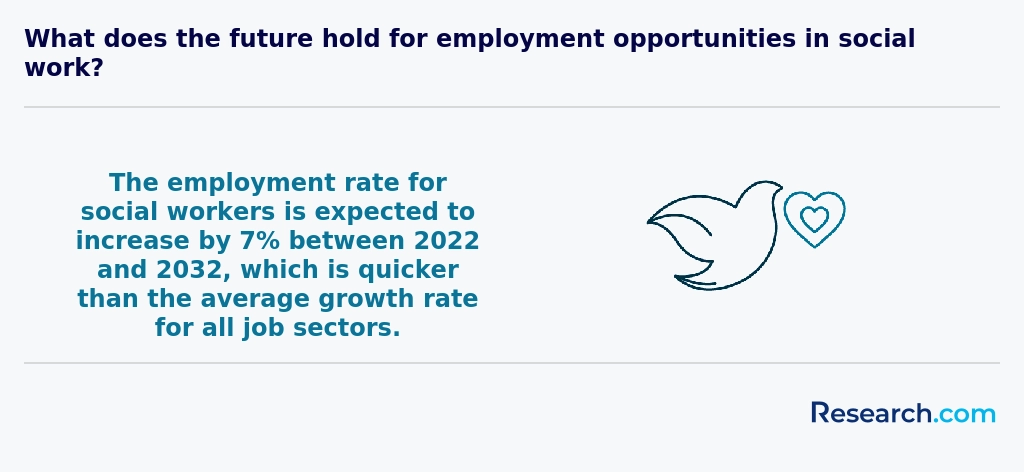
Gaining practical experience through internships or volunteer work during education enhances employability. The Iowa Department of Workforce Development reports that demand for social workers is expected to grow by 8% through 2030, indicating a steady job market. Tailoring resumes to emphasize skills in child welfare, mental health, or aging services-sectors prominent in Iowa-is beneficial.
Employers in Iowa seek several key skills when hiring social work degree graduates. Strong communication abilities are essential, as social workers must effectively interact with clients, families, and multidisciplinary teams. Critical thinking and problem-solving skills are also highly valued to address complex social issues.
Another important skill is cultural competence, given Iowa's diverse population. Social workers need to understand and respect different backgrounds to provide effective support. According to the Iowa Board of Social Work, empathy and ethical judgment rank among top competencies expected from recent graduates.
Finally, time management and organizational skills help graduates handle caseloads efficiently in agencies across Iowa's healthcare, school, and social service settings.
Finding internships in Iowa relevant to a social work degree usually begins with contacting accredited colleges and universities offering social work programs. Many institutions, such as the University of Iowa and Iowa State University, have established partnerships with local agencies and nonprofits, providing students with placement options. The Iowa Board of Social Work, which licenses social workers in the state, also offers resources and may list approved internship sites. According to the National Association of Social Workers (NASW) Iowa Chapter, internships commonly involve work in healthcare, mental health, child welfare, and community services.
Students should utilize career services and faculty connections to identify opportunities. Volunteering in community organizations like food banks and shelters can sometimes lead to formal internships. Additionally, websites dedicated to internships, including local government job boards, are useful for discovering openings. Securing an internship is essential for gaining practical experience and meeting Iowa's requirements for social work licensure.
A social work degree significantly enhances career mobility and advancement opportunities in Iowa. According to the Iowa Workforce Development, the demand for licensed social workers is expected to grow by 9% between 2020 and 2030, reflecting strong job prospects statewide. Earning a Bachelor of Social Work (BSW) or Master of Social Work (MSW) often qualifies individuals for licensure as a Licensed Social Worker (LSW) or Licensed Independent Social Worker (LISW), credentials that open doors to higher-paying and specialized roles.
Employers in Iowa's healthcare, education, and government sectors often favor candidates with accredited social work degrees for leadership and clinical positions. An MSW degree, in particular, is associated with faster career advancement and access to supervisory roles, making it a valuable investment for those seeking long-term growth in the field.
Studying for a social work degree in Iowa equips students with skills to collaborate effectively across various professional fields. Iowa's programs emphasize interdisciplinary training, integrating coursework from psychology, sociology, healthcare, and education to prepare students for complex social challenges.
For example, the Iowa Board of Social Work sets standards requiring social work curricula to include community resources, healthcare systems, and mental health awareness. This ensures graduates can work alongside medical professionals, educators, and law enforcement.
Additionally, many Iowa social work programs incorporate field placements in hospitals, schools, and government agencies, allowing students to practice in diverse settings. This exposure fosters communication and teamwork skills critical for interdisciplinary roles.
Choosing between a thesis and a non-thesis social work degree program in Iowa involves considering your career goals and learning preferences. Thesis programs focus on research, requiring students to design and complete an original study, which can be beneficial for those interested in doctoral studies or academic careers.
Non-thesis programs typically emphasize practical skills through coursework and fieldwork, preparing students for direct social work practice. According to the Iowa Board of Social Work, practical experience is critical for licensure and employment in the state.
Cost and program length may also differ. Thesis programs often take longer due to research demands. Review specific program details at Iowa universities to match your goals with program structure.
Students based in Iowa who wish to study social work abroad have several options through partnerships and exchange programs offered by Iowa universities. The University of Iowa and Iowa State University, among others, often collaborate with international institutions that provide social work courses aligned with US accreditation standards.
These programs usually last a semester or an academic year, allowing students to gain global perspectives on social welfare systems. According to the Iowa Board of Social Work Examiners, understanding diverse social policies is increasingly valuable for licensure and employment in the state.
Additionally, students may participate in faculty-led study abroad trips focused on fieldwork and community engagement, often in countries with established social work education frameworks, like Canada, Australia, or the United Kingdom.
Financial aid and scholarships specific to study abroad are frequently available through the Iowa College Student Aid Commission, facilitating international study for eligible social work students.
Students pursuing social work degrees in Iowa can benefit from several part-time job opportunities that enhance practical experience. Many find roles as behavioral health technicians, supporting mental health services in community clinics or hospitals. According to the Iowa Workforce Development, these positions often pay between $13 to $17 per hour, providing both income and relevant exposure.
Other popular options include case aide positions in child welfare agencies or nonprofit organizations, roles which help develop critical client-interaction skills. Additionally, working as a crisis hotline responder through local organizations offers firsthand experience in crisis intervention techniques, a core social work competency.
These jobs complement coursework by fostering direct engagement with vulnerable populations, essential for licensure and future employment.
Social work students in Iowa have access to numerous networking opportunities that support their academic and professional growth. Many universities, such as the University of Iowa and Iowa State University, host student organizations like the National Association of Social Workers (NASW) student chapters. These groups offer events, workshops, and conferences to connect students with local professionals.
The Iowa College Student Social Work Organization also facilitates statewide networking. Additionally, Iowa's Department of Human Services and various nonprofit agencies frequently collaborate with schools to provide internships and field placements, enabling students to build real-world connections early in their careers.
According to NASW Iowa Chapter, students who engage actively in these networks report enhanced job prospects and stronger community ties.
Alumni networks play a significant role in supporting social work degree students in Iowa by providing valuable professional connections. Graduates often share job openings, internship opportunities, and real-world advice, which can be crucial given Iowa's competitive social services sector. According to the Iowa NASW Chapter, networking through alumni groups helps students increase their chances of employment after graduation.
These networks also offer mentorship programs, pairing students with experienced social workers who guide them through complex career paths. In Iowa, where community ties are strong, alumni connections often lead to collaborations on statewide social initiatives.
Additionally, alumni networks facilitate continuing education updates, keeping students informed about changing licensure requirements set by the Iowa Board of Social Work Examiners.
Customizing a social work degree program in Iowa allows students to align their education with specific career goals. Many Iowa universities offering social work degrees provide elective courses that focus on areas like child welfare, mental health, or community development. These electives enable students to gain specialized knowledge relevant to their interests.
Field placements or internships are critical components in Iowa social work programs. Students typically complete hundreds of supervised hours in settings such as hospitals, schools, or social service agencies, selecting placements that complement their desired career paths. This hands-on experience strengthens practical skills and professional networks.
Some programs also offer concentrations or certificate options that add value for targeted roles within social work. For example, graduates aiming to work with veterans or older adults can choose relevant courses and practical experiences accordingly.
To ensure licensure eligibility in Iowa, students should confirm their coursework meets the state Board of Social Work's requirements, as licensing is essential for many social work careers. The Iowa Board of Social Work provides updated guidelines on curriculum standards and supervised experience.
Social work students in Iowa often face several challenges throughout their academic journey. A common difficulty is balancing rigorous coursework with field practicum requirements, which demand 400 to 900 hours depending on the program. These placements are essential but can be tough to coordinate with personal and work commitments.
Another challenge is financial strain. According to the Iowa College Student Aid Commission, the average tuition for public universities in Iowa is around $9,000 yearly, which may create barriers without adequate financial aid or scholarships.
Additionally, students must navigate Iowa's diverse populations and rural communities, requiring cultural competence and adaptability. This often requires additional training and support to effectively serve vulnerable groups.
With a social work degree in Iowa, graduates can pursue several professional certifications to advance their careers. The most common credential is the Licensed Social Worker (LSW), which requires a bachelor's or master's degree and passing the Association of Social Work Boards (ASWB) exam.
A step further is the Licensed Independent Social Worker (LISW), allowing for clinical practice and requiring supervised experience after the LSW. According to the Iowa Board of Social Work Examiners, as of 2023, over 5,000 professionals held social work licenses within the state.
Additional certifications include school social work and substance abuse counseling credentials, enhancing employment opportunities in specialized fields.
Applying to a social work program in Iowa requires careful preparation. Start by researching accredited programs through the Council on Social Work Education (CSWE), as Iowa has multiple CSWE-accredited schools offering Bachelor and Master of Social Work degrees. Highlight your relevant volunteer or work experience, as Iowa programs value practical commitment to community service.
When writing your personal statement, focus on your motivation to serve diverse populations, referencing Iowa's demographic trends or social issues such as rural health disparities noted by the Iowa Department of Public Health. Be clear, concise, and honest in describing your goals.
Include strong letters of recommendation, preferably from supervisors familiar with your social service work. Maintain a competitive GPA; most programs accept applications from students with a 3.0 or higher.
Social work is recognized worldwide as a vital profession addressing social issues and promoting well-being. In the United States, including Iowa, social work education emphasizes both local and global perspectives, preparing graduates to work with diverse populations.
The Council on Social Work Education (CSWE) includes global competency standards in its accreditation, encouraging programs in Iowa to integrate international social welfare concepts alongside U.S. policies.
Globally, social workers often collaborate on transnational challenges such as migration, human rights, and health crises. This global outlook enriches Iowa's social work workforce, fostering skills to advocate effectively in an interconnected world.
According to the Iowa Workforce Development, employment for social workers in Iowa is projected to grow by 8% through 2030, reflecting sustained demand nationally and internationally.
Gaining practical experience while studying for a social work degree in Iowa is essential for career readiness. Most accredited programs require students to complete field placements or internships, which provide hands-on training in community agencies, hospitals, schools, or government organizations. These placements often total between 400 and 900 hours, depending on the program level.
The Iowa Board of Social Work sets clear guidelines to ensure these experiences meet professional standards. Additionally, universities collaborate with local nonprofits and social service agencies, enabling students to work directly with diverse populations in need.
Such practical training enhances skills like client assessment, case management, and advocacy, better preparing students for Iowa's growing social services sector, which employs over 7,000 social workers statewide, according to the Iowa Workforce Development data from 2023.
Choosing the right concentration within a social work degree program in Iowa involves matching your career goals with the needs of local communities. Social work concentrations often include clinical practice, child and family services, or elder care. Iowa's aging population creates strong demand for expertise in gerontology, while rural areas often require skills in community organizing and mental health.
Reviewing Iowa Workforce Development reports can help identify high-demand specializations. Accredited programs in Iowa also provide detailed course descriptions and outcome statistics to guide your decision. Consider internships offered, as hands-on experience with Iowa agencies can clarify your interests.
Finally, ensure your chosen concentration aligns with Iowa licensure requirements if you plan to become a Licensed Social Worker (LSW) or Licensed Independent Social Worker (LISW).
Related Social Work Rankings for Nearby States
- 2027 Best Social Work Degree Programs Ranking in Minnesota
- 2027 Best Social Work Degree Programs Ranking in Illinois
- 2027 Best Social Work Degree Programs Ranking in Missouri
- 2027 Best Social Work Degree Programs Ranking in Kansas
- 2027 Best Social Work Degree Programs Ranking in Indiana
- 2027 Best Social Work Degree Programs Ranking in Kentucky
- 2027 Best Social Work Degree Programs Ranking in Arkansas
- 2027 Best Social Work Degree Programs Ranking in Colorado
- 2027 Best Social Work Degree Programs Ranking in Louisiana
- 2027 Best Social Work Degree Programs Ranking in Alabama
Top Trending Social Work Rankings
See What Experts Have To Say About Studying Social Work
Read our interview with Social Work experts

References
- The Evolution of Online Social Work Education https://www.socialworktoday.com/news/enews_0317_1.shtml
- Social Work Licensure https://dial.iowa.gov/licenses/other-professional-licensure/social-work-licensure
- The Time is Right to Advance Your Career as a Social Worker https://onlinedegrees.keuka.edu/blog/advance-your-career-social-worker
- Interdisciplinary Collaboration in Social Work and the ASWB Exam https://agentsofchangeprep.com/blog/interdisciplinary-collaboration-in-social-work-and-the-aswb-exam/
- 1+ Social Worker Cover Letter Examples (with In-Depth Guidance) https://www.tealhq.com/cover-letter-examples/social-worker
- Preparing For A Career In Social Work: Tips For New Graduates https://www.tripodpartners.com/career-advice/social-work/preparing-for-a-career-in-social-work-tips-for-new-graduates/
- Become a Social Worker in Iowa https://socialworklicensemap.com/social-work-licensure/become-a-social-worker-in-iowa/
- Study Social Work Abroad | Go Overseas https://www.gooverseas.com/study-abroad/social-work
- Social Work Transfer Major, AA Degree - Iowa Lakes Community College https://iowalakes.edu/program/social-work-transfer-major/
- Social Work Salaries - How Much Do Social Workers Make? https://www.onlinemswprograms.com/careers/social-worker-salaries/


