2027 Public Administration Degree Recruiter Preference Report: What Employers Value Most in New Graduates

Co-Founder and Chief Data Scientist
Public administration hiring is becoming more skills-screened, data-driven, and evidence-focused as agencies and nonprofits face tighter budgets and rising service demands. NACE's Job Outlook 2025 reported that employers planned to hire 7.3% more new college graduates than the prior class, but entry-level applicants still need proof of readiness.
This guide is for public administration students, recent graduates, and career changers who want to understand recruiter preferences, technical skills, screening standards, interviews, and resume tactics so they can tailor applications, prepare assessments, and compete for roles in government, nonprofit, policy, compliance, and public service organizations.
Key Things to Know About Recruiter Preferences in the Public Administration Industry
- Recruiters value applied experience more than coursework alone: internships, capstones, policy memos, budget analyses, grant projects, public-facing service work, and measurable outcomes help entry-level candidates stand out.
- Technical fluency is now a core screening factor: Excel, basic data analysis, public budgeting, GIS awareness, grant tracking, CRM or case-management systems, and clear writing are often more persuasive than a high GPA by itself.
- Credentials should be targeted, not collected: free FEMA Independent Study certificates can strengthen emergency management applications, while federal Pathways Recent Graduates eligibility generally applies within two years of degree completion, making timing a real screening benchmark.
- Do Public Administration jobs require a degree?
- What are the top qualities employers look for in Public Administration graduates today?
Do Public Administration jobs require a degree?
A public administration degree is strongly preferred for many entry-level roles, but it is not always an absolute requirement. Recruiters usually care whether the applicant can understand public institutions, write clearly, analyze policy or program data, work with stakeholders, and follow compliance rules.
A bachelor's degree in public administration, political science, public policy, economics, sociology, social work, criminal justice, business, or a related field can all be acceptable depending on the role.
The key distinction is between minimum qualifications and competitive qualifications. A job posting may accept any bachelor's degree, but recruiters may still favor candidates with public-sector internships, budgeting exposure, community engagement work, or agency-specific knowledge.
For federal jobs, education can sometimes substitute for experience at lower General Schedule levels, but the exact rule depends on the occupational series and announcement.
The table below compares common entry paths and how recruiters typically interpret them. Use it to decide whether your next step should be a degree, certificate, internship, or targeted experience:
| Entry path | Where it fits best | Recruiter interpretation | Limitations |
| Bachelor's in public administration or public policy | Program assistant, policy aide, city management assistant, analyst trainee | Strong foundational signal for public-sector systems, budgeting, ethics, and policy process | Needs internship or project evidence to avoid looking purely theoretical |
| Related bachelor's degree | Nonprofit coordinator, compliance assistant, legislative aide, community outreach specialist | Usually acceptable if the resume translates coursework into public service competencies | May need extra proof of budgeting, grants, procurement, or administrative law exposure |
| Associate degree plus experience | Administrative coordinator, permitting clerk, benefits assistant, records specialist | Can work for operations-heavy roles where customer service, documentation, and systems accuracy matter | May hit advancement limits for analyst or management-track positions |
| Certificate plus work history | Emergency management support, grants assistant, compliance support, legal-administrative roles | Useful when the certificate maps directly to the job function | Rarely replaces a degree for analyst-track or leadership-development hiring |
Candidates interested in public legal administration, court operations, compliance, or municipal legal support may also compare online paralegal certificate programs as a practical alternative or complement to a public administration degree.
Choose a formal degree if you want long-term mobility into analyst, manager, or policy roles. Choose a focused certificate if you already have a degree or relevant experience and need to close a specific skills gap. Choose internships, AmeriCorps, fellowships, or local government volunteer boards if your main weakness is lack of public-sector experience.
What are the top qualities employers look for in Public Administration graduates today?
Employers hiring public administration graduates are looking for candidates who can operate in complex, rules-based environments while still delivering practical results. The strongest applicants show judgment, service orientation, data literacy, communication skill, and reliability under public scrutiny.
BLS data published with 2024 wage estimates shows that social and community service managers had a median annual wage of $78,240, with faster-than-average projected growth for the occupation. While that is not an entry-level salary promise, it shows why employers screen early-career candidates for leadership potential, stakeholder management, and program accountability from the start.
The table below summarizes the qualities recruiters value and the evidence that makes each quality believable. This matters because merely listing "leadership" or "communication" is weaker than showing how you used those qualities in a public-service context:
| Employer-valued quality | What it means in public administration | Evidence recruiters trust |
| Public service motivation | Commitment to serving residents, clients, agencies, or communities ethically | Internships, volunteer service, AmeriCorps, community projects, constituent service work |
| Analytical judgment | Ability to interpret policy, budget, program, or service data before recommending action | Policy briefs, dashboards, budget memos, research projects, evaluation reports |
| Written communication | Clear memos, emails, summaries, grant narratives, and public-facing explanations | Writing samples, capstone reports, supervisor feedback, edited public documents |
| Stakeholder awareness | Ability to work with residents, elected officials, vendors, partner agencies, and nonprofits | Outreach projects, meeting notes, event coordination, multilingual or community liaison work |
| Ethical reliability | Respect for confidentiality, procurement rules, records, equity, and due process | Compliance training, records work, privacy-sensitive roles, references from supervisors |
Public administration overlaps with health, education, housing, justice, behavioral health, and family services. If your target is human services administration rather than general government operations, reviewing adjacent career preparation such as affordable online MFT programs california can help clarify the difference between clinical credentials and administrative public-service credentials.
To demonstrate these qualities in an application, build a short evidence bank before you apply. Recruiters respond better when your resume and interview examples show what you did, who benefited, and what changed:
- Select three public-service projects, internships, class assignments, or volunteer roles that best match the job posting.
- For each one, write a one-sentence result using plain language, such as "summarized survey responses from 120 residents for a parks access memo."
- Attach the skill to the employer's need: budgeting, outreach, compliance, writing, analysis, coordination, or service delivery.
- Prepare one ethical judgment example, because public employers often test whether candidates understand confidentiality, fairness, and accountability.
The most requested technical skills for public administration graduates are practical rather than highly specialized. Recruiters want to know whether you can turn messy information into a usable memo, spreadsheet, meeting brief, budget note, grant update, or service recommendation.
Technical skills vary by role, but the strongest entry-level candidates usually show a blend of data, finance, writing, compliance, and systems skills. The table below groups these skills by common public administration job families so you can prioritize what to learn first:
| Entry-level role family | Technical skills recruiters look for | Typical work product |
| Policy or research assistant | Policy research, source evaluation, data cleaning, memo writing, basic statistics | Policy brief, legislative summary, issue scan, evaluation memo |
| Budget or finance assistant | Excel formulas, public budgeting concepts, variance tracking, procurement awareness | Budget worksheet, expenditure summary, contract tracking sheet |
| Program coordinator | Grant reporting, case tracking, stakeholder communication, performance measures | Monthly program report, service dashboard, grant compliance update |
| Community outreach specialist | Survey design, event logistics, plain-language writing, CRM updates, accessibility awareness | Outreach plan, public meeting summary, resident feedback report |
| Compliance or administrative analyst | Records management, regulatory reading, audit support, process documentation | Checklist, procedure manual, compliance review summary |
Health, education, and disability-service agencies may also value candidates who understand how specialized service pipelines work. For example, applicants considering public health or school-district administration may find it useful to compare adjacent preparation pathways such as online SLP masters programs to understand how licensed-service teams differ from administrative support teams.
If you are starting from zero, prioritize the skills that appear across the widest range of postings. These steps build a recruiter-ready skill base without requiring expensive training:
- Build an Excel workbook that includes filtering, pivot tables, lookup formulas, simple charts, and a written interpretation of the results.
- Write a two-page policy memo using a real public issue, credible sources, alternatives, trade-offs, and a recommendation.
- Create a mock grant-tracking sheet with deadlines, deliverables, award amount, reporting status, and risk notes.
- Practice summarizing a public meeting or community survey in plain language for a nontechnical audience.
- Save sanitized samples as a portfolio so recruiters can verify your skills beyond course titles.
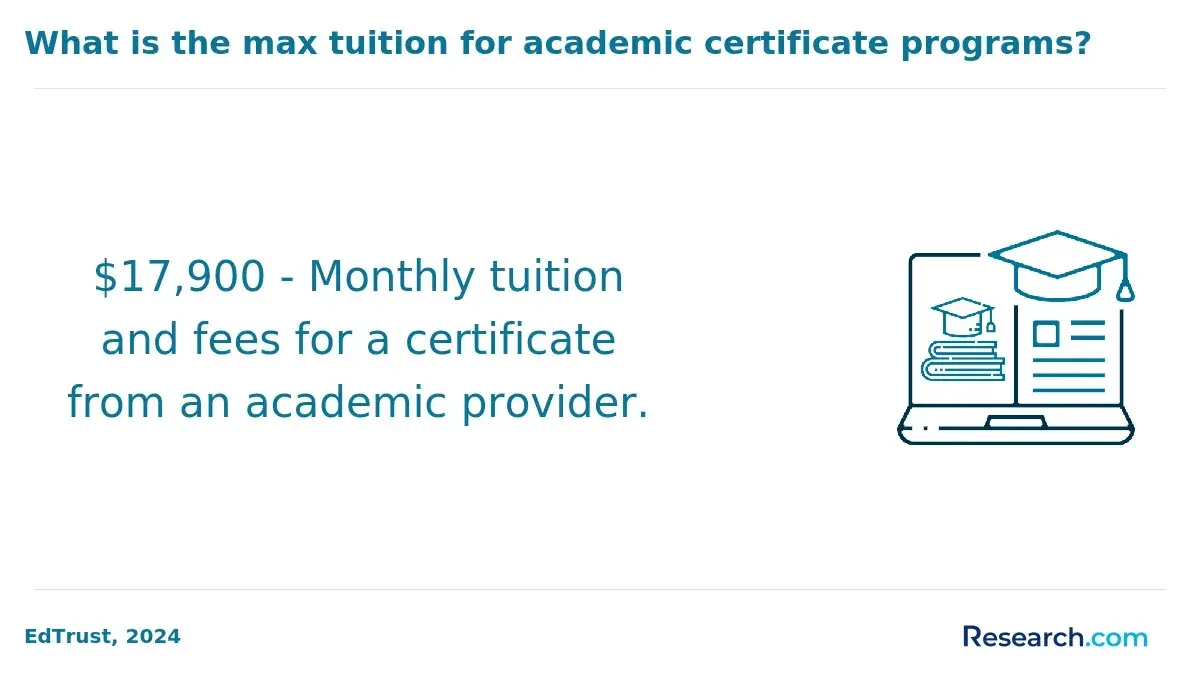
Specialized certifications are usually not required for entry-level public administration roles, but the right credential can help when it is directly tied to the job. Recruiters are skeptical of random certificates, but they value credentials that reduce training time or show commitment to a specific public-service function.
The strongest return often comes from low-cost, role-aligned credentials. FEMA Independent Study courses, for example, have no tuition and can be useful for emergency management, disaster recovery, homeland security support, and local government resilience roles. That does not make them a substitute for a degree, but it gives recruiters a concrete signal of interest and vocabulary.
The table below shows how to think about certificates by career direction. It is designed to prevent overpaying for credentials that do not match your target roles:
| Career target | Credential type that may help | Recruiter value | When it may not be worth it |
| Emergency management assistant | FEMA Independent Study certificates | Shows familiarity with incident command, preparedness, and disaster response terminology | If the role is general administration with no emergency function |
| Grants or nonprofit program assistant | Grant writing or grants management training | Signals readiness to track deliverables, outcomes, and reporting deadlines | If the course is expensive and provides no portfolio sample |
| Public finance or budget support | Government accounting, Excel, or budget analysis certificate | Shows comfort with numbers, compliance, and fiscal documentation | If you cannot demonstrate spreadsheet ability in a practical task |
| HR or workforce programs | Entry HR training or SHRM-aligned coursework | May help for public HR assistant and workforce development roles | If the posting does not mention HR duties |
| Planning or community development support | GIS or planning-related short course | Useful for mapping, zoning, housing, transportation, and equity analysis support | If you have no map, dashboard, or project output to show |
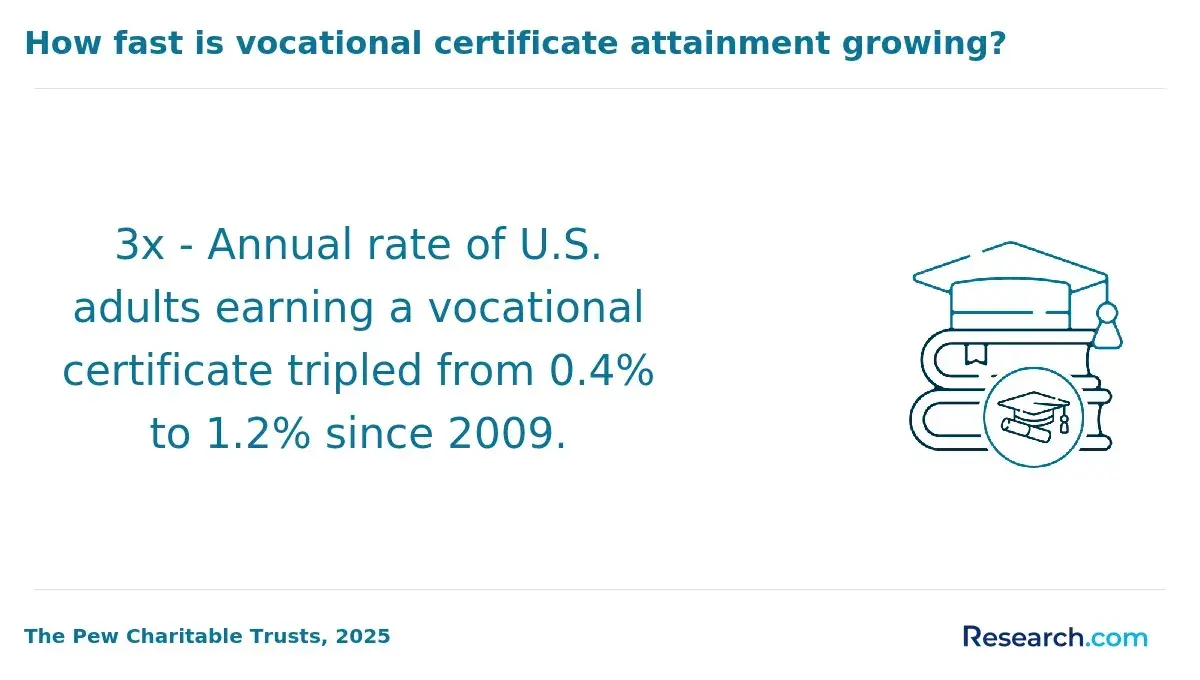
Use a simple decision rule: pursue a certificate only when it appears repeatedly in job postings, produces a work sample, or fills a clear gap in your background. If you are choosing between a certificate and an internship, the internship is often stronger for entry-level screening because it proves workplace behavior, not just course completion.
Recruiters weigh GPA and academic honors differently across public administration employers. GPA matters most for internships, fellowships, analyst-development programs, competitive graduate schemes, and roles that request transcripts. For many local government, nonprofit, and administrative roles, practical evidence often matters more.
A useful benchmark is to treat a 3.0 GPA as a common comfort zone when a posting asks for academic records, but it is not a universal cutoff. Some federal, state, and fellowship programs specify their own academic thresholds; others focus on minimum qualifications, veterans' preference rules, civil service exams, or structured scoring rubrics.
The table below shows how recruiters typically interpret academic signals. It can help you decide whether to feature GPA prominently or shift attention toward experience and skills:
| Academic signal | Recruiter impact | Best use on application materials |
| High GPA | Helpful for competitive early-career programs and roles requiring analytical rigor | Place in education section if strong and recent |
| Moderate GPA with strong internship | Often competitive when experience directly matches the role | Lead with experience, projects, and measurable work products |
| Low GPA with clear improvement | Can be managed if later coursework, work experience, or projects show growth | Avoid emphasizing GPA unless required; prepare a concise explanation if asked |
| Academic honors | Positive signal but rarely decisive by itself | Include briefly, especially if tied to research, leadership, or service |
| Capstone or thesis | Can be very valuable if relevant to the posting | Convert into resume bullets, writing sample, or portfolio item |
If your GPA is strong, include it but do not let it replace evidence of applied ability. If your GPA is weak, do not hide required information, but shift the recruiter's attention toward internships, service work, software samples, supervisor references, and a strong writing sample.
Applicants with lower GPAs can improve their positioning by using a targeted explanation strategy. Keep it short, accountable, and forward-looking:
- Do not volunteer a long GPA explanation in the resume unless the employer specifically asks.
- If asked, acknowledge the issue without blaming instructors, family, or workload.
- Point to stronger recent evidence, such as an internship, capstone, certificate, or work project.
- Explain what changed in your work habits, time management, or career focus.
- Return the conversation to the employer's needs and your ability to perform the role.
Top employers recruit public administration talent through a mix of formal postings, campus pipelines, government job boards, fellowships, internships, and professional networks. Unlike some private-sector fields, public administration hiring can be slow, rule-bound, and decentralized, so candidates should use multiple channels instead of waiting for one application to move.
BLS occupational data published with 2024 wage estimates continues to show substantial employment across government, education, healthcare, and social assistance settings for administrative, compliance, management, and community-service roles.
For applicants, this means the public administration job market is broader than city hall: nonprofits, contractors, hospitals, universities, courts, and regional authorities may all hire similar skill sets.
The table below identifies where recruiters commonly look for early-career public administration candidates and what each channel is best for:
| Recruitment channel | Best-fit employers | Why it matters |
| Government job portals | Federal, state, county, city, transit, housing, and school-district agencies | Primary source for official postings, eligibility rules, exams, and application instructions |
| Campus career centers | Local agencies, nonprofits, fellowships, public-service internship programs | Recruiters may trust university pipelines for entry-level screening |
| Fellowships and leadership programs | City management, policy, budget, legislative, and public-service programs | Structured route into competitive early-career roles |
| Professional associations | Planning, budgeting, emergency management, nonprofit, HR, and public finance employers | Useful for networking, informational interviews, and niche postings |
| LinkedIn and alumni networks | Nonprofits, contractors, consulting firms, universities, healthcare administrators | Helps candidates find hidden opportunities and referrals |
The most effective strategy is to match the channel to the employer type. Government portals require exact compliance with application instructions, while nonprofits and contractors may respond faster to networking, referrals, and mission-aligned resumes.
Use this outreach sequence when applying to public administration roles. It keeps your search organized and improves the chance that a recruiter sees a relevant application rather than a generic one:
- Create a target list of 20 employers across government, nonprofit, education, healthcare, and public-sector contractor categories.
- Track each employer's application portal, timeline, required documents, and contact restrictions.
- Identify alumni, former interns, or program staff connected to each organization.
- Request brief informational conversations focused on role expectations, not immediate job favors.
- Apply with a tailored resume that mirrors the posting's terminology for duties, systems, and eligibility.
- Follow up only when the posting or recruiter instructions allow it.
Public administration interviews often test practical judgment more than memorized theory. Recruiters want to know whether you can write clearly, interpret instructions, handle residents professionally, manage confidential information, and make reasonable recommendations with imperfect data.
Common formats include structured panel interviews, writing exercises, spreadsheet tasks, role-play scenarios, case questions, civil service exams, and behavioral interviews. Government employers may use standardized scoring, while nonprofits and contractors may rely more on supervisor interviews and work samples.
The table below summarizes common assessments and what they reveal to recruiters. This helps you prepare for the actual hiring process rather than rehearsing only general interview answers:
| Assessment format | What it tests | Typical entry-level example |
| Structured panel interview | Consistency, judgment, communication, public-service motivation | Three-person panel asks the same scored questions to every candidate |
| Writing exercise | Clarity, organization, tone, policy reasoning | Draft a short memo summarizing a community issue and recommended next step |
| Spreadsheet task | Accuracy, formulas, sorting, interpretation | Review program participation data and identify trends or errors |
| Case scenario | Problem-solving, ethics, stakeholder trade-offs | Respond to a resident complaint while following agency policy |
| Presentation | Briefing ability, confidence, audience awareness | Present a capstone, program idea, or data finding in five minutes |
| Civil service exam | Job-related knowledge, reading comprehension, administrative judgment | Written or online test tied to a classification or eligible list |
Prepare by practicing realistic work outputs. Public administration recruiters are often less impressed by polished slogans than by calm, organized answers that show you understand constraints, stakeholders, and public accountability.
- Prepare one STAR story each for analysis, teamwork, conflict, service, ethics, and deadline pressure.
- Practice writing a one-page memo in 30 to 45 minutes using a simple issue, recommendation, and rationale.
- Review basic Excel tasks: sorting, filtering, pivot tables, formulas, and chart interpretation.
- Read the employer's budget, strategic plan, recent meeting agenda, or annual report before the interview.
- Prepare questions about onboarding, performance measures, community needs, and cross-department collaboration.
Recruiters reject public administration applicants when the application creates doubt about accuracy, judgment, eligibility, or role fit. Because many public-sector employers must document fair hiring processes, incomplete or careless applications can be screened out before a hiring manager sees the candidate's potential.
Automated Applicant Tracking Systems and structured eligibility reviews have made precision more important. A resume that is impressive but missing required keywords, dates, documents, or minimum-qualification evidence may fail screening even when the candidate could do the job.
The table below lists common red flags and stronger alternatives. Use it as a pre-submission audit before applying:
| Red flag | Why recruiters reject it | Better alternative |
| Generic resume for every public administration role | Fails to match the posting's duties, systems, and eligibility language | Customize the summary, skills, and bullets for each role family |
| No evidence of applied work | Makes the degree look theoretical and untested | Add internship, capstone, volunteer, project, or portfolio bullets |
| Vague soft skills | Claims like "team player" are hard to score | Use examples showing coordination, service volume, deadlines, or outcomes |
| Missing required documents | Public employers may be unable to consider incomplete applications | Upload transcripts, writing samples, eligibility forms, or questionnaires exactly as requested |
| Unexplained employment gaps | Raises questions about reliability or timeline accuracy | Use honest dates and briefly account for education, caregiving, service, or job search periods |
| Careless formatting or typos | Signals weak attention to detail for records, compliance, and public communication | Proofread, use consistent dates, and export documents correctly |
| Overstated software skills | Can collapse during tests or interviews | List only tools you can demonstrate with examples |
The fastest way to avoid red flags is to audit your application against the posting before submission. Do not rely on a beautiful resume if the employer uses required fields, questionnaires, or scoring criteria:
- Copy the posting's required qualifications into a checklist.
- Confirm that each requirement is visibly addressed in the resume or application form.
- Match job titles and keywords naturally, especially for budgeting, grants, compliance, outreach, analysis, and reporting.
- Check that dates, degree names, employer names, and document filenames are consistent.
- Submit early enough to fix upload errors before the deadline.
A strong public administration resume should make the recruiter's screening job easy. It should quickly show eligibility, relevant experience, technical skills, writing ability, public-service motivation, and evidence that you can handle real administrative responsibilities.
Start by tailoring the top third of the resume. Recruiters often scan for degree status, role-relevant keywords, software tools, internships, and public-service context before reading every bullet. Your LinkedIn profile should reinforce the same message with a clear headline, project examples, and a concise "About" section.
Public information, community engagement, and communications-adjacent public service roles may also reward candidates who can document events, create accessible visual content, or manage public-facing materials. If that is your niche, comparing creative training options such as online photography degrees can help you decide whether visual communication skills are worth adding to your public administration profile.
The table below shows what recruiters expect to see in resume and profile sections. Use it to identify weak spots before applying:
| Resume or profile section | What recruiters want to see | Weak version | Stronger version |
| Headline or summary | Target role, public-service area, strongest skill evidence | Recent graduate seeking opportunity | Public administration graduate with internship experience in grant reporting, Excel analysis, and community outreach |
| Education | Degree, institution, graduation status, relevant coursework if useful | B.A. Public Administration | B.A. Public Administration; coursework in public budgeting, policy analysis, administrative law, and program evaluation |
| Experience bullets | Actions, tools, stakeholders, and results | Helped with office tasks | Tracked weekly program participation in Excel and prepared summary notes for supervisor review |
| Skills | Tools and job functions the employer requested | Leadership, communication, Microsoft Office | Excel pivot tables, policy memo writing, grant tracking, public meeting notes, stakeholder outreach |
| Projects | Capstones, writing samples, dashboards, maps, or reports | Completed senior project | Produced a policy brief comparing three options for improving local transit access |
| Consistent title, project links, service interests, professional photo | Empty profile with degree only | Profile aligned to analyst, coordinator, or outreach roles with featured portfolio samples |
To pass recruiter screening, tailor for both humans and ATS. The goal is not keyword stuffing; it is making your evidence easy to find:
- Use the exact degree name, graduation month or expected graduation date, and relevant eligibility language when required.
- Create a skills section grouped by function, such as analysis, public budgeting, grant support, outreach, compliance, and software.
- Rewrite bullets to start with action verbs and include a work product, audience, or measurable scope when available.
- Include public administration keywords from the posting only when you can support them in an interview.
- Add a portfolio link only if the samples are professional, nonconfidential, and relevant to the target role.
- Keep formatting simple: standard headings, readable fonts, consistent dates, and no graphics that may confuse ATS parsing.
Public administration graduates do not need to master every platform, but they should be comfortable with the tools that agencies use to manage information, budgets, cases, documents, residents, and projects. Tool mastery matters because many entry-level hires are expected to become productive quickly with limited training capacity.
The table below separates must-have tools from role-specific tools. Use it to decide what to put on your resume and what to practice before interviews:
| Tool category | Examples | Why recruiters care | Best proof for entry-level candidates |
| Spreadsheet and analysis tools | Microsoft Excel, Google Sheets | Used for budgets, program counts, grant reports, and performance tracking | Workbook sample with formulas, pivot tables, and written conclusions |
| Presentation and document tools | PowerPoint, Word, Google Docs | Used for briefings, public materials, board packets, and internal reports | Policy memo, slide deck, meeting summary, or briefing note |
| Data visualization tools | Tableau, Power BI | Increasingly used for dashboards and public performance reporting | Simple dashboard based on public data |
| GIS and mapping tools | ArcGIS, QGIS | Valuable for planning, emergency management, transportation, housing, and equity analysis | Map showing service access, district boundaries, or facility distribution |
| Project and workflow tools | Asana, Trello, Monday.com, Microsoft Planner | Helpful for coordinating grants, events, deliverables, and cross-agency work | Project timeline or task board from a capstone or internship |
| CRM and case-management systems | Salesforce, Apricot, HMIS-related systems, agency-specific databases | Used to track residents, clients, donors, benefits, or service outcomes | Description of accurate data entry, reporting, confidentiality, or workflow use |
Recruiters generally do not expect deep enterprise-system expertise from fresh graduates, especially when agencies use customized platforms. They do expect evidence that you can learn systems, protect sensitive information, document your work, and avoid careless data errors.
A practical tool-learning plan should focus on visible work samples, not vague claims. Use the sequence below if your resume currently says only Microsoft Office proficient:
- Choose one public dataset from a city, county, state, or federal source and clean it in Excel.
- Create one chart and one short paragraph explaining what the data suggests and what it does not prove.
- Turn the analysis into a one-page memo for a supervisor or council member audience.
- Create a three-slide briefing that summarizes the issue, finding, and recommended next step.
- Upload nonconfidential samples to a portfolio, Google Drive folder, or LinkedIn featured section.
Other Things You Should Know About Public Administration
Yes, if you are comfortable with rules, documentation, stakeholders, and slow-moving systems. Public administration can be a strong fit for people who want their work to support communities, public services, nonprofits, or government programs.
Yes, but do not rely only on one posting. Government hiring can take weeks or months, so apply to multiple agencies, track deadlines carefully, and continue pursuing nonprofit, fellowship, internship, and contractor roles at the same time.
Usually no. An MPA or related master's degree can help for advancement, policy leadership, budgeting, or management roles, but many graduates benefit from working first so they can choose a graduate program based on a clearer career direction.
Some analyst, grants, policy, and administrative roles may be hybrid, but many public-facing, records, emergency management, outreach, and local government jobs require in-person work. Read postings carefully and ask about schedule expectations during later interview stages.
- The Future of Public Administration https://journal.ppipbr.com/index.php/pusba/article/download/244/227
- Why Employers Value Skills Over Diplomas https://www.alliedonesource.com/strategic-staffing-employers-prefer-skills-over-diplomas
- What employers are looking for in new graduates | University Canada West (UCW) https://www.ucanwest.ca/blog/education-careers-tips/what-employers-are-looking-for-in-new-graduates
- The Future of Public Administration - MANCOSA https://www.mancosa.co.za/blog/the-future-of-public-administration/
- Public Administration & Policy Jobs Guide (2026 Careers) – PublicAdministrationPolicy.org https://publicadministrationpolicy.org/resources/jobs/
- Soft Skills Matter Now More Than Ever, According to New Research https://hbr.org/2025/08/soft-skills-matter-now-more-than-ever-according-to-new-research
- Key Trends in Public Administration https://vasscompany.com/en/insights/blogs-articles/trends-public-administration/