2027 Public Administration Degree Wage Advantage by Region: Where Graduates Gain the Biggest Earnings Edge

Co-Founder and Chief Data Scientist
Choosing where to use a public administration degree can change its payoff as much as choosing the degree itself. BLS data shows the national median annual wage for management analysts reached $101,190 in 2024, but public-sector, consulting, nonprofit, and regional labor markets pay very differently.
This guide is for students, recent graduates, and working professionals comparing regions, salaries, costs, and advancement paths. You will learn where the wage edge is strongest, when high pay is offset by high living costs, and how to choose a region that fits your career goals.
Key Things You Should Know
- The largest nominal wage advantages for public administration graduates tend to cluster in the Washington, DC corridor, major coastal metros, and specialized markets such as energy, technology, infrastructure, and federal contracting hubs.
- Cost of living can erase part of the salary premium: a high salary in San Francisco, New York, or Washington, DC may have less real purchasing power than a lower salary in a Midwest or Southeast state capital.
- For 2024 salary context, BLS reported national median annual wages of $101,190 for management analysts and $78,240 for social and community service managers, two common public administration-related career paths.
- What Is the Regional Wage Advantage for Public Administration Graduates?
- Which U.S. Regions Offer the Highest Salaries for Public Administration Graduates?
What Is the Regional Wage Advantage for Public Administration Graduates?
The regional wage advantage for public administration graduates is the extra earnings value a graduate may gain by working in one labor market instead of another. It is not just the advertised salary. A useful comparison looks at nominal pay, cost of living, employer concentration, promotion potential, and whether the region has strong demand for government operations, budgeting, policy analysis, emergency management, grants, procurement, and program evaluation.
Public administration degrees commonly prepare students for roles in government agencies, nonprofits, public policy organizations, healthcare administration, municipal management, compliance, and consulting. At the bachelor's level, graduates may pursue analyst, coordinator, program assistant, or administrative roles. At the master's level, especially with an MPA, they may compete for policy analyst, budget analyst, city management, grants management, program director, or consulting positions.
The table below explains the main ways to measure the wage advantage. This matters because a region with the highest paycheck is not always the region with the best financial outcome.
| Measure | What it means | Why it matters for public administration graduates |
| Nominal salary premium | The raw salary difference between one region and another | Useful for comparing job offers, but incomplete without cost-of-living context |
| Real wage advantage | Salary adjusted for local prices such as housing, transportation, taxes, and services | Helps determine whether a higher salary actually improves day-to-day affordability |
| Sector concentration | The density of federal, state, local, nonprofit, consulting, and contractor employers | Regions with more public-sector employers often offer more openings and advancement paths |
| Career ladder strength | The availability of higher-level roles after entry-level experience | A region with better promotion pathways may outperform a higher starting salary over time |
| Transferability | How easily skills move across agencies, states, industries, or remote roles | Budgeting, data analysis, procurement, and compliance skills often travel better than narrow local knowledge |
A common mistake is treating public administration as one salary category. In reality, a graduate working in federal consulting, a city budget office, a nonprofit housing agency, and a state emergency management department may have very different compensation even within the same region.
Which U.S. Regions Offer the Highest Salaries for Public Administration Graduates?
The highest-paying regions for public administration graduates are usually the places where complex government operations, large budgets, policy institutions, consulting firms, and regulated industries overlap. The Washington, DC metro area is the clearest example because it combines federal agencies, contractors, think tanks, associations, nonprofits, and consulting firms in one labor market.
Federal locality pay is one useful benchmark because many public administration graduates work for or around federal agencies. It does not represent every public administration job, but it shows how the federal government recognizes regional pay differences in 2024.
| Region or metro market | Representative 2024 federal locality pay add-on | Why the region can offer a wage advantage |
| San Francisco-San Jose-Oakland, CA | 45.41% | High compensation for policy, technology governance, infrastructure, public finance, and compliance roles, though housing costs are a major offset |
| New York-Newark, NY-NJ-CT-PA | 37.24% | Strong demand in municipal government, public finance, nonprofit administration, transportation, housing, and regulatory work |
| Los Angeles-Long Beach, CA | 35.84% | Large county and city systems, public health agencies, infrastructure programs, and nonprofit service networks |
| Houston-The Woodlands, TX | 34.72% | Energy regulation, emergency management, infrastructure, port operations, and public-private project management |
| Washington-Baltimore-Arlington, DC-MD-VA-WV-PA | 33.26% | The strongest federal ecosystem, with agencies, contractors, advocacy groups, research organizations, and policy employers |
| Boston-Worcester-Providence, MA-RI-NH-ME | 31.97% | Healthcare administration, higher education policy, municipal management, research, and public-sector consulting |
| Rest of U.S. federal locality area | 16.82% | Lower premium, but often paired with lower housing costs and less competitive entry-level markets |
For graduates who want the biggest nominal salary edge, the strongest choices are typically the DC corridor, large coastal metros, and specialized regional hubs. For graduates who want a balanced financial outcome, high-wage regions should be compared against rent, commuting costs, taxes, and competition for analyst-level roles.
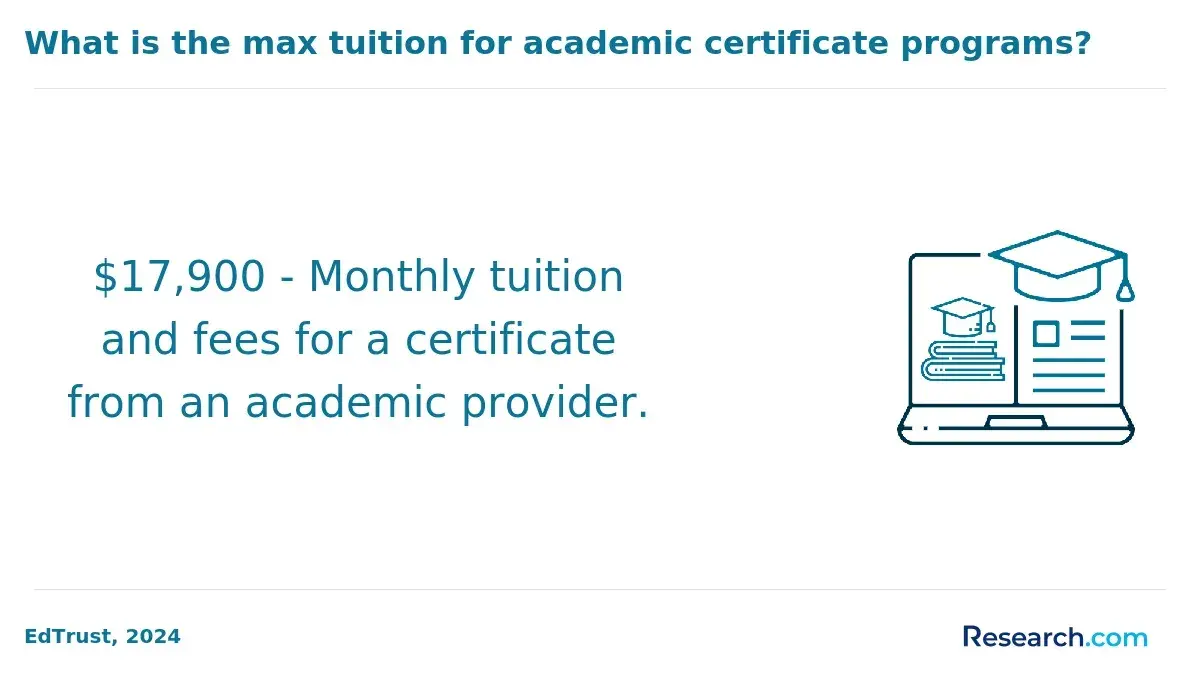
Cost of living changes the meaning of a public administration salary. A $90,000 job in a high-cost metro can feel tighter than a $75,000 job in a lower-cost state capital if housing, childcare, commuting, and taxes consume the difference.
A practical way to compare regions is to estimate real purchasing power. The table below uses hypothetical salaries to show how the same nominal offer can look different after adjusting for local prices; it is a decision tool, not a prediction of what any employer will pay.
| Scenario | Nominal salary | Cost-of-living pattern | What it means for decision-making |
| High-cost coastal metro | $95,000 | Housing and services are far above the national average | Attractive if the role offers strong promotions, specialized experience, or a pathway into federal contracting or consulting |
| Mid-cost federal or state hub | $82,000 | Prices are near or moderately above the national average | Often a strong balance for graduates who want career mobility without the highest housing burden |
| Lower-cost state capital or regional city | $70,000 | Housing and commuting costs are often lower | May deliver better real affordability, especially for early-career graduates managing loans or building savings |
| Remote or hybrid policy role | $80,000 | Depends on employer pay rules and worker location | Can create a wage advantage if compensation is not fully reduced for a lower-cost location |
The most important step is to compare disposable income, not salary alone. Before accepting an offer, estimate monthly rent or mortgage costs, transportation, health insurance contributions, state and local taxes, required commuting time, and student loan payments.
Students comparing different helping-profession pathways should also remember that ROI depends on licensure rules and local demand, not only the degree title. For example, someone focused on behavioral health leadership may compare public administration with affordable online MFT programs California if their long-term goal is clinical service delivery rather than agency management.
Entry-level and experienced public administration salaries differ by region because early-career roles are often tied to standardized pay bands, while experienced roles reward specialized skills, supervisory responsibility, and sector knowledge. New graduates may see smaller regional differences at first, but those differences can widen after several years if they move into management, consulting, budget authority, or technical policy roles.
The table below shows how regional salary dynamics often change by career stage. It does not promise a specific salary; instead, it helps you compare the type of wage advantage that matters at each point in your career.
| Career stage | Common roles | Where regional wage differences matter most | Best strategy |
| Entry level | Program assistant, policy assistant, grants coordinator, administrative analyst | High-cost metros may pay more, but housing can absorb much of the difference | Prioritize skill-building, benefits, tuition support, and advancement pathways |
| Early career | Budget analyst, management analyst, program specialist, compliance analyst | Federal hubs, consulting markets, and large local governments often start to pull ahead | Build a portfolio in data analysis, procurement, evaluation, grants, or public finance |
| Mid-career | Program manager, policy manager, assistant director, senior analyst | Regions with large agency systems and contractor ecosystems may offer stronger mobility | Compare promotion ladders and lateral moves, not just current salary |
| Experienced leader | Department director, city administrator, chief of staff, senior consultant | Large metros and high-budget jurisdictions can pay more, but competition is intense | Evaluate executive responsibility, pension value, relocation costs, and long-term stability |
For new graduates, the best region is not always the one with the highest advertised salary. A lower-cost region with mentoring, a clear analyst track, and exposure to budgeting or procurement can produce better long-term ROI than a prestigious market where advancement is slow and living costs are high.
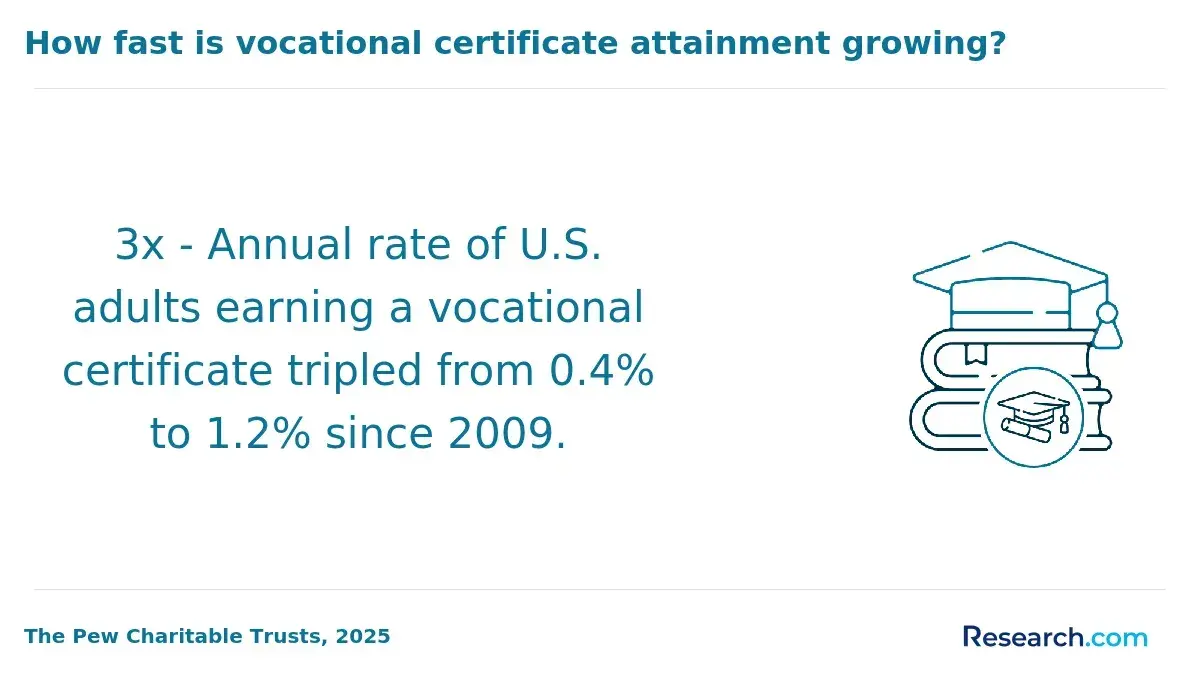
The best ROI regions for a public administration degree usually combine three things: reasonable education costs, solid entry-level access, and enough higher-level roles to support promotion. A region with many public employers but weak advancement may be good for stability, while a region with consulting and federal contracting may offer a higher ceiling but more competition.
Education cost matters because the wage advantage must be large enough to justify tuition, fees, lost work time, and possible borrowing. College Board's latest pricing data reported average published tuition and fees of $11,610 for in-state students at public four-year institutions for 2024-25, which means staying in-state or using employer tuition support can materially improve ROI.
The table below compares regional ROI patterns rather than ranking regions by salary alone. This is more useful because ROI depends on both earnings and costs.
| Region type | ROI strengths | ROI risks | Best fit |
| DC corridor and federal hubs | Strong employer density, federal career ladders, contractor mobility, policy networks | High competition and high housing costs in many neighborhoods | Students targeting federal service, policy analysis, contracting, or consulting |
| Major coastal metros | Higher nominal pay, large nonprofit ecosystems, complex public systems | Cost of living may reduce real wage gains | Graduates seeking specialized roles in housing, transportation, public health, or finance |
| Midwest state capitals and regional metros | Lower living costs, stable government employment, manageable competition | Fewer top-end consulting and federal contractor roles | Graduates prioritizing affordability, public service stability, and steady advancement |
| Sun Belt growth metros | Population growth creates demand for planning, infrastructure, emergency management, and public services | Rapid growth can strain agencies, and salaries may lag housing increases | Students interested in city management, transportation, utilities, and regional planning |
| Rural and small-city regions | Lower costs and broader responsibilities early in a career | Smaller salary ladders and fewer lateral employers | Graduates who want generalist leadership experience and community-level impact |
One common mistake is assuming a graduate degree automatically improves ROI. A master's in public administration can be valuable when it leads to management eligibility, policy specialization, or a higher pay grade, but the payoff depends on employer requirements, tuition cost, experience level, and regional labor demand.
Relocating can be financially worthwhile for public administration graduates when the move increases both salary and career trajectory. It is less attractive when a higher salary is mostly consumed by rent, commuting, taxes, or a weaker support network.
Before relocating, compare the offer against your current region using a structured process. The steps below help you avoid overvaluing headline salary and undervaluing real-life costs.
- Calculate the monthly difference between your current take-home pay and the new offer after taxes, benefits, retirement contributions, and required deductions.
- Estimate housing, commuting, parking, transit, insurance, childcare, and student loan payments in the new region.
- Compare employer density by searching for similar roles in the same region so you know whether you would have options if the first job does not work out.
- Check whether the role builds portable skills such as budgeting, data analysis, procurement, grants management, compliance, or project evaluation.
- Ask about promotion timelines, pay bands, hybrid work rules, relocation assistance, pension eligibility, and tuition reimbursement before accepting.
Relocation makes the most sense when the new region gives you access to employers or specializations you cannot reasonably reach where you are. It may not make sense if the salary bump is small, the market is narrow, or the position locks you into a niche that is difficult to transfer.
The skills that increase the regional wage advantage for public administration graduates are the ones employers can use immediately to manage money, measure performance, reduce risk, and improve services. These skills are especially valuable in high-cost regions because employers paying higher salaries often expect stronger technical or managerial capability.
The following skill areas can help graduates compete across regions and sectors. They are worth prioritizing in coursework, internships, capstone projects, certificates, and early-career job choices.
- Data analysis and visualization: Skills in spreadsheets, dashboards, basic statistics, survey analysis, and performance metrics help agencies justify budgets and improve programs.
- Budgeting and public finance: Understanding appropriations, revenue forecasts, cost-benefit analysis, and capital budgeting can open higher-paying analyst and management roles.
- Grants and contract management: Federal grants, procurement rules, vendor oversight, and compliance documentation are highly transferable across agencies and nonprofits.
- Policy analysis and evaluation: Employers value graduates who can interpret legislation, measure outcomes, write concise briefs, and recommend practical actions.
- Technology and AI literacy: Public agencies are adopting automation, digital service tools, and analytics platforms, so graduates who understand governance, ethics, privacy, and implementation risk may have an advantage.
- Communication and stakeholder management: Public administrators often translate complex rules for elected officials, community members, vendors, and agency leaders.
Public communication is also becoming more visual, especially for agencies explaining services, emergency updates, community programs, and public engagement campaigns. Graduates drawn to civic storytelling or digital communications may compare public administration training with online photography degrees if their goal is creative public-sector media rather than agency operations.
A major red flag is relying only on general leadership claims. "Strong communicator" is helpful, but "built a dashboard tracking grant outcomes" or "analyzed departmental spending trends" is much more convincing in competitive regional markets.
The fastest salary growth for public administration careers is likely to appear in regions where population growth, infrastructure investment, public health needs, climate resilience, housing pressure, and digital government modernization create complex administrative demands. Salary growth is not the same as job growth, but regions facing bigger public-management problems often need more skilled analysts and managers.
BLS employment projections published in 2024 show management analysts are projected to grow 11% from 2023 to 2033, faster than the average for all occupations. For public administration graduates, this suggests that analytical, consulting, and performance-improvement skills may be especially useful in regions where agencies and contractors are trying to modernize operations.
The table below summarizes where salary growth potential may be strongest and why. Use it as a screening tool, then verify current job postings and employer pay bands before making a decision.
| Region category | Why salary growth may be stronger | Career areas to watch |
| Fast-growing Sun Belt metros | Population growth increases demand for planning, transportation, utilities, housing, emergency services, and public health administration | City management, infrastructure coordination, emergency management, budget analysis |
| Federal and contractor hubs | Modernization, cybersecurity, procurement, grants oversight, and performance management create demand for specialized administrators | Management analysis, contract management, program evaluation, compliance |
| Climate and resilience-focused coastal regions | Flooding, wildfire, transportation, housing, and emergency preparedness needs require long-term public investment | Emergency management, resilience planning, public works administration |
| Healthcare and public health centers | Complex funding streams and service delivery needs support demand for administrators who understand compliance and program operations | Public health program management, healthcare compliance, community services administration |
| Mid-sized metros with expanding universities or medical systems | Anchor institutions can support grant-funded programs, workforce initiatives, and regional development projects | Grants administration, workforce policy, nonprofit management, economic development |
Do not assume that rapid regional growth automatically means abundant high-paying jobs. Growth can create demand, but salaries still depend on tax base, employer budgets, union agreements, pay bands, and competition from other candidates.
Students should choose a region by matching career goals to employer ecosystems, not by chasing the highest salary number. Public administration is broad, so the best region for a future city manager may differ from the best region for a federal policy analyst, nonprofit executive, emergency management specialist, or public-sector consultant.
Use the following decision sequence to narrow your options. It works for undergraduate students, MPA applicants, certificate seekers, and working professionals considering relocation.
- Define your target role first, such as budget analyst, city manager, grants administrator, policy analyst, emergency management coordinator, or nonprofit program director.
- Identify the regions where that role is concentrated by reviewing agency websites, government job boards, nonprofit associations, consulting firms, and local budget offices.
- Compare salary with cost of living, especially housing, commuting, taxes, and student loan repayment.
- Check whether entry-level roles lead to higher pay bands, supervisory responsibility, or specialized experience within three to five years.
- Evaluate degree requirements carefully: some roles accept a bachelor's degree plus experience, while others prefer or require an MPA, MPP, MBA, JD-related experience, or specialized certificate.
- Consider accreditation, internship access, alumni networks, online flexibility, transfer credits, tuition support, and public-service loan repayment options where applicable.
- Choose the region that gives you the strongest combination of affordability, employer density, skill growth, and long-term mobility.
A public administration degree is usually a better investment for students who want to manage programs, budgets, policy, agencies, or public-service organizations. It may be a weaker fit for someone who wants a licensed clinical, legal, medical, or highly technical occupation unless they pair it with the required credential for that field.
If your broader goal is public service but you prefer a licensed communication-health profession, you may want to compare MPA pathways with online SLP master's programs, since speech-language pathology has different licensure, clinical training, and regional demand factors.
The smartest choice is the region where your skills solve expensive problems for employers. For many graduates, that means combining public administration coursework with data, budgeting, grants, procurement, compliance, and communication experience before choosing whether to relocate.
Industries drive public administration wages because employers pay for different kinds of problems. A city department may value budgeting and resident services, while a consulting firm may pay more for analytics, compliance, federal grants, or project management experience.
The table below summarizes the industries and employer types that most often create regional wage premiums for public administration graduates. Use it to identify where your degree concentration and skills are most marketable.
| Industry or employer type | Regions where the wage premium is often strongest | Public administration roles commonly found there |
| Federal agencies and contractors | Washington, DC; Northern Virginia; Maryland; selected federal hubs nationwide | Program analyst, policy analyst, grants manager, contract specialist, management analyst |
| State and local government | State capitals, large counties, fast-growing metro areas | Budget analyst, assistant city manager, planning coordinator, public works administrator |
| Healthcare and public health administration | Boston, New York, Philadelphia, Atlanta, Chicago, Los Angeles, Houston | Program manager, compliance analyst, community health administrator, operations manager |
| Consulting and professional services | DC corridor, New York, Chicago, Boston, Dallas, San Francisco, Los Angeles | Management consultant, public-sector analyst, performance improvement associate |
| Nonprofit and philanthropy | New York, DC, Boston, California metros, major regional service hubs | Development operations manager, program director, grants officer, evaluation analyst |
| Infrastructure, transportation, and utilities | Texas metros, California, Northeast corridor, Great Lakes, fast-growing Sun Belt cities | Capital projects analyst, emergency preparedness coordinator, procurement manager |
Legal and regulatory work can also raise the wage ceiling for public administration graduates, especially in government contracting, procurement, compliance, and public records roles. Graduates who want a shorter legal-administrative credential rather than a full MPA may compare online paralegal certificate programs with public administration certificates or graduate programs.
A red flag is choosing a region because one industry pays well without checking how many employers are actually hiring. A strong public finance market, for example, may be excellent for someone with budgeting and analytics skills but less useful for a graduate focused on community programming.
Other Things You Should Know About Public Administration
The Washington, DC corridor often offers the strongest overall wage advantage because of its concentration of federal agencies, contractors, policy organizations, and consulting firms. However, high-cost coastal metros may offer higher nominal pay, while lower-cost state capitals may offer better real purchasing power.
It can be worth it if you want roles in nonprofits, healthcare administration, consulting, compliance, grants management, or public-sector contractors. It is less useful if your target career requires a separate clinical, legal, engineering, or technical license.
Use both. Salary shows earning potential, but cost of living shows how much of that pay you can actually keep. The best decision compares take-home pay, housing, commuting, benefits, advancement potential, and job availability.
Data analysis, budgeting, grants management, procurement, compliance, policy evaluation, project management, and technology literacy can improve mobility and wage potential. These skills help graduates qualify for higher-value roles across government, nonprofit, and consulting employers.
- How does a college degree improve graduates’ employment and earnings potential? - APLU https://www.aplu.org/our-work/4-policy-and-advocacy/publicuvalues/employment-earnings/
- 5 Growing Careers in Public Administration | Touro University Worldwide https://www.tuw.edu/business/5-growing-careers-public-administration/
- U.S. Census Bureau. (2025). Field of bachelor’s degree in the United States: 2024 (ACS-59). https://www.census.gov/library/publications/2025/acs/acs-59.html
- Baum, S., & Blagg, K. (2025). Supporting students choosing high-value, low-wage occupations. Urban Institute. https://www.urban.org/research/publication/supporting-students-choosing-high-value-low-wage-occupations