2027 Nursing Degree Bachelor's-Level ROI Report: Best Career Returns Without Graduate School

Co-Founder and Chief Data Scientist
Choosing a nursing bachelor's degree is really a return-on-investment decision: how quickly can the credential turn tuition, time, and licensure effort into stable earnings? The U. S. Bureau of Labor Statistics reports a $93,600 median annual wage for registered nurses in May 2024, with employment projected to grow 6% from 2023 to 2033.
This guide is for prospective BSN students, RN-to-BSN learners, and working nurses who want strong career returns without graduate school. You'll learn which roles, industries, locations, skills, and certifications can improve payoff.
Key Things You Should Know
- A BSN can produce strong ROI without graduate school when it leads to RN licensure, low debt, and higher-paying settings such as hospitals, outpatient care, government, case management, quality, informatics, or leadership-track roles.
- The main benchmark is the RN labor market: BLS reported a $93,600 median annual wage for registered nurses in May 2024 and 6% projected job growth from 2023 to 2033, which supports steady demand but does not guarantee individual earnings.
- The fastest payoff usually comes from minimizing tuition, passing the NCLEX-RN promptly, entering paid RN work quickly, and adding employer-valued certifications or specialty experience before considering graduate school.
- Which Nursing Bachelor's Degree Careers Deliver the Highest ROI Without Graduate School?
- Which Industries Reward Nursing Bachelor's Graduates the Most?
Which Nursing Bachelor's Degree Careers Deliver the Highest ROI Without Graduate School?
The highest-ROI bachelor's-level nursing careers are usually not defined by the degree alone. They combine a BSN, an active RN license, specialty experience, shift flexibility, and movement into settings where employers pay more for clinical judgment, care coordination, regulatory knowledge, or leadership.
A Bachelor of Science in Nursing, or BSN, typically prepares students for the NCLEX-RN licensure exam and entry into registered nursing practice. ROI improves when the graduate can earn RN-level wages without immediately paying for a master's, doctorate, or nurse practitioner program.
The table below compares common BSN-accessible paths that can offer strong returns without graduate school. It focuses on how each path creates value, not on guaranteed pay, because compensation varies by state, union status, shift, specialty, and employer.
| Career path | Typical bachelor's-level entry point | Why ROI can be strong | Best fit |
| Hospital registered nurse | BSN plus RN license | Large labor market, shift differentials, overtime opportunities, and specialty pathways | Graduates who want immediate clinical income and broad mobility |
| ICU, emergency, operating room, or labor and delivery nurse | RN license plus specialty training after hire | Specialty demand may support differentials, advancement, and travel opportunities | Nurses comfortable with high-acuity care and fast decisions |
| RN case manager or utilization review nurse | RN experience; BSN often preferred | Moves clinical knowledge into care coordination, insurance review, discharge planning, or population health | Nurses who want less bedside intensity and more systems-based work |
| Charge nurse or assistant nurse manager | RN experience; BSN commonly preferred or required | Leadership responsibility can raise earning potential without requiring graduate school at the first step | Nurses who enjoy staffing, mentoring, workflow, and accountability |
| Quality improvement, patient safety, or informatics nurse | RN background plus data, EHR, or quality skills | Connects nursing experience with compliance, analytics, technology adoption, and measurable outcomes | Nurses interested in process improvement and healthcare operations |
The strongest overall answer is this: a BSN has high ROI when it gets you into RN work quickly and gives you access to specialty, leadership, or care coordination roles that do not require graduate tuition. Graduate school can make sense later, but it should be tied to a clearly higher-paying license or role rather than used as a default next step.
Which Industries Reward Nursing Bachelor's Graduates the Most?
Industry choice can change nursing ROI as much as the job title. Two nurses with the same BSN and RN license may see different financial outcomes depending on whether they work in acute care, outpatient services, government, education, insurance, long-term care, or health technology.
BLS May 2024 wage data places the national RN median at $93,600, but industry-level pay can sit above or below that benchmark. Use the table below to compare where bachelor's-level nurses often find stronger compensation, stability, or advancement value.
| Industry or setting | ROI advantage | Trade-off to consider |
| General medical and surgical hospitals | Broad hiring, specialty ladders, differentials, and advancement into charge or unit leadership roles | Higher stress, nights, weekends, holidays, and physically demanding work |
| Outpatient care and ambulatory services | Growing demand as care shifts away from inpatient settings; often more predictable schedules | Some roles may require prior hospital or specialty experience |
| Government and public health | Potentially strong benefits, pension value, loan repayment eligibility, and job stability | Base pay may not always beat private-sector specialty roles |
| Insurance, utilization management, and case management | Clinical experience can translate into remote or hybrid work and non-bedside advancement | Employers often prefer experienced RNs, not brand-new graduates |
| Education and school health | Predictable calendar and community impact | Often lower direct wage upside than hospital or specialty settings |
The best-paying industry is not automatically the best ROI choice. A hospital role with difficult shifts may pay more upfront, while a government or payer role may deliver better long-term value through benefits, schedule stability, and lower burnout risk.

The fastest financial return usually comes from the shortest path to paid RN employment after completing required coursework, clinical hours, and licensure. For traditional students, that often means an accredited BSN followed by NCLEX-RN preparation; for licensed practical nurses or licensed vocational nurses, an LPN-to-RN or LPN-to-BSN bridge may shorten the path.
Students still deciding whether to start below the bachelor's level should compare speed against long-term ceiling. A 6 month LPN program may help some learners enter healthcare faster, but BSN-prepared RNs generally have broader hospital access, leadership eligibility, and mobility over time.
The following entry-level options differ in speed, cost, and ceiling. The right choice depends on whether your priority is immediate income, long-term RN mobility, or avoiding unnecessary debt.
| Path | Typical first credential | Fast ROI advantage | Main limitation |
| Traditional BSN to staff RN | BSN plus RN license | Direct access to RN labor market and BSN-preferred employers | Usually requires more time and tuition than an associate pathway |
| ADN to RN, then RN-to-BSN | Associate degree plus RN license, then bachelor's completion | Can start RN earnings earlier if local employers hire ADN-prepared nurses | Some hospitals require or strongly prefer BSN completion |
| LPN/LVN to RN bridge | Practical nursing license followed by RN pathway | Healthcare income may begin earlier, and prior experience can help | LPN scope and pay ceiling are typically lower than RN roles |
| Accelerated BSN for second-degree students | BSN plus RN license | Condensed timeline for students who already hold a bachelor's degree | Intensive schedule can limit ability to work during school |
A common mistake is choosing the shortest program without checking whether local employers hire graduates from that pathway. Before enrolling, confirm accreditation, NCLEX pass-rate transparency, clinical placement support, transfer-credit policy, and whether target hospitals prefer BSN-prepared applicants.
Location affects nursing ROI in three ways: wages, tuition, and cost of living. A high-wage state can look attractive on paper, but rent, taxes, commuting, childcare, and licensing timelines can reduce the real return.
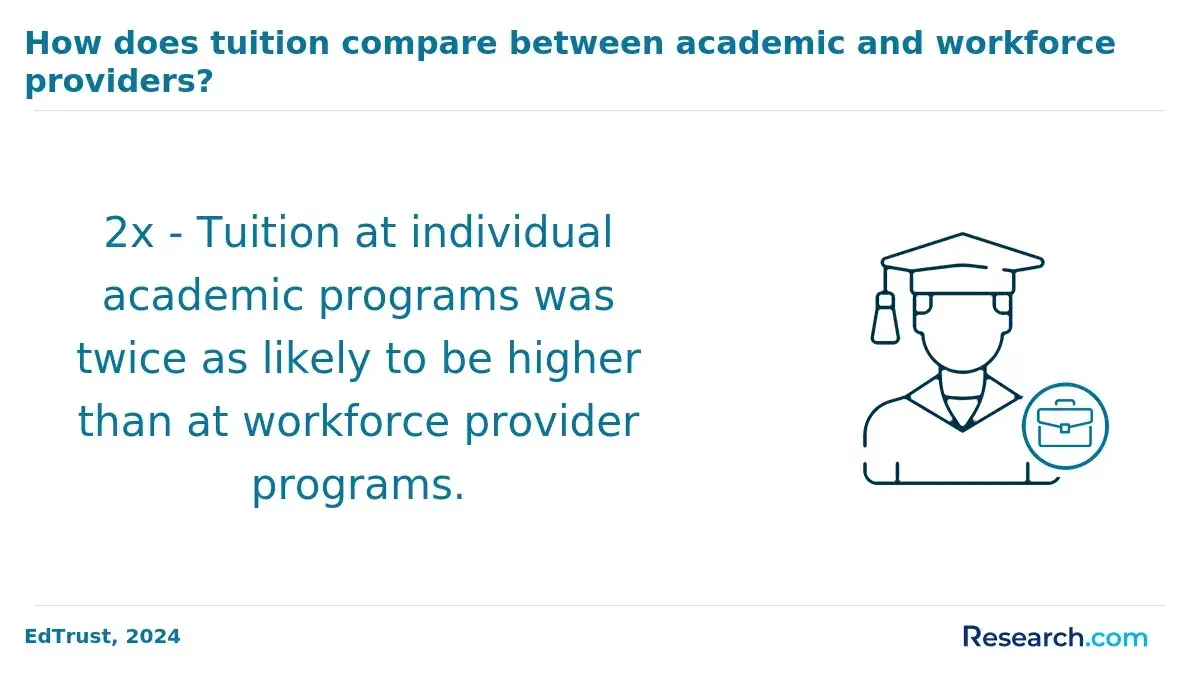
College Board's 2024 pricing data reported average published tuition and fees of $11,610 for in-state public four-year colleges and $43,350 for private nonprofit four-year colleges for the 2024-25 academic year. For nursing students, that gap can be decisive because both routes may lead to the same NCLEX-RN license if the programs are properly accredited and state-approved.
Use these location factors together rather than focusing on salary alone:
- Net tuition after aid: Compare the actual amount you must pay or borrow, not the published sticker price.
- Local RN wages: Review state and metro wage data for registered nurses, then compare it with housing and transportation costs.
- Clinical placement access: A lower-cost program may lose value if it delays graduation because clinical seats are limited.
- Licensure rules: State boards of nursing set approval and licensing requirements, so verify that the program meets the rules where you plan to work.
- Employer concentration: Areas with multiple hospitals, outpatient networks, and government health systems may offer better job mobility.
A strong ROI location is not always the highest-paying one. It is the place where you can complete an approved program affordably, pass licensure, find RN work quickly, and keep living costs manageable.
The skills that improve BSN ROI are the ones employers can connect to safer care, smoother operations, lower risk, and better patient outcomes. Technical competence matters, but the highest-return nurses often combine bedside skill with communication, documentation, data awareness, and leadership.
Technology is also changing the nursing skill mix. Electronic health records, clinical decision support, telehealth, remote monitoring, and AI-assisted documentation do not replace RN judgment, but they reward nurses who can use digital tools accurately and ethically.
These skill areas are especially useful because they transfer across employers and settings:
- Clinical prioritization: The ability to recognize deterioration, escalate concerns, and manage multiple patients safely.
- Clear documentation: Accurate charting affects reimbursement, legal risk, care continuity, and quality reporting.
- Patient education: Strong teaching skills improve discharge readiness and chronic disease management.
- Care coordination: Case management, transitions of care, and interdisciplinary communication can open non-bedside roles.
- Data and quality improvement: Familiarity with dashboards, infection metrics, readmission trends, and workflow analysis supports informatics and quality roles.
- Leadership under pressure: Charge nurse, preceptor, and committee experience can lead to supervisory opportunities.
The practical move is to document evidence of these skills early. Keep a record of preceptor roles, quality projects, EHR training, specialty competencies, patient education work, and measurable improvements you helped support.
Certifications can increase ROI when they match the role you already hold or the specialty you are actively trying to enter. They are usually most valuable after you have enough RN experience for the credential to signal real competence, not just test-taking ability.
Graduate or professional degrees are not the same as certifications. For example, nurses interested in medication systems, prescribing authority, or pharmacy leadership may compare nursing pathways with options such as PharmD online programs, but that is a different investment decision from adding a nursing specialty certification.
The certifications below are commonly associated with bachelor's-level RN advancement. Requirements vary by credentialing organization, so verify eligibility before paying for exam preparation.
| Certification area | Common example | ROI value | Best timing |
| Critical care | CCRN | Signals high-acuity expertise and may support ICU mobility or differential eligibility | After qualifying critical care experience |
| Emergency nursing | CEN | Supports emergency department specialization and trauma-related credibility | After sustained emergency nursing practice |
| Medical-surgical nursing | CMSRN or MEDSURG-BC | Validates broad inpatient clinical competence | After building med-surg experience |
| Case management | CCM or ACM | Can help transition into payer, hospital discharge, or population health roles | After care coordination experience |
| Informatics or quality | Informatics, quality, or patient safety credentials | Helps connect nursing practice with data, compliance, EHR, and improvement work | After participating in relevant projects or roles |
A red flag is paying for a certification because it sounds impressive without confirming employer demand. Ask hiring managers, nurse educators, or current staff which credentials affect hiring, promotion, clinical ladder points, or pay differentials at the organizations you want to work for.
Employer type and organization size can shape ROI through base pay, benefits, shift differentials, tuition reimbursement, union contracts, staffing models, and promotion ladders. A smaller employer may offer flexibility and faster responsibility, while a large health system may offer specialty training and internal mobility.
For bachelor's-level nurses, total compensation matters more than hourly wage alone. Health insurance, retirement contributions, paid leave, loan repayment, tuition support, certification reimbursement, and predictable scheduling can materially change the value of a job offer.
The table below summarizes how employer differences often affect ROI. Use it as a checklist when comparing offers, not as a rule that one employer type is always best.
| Employer type | Potential ROI advantage | Potential downside | Good questions to ask |
| Large hospital system | Specialty units, residency programs, tuition support, internal transfers, clinical ladders | High workload, rotating shifts, and slower bureaucracy | How do clinical ladders affect pay, and when can new nurses transfer specialties? |
| Academic medical center | Complex cases, specialty exposure, research or quality projects | Competitive environment and high acuity | Are BSN nurses eligible for committees, preceptor roles, and specialty training? |
| Community hospital | Broad clinical experience and potentially faster responsibility | Fewer specialty departments or advancement layers | What advancement options exist without leaving the organization? |
| Government employer | Benefits, stability, public service pathways, and possible loan-related programs | Hiring may be slower and processes more formal | How are pay steps, promotions, and benefits structured? |
| Insurance, payer, or corporate healthcare employer | Remote or hybrid possibilities, case review, analytics, and non-bedside roles | Often requires prior RN experience and strong documentation skills | What clinical experience is required before moving into review or case management? |
Do not assume a famous hospital automatically offers the best ROI. Compare the full package, including schedule, commute, staffing support, advancement history, and whether the employer pays for future certifications or BSN completion.
Emerging nursing career paths can improve future ROI by moving BSN-prepared nurses into areas where healthcare systems are investing: virtual care, care coordination, informatics, quality, patient safety, chronic disease management, and population health. These paths are attractive because they may not require graduate school at the entry point, although senior roles can become more competitive.
One especially important trend is the blending of nursing, data, and health records. Nurses who want to understand adjacent non-bedside roles can review a health information management job description and salary to see how documentation, compliance, analytics, and healthcare operations overlap with nursing experience.
The strongest emerging paths are not "easy exits" from bedside nursing. They usually reward nurses who first build credible clinical experience and then add targeted technical or operational skills.
- Telehealth and remote patient monitoring: Nurses support triage, education, follow-up, chronic disease monitoring, and escalation decisions using virtual tools.
- Nursing informatics support: RNs help improve EHR workflows, train users, test documentation changes, and connect clinical practice with technology teams.
- Population health and care navigation: Nurses coordinate care for patients with chronic conditions, high utilization, or complex discharge needs.
- Quality and patient safety: Nurses analyze processes, support audits, reduce preventable harm, and help teams comply with standards.
- Clinical documentation improvement support: Nurses use clinical knowledge to improve accuracy, continuity, and reimbursement-related documentation.
AI will likely make these paths more important, not less. Healthcare organizations need nurses who can validate AI-assisted notes, recognize unsafe recommendations, protect patient privacy, and translate digital outputs into clinically appropriate action.
To evaluate the ROI of a nursing bachelor's degree without graduate school, compare the total cost of the credential with realistic RN outcomes in the market where you plan to work. The best decision is not always the cheapest program or the highest starting salary; it is the path that produces the strongest combination of licensure eligibility, manageable debt, job access, and advancement.
Students comparing nursing with other health-related bachelor's options may also look at programs such as an online bachelor's in kinesiology. That comparison can be useful because nursing usually has a clearer licensure-to-occupation pathway, while broader health degrees may require additional credentials for clinical roles.
Use this step-by-step process before enrolling or before deciding that graduate school is necessary:
- Confirm that the program is state-approved for RN licensure and properly accredited for your goals.
- Calculate net cost after grants, scholarships, employer aid, transfer credits, and realistic living expenses.
- Check NCLEX-RN pass rates, clinical placement quality, graduation timelines, and student support services.
- Compare local RN wages and job postings for BSN requirements, specialties, schedules, and new-graduate residency options.
- Estimate debt burden against expected entry-level RN income rather than against national averages alone.
- Ask employers which certifications, specialties, or leadership experiences affect pay or promotion without a graduate degree.
- Delay graduate school unless it clearly unlocks a required license, defined role, or salary increase that justifies tuition and lost work time.
Common ROI mistakes include borrowing heavily for a program with weak clinical placement, assuming a graduate degree is automatically required, choosing a specialty only for pay, ignoring burnout risk, and comparing salaries without adjusting for local cost of living. A BSN is often enough for a strong nursing career when the student controls cost, passes licensure efficiently, and uses early work experience strategically.
Salary growth in nursing often comes from specialization, responsibility, and setting changes rather than the bachelor's degree alone. A new RN may begin in bedside care, then increase earning potential through critical care, procedural units, charge roles, case management, informatics, quality, or management-track positions.
BLS reported a May 2024 median annual wage of $117,960 for medical and health services managers. That figure does not mean every nurse manager earns that amount, but it shows why leadership and operations skills can materially change bachelor's-level ROI for nurses who move beyond entry-level staff roles.
The table below shows how salary growth can happen without a graduate degree. It is best read as a career-ladder map, not as a promise that every employer will pay more for every step.
| Growth route | How nurses usually qualify | Why it can improve ROI | When it may not fit |
| Specialty clinical practice | Experience in ICU, ED, OR, oncology, labor and delivery, or procedural care | Can support differentials, certification value, and stronger job mobility | May involve stress, call, weekends, or high-acuity workload |
| Charge nurse or unit coordinator | Strong clinical performance and leadership readiness | Adds supervisory experience without leaving patient care entirely | Responsibility may increase faster than base pay in some workplaces |
| Case management or utilization review | RN experience, documentation skill, and payer or discharge-planning knowledge | Can open non-bedside roles and stable schedules | May require comfort with insurance rules and administrative work |
| Quality, safety, or informatics | Clinical background plus data, EHR, compliance, or project skills | Positions nurses for healthcare operations and technology-driven roles | May require extra training or internal experience before moving over |
| Nurse management track | BSN, RN experience, leadership record, and budgeting or staffing exposure | Can connect nursing experience to higher-level healthcare management roles | Some employers prefer graduate education for senior leadership |
For long-term ROI, students should ask programs and employers about clinical partnerships, nurse residency programs, specialty transition opportunities, tuition reimbursement, and internal promotion pathways. These factors often matter more than a school's marketing claims.
Other Things You Should Know About Nursing
Yes, it can be worth it if the program leads to RN licensure, the cost is manageable, and the graduate enters a market with strong RN demand. The ROI is strongest when students avoid excessive debt and use the BSN to access hospitals, specialty units, case management, leadership-track roles, or non-bedside nursing opportunities.
There is no single best role for every nurse, but strong options include hospital RN, specialty RN, case manager, utilization review nurse, charge nurse, quality improvement nurse, and informatics-related nursing roles. The best choice depends on local pay, schedule tolerance, experience requirements, and advancement options.
Not necessarily. Many BSN-prepared RNs earn competitive wages without graduate school, especially in higher-paying regions, specialty units, leadership-track roles, or care coordination settings. A master's degree makes the most financial sense when it is required for a specific role, such as advanced practice nursing, education leadership, or senior administration.
The fastest way is to pass the NCLEX-RN promptly, start working in a setting with strong training and advancement, reduce debt aggressively, and build specialty skills that employers reward. After gaining experience, targeted certifications can improve mobility more efficiently than immediately enrolling in graduate school.
See What Experts Have To Say About Studying Nursing
Read our interview with Nursing experts


- Factors Influencing Registered Nurses Pursuing Advanced ... https://athenacommons.muw.edu/cgi/viewcontent.cgi
- 6 Considerations about the Geography of the Nursing Shortage https://blog.bluepipes.com/dissecting-the-geopraphic-aspect-of-the-nursing-shortage/
- How Much You Can Make With an Associate Degree in Nursing https://www.allnursingschools.com/adn/salary/
- How Far Can a Bachelor's Degree in Nursing Take You in Today's Competitive Job Market | Education https://vocal.media/education/how-far-can-a-bachelor-s-degree-in-nursing-take-you-in-today-s-competitive-job-market
- Nursing Degrees And Salary: Does Education Effect Earnings? https://betternurse.org/nursing-degrees-and-salary/
- Surprising Six-Figure Nursing Jobs That Don't Require a Master's Degree - The HJN Blog https://blog.healthjobsnationwide.com/surprising-six-figure-nursing-jobs-that-dont-require-a-masters-degree/
- New Graduate Employment Data https://www.aacnnursing.org/news-data/research-data-center/new-graduate-employment-data
- How to Pay for Nursing School [Tips and Options] | Lecturio https://www.lecturio.com/blog/how-to-pay-for-nursing-school-and-how-much-is-it/
- How Much Is Nursing School In The USA? | Shiftmed Blog https://www.shiftmed.com/professionals/blog/how-much-is-nursing-school/
- 2025â26 Nurse Salary: How Much Do RNs Make in Each State? https://credenzahealth.com/career-advice/nurse-salary-facts-figures-and-rn-salary-rates-by-state