2027 Nursing Degree Underemployment Report: Which Graduates Are Most Likely to Work Below Their Education Level

Co-Founder and Chief Data Scientist
Nursing has one of the strongest education-to-job matches among college majors, but underemployment still happens when graduates lack licensure, clinical readiness, specialty exposure, or local hiring access. The Federal Reserve Bank of New York's latest outcomes by major show nursing recent graduates with an underemployment rate near 11%, far below the all-major benchmark near 40%. This guide is for nursing students, new graduates, and career changers who want to avoid low-credential roles. You'll learn where mismatch risk comes from, how salaries differ, and what steps can improve your odds of landing degree-level work.
Key Things to Know About Underemployment in Nursing Industry
- Recent nursing graduates experience an underemployment rate near 11%, which is significantly lower than the overall college major benchmark near 40% due to mandatory state licensure and direct clinical hiring pathways.
- Graduates face the highest risk of underemployment if they delay passing the NCLEX, lack documented clinical readiness, restrict their job search to saturated geographic markets, or submit broad applications instead of targeting structured RN residency programs.
- Accepting long-term fallback positions carries a steep financial penalty, with median annual wages for registered nurses ($93,600) significantly outpacing common low-credential roles like medical assistants ($44,200) and nursing assistants ($39,530).
- How likely is it for Nursing graduates to become underemployed?
- Is the college curricula for Nursing keeping up with employer expectations?
How likely is it for Nursing graduates to become underemployed?
For nursing graduates, underemployment usually means working in a role that does not fully use a nursing degree, RN preparation, or bachelor's-level training. Examples include working as a nursing assistant, medical assistant, home health aide, unit clerk, patient transporter, or nonclinical customer service employee after completing a nursing degree but before securing a degree-level nursing role.
The risk is lower than in many majors because nursing is tied to a regulated occupation, a clear licensure pathway, and persistent healthcare staffing needs. The latest Federal Reserve Bank of New York major-level labor outcomes show nursing underemployment near 11% for recent graduates. That means most nursing graduates who complete licensure requirements are positioned for degree-level work, but the minority who miss key readiness markers can still get pushed into lower-credential healthcare jobs.
The table below shows how risk differs by graduate situation. It is most useful for identifying whether the problem is the degree, the license, the job market, or the way the graduate is presenting their experience.
| Graduate situation | Underemployment risk | Why it happens | Better target |
| BSN graduate who passed the NCLEX and completed strong clinical rotations | Low | The graduate meets the baseline credential for RN hiring and can show patient-care exposure | Staff RN, residency RN, public health nurse, ambulatory care RN |
| Graduate waiting to pass the NCLEX | Moderate to high | Employers may not hire into RN roles until licensure is active or pending under state rules | Graduate nurse role where allowed, nurse extern, structured RN residency pipeline |
| Graduate with weak clinical references or limited specialty exposure | Moderate | Hospitals may prefer applicants who already understand unit workflow, documentation, and safety protocols | Residency programs, med-surg entry roles, long-term care RN roles with training |
| Graduate in a saturated local market who will not relocate | Moderate | Competition can be concentrated in major hospital systems, especially for specialty units | Regional hospitals, rural facilities, long-term care, home health, behavioral health |
| Graduate who applies broadly to "healthcare jobs" instead of RN-aligned roles | High | Generic applications can lead to low-credential offers that do not require the degree | RN postings that specify new-graduate eligibility, preceptor support, or residency entry |
The most important takeaway is that nursing underemployment is usually preventable when students treat licensure, clinical performance, references, and local employer fit as part of the degree's return on investment.
Is the college curricula for Nursing keeping up with employer expectations?
Nursing curricula are generally more employer-aligned than many academic majors because programs must prepare students for clinical practice, state licensure, and the NCLEX. Still, employers increasingly expect new nurses to arrive with stronger clinical judgment, technology fluency, documentation accuracy, and teamwork habits than classroom coursework alone can prove.
The curriculum-employer gap is most visible when a graduate has passed classes but cannot confidently describe patient prioritization, medication safety, EHR charting, care coordination, or escalation protocols. The Next Generation NCLEX has reinforced this shift by emphasizing clinical judgment, which mirrors how employers evaluate readiness on busy units.
The table below summarizes the most common alignment gaps. Use it as a checklist when reviewing a program, choosing electives, or preparing for interviews.
| Employer expectation | Where some programs fall short | Why it affects underemployment risk |
| Clinical judgment under pressure | Students may practice scenarios but get limited high-acuity exposure | Employers may hesitate to place new graduates in complex units without residency support |
| EHR and documentation accuracy | Simulation labs may not fully match real hospital systems | Poor documentation readiness can weaken interview performance and early job confidence |
| Medication safety and pharmacology application | Coursework may be strong theoretically but uneven in real-time application | Medication errors are high-stakes, so employers value evidence of safe practice habits |
| Interprofessional communication | Students may not get enough practice coordinating with physicians, pharmacists, therapists, and case managers | Weak communication can make a graduate look less ready for degree-level responsibility |
| Specialty exposure | Clinical placements may not include pediatrics, ICU, emergency, oncology, or community health in depth | Graduates may have to start in broader roles before moving into preferred specialties |
Students should not assume that a nursing degree alone proves job readiness. A stronger strategy is to compare course outcomes against actual RN job descriptions in the target region and then fill gaps through externships, simulation labs, specialty clinicals, or faculty-supervised projects.
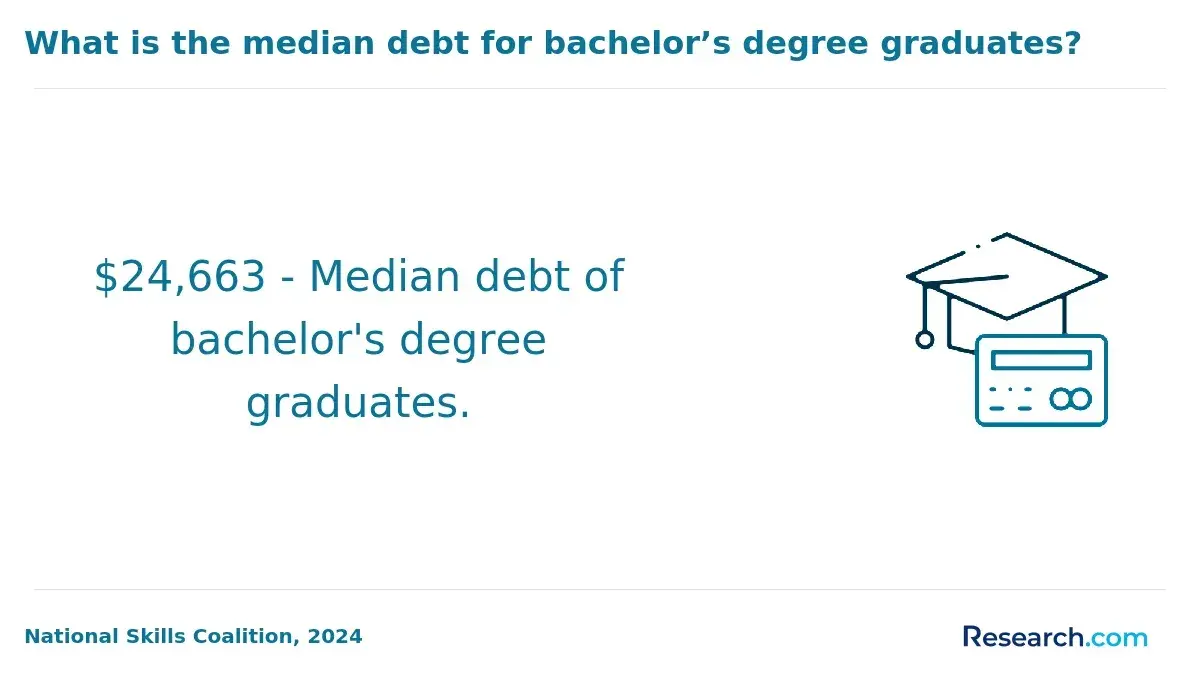
Nursing performs better than the average major on underemployment because it leads to a licensed occupation with direct labor-market demand. In contrast, many majors require graduates to translate broad academic skills into job-specific evidence, which can increase the risk of taking roles that do not require a bachelor's degree.
The Federal Reserve Bank of New York's recent graduate data place nursing underemployment near 11%, while the all-major recent-graduate benchmark is near 40%. That gap matters because it shows nursing is less exposed to the "degree but no clear occupation" problem, although it does not remove risk for graduates who lack licensure or clinical readiness.
The comparison below uses broad categories to show how nursing fits into the wider college labor market. It should be read as a decision aid, not as a promise of individual outcomes.
| Major or field category | Typical underemployment pattern | Why nursing differs |
| Nursing | Low relative risk, near 11% for recent graduates | Licensure, clinical training, and direct RN hiring pathways create clearer job matching |
| All college majors combined | Much higher benchmark, near 40% for recent graduates | Many graduates must translate general coursework into employer-specific skills |
| Health-related but non-licensed majors | Mixed risk | Outcomes depend on whether the degree leads to a defined credential, graduate school, or employer-recognized technical skill |
| Liberal arts and general social science fields | Often higher risk | Graduates may need internships, analytics skills, writing samples, or graduate credentials to access degree-level roles |
| Engineering and computer-related fields | Often lower than the all-major benchmark but skill-sensitive | Hiring depends heavily on demonstrable technical tools, projects, and market cycles |
The practical lesson is not that nursing is risk-free. It is that nursing students have more control over outcomes when they complete the licensure sequence, build employer-facing clinical evidence, and apply to roles designed for new graduates.
Taking a low-credential role can affect nursing career growth if it delays RN practice, specialty entry, or employer-sponsored residency participation. Nursing skill development is cumulative: assessment, prioritization, medication safety, delegation, and care planning improve through supervised RN-level responsibility, not just general healthcare exposure.
The effect depends on the role. A patient care technician position in a hospital may help a graduate understand unit workflow and build internal contacts. A nonclinical job with no patient-care responsibilities may create a harder story to explain in RN interviews, especially if the graduate is out of clinical practice for several months.
Graduates who realize bedside nursing is not the right fit still have degree-adjacent options, but they should pivot deliberately rather than drift into underemployment. For example, nurses interested in records, quality, coding, compliance, or clinical data may compare the health information management job description and salary to see whether a non-bedside healthcare path better matches their strengths.
The main career-growth risks of prolonged low-credential work are practical, not symbolic. Hiring managers may question why the graduate has not entered RN practice, specialty units may prioritize fresher clinical references, and the graduate may lose confidence in core nursing competencies.
To reduce damage, the graduate should keep the resume anchored to nursing readiness. That means documenting patient-care responsibilities, maintaining active licensure, completing continuing education, staying connected with faculty references, and applying for structured transition-to-practice programs as soon as possible.
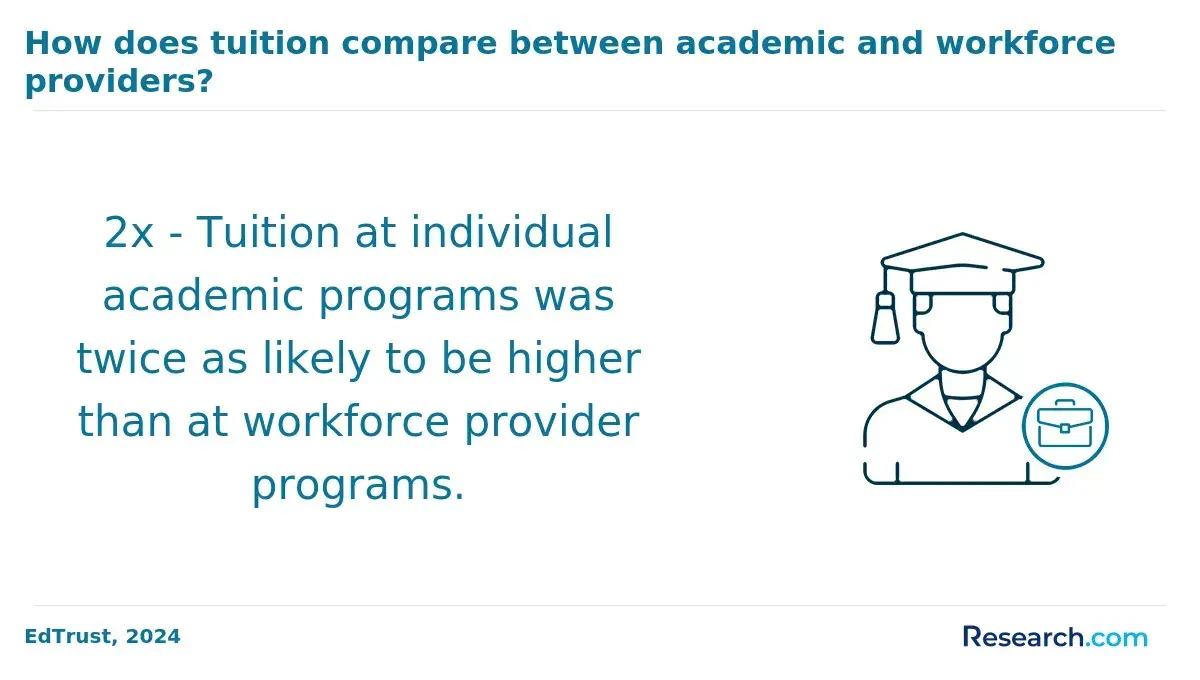
The salary gap between degree-level RN work and low-credential fallback jobs is one of the clearest financial risks of nursing underemployment. BLS May 2024 wage data show a median annual wage of $93,600 for registered nurses, which is substantially higher than several healthcare support occupations that nursing graduates may take when they are not yet licensed or not hired into RN roles.
The table below compares median wages for RN-aligned work with common fallback roles. The annual gap is not a guarantee for any individual worker, but it shows the scale of the opportunity cost when a nursing graduate remains below degree level.
| Role | Credential fit for a nursing graduate | Median annual wage, BLS May 2024 | Approximate annual gap vs. RN median |
| Registered nurse | Degree-level target role | $93,600 | $0 |
| Licensed practical or vocational nurse | Lower-scope licensed role for BSN/RN-prepared graduates | $62,340 | $31,260 |
| Medical assistant | Low-credential fallback for a nursing graduate | $44,200 | $49,400 |
| Nursing assistant | Low-credential patient-care support role | $39,530 | $54,070 |
| Home health or personal care aide | Low-credential support role | $34,900 | $58,700 |
The financial risk is not only the first-year wage difference. Lower earnings can make loan repayment harder, reduce retirement contributions, delay relocation to stronger job markets, and limit the ability to pay for certifications or graduate education. A temporary fallback role may be financially necessary, but graduates should treat it as a bridge with a defined transition plan.
Nursing underemployment usually comes from a specific barrier rather than from weak demand for nurses overall. The BLS projects registered nurse employment to grow 6% from 2023 to 2033, which is faster than the average for all occupations. That demand helps, but it does not eliminate screening standards, licensure rules, specialty competition, or geographic differences.
The most common barriers fall into several categories. Understanding which one applies helps graduates choose the right fix instead of sending more generic applications.
- Licensure barrier: The graduate has not passed the NCLEX, has not completed state board requirements, or is applying before the employer can legally place them into an RN role.
- Clinical-readiness barrier: The resume lists rotations but does not show patient assessment, prioritization, safety, documentation, or teamwork examples.
- Specialty-access barrier: The graduate wants ICU, labor and delivery, emergency, oncology, or pediatrics but has no externship, capstone, practicum, or residency link to that unit.
- Geographic barrier: The local market has many nursing schools, limited new-graduate residency seats, or preferred internal candidates.
- Application barrier: The graduate uses one generic resume for every role, omits license status, or fails to include clinical hours and unit types.
- Networking barrier: The graduate relies only on job boards and misses referrals from preceptors, faculty, alumni, clinical coordinators, and nurse managers.
Common mistakes often make these barriers worse. The most damaging are waiting until after graduation to begin applications, assuming a BSN automatically secures a hospital role, ignoring long-term care and community health as legitimate RN starting points, and accepting a low-credential job without asking how internal transfer into RN roles works.
A strong nursing resume should make it easy for an employer to see licensure status, clinical readiness, unit exposure, patient populations, technical skills, and safety awareness. Many underemployed graduates are not unqualified; they simply present themselves like students rather than entry-level clinicians.
Before applying, tailor the resume to the exact role. Applicant tracking systems and nurse recruiters often look for terms that match the unit, license, certifications, and clinical skills in the posting.
- Place your license status near the top, including RN license, NCLEX scheduled date, compact license status if applicable, and state eligibility.
- List clinical rotations with unit type, facility type, patient population, and relevant hours when allowed by your school or employer norms.
- Convert coursework into job evidence by naming applied skills such as medication administration, wound care, patient education, EHR documentation, care planning, and SBAR communication.
- Add a focused skills section that mirrors the posting, but only include skills you can discuss honestly in an interview.
- Use accomplishment bullets from clinicals, externships, simulations, or capstones rather than vague statements such as "helped nurses with patient care."
- Show readiness for the employer's environment by mentioning shift flexibility, residency interest, quality improvement exposure, infection control, and interdisciplinary teamwork.
A weak resume says, "I completed a nursing program." A strong resume says, "I am prepared to enter supervised RN practice in this specific setting." That distinction can be the difference between an RN interview and a fallback offer.
Certifications cannot replace RN licensure, but they can help a nursing graduate show readiness for specific settings. The fastest return often comes from certifications that match the first target role, such as acute care, long-term care, behavioral health, public health, ambulatory care, or perioperative nursing support.
The table below summarizes common credentials that may strengthen an entry-level nursing application. Requirements vary by employer, state, and certifying body, so graduates should verify eligibility before paying for an exam or course.
| Credential | Best fit | How it may reduce underemployment risk |
| Basic Life Support | Nearly all patient-care settings | Shows baseline emergency response readiness and is often required before start date |
| Advanced Cardiovascular Life Support | Telemetry, emergency, ICU, step-down, procedural areas | Signals interest in higher-acuity care, though some employers prefer nurses to earn it after hire |
| Pediatric Advanced Life Support | Pediatrics, emergency, urgent care | Supports applications to child-focused settings when paired with relevant clinical exposure |
| Certified Nursing Assistant | Pre-licensure students or graduates needing healthcare experience | Can build bedside exposure, but should not substitute for RN licensure after graduation |
| Wound care training or continuing education | Long-term care, home health, med-surg | Helps applicants target settings with strong demand for skin assessment and care coordination |
| Electronic health record training | Hospitals, clinics, ambulatory care | Strengthens documentation readiness and may help in outpatient or care-coordination roles |
Graduates should be cautious about stacking credentials without a hiring strategy. A certification is valuable when it closes a specific gap in a target job description; it is less useful when it is collected randomly to compensate for unclear goals.
Some healthcare students eventually decide they want a medication-focused doctoral pathway rather than nursing practice. In that case, comparing PharmD online programs can help clarify whether pharmacy, advanced nursing, or another healthcare route offers the better long-term fit.
Nursing students can lower underemployment risk well before graduation by treating the degree as a career pipeline, not just an academic requirement. The strongest candidates usually have licensure momentum, clinical references, unit-specific exposure, and a job-search plan before their final semester ends.
The steps below are most useful when started early, but recent graduates can still apply them to regain traction.
- Audit local RN job postings each semester and list the repeated requirements, such as BLS, EHR experience, med-surg exposure, residency eligibility, or night-shift availability.
- Choose clinical placements, capstones, externships, or part-time roles that align with the settings that hire new graduates in your region.
- Build relationships with preceptors and nurse managers by asking for feedback, showing reliability, and requesting permission to use them as references when appropriate.
- Apply to RN residency programs early because many hospitals recruit cohorts before graduation or shortly after NCLEX eligibility.
- Prepare for behavioral interviews using examples tied to safety, conflict, patient education, prioritization, delegation, and ethical judgment.
- Create a fallback plan that still keeps you close to RN practice, such as long-term care, behavioral health, ambulatory care, or a regional hospital, rather than unrelated work.
- Track application outcomes by employer, unit, resume version, referral source, and interview stage so you can identify whether the problem is targeting, resume strength, or interview performance.
Students who are not fully committed to nursing should also evaluate adjacent health majors before investing further time and tuition. For example, an online bachelor's in kinesiology may fit students drawn to exercise science, rehabilitation support, wellness, or graduate preparation for therapy-related fields, but it does not provide the same direct RN licensure pathway.
The smartest strategy is to align the program, license, clinical experience, geography, and first job target from the beginning. Nursing can be worth pursuing when the student is prepared for patient-care responsibility and follows the licensure pathway carefully; it becomes riskier when the student delays career planning until after graduation.
Nursing graduates do not necessarily stay long in low-credential roles, but the first job can create momentum in either direction. A short-term nursing assistant, unit clerk, or patient care technician role may be reasonable before licensure, during NCLEX preparation, or while waiting for a residency cohort to open. It becomes risky when the graduate stops applying for RN-level roles or lets clinical knowledge fade.
Low-credential work can serve as a bridge only when it has a clear exit plan. For example, someone who intentionally chooses a 6 month LPN program is following a different credential pathway than a BSN graduate who completed RN preparation but remains in assistant-level work because of weak applications or an unpassed licensure exam.
Use the following steps to keep a temporary low-credential role from becoming a long-term mismatch:
- Set a deadline for NCLEX completion, RN residency applications, or specialty applications before accepting the fallback job.
- Choose a fallback role inside a healthcare system that hires new RNs internally and ask about internal transfer timelines before accepting.
- Keep applying to RN-level openings every week rather than waiting for the fallback employer to promote you automatically.
- Ask for assignments that strengthen RN-relevant evidence, such as patient education support, documentation exposure, or care-team communication.
- Track what you learn in a clinical accomplishment file so you can convert the experience into resume bullets and interview examples.
A low-credential job is most defensible when it protects income while keeping the graduate close to patient care. It is least defensible when it is unrelated to nursing, lacks RN exposure, or delays licensure preparation.
Other Things You Should Know About Nursing
Usually no. If the role requires RN licensure and uses nursing judgment, it is generally degree-level work for an ADN-prepared nurse. Some hospitals prefer or require a BSN for advancement, specialty units, leadership, or Magnet-related hiring goals.
Not automatically. The key issue is whether the program is properly accredited, approved by the state board of nursing, provides compliant clinical placements, and prepares students for the NCLEX. A program with weak clinical support can create hiring barriers.
Relocation can help when the local market has limited new-graduate openings or intense competition for hospital residencies. Before moving, compare license transfer rules, cost of living, shift expectations, residency availability, and employer training support.
Not usually as a first step. If the problem is NCLEX status, weak applications, limited clinical exposure, or poor targeting, graduate school may add cost without solving the core barrier. It makes more sense when it supports a clear role such as nurse practitioner, educator, administrator, or informatics specialist.
See What Experts Have To Say About Studying Nursing
Read our interview with Nursing experts

Lisa Grubb
Nursing Expert
Assistant Professor
Johns Hopkins School of Nursing

- Factors Influencing New Graduate Nurse Employment https://www.myamericannurse.com/factors-influencing-new-graduate-nurse-employment/
- Nursing Shortage Fact Sheet https://www.aacnnursing.org/news-data/fact-sheets/nursing-shortage
- Nurse Demographics and Workforce Statistics in the United States: Trends, Diversity, and the Growing Shortage https://www.cwshealth.com/post/nurse-demographics-and-workforce-statistics-in-the-united-states-trends-diversity-and-the-growing
- Drivers and barriers to career entry and retention of nurses with initial higher education: A scoping review https://journals.publisso.de/en/journals/jme/volume42/zma001759
- Bachelor’s in Nursing Enrollment Trends: How Healthy Is the Market? https://www.encoura.org/resources/wake-up-call/bachelor-s-in-nursing-enrollment-trends-how-healthy-is-the-market/
- Least Stressful Nursing Careers https://nightingale.edu/blog/least-stressful-nursing-jobs.html
- Perceived Motivators and Barriers that Influence Early ... https://www.graphyonline.com/archives/archivedownload.php
- Nurse graduates unemployed or underemployed - Australian Council of Trade Unions https://www.actu.org.au/media-release/nurse-graduates-unemployed-or-underemployed/
- Nursing Survey https://www.statcrunch.com/reports/view
- Your Future in Nursing: RN vs. BSN vs. MSN | Maryville Nursing https://nursing.maryville.edu/blog/rn-vs-bsn-vs-msn