
2027 Most Popular MBA Degree Programs Ranking in Kansas

Co-Founder and Chief Data Scientist
Exploring MBA programs in Kansas can be overwhelming, but this article is here to simplify that journey. It features the 2027 Most Popular MBA Degree Programs Ranking in Kansas developed by the Research.com team of data scientists. This carefully crafted ranking helps you identify the best MBA programs worth considering.
Getting an MBA opens doors to new career opportunities, higher earning potential, and valuable connections. Reading this article will guide you toward making an informed decision that fits your goals and aspirations.
Key benefits of getting MBA degree in Kansas
- Although specific salary data from the US Bureau of Labor Statistics is unavailable, MBA graduates in the US typically earn competitive salaries, often ranging from $80,000 to over $120,000 annually in managerial and business roles, reflecting the strong financial benefits of the degree.
- Graduates from well-known Kansas universities commonly pursue careers in finance, marketing, consulting, or operations management, enjoying diverse opportunities that allow them to grow professionally in thriving Midwestern industries.
- Getting an online MBA from a respected Kansas institution offers flexible scheduling and the ability to balance work and study, making it easier to earn your degree without disrupting your current lifestyle, while still gaining valuable skills and networking.
- 2027 Most Popular MBA Degree Programs Ranking in Kansas
- What can I expect from MBA degree in Kansas?
- Where can I work with MBA degree in Kansas?
What can I expect from MBA degree in Kansas?
Diving into the world of MBA degrees in Kansas, you'll find the average cost comfortably ranges between $20,000 and $40,000 for the entire program. Graduates from places like the University of Kansas recall weighing this investment against the rich opportunities their education unlocked-connecting with local businesses and jumping into vibrant industries like healthcare and manufacturing.
Many students balance tuition with the flexibility of part-time and online courses offered by institutions such as Kansas State University. One graduate shared how this adaptability allowed them to continue working while gaining skills in finance and leadership, making every dollar spent feel worthwhile. The cost reflects comprehensive programs infused with practical insights tailored to Kansas' unique economy.
Imagine attending classes where entrepreneurship and innovation spark new ideas that could shape the state's growing startups. This is what many MBA candidates experience firsthand, fueling both their ambition and the local economy without breaking the bank.
Where can I work with MBA degree in Kansas?
Graduates from MBA programs at universities like the University of Kansas and Kansas State find themselves stepping into vibrant career paths across the state's dynamic industries. Imagine joining the aerospace sector in Wichita, collaborating with teams at companies such as Spirit AeroSystems, where your strategic planning skills drive innovation in manufacturing. Others have ventured into financial hubs like Overland Park, navigating risk management or financial analysis roles at institutions including UMB Financial Corporation, turning complex data into actionable business insights.
Many MBA holders experience the rewarding challenge of healthcare administration at places like the University of Kansas Health System, leading efforts to improve patient services and streamline operations. Others take entrepreneurial leaps, supported by Kansas Small Business Development Center, managing startups that energize local economies.
Picture yourself as a project manager or marketing director in Kansas City's bustling corporate offices, where leadership abilities shape the future of business. The state's growing demand for skilled managers offers a playground of opportunities to apply your MBA knowledge and thrive.
Imagining your journey after earning an MBA in Kansas sparks exciting possibilities, especially when you consider the salary landscape. Graduates from institutions like the University of Kansas or Wichita State often find themselves stepping into roles in finance or consulting with starting salaries ranging from $90,000 to $100,000. This aligns well with numbers seen across the Midwest, adding a reassuring layer of predictability to your financial planning.
As you gain experience and take on leadership roles, your salary potential expands. For example, mid-career graduates who return to Kansas City's bustling business environment report earning upwards of $120,000, especially when moving into operations management or executive roles. Manufacturing and tech sectors also offer competitive wages, reflecting Kansas's strong industrial base.
Think of former MBA students who took the leap and saw their salaries jump significantly within five to ten years-these real-world stories fuel the spirit of adventure in your own career path. The numbers may vary, but the upward trend invites you to explore the vast financial rewards that an MBA in Kansas can unlock.
- MBA programs in Kansas offer full-time, part-time, and online options suitable for working professionals and recent graduates.
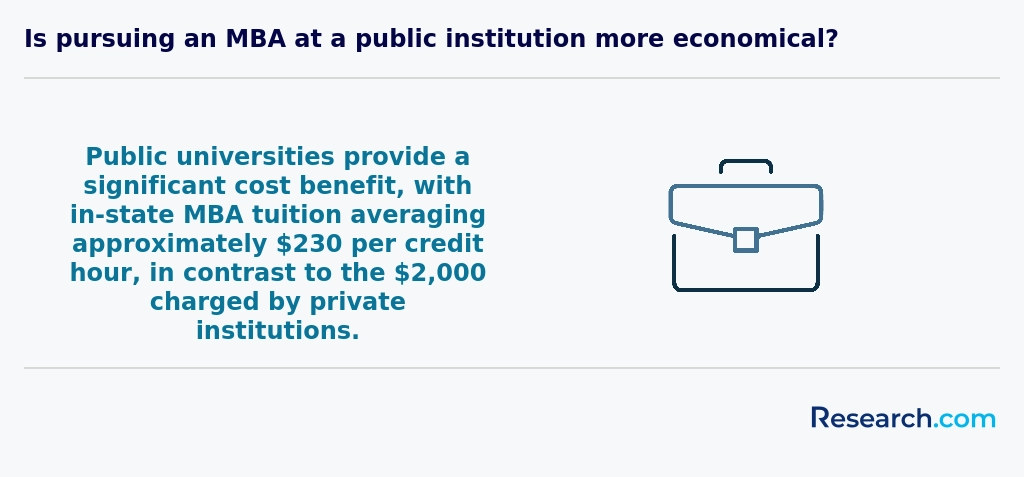
- Total tuition and fees typically range from $25,000 to $60,000, with public universities generally more affordable than private ones.
- Starting salaries for MBA graduates in Kansas usually fall between $65,000 and $80,000 annually, increasing to over $110,000 mid-career in fields like finance and healthcare administration.
- Key industries hiring MBA graduates include manufacturing, financial services, healthcare, education, and logistics due to Kansas' central location.
- Several MBA programs in Kansas are accredited by AACSB, ensuring high academic standards and better job prospects.
In Kansas, the journey to earning an MBA varies widely, sparking excitement for those ready to embrace new challenges. Many full-time students at institutions like the University of Kansas enjoy completing their degrees in about two years, diving deep into core courses and electives with a vibrant campus life. Imagine the thrill of balancing dynamic classroom discussions while building professional networks in a bustling academic environment!
On the other hand, part-time MBA candidates, often juggling jobs or families, find freedom in extending their studies to three or more years. Graduates cherish this flexibility, sharing stories of managing work, study, and life with determination and pride.
For the ambitious, accelerated programs offered by several Kansas schools turn the clock faster-finishing in just 12 to 18 months. Imagine pushing your limits to conquer an intensive curriculum, all while fast-tracking your career goals.
Meanwhile, the rising popularity of online and hybrid options offers self-driven learners a chance to tailor their pace, embracing convenience and challenge together from anywhere in the Sunflower State.
As the business landscape evolves, MBA programs in Kansas are adapting to meet future demands by integrating technology, sustainability, and experiential learning into their curricula. Data analytics and artificial intelligence modules are becoming core components, ensuring graduates can leverage big data to make strategic decisions. Meanwhile, sustainability and social impact courses reflect the growing importance of ethical leadership in addressing global challenges. Institutions are also partnering with local industry leaders to offer live consulting projects and internships, giving students real-world experience before graduation. Another key trend is the expansion of flexible delivery formats. Beyond traditional on-campus and hybrid models, many Kansas schools are launching micro-credential programs and stackable certificates that allow professionals to upskill quickly. This modular approach aligns well with working students’ schedules and encourages lifelong learning. For those exploring cost-effective online pathways, the Affordable Online Master's in MBA Degree Programs Ranking in Ohio offers insights into accessible online MBA options that balance quality and affordability. The rise of niche specializations is also reshaping the market. Programs focused on healthcare management, agribusiness, and technology management are attracting candidates who seek targeted expertise in Kansas’s key industries. These specialized tracks often feature guest lectures from sector experts and capstone projects in partnership with regional employers, boosting both employability and local economic development. Looking ahead, Kansas MBA programs are poised to emphasize global immersion through virtual exchange programs and short-term study tours. This global perspective prepares graduates for leadership roles in multinational organizations and equips them to navigate cross-cultural teams effectively. As investment in digital infrastructure continues, students can expect more interactive virtual classrooms, enhanced by AI-powered tutoring and networking platforms that foster connections well beyond state lines. By staying attuned to these emerging trends, prospective MBA students can select programs that not only align with their career goals but also equip them with the forward-looking skills needed to thrive in an ever-changing business environment.
Imagine juggling a busy job and family life while earning your MBA-this is where online programs in Kansas truly shine. Graduates from the University of Kansas and Wichita State University often share how online classes offered them the flexibility to learn at their own pace, fitting coursework around hectic schedules without ever needing to relocate or miss important moments.
In contrast, students opting for on-campus MBAs at Kansas State University describe an energizing environment rich with face-to-face interactions. They value spontaneous hallway discussions with professors and the camaraderie built during group projects and internships, which bring theory to life in ways that virtual classrooms sometimes can't fully replicate.
Both paths meet high accreditation standards and deliver quality education tailored to your goals. But whether it's the freedom of asynchronous lectures or the thrill of in-person networking, Kansas MBA students find themselves immersed in experiences that shape not just their careers but their confident, adventurous spirits.
Evaluating the return on investment for an MBA in Kansas involves comparing program costs against expected salary gains and career advancement. On average, full-time in-state tuition ranges from $20,000 to $40,000, while graduates report starting salaries between $70,000 and $100,000. Considering living expenses of $15,000–$25,000 per year, the typical payback period for most Kansas MBA programs falls between two and four years. Key factors influencing ROI: • Specialization: Finance and technology management often yield higher starting salaries (up to $131,710 and $169,510, respectively), shortening payback to under three years. • Program Format: Online MBA graduates from Kansas State University report saving up to 20% on living costs, offsetting tuition and reducing break-even time. • Employer Sponsorship: With 68% of students receiving funding, sponsored candidates can achieve ROI immediately upon graduation, especially when promoted internally. Practical ROI tips: 1. Negotiate scholarships and grants early-Kansas State University’s merit awards can cut tuition by 25%. 2. Leverage part-time or online formats to maintain full-time income. 3. Target high-demand sectors such as healthcare management, where salary growth can exceed 30% within five years. For those comparing cost-effective options beyond Kansas, explore the Affordable Online Master's in MBA Degree Programs Ranking in Ohio to see programs that balance lower tuition with strong career outcomes.
The average cost of an MBA degree in Kansas offers an exciting range for prospective students eager to expand their horizons. Median total costs hover around $44,958, but Kansas residents often benefit from a lower median in-state total cost near $34,192. This difference makes pursuing an MBA from schools like the University of Kansas or Kansas State University feel more attainable and rewarding for local learners. Imagine a graduate from KU reflecting on their choice-valuing not just the budget-conscious tuition but the vibrant campus life that enriches their journey.
Many graduates from private institutions such as Rockhurst or Baker University describe their investment as worthwhile, citing specialized programs and smaller class sizes that foster meaningful connections. This balance between cost and experience helps many feel confident in their decision despite the higher tuition fees associated with private universities.
For those curious about how the average MBA degree cost in Kansas fits into real-life budgets, consider that long-time students speak of stretching tuition through scholarships, employer support, or student loans without sacrificing quality education. If you're exploring options, check out the cheapest mba programs in kansas to discover hidden gems that manage costs creatively.
The adventure of earning an MBA in Kansas combines smart financial planning with a sense of community and purposeful growth, encouraging students to embrace both challenges and opportunities on their path.

When considering an MBA program in Kansas, one of the critical factors to evaluate is the affordability and potential return on investment. Prospective students should weigh the costs of tuition, living expenses, and other fees against the potential salary increases and career advancements that an MBA degree can offer. Exploring the cheapest mba programs in kansas can provide valuable insights into budget-friendly options that still offer a high-quality education. By understanding the financial implications and potential outcomes, students can make informed decisions about their educational investments, ultimately leading to a more fulfilling and successful career trajectory.
Imagine stepping into the University of Kansas's MBA program with a hefty tuition bill, only to discover merit-based scholarships that lighten the load-just like many graduates have experienced. Financial aid in Kansas often starts with federal options, where students can tap into Direct Unsubsidized Loans, borrowing up to $20,500 each year. It's an empowering way to fund your studies without immediate repayment pressure.
At Kansas State University, many MBA candidates find scholarships tailored to their achievements, turning academic and professional efforts into financial rewards. These opportunities feel like a win after all your hard work.
- Working professionals often unlock hidden treasures through employer tuition reimbursement programs, which cover part or all of tuition costs. Checking with your HR might reveal surprising support for your MBA journey.
- Graduate assistantships, common across Kansas's universities, offer tuition waivers or stipends-providing a chance to both learn and earn.
- Private scholarships from local business groups add another layer of support, though they require a little research and timely applications.
Each aid source tells a story of hopeful students transforming potential financial barriers into exciting opportunities to grow and succeed in Kansas's vibrant MBA community.
Navigating the MBA application process can be as challenging as it is rewarding. Prospective students should start by carefully tailoring their personal statements and resumes to highlight both academic achievements and practical experience. Ensure that every component of your application-from recommendation letters to standardized test scores-reflects your unique value proposition. It’s crucial to review program-specific prerequisites and connect with alumni or current students for insights. In addition, time management and preparation are key to mastering interview techniques and essay writing. Utilize available resources such as webinars, workshops, and networking events to stay updated on best practices. Some applicants even explore flexible options like the quick mba online programs to balance professional obligations with application preparation. By integrating these advanced strategies, you can strengthen your candidacy and stand out in a competitive applicant pool.
Diving into an MBA program in Kansas means gearing up with a solid foundation, starting with a bachelor's degree from an accredited college. Imagine walking through the halls of the University of Kansas or Wichita State University, where admissions teams look for applicants who not only hold an undergraduate degree but often appreciate those with some business coursework-like economics or stats-to hit the ground running.
Many graduates recall the challenge and excitement of submitting GMAT or GRE scores, essential tokens showcasing your quantitative and verbal skills. Although some programs now waive these tests, they remain a rite of passage for numerous eager candidates.
Practical experience truly brings the journey to life. Think about past students who thrived by sharing stories from two to five years of real-world work as they collaborated in lively class debates and group projects. Alongside these, preparing thoughtful recommendation letters and personal essays helps reveal your unique leadership spark and ambitions.
All these steps, embraced by Kansas' vibrant MBA community, open doors to transformative learning adventures.
Diving into an MBA in Kansas unlocks a curriculum that feels like a dynamic journey through the core engines of business. Imagine sitting in a classroom at the University of Kansas, where graduates recall tackling courses like Financial Accounting and Reporting that unravel the mysteries behind company numbers, or Managerial Economics that sharpen decision-making skills in fast-changing markets.
Students often find themselves energized by Marketing Management lessons, applying fresh strategies to real business cases, while Operations and Supply Chain Management reveal how goods and services flow seamlessly. Leadership isn't just theory here-Organizational Behavior and Leadership courses invite students to experiment with motivating teams and resolving conflicts, crafting confidence that graduates carry into boardrooms.
Beyond core classes, hands-on projects and electives spark curiosity and adaptability-students from popular Kansas colleges rave about exploring Business Ethics or diving into Corporate Social Responsibility, connecting purpose with profit. This blend of rigorous fundamentals and real-world application keeps MBA learners in Kansas curious and ready to conquer tomorrow's challenges.
In Kansas, MBA specializations unlock a world of possibilities for students eager to tailor their education to real-world ambitions. Graduates from popular universities often share how diving into concentrations like Finance, Marketing, or Operations Management transformed their perspectives and career paths. Imagine refining your skills in Finance within Kansas' vibrant banking scene or mastering digital marketing strategies amidst the state's rising e-commerce landscape-these experiences bring business theories to life, creating excitement and purpose.
The variety of business management MBA concentrations Kansas offers is equally thrilling. Many students embrace Healthcare Management, capitalizing on Kansas' strong medical sector, or explore Entrepreneurship, joining a buzzing startup atmosphere fueled by local incubators. Balancing work with flexible study options, they even opt for quick mba online paths, making higher education accessible without pausing their careers.
Choosing the best MBA programs in Kansas 2027 is an exciting journey, full of important decisions that shape your future. Picture yourself walking through the vibrant campuses of the University of Kansas or Wichita State University, where graduates recall how the AACSB accreditation made them confident in the quality of their education. These programs don't just teach business; they open doors with strong alumni networks and employer connections right here in Kansas.
Many students appreciate flexible learning environments-whether it's a part-time MBA that fits around a busy work schedule or a full-time program that immerses you deeply into campus life. Graduates who pursued specialized tracks like finance or healthcare management often share how these pathways aligned perfectly with their career dreams.
Financially, finding affordable MBA degrees in Kansas makes all the difference. Public universities often offer lower in-state tuition, easing the investment while still delivering value. For those looking beyond Kansas or online options, resources such as the Affordable Online Master's in MBA Degree Programs Ranking in Ohio provide valuable guidance.
To hone your choice further, consider factors like faculty expertise, internship possibilities, and post-graduation job success. These practical details paint a vivid picture, much like the stories shared by career services at popular Kansas colleges.

Graduates with an MBA in Kansas often find themselves stepping into vibrant leadership roles, such as project managers or business development managers, where strategic decisions spark real change. Those who studied at popular MBA programs in Kansas universities share how their skills unlocked doors in sectors like manufacturing and technology, reflecting the diverse opportunities embedded in the state's economy. Finance careers also shine brightly-especially in Kansas City-with roles like financial analysts and investment managers drawing graduates eager to shape fiscal futures.
For many, the journey extends into healthcare administration, blending business savvy with service-minded impact in hospitals and health organizations across Kansas. Entrepreneurship buzzes alive here too; graduates often talk about launching startups supported by local incubators and grants, fueled by the practical insights from their MBA experience. Consulting is another exciting path where graduates enhance company strategies and operations, experiencing firsthand the pulse of Kansas businesses. If you're curious about speedy pathways, consider an associate degree in 6 months online accredited as a stepping stone in your educational adventure.
Exploring these top business jobs with MBA in Kansas reveals a landscape rich with possibility, where education meets action and ambition finds a welcoming home.
The job market for MBA graduates in Kansas unlocks a spectrum of exciting pathways across vibrant industries like finance, healthcare, and technology. Graduates from popular universities, such as the University of Kansas, often find themselves stepping confidently into leadership roles within dynamic companies based in Kansas City and Wichita. Imagine joining an aviation firm in Wichita, the "Air Capital of the World," managing supply chains or steering financial strategies-a reality for many.
Many MBA holders in Kansas enjoy access to roles paying between $85,000 and $120,000 annually, fueled by a growing demand for seasoned professionals. With thriving hubs and a burgeoning startup scene in Overland Park, graduates frequently connect with fresh opportunities where entrepreneurial spirit meets strategic business skills.
When considering the investment, local MBA programs offer affordability unmatched by national averages, making it easier to pursue your goals without excessive debt. Those curious about choosing the right degree might explore what is the easiest bachelor's degree as a stepping stone into further advanced studies.
Overall, MBA employment opportunities in Kansas reflect a promising, ever-evolving landscape where graduates thrive by leveraging robust networks and practical experience to navigate the job outlook for MBA graduates in Kansas with confidence.
2027 Most Popular MBA Degree Programs Ranking in Kansas
Investing in your education is a significant decision that can shape your future, and the Research.com team understands the importance of making informed choices. To assist prospective students, we have meticulously crafted the "2027 Most Popular MBA Degree Programs Ranking in Kansas." Our commitment to quality, credibility, and accuracy is reflected in the extensive research and analysis conducted to compile this ranking.
We utilized the following reputable data sources to ensure a comprehensive evaluation of MBA programs:
By exploring this ranking, readers will gain valuable insights into the most popular MBA programs in Kansas, helping them make informed decisions about their educational and professional futures. For more details on our methodology, please visit our Research.com methodology page.


# 9 position
Southwestern College
Master of Business Administration


Frequently Asked Questions About MBA
Students pursuing an MBA in Kansas can maximize their learning by engaging deeply with both their coursework and local business communities. Kansas is home to several respected institutions, such as the University of Kansas and Kansas State University, which offer networking events and internships that connect students directly with regional companies. According to the Kansas Board of Regents, participation in internships increases job placement success by over 30% for MBA graduates.
Active involvement in student organizations and case competitions is another key strategy. These activities enhance practical skills and provide valuable leadership experience, critical in today's job market.
Finally, taking advantage of online resources and hybrid learning options allows students to tailor their education around work and personal responsibilities, a flexibility that 45% of Kansas MBA students currently utilize (National Center for Education Statistics, 2023).
The MBA field is evolving with several emerging niches reflecting current economic and technological trends. In Kansas, sectors like healthcare management and data analytics are gaining popularity among MBA candidates. According to the Kansas Board of Regents, programs are increasingly offering specializations in supply chain management, driven by the state's central role in logistics and manufacturing.
Additionally, sustainability and social impact are rising focuses. Universities in Kansas now integrate courses on environmental management and corporate social responsibility into their MBA curricula. This aligns with national trends showing growing employer demand for leaders skilled in ethical business practices.
Technology-driven niches, like fintech and digital marketing, also attract students seeking to capitalize on Kansas's growing tech startups. These focused MBAs help graduates meet evolving market needs and improve career prospects.
After completing an MBA degree in Kansas, preparing for the job market involves targeted strategies to leverage your skills effectively. Networking is crucial; Kansas hosts several professional organizations and alumni networks connected to universities like the University of Kansas and Kansas State University. According to the Kansas Department of Labor, industries such as finance, healthcare, and manufacturing offer strong growth opportunities for MBA graduates.
Internships and practicum experiences gained during the program can provide practical skills attractive to employers. Additionally, utilizing career services available on campus improves access to job fairs and employer connections.
Developing proficiency in data analytics and leadership, commonly emphasized in Kansas MBA curricula, aligns well with local market demands.
Regularly updating your resume and LinkedIn profile to reflect relevant skills and certifications further enhances your employability in the evolving Kansas marketplace.
Employers in Kansas highly value MBA graduates who demonstrate strong leadership and strategic thinking skills. According to the Kansas Department of Labor, over 70% of business roles require advanced decision-making capabilities. Analytical skills, particularly in data interpretation and financial management, are also crucial due to the rising demand for data-driven strategies in Kansas companies.
Communication skills, both written and verbal, remain essential for collaborating across diverse teams. Additionally, proficiency in technology and adaptability to digital tools are increasingly sought after. The Kansas Chamber of Commerce highlights that MBA graduates with project management expertise tend to have better job prospects in the state's competitive market.
Finding internships in Kansas relevant to an MBA degree involves leveraging both university resources and local business networks. Many Kansas universities with MBA programs, such as the University of Kansas and Kansas State University, offer career services that provide internship listings specifically for their MBA students.
Additionally, online platforms like Handshake and LinkedIn are widely used by Kansas employers seeking MBA interns, especially in major cities like Kansas City and Wichita. According to the Kansas Department of Labor, sectors such as finance, healthcare, and manufacturing frequently offer internships suited for MBA candidates.
Networking remains crucial; joining local business organizations, such as the Kansas Chamber of Commerce, can connect students to internship opportunities through events and mentorship programs.
In Kansas, earning an MBA degree significantly enhances career mobility and advancement opportunities. According to the U.S. Bureau of Labor Statistics, professionals with graduate business degrees tend to experience faster promotions and higher earning potential compared to those with only undergraduate credentials.
The state's growing sectors, including healthcare, finance, and manufacturing, value the leadership and strategic skills developed through MBA programs. A 2023 report from the Kansas Department of Labor shows that MBA graduates in Kansas have a 12% higher median salary and are more likely to transition into managerial roles within five years of graduation.
Additionally, the networking opportunities offered by Kansas universities connect students with local business leaders, often resulting in improved job placements and career growth. This local professional engagement is crucial in industries concentrated around cities like Wichita and Overland Park.
Studying for an MBA degree in Kansas offers a strong foundation for interdisciplinary roles by emphasizing diverse skill sets across business functions. Kansas MBA programs frequently integrate coursework in finance, marketing, operations, and management, reflecting the varied demands of real-world business environments. According to data from the Kansas Board of Regents, many programs encourage collaboration among students from different professional backgrounds, fostering teamwork and problem-solving skills vital for interdisciplinary success.
Additionally, Kansas universities often provide access to internships and partnerships with industries such as agriculture, manufacturing, and healthcare. This exposure helps students apply business principles in multiple contexts. The practical, cross-industry focus equips graduates to manage complex projects involving various sectors efficiently.
When choosing between a thesis and a non-thesis MBA program in Kansas, consider your career goals and learning preferences. Thesis programs emphasize research and are suitable for students interested in academic careers or deep specialization. They usually require completing a substantial research project under faculty supervision.
Non-thesis programs focus on practical skills and industry readiness, often substituting the thesis with additional coursework or internships. In Kansas, many top MBA schools like the University of Kansas and Wichita State University offer both options, allowing flexibility.
According to the National Center for Education Statistics, around 40% of MBA graduates in Kansas choose non-thesis paths for quicker completion, reflecting local business demands.
Students in Kansas interested in pursuing an MBA abroad have several pathways to consider. While Kansas universities such as the University of Kansas and Kansas State University offer strong MBA programs, some students seek international exposure to enhance their global business understanding. Common options include enrolling in dual-degree or exchange programs affiliated with U.S. institutions. Many MBA programs in Kansas have partnerships with universities in Europe and Asia, allowing students to complete part of their studies abroad.
Additionally, international business schools accredited by bodies like AACSB often attract Kansas students due to their global recognition. According to the Graduate Management Admission Council, around 12% of U.S. MBA candidates consider international study options to boost career prospects.
Part-time job opportunities in Kansas can effectively complement MBA degree education by providing practical experience alongside academic learning. Students often find roles in financial analysis, marketing coordination, and project management valuable for applying classroom theories.
Kansas' growing sectors such as healthcare, manufacturing, and finance offer numerous part-time positions suited for MBA students. For example, positions as business analysts or consulting assistants allow students to develop critical skills in data interpretation and strategic planning.
The Kansas Department of Labor notes that roles in management support are projected to grow by 6% through 2028, reflecting steady opportunities for MBA students.
Working part-time in these fields can enhance networking and improve employment prospects post-graduation, making these roles an important complement to academic MBA studies.
MBA students in Kansas benefit from a variety of networking opportunities both during and after their studies. Many universities, such as the University of Kansas and Kansas State University, organize regular career fairs, industry panels, and alumni events to connect students with local and national business leaders.
Additionally, the Kansas City area is a thriving business hub, home to numerous Fortune 500 companies, which creates ample internship and mentorship possibilities. Professional organizations like the Kansas City Chamber of Commerce and local chapters of associations such as the American Marketing Association often collaborate with MBA programs to offer workshops and networking events.
According to the Graduate Management Admission Council, engaging in these networks significantly enhances job placement rates for MBA graduates in the region.
Alumni networks play a crucial role in supporting MBA students in Kansas. These networks provide access to experienced professionals who can offer mentorship, career advice, and industry connections. According to the Graduate Management Admission Council, 85% of MBA graduates find networking essential for career advancement. In Kansas, universities such as the University of Kansas and Wichita State maintain active alumni communities that host events and job fairs, increasing opportunities for students.
Furthermore, alumni networks often facilitate internships and job placements by connecting current students with companies in the Kansas business landscape. This support can lead to higher employment rates post-graduation and valuable real-world insights.
In Kansas, many MBA programs offer flexibility to tailor your education toward specific career goals. You can often choose specializations such as finance, marketing, supply chain management, or healthcare administration. For example, universities like the University of Kansas and Kansas State University provide elective courses that align with industry demands.
Additionally, students can select concentrations or certificates that complement their professional interests and expand skill sets. Part-time and online options make it easier to balance work and study.
Networking opportunities and internships available through local business partnerships help in gaining practical experience related to chosen fields. According to the Graduate Management Admission Council, about 40% of MBA students nationwide pursue career-focused electives, a trend consistent in Kansas programs.
Many MBA students in Kansas face challenges balancing work, family, and study. Since a significant portion of MBA enrollees are working professionals, managing time effectively can be difficult. According to the Kansas Board of Regents, about 60% of MBA students attend programs part-time, increasing the complexity of scheduling.
Financial concerns are also common. Tuition for MBA programs in Kansas can range from $25,000 to over $50,000, depending on the institution, which may strain budgets for many students.
Another challenge is adapting to evolving curriculum demands. As business environments change rapidly, MBA programs in Kansas increasingly emphasize technology and data analytics, which can be difficult for some students without prior experience.
Lastly, networking opportunities can be limited in smaller markets compared to larger urban centers, affecting career advancement for graduates. These challenges require careful planning and resourcefulness to overcome.
An MBA degree from Kansas universities can open doors to various professional certifications that enhance career prospects. Common certifications pursued include the Project Management Professional (PMP), Certified Management Accountant (CMA), and Certified Financial Planner (CFP). These credentials complement the broad business knowledge gained from an MBA by deepening expertise in specific areas.
According to the Graduate Management Admission Council, approximately 40% of MBA graduates aim for certifications to boost their credentials. In Kansas, institutions like the University of Kansas and Kansas State University support students with preparatory resources for these exams.
Pursuing certifications such as Certified Professional in Supply Management (CPSM) or Six Sigma Green Belt also adds value, especially in manufacturing and logistics roles prevalent in the state's economy.
Applying to an MBA program in Kansas requires clear and strategic preparation. First, maintaining a strong undergraduate GPA, ideally above 3.0, helps demonstrate academic ability. Kansas schools like KU and K-State expect competitive GMAT or GRE scores; recent data shows average GMAT scores around 600-620 for top programs. Applicants should tailor their personal statement to highlight leadership skills, career goals, and why the Kansas-specific MBA fits their plan. Including relevant work experience, ideally two or more years, strengthens the profile. Letters of recommendation from professional supervisors add credibility. Finally, preparing well for interviews-focused on communication and problem-solving-is crucial for success.
Globally, an MBA degree is widely recognized as a valuable credential for advancing leadership and managerial careers. Graduates from U.S. institutions, including those in Kansas, often find that their MBA opens doors to international business roles and diverse industries. According to the Graduate Management Admission Council, nearly 60% of MBA graduates pursue careers outside their home country, reflecting the degree's global reach.
In Kansas, top schools integrate global business perspectives into their curriculum, helping students develop skills relevant to multinational companies. This focus prepares graduates for careers in international finance, consulting, and supply chain management.
Moreover, U.S. MBA programs typically emphasize networking opportunities with global corporations, enhancing career mobility. The Kansas economy's ties to agriculture and manufacturing also provide unique global business challenges for MBA candidates.
Gaining practical experience while studying for an MBA degree in Kansas is possible through multiple avenues. Many Kansas universities offer internships and cooperative education programs in partnership with local businesses, allowing students to work on real projects while earning credit.
Additionally, some MBA programs include consulting projects or capstone courses where students solve actual business challenges. For example, the University of Kansas and Wichita State University emphasize experiential learning through these initiatives.
Students can also join business clubs or networking groups to connect with professionals and participate in case competitions. According to the National Center for Education Statistics, 45% of MBA students in Kansas took part in internships during their studies, highlighting the importance of hands-on learning in this region.
When choosing a concentration within an MBA program in Kansas, consider your career goals and industry demands. Popular concentrations include finance, marketing, healthcare management, and entrepreneurship. According to the Kansas Department of Labor, sectors like healthcare and finance are growing steadily, offering diverse job opportunities for graduates.
Review the curriculum offered by Kansas universities to ensure it aligns with your interests and skill development needs. Some concentrations provide hands-on projects and internships, which can enhance your practical experience.
Finally, evaluate each program's connections to local industries and alumni networks, as these resources can support job placement after graduation.
- 2027 Most Popular MBA Degree Programs Ranking in Nebraska
- 2027 Most Popular MBA Degree Programs Ranking in Oklahoma
- 2027 Most Popular MBA Degree Programs Ranking in Missouri
- 2027 Most Popular MBA Degree Programs Ranking in Iowa
- 2027 Most Popular MBA Degree Programs Ranking in Arkansas
- 2027 Most Popular MBA Degree Programs Ranking in Minnesota
- 2027 Most Popular MBA Degree Programs Ranking in Illinois
- 2027 Most Popular MBA Degree Programs Ranking in New Mexico
- 2027 Most Popular MBA Degree Programs Ranking in Mississippi
- 2027 Most Popular MBA Degree Programs Ranking in Alabama
- Why Alumni Networks Matter in Business School: 7 Reasons https://europe.ceibs.edu/article/why-alumni-networks-matter-business-school
- MBA Career Outlook from a Global Perspective Margaret Buj https://interview-coach.co.uk/mba-career-outlook-from-a-global-perspective/
- 10 Highest-Paying MBA Specializations in 2026 (With Salary Data) - Paris School of Management (PSM) https://www.psm-paris.fr/en/10-highest-paying-mba-specializations-in-2026/
- Master of Business Administration (MBA) - Avila University https://www.avila.edu/academics/college-of-professional-schools/school-of-business/mba-school-of-business/
- How to Choose the Best MBA Program for Your Career Goals https://www.clearadmit.com/2025/05/how-to-choose-the-best-mba-program-for-your-career-goals/
- How an MBA gives you an international vision and helps you make smart decisions - AEEN https://www.aeen.org/how-an-mba-gives-you-an-international-vision-and-helps-you-make-smart-decisions/
- MBA https://stmary.edu/mba.html
- Online MBA Programs in Kansas https://www.onlinemba.com/rankings/states/kansas/
- What Are the Career Opportunities After a Global MBA? https://www.eaebarcelona.com/en/blog/global-mba-career-opportunities
- MBA Requirements: What do you really need for an MBA degree https://www.obseducation.org/en/blog/mba-requirements-what-do-you-really-need-for-an-mba-degree


