2027 Most Valuable Marketing Degree Programs Ranking in Washington

Co-Founder and Chief Data Scientist
Choosing the right marketing degree program in Washington can shape your future career and open exciting opportunities. This article introduces the 2027 Most Valuable Marketing Degree Programs Ranking in Washington, carefully created by the Research.com team of data scientists. It's designed to help you make an informed decision about which programs offer the best value and opportunities.
By exploring this ranking, you'll gain insight into quality education paths that align with your goals. A marketing degree can boost your skills, confidence, and career potential, making this guide a helpful resource for your journey.
Key benefits of getting marketing degree in Washington
- Marketing degree graduates in Washington can earn competitive salaries, such as $83,190 annually for Marketing Assistants and Digital Marketing Specialists, and up to $159,420 for Public Relations Specialists, offering strong financial motivation.
- Career paths for marketing graduates include roles like Media Planner and Sales Associate, providing diverse opportunities in advertising, communications, and retail sectors, ideal for those seeking dynamic work environments.
- Online marketing degrees offer flexibility and convenience, allowing students in Washington to balance studies with personal commitments, while gaining credentials from respected schools without relocating.
- 2027 Most Valuable Marketing Degree Programs Ranking in Washington
- What can I expect from marketing degree in Washington?
- Where can I work with marketing degree in Washington?
What can I expect from marketing degree in Washington?
The average cost of earning a marketing degree in Washington varies widely depending on the institution and residency status. Graduates from the University of Washington, for instance, often report tuition costs around $11,745 per year for in-state students, while out-of-state fees can double that amount. Seattle University and Washington State University show similar patterns, with private or out-of-state tuition generally rising above $30,000 annually. Many students feel the investment is justified given the hands-on marketing projects and internships facilitated by these programs, which connect them to Seattle's tech and retail sectors.
Some graduates share that managing tuition expenses alongside living costs in Seattle or Pullman can be challenging but rewarding, especially when internship experiences lead to strong professional networks. Others suggest exploring scholarships or work-study options to ease financial pressures. Considering the competitive job market and specialized curriculum-including digital marketing and data analytics tracks-these costs might seem reasonable for those committed to a marketing career in the region.
Where can I work with marketing degree in Washington?
Graduates from marketing programs at well-known Washington institutions, such as the University of Washington or Seattle University, often find themselves welcomed by major employers like Amazon, Microsoft, and Seattle-based startups. This reflects the practical advantage of studying in a state with a strong tech and corporate presence, where real-world internships and networking events connect students directly to employers.
However, not all opportunities are centered on large corporations. Many graduates thrive in small to medium enterprises around Bellevue and Redmond, where agility and creativity are prized. For instance, recent alumni have shared how their ability to execute digital campaigns and analyze market trends helped young startups gain traction quickly in competitive markets.
The healthcare industry in Washington also offers meaningful roles in patient outreach and brand communication, often requiring collaboration with health specialists. Graduates appreciate the challenge of navigating this regulated environment while crafting effective marketing messages that resonate with diverse audiences.
Marketing students at these universities often report excitement about careers in digital marketing, including SEO and content creation, fueled by Washington's increasing investment in online strategies. Such tangible experiences create valuable confidence for the transition from classroom to career.
Graduates with a marketing degree from institutions like the University of Washington or Seattle University typically find a variety of salary outcomes depending on their chosen roles and experience. For example, those entering entry-level positions such as Marketing Assistants can expect a mean annual wage of about $83,190 in Washington, reflecting solid starting pay compared to national averages.
Others focusing on specialized roles such as Digital Marketing Specialists also earn around $83,190 annually, benefiting from the state's strong tech ecosystem and demand for digital expertise. Graduates stepping into Public Relations Specialist roles enjoy higher mean wages near $159,420, highlighting the value of communication skills combined with marketing knowledge.
Sales Associates, often a path for marketing grads interested in direct client engagement, earn more modest salaries close to $53,280, which may be suitable for those seeking field experience and career flexibility. Many graduates appreciate that schools in Washington prepare them well for these roles by integrating practical learning and internships.
While salary varies by experience and location-especially given Seattle's concentration of Fortune 500 companies-graduates are encouraged by the state's diverse economy, which offers multiple pathways to earn competitive wages and grow professionally in marketing.
- In Washington, public universities charge between $11,000 and $14,000 per year for in-state marketing bachelor's degrees, while private colleges cost $30,000 to $50,000 annually.
- Early-career marketing professionals earn about $55,000 to $65,000 per year, with mid-career salaries rising to $90,000 to $110,000 depending on the role.
- Senior marketing roles in large metropolitan areas like Seattle and Bellevue often pay over $100,000 annually.
- The job market for marketing graduates is growing, driven by demand in digital marketing, data analysis, brand management, and communications.
- Washington's major tech companies, such as Amazon and Microsoft, heavily influence the demand and salary levels for marketing professionals.
The typical time to complete a marketing degree in Washington varies with the degree type and enrollment pace. For example, graduates from the University of Washington pursuing a bachelor's degree usually finish in about four years of full-time study, aligning with the common national timeline. This period allows students to explore core marketing concepts, from consumer behavior to digital marketing, while balancing general education requirements.
In contrast, community college students aiming for an associate degree at institutions like Seattle Central College often complete their studies in around two years when attending full-time. These programs offer practical skills that serve as a springboard toward bachelor's degrees or entry-level marketing roles.
Meanwhile, master's degree seekers at universities such as Washington State University experience more variability. Full-time MBA students typically finish in one to two years, but part-time or working professionals may take longer, appreciating flexible schedules that accommodate their commitments without sacrificing progress.
Many students find part-time or online paths rewarding, despite extended timelines, as these options provide balance between academics and work or family life. This flexibility is particularly valued in Washington's educational landscape, where institutions understand diverse student needs and encourage steady advancement even when timeframes stretch beyond traditional durations.
Understanding the financial commitment behind marketing degree programs in Washington is crucial for prospective students. Tuition for an associate degree typically ranges from $6,000 to $12,000 per year at community colleges, while public four-year universities charge between $11,000 and $25,000 annually for in-state residents. Out-of-state students often face higher rates, with bachelor’s programs costing up to $45,000 per year at private institutions. Master’s degrees in marketing can add an extra $15,000 to $35,000 annually, depending on program prestige and format. Beyond base tuition, students should budget for additional fees such as technology, lab, and student activity costs, which can total $1,000 to $2,500 per year. Textbooks and software subscriptions may add another $800 to $1,200 annually, especially for courses in digital marketing and analytics. Living expenses in metropolitan areas like Seattle average around $16,000 per year, including housing, transportation, and meals. To maximize value, some students opt for a hybrid pathway-completing an affordable associate degree before transferring credits to a four-year institution. Research shows that programs like the best rated online associate in marketing program can reduce overall costs by up to 30% while maintaining academic quality. Comparing net price calculators across institutions and exploring in-state tuition waivers can further lower out-of-pocket expenses. Finally, don’t overlook one-time fees such as application, orientation, and graduation charges, which may range from $200 to $800 combined. When planning your budget, compile a detailed spreadsheet of all costs and financial aid packages to ensure your investment in a marketing degree in Washington delivers the highest return.
Choosing between online and on-campus marketing degrees in Washington involves weighing distinct experiences. Graduates from the University of Washington often recall the energizing campus atmosphere, collaborating face-to-face on group projects and tapping into career center events that connect them directly with Seattle's vibrant business community. This hands-on interaction often leads to internships grounded in Washington's economic landscape, offering real-world marketing practice.
Conversely, graduates from online programs at accredited Washington institutions emphasize the convenience of flexible schedules, allowing them to balance jobs or family while progressing through their courses. They appreciate digital lectures and interactive tools that bring diverse faculty expertise right to their screens, sometimes from beyond Washington itself. Though these students miss some in-person networking, many find virtual workshops and guest lectures equally inspiring.
While on-campus study immerses students in a traditional college lifestyle with rich peer engagement, online programs appeal through adaptability. Both paths cover core marketing content, but the choice hinges on each student's unique circumstances and learning style within Washington's educational ecosystem.
Understanding the total cost of a Marketing degree in Washington-and how it translates into long-term value-is essential for informed decision-making. Annual tuition for public universities in Washington typically ranges from $10,000 to $20,000 for in-state students, while private institutions can charge between $30,000 and $45,000. When you factor in fees, textbooks, and living expenses, the estimated four-year investment for a bachelor’s degree can span $60,000 to $120,000. To gauge return on investment (ROI), consider that entry-level Marketing graduates in Washington earn an average starting salary of $55,000 to $78,880, with mid-career professionals exceeding $100,000 annually. Assuming a median starting salary of $68,000, most students recover their direct education costs within 5–7 years, especially when leveraging internships and on-campus work-study roles. ROI improves further for those who secure specialized roles-such as digital marketing specialists or brand managers-where salaries can climb above $90,000 within the first decade. Scholarships and grants play a pivotal role in reducing net costs. With approximately 77% of students receiving financial aid, the average award of $13,500 per year can shorten payback periods by a full year. For cost-conscious applicants, exploring programs with lower sticker prices and robust aid packages is key. You may also find valuable options in other regions by comparing affordability metrics in our Most Affordable Online Bachelor’s in Marketing Degree Programs Ranking in the Midwest. Balancing tuition fees with expected earning potential ensures that a Washington Marketing degree delivers strong financial and professional dividends.
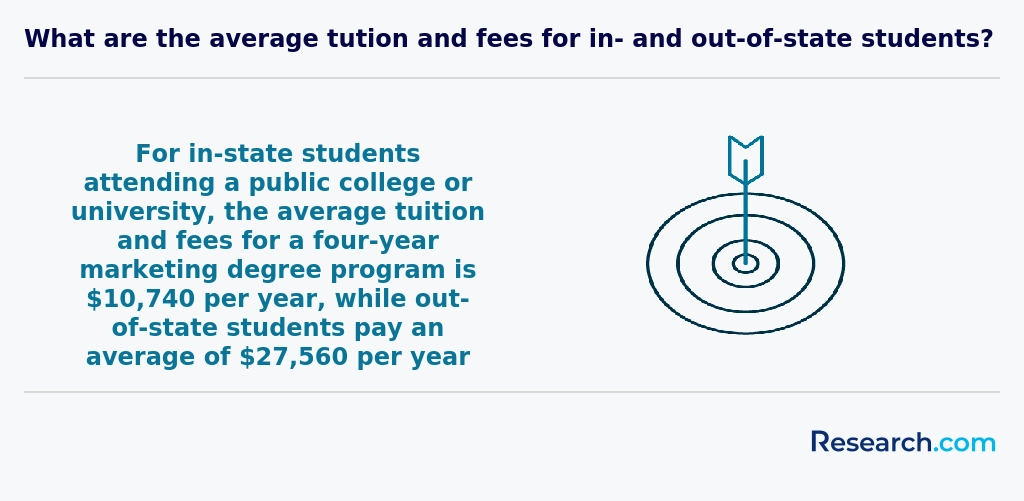
The average cost of a marketing degree in Washington varies significantly depending on the type of institution and residency status, with median total costs around $47,743 and a notably lower median in-state total cost near $13,168. Graduates from popular universities in the state often reflect on the financial challenges, especially those coming from out-of-state backgrounds facing higher tuition fees. Many students find that paying in-state tuition substantially reduces their financial burden, making their investment feel more manageable and rewarding as they start their careers.
Marketing students often consider beginning their education at community colleges, which offer a more affordable path. These institutions typically have significantly lower tuition fees, making the overall total expenses for marketing degree programs Washington-friendly for those who are budget-conscious. This approach lets students gain foundational knowledge before transferring to larger universities, which can ease financial stress and bring a sense of accomplishment along the way.
While tuition constitutes the largest part of costs, students also budget for books, supplies, and living expenses, which can add up. Many graduates recall balancing part-time jobs with studies and utilizing various scholarships and financial aid options in Washington to keep expenses manageable. Prospective students eager to minimize debt are encouraged to explore such funding routes early on, including state grants and institutional aid.
For more detailed comparisons and options, students are advised to research the cheapest marketing school in washington to better align their educational goals with their financial planning.

Students pursuing a marketing degree in Washington often rely on multiple types of financial aid to ease the significant costs associated with this path, especially given the 2023 average tuition of about $11,745 annually at public universities. Federal aid, such as Pell Grants and federal student loans accessed through FAFSA, is a common starting point. These grants offer crucial support because they don't require repayment, and the loans come with relatively favorable terms compared to private financing options.
Many marketing students at the University of Washington and Washington State University share how state-specific aid, like the Washington College Grant, made a tangible difference in their ability to afford tuition. This grant targets Washington residents and helps bridge financial gaps, highlighting the value of being an in-state student.
Merit-based scholarships further lighten financial burdens, rewarding academic excellence and leadership in marketing-focused activities. Some students have described receiving these awards as both motivating and affirming, empowering them to deepen their engagement with their programs.
Employer tuition assistance is another less obvious but impactful source of aid. Graduates often recall how their part-time or full-time jobs in marketing-related roles not only provided direct financial support but also real-world experience, enhancing their education and career prospects simultaneously.
Finally, paid internships and co-op programs offer both income and indispensable experience. With Washington's projected 7% growth in marketing jobs, many find these opportunities to be a practical way to offset expenses while gaining a competitive edge in the evolving job market.
Understanding the full cost of obtaining a marketing degree is crucial for prospective students planning their educational investment. This section breaks down not only tuition fees but also associated expenses such as textbooks, technology fees, and living costs. By evaluating these factors, you can create a comprehensive budget that aligns with your financial capabilities. Prospective students should compare the return on investment of various programs, as some institutions offer competitive curricula at lower overall costs. For example, if affordability is a top priority, you may want to explore options like the cheapest marketing school in washington, which provides quality instruction without a high price tag. Additionally, consider leveraging financial aid packages, scholarships, and grants that are available to mitigate these expenses. This process of thorough financial planning gives you a clearer picture of the economic commitment required, empowering you to make an informed decision on your educational journey.
Enrolling in a marketing degree in Washington typically requires a high school diploma or GED, alongside a solid foundation in subjects like math and English. Graduates from popular universities such as the University of Washington often recall how these prerequisites prepared them well for rigorous coursework and group projects focused on communication and analytics.
Some institutions in Washington still ask for SAT or ACT scores, though many have embraced test-optional policies. This flexibility reflects a growing understanding that standardized tests don't always capture a student's potential. For instance, students from community colleges like Seattle Central College appreciate how basic reading and writing placement tests cater to diverse skill levels, easing their way into marketing studies before transferring to a four-year program.
Competitive GPAs, usually between 2.5 and 3.0, are common expectations, but additional materials like personal statements and recommendation letters help admissions teams gauge enthusiasm and real-world experience. Graduates often mention how showcasing volunteer marketing roles or internships helped them stand out during admissions, turning their passion into opportunity.
Marketing degree programs in Washington typically feature core courses such as marketing management, consumer behavior, and marketing research, which graduates often find essential for grasping how to analyze markets and craft effective strategies. For example, students at the University of Washington have shared how hands-on projects in marketing research helped them understand real customer data, bridging theory with practical insight.
Courses in digital marketing are prominent, reflecting regional industry trends that emphasize social media and online advertising. Graduates from Seattle University describe the excitement of learning digital campaign design and analytics, skills highly valued in the local job market where demand for specialists is growing.
Additionally, many programs at colleges like Western Washington University integrate business analytics and ethics, fostering a balanced approach to data-driven decisions and responsible marketing. Some students appreciate how classes in strategic communication and product development prepare them to manage brand reputations and launch new products effectively in vibrant Washington markets.
Internships, often encouraged within these curricula, give students invaluable real-world experience, making the theoretical lessons tangible and highly relevant to Washington's evolving marketing landscape.
Marketing degree specializations in Washington reflect the state's diverse economy and technological advancements, offering focused tracks like digital marketing, market research and analytics, brand management, advertising, sales management, and international marketing. For instance, graduates from the University of Washington often highlight how digital marketing courses prepare them to navigate Seattle's thriving tech scene, blending creative and analytical skills that employers highly seek.
Another common experience among alumni from Washington State University involves the data-driven coursework in market research and analytics, which equips them to interpret consumer trends and make strategic decisions-skills essential in the competitive business environment of Washington. These specializations align with local industry demands but also encourage students to consider broader market implications, keeping them adaptable beyond regional confines.
While some students thrive in creative roles through advertising or brand management, others prefer sales management or international marketing, tapping into Seattle's global trade connections. Prospective students seeking flexibility might explore best rated online associate in marketing program options to complement their studies with work or internships, demonstrating how Washington marketing programs with specializations cater to varied interests and career paths.
When choosing the best marketing degree programs in Washington, it's essential to look beyond rankings and consider factors like accreditation and curriculum depth. Graduates from popular universities in the Seattle area often highlight the value of programs accredited by AACSB, which assures rigorous academic standards and is recognized nationwide. This accreditation can impact your future opportunities, especially if you plan to pursue advanced studies or competitive roles within the state's vibrant tech and retail sectors.
Cost is another vital element, especially for those seeking affordable marketing colleges in Washington state. While some private institutions may seem appealing, graduates frequently mention the financial relief and strong foundational education they received at public universities with in-state tuition. Many students balance expenses with the benefit of robust internship networks, provided by colleges connected to companies like Amazon and Microsoft, which is a significant plus in gaining practical experience.
For students needing flexibility, exploring online options is wise. For example, those researching cost-effective paths often refer to the Most Affordable Online Bachelor's in Marketing Degree Programs Ranking in the Midwest, which can inspire comparable choices. Ultimately, selecting a program with a comprehensive curriculum that matches your career goals in Washington's dynamic economy will foster confidence and satisfaction in your education.

Graduates with a marketing degree in Washington find diverse career paths shaped by the state's dynamic economic sectors. Popular roles include market research analysts, marketing managers, and digital marketing specialists, reflecting the widespread demand in technology hubs like Seattle and retail industries. Many graduates from well-known universities describe entering positions where they analyze complex consumer data or lead creative campaigns for companies such as Amazon or Microsoft, highlighting practical opportunities within the local business climate. However, not all paths follow corporate routes; some pursue freelance consulting or startup ventures, supported by Washington's network of incubators and entrepreneurial resources. This flexibility appeals to students who value autonomy and innovation alongside traditional careers. For those weighing education options, graduates from institutions in Washington often compare their choices to accelerated programs, sometimes opting for options such as an associate's degree online in 6 months to swiftly enter the workforce. Exploring marketing degree career options in Washington involves balancing salary potential, job availability, and personal aspirations.
Recognizing job opportunities with marketing degree Washington requires consideration of evolving market demands. Students from Seattle-based colleges frequently report that their skills in digital marketing and social media management are increasingly valued as companies adapt to online consumer behavior. Brand management and advertising roles also remain significant, though graduates caution that competition is strong and ongoing skill development is essential. Some prefer positions emphasizing creativity and strategic thinking, while others emphasize data-driven functions that benefit from Washington's robust tech environment. By actively engaging with local industries during their studies, students enhance job readiness and connect theoretical knowledge with real-world applications, fostering confidence amidst a competitive landscape. Overall, career paths can be as varied as Washington's economy, rewarding adaptability and continuous learning alongside formal qualifications.
The job market for marketing degree holders in Washington presents a complex yet promising landscape. Graduates from institutions like the University of Washington or Seattle University often find themselves navigating opportunities in tech giants and retail leaders, which fuels the demand for marketing professionals adept in digital strategies and data analytics. Many marketing graduates in Washington relish the vibrant environment where applying classroom knowledge to real-world projects-from crafting campaigns for emerging startups to analyzing consumer data at established companies-feels immediately rewarding. This practical engagement sharpens their skills and reflects the marketing degree job opportunities in Washington, particularly around Seattle and Bellevue.
However, some graduates note that competition can be stiff, requiring continuous learning and adaptability. Entry-level salaries typically range from $45,000 to $55,000, while seasoned marketing managers enjoy median wages around $78,000. Despite the cost of public and private education in the state, many find the investment worthwhile due to strong employment outlooks. For those balancing career transitions, options like best degrees for older adults online programs provide flexible pathways to enter this evolving field.
2027 Most Valuable Marketing Degree Programs Ranking in Washington
Investing in your education is a significant decision that can shape your future, and the Research.com team understands the importance of making informed choices. To assist prospective students in Washington, we have meticulously crafted the "2027 Most Valuable Marketing Degree Programs Ranking in Washington." Our commitment to quality, credibility, and accuracy is reflected in the extensive research and analysis conducted to compile this ranking.
We utilized the following reputable data sources to ensure a comprehensive evaluation of marketing degree programs:
By exploring this ranking, readers will gain valuable insights into the most valuable marketing degree programs in Washington, helping them make well-informed decisions about their education and career paths. For more details on our methodology, please visit our Research.com methodology page.


# 7 position
University of Washington-Tacoma Campus
Bachelor of Business Administration in Marketing


Frequently Asked Questions About marketing
Marketing degree students in Washington can maximize their learning experience by engaging actively with local industry resources. Washington hosts a vibrant digital marketing scene, especially in Seattle, where over 10,000 marketing professionals work across technology firms, startups, and retail companies according to the Washington State Employment Security Department (2023).
Students should pursue internships to gain real-world experience and build professional networks. Many universities in Washington partner with businesses offering hands-on projects that complement classroom learning.
Participating in marketing clubs and attending regional conferences enhances knowledge of emerging trends. Leveraging state-specific labor market data can help students tailor their skills towards in-demand areas like data analytics and social media marketing, which show high growth in Washington's job market.
The marketing field in Washington is rapidly evolving, with several emerging niches capturing attention. One prominent area is digital analytics, where professionals use data to shape targeted campaigns and improve customer engagement. According to the U.S. Bureau of Labor Statistics, jobs in marketing analysis are expected to grow by 23% nationally by 2032, with Washington showing strong demand due to its tech industry presence.
Another growing niche is influencer marketing, especially relevant in Seattle's vibrant social media and tech scenes. Additionally, sustainable marketing is gaining traction as companies respond to consumer demand for eco-friendly products. These specialties offer exciting opportunities for students pursuing marketing degrees in Washington.
After completing a marketing degree in Washington, preparing for the job market involves several strategic steps. Networking is crucial; joining local chapters of professional organizations such as the American Marketing Association's Seattle branch can open doors. Internships and cooperative education programs offered by universities give practical experience valued by employers. According to the Bureau of Labor Statistics, Washington's marketing coordinators earned a median annual wage of about $65,000 in 2023, highlighting competitive opportunities in the region.
Additionally, job seekers should focus on developing digital marketing skills, including SEO, data analytics, and social media management, as these are in high demand. Utilizing Washington's robust tech sector resources through platforms like LinkedIn and regional job fairs also improves chances of finding employment. Continuing education and certifications, such as Google Analytics, further enhance resumes and marketability in the evolving marketing field.
Employers in Washington seek several key skills when hiring marketing degree graduates. Strong communication abilities are essential, as professionals must craft clear messages for diverse audiences. Analytical skills also rank high, with companies valuing graduates who can interpret data and measure campaign effectiveness. Digital marketing expertise, including proficiency in social media platforms and SEO, is increasingly important due to the region's tech-driven economy.
According to a 2023 report by the Washington State Workforce Board, over 60% of marketing job postings require candidates familiar with digital analytics tools. Creativity and adaptability are also frequently mentioned, reflecting the dynamic nature of marketing roles in Washington's competitive business environment.
Finding internships in Washington relevant to a marketing degree involves several practical steps. Start by leveraging university career centers, which often have partnerships with local businesses and can connect students to marketing internship opportunities. Platforms like Handshake and LinkedIn are widely used by Washington companies to post internships.
Washington's economy includes strong sectors such as technology, retail, and media, where marketing roles are frequently available. For example, Seattle hosts offices for major corporations like Amazon and Starbucks, both offering marketing internships.
The Washington State Employment Security Department reports that marketing professionals are among high-growth occupations, increasing internship availability.
Networking at local industry events or joining professional groups such as the American Marketing Association's Seattle chapter can also help secure internships.
A marketing degree in Washington significantly enhances career mobility by providing essential skills in digital marketing, consumer behavior, and data analysis. Many local employers, including major companies in Seattle's tech and retail sectors, prioritize candidates with formal marketing education. According to the U.S. Bureau of Labor Statistics, marketing manager positions in Washington are projected to grow 10% through 2032, faster than the national average.
Graduates with a marketing degree often find advancement opportunities in roles like brand management, market research, and sales leadership. A degree can lead to higher starting salaries and eligibility for promotions within competitive industries. Networking opportunities through Washington universities also support professional growth.
Studying for a marketing degree in Washington equips students with skills spanning multiple disciplines, essential for today's integrated business environments. Programs often combine marketing with courses in data analysis, psychology, communication, and technology to foster versatile expertise. This approach prepares graduates to collaborate effectively across departments such as sales, finance, and IT.
Washington's economy, with its strong sectors in technology and retail, offers practical learning contexts. According to the Washington State Workforce Training and Education Coordinating Board, marketing professionals with interdisciplinary skills have a 10% higher employment rate locally. Universities encourage internships and projects that blend marketing with digital media and analytics, reflecting real-world demands.
Such diverse training makes graduates ready for roles beyond traditional marketing, including product management, business strategy, and customer experience management, supporting career flexibility in a competitive market.
When choosing between a thesis and a non-thesis marketing degree program in Washington, consider your career goals and learning preferences. Thesis programs often appeal to students interested in research or planning to pursue a PhD, requiring original research and writing under faculty supervision.
Non-thesis options focus more on practical skills through coursework and internships, which suits students aiming for immediate entry into marketing roles in industries like technology or retail, prevalent in Washington's economy.
According to the Washington Student Achievement Council, non-thesis programs tend to be shorter, allowing faster completion.
Ultimately, check program requirements and align them with your professional aspirations.
Students based in Washington seeking marketing degrees abroad can explore a variety of study abroad programs offered by their home institutions. Many universities in Washington, such as the University of Washington, partner with international schools allowing marketing majors to study for a semester or year overseas.
Programs often include opportunities in Europe, Asia, and Latin America, providing exposure to global marketing practices. According to the Institute of International Education, nearly 10% of U.S. marketing students participate in study abroad experiences to enhance their understanding of global markets.
Additionally, some Washington-based schools offer dual-degree or exchange programs that enable students to earn credits abroad while maintaining progress toward their marketing degrees at home.
Students pursuing marketing degrees in Washington can benefit from various part-time job opportunities that enhance their education and professional skills. Common roles include social media assistant, content creator, and marketing intern, which help develop practical experience in digital marketing and campaign management.
The Washington State Employment Security Department highlights a steady demand for marketing assistants, with an expected growth rate of 6% from 2022 to 2032. These positions allow students to apply classroom knowledge to real-world projects, improving critical skills like data analysis and consumer behavior understanding.
Working with local startups or agencies also offers networking advantages in Seattle's vibrant tech and marketing sectors. Additionally, roles in retail marketing or event promotion provide exposure to customer interaction and brand strategy development, strengthening a student's resume for future full-time roles.
Marketing students in Washington benefit from strong networking opportunities through universities, professional organizations, and regional events. Schools like the University of Washington offer student chapters of the American Marketing Association (AMA), providing access to industry speakers and local marketing professionals.
Washington hosts various marketing conferences and workshops annually, including the Puget Sound Marketing Conference, which draws over 300 marketing experts each year. These events allow students to connect with potential employers in tech, retail, and digital marketing sectors.
The state's robust economy, anchored by companies like Microsoft and Amazon, creates internships and mentorship programs that help marketing students build valuable industry relations early in their studies, according to the Washington Workforce Training and Education Coordinating Board.
Alumni networks offer significant advantages to marketing degree students in Washington by providing access to established professionals within the state's dynamic marketing sector. These networks facilitate valuable mentorship opportunities, enabling students to receive guidance on career paths and industry trends. According to the University of Washington's 2023 alumni report, students connected to alumni networks are 30% more likely to secure internships in major Puget Sound companies, such as Seattle-based advertising agencies.
Additionally, alumni networks support job placement by sharing exclusive openings and hosting networking events, which are critical in the competitive marketing field. These connections can lead to faster career entry and higher starting salaries.
Customizing a marketing degree program in Washington allows students to align their education with specific career goals. Many universities offer concentrations or electives in areas like digital marketing, consumer behavior, or brand management. Selecting internships or cooperative education experiences within the state's vibrant tech and retail sectors, including companies in Seattle, can provide valuable hands-on skills.
Washington State Board for Community and Technical Colleges reports that marketing occupations are projected to grow 8% from 2020 to 2030, indicating strong local demand. Students should also consider certificate programs or minors in data analytics or communication to complement marketing studies.
Advisors play a key role in tailoring coursework to industry trends, ensuring graduates meet employer needs in Washington's evolving marketplace.
Marketing students in Washington often face the challenge of balancing theoretical knowledge with practical skills. Despite the state's growing digital economy, many programs struggle to keep curricula updated with rapidly evolving marketing technologies and trends. According to the National Center for Education Statistics, adapting to tools like data analytics and social media advertising remains a gap. Additionally, competition for internships in Seattle's competitive job market can limit real-world experience for students. Another common hurdle is understanding the diverse consumer base in Washington, which requires strong cultural competency and strategic thinking. These factors combined shape a demanding educational environment for marketing students.
With a marketing degree in Washington, you can pursue several respected professional certifications to enhance your career prospects. Popular certifications include the Certified Marketing Professional (CMP) offered by the American Marketing Association (AMA), which validates core marketing skills.
Marketing professionals in Washington also benefit from digital-focused certifications like the Google Analytics Individual Qualification (GAIQ) and Google Ads Certification, both recognized nationwide for expertise in online marketing analytics and advertising.
Another valuable credential is the HubSpot Content Marketing Certification, emphasizing inbound strategies widely used by Seattle-based tech companies.
According to the Washington State Employment Security Department, holders of certifications often see faster job placement and higher salaries in marketing roles.
To write a winning application for a marketing program in Washington, start by highlighting your relevant academic achievements and any practical experience in marketing or related fields. Washington State University and the University of Washington emphasize strong communication and analytical skills in their applicants. Make sure your personal statement clearly explains your motivation for pursuing marketing and how you plan to contribute to the program.
Include specific examples of leadership, internships, or projects that demonstrate your interest in marketing. According to the National Center for Education Statistics, competitive programs often seek applicants with GPAs above 3.0. Additionally, tailor your resume to reflect skills in digital marketing, data analysis, and consumer behavior, which are highly valued in Washington's growing marketing sector.
Marketing careers in Washington reflect global trends emphasizing digital skills and cultural awareness. The U.S. Bureau of Labor Statistics reports marketing manager employment is projected to grow 10% from 2022 to 2032, aligning with worldwide demand. Washington's vibrant tech industry, including companies like Microsoft and Amazon, fuels opportunities for marketing professionals focused on global digital commerce.
Internationally, marketers must navigate diverse markets and consumer behaviors, making global perspectives crucial. Many Washington institutions include global marketing strategies in their curricula. According to the Washington State Employment Security Department, marketing roles here often require understanding of international regulations and multilingual communication, reflecting a broader trend seen across the U.S.
Gaining practical experience while studying for a marketing degree in Washington is essential for career readiness. Many universities in the state offer internship programs that connect students with local businesses in Seattle and other cities. According to the Washington State Employment Security Department, internships can boost job placement rates by up to 30% for marketing graduates.
Students can also participate in cooperative education (co-op) programs, combining coursework with paid work experience. Additionally, marketing clubs and university-sponsored projects often provide real-world challenges and networking opportunities with industry professionals.
Utilizing resources like the Washington State Marketing Association can further enhance practical skills and professional connections.
Choosing the right concentration within a marketing degree program in Washington involves evaluating your career goals and local industry demands. Washington's economy has strong technology, retail, and international trade sectors, influencing concentrations like digital marketing, retail management, and international marketing.
Students should consider concentrations that align with these industries to increase job opportunities. For example, digital marketing skills are in high demand due to Washington's growing tech companies, according to the Washington State Employment Security Department.
Additionally, reviewing each program's curriculum to ensure it offers relevant courses and hands-on experiences is important. Internship availability in nearby urban centers like Seattle also plays a crucial role in gaining practical skills.
- 2027 Most Valuable Marketing Degree Programs Ranking in Idaho
- 2027 Most Valuable Marketing Degree Programs Ranking in California
- 2027 Most Valuable Marketing Degree Programs Ranking in Arizona
- 2027 Most Valuable Marketing Degree Programs Ranking in Colorado
- 2027 Most Valuable Marketing Degree Programs Ranking in Kansas
- 2027 Most Valuable Marketing Degree Programs Ranking in Minnesota
- 2027 Most Valuable Marketing Degree Programs Ranking in Iowa
- 2027 Most Valuable Marketing Degree Programs Ranking in Missouri
- 2027 Most Valuable Marketing Degree Programs Ranking in Arkansas
- 2027 Most Valuable Marketing Degree Programs Ranking in Louisiana
See What Experts Have To Say About Studying Marketing
Read our interview with Marketing experts

Aidin Namin, Ph.D.
Marketing Expert
Associate Professor of Marketing Analytics
Loyola Marymount University

John R. Meindl
Marketing Expert
Adjunct Assistant Professor of Marketing
Hofstra University

- Study Marketing Abroad | Go Overseas https://www.gooverseas.com/study-abroad/marketing
- Master of Science (M.S.) Major in Marketing Research and Analysis (Non-thesis Option) https://mycatalog.txstate.edu/graduate/mccoy-business-administration/marketing/marketing-research-analysis-ms/
- What Are Market Niches? Includes Benefits And Expert Insights https://seekmarketingpartners.com/digital-marketing-blog/what-are-market-niches/
- Digital Marketing Major https://www.kozminski.edu.pl/en/digital-marketing-major
- Why study Marketing? https://blogs.tees.ac.uk/students/2024/04/15/why-study-marketing-2/
- Academic Challenges of Marketing Students - Blog – Expert Tips & Insights for Students https://affordableassignments.co.uk/blog/academic-challenges-of-marketing-students/
- Why study marketing? Discover 7 compelling reasons https://isc.strath.ac.uk/blog/why-study-marketing
- Who Can Be an International Marketer? https://www.spencerstuart.com/research-and-insight/who-can-be-an-international-marketer
- Best Marketing Certifications for Your Marketing Career https://www.business.com/articles/guide-to-marketing-certifications/
- Marketing Assistant Cover Letter Sample https://www.kickresume.com/en/help-center/marketing-assistant-1-cover-letter-sample/