2027 Best Online Bachelor's in Marketing Degree Programs Ranking in the USA

Co-Founder and Chief Data Scientist
Choosing the right online marketing degree can feel overwhelming, but you're in the right place. This article introduces the 2027 Best Online Bachelor's in Marketing Degree Programs Ranking in the USA, created by the Research.com team of data scientists to guide you.
By exploring these top-ranked programs, you'll gain clarity on which options stand out for quality and value. Earning a marketing degree can open doors to creative, rewarding careers, making this an exciting step towards your future. Let's help you make an informed decision that fits your goals and lifestyle.
Key benefits of getting online marketing degree in America
- Marketing degree graduates can earn competitive salaries, with roles like Public Relations Specialists averaging $159,420 annually and Marketing Assistants about $83,190, offering strong financial incentives.
- Career paths are diverse; a graduate from a well-known university might pursue roles such as Digital Marketing Specialist or Media Planner, tapping into creative and strategic industries.
- Completing a marketing degree online, as demonstrated by graduates from popular universities, offers flexibility and accessibility, allowing students to balance work and study while gaining valuable skills.
- 2027 Best Online Bachelor's in Marketing Degree Programs Ranking in the USA
- What can I expect from online marketing degree in America?
- Where can I work with online marketing degree in America?
What can I expect from online marketing degree in America?
When diving into an online marketing degree in America, you'll find that the investment typically ranges between $20,000 and $60,000 for a full bachelor's program, depending on the university. Graduates from well-known schools like the University of Florida or Arizona State University often share how the costs felt worthwhile given the flexible learning schedules and real-world marketing skills they gained. Imagine logging into your course portal from the comfort of your home one evening, unraveling the mysteries of SEO or mastering Google Analytics without missing a beat in your daily life.
The pricing naturally varies with public versus private institutions, but many students appreciate that accredited programs maintain strong academic standards, making the cost an investment in a career-ready skillset. For example, learners juggling jobs or family commitments find the online format a game-changer, allowing them to grow their marketing knowledge while managing life's unpredictable rhythms.
This financial commitment opens doors to future opportunities in digital marketing, branding, and data analytics, industries eager for creative thinkers who've trained amid America's leading marketing programs.
Where can I work with online marketing degree in America?
Graduates from renowned marketing programs at universities like the University of Pennsylvania or the University of Southern California often find themselves stepping into dynamic careers with a sense of excitement and possibility. Imagine launching your day as a social media manager, crafting vibrant campaigns that captivate audiences nationwide, or diving deep into data as a marketing analyst, uncovering trends that shape consumer behavior.
Many graduates embrace roles in digital marketing, guiding brands through the evolving online landscape with creativity and strategy. From SEO specialists optimizing search results to email marketing coordinators fostering loyal customer relationships, the scope is vast and energizing.
Others thrive in market research or e-commerce firms, where they translate insights into action, helping businesses growth in America's booming retail sector. Some take bold leaps, becoming freelancers or starting agencies, proving that marketing degrees also unlock paths to independence and entrepreneurship.
Across the board, marketing graduates in America enjoy careers filled with discovery, innovation, and real-world impact-transforming ideas into thriving business success stories.
Imagine graduating from a top marketing program at a school like the University of Southern California or the University of Florida, ready to step into the vibrant American marketing scene. What can you expect to make? Entry-level roles like Marketing Assistant or Digital Marketing Specialist typically offer a mean annual wage around $83,190, providing a solid foundation to launch your career.
For those energetic grads who dive into Public Relations, the salary jumps impressively, with an average of $159,420 per year - a thrilling prospect for anyone mastering communication strategies in bustling cities like New York or Chicago. Meanwhile, Sales Associates, often key players in marketing teams, earn about $53,280 annually, perfect for gaining hands-on experience in dynamic retail or corporate settings.
Media Planners share a similar salary outlook to Digital Marketing Specialists, averaging $83,190, reflecting their vital role in crafting campaigns across multiple platforms. These figures, grounded in real data, illuminate the exciting financial possibilities awaiting American marketing graduates who blend creativity with strategy.
- Online marketing bachelor's degrees typically take four years and cover topics such as digital advertising, consumer behavior, market research, and data analytics.
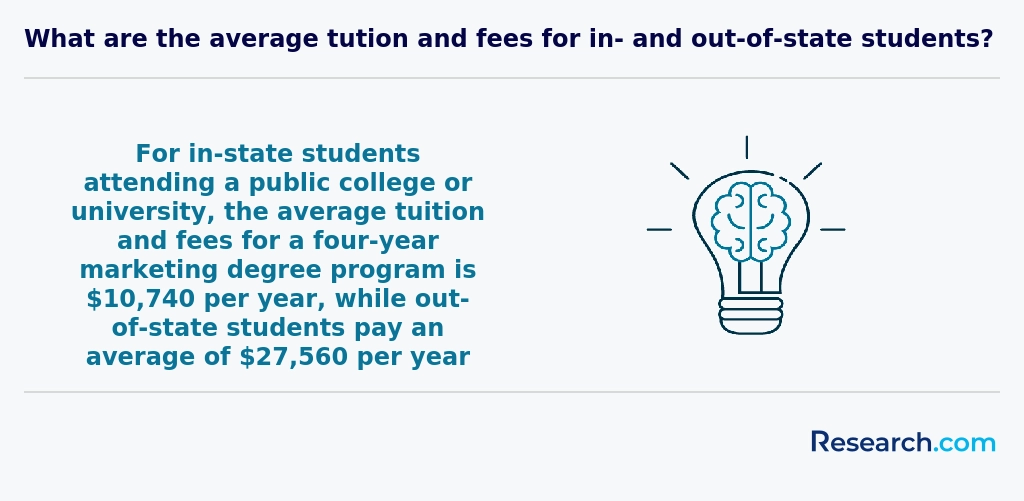
- Annual tuition varies widely: public in-state students pay between $10,000 and $25,000, while out-of-state and private university costs can exceed $30,000.
- Entry-level marketing salaries average around $50,000 per year, with experienced managers earning between $65,000 and $85,000.
- The job market for marketing managers is expected to grow by 10% from 2021 to 2031, which is faster than the average for all occupations.
- Accreditation, relevant curriculum, and internship opportunities are important factors for program quality and job readiness.
In America, choosing between online and on-campus marketing degrees sparks a sense of adventure in how you'll experience your education. Imagine attending a bustling campus at a university like the University of Florida, where face-to-face classes let you dive into lively discussions, group projects, and career fairs buzzing with energy. You build real connections and soak in spontaneous moments from guest lectures or marketing club meetings.
Now picture earning your degree online through a program like Arizona State University's, where flexibility reigns. Graduates often share how juggling work and family was easier, thanks to digital lectures and virtual collaboration tools. They appreciate that tuition can be flat regardless of residency, saving money on commuting or housing. Yet, online learning calls for self-motivation and creative ways to gain hands-on experience, like remote internships or virtual marketing campaigns.
Both paths offer respected, accredited curricula, but the choice shapes not only your learning style but the whole vibe of your marketing journey across the vibrant landscape of American education.
The return on investment of an online marketing degree depends on three main factors: total program cost, debt at graduation, and the salary growth you can reasonably achieve after earning the degree. Tuition is important, but ROI also depends on whether the program helps you build practical skills, complete internships, and qualify for roles with advancement potential.
On average, graduates incur $28,500 in student loan debt for a four-year bachelor’s program. With competitive starting salaries, many graduates see a break-even point within 2–3 years of graduation. By comparing total program cost against median earnings, prospective students can estimate a return on investment that often exceeds 200% over a decade.
Data on salary for marketing careers shows entry-level roles start around $50,000 annually, while mid-career professionals earn upwards of $90,000. Factoring in a 5% annual salary growth rate and standard repayment terms, graduates typically pay off their debt in under 36 months. For students comparing public and private institutions, a lower-cost public program can shorten payback periods by 6–12 months.
| ROI factor | Why it matters |
| Total program cost | Lower tuition and fees reduce the salary needed to justify the degree. |
| Student loan debt | Borrowing less can shorten repayment time and improve early-career cash flow. |
| Career-ready curriculum | Courses in analytics, SEO, digital campaigns, and market research can improve employability. |
| Internships and projects | Hands-on experience can strengthen a resume and help graduates compete for better roles. |
| Career services | Resume support, employer connections, and interview preparation can influence job-search outcomes. |
ROI is not only financial. A strong online marketing program may also help you move into leadership, transition into digital marketing niches, or qualify for roles that require a bachelor's degree. The best value usually comes from a program that combines reasonable cost, recognized quality, flexible scheduling, and evidence of career support.
Exploring the average cost of online marketing degrees in America reveals an intriguing range shaped by your choice of university and residency status. On average, the total expenses for online marketing bachelor's in the USA hover around $53,580. However, graduates from public universities often enjoy a lighter financial burden, with median in-state total costs closer to $36,120, making these programs a popular and smart choice for budget-conscious students.
Imagine a student enrolling in a well-known public institution famous for marketing programs and finding affordable, quality instruction paired with innovative online tools. Such students often feel a sense of excitement and achievement, knowing their investment is balanced and practical. Conversely, those attending prestigious private colleges might face median out-of-state total costs around $64,740 but often express enthusiasm about the smaller class sizes and specialized marketing courses that enhance their learning experience.
Beyond tuition, graduates recall additional fees, like technology charges and course materials, which add a few hundred to over a thousand dollars annually, providing the tech backbone for their online studies. Opportunities for financial aid and scholarships lend an optimistic boost to many, helping to ease the journey toward their marketing career goals.
Choosing your path wisely means exploring options thoroughly; that's why many prospective students check out the most affordable marketing degree offerings to balance cost, quality, and personal aspirations.

Evaluating ROI means looking beyond the advertised tuition rate. A bachelor's in marketing can range from $26,000 to over $63,000, and the true cost may include fees, books, software, technology requirements, and reduced work hours if you need to lower your employment schedule while studying.
Graduates typically see this investment pay off within five to seven years, supported by competitive entry-level salaries, including a mean annual wage of $78,880 for Marketing Assistants, and mid-career earnings that often exceed $100,000. To compare programs fairly, review tuition together with graduation rates, job placement information, career services, alumni outcomes, and internship access.
If affordability is your main concern, the Cheapest Marketing Degree Programs Ranking in the Midwest can help you identify institutions that may pair lower tuition with practical career support. A lower-cost program is especially valuable when it still offers relevant coursework in digital marketing, analytics, consumer research, and campaign strategy.
Long-term earning potential also matters. Marketing managers are expected to see a 10% employment growth through 2031, translating into approximately 33,700 new positions, with median salaries around $133,380. Students who reduce borrowing, choose programs with strong employment support, and build a portfolio before graduation are often better positioned to improve the financial return of their degree.
Diving into the world of online marketing degrees in America opens a treasure chest of financial aid options that many students eagerly explore. Graduates from universities like the University of Florida or Arizona State often share how the FAFSA became their gateway to funds like the Pell Grant, which in 2023-2024 offers up to $7,395 a year, easing the weight of tuition fees. Imagine a student juggling work and study discovering the Federal Work-Study program-earning while learning in real marketing roles that boost both resume and bank account.
Others marvel at the power of state aid, like California's Cal Grant, providing up to $12,630 for in-state learners attending popular schools such as the University of Southern California. Beyond federal and state grants, institutional scholarships crafted for marketing hopefuls often feel like hidden gems-rewarding academic grit or professional experience. Private scholarships from organizations tied to marketing also spark enthusiasm, while employer tuition assistance offers a lifeline for working professionals seeking to advance without pause.
For non-native English speakers eagerly joining programs at renowned colleges, submitting TOEFL or IELTS scores is a familiar step that reassures both students and faculty of smooth communication throughout intensive coursework. Those who've thrived in competitive marketing programs often recall the extra boost from prior business classes or communications experience, which gave them confidence navigating complex marketing strategies.
Every aspiring marketer appreciates having reliable internet and basic computer skills to dive deep into vibrant online discussions and real-time projects offered by leading universities. Application tasks like crafting a personal statement or gathering recommendation letters become part of the exciting journey toward joining America's dynamic online marketing community.
Succeeding in an online marketing degree program requires more than logging in and submitting assignments. Marketing is a practical field, so the strongest students build a routine, participate actively, and connect coursework to real campaigns, tools, and business problems.
Build a schedule you can actually maintain
Online learning gives you flexibility, but flexibility can become a problem without structure. Set weekly blocks for reading, lectures, discussions, group projects, and exams. If you work full time, treat coursework like a recurring professional commitment rather than something to finish only when time is left over.
Participate before you need help
Use discussion boards, virtual office hours, webinars, and group projects to stay visible and engaged. Strong communication matters in marketing, and online programs give you regular chances to practice writing clearly, presenting ideas, giving feedback, and collaborating across digital platforms.
Use every student support resource
Many online programs offer tutoring, library access, career advising, technical support, writing centers, and resume reviews. These services are part of the value of your tuition. Students who use them early often avoid preventable problems with research, time management, software tools, and internship preparation.
Connect assignments to real marketing work
Whenever possible, turn class projects into portfolio pieces. Campaign briefs, SEO audits, social media calendars, email marketing plans, customer personas, and analytics reports can help you show employers what you can do. If cost is a major concern, compare lower-cost options such as the most affordable marketing degree programs before enrolling.
Track progress and outcomes
Set short-term goals for each term and long-term goals for graduation, internships, certifications, and job applications. Keep copies of your strongest work in a digital portfolio. Review your progress regularly so you can adjust your course load, seek help, or refine your career direction before small issues become major setbacks.
Diving into an online marketing degree in America feels like unlocking a toolkit teeming with powerful strategies and insights. Graduates from top schools like the University of Southern California or Indiana University often share how courses such as Introduction to Marketing sparked their excitement by breaking down the marketing mix and showing real customer behaviors in action.
Imagine mastering Digital Marketing techniques that breathe life into brands through social media campaigns or SEO - a favorite among students at Northeastern University who've crafted their own ad strategies targeting real audiences. Then there's Marketing Research and Analytics, where learners transform raw data into clear, actionable stories that shape decisions, a skill many find thrilling and deeply empowering.
Sales Management courses illustrate how to inspire sales teams and build lasting client relationships, while Brand Management teaches you to create identities that resonate emotionally - something graduates from the University of Florida describe as both an art and a science. Emerging topics like e-commerce and content marketing keep students on the cutting edge, blending creativity with technology in ways that feel vibrant and endlessly promising.
Diving into an online marketing degree in America opens doors to exciting specializations that spark curiosity and ambition. Graduates from well-known colleges often recall how specializing in Digital Marketing immersed them in real-world tasks like crafting social media strategies or optimizing SEO for local businesses, making them feel ready to conquer the digital frontier. Marketing Analytics is another thrilling path where students at top universities unravel the stories data tells, using tools such as Google Analytics to predict consumer trends and sharpen campaigns.
Content Marketing sparks creativity by encouraging students to produce engaging stories and videos that captivate audiences, a favorite among many online learners who thrive on connection and brand storytelling. Other adventurous specializations include Brand Management and Advertising, where students learn to shape brand identities and design compelling multi-channel campaigns, often inspired by case studies from America's leading marketing programs.
Choosing one of these specializations as part of your online marketing degree in America tailors your journey toward the best marketing degree focus areas in America. Plus, exploring expected salary for marketing careers enriches your understanding of future rewards.
Choosing the best online marketing degree in America is like embarking on an exciting journey through a dynamic landscape. Graduates from well-known universities often recall how accreditation shaped their decision-programs recognized by bodies like the Higher Learning Commission brought reassurance that their investment was solid and respected in the industry. Imagine diving into courses that evolve alongside trends like digital analytics and social media marketing, just as students at top colleges experience, blending creativity with data-driven insights.
Affordability plays a big role too. Many students hunting for affordable online bachelor's marketing degrees America-wide find that public universities offer competitive tuition, but smart budgeting includes fees and course materials. Exploring scholarships or financial aid can feel like discovering hidden treasure along the way. For those curious about budgeting, checking out the Cheapest Marketing Degree Programs Ranking in the Midwest is a practical step that alumni often recommend.
Flexibility and hands-on opportunities turn learning into adventure. Graduates remember coursework paired with real-world projects or internships that build confidence and connections. Faculty support and career counseling online help make the path clearer, boosting excitement for entering a field projected by the U.S. Bureau of Labor Statistics to grow 10% through 2032. This sense of momentum and practical preparation makes pursuing the best online marketing degree programs in the USA feel like a truly rewarding quest.

The adventure continues for those aiming higher as marketing or brand managers, directing strategies and shaping brand identities with confidence. Many graduates relish the fast-paced environments at top American colleges where hands-on projects prepare them to steer teams and budgets efficiently. Meanwhile, roles like market research analyst offer the chance to decode consumer behavior, a path that combines data with creativity in a uniquely stimulating way.
Explorers of marketing degrees also find joy in careers like social media manager, content strategist, or email marketing coordinator, especially knowing their degree from vibrant American schools costs far less than traditional paths. For those eager to discover more affordable routes, options like most affordable online colleges stand out as welcoming gateways. This variety keeps the journey exciting for anyone considering online marketing degree career options USA, blending passion with promising prospects across industries.
The job market for an online marketing degree in America sparkles with opportunity, especially as businesses push to amplify their digital presence. Graduates from notable universities often find themselves stepping into roles where creativity meets data, managing social media campaigns or crafting compelling brand stories. Many recent grads from schools with strong marketing programs relish the challenge of driving digital strategies in bustling cities where e-commerce thrives. This real-world thrill fuels their passion and opens doors across industries. The career opportunities for marketing graduates America-wide encompass exciting fields like SEO and customer engagement, making each workday feel like an exploration into new trends and technologies.
Success stories from online marketing graduates often highlight flexible jobs in consulting or freelancing, perfectly blending work and lifestyle. With salaries climbing along with experience, these careers offer both stability and room to innovate. For students mapping their path, programs in popular colleges deliver not only skills but also connections that jumpstart rewarding careers. Curious learners might also explore easiest online degrees to get that complement their goals.
2027 Best Online Bachelor's in Marketing Degree Programs Ranking in the USA
Investing in your education is a significant decision that can shape your future, and the Research.com team understands the importance of making informed choices. To assist prospective students, we have meticulously crafted the "2027 Best Online Bachelor's in Marketing Degree Programs Ranking in the USA." Our commitment to quality, credibility, and accuracy is reflected in the extensive research and analysis conducted to compile this ranking.
We utilized the following reputable data sources to ensure a comprehensive evaluation of marketing programs:
By exploring this ranking, readers will gain valuable insights into the top online marketing bachelor's degrees in the USA, helping them make informed decisions about their educational paths. For more details on our methodology, please visit our Research.com methodology page.
# 1 position
Penn State University Park
Bachelor of Marketing


# 12 position
Western Governors University
Bachelor of Marketing Management


# 19 position
Full Sail University
Bachelor of Digital Marketing


Frequently Asked Questions About marketing
Online marketing degree students in America can maximize their learning experience by actively engaging with course materials and participating in virtual discussions. According to the National Center for Education Statistics, 74% of college students utilize digital tools to supplement their learning, which highlights the importance of leveraging technology effectively.
Students should seek internships and real-world projects, as practical experience is critical in marketing. Collaborating with peers in study groups or online forums also enhances understanding through diverse perspectives.
Furthermore, staying updated on U.S. marketing trends and data from sources like the American Marketing Association helps students apply theory to current industry practices.
The marketing field in the United States is rapidly evolving, creating new niches for professionals with online marketing degrees. One significant emerging area is digital analytics, where marketers use data to optimize campaigns. According to the U.S. Bureau of Labor Statistics, demand for market research analysts is expected to grow 22% from 2020 to 2030.
Another fast-growing niche is sustainable marketing, focusing on promoting eco-friendly products and corporate social responsibility. This aligns with increasing consumer interest in ethical brands, as reported by the 2023 Deloitte Global Marketing Trends.
Additionally, influencer marketing and content strategy continue to expand, driven by social media platforms like TikTok and Instagram, which have reshaped brand engagement in recent years.
After completing an online marketing degree in America, preparing for the job market involves strategic steps to enhance employability. Graduates should build a strong portfolio showcasing real-world projects, internships, or freelance work, as 70% of employers value practical experience alongside academic credentials (National Association of Colleges and Employers, 2023).
Networking is vital; joining professional organizations like the American Marketing Association and attending local marketing events can open doors. Familiarity with digital tools such as Google Analytics, SEO platforms, and social media ads is increasingly expected.
Additionally, pursuing certifications like Google Ads or HubSpot can boost credibility. According to the U.S. Bureau of Labor Statistics, the marketing sector is projected to grow 10% through 2032, signaling robust job opportunities for well-prepared graduates.
Employers in America seek a combination of technical and soft skills in marketing degree graduates. According to the U.S. Bureau of Labor Statistics, strong communication skills rank high, enabling graduates to create compelling messages for diverse audiences.
Data analysis is increasingly important; marketers must interpret customer data to guide strategies. The Digital Marketing Institute reports that 78% of U.S. companies value proficiency with tools like Google Analytics and social media platforms.
Creativity also remains vital, as innovative campaigns capture consumer attention. Problem-solving and adaptability skills help graduates navigate rapidly changing market trends.
Finally, teamwork and project management abilities ensure graduates can collaborate effectively in professional settings.
Finding internships relevant to a marketing degree in America involves strategic use of college career services, online platforms, and networking. Many universities partner with local and national companies to offer internship opportunities specifically tailored to marketing students.
Popular websites like Handshake, Indeed, and LinkedIn list thousands of marketing internships across the US. According to the National Association of Colleges and Employers (NACE), about 60% of students secure internships through online job portals and faculty recommendations.
Additionally, attending marketing conferences, joining student chapters of organizations like the American Marketing Association, and leveraging alumni networks can significantly improve chances of finding quality internships.
An online marketing degree in America significantly enhances career mobility by equipping students with specialized skills suited for the digital economy. According to the U.S. Bureau of Labor Statistics, marketing management jobs are projected to grow 10% from 2022 to 2032, faster than the average for all occupations. This demand opens pathways across industries.
Graduates gain proficiency in areas like SEO, data analytics, and digital advertising, which employers highly value. The flexibility of online programs allows working professionals to upskill without disrupting their careers, supporting advancement opportunities.
Furthermore, degree holders often experience higher earning potential; the median annual wage for marketing managers was $135,030 in 2023, emphasizing the financial benefits linked to formal education in marketing.
Studying for a marketing degree in America equips students with skills that extend beyond traditional marketing roles. Many programs emphasize interdisciplinary learning by integrating courses in data analytics, communications, psychology, and business management. This approach reflects industry demands, as 87% of marketing professionals in the U.S. report needing competencies in data-driven decision-making, according to the American Marketing Association (AMA, 2023).
Students learn to collaborate across various departments, preparing them for roles in digital strategy, sales, and product development. The curriculum often includes case studies and projects involving real-world business challenges, promoting practical understanding.
Such interdisciplinary training enhances adaptability, a key asset in today's fast-evolving marketing landscape.
Choosing between a thesis and a non-thesis marketing degree program in America depends on your career goals and learning preferences. Thesis programs typically require conducting original research and writing a detailed paper, ideal for students considering graduate school or research-heavy roles. Non-thesis options focus on coursework and practical skills, better suited for those seeking immediate entry into the marketing workforce.
According to the National Center for Education Statistics, over 60% of marketing students prefer non-thesis programs due to their faster completion times. Employers in the U.S. marketing field often value practical experience, making non-thesis degrees attractive for many professionals.
American students interested in studying marketing abroad have several options through partnerships between US universities and international institutions. Many US colleges offer study abroad programs or joint degrees allowing coursework in countries like the UK, Canada, or Australia. These programs often include online components, fitting well with marketing studies that rely on digital skills.
According to the Institute of International Education, over 60% of US students studying abroad choose business-related fields, including marketing. Popular destinations offer exposure to global marketing strategies and cross-cultural consumer behavior, valuable in an increasingly connected economy. Some programs provide internships with multinational firms, enhancing practical experience.
Additionally, American students may enroll directly in foreign universities offering English-language marketing degrees or take advantage of fully online international programs. Accreditation and credit transfer remain crucial considerations students should research thoroughly before committing.
Part-time jobs that align with a marketing degree in America often provide valuable practical experience alongside academic learning. Popular roles include social media management, content creation, and digital marketing assistant positions. According to the U.S. Bureau of Labor Statistics, marketing-related part-time roles are growing steadily, driven by the increasing demand for online brand management and data analytics.
Internships at marketing firms or in corporate marketing departments also offer hands-on experience that complements coursework. Additionally, freelance opportunities in areas like email marketing or SEO allow students to build a portfolio while earning income.
Online marketing students in America have access to various networking opportunities despite studying remotely. Many accredited institutions partner with professional organizations like the American Marketing Association (AMA), which has over 30,000 members nationwide, offering virtual events, webinars, and local chapter meetings.
Students can also connect through school-sponsored online forums, virtual career fairs, and alumni networks. These platforms facilitate mentorships, internships, and job placements in marketing sectors. According to the National Association of Colleges and Employers, 85% of jobs are filled through networking, highlighting its importance.
Additionally, social media groups on LinkedIn and industry-specific platforms provide further avenues to build professional relationships.
Alumni networks provide valuable support for online marketing degree students in America by fostering professional connections. Graduates can access job leads, internships, and mentorship opportunities through established networks, which often include thousands of marketing professionals nationwide. According to the National Association of Colleges and Employers (NACE), 70% of jobs are found through networking, making alumni connections crucial for career advancement. These networks also offer students insights into the latest industry trends and tools used by marketing experts, which can be especially important in a rapidly evolving field.
Alumni events and online platforms create ongoing learning opportunities and help students build a strong professional identity. For distance learners, these networks reduce isolation by connecting them with peers and industry leaders across the country, enhancing both education and future employment prospects.
Many online marketing degree programs in America offer flexibility to tailor coursework according to your career aspirations. You can select concentrations such as digital marketing, consumer behavior, or marketing analytics, allowing you to develop specialized skills. Elective courses often cover topics like social media strategy, SEO, or brand management, which are critical in today's marketing landscape.
Additionally, some programs provide opportunities for internships or capstone projects, enabling practical experience aligned with your goals. According to the U.S. Bureau of Labor Statistics, marketing analyst roles are expected to grow 10% from 2021 to 2031, highlighting the value of customizing skills in data analysis and digital tools.
Engaging with faculty advisors can help you design a course plan that matches industry demands. Selecting accredited programs ensures your degree holds national recognition, which is essential for career advancement. Overall, customization enhances your readiness for specific marketing roles in diverse industries.
Online marketing students in America often face challenges related to staying motivated and managing time effectively. Because many programs are self-paced, students need strong discipline to keep up with coursework alongside jobs or family responsibilities. According to the National Center for Education Statistics, about 54% of online students balance work and study simultaneously.
Another difficulty lies in acquiring practical experience. Marketing is a rapidly evolving field, with digital tools and trends changing quickly. Students may struggle to find internships or real-world projects that align with online coursework, limiting hands-on learning opportunities.
Technical issues can also disrupt learning. Reliable internet access is crucial, yet the Federal Communications Commission reports that roughly 14.5 million Americans still lack broadband at home, impacting online students' connectivity. Additionally, networking and building professional connections online can be less effective than in face-to-face environments, which may affect career development.
With an online marketing degree in America, you can pursue several respected professional certifications to enhance your career prospects. Popular choices include the Google Ads Certification and HubSpot Content Marketing Certification, both recognized across the industry for digital marketing expertise. The American Marketing Association (AMA) offers the Professional Certified Marketer (PCM) credential, which validates advanced knowledge in marketing strategy and management.
Other certifications like the Facebook Blueprint Certification focus on social media advertising skills, while the Certified Digital Marketing Professional (CDMP) from the Digital Marketing Institute is also widely recognized.
These certifications often lead to higher salaries; according to the U.S. Bureau of Labor Statistics, marketing managers with certifications can earn upwards of 20% more than their non-certified counterparts.
Applying to an online marketing program in America requires careful preparation to stand out. Start by showcasing relevant experience, such as internships or jobs in digital marketing, social media, or advertising. According to the U.S. Bureau of Labor Statistics, marketing careers are expected to grow 10% from 2022 to 2032, highlighting strong demand for skilled professionals.
Craft a clear personal statement that details your passion for marketing and your career goals. Use specific examples of projects or achievements to demonstrate your skills. Include any certifications like Google Analytics or HubSpot to boost credibility.
Maintain a strong academic record with good grades in business-related courses, and ensure your application materials are error-free and well-organized.
Marketing careers in the United States offer a strong foundation for understanding global business trends. U.S. marketing degrees focus on digital strategies, consumer behavior, and data analytics, skills highly valued worldwide. According to the U.S. Bureau of Labor Statistics, marketing manager jobs are projected to grow 7% from 2022 to 2032, reflecting global demand for marketing expertise.
American marketing professionals often work with international brands, requiring knowledge of diverse markets. Many online marketing programs incorporate global case studies to prepare students for such challenges. Additionally, proficiency in digital marketing techniques learned in the U.S. boosts career prospects in multinational companies.
Overall, a marketing degree from an American institution equips students with versatile skills that meet the evolving needs of global industries.
Gaining practical experience while pursuing an online marketing degree in America is vital to career readiness. Many programs include internships or cooperative education options, allowing students to work with real companies. According to the National Association of Colleges and Employers (NACE), 60% of marketing graduates had completed at least one internship by 2023. Students can also participate in virtual marketing projects, simulations, or freelance work to build portfolios. Additionally, joining professional organizations like the American Marketing Association offers networking and hands-on event opportunities. These experiences help bridge theory with practice, enhancing skills highly valued by US employers in the digital marketing field.
Choosing the right concentration within an online marketing degree in America begins with understanding your career goals. Marketing offers diverse fields such as digital marketing, market research, advertising, and brand management. Each concentration targets different skills and job roles.
Consider current market trends: the U.S. Bureau of Labor Statistics projects a 10% growth in advertising, promotions, and marketing management jobs from 2021 to 2031, highlighting demand for digital and data analytics expertise.
Research program curricula carefully. Leading programs often include courses on SEO, consumer behavior, analytics, and content strategy, equipping students with practical skills relevant to U.S. industries.
Additionally, evaluate concentrations that align with emerging technologies and social media trends, as these areas show strong job market growth according to the American Marketing Association.
See What Experts Have To Say About Studying Marketing
Read our interview with Marketing experts

John R. Meindl
Marketing Expert
Adjunct Assistant Professor of Marketing
Hofstra University

Sonya A. Grier, Ph.D.
Marketing Expert
Professor, Department of Marketing
American University

- Student Jobs: Why is Networking Important? https://ydiak.hu/en/student-jobs-why-is-networking-important
- Digital Marketing Bachelor of Science https://www.fullsail.edu/degrees/digital-marketing-bachelor-degree-program
- The Importance of Networking for Students Entering ... https://moviamedia.com/moving-billboard-blog/the-importance-of-networking-for-students-entering-the-marketing-industry/
- What Jobs Can You Get with a Marketing Degree? https://www.global-business-school.org/content-type/blog/what-jobs-can-get-marketing-degree/
- Top marketing jobs in North America right now https://www.cartermurray.com/career-advice/what-marketing-occupations-are-in-demand-in-north-america/
- Online Digital Marketing Courses https://www.phoenix.edu/online-courses/digital-marketing.html
- Online Bachelor's Degree Marketing https://www.umgc.edu/online-degrees/bachelors/marketing
- 2026 Most Affordable Online Marketing Degrees https://www.onlineu.com/most-affordable-colleges/marketing-degrees
- Tips for Marketing Students https://impactmt.com/tips-for-marketing-students/
- Digital Marketing Specialist – What Do They Do and How ... https://antal.pl/en/insights/article/digital-marketing-specialist-what-do-they-do-and-how-much-do-they-earn