2027 Most Popular Marketing Degree Programs Ranking in the USA

Co-Founder and Chief Data Scientist
Choosing the right marketing degree program can shape your future career and open exciting opportunities. This article introduces the 2027 Most Popular Marketing Degree Programs Ranking in the USA, developed by the Research.com team of data scientists. The ranking is designed to guide you through the best options available across the country.
By exploring this ranking, you'll gain clear insights into which programs offer strong value, helping you make an informed decision. A marketing degree can boost your skills and confidence, preparing you for a rewarding path ahead.
Key benefits of getting marketing degree in America
- A marketing degree can lead to well-paying jobs such as a Public Relations Specialist with an average annual wage of $159,420 or a Digital Marketing Specialist earning around $83,190 per year.
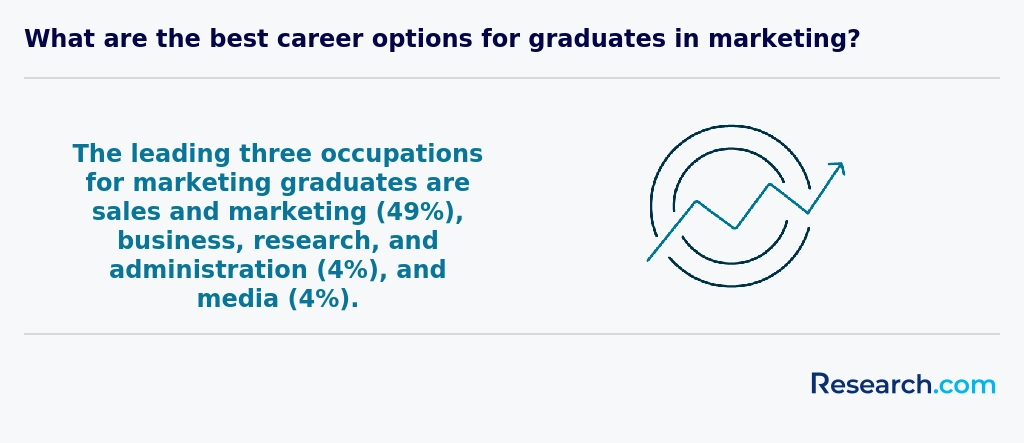
- Graduates from popular universities often find diverse career paths, including roles like Sales Associate, Media Planner, and Marketing Assistant, offering flexibility and growth opportunities.
- Online marketing degrees provide convenience and affordability, allowing graduates from institutions like Arizona State University to balance work and study while gaining skills that employers value.
- 2027 Most Popular Marketing Degree Programs Ranking in the USA
- What can I expect from marketing degree in America?
- Where can I work with marketing degree in America?
What can I expect from marketing degree in America?
The cost of pursuing a marketing degree in America can be a thrilling discovery journey itself. Public universities, especially for in-state students, often make this adventure more affordable, sometimes charging around $10,000 to $15,000 per year. Imagine being a marketing student at a well-known public university, balancing budget-friendly tuition with access to powerful internships and local networking events-this can feel like an exciting launchpad into the marketing world.
On the other hand, private institutions with renowned marketing programs might push the price tag to $40,000 or more annually. Graduates from these schools often describe the experience as an investment in exclusive opportunities, like global brand projects or elite industry connections that ignite their creative and strategic passions. It's a trade-off many find worthwhile when dreaming big.
Whether at a state college or a top private university, students embrace this cost as part of the unfolding story, knowing that gaining skills in digital marketing, brand storytelling, and data analytics opens doors to vibrant and rewarding careers.
Where can I work with marketing degree in America?
Graduates from marketing programs at renowned American universities often find themselves diving into dynamic industries that sparkle with opportunity. Imagine working at a bustling retail company in Chicago or joining a tech firm in Silicon Valley, where every day challenges your creativity and strategic thinking. Many alumni from top schools explore roles in advertising agencies, crafting campaigns that capture attention nationwide, or managing brand narratives for financial institutions in New York's fast-paced environment.
Some graduates cherish the thrill of digital marketing-becoming social media managers or SEO specialists who shape the online presence of trailblazing startups. Others head into nonprofit sectors or government agencies, using marketing skills to boost fundraisers and community programs, proving business savvy meets meaningful impact.
These career paths reflect the adventurous spirit nurtured at colleges like the University of Pennsylvania or the University of Michigan, where students experiment with real-world projects and internships. The versatility of a marketing degree in America truly unlocks doors to varied and fulfilling professional journeys.
Imagine graduating from a renowned university like the University of Michigan or UCLA with a marketing degree and stepping into the world of work. As a Marketing Assistant, many find themselves earning an average of $83,190 annually, a solid start that sparks excitement for growth. Graduates diving into media planning or digital marketing roles often see similar salary figures around $83,190, blending creativity with data skills in vibrant companies.
Some adventurous grads pursue public relations, where seasoned specialists can earn an impressive $159,420 yearly-imagine the thrill of leading brand narratives in bustling cities like New York. Even sales associates, often fresh from college, earn around $53,280, providing a rewarding foothold in the business landscape.
These numbers paint a promising picture for those curious about marketing careers in America. Graduates from schools like the University of Texas at Austin or Indiana University celebrate their blend of theory and hands-on experience paying off in meaningful salaries, fueling exciting professional journeys across diverse industries.
- A bachelor's degree in marketing usually takes four years to complete at accredited colleges or universities.
- Annual tuition costs range from $10,000 to $12,000 at public schools and $30,000 to $50,000 at private colleges.
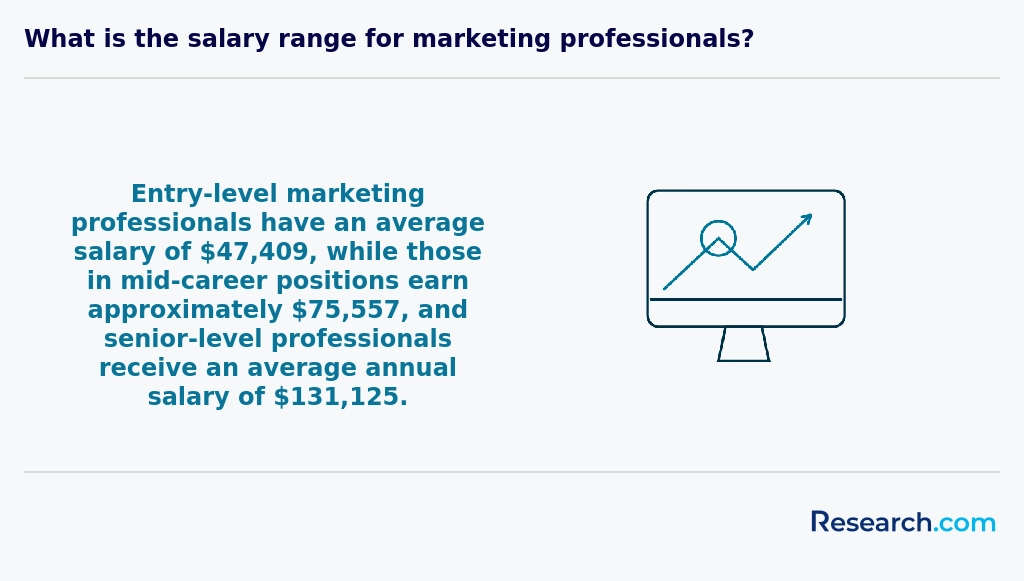
- The median starting salary for marketing graduates is about $50,000 per year, increasing to $70,000-$90,000 with experience.
- Marketing jobs are expected to grow by 10% over the next decade, driven by demand for digital marketing and data skills.
- Practical skills like data analytics and brand strategy are emphasized, with internships providing important real-world experience.
- Accreditation from groups like AACSB indicates higher academic standards and strong industry connections.
In America, completing a marketing degree typically feels like stepping into a well-paced adventure. Most students aiming for a bachelor's degree at popular institutions like the University of Pennsylvania or the University of Texas dive into about four years of full-time study. Imagine juggling lively campus events with your marketing projects, all while building skills that open exciting career doors. Graduates often recall how this immersive experience shaped their creativity and strategy thinking.
If you're chasing higher-level mastery, a marketing master's degree-whether an MS or an MBA with a marketing focus-usually unfolds over one to two years of full-time study. For instance, MBA candidates at top programs like Northwestern's Kellogg School savor the intense, yet rewarding, 21-month journey packed with real-world case studies and networking.
Some students choose to speed things up through accelerated paths, wrapping up a bachelor's in three years, or take it slow by attending part-time, often while working. Community college transfers add another fun twist, as students weave through credits before landing at a four-year university. Along the way, hands-on internships add vibrant chapters that may stretch the timeline but deeply enrich the learning experience.
In today’s rapidly evolving educational landscape, marketing degree programs are increasingly integrating innovative trends to equip students for future challenges. Institutions are now emphasizing data analytics, artificial intelligence, and digital transformation within their curricula, ensuring that graduates are well-prepared for a market that values agile, tech-savvy professionals. Furthermore, many programs are expanding interdisciplinary learning, intertwining marketing with technology, business strategy, and consumer psychology to foster a comprehensive skill set. This forward-thinking approach is evidenced by the growing popularity of flexible learning formats-such as online and hybrid courses-which enable students to balance rigorous coursework with practical, real-world applications. For students seeking budget-friendly opportunities to access these cutting-edge programs, checking out most affordable marketing colleges can provide valuable insights into cost-effective education paths that do not compromise on quality. Embracing these emerging trends not only ensures that graduates stay competitive in a dynamic job market but also reinforces the essential foundation of innovative marketing strategies vital for long-term career success.
Choosing between an online and on-campus marketing degree in America sparks a unique adventure for each student. Imagine studying at a bustling campus like the University of Southern California, where in-person classes buzz with energy and spontaneous hallway chats with professors turn into deep marketing insights. Graduates recall the thrill of networking at career fairs and joining lively marketing clubs that bring ideas to life.
On the other hand, envision balancing coursework from home with real-life responsibilities while enrolled in Arizona State University's online marketing program. Many online learners cherish the flexibility to tune into lectures whenever inspiration strikes, fitting study around jobs or family. Graduates often smile recalling how digital discussions connected them to peers across the country, creating a diverse, virtual classroom experience.
Cost also shapes these journeys. Traditional students might face higher tuition at private colleges, while online students often appreciate affordable fees and savings on commute and housing. Whether from a sunny campus or their cozy couch, these paths shape marketing minds ready to conquer the American job market.
The landscape of marketing education is evolving rapidly in response to technological advancements and shifting consumer behaviors. Programs are increasingly integrating artificial intelligence (AI) and data analytics into core curricula, equipping students with the skills to harness machine learning algorithms for customer segmentation, predictive modeling, and personalization. At the same time, experiential learning-through live client projects, virtual simulations, and internships-continues to gain prominence, ensuring graduates can translate theoretical knowledge into real‐world impact. Another hallmark of 2024 curricula is the rise of micro-credentials and digital badges that allow learners to specialize in niche areas like voice search optimization, influencer marketing, and loyalty program design. These bite-sized certifications not only enhance resumes but also encourage lifelong upskilling in an industry where platforms and tools evolve monthly. Equally important is the growing emphasis on sustainable and ethical marketing practices: courses now explore circular economy principles, green branding strategies, and the role of corporate social responsibility in consumer trust. As students seek flexibility without sacrificing quality, online delivery models have matured, offering immersive experiences through interactive webinars, AI-driven tutoring, and peer collaboration platforms. For those looking to compare top-ranked programs that seamlessly blend innovation with flexibility, our list of the best online marketing degree programs provides an up-to-date overview of institutions leading the charge. Finally, personalization remains at the forefront: adaptive learning technologies tailor coursework to individual strengths, while emerging modules on augmented reality (AR) and voice commerce prepare graduates for the next frontier of digital engagement. By embracing these trends, aspiring marketers can ensure their education remains relevant and future-proof in an ever-accelerating industry.
Imagine yourself stepping onto a vibrant campus bustling with students eager to master the art of marketing. The average cost of a marketing degree in America hovers around $45,370 for many students, balancing ambition and practicality. This figure represents a typical total expense and provides a grounded sense of what to expect when pursuing a marketing degree across the nation. Some graduates from popular universities in states with in-state tuition find this figure beautifully manageable, often closer to $21,926, while out-of-state students might experience costs closer to the median total cost as they expand their horizons.
For those seeking an adventurous path in marketing education, the total expenses for marketing degree in the USA can feel like an investment in a thrilling, career-defining journey. Picture yourself exploring innovative marketing strategies at schools known for their dynamic business programs, all while considering tuition costs as part of your personal story. Many future marketers share how the experience, coupled with this calculated financial outlook, fueled their excitement and motivation, turning the monetary investment into a gateway for creative opportunity.
For students hunting the best balance of cost and quality, discovering the most affordable marketing colleges offers a promising start. These institutions open doors to affordable but robust marketing programs, making the dream of studying marketing in America more attainable for a diverse range of students eager to thrive.
Exploring financial aid for a marketing degree in America often feels like uncovering hidden treasures. Many students attending schools like the University of Pennsylvania's Wharton School or the University of Texas at Austin find federal aid to be a vital support. Filling out the FAFSA can unlock Pell Grants up to $7,395 annually, which truly lightens the financial load without needing repayment.
Imagine a marketing student at the University of Michigan leveraging Direct Subsidized Loans that pause interest while studying, offering much-needed breathing room. Borrowing limits between $5,500 and $7,500 per year empower students to fund their education without overwhelming debt.
Scholarships specific to marketing are another beacon of hope. Graduates of prominent programs often reminisce about competitive scholarships from organizations like the American Marketing Association, which shine a spotlight on leadership and academic excellence.
Beyond federal aid, work-study roles and internships offer practical income plus priceless experience, often sought by students at institutions like Boston University. Meanwhile, employer tuition assistance programs reward dedication, helping students balance work and study adventures.
When budgeting for a marketing degree, prospective students often seek programs that balance quality instruction with manageable tuition. New York State stands out with an array of cost-effective options-from SUNY campuses offering in-state tuition under $11,000 per year to private colleges with robust scholarship packages. For an in-depth look at the top budget-friendly choices, consult our Cheapest Marketing Degree Programs Ranking in New York. Beyond tuition, consider living expenses, internship opportunities, and alumni networks that can accelerate your return on investment. Many New York institutions partner with leading firms in finance, media, and technology to provide paid internships, reducing net educational costs while building professional experience. Comparing total cost of attendance against average post-graduation salaries helps identify programs with the highest ROI. Finally, explore financial aid and scholarship resources unique to New York residents. State grants, merit-based awards, and graduate assistantships can offset tuition by up to 50%. By combining cost-effective program selection with strategic financial planning, students can graduate with a marketing degree that maximizes career growth while minimizing debt.
Diving into a marketing degree in America often begins with a solid academic foundation-most undergraduates share the common step of holding a high school diploma or GED, paired with a GPA around 2.5 to 3.0. Imagine a student at a vibrant university like the University of Texas at Austin, where showing proficiency in English and math can unlock the doors to dynamic marketing classes. While standardized tests like the SAT or ACT might seem daunting, many graduates recall how test-optional policies across more than 60% of colleges eased that pressure.
For those venturing into graduate programs, such as an MBA with a marketing focus at a renowned business school, a bachelor's degree is key. Admissions committees eagerly welcome applicants who bring not only academic achievements but also real-world marketing experiences-often turning professional stories into compelling applications. GRE or GMAT scores may appear on the checklist, yet many schools are opening doors wider by waiving these tests, rewarding practical savvy and communication skills.
Picture a graduate from a top college in California explaining how prior coursework in economics or statistics helped them confidently tackle marketing analytics. These prerequisites are more than hurdles-they're stepping stones that prepare students to explore the creative and analytical adventures marketing studies offer across the diverse landscape of American universities.
Diving into a marketing degree in America means jumping into a world where courses like Principles of Marketing spark curiosity about how markets, consumers, and strategies interact in real life. Imagine exploring concepts that graduates from top schools like the University of Pennsylvania or the University of Michigan recount as game-changers: understanding how brands capture attention and hold it through clever campaigns.
Students often find themselves excited in Marketing Research and Analytics classes, where they gather real data and decode consumer habits-skills highly sought after today. Visualize applying these analytics in internships at bustling firms in New York or Chicago, shaping campaigns that really resonate.
The digital wave sweeps through courses such as Social Media Marketing and SEO, allowing students to craft compelling online stories and measure impact using tools like Google Analytics. Former students from institutions like USC share how these classes prepared them to launch vibrant digital campaigns, igniting creativity and confidence.
Beyond that, courses in Consumer Behavior and Brand Management offer eye-opening insights into decision-making and leadership. Picture yourself navigating the fast-paced marketing world armed with these versatile skills from an American college experience that feels both adventurous and practical.
Diving into marketing degree specializations in the USA opens up a world of possibilities, from the fast-paced excitement of Digital Marketing to the analytical thrills of Market Research and Analytics. Graduates from top colleges like the University of Michigan and New York University often share how mastering social media strategies or decoding consumer data made their studies come alive, preparing them for real-world challenges in American businesses.
Brand Management is another path where students learn to craft powerful identities, a favorite among those attending schools such as the University of Florida, who relish the challenge of balancing creativity and strategy to build customer loyalty. Meanwhile, Sales Management delivers leadership skills combined with marketing savvy, ideal for those wanting to lead sales teams at dynamic companies across the country.
For the adventurers, International Marketing offers a thrilling gaze at global markets, essential since 95% of consumers live outside the U.S. Many students exploring this specialization find themselves inspired by courses at schools with strong global ties like the University of Southern California.
Exploring these options in marketing majors in America is an exciting journey, and you can find a detailed list of the best online marketing degree programs to start your own adventure today.
Choosing the best marketing degree in America often feels like an exciting adventure where you balance quality, cost, and career potential. Many graduates from well-known universities recall the thrill of discovering programs with strong regional and AACSB accreditation, which gave them confidence in the rigor and relevance of their coursework. Imagine diving into courses blending consumer behavior, social media marketing, and hands-on data analytics, preparing you for the dynamic industry ahead.
Affordable marketing degrees in America are a treasure many students actively seek, especially with tuition often soaring above $35,000 at private schools. Some recent graduates found true value by exploring programs in public universities, where in-state tuition is closer to $10,400, and even stumbled upon gems listed in the Cheapest Marketing Degree Programs Ranking in New York. These affordable options often deliver vibrant learning communities alongside practical internships that open doors.
Location matters too-graduates from colleges nestled in metropolitan hubs describe the thrill of networking events that turn into real job offers. The 7% growth rate in marketing jobs nationally means your degree becomes a launchpad to industries hungry for fresh talent. Exploring marketing degree programs in the USA through this lens reveals a path full of opportunity and rewarding challenges, making the quest both personal and transformative.
Graduates holding a marketing degree in America find themselves at the threshold of thrilling career paths that spark creativity and strategy. From bustling campuses like the University of Michigan to vibrant hubs such as the University of Texas at Austin, students dive into real-world projects as marketing assistants or social media specialists, honing skills that launch their marketing career opportunities in the USA. One graduate recalls the excitement of developing digital campaigns that blend data analytics with storytelling, fueling brands' growth in competitive markets.
Climbing higher, roles like Marketing Manager bring leadership challenges, directing teams and crafting impactful campaigns that shape consumer trends. Others explore the analytics-driven world of Market Research Analyst, interpreting data to unlock market secrets-an especially fast-growing path with promising prospects. For those drawn to the pulse of the internet, becoming a Digital Marketing Specialist offers endless experimentation with SEO, email blasts, and social media ads, turning passions into professions.
Many graduates also consider continuing their education, gravitating toward 1 year online masters programs that deepen expertise and open doors to brand management or advertising executive roles. These pathways illustrate top marketing degree jobs in America, each reflecting the vibrant and diverse possibilities waiting for you.
The job market for marketing degree graduates in America is vibrant and filled with exciting possibilities. Graduates from renowned universities often find themselves thriving in roles like brand management, digital marketing, and market research-fields that continue to expand thanks to evolving technologies and consumer trends. Many graduates describe the experience of landing their first marketing role as a thrilling adventure, where applying classroom knowledge to real-world campaigns sparks creativity and growth.
With career opportunities for marketing graduates America-wide benefiting from a 10% growth outlook for marketing managers alone, the prospects feel promising. Those skilled in digital tools and data analytics stand out, often securing salaries beyond $135,000 in key markets. Students from major colleges frequently emphasize the value of internships and hands-on projects, which help bridge theory and practice while building networks.
Tuition can be a significant factor, ranging from about $10,000 annually at public institutions to $35,000 at private colleges, inspiring many to explore quick online certifications that pay well as a smart complement to their studies. This blend of formal education and flexible skill-building reflects the dynamic, ever-adapting nature of the marketing degree job outlook USA.
2027 Most Popular Marketing Degree Programs Ranking in the USA
Investing in your education is a significant decision that can shape your future, and the Research.com team understands the importance of making informed choices. To assist prospective students, we have meticulously developed the "2027 Most Popular Marketing Degree Programs Ranking in the USA." Our commitment to quality, credibility, and accuracy is demonstrated through extensive research and thorough analysis conducted to compile this ranking.
We utilized the following reputable data sources to ensure a comprehensive evaluation of marketing degree programs:
By exploring this ranking, readers will gain valuable insights into the most popular marketing degree programs in the USA, helping them make well-informed decisions about their educational paths. For more details on our methodology, please visit our Research.com methodology page.

# 2 position
Pennsylvania State University-Main Campus
Bachelor of Science in Marketing


Frequently Asked Questions About marketing
Marketing degree students in America can maximize their learning experience by engaging with both theoretical and practical aspects of the field. Participating in internships is crucial, as the Bureau of Labor Statistics shows marketing internships increase job placement rates by nearly 20%. Networking with professionals through events and student organizations also provides valuable insights and connections. Utilizing campus resources like marketing labs and software training equips students with hands-on skills essential for modern digital marketing. Additionally, staying updated with industry trends via resources such as the American Marketing Association helps students align their education with current market demands.
Emerging niches within the marketing field in the United States reflect the growing influence of technology and data. Digital marketing continues to expand rapidly, with specialties like search engine optimization (SEO), social media marketing, and content strategy becoming crucial. According to the U.S. Bureau of Labor Statistics, employment for market research analysts, a role closely tied to data-driven marketing, is projected to grow 23% from 2021 to 2031, much faster than average.
Another growing area is influencer marketing, fueled by social media platforms like Instagram and TikTok. Sustainable and ethical marketing is gaining attention as brands respond to consumer demand for corporate responsibility. Data analytics and artificial intelligence are also shaping how marketers target audiences more precisely, creating opportunities for students skilled in both marketing and technology.
Graduates with marketing degrees in America should build a strong professional network to enhance job prospects. Joining organizations like the American Marketing Association (AMA), which has over 30,000 members, can provide valuable connections and industry insights. Gaining hands-on experience through internships is also essential; according to the National Association of Colleges and Employers, 60% of marketing employers prefer candidates with prior internship experience.
Developing digital skills is critical as 70% of marketers now use data analytics tools for decision-making, per the U.S. Bureau of Labor Statistics. Lastly, tailoring resumes and preparing for behavioral interviews will improve chances of securing marketing roles in competitive markets.
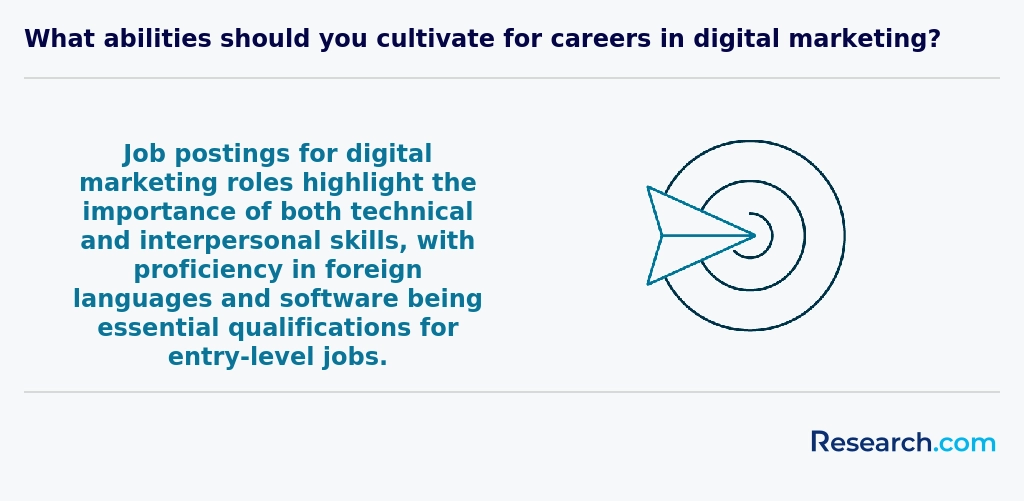
Employers in America seek specific skills in marketing degree graduates to meet the demands of a competitive market. Critical among these are data analysis and digital marketing proficiency. According to the National Association of Colleges and Employers (NACE) 2023 report, 65% of marketing employers value candidates with strong digital skills including SEO, SEM, and social media marketing.
Communication skills are essential as marketers must craft persuasive messages and collaborate across teams. Additionally, creativity and strategic thinking enable graduates to design innovative campaigns that capture consumer attention.
Understanding consumer behavior and basic analytics tools like Google Analytics are increasingly crucial to measure campaign success effectively.
Finally, adaptability to evolving technology trends and a clear grasp of branding fundamentals remain highly sought after in the U.S. job market.
Finding internships in America relevant to a marketing degree involves multiple strategic steps. Many universities offer dedicated career centers that connect students with local and national marketing internship opportunities. According to the National Association of Colleges and Employers (NACE), more than 60% of internships in the US are secured through university programs and networking events.
Students should also explore online platforms such as Handshake and WayUp, which specialize in internships for college students. Marketing internships often range from digital marketing to brand management, with companies like Coca-Cola and IBM frequently offering structured programs. According to the U.S. Bureau of Labor Statistics, marketing occupations are expected to grow 10% through 2032, highlighting strong internship demand.
Building professional connections via LinkedIn and attending marketing conferences can significantly improve internship prospects. Students are advised to prepare tailored resumes emphasizing relevant coursework and skills to stand out in competitive markets.
A marketing degree in America significantly enhances career mobility and advancement opportunities. According to the U.S. Bureau of Labor Statistics, marketing managers earn a median annual wage of approximately $133,000, showing strong financial incentives for degree holders. Graduates gain valuable skills in data analysis, consumer behavior, and digital marketing, which are highly sought after across industries.
Employers often prefer candidates with formal marketing education for roles ranging from brand management to market research. Additionally, a degree can open doors to leadership positions, as 70% of marketing managers hold at least a bachelor's degree, per LinkedIn Workforce Report 2023.
Networking and internships during a marketing program also facilitate smoother job transitions and promotions over time.
Studying for a marketing degree in America equips students with a broad skill set essential for interdisciplinary roles. American universities emphasize combining marketing principles with data analytics, communication, psychology, and business strategy. This approach reflects the evolving demands of the U.S. job market, where 61% of marketing positions require proficiency in digital tools and cross-functional collaboration (Bureau of Labor Statistics, 2023).
Curriculums often integrate real-world projects involving finance, technology, and consumer behavior, enabling students to work effectively across departments. Marketing graduates gain experience in teamwork and critical thinking, preparing them to adapt in industries like healthcare, technology, and entertainment.
Furthermore, many programs encourage internships and partnerships with diverse industries, reinforcing practical interdisciplinary skills valuable in competitive American workplaces.
Choosing between a thesis and a non-thesis marketing degree program in America depends on your career goals and learning preferences. Thesis programs typically require students to conduct original research and write a detailed paper, which can prepare you for research roles or doctoral studies. According to the National Center for Education Statistics, about 30% of US master's marketing programs offer thesis options.
Non-thesis programs focus on coursework and practical skills, ideal for those aiming for immediate industry employment. They often include internships or projects that develop applied marketing experience. The Bureau of Labor Statistics notes that marketing managers with practical skills tend to find jobs faster after graduation.
Consider your long-term plans and the program structure carefully before deciding.
American students seeking to study marketing abroad have numerous options through exchange programs, study abroad partnerships, and dual degree arrangements offered by U.S. universities. Many institutions collaborate with European, Asian, and Latin American universities, providing access to diverse marketing approaches and global business environments.
According to the Institute of International Education, over 300,000 American students studied abroad during the 2021-2022 academic year, with business and management disciplines, including marketing, among the most popular fields. Programs often include internships or experiential learning components that enhance understanding of international markets.
Additionally, some U.S. universities offer marketing degrees with embedded international study segments. Students considering studying marketing abroad should also explore government-sponsored scholarships and private grants that facilitate global education opportunities.
Part-time job opportunities in America that complement a marketing degree are diverse and valuable for gaining practical experience. Popular roles include social media management, where students can apply digital marketing skills and learn platform algorithms. According to the U.S. Bureau of Labor Statistics, marketing careers are projected to grow 10% from 2022 to 2032, highlighting the importance of early hands-on experience.
Other common positions are market research assistant and content creator, both offering insights into consumer behavior and brand communication. Internships at advertising agencies or corporate marketing departments provide real-world applications of classroom learning. These roles improve critical skills like data analysis and campaign development, enhancing employability after graduation.
Marketing students in America have numerous networking opportunities that can shape their careers. Many universities host marketing clubs and chapters of organizations like the American Marketing Association (AMA), offering chances to connect with peers and industry professionals. Attending regional or national AMA conferences enables students to meet marketing executives and recruiters.
Internships remain a crucial networking tool, allowing students to gain experience and industry contacts. According to the National Association of Colleges and Employers, over 60% of marketing internships lead to full-time roles.
Additionally, career fairs and alumni events at universities provide valuable face-to-face networking with potential employers.
Alumni networks play a crucial role for marketing degree students in America by providing valuable connections in a competitive job market. According to the National Association of Colleges and Employers (NACE), 70% of jobs are found through networking. These networks connect students to graduates working in top marketing firms and agencies across the country.
Through mentorship programs, alumni offer guidance on career paths, internships, and industry trends, which is essential given the dynamic nature of marketing. The American Marketing Association notes that students linked to active alumni groups have a higher chance of securing internships and entry-level roles.
Additionally, alumni events foster professional relationships and often lead to job referrals. This support system can significantly impact a student's career trajectory in the evolving marketing landscape of the United States.
Customizing a marketing degree program in America allows students to align their education with specific career goals. Many universities offer concentrations such as digital marketing, brand management, or market research. Choosing electives strategically can help build skills in areas like data analytics or consumer behavior, which are highly valued in the job market.
Internships and cooperative education programs provide practical experience, enhancing a student's resume before graduation. According to the National Center for Education Statistics, about 70% of marketing students participate in internships during their studies.
Additionally, some schools collaborate with industry partners for real-world projects, giving students exposure to current marketing challenges and technologies.
Marketing students in America often face a range of challenges during their studies. One major difficulty is staying current with rapidly evolving digital marketing trends, including social media algorithms and data analytics tools. According to the American Marketing Association, this constant change demands continual skill updating beyond the classroom.
Additionally, students frequently report struggling to apply theoretical knowledge to practical situations. Internships and real-world projects, essential for hands-on experience, can be competitive and limited in availability.
Financial stress is another common challenge. The National Center for Education Statistics notes that the average undergraduate debt in the U.S. exceeds $30,000, often impacting marketing students as well.
Lastly, given the broad nature of marketing, students must balance learning diverse subjects such as psychology, communications, and statistics, which can be overwhelming without clear specialization guidance.
With a marketing degree in America, you can pursue various professional certifications to enhance your career prospects. Popular options include the Certified Marketing Professional (CMP) offered by the American Marketing Association (AMA), which validates foundational marketing skills across industries. Another widely recognized certification is the Digital Marketing Pro credential from the Digital Marketing Institute, focusing on online marketing strategies.
Certifications such as Google Ads and Google Analytics are valuable for professionals aiming to specialize in digital advertising and data analysis, skills increasingly demanded in the US job market. According to the Bureau of Labor Statistics, marketing analyst roles are projected to grow 10% from 2022 to 2032, highlighting the importance of advanced credentials.
Additionally, certifications like HubSpot's Inbound Marketing or Facebook Blueprint can help develop expertise in content marketing and social media management, both critical in today's digital economy.
To write a winning application for a marketing program in America, start by emphasizing your understanding of key marketing concepts such as consumer behavior, digital marketing, and data analytics. Admissions committees look for candidates who can demonstrate both creativity and analytical skills.
Include clear academic achievements, especially in business-related courses, and highlight any relevant internships or work experience. According to the National Center for Education Statistics, marketing degrees have grown 8% in enrollment since 2019, increasing competition.
Craft a compelling personal statement that explains your career goals and passion for marketing. Tailor each application to the specific program by researching faculty expertise and course offerings. Strong letters of recommendation from professionals familiar with your skills also boost your chances.
Marketing careers in America increasingly reflect global trends, emphasizing digital skills and cultural awareness. According to the Bureau of Labor Statistics (BLS), marketing manager roles are expected to grow 10% from 2022 to 2032, faster than average professions. This growth is partly driven by global market expansion and digital advertising.
American marketing programs often include global case studies and international business strategies, preparing graduates for careers that connect brands worldwide. The rise of e-commerce and social media platforms creates demand for professionals who understand diverse markets and consumer behaviors globally.
Understanding international regulations and cross-cultural communication is critical, as firms in the US increasingly engage in global partnerships. By gaining a marketing degree in America, students position themselves to compete in an interconnected economy with opportunities beyond domestic borders.
Gaining practical experience while studying for a marketing degree in America is essential for career readiness. Many universities offer internship programs that connect students directly with companies in sectors like advertising, digital marketing, and public relations. According to the National Association of Colleges and Employers (NACE), over 60% of marketing students complete at least one internship before graduating.
Students can also participate in cooperative education (co-op) programs, which alternate academic study with paid work experience. Additionally, marketing clubs and student-run agencies on campus provide hands-on opportunities to develop campaigns, manage social media, and conduct market research.
Some universities encourage project-based courses where students collaborate with real businesses, enhancing their practical skills. These experiences help build professional networks and improve employability after graduation.
Choosing the right concentration within a marketing degree program in America involves understanding your career goals and industry trends. Common concentrations include digital marketing, consumer behavior, advertising, and market research. According to the U.S. Bureau of Labor Statistics, roles in digital marketing are expected to grow by 23% from 2022 to 2032, indicating strong demand for skills in this area.
Researching the curriculum and faculty expertise at different universities helps align your interests with program strengths. Internships and networking opportunities also play a key role in gaining real-world experience during your studies.
Consider your strengths: analytics-driven students may favor market research, while creative thinkers might prefer advertising or branding. Accreditation status, such as by AACSB, ensures program quality and can impact employment prospects after graduation.
See What Experts Have To Say About Studying Marketing
Read our interview with Marketing experts

Sonya A. Grier, Ph.D.
Marketing Expert
Professor, Department of Marketing
American University

Aidin Namin, Ph.D.
Marketing Expert
Associate Professor of Marketing Analytics
Loyola Marymount University

- The Importance of Networking for Students Entering the Marketing Industry https://moviamedia.com/moving-billboard-blog/the-importance-of-networking-for-students-entering-the-marketing-industry/
- Master of Science (M.S.) Major in Marketing Research and Analysis (Non-thesis Option) https://mycatalog.txstate.edu/graduate/mccoy-business-administration/marketing/marketing-research-analysis-ms/
- The skills that will get you a graduate job in marketing https://targetjobs.co.uk/careers-advice/marketing-advertising-and-pr/skills-will-get-you-graduate-job-marketing
- Why study Marketing? https://blogs.tees.ac.uk/students/2024/04/15/why-study-marketing-2/
- Academic Challenges of Marketing Students - Blog – Expert Tips & Insights for Students https://affordableassignments.co.uk/blog/academic-challenges-of-marketing-students/
- What marketing occupations are in demand in North America? https://www.cartermurray.com/career-advice/what-marketing-occupations-are-in-demand-in-north-america/
- 12 Major Marketing Challenges and How to Address Them | NetSuite https://www.netsuite.com/portal/resource/articles/erp/marketing-challenges.shtml
- How to Get a Summer Internship in Marketing in 2026 (Agency, In-House, and Startup) https://whali.co.uk/blog/summer-internship-marketing-guide
- What Jobs Can You Get with a Marketing Degree? https://www.global-business-school.org/content-type/blog/what-jobs-can-get-marketing-degree/
- How to Become an International Marketing Executive https://online.maryville.edu/online-bachelors-degrees/marketing/careers/international-marketing-executive/