2027 Most Affordable Marketing Degree Programs Ranking in the USA

Co-Founder and Chief Data Scientist
Choosing the right marketing degree program can feel overwhelming, especially when balancing costs and quality. To help, the Research.com team of data scientists has created the 2027 Most Affordable Marketing Degree Programs Ranking in the USA, designed to guide you toward smart, budget-friendly options.
Exploring this ranking can empower your decision-making with clear, data-driven insights. A marketing degree opens doors to exciting career possibilities and personal growth, making it well worth considering for your future.
Take a step closer to your goals with confidence and clarity.
Key benefits of getting marketing degree in America
- Marketing degree graduates can earn competitive salaries, such as a Public Relations Specialist with a mean annual wage of $159,420 or a Digital Marketing Specialist earning about $83,190 per year, offering strong financial stability.
- A graduate from a well-known American university often finds diverse career paths in roles like Sales Associate, Media Planner, or Marketing Assistant, providing exciting opportunities across industries.
- An online marketing degree graduate from a popular university enjoys flexible learning schedules and the convenience of studying anywhere, making education more accessible without sacrificing quality.
- 2027 Most Affordable Marketing Degree Programs Ranking in the USA
- What can I expect from marketing degree in America?
- Where can I work with marketing degree in America?
What can I expect from marketing degree in America?
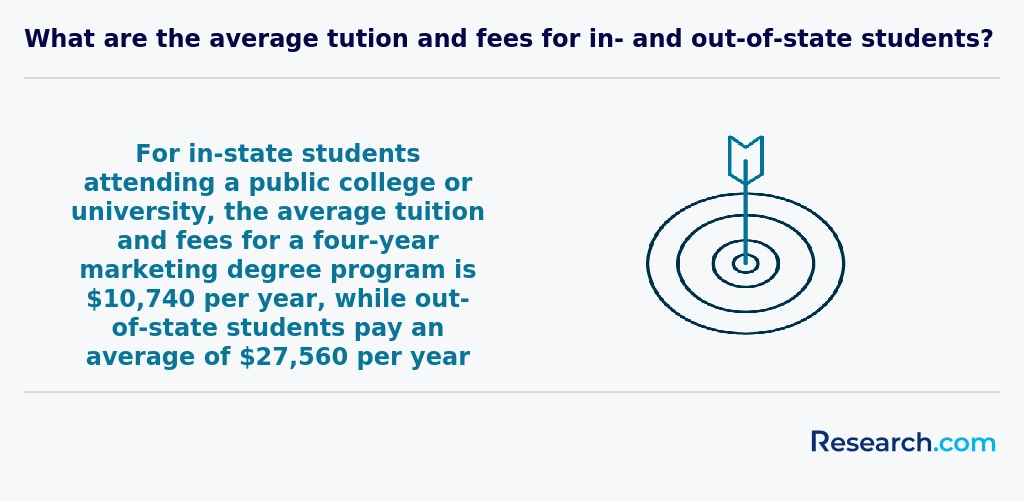
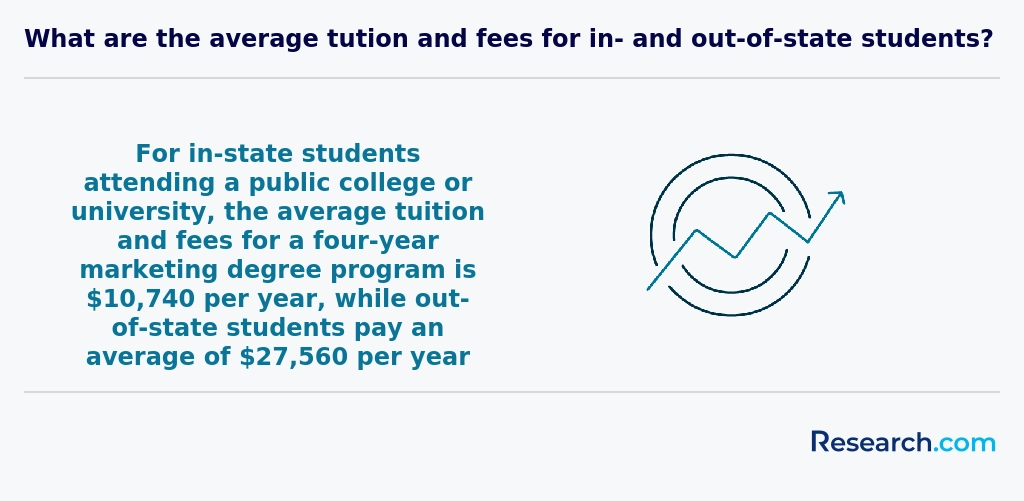
The average cost of a marketing degree in America varies widely depending on the type of institution. Public universities often charge between $10,000 and $25,000 per year for in-state students, while private colleges can exceed $40,000 annually. Graduates from popular schools like the University of Michigan or New York University often share that managing tuition along with living expenses requires careful budgeting and seeking scholarships or work-study options.
Many marketing students recommend taking advantage of internships offered through their programs, as these often provide real-world experience and sometimes financial support. For example, marketing majors at UCLA report that internships with local businesses helped offset costs and boosted job prospects after graduation.
Applying early for financial aid and exploring federal loans can make tuition more manageable. Students consistently emphasize that the investment is worthwhile given the solid job outlook and potential salaries in marketing careers, particularly in digital marketing roles where skills are in high demand and compensation tends to be favorable.
Where can I work with marketing degree in America?
Graduates from marketing programs at popular American universities find diverse job opportunities across industries. Many secure roles at advertising agencies where they create compelling campaigns and analyze consumer trends, blending creativity with data-driven strategies. For example, marketing students from schools like the University of Pennsylvania often highlight how internships with digital agencies gave them hands-on skills in social media and SEO, areas with skyrocketing demand.
Corporations in technology, retail, and healthcare actively hire marketing graduates to lead product launches and customer engagement efforts. Alumni from institutions such as the University of Michigan report entering roles where strong communication and analytics skills they developed in class prove invaluable.
Market research firms offer roles focused on interpreting big data using popular tools like Google Analytics or SAS, providing exciting challenges for those passionate about numbers and trends. Additionally, graduates often thrive in nonprofits or government roles, using marketing expertise to advance social causes and public relations.
Freelance consulting is another rewarding path, offering flexibility to apply skills supporting startups or small businesses-a growing choice for many graduates eager to blend entrepreneurship with marketing know-how.
Graduates with a marketing degree in America can expect a range of earnings based on their chosen career path. For example, marketing assistants often start with a mean annual wage around $83,190, which provides a solid foundation for entry-level professionals. Those pursuing roles like digital marketing specialists or media planners typically see similar salaries, close to $83,190 annually, reflecting the growing demand for digital skills.
Public relations specialists, another common career for marketing graduates, earn significantly more, with a mean annual wage of $159,420. This higher figure reflects the value of strong communication skills and industry experience gained along the way.
Sales associates, while still crucial in marketing fields, tend to earn less with a mean annual salary of about $53,280. Graduates from universities known for strong marketing programs, such as the University of Michigan or University of Texas, often leverage internships and certifications to boost their starting pay and accelerate career growth.
These figures remind students that specializing in high-demand areas and gaining hands-on experience during their marketing studies can lead to rewarding salaries in vibrant cities like New York or San Francisco.
- The cost of a bachelor's degree in marketing ranges from $21,000 to over $70,000, depending on the type of institution and residency status.
- Marketing degree programs usually take four years to complete, with courses in market research, consumer behavior, digital marketing, and advertising.
- Marketing jobs are projected to grow around 10% from 2022 to 2032, faster than the average for all occupations.
- Starting salaries for marketing graduates are typically $50,000 to $60,000, while mid-career professionals can earn between $75,000 and $100,000.
- Marketing managers have a median annual wage of over $135,000.
- Internships and skills in digital marketing, social media, and analytics improve job prospects after graduation.
Completing a marketing degree in America typically takes about four years for undergraduate students pursuing a Bachelor of Science or a Bachelor of Business Administration with a marketing focus. For example, many students at universities like the University of Michigan or the University of Texas follow this timeline, completing roughly 120 to 130 credit hours that include general education and specialized marketing classes.
Graduate degrees, such as an MBA with a marketing concentration or a Master of Science in Marketing, usually require an additional one to two years. Graduates from schools like Northwestern or the University of Southern California often balance internships and coursework to finish within this timeframe while gaining practical experience.
Choosing an accelerated program or taking summer courses, as some students at Indiana University do, can reduce completion time to three years. Conversely, part-time study or flexible online programs extend the duration but offer valuable adaptability for working professionals.
This flexibility allows students to tailor their path to fit life's demands while still earning a respected marketing credential on a manageable timeline.
Students embarking on a marketing degree journey can maximize their educational and professional outcomes by adopting strategic approaches tailored to the demands of the evolving marketing landscape. First, it is essential to leverage available resources such as career counseling services, networking events, and internship opportunities provided by many institutions. Engaging with professors and industry experts can offer deep insights into current digital trends and innovative marketing strategies, which are invaluable for bridging the gap between classroom theory and real-world practice. Building a strong portfolio early on is equally crucial. Participate in hands-on projects and live campaigns, and document your contributions. These practical experiences not only enhance your resume but also boost your confidence in developing creative solutions for complex challenges. For instance, exploring programs that provide direct exposure to advanced digital marketing tools and techniques can set you apart from the competition. Courses, webinars, and workshops can further supplement your learning, ensuring you remain up-to-date with the latest innovations in the field. Time management and self-discipline are key factors for success, especially for students balancing studies with part-time work or other commitments. Embracing online learning platforms can offer flexibility and help you maintain a steady pace. In fact, many students choose to explore options like an affordable marketing degree to accommodate their busy schedules without sacrificing quality education. Lastly, be proactive in seeking mentorship opportunities and join marketing-related clubs or associations. These networks provide a collaborative environment where you can share ideas, gain feedback, and prepare for the competitive job market. With a commitment to continuous learning and professional development, you can transform your marketing education into a launchpad for a successful career.
Choosing between an online and on-campus marketing degree in America boils down to flexibility and interaction. Online programs, like those offered by Arizona State University or the University of Florida, let you study from anywhere with a schedule tailored around work or family. Graduates often praise the freedom to balance life commitments while advancing their education. In contrast, on-campus programs at schools such as the University of Michigan or New York University provide a more structured routine with fixed class times and rich face-to-face networking opportunities.
Cost can also influence your choice. For example, in-state students attending a public university might pay around $10,000 to $12,000 annually on campus, while online options sometimes reduce costs by cutting campus fees. However, some institutions offer equal tuition for both formats, so research is key. Graduates from on-campus programs often highlight easy access to career centers and internships, while online students benefit from virtual platforms but need to proactively seek these opportunities.
Both paths cover essential marketing skills like digital marketing and consumer behavior, so consider your learning style and personal commitments carefully before deciding.
When evaluating the 2024 Most Affordable Marketing Degree Programs, accreditation is your first benchmark for quality assurance. Accredited programs-whether by AACSB, ACBSP, or IACBE-guarantee that curricula meet rigorous academic standards and that credits transfer seamlessly to graduate schools. Students should verify institutional and programmatic accreditation on the U.S. Department of Education’s database before applying. For those seeking region-specific affordability, the Most Affordable Marketing Degree Programs Ranking in Maryland offers a curated list of accredited, cost-effective options that combine value with recognized quality. Beyond formal accreditation, industry certifications empower graduates to stand out in a crowded job market. In-program workshops or partnerships with organizations like the American Marketing Association (AMA) often culminate in the Professional Certified Marketer (PCM) credential, a milestone that signals expertise to employers. Digital marketing courses may also include Google Ads and Google Analytics certifications or HubSpot’s Inbound Marketing certification-credentials that boost both technical skills and hireability. Look for programs that integrate these certifications directly into coursework or offer exam vouchers as part of tuition. Finally, some universities collaborate with leading marketing bodies such as the Digital Marketing Institute (DMI) or the Data & Marketing Association (DMA) to provide exclusive access to webinars, conferences, and networking events. These partnerships not only enrich your learning but also facilitate internships and job placements. Prioritizing both regional affordability and robust accreditation plus certification pathways ensures you invest wisely in a marketing education that delivers measurable career returns.
The average cost of a marketing degree in America can vary, but median total expenses typically reach around $45,370. For many students, especially those attending public universities as in-state residents, the total cost averages closer to $21,926. Out-of-state students usually face higher fees, aligning with the median out-of-state total cost of approximately $45,370. Graduates from popular marketing programs at well-known universities often share how balancing tuition costs with scholarships and financial aid helped make their education more affordable and less stressful. These budgeting strategies can be essential for prospective students aiming to manage expenses effectively.
Community colleges provide an affordable starting point for many who want a marketing degree but are mindful of costs. Beginning with an associate degree and then transferring to a four-year college can significantly reduce the overall outlay. This approach is often praised by graduates who successfully navigated cost challenges by initially choosing more economical institutions. When considering affordable marketing degree programs USA-wide, students should evaluate this pathway to maximize savings without sacrificing quality education.
Beyond tuition, other expenses like books, supplies, and living costs must be factored in. Graduates recall budgeting for approximately $1,200 annually on materials and an average of $11,620 per year for room and board at public schools. Many emphasize taking advantage of financial aid and scholarships to offset these costs, making the overall journey more manageable and less overwhelming.
For those interested in further specialization, graduate marketing programs such as MBAs come with a higher price tag-around $66,000 for the full program on average. However, this investment often leads to stronger career prospects and higher earning potential, which past students gladly attest to after completing their degrees. Prospective students should research extensively and consider all financial assistance options available.
Exploring options like an affordable marketing degree can uncover valuable resources and institutions that balance cost and quality, helping you pursue your marketing goals without excessive financial strain.
Prospective students should weigh both the cost of tuition and the potential earnings to determine the true value of a marketing degree. On average, a bachelor’s in marketing costs between $10,000 and $40,000 per year, but financial aid can reduce out-of-pocket expenses significantly. When assessing ROI, it’s also essential to review digital marketing degree requirements to ensure the curriculum aligns with the highest-demand skills-such as analytics, SEO, and social media management-that drive top salaries. A simple ROI calculation compares the net cost of education (tuition minus scholarships and grants) against expected lifetime earnings. For example, a graduate who borrows $40,000 at a 4% interest rate and secures an entry-level salary of $60,000 can typically repay loans within five to seven years while benefiting from a median mid-career income exceeding $100,000 in roles like marketing manager or brand strategist. To refine your ROI estimate: • Calculate Total Debt: Factor in tuition, fees, and living expenses minus any merit-based aid. • Estimate Earnings Growth: Use data on regional salaries-for instance, marketing professionals in San Francisco earn up to $107,790 annually. • Project Payback Period: Divide net educational cost by the annual salary premium relative to a non-degree role. Programs with integrated internships, strong alumni networks, and modern coursework in AI marketing tools often yield quicker returns. By focusing on accredited institutions that balance affordability with career services and industry partnerships, students can maximize their ROI and accelerate their path to financial and professional success.
Marketing students in America commonly rely on federal financial aid to manage tuition costs at universities like the University of Pennsylvania or the University of Texas. Filing the FAFSA early opens doors to Pell Grants, which can cover up to $7,395 annually for eligible students without needing repayment. Federal student loans also provide manageable interest rates and flexible repayment, easing financial stress during studies.
Merit scholarships are another vital support, often awarded by institutions such as the University of Michigan to students demonstrating strong academic performance and leadership in marketing. These awards can significantly reduce out-of-pocket expenses and boost confidence.
State aid programs add extra funding opportunities. For instance, California residents attending UC Berkeley often benefit from state grants, helping cover thousands in tuition. Work-study positions tied to marketing faculty or campus marketing offices offer practical experience while earning money, a win-win for career growth and finances.
Many graduates recall the peace of mind that came from combining these aids before considering private loans, which usually have higher interest rates and stricter requirements. Some working students successfully leverage employer tuition reimbursement, enabling them to pursue degrees part-time and advance their careers without financial strain.
To enroll in a marketing degree program in America, you'll first need a high school diploma or its equivalent, like a GED. Graduates from well-known schools such as the University of Pennsylvania's Wharton School often highlight how having solid grades in core subjects like English, math, and social studies helped ease their admission process. Many colleges expect minimum GPAs around 2.5 to 3.0, so maintaining a consistent academic performance is crucial.
Some universities may require specific courses like algebra or statistics, which prepare you for the analytical side of marketing. For example, students at the University of Michigan found that taking these courses gave them confidence when tackling quantitative marketing classes.
Although standardized tests like the SAT or ACT have traditionally been part of admissions, many top programs, including New York University's Stern School, now offer test-optional policies. For graduate marketing degrees, such as MBAs with a marketing focus, you'll need a bachelor's degree, plus GRE or GMAT scores, letters of recommendation, and a clear career statement. These components showcase your readiness and commitment, making your application stand out in competitive pools.
Marketing degree programs in America typically include core courses such as marketing principles, which cover essential topics like product development, pricing strategies, promotion, and distribution channels. Students at popular business schools like the University of Michigan or the University of Texas often find these classes directly applicable to real-world projects, such as designing a campaign for a new product launch or analyzing competitor pricing to identify market opportunities.
Graduates frequently highlight the value of market research courses, where they learn data collection and analysis techniques that help guide marketing decisions. Classes on consumer behavior dive into psychological and sociological factors influencing purchase choices, a skillset graduates use to craft targeted, effective advertising that resonates emotionally with audiences.
Many students also benefit from related business courses like accounting and finance, which deepen their understanding of how marketing strategies impact a company's bottom line. Additionally, digital marketing modules focusing on SEO, social media, and content marketing prepare students for evolving online marketplaces, making their skillset both current and highly competitive.
Electives such as international marketing or brand management offer hands-on experience tailoring campaigns for global markets, providing a well-rounded education that graduates at institutions like Indiana University rave about for career readiness and confidence.
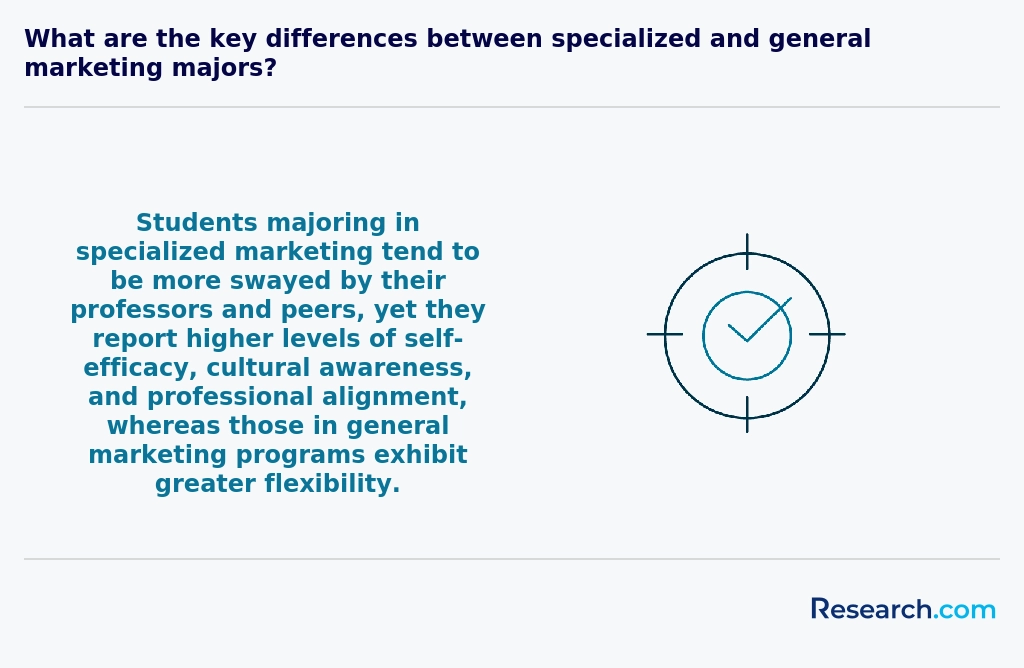
Marketing degrees in America typically offer a range of specializations that help students tailor their education to specific career paths. Popular focus areas include digital marketing, where graduates from universities like the University of Southern California develop skills in online advertising and SEO, directly preparing them for fast-paced, data-driven roles. Many students passionate about brand management find specializations at schools such as the University of Pennsylvania valuable, learning strategies to build and maintain strong brands in competitive markets. Those interested in data analysis often select market research and analytics, gaining expertise in interpreting consumer behavior to guide strategic decisions, a trend growing rapidly across American colleges.
To navigate these choices effectively and find affordable marketing degree specializations in usa institutions, it helps to explore programs thoroughly. Graduates from state universities often highlight practical internship opportunities and the chance to engage in real campaigns, sharpening their skills in advertising, sales management, or international marketing. Prospective students can also check the digital marketing degree requirements to align coursework with their career goals and budget.
Choosing the best marketing degree in America means prioritizing accreditation, curriculum relevance, and cost. Graduates from well-known universities often highlight how AACSB-accredited programs gave them confidence that their education met national standards and employers recognized their qualifications. Balancing foundational marketing principles with modern skills like digital marketing and data analytics is key-students appreciated programs offering hands-on projects and internships tied to real companies in major business hubs.
Costs vary widely. Many find that considering in-state tuition or private university prices helps plan finances better. For those seeking the best affordable marketing degrees in the USA, exploring financial aid and scholarships is essential. A strong program reputation, reflected in graduate employment rates above 80%, motivates students to choose schools that build employer connections and offer specialized tracks aligned with career goals.
Flexibility also matters. Some graduates value online or hybrid formats that support working students. Location near thriving markets fuels networking opportunities and internships. For detailed options, prospective students can consult the Most Affordable Marketing Degree Programs Ranking in Maryland to find programs balancing quality and affordability.
Graduates with a marketing degree in America often pursue a variety of career paths such as market research analyst, marketing manager, brand manager, digital marketing specialist, and sales manager. At well-known institutions like the University of Michigan or New York University, students gain hands-on experience that directly prepares them for these roles, which are thriving in sectors like retail, healthcare, and technology. Many graduates find satisfaction in digital marketing positions, reflecting the 60%+ demand for digital skills noted by industry reports. These practical skills open doors to dynamic roles that evolve with trends like social media and e-commerce.
Marketing degree career opportunities in USA also extend to public relations, content creation, and product management, where communication and strategy are vital. Graduates often share how internships at popular colleges have helped them build networks and boost confidence. For students mindful of costs, exploring affordable programs or seeking certifications that pay the most can enhance job prospects without overspending.
The job market for marketing degree holders in America remains strong, with steady demand across sectors like retail, technology, and healthcare. Graduates from well-known programs at universities such as those in New York City and San Francisco often find themselves quickly employed, leveraging both theoretical knowledge and hands-on skills. Many marketing students share how internships and practical experience with digital tools helped them land roles ranging from marketing coordinators to brand managers.
For those considering career outlook for marketing graduates America, the roles available offer competitive salaries that grow with experience. Entry-level positions typically start around $45,000 to $55,000 annually, while advanced analysts or managers skilled in data analytics and digital marketing can earn significantly more. Location matters-metropolitan areas like San Francisco and Seattle tend to provide higher wages due to their vibrant business environments.
Students exploring affordability alongside opportunity can look into the easiest online associates degree programs, which help reduce costs without sacrificing access to this thriving marketing degree job opportunities USA.
2027 Most Affordable Marketing Degree Programs Ranking in the USA
Investing in your education is a significant decision that can profoundly impact your career, and the Research.com team recognizes the importance of providing trustworthy information to guide prospective students. To support those seeking affordable marketing degree programs in the USA, we have diligently developed the "2027 Most Affordable Marketing Degree Programs Ranking in the USA." Our commitment to quality, credibility, and accuracy is evident through the extensive research and analysis behind this ranking.
We utilized the following reputable data sources to ensure a comprehensive evaluation of marketing programs:
By exploring this ranking, readers will gain valuable insights into cost-effective marketing degree options across the USA, enabling them to make well-informed educational choices that align with their goals and financial considerations. For more information about our ranking process, please visit the Research.com methodology page.


# 13 position
Ensign College
Bachelor of Science in Marketing
# 15 position
Western Governors University
Bachelor of Science in Marketing


# 17 position
University of Southern Mississippi
Bachelor of Science in Business Administration in Marketing


Frequently Asked Questions About marketing
Marketing degree students in America can maximize their learning by engaging in internships, which 70% of marketing programs encourage to gain practical skills (National Association of Colleges and Employers, 2023). Real-world experience complements classroom knowledge, helping students understand consumer behavior and digital marketing trends.
Active participation in student marketing clubs or organizations enhances networking opportunities and leadership skills. These groups often host events with industry professionals, providing insights into evolving market strategies.
Taking advantage of resources like university career centers and attending marketing conferences broadens perspectives and exposes students to current industry challenges and solutions.
Additionally, staying updated with reports from the American Marketing Association ensures that students learn the latest data-driven marketing techniques relevant to the US market.
Emerging niches within the marketing field in America reflect rapid technological advances and shifting consumer behavior. Digital marketing continues to evolve, with areas like social media management, influencer marketing, and content marketing gaining prominence. According to the U.S. Bureau of Labor Statistics, employment in digital marketing roles is expected to grow faster than average through 2031.
Another growing area is data analytics, where marketers use big data to predict trends and personalize campaigns. This niche requires both marketing knowledge and strong technical skills. Additionally, sustainability marketing is becoming important as consumers increasingly prefer eco-friendly brands.
Finally, experiential marketing, which focuses on live events and immersive brand experiences, offers creative opportunities aligned with current consumer engagement trends.
After earning a marketing degree in America, preparing for the job market requires strategic steps. First, gaining practical experience through internships is crucial, as 70% of marketing employers prefer candidates with relevant work experience, according to the National Association of Colleges and Employers (NACE).
Next, building a professional network can significantly improve job prospects. Joining organizations like the American Marketing Association provides valuable connections and resources. Additionally, developing digital skills such as SEO, data analytics, and social media management is essential as 69% of marketing roles now demand these abilities (Bureau of Labor Statistics, 2023).
Finally, staying updated on marketing trends and certifications can enhance employability.
Employers in the United States highly value marketing graduates who combine strong analytical skills with creativity. According to the National Association of Colleges and Employers (NACE), 78% of marketing employers seek candidates proficient in data analysis and market research. This reflects the growing importance of understanding consumer behavior through numbers and trends.
Effective communication skills are also crucial. Graduates must clearly convey ideas both in writing and verbally, as 85% of organizations consider this a top priority. Digital marketing expertise, including social media and SEO knowledge, is increasingly essential due to rapid changes in marketing platforms.
Finally, teamwork and adaptability stand out. Marketing professionals must collaborate across departments and adjust strategies quickly in dynamic markets, traits emphasized in reports by the American Marketing Association (AMA).
Finding internships related to marketing degrees in America begins with leveraging your college's career services, which often partner with companies seeking marketing interns. According to the National Association of Colleges and Employers, 62% of marketing graduates secure internships through university programs. Networking plays a crucial role; attending industry events, joining marketing clubs, and connecting with professionals on LinkedIn can open doors. Websites like Handshake and internships.com also list thousands of opportunities tailored for marketing students nationwide. Additionally, applying early and customizing your resume to highlight marketing skills increases your chances, as competition for internships in popular cities like New York or Chicago remains high.
In America, earning a marketing degree significantly enhances career mobility and advancement opportunities. According to the U.S. Bureau of Labor Statistics, marketing specialists and managers often experience faster job growth than average, with a projected 10% increase through 2032. This degree equips graduates with essential skills such as data analysis, digital marketing, and strategic planning, which are highly valued across various industries.
Professionals with marketing degrees typically access higher starting salaries and have greater chances to move into leadership roles. Many firms prefer candidates who hold formal marketing education because it demonstrates knowledge of evolving market trends and consumer behavior.
Moreover, accredited programs in the U.S., including those recognized by the Association to Advance Collegiate Schools of Business (AACSB), tend to offer strong alumni networks and internship connections, further facilitating career progression.
Studying for a marketing degree in America equips students with skills that span multiple disciplines, essential for today's dynamic business environment. Marketing programs often include coursework in data analytics, psychology, communications, and technology, promoting an interdisciplinary approach.
According to the National Center for Education Statistics, over 60% of marketing programs integrate business analytics, enhancing students' abilities to interpret consumer data. This combination prepares graduates to collaborate across teams, including finance, IT, and creative sectors.
Many universities also encourage internships and project-based learning, providing real-world experience that involves cross-functional problem solving. This practical exposure strengthens adaptability and critical thinking-key for interdisciplinary roles in marketing.
Choosing between a thesis and a non-thesis marketing degree program in America depends largely on your career goals and learning preferences. Thesis programs focus on original research, ideal for students planning to pursue a PhD or careers in research and academia. According to the National Center for Education Statistics, about 30% of master's marketing students opt for thesis programs.
Non-thesis programs emphasize practical coursework and internships, preparing students for immediate employment in marketing roles. They are often shorter in duration, making them attractive for working professionals. The U.S. Bureau of Labor Statistics projects a 10% growth in marketing careers through 2032, favoring practical skills. Consider whether you prefer theoretical study or hands-on experience when deciding.
American students interested in studying marketing abroad have several options through U.S. universities and exchange programs. Many colleges partner with international institutions, offering semester- or year-long study abroad opportunities that count toward marketing degrees. Popular destinations often include Europe, Asia, and Australia, where students can gain global business insights and marketing practices. According to the Institute of International Education, over 17% of U.S. study abroad participants in 2022 chose business-related fields, including marketing. Additionally, students can enroll directly in foreign universities with marketing programs, many of which provide English-taught courses designed for international students.
Part-time jobs that complement marketing degree education in America often involve roles where students gain hands-on experience with consumer behavior and digital tools. Common positions include social media coordinator, content creator, or marketing assistant. According to the Bureau of Labor Statistics, marketing-related roles frequently require familiarity with data analysis and digital marketing platforms, skills that part-time jobs readily foster.
Internships with local businesses provide practical insight into campaign management and brand strategy, which are vital in marketing careers. Additionally, positions in retail or customer service help build communication and customer insight skills-both essential for marketing professionals.
Marketing students in America benefit from diverse networking opportunities that can significantly enhance their career prospects. Many universities host marketing clubs and student organizations that connect peers with industry professionals through workshops and guest lectures. According to the American Marketing Association (AMA), student chapters provide access to national conferences and local events, where networking with marketing experts is encouraged.
Internships are another key way students build professional connections. The U.S. Bureau of Labor Statistics highlights that practical experience gained during internships often leads to job offers.
Additionally, career fairs and alumni networks offer platforms for students to meet recruiters and experienced marketers. These events help students establish relationships that are crucial for job placement in the competitive marketing field.
Alumni networks play a critical role for marketing degree students in America by offering valuable connections that can lead to internships and job opportunities. According to the National Association of Colleges and Employers (NACE), 85% of jobs are filled through networking. Marketing-focused alumni often share industry insights, helping current students understand evolving trends like digital marketing and consumer analytics.
These networks also provide mentorship programs, enabling students to receive career advice directly from experienced professionals. Universities with strong alumni engagement see higher graduate employment rates; for example, the University of Southern California reports that 90% of its marketing graduates secure jobs within six months.
Such connections not only enhance career prospects but also support long-term professional growth in the competitive American marketing sector.
Customizing a marketing degree program in America allows students to align their studies with specific career goals. Many U.S. universities offer concentrations such as digital marketing, consumer behavior, or international marketing. Selecting relevant electives helps tailor your expertise.
Internships and cooperative education are valuable options to gain practical experience and strengthen resumes. According to the National Association of Colleges and Employers, over 60% of marketing graduates obtain internships before graduating.
Additionally, students may enhance their degrees with certifications in areas like Google Analytics or SEO, complementing academic knowledge with industry-recognized credentials.
Choosing schools that integrate hands-on projects and maintain business partnerships can further personalize your marketing education to match your ambitions.
Marketing students in America often face the challenge of keeping up with rapidly changing industry trends. Digital marketing tools and platforms evolve quickly, requiring constant learning outside of the classroom. According to the National Center for Education Statistics, many students struggle with balancing theoretical knowledge and practical skills.
Another common difficulty is the intense competition for internships and entry-level jobs, as marketing is a popular field with many graduates each year. Data from the Bureau of Labor Statistics shows that marketing roles are projected to grow 10% from 2022 to 2032, but standing out remains challenging.
Additionally, some students find mastering data analytics and consumer behavior concepts demanding, as these require both technical and creative abilities.
With a marketing degree in the United States, you can pursue several professional certifications that enhance both knowledge and career prospects. Popular options include the Certified Marketing Professional (CMP) credential, offered by organizations such as the American Marketing Association (AMA). This certification validates expertise in marketing strategy, digital marketing, and analytics.
Another key certification is the Google Ads Certification, which proves proficiency in online advertising and pay-per-click campaigns, important skills in today's digital marketing landscape. According to a 2023 AMA report, 65% of marketers believe that certifications significantly improve job opportunities.
The HubSpot Content Marketing Certification is also widely recognized for those focusing on inbound marketing and content strategy. Additionally, the Digital Marketing Institute's Professional Diploma offers a broad overview of digital marketing skills aligned with industry demands in the United States.
Applying to a marketing program in America requires clear focus and preparation. Start by researching programs accredited by the Association to Advance Collegiate Schools of Business (AACSB), which ensures quality education in marketing and business. Highlight your academic achievements, especially in economics, statistics, and communication courses, as these are crucial for marketing success.
Craft a compelling personal statement that emphasizes your passion for marketing and relevant experiences, such as internships or projects. Admissions committees appreciate applicants who demonstrate understanding of current marketing trends and digital tools.
Standardized test scores like the SAT or ACT remain important at many schools, though some have become test-optional.
According to the National Center for Education Statistics, marketing degrees in the U.S. grew 15% over the past five years, reflecting rising demand.
Marketing careers in America are shaped by both domestic market demands and global economic trends. The U.S. Bureau of Labor Statistics projects a 10% growth in marketing management jobs from 2022 to 2032, reflecting strong domestic opportunities. However, American marketers increasingly engage with international audiences, requiring knowledge of global consumer behavior, digital platforms, and cross-cultural communication.
U.S. marketing degree programs emphasize skills like data analytics and digital strategy, which are crucial for global competitiveness. According to the American Marketing Association, familiarity with international regulations and multilingual communication enhances career prospects. Many graduates find roles in multinational corporations headquartered in the U.S., blending American business practices with global marketing strategies.
Gaining practical experience during a marketing degree in America is essential for building valuable skills. Many universities offer internship programs, connecting students with companies where they can apply classroom knowledge in real-world settings. According to the National Association of Colleges and Employers (NACE), 60% of marketing graduates complete internships before earning their degree.
Students can also participate in campus-sponsored marketing clubs and case competitions, which foster teamwork and strategic thinking. Additionally, some schools provide opportunities to work on projects with local businesses or non-profits, giving hands-on experience in campaign planning and digital marketing tools.
Choosing the right concentration within a marketing degree program in America involves evaluating your career goals and interests. Popular concentrations include digital marketing, market research, advertising, and brand management. According to the U.S. Bureau of Labor Statistics, marketing specialists focusing on digital skills are expected to grow 10% from 2022 to 2032, faster than average for all occupations.
Consider the curriculum offered by universities and how it aligns with emerging trends in marketing. Practical experience, such as internships and project work, is crucial. Additionally, review how concentrations prepare you for certifications like Google Analytics or HubSpot, which are valued in the US job market. Evaluate schools accredited by bodies like AACSB or ACBSP for quality assurance.
See What Experts Have To Say About Studying Marketing
Read our interview with Marketing experts

Sonya A. Grier, Ph.D.
Marketing Expert
Professor, Department of Marketing
American University

Aidin Namin, Ph.D.
Marketing Expert
Associate Professor of Marketing Analytics
Loyola Marymount University

- Digital Marketing Major https://www.kozminski.edu.pl/en/digital-marketing-major
- Niche Digital Marketing Roles: Exploring Specialized Career Paths https://www.cellainc.com/insights/blog/niche-digital-marketing-roles-exploring-specialized-career-paths/
- Why study Marketing? https://blogs.tees.ac.uk/students/2024/04/15/why-study-marketing-2/
- What Are Market Niches? Includes Benefits And Expert Insights https://seekmarketingpartners.com/digital-marketing-blog/what-are-market-niches/
- How to Get a Summer Internship in Marketing in 2026 (Agency, In-House, and Startup) https://whali.co.uk/blog/summer-internship-marketing-guide
- Best Marketing Certifications for Your Marketing Career https://www.business.com/articles/guide-to-marketing-certifications/
- Outstanding Job Application Letter for Marketing Manager | Cover Letter Copilot https://coverlettercopilot.ai/blog/job-application-letter-marketing-manager
- 12 Major Marketing Challenges and How to Address Them | NetSuite https://www.netsuite.com/portal/resource/articles/erp/marketing-challenges.shtml
- Career Goals: 17 Inspirational Examples for you in 2026 https://www.imd.org/blog/learning-and-development/career-goals/
- 11 Best Marketing Schools in the US in 2023 https://www.kingseducation.com/kings-life/best-marketing-schools-in-the-us