
2027 Most Popular Finance Degree Programs Ranking in Georgia

Co-Founder and Chief Data Scientist
Choosing the right finance degree program in Georgia can be overwhelming with so many options available. This article presents the 2027 Most Popular Finance Degree Programs Ranking in Georgia, created by the Research.com team of data scientists to help you make an informed decision.
By exploring this ranking, you'll discover programs that align with your goals and boost your career potential. Earning a finance degree opens doors to exciting opportunities, financial stability, and personal growth.
Keep reading to find the best fit for your future ambitions and feel confident about your next steps.
Key benefits of getting finance degree in Georgia
- Finance degree graduates in Georgia can expect strong earning potential, with roles such as Financial Advisors earning a mean annual wage of $150,670 and Financial Analysts making around $112,950 per year.
- Career paths for finance graduates from universities like the University of Georgia include opportunities in banking, investment, insurance underwriting, and credit analysis, providing diverse options to grow professionally.
- Obtaining a finance degree online from institutions like Kennesaw State University offers flexibility, allowing students to balance work and study while still accessing valuable career resources and networking opportunities.
- 2027 Most Popular Finance Degree Programs Ranking in Georgia
- What can I expect from finance degree in Georgia?
- Where can I work with finance degree in Georgia?
What can I expect from finance degree in Georgia?
The average cost of earning a finance degree in Georgia varies significantly depending on the type of institution. Graduates from public universities, like the University of Georgia, often pay around $12,000 per year for in-state tuition, which makes pursuing a bachelor's degree more affordable if you qualify as a resident. Many students find this option practical because it balances quality education with manageable expenses.
Private colleges in Georgia typically charge higher tuition, sometimes double that of public universities. However, graduates often share how the additional cost can be worthwhile, as these institutions usually provide valuable networking opportunities and access to internships in Atlanta's bustling financial district. These real-world experiences can make a tangible difference when starting a career in finance.
Considering expenses beyond tuition, such as books, fees, and living costs, planning a budget around $15,000 to $20,000 annually is realistic for many students. Taking advantage of internships offered through programs helps offset costs and adds critical experience, which multiple graduates highlight as essential for landing good jobs after graduation.
Where can I work with finance degree in Georgia?
Graduates with a finance degree from institutions like the University of Georgia or Georgia State University often find themselves stepping directly into Atlanta's bustling financial sector. Many land roles in banking and investment firms, benefiting from the city's status as a Southeast financial hub. Working at major institutions such as Truist Financial offers hands-on experience in corporate finance, helping graduates build confidence and valuable skills early in their careers.
Others discover career options in financial analysis, risk management, or planning. For example, finance graduates from Georgia Tech have shared how internships in advisory firms gave them a real-world edge, boosting earnings to well above the $83,000 median annual wage reported statewide. Realistically, these roles involve managing assets and crafting growth strategies for clients, blending analytical thinking with clear communication.
Public sector jobs are also a viable path. Graduates working for the Georgia Department of Revenue or local government finance offices experience steady career growth while applying budgeting and auditing skills learned in college. These positions appeal especially to those valuing job security and structured advancement.
Finally, expanding industries like fintech, insurance underwriting, and real estate finance provide diverse opportunities, particularly in Georgia's dynamic economy. Practical experience paired with a Georgia-based finance degree creates multiple pathways to rewarding, stable careers aligned with your unique interests.
Graduates with a finance degree in Georgia can expect to earn solid salaries that reflect their growing expertise. For example, financial analysts-one of the most common roles for new graduates from schools like the University of Georgia or Georgia State University-have a mean annual wage of about $112,950 according to the latest BLS data. Many beginners start between $55,000 and $65,000, but practical experience and networking in Atlanta's bustling financial sector often propel early careers beyond $100,000 within a few years.
Roles such as financial advisors offer even higher earnings, with a mean salary near $150,670, highlighting the value of pursuing advanced certifications or specialized positions. Credit analysts typically pull in around $94,750 annually, while investment banking analysts also average about $112,950, reinforcing the advantage of targeting metropolitan job markets.
Graduates from Georgia's well-regarded finance programs often find their degree acts as a springboard into these roles, with salaries rising steadily as expertise deepens and local financial hubs provide ample opportunity.
- Annual tuition for finance degrees in Georgia ranges from about $10,000 to $12,000 at public universities and can exceed $25,000 at private institutions.
- Additional costs to consider include fees, books, and living expenses when budgeting for a finance degree.
- The average starting salary for finance graduates in Georgia is around $55,000 per year, varying by location and employer.
- Mid-career finance professionals typically earn about $85,000 annually, with higher salaries for senior and specialized roles.
- Georgia's finance job market is strong, especially in Atlanta, where many financial institutions and fintech companies offer opportunities.
- Many finance programs in Georgia provide internship opportunities and strong employer connections to help with job placement.
Completing a finance degree in Georgia usually takes about four years for most full-time undergraduates, especially at well-known schools like the University of Georgia or Georgia State University. Many graduates recall starting with a clear four-year plan, balancing coursework and internships, which helped them finish right on time. Taking advantage of credits from Advanced Placement or dual enrollment in high school can speed up the timeline, allowing some to wrap up sooner.
Graduate finance degrees, such as a Master of Science in Finance or an MBA with a finance focus, typically require one to two years of full-time study. Working professionals attending part-time programs often extend their completion time to around three years, which fits well with busy schedules.
Students juggling jobs have found part-time study in Georgia's flexible programs helpful despite taking longer. The consistent tuition rates at public universities, ranging between $4,000 and $6,000 annually, make financial planning smoother, encouraging steady progress toward graduation.
Choosing between online and on-campus finance degrees in Georgia often boils down to how you want to balance education with life's demands. Graduates from Kennesaw State University who studied online appreciate the flexibility-it allowed them to work part-time or manage family responsibilities while completing coursework. This option suits anyone needing a adaptable schedule without sacrificing the comprehensive curriculum offered in traditional programs.
On-campus students at the University of West Georgia often highlight the value of face-to-face interactions and networking. Being physically present on campus meant easy access to finance clubs, career services, and local internships in Atlanta's finance sector-an advantage that helped many secure job offers before graduation.
Cost-wise, in-state tuition for on-campus finance programs typically ranges from $8,000 to $10,000 annually, which is generally more affordable than some online options once you factor in additional fees. However, online learners save on commuting and housing costs, making it a practical choice depending on your situation.
Both paths ensure quality education through accredited programs, so consider your learning style, budget, and career priorities when deciding. Georgia's diverse offerings make it possible to tailor your degree to fit your life.
Understanding the return on investment (ROI) of a finance degree in Georgia is essential for prospective students weighing costs against future earnings. On average, bachelor’s degree holders in finance incur tuition and fees between $40,000 and $120,000 over four years, depending on residency and institution type. With median starting salaries ranging from $65,000 to $85,000 and mid-career earnings often surpassing $100,000, most graduates recoup their educational investment within three to five years. Several factors influence ROI:
- Total Cost of Attendance: Public in-state tuition averages $12,000 per year, while private institutions may cost upwards of $35,000 annually. Factoring in living expenses and fees, the four-year investment can vary significantly.
- Income Trajectory: Entry-level roles such as financial analysts earn a mean annual wage of $75,000, climbing to $95,000 within five years. Specialized positions-like business analysts-offer competitive compensation and clear advancement paths; for details on necessary qualifications, review our guide on business analyst requirements.
- Break-Even Analysis: Assuming an average total cost of $80,000 and starting salary of $75,000, graduates typically reach break-even in under four years. Those securing internships or co-ops during their studies often accelerate this timeline through higher starting offers.
- Long-Term Gains: Over a 20-year career, cumulative earnings can exceed $2 million, excluding bonuses and equity incentives common in financial services and corporate roles. Beyond quantifiable returns, a finance degree delivers intangible benefits-strong alumni networks, access to industry conferences, and mentorship programs-that amplify career growth. When ROI is measured holistically, the value of a finance education in Georgia becomes unmistakably clear for students committed to maximizing both financial and professional outcomes.
The average cost of a finance degree in Georgia varies significantly depending on whether you attend a public or private institution. For in-state students at public universities, like the University of Georgia or Georgia State University, the median total cost typically hovers around $6,106 per year in tuition and fees. Graduates from these public schools often recall balancing affordability with a strong educational foundation, which helped them feel confident about their investment. This estimate fits well within the broader average cost of finance degree tuition and fees Georgia students face when seeking an accessible yet reputable program.
Out-of-state students, however, can expect to pay closer to $33,829 total, which is a substantial increase. Private colleges such as Emory or Mercer University often exceed this, with tuition reaching upwards of $30,000 per year. Finance students at these institutions describe the experience as prestigious and rewarding, but they emphasize the importance of budgeting for additional expenses like living costs, books, and fees that can add thousands more annually.
Room and board, supplies, and fees typically range from $10,000 to $15,000 annually, making practical planning essential. Fortunately, programs such as the HOPE Scholarship reduce costs for many in-state students, making this degree more attainable. Students balancing these expenses often explore financial aid or scholarships and carefully weigh what their net cost will be after support.
Those preparing for a career in finance should also consider the broader career path and the associated business analyst requirements as part of their planning. Understanding and realistically calculating the average cost of finance degree in Georgia allows prospective students to make informed decisions and pursue their goals with confidence.

When financing a finance degree in Georgia, federal aid like the Pell Grant is a solid starting point-offering up to $7,395 annually without the stress of repayment. Graduates from the University of Georgia often highlight how this grant, combined with the HOPE Scholarship, which can cover around 80% of public tuition costs, made a major difference in affordability. The HOPE programs reward consistent academic effort, so maintaining good grades pays off directly in dollars saved.
Beyond scholarships, students at Georgia State University frequently use federal Direct Subsidized and Unsubsidized Loans to cover remaining costs, benefiting from lower interest rates and flexible repayment plans compared to private loans. Work-study jobs tied to finance departments also help students earn as they learn, easing day-to-day expenses while building valuable experience.
Many finance students recommend checking for institutional merit scholarships offered by colleges like Emory University, which can range from a few thousand dollars up to full tuition remission based on performance and need. Finally, employer tuition assistance programs are a practical option for those already working, especially in Atlanta's thriving financial sector, adding an extra layer of support without sacrificing income.
To enroll in a finance degree program in Georgia, you need a high school diploma or GED with strong math skills. Graduates from the University of Georgia often recall how excelling in algebra and calculus helped them breeze through tough finance courses. Many universities expect SAT or ACT scores, though some are test-optional now; a solid score around 1330 on the SAT can really boost your application at schools like UGA.
Transcripts should show coursework in relevant subjects such as economics and statistics. Some students from Georgia State University found their prior exposure to business classes gave them an edge, making foundational courses easier to manage. While internships aren't always required, hands-on experience in finance-related roles often made peers feel confident and job-ready.
Don't forget to complete all university admission steps: applications, essays, and recommendation letters play a big role in showing your motivation. The whole process, while detailed, becomes manageable when broken down step-by-step, as many successful Georgia students have experienced.
A robust finance curriculum in Georgia typically consists of a blend of core courses, electives, and experiential learning designed to build both quantitative expertise and practical decision-making skills. Core classes often include Financial Accounting, Corporate Finance, Investment Analysis, and Risk Management. For example, Financial Accounting lays the groundwork for understanding balance sheets and cash-flow statements, while Corporate Finance delves into capital budgeting and cost of capital-essential topics for any aspiring financial analyst. Elective offerings allow students to tailor their studies toward emerging fields such as FinTech, Behavioral Finance, or Sustainable Investing. At institutions like Georgia State University, electives in data analytics and financial modeling leverage software tools to simulate market conditions, preparing graduates for the demands of modern financial roles. Many programs also require a Quantitative Methods course, which covers statistics and econometrics, ensuring that students can interpret large datasets and perform rigorous market forecasts. In addition to traditional coursework, most Georgia finance programs integrate a capstone project or internship component, enabling students to apply theory to real-world scenarios. Capstone seminars may involve consulting for local businesses, while internships-often facilitated through campus career centers-offer hands-on experience in banking, wealth management, or corporate finance. These experiential learning opportunities are critical for building professional networks and demonstrating job readiness to future employers. When comparing program structures and overall investment, prospective students should also weigh affordability alongside academic rigor. Those interested in cost-effective options can explore our Affordable Finance Degree Programs Ranking in Saint Paul, MN to understand how curriculum quality and tuition rates intersect in different regions.
If you're aiming for a finance degree in Georgia, expect a curriculum that blends practical skills with essential theory. Students from well-known schools like the University of Georgia or Georgia State University often highlight core courses such as Financial Accounting and Managerial Accounting-these lay the groundwork by teaching you how companies track and use money daily.
From there, focus shifts to essential finance topics. Courses in Corporate Finance will have you analyzing real business decisions on investments and capital structure, while Investments classes often simulate managing a portfolio, helping you grasp market behaviors firsthand.
Many graduates find Financial Markets and Institutions eye-opening because they explain how banks and markets operate both within Georgia's economy and globally. Risk Management coursework arms you with tools to spot and reduce financial threats, which feels empowering when thinking about real-world business challenges.
Electives like International Finance or Financial Modeling prepare students for global roles or data-driven decision-making, a must-have skill in Atlanta's dynamic finance sector. These classes ensure you're not just trained but ready, confident, and eager to step into Georgia's competitive finance workforce.
Finance degree specializations in Georgia typically include Corporate Finance, where students learn to manage a company's capital budgeting and mergers, preparing them for strategic corporate roles. Graduates from popular universities in Atlanta often highlight how hands-on projects made complex topics feel achievable and directly relevant to finance careers. Another well-regarded option is Investment Management, which teaches analysis of markets and portfolio management, especially valuable given Atlanta's financial hub status that offers rich internship opportunities.
Types of finance majors available in Georgia also include Financial Planning, focused on retirement and tax strategies, perfect for students aiming to advise clients on wealth building. Risk Management and Insurance stand out as practical areas that teach risk evaluation skills, useful in Georgia's fluctuating markets. Quantitative Finance attracts students who enjoy mathematical modeling and financial data analysis, combining technical rigor with career-ready skills widely appreciated by finance graduates.
For those researching options, checking the Affordable Finance Degree Programs Ranking in Saint Paul, MN can provide comparable insights on program costs and specializations, assisting in informed decision-making.
Start by verifying the accreditation and reputation of finance programs in Georgia. Graduates from schools like the University of Georgia or Georgia State University often praise how AACSB accreditation boosted their confidence and helped secure internships in Atlanta's competitive financial sector. These institutions offer curricula rich in investment analysis and risk management, which graduates say prepared them for real-world challenges. When researching, prioritize programs with strong ties to local firms such as Truist Financial and Equifax, to benefit from internship and job placement opportunities.
Cost also matters-look into affordable finance colleges in Georgia, especially public options with in-state tuition benefits. Graduates have shared how scholarship support made a big difference in managing expenses. Consider delivery formats too; many find that hybrid and online degrees offer the flexibility needed to balance work and study without sacrificing quality.
Exploring accelerated programs can also be a smart move if you want to complete your degree faster and enter the workforce sooner, gaining relevant experience with less delay.

Graduates with a finance degree in Georgia have access to diverse career paths supported by the state's dynamic economy. Many find roles as financial analysts, investment bankers, or corporate finance specialists, especially around Atlanta's bustling financial hubs. For example, graduates from popular universities in Georgia often land positions at major banks or consulting firms, experiencing firsthand the competitive wages and growth opportunities in these sectors. This practical career trajectory satisfies both ambition and financial goals.
Other common paths include risk management and wealth management, where graduates help businesses and individuals navigate complex financial decisions. As fintech expands rapidly in Georgia, recent finance degree holders are entering data analysis and financial technology roles, gaining hands-on experience in innovative environments. Students at Georgia colleges also benefit from programs aligning with certifications like CFA or CFP, boosting their employability.
Those weighing options should consider that a finance degree offers flexibility to explore careers with finance degrees in Georgia without being locked into one field. For some, pursuing the easiest degree to get alongside finance courses helped create unique niche roles in financial services, combining skills and broadening opportunities.
The job market for a finance degree in Georgia is strong, particularly for graduates from universities like the University of Georgia and Georgia State University. These schools provide graduates with the skills local employers in Atlanta's banking and financial services sectors seek. Many finance graduates quickly find roles as financial analysts, risk managers, or compliance officers, with entry-level salaries typically between $55,000 and $70,000. This reflects a solid start in a market projected to grow about 7% for financial analyst jobs through 2032.
Graduates benefit from Georgia's affordable in-state tuition rates, which make earning a finance degree less financially stressful. Many feel confident pursuing positions at prominent local firms such as Truist Financial or the Federal Reserve Bank of Atlanta. More advanced roles, like finance manager, can command median salaries over $130,000 in the state, demonstrating clear pathways for career advancement. Considering fields adjacent to finance, such as insurance and real estate, can also broaden opportunities.
For students weighing their options, exploring what majors make the most money out of college is a practical step toward maximizing career outcomes while studying finance in Georgia.
2027 Most Popular Finance Degree Programs Ranking in Georgia
Investing in your education is a significant decision that can shape your career path, and the Research.com team recognizes the importance of providing trustworthy guidance. To assist prospective students in Georgia, we have carefully developed the "2027 Most Popular Finance Degree Programs Ranking in Georgia." Our dedication to quality, credibility, and accuracy is demonstrated through rigorous research and thorough analysis in compiling this ranking.
We utilized the following reputable data sources to ensure a comprehensive evaluation of finance degree programs:
By reviewing this ranking, readers will gain valuable insights into the most popular and credible finance programs in Georgia, empowering them to make informed educational decisions. For more details on our methodology, please visit our Research.com methodology page.


Frequently Asked Questions About finance
Finance degree students in Georgia can maximize their learning experience by engaging with local industries and financial institutions in Atlanta, the state's economic hub. Internships at major banks and firms like SunTrust or Equifax provide practical skills crucial for career readiness.
Participating in campus-affiliated finance clubs and organizations helps students build networks and apply classroom knowledge through case competitions and workshops. Access to resources such as the Georgia Department of Economic Development's reports offers insight into regional market trends, enhancing academic understanding.
Additionally, students should consider certifications like CFA or CFP alongside their degrees to improve job prospects in Georgia's competitive finance sector.
The finance field is evolving rapidly, with several emerging niches gaining attention. In Georgia, fields like financial technology (fintech) are expanding, driven by Atlanta's growing startup ecosystem. Fintech blends finance with technology, focusing on innovations such as digital payments and blockchain. Another niche is sustainable finance, which involves investments that support environmental and social governance (ESG) goals. Demand for experts in this area is rising nationally and locally as companies prioritize responsible investing.
Wealth management tailored to millennials and Gen Z is also growing, as these groups seek personalized financial planning. According to the Georgia Department of Labor, roles in these specialized areas are expected to grow faster than average through 2030.
After earning a finance degree in Georgia, preparing for the job market involves several strategic steps. First, gaining practical experience through internships or cooperative education programs is crucial. Georgia's Atlanta metropolitan area hosts many financial institutions, providing valuable opportunities for hands-on learning. According to the Georgia Department of Labor, the finance sector is projected to grow by 5% through 2030, signaling steady demand for entry-level professionals.
Networking is equally important. Graduates should attend local finance meetups and career fairs, especially those organized by universities or professional groups such as the Georgia Finance Authority. Obtaining certifications like the CFA or CPA can also enhance employability and professional credibility in Georgia's competitive market.
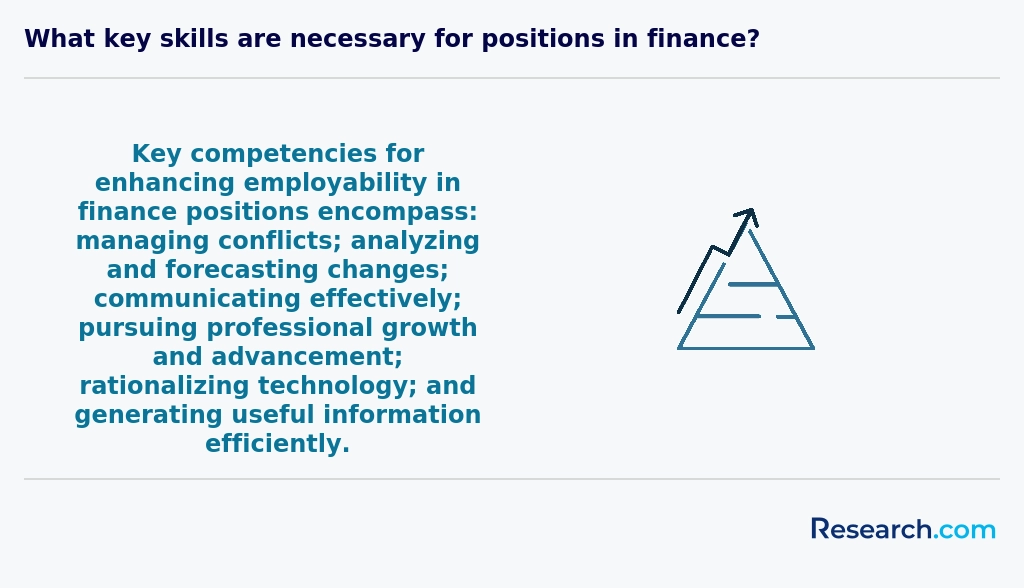
Employers in Georgia seek finance degree graduates with strong analytical and quantitative skills. Finance professionals must be comfortable working with complex data to support investment, budgeting, and financial planning decisions. According to the Georgia Department of Labor, candidates proficient in Excel, financial modeling, and data interpretation are highly preferred.
Communication skills also rank high as finance roles often require explaining financial concepts to non-experts. Attention to detail is critical, given the regulatory environment in Georgia's banking and investment sectors.
Additionally, knowledge of financial software like QuickBooks and SAP increasingly boosts employability. Many Atlanta-based finance employers value adaptability and ethical decision-making as well.
Finding internships in Georgia relevant to a finance degree begins with targeting companies in key financial hubs such as Atlanta, which hosts major banks, investment firms, and corporate headquarters. According to the Georgia Department of Economic Development, Atlanta is home to over 150 finance-related companies, making it an ideal location for internship opportunities.
Students should utilize university career centers, which often partner with local businesses to connect students with internships tailored to finance. Websites like GeorgiaFIN (the state's financial services association) also list internships and networking events that are industry-specific.
Networking is vital. Attending finance-related conferences, joining student finance clubs, and using LinkedIn to connect with finance professionals in Georgia can increase internship prospects. Many internships in Georgia offer hands-on experience in financial analysis, portfolio management, and accounting, providing a valuable springboard into the finance industry.
In Georgia, earning a finance degree significantly enhances career mobility and advancement opportunities. The state's growing financial sector, especially in Atlanta-home to major firms like SunTrust and Equifax-creates a strong demand for finance graduates. According to the Georgia Department of Labor, finance-related jobs are projected to grow 7% through 2030, outperforming many other industries. This growth provides entry points for graduates and potential for upward movement into roles like financial analyst, advisor, and manager.
Finance degrees offer foundational skills in financial analysis, risk management, and financial planning, which are highly valued by employers across multiple industries in Georgia. Additionally, graduates often benefit from professional networking opportunities provided by state universities and regional finance organizations, aiding career progression.
Studying for a finance degree in Georgia equips students with skills that extend beyond traditional finance roles. Programs often integrate courses in economics, accounting, and data analysis, fostering versatile expertise. This interdisciplinary approach enables graduates to tackle complex financial problems using knowledge from related fields.
Georgia's growing industries, including technology and logistics, demand professionals who understand finance within diverse contexts. According to the Georgia Department of Labor, finance-related jobs are expected to grow by 10% through 2030, reflecting the value of adaptable skill sets. Partnerships between universities and local businesses also help students gain practical experience across multiple disciplines.
Moreover, the rise of financial technology in Atlanta offers unique opportunities for those with mixed knowledge of finance and IT. Overall, Georgia's finance education prepares students for dynamic careers requiring multidimensional insights.
When choosing between a thesis and a non-thesis finance degree program in Georgia, consider your career goals and learning preferences. A thesis program emphasizes research, requiring students to conduct original studies and write a comprehensive paper. This path is ideal for those aiming for doctoral studies or careers in research and academia.
Non-thesis programs focus more on coursework and practical skills, often preferred by students seeking immediate employment in Georgia's finance sector, including Atlanta's growing financial services industry. According to the Georgia Department of Labor, finance jobs in the state are projected to grow 7% through 2030, emphasizing applied knowledge.
Cost and time investment also play a role: thesis programs may take longer due to research demands.
Students based in Georgia who wish to study finance abroad have several pathways through U.S. university exchange programs and study abroad opportunities. Many institutions in Georgia, such as the University of Georgia and Georgia State University, maintain partnerships with universities in Europe and Asia, enabling finance students to earn credits overseas. According to the Institute of International Education, about 7% of finance majors nationally participate in study abroad programs, reflecting growing interest.
Additionally, students can explore summer programs and internships abroad that focus on international finance and economics. Financial aid and scholarships are often available, helping Georgia students manage expenses while gaining global experience.
Students pursuing finance degrees in Georgia can benefit from several part-time job opportunities that enhance their education and build practical skills. Popular roles include financial analyst internships, bookkeeping positions, and bank teller jobs, which offer real-world exposure to financial operations. According to the Georgia Department of Labor, the finance and insurance sector is growing steadily, creating ample opportunities for students to gain work experience.
Many students also find part-time work as tax assistants during tax season, providing hands-on knowledge of tax regulations. Additionally, roles in credit counseling and budgeting assistance help develop essential financial planning skills. These jobs complement academic studies and improve employability after graduation.
Finance students in Georgia benefit from a variety of networking opportunities that connect them with professionals and potential employers. Universities such as the University of Georgia and Georgia State University host finance-focused events, career fairs, and guest speaker sessions featuring industry leaders. According to the Georgia Department of Economic Development, the state's robust finance sector, including Atlanta's position as a major financial hub, offers ample internships and mentorship programs for students.
Professional organizations like the Financial Executives International (FEI) Georgia chapter and local CFA Society events provide additional platforms for networking. These opportunities help students build relationships crucial for career advancement in finance.
Alumni networks offer considerable benefits for finance degree students in Georgia by providing access to valuable professional connections. Graduates from Georgia's top universities often engage in active networking, which can lead to internships, job opportunities, and mentorship within the state's robust financial sector, including Atlanta's growing fintech industry.
According to the Georgia Higher Education Coordinating Board, over 60% of recent finance graduates find employment through alumni referrals. This network also supports career development by sharing industry insights and hosting events that connect current students with experienced professionals.
Such connections are crucial in finance, where relationships often influence hiring decisions, especially in competitive markets like Georgia.
Students pursuing a finance degree in Georgia can customize their programs by selecting specialized electives aligned with their career goals. Many universities offer concentrations such as corporate finance, investment analysis, or financial planning. This allows students to develop expertise in areas like risk management or asset valuation.
Internship opportunities with Atlanta's growing financial sector, including banks and investment firms, provide practical experience to complement academic studies. Additionally, some schools offer dual-degree options or certificates in areas like data analytics or accounting, increasing marketability.
According to the Georgia Department of Labor, finance-related occupations are expected to grow by 11% through 2030, emphasizing the importance of tailored education to meet evolving industry demands.
Finance students in Georgia often face several common challenges throughout their academic journey. One major difficulty is mastering complex quantitative skills, including advanced mathematics and statistics, which are essential for understanding financial models and analysis. Many students report struggling with these subjects, particularly if their background in math is limited.
Additionally, the competitive job market in Atlanta and other major cities in Georgia can create pressure to gain relevant internships and networking opportunities early. According to the Georgia Department of Labor, finance-related roles are expected to grow by 8% through 2030, increasing demand for experienced candidates.
Students also encounter challenges balancing coursework with part-time jobs or family responsibilities, a common situation in Georgia's diverse student population. Finally, staying updated with rapid changes in financial regulations and technology demands continuous learning beyond the classroom.
With a finance degree in Georgia, students can pursue several professional certifications to enhance their careers. Popular options include the Chartered Financial Analyst (CFA), which is highly respected in investment management. The CFA credential requires passing three exams focusing on portfolio management and ethical standards.
Another well-known certification is the Certified Public Accountant (CPA), especially valuable for those interested in accounting and financial reporting. Georgia's Board of Accountancy regulates CPA licensing, requiring education and an exam.
Other certifications include the Certified Financial Planner (CFP) and Financial Risk Manager (FRM), which broaden opportunities in personal finance and risk assessment. According to the Georgia Department of Labor, finance-related jobs requiring certifications grew by 8% from 2019 to 2023.
To write a winning application for a finance program in Georgia, start by researching schools thoroughly. Highlight your academic strengths, especially in mathematics and economics, as these are crucial for finance. Georgia's universities, like the University of Georgia and Georgia State, value strong quantitative skills and relevant coursework.
Include clear, concise personal statements explaining why you chose finance and how it aligns with your career goals. Mention any internships or work experience in finance or business, as practical exposure strengthens applications.
Georgia's labor market for finance professionals grows steadily; according to the Georgia Department of Labor, demand for financial analysts is expected to rise by 10% through 2030. Demonstrating awareness of this can impress admissions.
The global perspective on a finance career highlights the growing demand for skilled professionals who understand international markets and regulations. Finance degrees from Georgia equip students with strong analytical and decision-making skills, preparing them for roles in global banking, investment, and corporate finance.
According to the U.S. Bureau of Labor Statistics, finance jobs are expected to grow by 17% nationally from 2022 to 2032, which applies to Georgia as well due to its expanding business sectors. Many employers value graduates with knowledge of global financial systems and cross-border transactions.
Studying finance in Georgia offers access to companies engaged in international commerce, such as those in Atlanta, a major financial hub. This local environment supports understanding global finance trends while remaining grounded in U.S. regulatory frameworks.
Gaining practical experience while studying for a finance degree in Georgia is crucial to building a competitive edge. Many institutions encourage internships with local businesses, banks, and financial firms based in Atlanta, the state's financial hub. Internships often last from a semester to a summer, providing hands-on experience in areas such as asset management and corporate finance.
Students can also join finance-related student organizations or clubs, which sometimes collaborate with industry professionals for workshops and networking events. According to the Georgia Department of Economic Development, nearly 400 finance-related companies operate statewide, offering ample opportunities for real-world exposure.
Additionally, some universities partner with regional financial institutions to offer cooperative education (co-op) programs, blending classroom learning with paid work placements. These experiences help students apply theory to practice and enhance their resumes before graduation.
Choosing the right concentration within a finance degree program in Georgia depends on your career goals and interests. Common concentrations include corporate finance, investment banking, financial planning, and risk management. Georgia's diverse economy, with strengths in banking and logistics, favors concentrations in corporate finance and financial analysis. According to the Georgia Department of Labor, jobs in financial analysis are projected to grow by 9% through 2030, indicating strong local demand.
Research the curriculum and internship opportunities available in your program. Programs linked to Atlanta's financial sector can offer practical experience. Also, consider certifications like CFA or CFP, which align with specific concentrations and enhance employability.
- 2027 Most Popular Finance Degree Programs Ranking in Florida
- 2027 Most Popular Finance Degree Programs Ranking in Alabama
- 2027 Most Popular Finance Degree Programs Ranking in Mississippi
- 2027 Most Popular Finance Degree Programs Ranking in Kentucky
- 2027 Most Popular Finance Degree Programs Ranking in Louisiana
- 2027 Most Popular Finance Degree Programs Ranking in Arkansas
- 2027 Most Popular Finance Degree Programs Ranking in Missouri
- 2027 Most Popular Finance Degree Programs Ranking in Indiana
- 2027 Most Popular Finance Degree Programs Ranking in Ohio
- 2027 Most Popular Finance Degree Programs Ranking in Maryland
See What Experts Have To Say About Studying Finance
Read our interview with Finance experts

Jason James Sandvik
Finance Expert
Assistant Professor of Finance
University of Arizona

H. Kent Baker
Finance Expert
Professor at Department of Finance and Real Estate
American University

Andrew Karolyi
Finance Expert
Dean of the Cornell SC Johnson College of Business
Cornell University

- Finance Jobs and Internships in Georgia https://www.iagora.com/work/en/jobs-and-internships/finance/georgia
- FINANCE AND BANKING (THESIS / NON-THESIS) - Lisansüstü Eğitim Enstitüsü https://lee.nisantasi.edu.tr/en/finance-and-banking-thesis-non-thesis-2/
- 2026 Finance Career Outlook: Top 7 Global Roles, Salaries & Skill Requirements | Saraf Academy https://saraf.academy/top-7-global-finance-careers-in-2025-skills-salaries-and-the-best-courses-to-get-you-there/
- Must-Have Skills for Accounting & Finance Graduates Entering Singapore’s Competitive Job Market https://www.lsbf.edu.sg/blog/accountancy-and-finance/must-have-skills-for-accounting-finance-graduates-entering-singapores-competitive-job-market
- Finance B.S. https://www.gcsu.edu/business/economics/finance-bs
- Your Guide to Getting a Job in Finance https://www.mountunion.edu/academics/undergraduate-degrees/finance/your-guide-to-getting-a-job-in-finance
- Is Finance a Good Career Path? Predictions for 2040 https://mergersandinquisitions.com/is-finance-a-good-career-path/
- Glossary https://www.pathways2gsfa.org/federal-aid-scholarships/financial-aid-basics/glossary/
- 10 Challenges of Financial Management & How to Overcome Them https://itservices.saglobal.com/blogs/10-challenges-finance-teams-face/
- Why Alumni Networks Matter in Business School: 7 Reasons https://europe.ceibs.edu/article/why-alumni-networks-matter-business-school


